The Medical Profession, Moral Entrepreneurship, Moral Panics, and Social Control

Blind-faith and unquestioning allegiance to expert authority deflects scrutiny and analysis. Few red flags are raised as this type of moral preening promotes misguided plausibility and complacency in the belief that these are indeed experts with good intentions. This needs to be addressed.

But if you look at any of the current “moral panics” that are being used to suggest random suspicion-less drug testing of doctors or promoting the Physician Health Programs as successful and replicable models, you will inevitably find a doctor on this list behind it. It is a given.

And the invitation goes out to Seppala to debate this in a public forum on a level playing field. Not gonna happen because it would be impossible for him to address and answer the questions rationally, directly and with any tiny scrap of evidence based data.ByQiW11IYAI2Cit

IMG_0728

mllangan1's avatarDisrupted Physician

The Medical Profession, Moral Entrepreneurship, Moral Panics, and Social Control.

 “Few, no matter how desperate, seek help of their own accord.”  says Dr. Marv Seppala, M.D., Chief Medical Officer at Hazelden, one of the “PHP-approved” drug and alcohol assessment and treatment centers located in Center City, Minnesota.  “Physicians are intelligent and skilled at hiding their addictions.”

“They’re often described as the best workers in the hospital,” he says. “They’ll overwork to compensate for other ways in which they may be falling short, and to protect their supply. They’ll sign up for extra call and show up for rounds they don’t have to do.”

In reality this is ludicrous–knee slapping absurd.   If the results of this authoritative opinion were not so dire these statements would, in fact, be comical.   Such is not the case, however, and opinions like Seppala’s have been taken at face value and, as a result, the aftermath has…

View original post 636 more words

Drug Companies and Doctors: A Story of Corruption

Drug Companies and Doctors: A Story of Corruption.

What we need is a Marcia Angell to take on the multi-billion dollar drug and alcohol testing, assessment and treatment industry.

Screen Shot 2015-06-01 at 7.22.25 PMWhile all eyes were focused on the drug companies these multi-billion dollar industries erected a scaffold of immunity and profit by removing (and blocking) themselves from essentially all aspects of accountability; answerability, justification for actions and the ability to be punished by outside actors.    The 2009 quote in reference to “big pharma”  is just as applicable to the drug and alcohol testing industry,”  the inpatient assessment and treatment centers and the “authorities” pushing public policy and swaying public opinion to accept irrational and illegitimate authoritative opinion as truth.

And unlike the pharmaceutical industries carefully constructed “bent science” which requires a keen eye and critical analysis , the evidence-base supporting the testing, assessment and treatment industry rests on a foundation that can be aptly characterized as illusions and lies.  The “science” is not just “junk-science” but junk-science of the lowest order–examples of confirmatory distortion and data-dredging to make the data fit the hypothesis abound.   The conflicts-of-interest are not potential but incestual with many of the key players putting their hands in every slice of the pie!

The bad science, bad medicine, bad policy and  bad actors are easy to identify. It would be like shooting fish in a barrel.

So what are the barriers?

Why has this not been done?

The answer to that is complex but  involves a confluence of factors including psychological, political and cultural.  “Feel good fallacy,”  “political correctness, and moral and policy entrepreneurship have effectively swayed the targets intended.  The well-funded misinformation and propaganda was cast with a large net using the same techniques others have successfully used throughout history to accomplish the same.  Moral panics, moral crusades, and a plethora of logical fallacy have been used and used with considerable resources and skill.

So what can we do about it?

The first “step into the breach” is to identify the problem with the first one being the Emperor has no clothes.  Once this is acknowledged it would not take long to address directly the specific problems and erroneous assumptions of this paradigm through the lenses of science, critical reasoning, ethics and common sense.  If this were to be done the entire Potemkin village would fall like a house of cards.

But the very first and simplest step is to use your voice to question this authority. Make it be known.

Screen Shot 2015-05-31 at 5.24.44 PM

Screen Shot 2015-05-31 at 5.23.51 PM


History teaches us that silence and secrecy are often the most effective tools of power.   It hides things including very bad things.  It is time to shine a light on this dank dark corner of the medical profession.


It is simply no longer possible to believe much of the clinical research that is published, or to rely on the judgment of trusted physicians or authoritative medical guidelines. I take no pleasure in this conclusion, which I reached slowly and reluctantly over my two decades as an editor of The New England Journal of Medicine” – Marcia Angell 

leonardo

“At times to be silent is to lie. You will win because you have enough brute force. But you will not convince. For to convince you need to persuade. And in order to persuade you would need what you lack: Reason and Right”
― Miguel de Unamuno

“I have always found it odd that people who think passive aggressively ignoring a person is making a point to them. The only point it makes to anyone is your inability to articulate your point of view because deep down you know you can’t win. It’s better to assert yourself and tell the person you are moving on without them and why, rather than leave a lasting impression of cowardness on your part in a person’s mind by avoiding them.”
― Shannon L. Alder

Staying silent is like a slow growing cancer to the soul and a trait of a true coward. There is nothing intelligent about not standing up for yourself. You may not win every battle. However, everyone will at least know what you stood for—YOU.”
― Shannon L. Alder


IMG_8021Screen Shot 2015-06-01 at 8.17.00 PM

Moving the Goalpost–Criminal Violations of HIPAA by PHS, Quest and USDTL

imgres-22

Information obtained under HIPAA Privacy Rule

1.August 6, 2014 to Langan with health materials   2. Quest-Clinical

PastedGraphic-1

The elements of a criminal offense under HIPAA are fairly straightforward.  To commit a “criminal offense” under HIPAA, a person must knowingly and in violation of the HIPAA rules do one (or more) of the following three things.:  use or cause to be used a unique health identifier, obtain individually identifiable health information relating to an individual or disclose individually identifiable health information to another  person.   Criminal penalties under HIPAA, tiered in accordance with the seriousness of the offense, range from a fine of up to $50,000 and/or imprisonment up to a year for a simple violation to a fine up to $100,000 and/or imprisonment up to five years for an offense committed under a false pretense and a fine up to $250000 and/or imprisonment up to ten years for an offense committed with intent to sell, transfer, or use individually identifiable health information for commercial advantage , personal gain, or malicious harm.

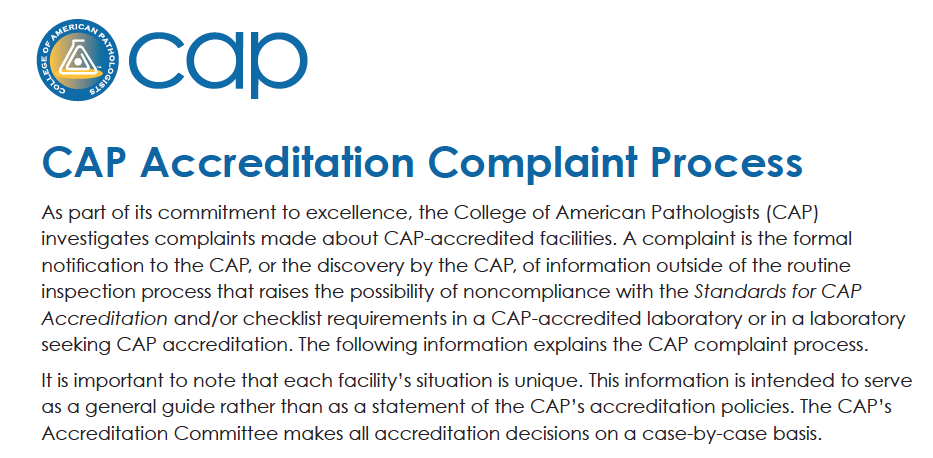
One of the ways physician health programs are engaging in forensic fraud  using laboratory developed tests (LDTs) is by changing them from “forensic” to “clinical” samples in order to bypass chain-of-custody.  As there is no regulation or oversight of the entire testing process it is easy to do.  PHPs have no oversight or regulation.  Neither do the commercial drug testing labs using these tests.  They are non-FDA approved and CLIA exempt so the only avenue of complaint is the College of American Pathologists (CAP) which is an accreditation agency that does not have the power to sanction.


Screen Shot 2015-01-08 at 10.04.47 PM


In terms of criminal penalties  I would aim for the $25000 and 10 year mark as the cumulative documentation of HIPAA breaches committed by PHS, Quest and USDTL under false pretense are many and severe.

The Department of Health and Human Services Office for Civil Rights confirmed that my blood test from July 1, 2011 was intentionally changed to a clinical specimen and sent to USDTL with specific instructions to process it as a clinical specimen.  Under the updated HIPAA-Privacy Rule “patients’ have the right to request their records directly from labs without authorization of the ordering provider.

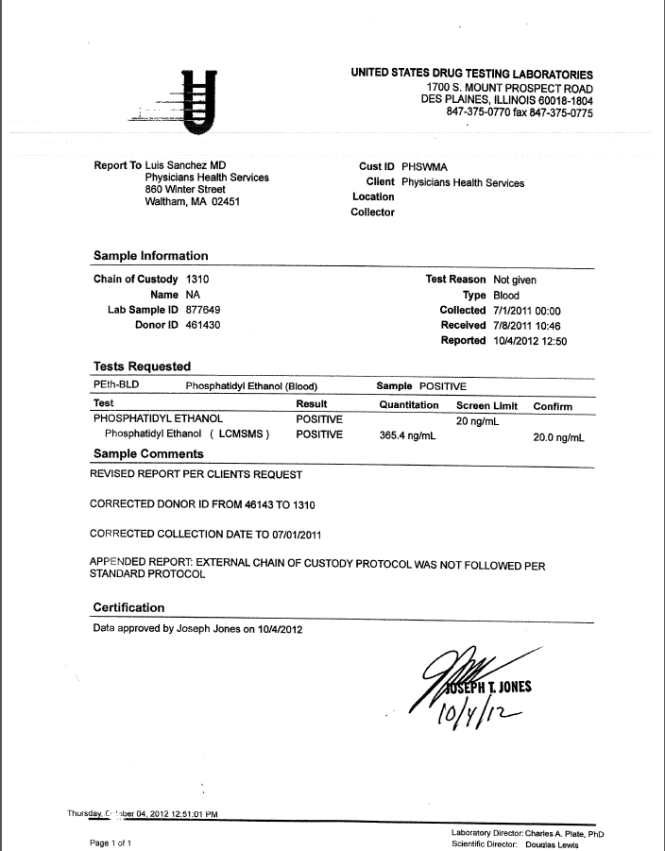
It is important to recognize that all three parties had misrepresented this test as “forensic” since 2011. I have been requesting the “external chain-of-custody” from Quest since December of 2011 and the “appended test” from V.P. of Laboratory Operations Joseph Jones since December of 2012 when I was informed that it was changed from positive to invalid on October 4, 2012.

The new documents provided by USDTL include the October 4, 2012 revised test contradicting Dr. Luis Sanchez letter that he “just found out about” the revised test 67-days later.

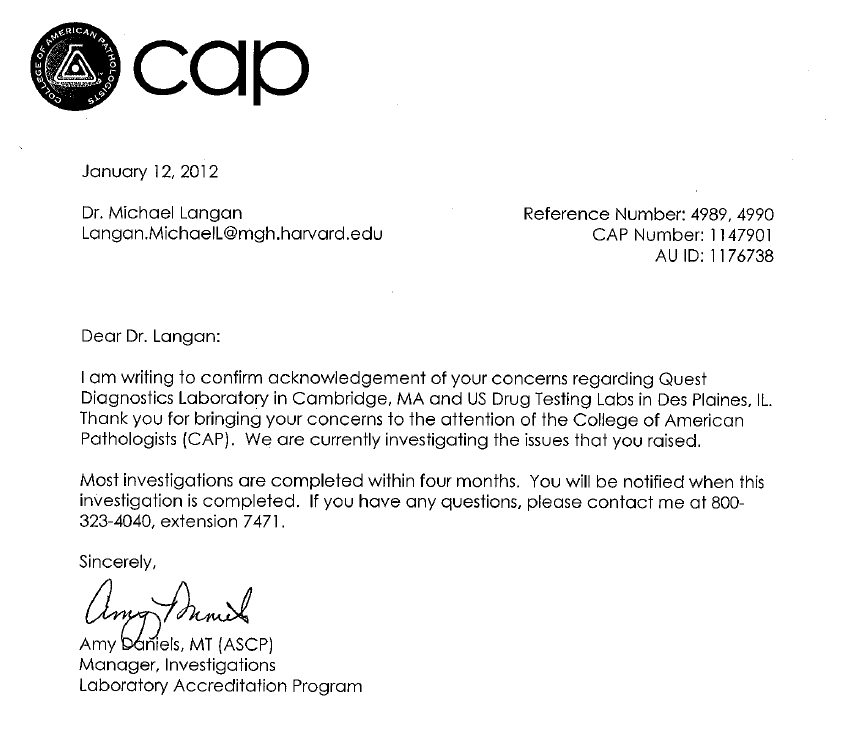
The importance of this cannot be overstated as I filed a complaint with the College of American Pathologists in January of 2012. The  investigation confirmed my suspicion that the test was fraudulent and as a result CAP mandated that USDTL revise the test.

Screen Shot 2015-05-07 at 1.28.18 AM

USDTL did so and reported it to Dr. Sanchez but both concealed it and Sanchez took action against my license the following week.

“Moving the Goalpost” is a frequent tactic of PHPs whereby they make a new allegation and disregard the original.   By controlling the information that is provided they are able to suppress and conceal whatever they want by misusing existing health care confidentiality law.

The October 19, 2012 report for noncompliance with my contract was done  under “color of law” and resulted in suspension of my medical license.   The new documentation shows that all three parties were involved in the fraud and the coverup.

The information USDTL provided even contains an email from me to Joseph Jones  from December of 2012 requesting that he provide a copy of the October 4, 2012 revision which he ignored.

In response to demand letters from my attorney all three defended themselves by claiming the July 1, 2011 test had absolutely nothing to do with my suspension and blamed it on my non-compliance.  The new documentation shows that I was reported for noncompliance after Dr. Sanchez was made aware of the revised test.

As the three parties colluded to produce PHI and used it with malice in a conspiracy to commit fraud and I am therefore requesting that charges be filed against these parties under the HIPAA criminal statute:

The HIPAA criminal statute, 42 U.S.C.A. § 1320d-6, reads in pertinent part:

”A person who knowingly and in violation of this part—

•   uses or causes to be used a unique health identifier;
•   obtains individually identifiable health information relating to an individual; or
discloses individual identifiable health information to another person, shall be punished as provided in subsection (b) of this section.”


”Whoever willfully causes an act to be done which if directly performed by him or another would be an offense against the United States, is punishable as a principal.” 18 U.S.C. § 2(b).

 All three parties knew this was intentionally changed from a forensic to a clinical sample and PHI. Instead of correcting an error both Quest and USDTL took steps to conceal this information.   In fact, the complicity of the three parties, cover-up and extent of damages caused by it make this the worst HIPAA-criminal violation to date. I can find nothing comparable and the damages have still not been corrected.

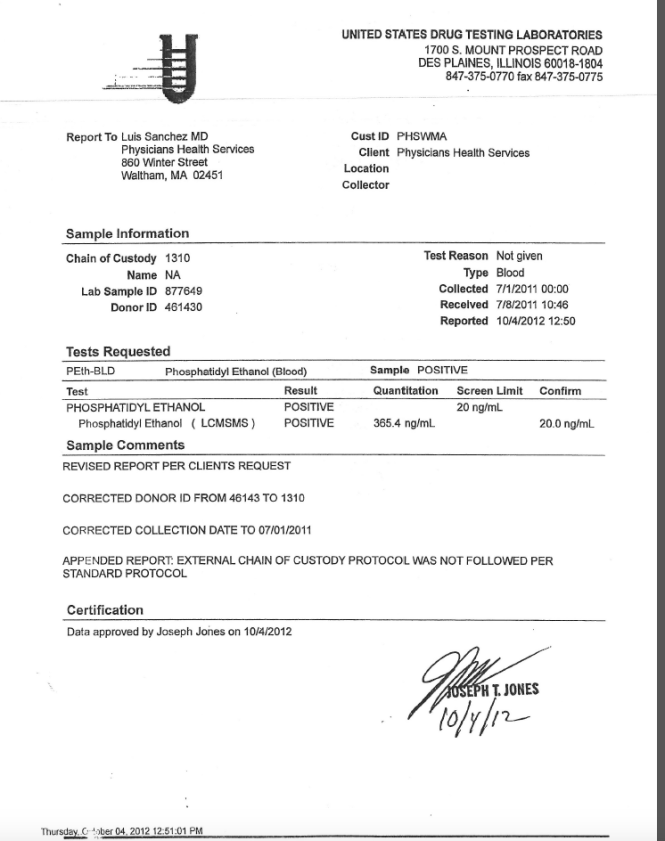
Luis Sanchez was notified  of the invalidity of the test on October 4, 2012 but suppressed it for 67-days.    This was a result of my complaint to the College of American Pathologists (CAP) that launched an investigation which revealed no external chain-of-custody existed for the specimen rendering it invalid.  This was revealed to PHS on October 4th, 2012 but instead of disclosing this and correcting things Dr. Luis Sanchez reported me to the Board  for “noncompliance” less than 2 weeks after it was revealed to him that the test was invalid.     He then wrote a letter on December 11, 2012 stating that he “just found out” about the invalid test.


Screen Shot 2015-05-04 at 10.57.54 AM

Sanchez violates M.G.L. (B) Section 69 on 3 separate occasions 1. July 28, 2011 when he reports the fabricated test to the Board of Registration in Medicine (BORM) 2. October 19, 2012 when he reports non-compliance with my contract leading to my suspension. 3. December 11, 2012 when he reports PHS was made aware of the invalidity of the test the day prior when it was actually 67-days prior (and 2 weeks prior to the report of non-compliance). His attempt at “moving the goal-post” was made clear with the August 2014 provision of the October 4, 2012 report from USDTL to Sanchez. Both USDTL and Sanchez suppressed this information to conceal the crime.


Screen Shot 2015-05-07 at 10.52.03 AM

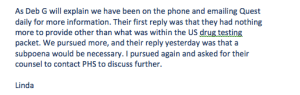
The additional evidence was provided in December of 2011 with the litigation packet. Since that time Ms. Stoller has received exculpatory evidence that undeniably refutes the test including an investigation by the College of American Pathologists. In addition Ms. Stoller has been made aware point by point the crimes involved. She is aware that this is not only “invalid” but the product of forensic fraud. Her stance has been to ignore each and every point and support PHS regardless of facts and truth while professing to serve the public interest.


Screen Shot 2015-04-07 at 4.50.05 AM

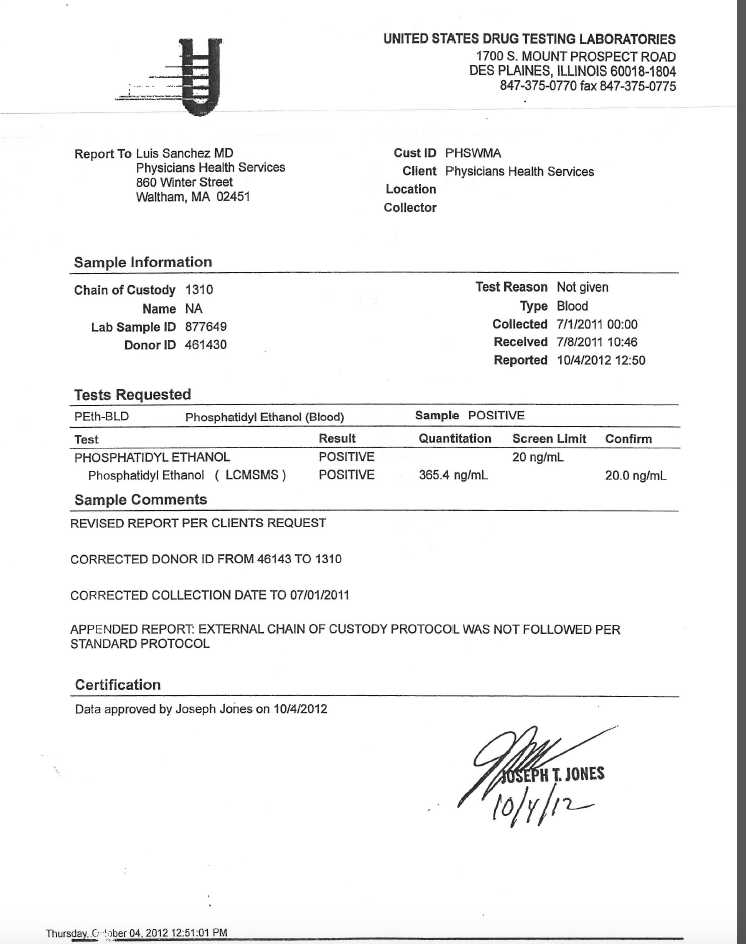
Letter from USDTL to Sanchez reporting the absence of external chain-of-custody and invalidating the positive test. This was concealed until August of 2014.


Screen Shot 2015-05-08 at 2.03.30 AM

While concealing the October 4th test correction Sanchez reports “non-compliance” with A.A. meetings. The positive test was the sole justification for the A.A. meetings.


Screen Shot 2014-11-08 at 1.19.44 AM

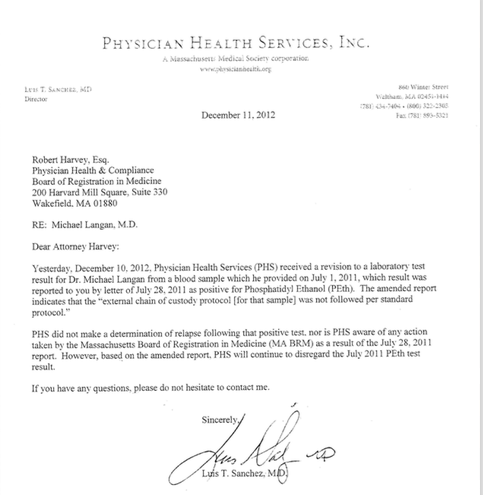
Sanchez claims that he just found out about the revised test 67-days after he actually did. Note he makes it a point to state that the test did not cause any consequences confident that the October 4, 2012 document will remain concealed.


A  Request to Inspect and Copy Protected Health Information and  Authorization for Use or Disclosure of Patient’s Protected Health Information was sent to USDTL in July and August of 2014.

The July 1, 2011 PEth test was drawn as a forensic specimen and subsequently changed to “clinical” (rendering it PHI) at the request of Quest’s client, PHS, Inc on July 7th, 2011.  USDTL sent the materials within the 30 day deadline.

Quest Diagnostics, however, refused to comply with my request for the authorization and release of information forms required for them to draw a clinical specimen (which I knew did not exist) as well as any documentation related to the request by PHS that Quest  (in violation of all regulations, professional standards, and clinical laboratory law) changed a “forensic” to a “clinical” specimen.  The Quest attorney insisted that I sign a “release” from PHS.

PHS and the colluding labs were apparently unaware  of the updated HIPAA regulations removing the need to obtain a signed release from a “provider” to obtain PHI.

 I only received it because the DOJ-OCR agreed that this was PHI and forced Quest to send it.    

PHS manipulated the test, set up a system in which they could claim me non-compliant , then did so immediately after the test was amended and hoped I would never find out.

On 10/4/2012 USDTL amended the test noting “external chain of custody was not followed per standard protocol” invalidating the test (this was the result of the initial CAP investigation under the assumption it was a forensic test).  This was faxed to PHS but they withheld this information from me and the Board of Registration in Medicine.

The very next week they deemed me  “non-compliant.” 

PHS then officially reported me to the BORM as “noncompliant” on 10/19/2012.

On 12/10/2012 I found out from Amy Daniels of CAP that the test had been amended. I then called PHS and they issued a letter the very next day 12/11/2012 stating “Yesterday, December 10, 2012 Physician Health Services (PHS) received a revision to a laboratory test” referring to the July 1, 2011 PEthstat.  They  then try to cover themselves by claiming they were not aware of any action taken by the board as a result of this test.

The documents reveal that PHS is violating multiple state and federal criminal laws including clinical laboratory laws.  It not only involves forensic manipulation but sending laboratory specimens as “clinical” samples when they are not authorized to do so and misrepresenting them as “forensic.” 

Joseph  Jones goes on record as a strict advocate of quality control and chain-of-custody with his “Defense in Depth Strategy” video and multiple written documents proclaiming how USDTL follows strict and rigid protocol.  Well the ” litigation packet”  contradicts and even negates this.  How can any of USDTLs testing be trusted in light of what is seen here.

 There is nothing that correlates that test with me and for all intents and purposes it could be a positive template used specifically for this type of misconduct.    They pointed out that it does not pass the  common sense factor (i.e. what would an average person think under normal circumstances about this?)

What it shows is that Mary Howard of PHS changed a test that was drawn as a “forensic” test to “clinical.”    She is listed as the ordering “physician.”  None of the required information exists to obtain a clinical sample. There are no authorization forms signed by me or to whom the information can be disclosed–clear violations of “Prohibited Activities” under Massachusetts law governing clinical laboratories.

Quest and USDTL representation has already clarified that PHS requested this test be sent by Quest to  USDTL as a “clinical sample” with specific instructions to process it as a “clinical” sample.  PHS is a monitoring agency not a treatment provider.

A “clinical” laboratory specimen is defined (CLIA, DPH, HHS, state laboratory law, essentially everyone) by its use in the diagnosis and treatment of a patient in a  doctor-patient relationship. It necessitates patient “care” which PHS is unable to legally provide as a “non-profit” charitable organization. 

As this is both “bad-faith” and ultra vires “confidentiality agreements” and “peer review” protection should no longer be an issue.  Just one removes it.

 PHS is an agency that utilizes drug and alcohol screens to detect if doctors are using substances they are prohibited to use.  It is not a clinical provider.  I am sure Bresnahan has spun some sort of logical-fallacy argument to say it is, but the documentary facts negate this.  Organizational purpose is clear. As a monitoring agency their drug and alcohol testing is forensic.    This brings in to question their “charitable organization” non-profit status.

Accountability requires both the provision of information and justification for actions

Accountability also requires consequences for violations of professional standards-of-care, ethical codes of conduct and the law

PHS is able to do what they do by both blocking information and relying on others to overlook, table or otherwise dismiss valid complaints–complacent that these are good people helping doctors and protecting the public.  The current incarnation does neither

There should be zero tolerance.  PHS has been unaccountable for this type of behavior but this needs to be addressed. 

Accountability requires both answerability, justification and consequences.     There is no conceivable procedural, ethical or legal justification for what is shown here.   The compounding of crimes over time is self-evident and therefore it is the responsibility of the state to hold him accountable for his crimes. The fact that he pontificates on professionalism and stands in judgment of others makes it even more important.    There are no exceptions to the rules or the law..

 And we now know why Quest was so reluctant to provide the records.  Quest was complicit in this and obtained and processed a known forensic sample as “clinical” without any of the required documents.  The test lists “ordering physician” as Mary Howard (who is a secretary at PHS).  There are no signed release of information forms or authorization forms indicating who my PHI could be distributed to.

This is in violation of the HIPAA criminal statute.  As a business associate  It is my understanding  PHS can be tied to it by the conspiracy statute.

There should be zero-tolerance for this type of criminal activity.   There is no excuse for forensic manipulation and this must be addressed.  The people who are engaging in this should be in jail yet they remain unscathed.  This is a systemic problem that is best met with head on and in real time.  It makes Annie Dookhan look like a girl scout.


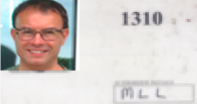
7/1/2011—PHS requests blood test at Quest Diagnostics.  No outside factors are involved in  PHP requesting this.   There is no outside complaint or concern behind it.  I provide blood sample using my PHS unique identifier #1310
Screen Shot 2014-11-06 at 11.17.32 PM

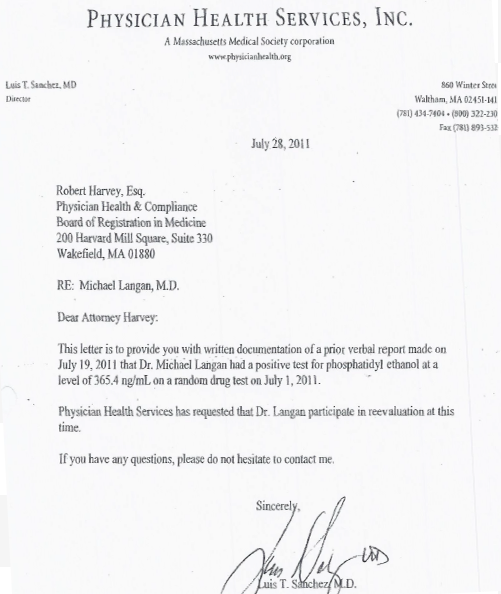
7/28/2011—verbal report that test was positive to the Board of Registration in medicine and requests I have a “reevaluation.”

Screen Shot 2015-02-01 at 11.41.40 PM

I request test results in form of “litigation packet” but PHS tries to dissuade me and eventually threatens me with “unintended consequences.”

11/29/2011—PHS agrees to provide “litigation packet. Check dated 11/29/2011 is given for payment.

12/5/2011—Receive USDTL Litigation Packet   Sole document from Quest is a fax that is time stamped and arrived 3 hours after the specimen was collected when I was in clinic at MGH rendering this impossible.  In addition it is not my signature:

Signature on Quest document

Signature on Quest document

image

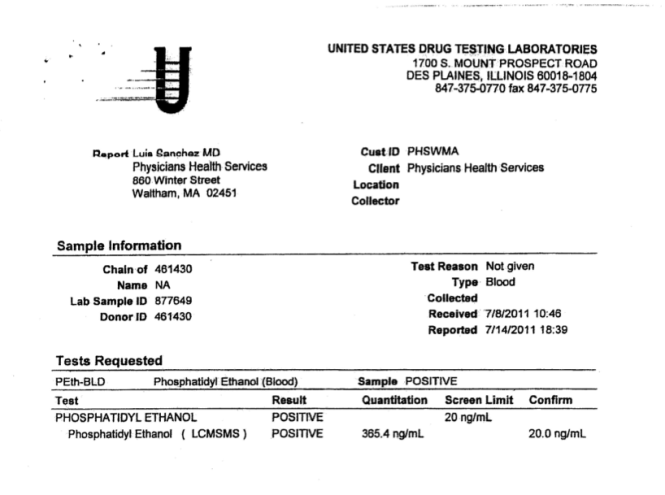
A fax from PHS to USDTL is also included requesting that my ID # 1310 and a “chain-of-custody” be added to an already positive specimen with no unique identifier connecting it to me.

Screen Shot 2014-11-04 at 10.47.41 PM


PHS asking that my ID # 1310 be added to this sample and

PHS asking that my ID # 1310 be added to this sample and “chain-of-custody” be updated

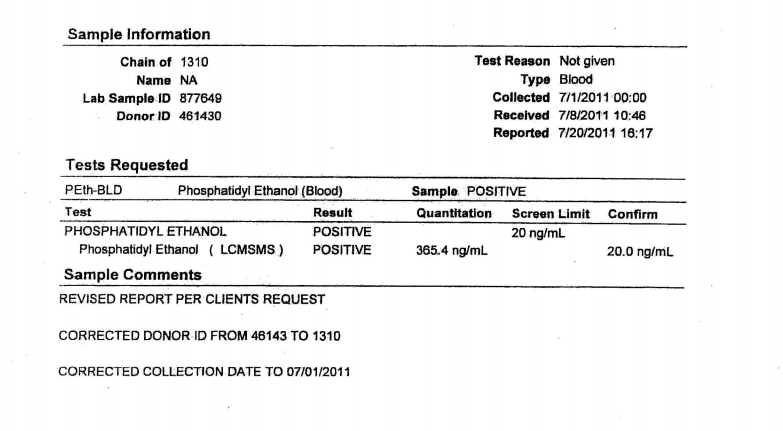
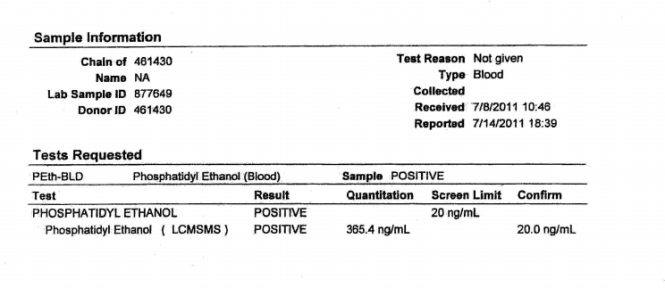
A report dated 7/20/11 from USDTL “revised report per clients request” and “corrected donor ID from 46130 to 1310 and “corrected collection date to 7/1/2011”

Screen Shot 2014-07-28 at 12.41.18 PM

USDTL adds my ID # 1310 to an already positive sample and adds collection date of July 1, 2011

Note this backdating of chain of custody and addition of my ID # is on 7/20/11  (one day after Dr. Luis Sanchez reported the test as positive to the Board of Registration in Medicine. )
Screen Shot 2014-07-28 at 12.41.01 PM

Screen Shot 2014-07-28 at 12.41.18 PM

Joseph Jones certifies that the specimen was processed with laboratory SOP. This is signed on 12/3/2011

Screen Shot 2014-07-28 at 6.50.01 PM

Note that Dr. Luis Sanchez “explained that the testing laboratory is willing to support the test results and provide the litigation packet’ December 5, 2011

Note- the “PHP-referred” attorneys are an essential part of this racket.   Although ostensibly representing your interests they are also serving the PHP as they will not go beyond certain boundaries.  They will not address the forensic fraud facilitated by the labs or the “tailoring” of assessments to fit the diagnosis.  Their other job is 12-step facilitation.  They enforce mandated 12-step and essentially threaten you that the medical board will suspend you if you do not show them you accept it.   My attorney would not even contact the labs involved.    Although discovery of the fraud would have been exculpatory my attorney felt a better approach would be to blame the positive test on my asthma inhalers and referred me to an “expert witness” who for $3000..00 would write a letter supporting this.   I even write a letter for him to USDTL.  He will not contact the labs but offers to do so if Linda Bresnahan “wants him to.”  The deferential almost sycophantic exchange is seen below.Screen Shot 2015-05-07 at 10.32.33 AM Screen Shot 2015-05-07 at 10.31.17 AM

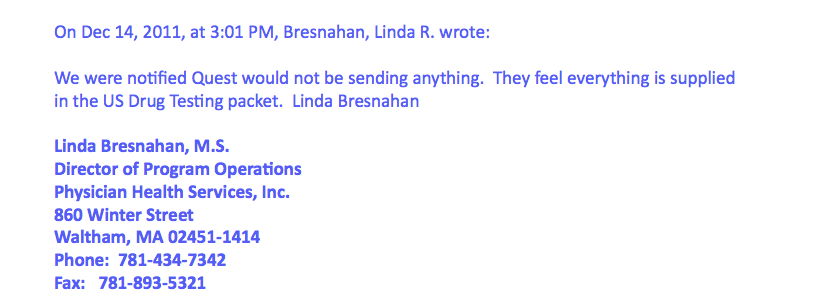
12/14/2011—Bresnahan replies that the one page document with my forged signature is sufficient external chain of custody.

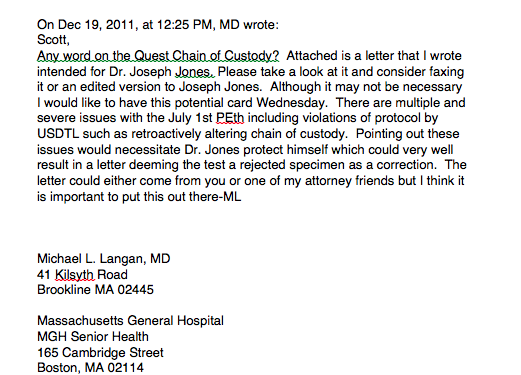
Screen Shot 2015-05-07 at 9.26.53 AM12/19/2011–I try to do everything I can to  get my attorney to address the lab issue.  In any other profession this would have been immediately resolved.  The lab fraud would have been exculpatory. but in this rigged system it is avoided.    The fact that the attorney who is supposedly working for you is actually working against you is a very significant breach of trust It is an essential part of the racket.

Screen Shot 2015-05-07 at 10.31.47 AM

12/29/12—As I  am determined to get the truth about the test I request that when that happens the board allow me to repetition for reconsideration.  Confident that the College of American Pathologists will confirm the fraud this letter is written to Board Attorney Deb Stoller.

Screen Shot 2015-05-07 at 10.52.03 AM

Letter to Board Attorney Deborah Stoller. My contract with PHS was extended for 2 years because I asked for an evaluation at an independent facility not affiliated with PHS and the Like-minded docs. This letter is important as it shows the import of the PEth test which PHS will later say is irrelevant as they “move the goalpost.

1/12/2012—I send “litigation packet” to the College of American Pathologists (an accreditation agency that does not have power to sanction but can investigate and force lab to correct errors under threat of loss of accreditation)

Screen Shot 2014-08-20 at 12.15.52 PM

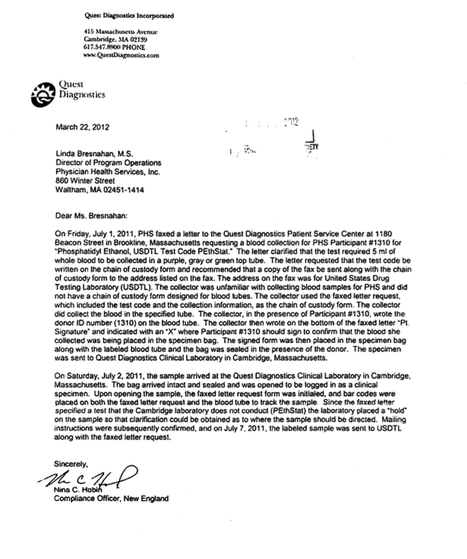
3/22/2012 – Quest New England Compliance Manager, Nina Tobin in response to my persistence in obtaining the absent Quest “chain-of-custody” provides letter documenting all of the errors in collection and process in a letter that seems to try to give the impression some sort of protocol was followed. She notes it was “ logged as a clinical sample.” Note no indication of the validity of the sample and that this was processed as a clinical sample.
Screen Shot 2015-05-07 at 9.37.20 AM

10/8 2012 –I am called by my attorney and told PHS is deeming me “noncompliant’ with my contract.

10/19/2012—I am verbally reported to the Board of Registration in Medicine for noncompliance with my contract.  This is followed by a written letter:  10:23:12 PHS Letter to BORM-noncompliance

Screen Shot 2015-05-07 at 10.52.03 AM

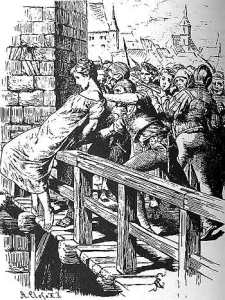
11/5/2012—Inquisition_10_Pushing_Off_Bridgen appears to be “a purposeful and intentional act by PHS to show MLL’s 7/1/11 test as valid when in reality this test was invalid, and involved both fatal laboratory errors and lack of adequate MRO review of results. Anything based on MLL’s 7/1/11 test as a confirmatory positive should be reversed, rectified and remediated.”   This letter remains unacknowledged by Board Attorney Deborah Stoller.

12/5/2012 – Contacted by Amy Daniels (investigator for CAP) to follow up on the “appended lab.” She tells me that the July 1, 2011 lab was amended on 10/4/2012 and reported to PHS. I contact PHS and they deny it.

12/11/2012– Dr. Sanchez issues a letter stating “Yesterday, December 10, 2012 Physician Health Services (PHS) received a revision to a laboratory test” referring to the July 1, 2011 test. He claims the test had no consequences.

2/6/2013—I am suspended by Board of Registration in Medicine for the “non-compliance” reported by Dr. Luis Sanchez.

6/23/2014-Letter from PHS attorney Paul W. Shaw claiming PHS immune from damages and documenting that the lab draw was performed by PHS ‘in its capacity as a charitable corporation.” He states “you should be aware that the suspension of Dr. Langan’s license had absolutely nothing to do with the blood test referenced in your letter or any actions on the part of PHS, as detailed in the Board of Registration in Medicine’s {Board Order} dated February 6, 2011” referring to my suspension for the “noncompliance reported by Dr. Luis Sanchez.

6/27/2014—Letter from USDTL attorney William F. Burke stating that “the blood sample was tested clinically at the request of Quest Diagnostics” and that “Dr. Langan’s blood sample was provided to USDTL by Quest Diagnostics on behalf of Physician Health Services as part of medical treatment..”   He states “Dr. Langan’s suspension was the result of his inability to comply with the terms of his contract.”

8/6/2014—in response to my request for PHI USDTL provides record. This includes documentation that Dr. Luis Sanchez was made aware of the revised test on 10/4/2012.   Note the very next week on 10/8/12 my attorney informed me that he was reporting me to the Board of Registration in Medicine for “noncompliance’ and officially did so on 10/19/12.

Screen Shot 2015-04-07 at 4.50.05 AM

Also included in the record is an e-mail from me to Dr. Jones December 10, 2012 with subject “please provide amended lab report.” I request a copy of the amended lab report ASAP specifically to “clarify the truth about this test as explicitly as possible before this goes any further.” I state “PHS has used this test to cause, and continue to cause, a significant amount of harm.” He does not respond to this request for what is now documented PHI.   I am suspended 2 months later for non-compliance.

Joseph Jones had already corrected the test 10/4/2012 but both he and PHS concealed it while PHS “moved the goalpost” by deeming me non-compliant.

10/9/14—Receive documents from Quest Attorney Fay Caldwell.   No release of information forms or other HIPAA required documentation is found.

Ordering Physician is listed as Mary Howard.  (secretary at PHS).   Documents reveal no custody and control form information only that it was changed to a clinical specimen by Ms. Howard on July 5, 2011 and sent to USDTL on July 7,2011.

breaking-bad-series-finale_article_story_main

Organizational Purpose and Public Trust in Drug and Alcohol Testing

Organizational Purpose and Public Trust in Drug and Alcohol Testing

IMG_9150

http://www.nytimes.com/2014/03/13/opinion/why-arent-doctors-drug-tested.html?partner=rss&emc=rss&_r=0

In 2012 Robert Dupont delivered the keynote speech at the Drug and Alcohol Testing Industry Association annual conference and described a “new paradigm” for addiction and substance abuse treatment of zero tolerance for alcohol and drug use that is enforced by monitoring with frequent random drug and alcohol tests. Detection of any substances is met with swift and certain consequences. He proposed expansion of this paradigm to other populations including workplace, healthcare, and schools. Based on the state Physician Health Program model of “contingency management,” with frequent testing and a point of “leverage,” such as a medical license in doctors, that is used as a behavioral incentive.

The ASAM White Paper on drug testing seems to indicate a desire to liberalize drug testing by utilizing health care providers in the process. Currently forensic drug testing uses a strict chain-of-custody protocol with Medical Review Officer (MRO) review. But if the result of a positive test is “therapeutic” rather than “punitive” this is unnecessary. In the “new paradigm” a positive test simply requires an evaluation at a “PHP-approved” facility.

IMG_9516 Accountability needs to be rooted in organizational purpose and public trust.

A recent article in JAMA, “Identification of Physician Impairment”  suggests that undetected physician impairment  may be contributing to medical error and that sentinel-event and  random alcohol-drug testing could be implemented to address the problem as is being done in the  current “Physician Health Program (PHP)” system.

The most consequential and critical issue for physicians, if this comes to fruition, is who will be in organizational and managerial control of the system and what ideological influences will be guiding policy and practice.   It is concerning that one of the co-authors of this article, Greg Skipper, is a Fellow of the American Society of Addiction Medicine with strong ties to the 12-step treatment industry and drug testing industry.

History shows Lord Acton’s aphorism on absolute power to be repeatedly true.  Corruption is a virtually inevitable consequenphotoce of unchecked power. The only two factors that constrain corruption are moral virtue and deterrence.

Disregard for standards of care and violations of codes of conduct are common.  So too is the use of anything that furthers the agenda.  Pseudoscience, such as polygraph testing, previously deemed by the American Medical Association as an unscientific game of “chance,” and psychometric testing of dubious validity are being used for confirmation of diagnoses.

They introduced and brought to market junk science like the Ethyl Glucuronide  (EtG) biomarker for detecting alcohol use. The EtG was introduced by an FSPHP physician, marketed, and proselytized as an accurate and reliable test for alcohol. After setting an arbitrary cutoff of 100 to prove drinking he ruined countless careers and lives.

As the disaster toll increased it became clear the test was not very good. It became apparent the test was, in fact, very flawed and misguided as using an ultra sensitive poorly specific test for a substance environmentally ubiquitous precludes its forensic applicability.

Hand sanitizer, cosmetics, sauerkraut, and myriad other products were shown to result in an elevated EtG. Sensibly, the majority of drug testing and monitoring programs abandoned it. 

The market for the test decreased dramatically as the only customers left were drug monitoring programs in which the testers had absolute power and those being tested were absolutely powerless–programs like those run by the PHP.

This group has now introduced the Phosphatidylethanol (PEth) test as a confirmation test for EtG and USDTL mScreen Shot 2014-04-05 at 2.08.11 PMarketed it as the PEthStat.  

State Physician Health Programs are now using the EtG  and adding the PEth to confirm alcohol ingestion. And just as they did with the EtG the claims of reliability are grand but without foundation. 
All speculative A=B oversimplified thinking that ignores the myriad other factors involved. The science is empty if you remove the dregs of filler and puff.  And the conflicts of interest are mind-boggling.

Corporate Front Groups and Corruption in Medicine-Forensic fraud, conflicts of Interest and the Erosion of Trust

The ASAM and FSPHP are corporate front groups that have infiltrated organized medicine and gained tremendous sway. Advancing the multi-billion dollar 12-step rehab and drug testing industry agenda control has replaced conduct and ideology has trampled science and reason. As organizations without transparency, accountability, or regulation they have become reservoirs of bad medicine and corruption.

Accountability is  rooted in organizational purpose and public trust.  Unfortunately, humanitarian ideals have been trampled by the imposition of corporate front groups who advance  hidden agendas under guises of science and scholarship  and patinas of benevolence.  Rife with conflicts of interest, these groups obfuscate, mislead, and exploit us to further an underlying political agenda.  Healthcare and medicine has been infiltrated by various groups that pose a serious threat to both the humanitarian and evidence based aspects.

An Open Letter to Senator Elizabeth Warren Regarding Laboratory Developed Tests, Physician Health Programs and Institutional Injustice

An Open Letter to Senator Elizabeth Warren Regarding Laboratory Developed Tests, Physician Health Programs and Institutional Injustice.

I can think of nothing more institutionally unjust than an unregulated zero-tolerance monitoring program with no oversight using unregulated drug and alcohol testing of unknown validity.   But that is what is occurring.   Some of us are trying to expose this corrupt system but barriers exist. As with the Laboratory Developed Tests (LDTs), those involved have intentionally taken steps to remove both answerability and accountability.  Both the tests and the body of individuals administering these tests are notable for their lack of transparency, oversight and regulation.  This renders them a power unto themselves.

Doctors (and others coerced into Professional Health Programs) across the country have reported going to law enforcement and state agencies only to be turned away.   The Federation of State Physician Health Programs (FSPHP)  has convinced these outside agencies that this is a “parochial” issue best handled by the medical profession..   Those reporting crimes are turned back over to the very people committing the crimes.

Screen Shot 2015-01-08 at 9.54.30 PM

—There is no place in science for consensus or opinion, only evidence.-Claude Bernard

Dear Senator Warren,

Thank you for your reply regarding laboratory developed tests (LDTs) and the need for regulatory oversight.   As you mention, LDTs are developed without FDA approval—a pathway in which is not even necessary to prove validity of a test (that it is actually testing what it claims to be testing for) to bring it to market. With no FDA oversight or regulation a commercial lab can claim any validity they want in marketing these tests. The regulation debate has focused on the reliability and validity of a number of clinical tests marketed with unverified claims of accuracy such as prenatal screening and Lyme disease and this lack of oversight is a direct threat to patient safety.

I am sure you would agree with me that the importance of tests diagnostic accuracy is directly proportional to its potential to cause patient harm if reported inaccurately. Sensitivity and specificity are important components of any diagnostic test as there are consequences associated with both false-positive and false negative results.

A test falsely indicating the absence of a condition in someone who truly has it can delay or prevent needed treatment wile a test falsely indicating the presence of a condition in someone who does not truly have it can result in unnecessary testing and treatment.

Incorrect treatment and false labeling of patients can also occur. Therefore diagnostic accuracy is paramount if a test is being used as the basis for further tests and treatment. Any test being used as a basis for further tests or treatment needs to be accurate. It needs to be reliable and valid. Moreover, if the consequences of a test can result in significant patient harm (such as unneeded chemotherapy) it needs to be either 100% accurate or be combined with other tests to confirm the true diagnosis.

 “Forensic” vs. “Clinical” Laboratory Testing

“Forensic” testing differs from “clinical” testing because of the consequences and the process is tightly controlled because false-positive results are unacceptable as the consequences can be grave, far-reaching and even permanent.

Forensic testing demands special handling and safeguards to protect the donor such as validated tests, certified labs, strict chain-of-custody procedures and MRO (Medical Review Officer) review. These safeguards of quality control assure the validity and integrity of the specimen.   The LDT pathway was not designed for forensic tests.

Forensic Laboratory Developed Tests (LDTs)

 Paradoxically, laboratory developed tests with the potential to cause  life-changing and possibly irreparable harm have been absent from the regulatory debate; LDT drug and alcohol tests used for “forensic” monitoring purposes.

A panoply of tests using urine, blood, hair, fingernails breath and saliva have been developed and brought to market since 2003 when the first one was introduced by Gregory Skipper, then Medical Director of the Alabama Physicians Health Program, who “convinced the initial lab in the USA, NMS near Philadelphia to start performing EtG testing.” 1

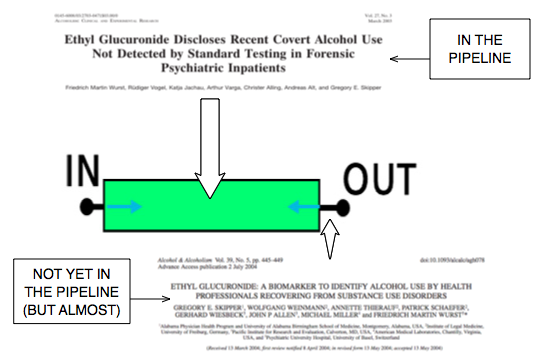
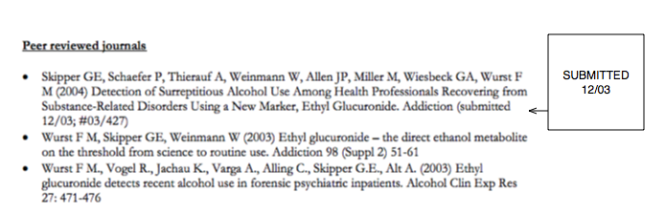
Developed as an LDT, Skipper and NMS then claimed the alcohol biomarker (which was discovered in the 1950s) “appeared to be 100 percent specific” in detecting covert use of alcohol based on a study he coauthored that involved a mere 35 forensic psychiatric inpatients in Germany, all male. 2   With this “evidence-base” and a not yet published paper in the pipeline,3   Skipper then pitched the test to the Federation of State Medical Boards (FSMB) as an accurate and reliable tool detect covert alcohol use in health care professionals.

Policy Entrepreneurship

In  “Agendas, Alternatives, and Public Policies,”4 John W. Kingdon describes the problem, policy and political streams involved in public policy making.   When these three streams come together a specific problem becomes important on the agenda, policies matching the problem get attention, and then policy change becomes possible.

Kingdon also describes “policy entrepreneurs’ who use their knowledge of the process to further their own policy ends. They ‘lie in wait… with their solutions at hand, waiting for problems to float by to which they can attach their solutions, waiting for a development in the political stream they can use to their advantage.”4

And due to a perfect confluence of streams ( Institute of Medicine report that 44,000 people die each year due to medical error,5 media reports of “impaired physicians,”  the the war-on-drugs, etc.)  the FSMB was swayed into accepting not just the validity but the necessity of using an alcohol biomarker of unknown reliability and validity on doctors referred to or monitored by state Physician Health Programs (PHPs) .

As the national organization that gives guidance to state medical boards through public policy development and recommendations, the individual state medical boards adopted use of the test without critical appraisal and no meaningful opposition.

Shortly after its founding in 1912, the FSMB began publishing a  journal called the Quarterly of the Federation of State Boards of the United States. Now known as the Journal of Medical Regulation, the publication has archived all issues with full articles dating back to 1967 and, as the official journal of the national organization involved in  medical licensing and regulation this facilitates an unskewed and impartial examination of how and when specific issues and problems were presented and who presented them and, in doing so, the “policy entrepreneurship” Kingdon describes can be seen quite clearly. For example a 1995 issue containing articles written by the program directors of PHPs in 8 different states contains an FSMB editorial acknowledging the reported 90% success rate claimed of these programs (in part attributed to the 90-day inpatient treatment programs) that concludes:

“Cooperation and communication between the medical boards and the physician health programs must occur in an effort to protect the public while assisting impaired physicians in their recovery.” 6

No one bothered to examine the methodology of these reports to discern the validity of the claims and it is this acceptance of faith without objective assessment that has allowed the passage of flawed public policy in medical regulation.

Nowhere  is “policy entrepreneurship” more glaringly displayed as it is in a 2004 issue promoting the use of EtG in monitoring doctors as under the same cover is an article identifying both the need7 for such a test and an article providing the solution.8  

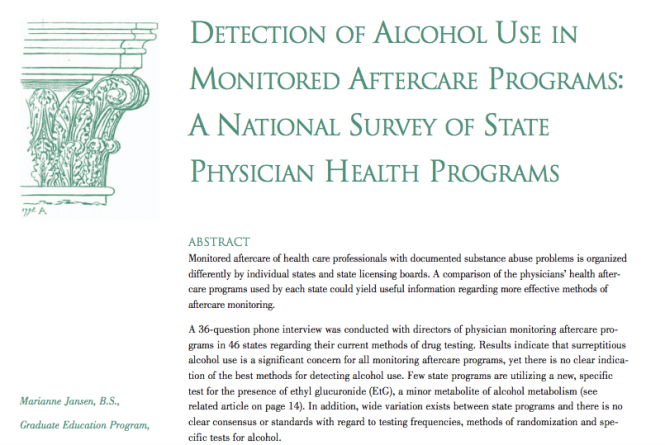
“Detection of Alcohol Use in Monitored Aftercare Programs: A National Survey of State Physician Health Programs,” a survey of state Physician Health Programs (PHPs) concludes that “surreptitious alcohol use” is a significant concern” for PHPs, there is no current  “best method” for detection,  but a promising new test  with “exceptional specificity (100 percent) and sensitivity” in detecting small amounts of alcohol for up to 18 hours has recently become available.7

This same issue contains an article authored by Skipper about a new marker “not detectable unless alcohol has been consumed” recently introduced in the United States and now commercially available.”8

Notably absent from both of these articles is Skipper’s role in the commercial availability of the test. This conflict-of-interest is nowhere mentioned in this display of “creating a market then filling it.”

This “regulatory sanctification” of the test implied its tacit approval by the medical profession  (i.e. “if they are using it on doctors it must be valid”) and facilitated its marketing  to other monitoring agencies (nurses, airline pilots) as well as  Courts and Probation Departments where those doing the monitoring had absolute power while those being monitored had no voice.

Bent Science

In Bending Science: How Special Interests Corrupt Public Health Research9Thomas McGarity and Wendy Wagner describe how special interest groups scheme to advance their own economic or ideological goals by using carefully crafted distorted or “bent” science to influence legal, regulatory and public health policy.  The authors describe how those making these decisions often assume the information that reaches them has been sufficiently vetted by the scientific community as it flows through a pipeline of rigorous peer-review and professional oversight and that the final product that exits the pipeline is unbiased and produced in accordance with the norms and procedures of science.

McGarity and Wagner note the serious and sometimes horrific consequences of bent science and provide examples involving Tobacco and Big Pharma . The authors call for:

“..immediate action to reduce the role that bent science plays in regulatory and judicial decision making” and the need for the scientific community to be involved in “designing and implementing reform.”

“Shedding even a little light on how advocates bend policy -relevant science could go a long way toward remedying these problems.  Indeed, precisely because the advocates have overtaken the law in this area, heightened attention to the social costs of bending science could itself precipitate significant change.”

In the case of EtG this shedding of light is not very hard as no “carefully crafted” studies bending science were used to sway opinion.   None existed. The only items in the pipeline were directly related to Skipper.  If anyone dare to look, the Emperor has no clothes.

Lack of Answerability and Accountability

There are difficulties in challenging bent science including a general lack of recognition of the problem and an absence of counter-studies to oppose deliberately manufactured ends-oriented research.   This has proven true with the myriad LDTs introduced into the marketplace as no counter-forces or competing economic interests producing counter-studies exist.

Multiple lawsuits, including a class-action, have been decided in favor of the labs who have taken a stand-your-ground approach supported by a body of industry-related “research” they or their affiliates produced to support the validity and reliability of the tests.

Those affected by these tests either have no power or have had their power removed. Most do not have the resources to mount a defense let alone produce counter-studies questioning the reliability and validity of the tests.

Most employee drug testing follows Department of Health and Human Services (DHHS) guidelines using FDA-approved tests that have specific cutoff levels defining a positive-result in an effort to eliminate false-positive results.10  Procedural safeguards are in place in these programs to protect the donor.  Forensic testing programs using LDTs provide no such safeguards as the testing is unregulated and there is no oversight from outside actors.

Unlike clinical LDTs “forensic” LDTs are even exempt from CLIA oversight.   The only avenue for complaint is through the College of American Pathologists (CAP) and, as an accrediting agency, they can only address problems by ensuring compliance with CAP guidelines.   If an investigation concludes lab error or misconduct CAP can mandate the lab correct the test result and come into compliance with their guidelines under threat of loss of accreditation but no other consequences exist.  Accountability has been removed yet the  consequences to those harmed by these are significant and without remedy.

State Physician Health Programs

As is the case with the LDTs  they introduced, Physician Health Programs have no oversight or regulation.   A 2013 Audit of the North Carolina PHP 11 prompted by complaints from doctors and performed by State Auditor Beth Woods found absolutely no oversight of the program by either the state medical board or medical society and that “abuse could occur without being detected.”

The Audit also found that doctors were predominantly referred to the same “PHP-approved” out-of-state facilities to which they in part attribute their high success rates in treatment. Interestingly the PHP could not identify what quality indicators or quantitative measurements were used by the PHP to “approve” the “PHP-approved” facilities.

In January of 2015 a Federal class action lawsuit was filed in the Eastern District of Michigan against the state PHP program and found health care providers were subject to the same referral system using these out-of-state facilities. The suit alleges constitutional violations related to the forced medical treatment of health care professionals and the “callous and reckless termination of professional licenses without due process.” 12

As with North Carolina, the Michigan PHP will be unable to provide what quality indicators and quantitative measurements are being used to “qualify” and “approve these facilities.    None exist. The sole indicators for approving these assessment centers are ideological and economic. In fact, the medical directors of most, if not all, of these facilities can be seen on this list of “like-minded docs.” 

Institutional Injustice

You once said “People feel like the system is rigged against them. And here’s the painful part: they’re right. The system is rigged.”

So too is this system.

As the Michigan lawsuit notes: “Unfortunately, a once well-meaning program has turned into a highly punitive and involuntary program where health professionals are forced into extensive and unnecessary substance abuse/dependence treatment under the threat of the arbitrary application of pre-hearing deprivations.”

This has become the rule not the exception. The Federation of State Physician Health Programs (FSPHP), the same group to which Dr. Skipper belongs, has systematically taken over these programs state by state by removing competent and caring doctors not agreeing with the groupthink and silenced them under threat of litigation if they violate their confidentiality agreements and “peer review” statutes.

The same system of coercion, control and abuse exists in Massachusetts.  In the past week alone I have heard from a medical student, a resident and two doctors who complained of misconduct  misconduct involving fraudulent testing and falsified diagnoses.

In “Ethical and Managerial Considerations Regarding State Physician Health Programs,” published in the Journal of Addiction Medicine in 2012, Drs. John Knight, M.D. and J. Wesley Boyd, M.D., PhD who collectively have more than 20 years experience with the Massachusetts Physician Health Program (PHP) state that:

“Because PHP practices are unknown to most physicians before becoming a client of the PHP, many PHPs operate out- side the scrutiny of the medical community at large. Physicians referred to PHPs are often compromised to some degree, have very little power, and are, therefore, not in a position to voice what might be legitimate objections to a PHP’s practices.”13

Noting that “for most physicians, participation in a PHP evaluation is coercive, and once a PHP recommends monitoring, physicians have little choice but to cooperate with any and all recommendations if they wish to continue practicing medicine,” Knight and Boyd raise serious ethical and managerial questions about current PHP policies and practice including conflicts of interest in referrals for evaluation and treatment, lack of adherence to standards of care for forensic testing of substances of abuse, violations of ethical guidelines in PHP research, and conflicts of interest with state licensing boards.

Knight and Boyd recommend “the broader medical community begin to reassess PHP’s as a whole” and that “consideration be given toward the implementation of independent ethical oversight and establish and appeals process for PHP clients who feel they are being treated unfairly.” 13

They recommend the relationship between PHP’s and the evaluation and treatment centers and licensing boards be transparent and that national standards be developed “that can be debated by all physicians, not just those who work within PHPs.”13

Accountability, or answerability, is necessary to prevent corruption.  This requires both the provision of information and justification for actions.    What was done and why? Accountability also requires that consequences be imposed on those who engage in misconduct.

In discussing the financial conflicts-of-interest between PHPs and “PHP-approved” assessment centers Knight and Boyd state:

“..if a PHP highlights a physician as particularly problematic, the evaluation center might–whether consciously or otherwisetailor its diagnosis and recommendations in a way that will support the PHP’s impression of that physician.”  

To “consciously tailor a diagnosis” is fraud. It is political abuse of psychiatry. And it is not only the assessment and treatment centers willing to “tailor” a diagnosis; so too are the labs involved.

Physician Suicide

I can think of nothing more institutionally unjust than an unregulated zero-tolerance monitoring program with no oversight using unregulated drug and alcohol testing of unknown validity.   But that is what is occurring.   Some of us are trying to expose this corrupt system but barriers exist. As with the Laboratory Developed Tests (LDTs), those involved have intentionally taken steps to remove both answerability and accountability.  Both the tests and the body of individuals administering these tests are notable for their lack of transparency, oversight and regulation.  This renders them a power unto themselves.

Doctors (and others coerced into Professional Health Programs) across the country have reported going to law enforcement and state agencies only to be turned away.   The Federation of State Physician Health Programs (FSPHP)  has convinced these outside agencies that this is a “parochial” issue best handled by the medical profession..   Those reporting crimes are turned back over to the very people committing the crimes.

The Massachusetts Medical Society and Massachusetts DPH claim no oversight of the Massachusetts PHP, PHS.inc. The Massachusetts Board of Registration in Medicine (BORM) will not address ethical or even criminal complaints about the doctors involved in the PHP and there is good evidence that some members of the BORM are in fact complicit in unethical and even criminal behavior. As the Massachusetts AGO represents the BORM they defer issues back to them and dig no deeper.

Drs. Knight and Boyd have suggested State Audits and we are hoping that MA State Auditor Suzanne Bump will investigate the MA PHP and the Board of Registration in Medicine’s Physician Health and Compliance Unit shortly.

One major problem is that barriers have been put in place to prevent information from getting to the right people.

The majority of people at medical societies, boards, departments of public health and other organizations are individuals of integrity and honesty but the system has been erected so that valid complaints are deflected, delayed, dismissed or otherwise tabled by sympathizers, apologists and those complicity.   The criminal activity the Massachusetts PHP is engaging in is undeniable and indefensible but who is going to hold them to account?

It is going to take a while to reform this system of institutional abuse and it has to be done state by state. Please take a look at the facts and documentary evidence and help me hold them accountable. This needs to be exposed, acknowledged and addressed.   Doctors are dying from this system of institutional abuse. It is a public health emergency no one is talking about.  Yet those behind the PHP programs are claiming this system of coercion, abuse and control is the “gold standard” of addiction treatment and, using another loophole, they want to expand this system to mainstream healthcare.

Sincerely,

Michael L. Langan, M.D.

  1. Skipper G. Exploring the Reliability, Frequency, and Methods of Drug Testing: What is Enough to Ensure Compliance?:   Alcohol Markers and Devices. 2013; http://www.fsphp.org/Skipper, Exploring the Reliability Frequency and Methods 2 Presentation.pdf.
  2. Wurst FM, Vogel R, Jachau K, et al. Ethyl glucuronide discloses recent covert alcohol use not detected by standard testing in forensic psychiatric inpatients. Alcoholism, clinical and experimental research. Mar 2003;27(3):471-476.
  3. Skipper GE, Weinmann W, Thierauf A, et al. Ethyl glucuronide: a biomarker to identify alcohol use by health professionals recovering from substance use disorders. Alcohol Alcohol. Sep-Oct 2004;39(5):445-449.
  4. Kingdon JW. Agendas, alternatives, and public policies. Updated 2nd ed. Boston: Longman; 2011.
  5. Leape LL. Institute of Medicine medical error figures are not exaggerated. JAMA : the journal of the American Medical Association. Jul 5 2000;284(1):95-97.
  6. Schneidman B. The Philosophy of Rehabilitation for Impaired Physicians. The Federal Bulletin: The Journal of Medical Licensure and Discipline. 1995;82(3):125-127.
  7. Jansen M, Bell LB, Sucher MA, Stoehr JD. Detection of Alcohol Use in Monitored Aftercare Programs: A National Survey of State Physician Health Programs. Journal of Medical Licensure and Discipline. 2004;90(2):8-13
  8. Skipper G, Weinmann W, Wurst F. Ethylglucuronide (EtG): A New Marker to Detect Alcohol Use in Recovering Physicians. Journal of Medical Licensure and Discipline. 2004;90(2):14-17.
  9. McGarity TO, Wagner WE. Bending Science: How Special Interests Corrupt Public Health Research. Cambridge, MA: Harvard University Press; 2008.
  10. US Department of Health and Human Services. Mandatory guidelines and proposed revisions to mandatory guidelines for federal workplace drug testing programs: notices.Federal Register. April 13, 2004;69(71):19659-19660.
  11. Wood B. State of North Carolina Performance Audit North Carolina Physicians Health Program. . http://www.ncauditor.net/EPSWeb/Reports/Performance/PER-2013-8141.pdf. Accessed March 17, 2015.
  12. U.S. District Court Eastern District of Michigan, Case No: 2:15-cv-10337-AJT-RSW (2015). Carole Lucas, R.N., Tara Vialpandno, R.N., Scott Sanders, R.N., Kelly Schultz, P.A., and all other similarly situated health professionals v. Michigan Department of Licensing and Regulatory Affairs, Carole Engel, J.D.Former Director of Michigan Bureau of Health Professions, Ulliance, Inc. (State Contractor), Carolyn Batchelor (HPRP Contract Administrator), Stephen Batchelor (HPRP Contract Administrator), and Nikki Jones, LMSW.   Filed January 30, 2015.
  13. Boyd JW, Knight JR. Ethical and managerial considerations regarding state physician health programs. Journal of addiction medicine. Dec 2012;6(4):243-246.

Screen Shot 2014-07-28 at 12.40.13 PMScreen Shot 2014-08-06 at 4.50.02 PM


photo 2


Institutional Justice and Quality Disparity in Drug and Alcohol Monitoring–The Contrast Between MBTA Operators and Massachusetts Doctors is Shocking

Safety-Sensitive Occupations 

images-18

In Backfire Step 1: Expose the Injustice–Forensic Fraud being committed by PHPs in Collusion with Corrupt Labs,  I used documentary evidence from my own case to show how the PHPs and labs are engaging in undeniable and indefensible forensic fraud. The documents speak for themselves and it does not take a toxicologist or Medical Review Officer to understand that “Updating” a “chain-of-custody”and adding a new ID # to an already positive test breaches all procedural and professional guidelines, medical and societal ethics and state and federal law.  It exemplifies how PHPs are blocking the “provision of information” required by most substance of abuse testing programs.   Whereas most substance of abuse testing guidelines require not only answerability but “timely” answerability, PHPs use tactics that block and delay such information. These tactics include both refusing to provide the information and dissuading those monitored from requesting it.

In my case it took 5 months to obtain the “litigation packet” (a  documentary record generated on any and all “forensic” drug and alcohol testing that records the “chain-of-custody” from initial collection to final analysis.   The litigation packet I received in December of 2011 from a test collected by Quest Diagnostics can be seen here:  USDTL Litigation Packet.

If you take a look at it you will see that no documentation exists regarding the specimen from when it was collected July 1st, 2011 to when it was reported as positive on July 19th, 2011 by Dr. Luis Sanchez, Medical Director of the Massachusetts PHP, Physician Health services, inc. (PHS).  There is, in fact, absolutely no external chain of custody documenting the collection, handling and transport of the specimen.  This in itself, according to each and every guideline ever published in the history of forensic testing invalidates the test.

Screen Shot 2013-12-19 at 12.20.46 PM

But more importantly, the litigation packet revealed evidence that the reported positive test was not the result of oversight or accident but deliberate and intentional–forensic fraud by fax.  Although this laboratory misconduct and fraud is undeniable and indefensible PHPs have no oversight or regulation.  Neither do the labs.

Most individuals being tested for substances of abuse by employee assistance programs have a union or some other organization protecting their best interests. In the case of a suspected fraudulent or mishandled test these groups facilitate accountability by helping to obtain the information and requesting justification of actions.   No such agencies exist for those being monitored by PHPs.  No avenue of complaint against PHPs exist.  In addition to no FDA oversight, “forensic” LDTs (unlike clinical LDTs) are exempt from Clinical Laboratory Improvement Amendments of 1988 (CLIA).   The only avenue of complaint against a lab utilizing forensic LDTs is through the College of American Pathologists (CAP). As an accreditation agency, however, they are limited in what they can do as a result of an investigation.  Whether the complaint involves accidental lab error or intentional fraud the only action CAP can take at the conclusion of an investigation is to threaten the lab with loss of accreditation if the lab does not come into compliance with their “Forensic Drug Testing Checklist.”  They can also force the lab to “correct” these tests under threat of loss of accreditation.   This is what CAP did in my case which brings us to  Backfire Step 3: Reframe: emphasize the injustice, counter reinterpretation.

Drug testing that follows mandated guidelines provides procedural safeguards that protect the donor.  .Accountability demands both the provision of information (answerability) and justification for ones actions.   both those administering the tests and those performing the tests are held accountable by outside agencies.   The system is transparent and when the validity or integrity of a test is questioned the employer and lab must provide the records and documentation.

Why are doctors allowing PHPs to use drug and alcohol testing of unknown validity? We require evidence-base and adherence to professional protocol and ethical guidelines in every other arena but this one.   Using the fallacious appeal to authority, however, the impaired physicians movement doctors (FSPHP) convinced regulatory boards that these tests were valid, reliable and necessary. In fact the sensitivity and specificity is unknown so the false-positive rate is unknown. In addition, with no regulation or oversight, positive tests can be the result of deliberate misconduct and, with no agency to sanction those engaging in the misconduct, it can continue unchecked.

It is time we demand better care for our fellow doctors.  It is time we debunk the mythology surrounding the required length of stay in rehabilitation facilities that is three-times longer than anyone else.  There is nothing unique about being a doctor that warrants this.  No evidence base exists.   PHPs need to be reformed and rebuilt as programs of institutional justice.  The current state of affairs is one of coercion, control and abuse.

chris-hedges

images-25


Bent Science and Bad Medicine: The Medical Profession, Moral Entrepreneurship and Social Control

mllangan1's avatarDisrupted Physician

IMG_9005The Medical Profession, Moral Entrepreneurship, and Social Control

Sociologist Stanley Cohen  used the term “”moral panic” to characterize the amplification of deviance by the media, the public, and agents of social control.1  Labeled as being outside the central core values of consensual society, the deviants in the designated group are perceived as posing a threat to both the values of society and society itself.   Belief in the seriousness of the situation justifies intolerance and unfair treatment of the accused.   The evidentiary standard is lowered.
Howard Becker describes the role of “moral entrepreneurs,” who crusade for making and enforcing rules that benefit their own interests by bringing them to the attention of the public and those in positions of power and authority under the guise of righting a society evil. 2

And according to cultural theorist Stuart Hall, the media obtain their information from the primary definers of social…

View original post 2,654 more words

Backfire Step 1: Expose the Injustice–Forensic Fraud being committed by PHPs in Collusion with Corrupt Labs


Screen Shot 2015-03-12 at 10.45.17 PM

I will be putting up a survey shortly and want to hear your stories.  One of the recurrent themes I keep hearing from those victimized by PHPs is falsified drug and alcohol tests.   Attached is an example of what they are capable of.

Screen Shot 2015-03-19 at 9.09.39 PM

Quote by Dr. Greg Skipper, MD, FASAM, FSPHP

Remember, this group has essentially removed themselves from accountability in drug and alcohol testing via the use of Laboratory Developed Tests (LDTs), a loophole which avoids FDA approval and oversight.   Whereas most drug testing is transparent and held accountable, the PHPs use testing that is opaque, unregulated and accountable to no one.  Accountability demands both the provision of information and justification for ones actions. PHPs block both.  While most drug-testing requires the immediate provision of information if the test is questioned (as it should be), PHPs have put forth the logical fallacy that doctors have some sort of inherent expertise in toxicology and pharmacology and can “figure out” how to circumvent the testing process if they were to get copies of their lab results.  They block this provision of information.  And even if this information is ultimately provided, as seen below,  no outside organizations exist to hold them to account.  They do not have to justify their actions to anyone.  No safeguards exist to assure integrity and honesty of the sample.   No safeguards exist to assure the integrity and honesty of those ordering the sample either.

The documents below show forensic fraud.  This is undeniable and indefensible. It does not take a toxicologist or Medical Review Officer to understand what “chain-of-custody” is and that “updating” one constitutes misconduct, fraud and (as seen here) criminal activity.   These documents were obtained 5 months after a falsified test was ordered by Linda Bresnahan, Director of Operations at Physician Health Services, Inc. (PHS, inc.) the Massachusetts PHP via fax no less.  The blood test was drawn on July 1, 2011.  On July 19th, 2011 Ms Bresnahan requests (through the PHP secretary Mary Howard) that an already positive test for the alcohol biomarker phosphatidylethanol be “updated” with  ID # 1310 and a “chain-of-custody. (which is an oxymoron-a “chain-of-custody” by definition cannot be “updated.”  Unveleivably the lab does it without hesitation or any apparent compunction.   The documents speak for themselves.  ID # 1310 just happens to be my ID number.  When I complained that no one ever accused me of ever having an alcohol problem she replied:

“You have an Irish last name-good luck finding anyone who will believe you!” 

For a more detailed analysis see here, here and here.  And where was the Medical Review Officer during all of this?  Good question and one he will not answer!  And no one else is holding him to account.   This needs to change.


Screen Shot 2014-11-06 at 11.17.32 PM


IMG_8756 2


IMG_8758 2


IMG_8757 2


Screen Shot 2014-11-04 at 11.38.57 PM


Screen Shot 2015-03-12 at 10.40.47 PM


Screen Shot 2015-03-12 at 11.16.11 PMScreen Shot 2015-03-12 at 10.42.01 PM

Screen Shot 2015-03-12 at 11.09.28 PMScreen Shot 2015-03-12 at 10.51.09 PMBTwgkTwCMAABmSA


A

Screen Shot 2014-07-28 at 12.40.13 PM

B

Screen Shot 2014-07-28 at 12.41.01 PM

C

Screen Shot 2014-07-28 at 12.41.18 PM


Screen Shot 2015-02-02 at 12.22.44 AM


Screen Shot 2014-11-10 at 1.34.48 PM


Screen Shot 2014-12-03 at 12.53.49 AM


Screen Shot 2014-11-10 at 1.25.03 PM


Screen Shot 2014-11-10 at 1.23.23 PM


Screen Shot 2014-12-05 at 2.02.29 AM

1. Supression of Dissent: Basic Information

2. The keys to backfire

• “Reveal: expose the injustice, challenge cover-up

• Redeem: validate the target, challenge devaluation

• Reframe: emphasize the injustice, counter reinterpretation

• Redirect: mobilize support, be wary of official channels• Resist: stand up to intimidation and bribery”

via Helpful resources for those abused and afraid — via www.bmartin.cc .

EtG–The Rosie Ruiz of Bent Science and Bad Medicine

The Displacement of the idea that facts and evidence matter, by the idea that everything boils down to subjective interests and perspectives is — second only to American political campaigns — the most prominent and pernicious manifestation of anti-intellectualism in our time. — Larry Laudan, Science and Relativism (1990)Screen Shot 2015-03-19 at 11.55.08 PMOn April 21, 1980 Rosie Ruiz appeared to win the 84th Boston Marathon’s female category with a time of 2:31:56.  Her time would have been the fastest female time in Boston Marathon history and and the third-fastest female time ever recorded in any marathon.

“Miss Ruiz, an administrative assistant for Metal Trading Inc. in Manhattan, received the traditional laurel wreath, a medal and a silver bowl for her victory,” According to the New York Times

Ruiz was unknown in the running world and her victory raised suspicions.  After studying marathon photographs she didn’t appear in any of them until the very end and conducting interviews.

The problem was that, according to Runners World: “Ruiz had dropped out of the race, hopped on the subway, got off about a mile from the finish line, and ran in from there.”   It is believed Ruiz intended to jump in in the middle of the pack but miscalculated when she joined so close to the end not realizing she was ahead of the other 448 female runners.Screen-Shot-2014-12-29-at-10.16.38-AM

Marathon officials stripped Ruiz of her title on April 29, 1980, and named Jacqueline Gareau of Canada the women’s division champion with a time of 2:34:28.  It was later discovered that she had also taken the subway during part of the New York City Marathon which qualified her for the Boston Marathon.  In 1982 she was caught stealing money from her employer and was subsequently caught selling drugs to an undercover officer in Florida.


Screen Shot 2015-03-19 at 9.02.57 PM

In the early 1950’s it was discovered that a small fraction of ingested alcohol in rabbits gets metabolized by conjugation with glucuronic acid to form Ethyl Glucuronide (EtG)..1,2 The potential of EtG as a marker for alcohol consumption was recognized in the 1990s and analytical methods for its determination were developed in urine, blood and hair.3-5

It’s use as a marker of alcohol consumption in forensic settings was subsequently suggested by Dr. Friedrich Wurst based on studies showing that urine EtG could be detected after complete elimination of alcohol from the body (up to 80 hours), and he suggested the alcohol biomarker be utilized in forensic monitoring to improve public health.   6,7

Wurst et al note that a “marker of high sensitivity and specificity capable of monitoring patients in treatment for alcohol or other drug abuse” could “improve therapy outcome and quality of life in patients, increase safety at work places and in traffic, avoid harm to the unborn during pregnancy (fetal alcohol syndrome) and reduce costs by making therapy more effective and reducing productivity loss.”7

Screen Shot 2015-03-19 at 8.52.29 PM

A literature search from 1952 to 2002 yields one conclusion and once conclusion only; EtG measurements increase with alcohol ingestion. There are no studies considering what other factors might increase EtG measurements.

The false logic takes the following form:

  • Premise: Event A occurred after (or with) event B.
  • Conclusion: Therefore, event A caused event B.

But in 2003 Wurst and Gregory Skipper, M.D., FASAM, Medical Director of the Alabama Physician Health Program reported at an international meeting of the American Medical Society that EtG provided proof of alcohol consumption as much as 5 days after drinking an alcoholic beverage and that there are now a substantial number of studies in the world literature that support the clinical importance and reliability of EtG as a marker of recent alcohol consumption.8

“In the future it will be negligent not to test for EtG when monitoring recovering alcoholics,” reported Dr. Skipper.8

Also, in 2003, Skipper pitched the test to National Medical Services, Inc. (NMS labs) who then developed it as a Laboratory Developed Test (LDT).9

Screen Shot 2015-03-19 at 11.49.56 PM

Because of its high sensitivity the newly marketed test was suggested as a tool to monitor health care professionals by Skipper in 2004.10   Skipper then approached the Federation of State Medical Boards and pitched the test to them proposing it be used in the assessment and monitoring of doctors by state Physician Health Programs.   In a stunning example of policy entrepreneurship a market was created and filled simultaneously.

images-4

“Detection of Alcohol Use in Monitored Aftercare Programs: A National Survey of State Physician Health Programs11 published in the Journal of Medical Licensure and Discipline in 2004 found that “surreptitious alcohol use was a significant concern” for state Physician Health Programs (PHPs) yet no “best methods for detecting alcohol use.” The 36-question phone interview was conducted with directors of PHPs in 46 states regarding current methods of drug testing and notes:Screen Shot 2015-03-20 at 4.06.32 AM

“Because alcohol is the most frequently abused substance adequate monitoring for alcohol is a major concern. During rehabilitation and recovery, the potential for alcohol abuse may increase due to the lack of efficient screening tests. The ingestion of alcohol while in aftercare is a violation of the contractual agreement made with the monitoring program and may lead to relapse and/or abuse of other psychoactive substances, thus rendering the practitioner unsafe to practice their profession. Therefore, alcohol detection remains an important component of contract compliance and sobriety.”

Screen Shot 2015-03-19 at 9.09.39 PMThey conclude that: “EtG can be detected in urine as long as 18 hours after blood alcohol levels reach zero and demonstrates exceptional specificity (100 percent) and sensitivity because even small amounts of alcohol (7 g, or less than one alcoholic beverage) can be detected.”

This very same issue of the Journal of Medical Licensure and Discipline contains an article written by Skipper concerning new marker to detect alcohol use in “recovering physicians” that “has recently been introduced in the United States and an assay for EtG is now commercially available.”12

Screen Shot 2015-03-19 at 9.08.30 PM

Skipper states that “EtG is not detectable unless alcohol has been consumed” and notes the “usefulness of the test was affirmed in one study involving psychiatric inpatients”Screen Shot 2015-03-19 at 9.09.15 PM

An EtG above 500 renders it “extremely unlikely” that alcohol was not ingested and adds “ In any event, if testing is positive” in monitored doctors it is advisable to refer them for further in-depth evaluation by clinicians or programs skilled and adept at evaluating physicians.”

In Bending Science: How Special Interests Corrupt Public Health Research13, Thomas McGarity and Wendy Wagner describe how special interest groups scheme to advance their own economic or ideological goals by using distorted or “bent” science to influence legal, regulatory and public health policy.

The authors describe a “separatist view” of the world that assumes scientific research is sufficiently reliable for public policy deliberations and legal proceedings once it flows out of the realm of science through a pipeline in which the scientific community has ensured through rigorous peer-review and professional oversight that the final product that exits the pipeline is unbiased and produced in accordance with the norms and procedures of science.

Screen Shot 2015-02-05 at 10.49.27 AM

This view does not consider the possibility that the scientific work exiting the pipeline could be distorted and contaminated by biasing influences.

If we look at this through the lens of “bent science” several issues arise including a failure to adhere to the norms and standards of toxicology and forensic drug and alcohol testing, an absence of evidence base and glaring conflicts of interests.

Norms and Standards of Toxicology and Forensic Drug Testing

On September 15, 1986 President Ronald Reagan signed Executive Order 12,564 requiring that the urine of federal employees in “sensitive” jobs be sampled randomly for illegal drugs. In 1988 Congress followed with the Drug-Free Workplace Act and drug testing became common organizational practice by the mid 1990s. Most followed the federal norms and procedures in their testing.

The Department of Health and Human Services (DHHS) had established specific cutoff levels that define a positive result.   These values were developed to help eliminate false-positive results.14 The cutoff levels were originally established at a drug concentration that produced an analytic signal some multiplicative factor above the noise level (the signal obtained from drug free urine).

“The concept of cutoff for major urine screening programs has two basic applications: the lower limit of reliable testing based on the techniques involved in the testing and the lower limit of reliable testing based on the possibility of interference from medications, foodstuffs, environmental exposure, or endogenous processes.”15

“Urine Drug Testing in Clinical Practice: Dispelling the myths & Designing Strategies cautions about “caveats to interpretation.” “As with any unexplained test result, it is important to clarify the interpretation with someone knowledgeable in clinical toxicology.”16

Evidence Base

What was in the pipeline when the EtG was proposed as a forensic monitoring tool can be illustrated below:

Screen Shot 2015-03-19 at 9.02.57 PM

Taking Advantage of a Loophole

The EtG was developed by NMS labs as a “Laboratory—Developed Test” or LDT. The LDT pathway does not even require proof of validity, that the test is actually testing for what it claims to be testing, and with no FDA oversight a lab can claim any validity it wants in its marketing and sales, and they did.   Proponents for regulation of LDTs argue this lack of oversight is a direct threat to patient care and safety. An viewpoint piece in JAMA states that a   “patient’s life or death could hinge on whether a single, unregulated diagnostic test result is meaningful.” 17

In the case of EtG Skipper arbitrarily chose a value of 100 as a cut-off for EtG. The rationale behind this value is not cited. Interference with foods, medications and environmental exposures had not been worked out. The results were predictable.

Aftermath was Predictable and Therefore Avoidable

The case of EtG is exemplifies ‘policy entrepreneurship” and “bent science” at its worst. It shows how junk-science can be introduced into the market without any real difficulties or meaningful opposition and how self-interest is promoted in defiance of science in an effort to manipulate public policy. This is nothing more than opportunist exploitation of the regulatory framework and the FSMB eagerly complied.   Without this “regulatory sanctification” none of these tests would have ever made it to market.

EtG was subsequently found to be so sensitive that it could measure incidental exposure to alcohol in foods, over the counter cold medications, mouthwash18,19, hand sanitizer gel20, nonalcoholic beer21, and nonalcoholic wine.22

“Exposure to ethanol-containing medications, of which there are many, is another potential source of “false” positives.

Forbidding patients/subjects access to such medications may be unrealistic, and even unwise.”23

The United States Substance Abuse and Mental Health Services Administration warned against using a positive EtG as primary or sole evidence of drinking for disciplinary or legal action.24 The advisory states:

“Although positive biomarker results should be taken seriously, use of certain biomarkers, such as EtG, is now warranted as stand-alone confirmation of relapse because research has not yet established an acceptable standard to distinguish possible exposure to alcohol in various commercial products from consumption of alcoholic beverages.”

The Wall Street Journal in 2006 reported the problems with the EtG to the general public.25

The authors of a 2011 study demonstrating that hand sanitizer alone could result in EtG concentrations of 1998 concluded that:

“in patients being monitored for ethanol use by urinary EtG concentrations, currently accepted EtG cutoffs do not distinguish between ethanol consumption and incidental exposures, particularly when urine specimens are obtained shortly after sustained use of ethanol containing hand sanitizer.”26

images-5Sauerkraut and bananas have even recently been shown to cause positive EtG levels.27

A 2010 study found that consumption of baker’s yeast with sugar and water28 led to the formation of elevated EtG above the standard cutoff.images-6

EtG can originate from post-collection synthesis if bacteria is present in the urine.29 Collection and handling routines can result in false-positive samples.30

EtG varies among individuals.31 Factors that may underlie this variability include gender, age, ethnic group, and genetic polymorphisms.

images-9

The Cochrane Collaboration does systematic reviews of the literature using conscientious, explicit, and judicious criteria to in order to produce and disseminate only high quality and evidenced based health care, exclude bias, and enhance transparency.

The Cochrane database is internationally recognized as the standard in evidence based health care.   It records just 5 controlled trials under the topic ethyl glucuronide.22,31-33

These 5 studies represent the only high-quality evidence regarding EtG to date. Information provided by the five studies suggests the following, and only the following:

  1. EtG measurements increase with alcohol ingestion.
  2. The window of detection is shorter than what is commonly proposed (80 hours).
  3. Individual values are variable both within and between subjects.
  4. Non-alcoholic wine can cause positive levels.

During this time period any rational authority would have admitted error and removed the test from the market. Skipper’s approach was to keep raising the cutoff level from 100 to 250 to 500 to 1000. With EtG paving the way for other laboratory developed tests he then added “confirmatory” LDTs such as EtS and PEth. The EtS was found to have the same problems and PEth inevitably will but this is now a billion dollar market and they plan on using these tests on almost everyone including kids.

There has been no academic, public policy or conflict of interest analysis of all of this. As probably the worst case of bent-science in history there needs to be.

  1. Kamil A, Smith JN, Williams RT. A New Aspect of Ethanol Metabolism: Isolation of ethylglucuronide. Biochemical Journal. 1952;51:32-33.
  2. Kamil IA, Smith JN, Williams RT. Studies in detoxication. L. The isolation of methyl and ethyl glucuronides from the urine of rabbits receiving methanol and ethanol. The Biochemical journal. Jun 1953;54(3):390-392.
  3. Schmitt G, Aderjan R, Keller T, Wu M. Ethyl glucuronide: an unusual ethanol metabolite in humans. Synthesis, analytical data, and determination in serum and urine. Journal of analytical toxicology. Mar-Apr 1995;19(2):91-94.
  4. Schmitt G, Droenner P, Skopp G, Aderjan R. Ethyl glucuronide concentration in serum of human volunteers, teetotalers, and suspected drinking drivers. Journal of forensic sciences. Nov 1997;42(6):1099-1102.
  5. Aderjan RE. Ethyl glucuronide. A non-volatile ethanol metabolite in hair. 1995.
  6. Wurst FM, Seidl S, Alt A, Metzger J. [Direct ethanol metabolite ethyl glucuronide. Its value as alcohol intake and recurrence marker, methods of detection and prospects]. Psychiatrische Praxis. Nov 2000;27(8):367-371.
  7. Wurst FM, Seidl S, Ladewig D, Muller-Spahn F, Alt A. Ethyl glucuronide: on the time course of excretion in urine during detoxification. Addiction biology. Oct 2002;7(4):427-434.
  8. Martin DM, G.E. S, Costantino A. Alcohol Use Can Now be Detected for Days Rather than Hours Using a New Test, Ethyl Glucuronide. 2003; http://www3.firstlab.com/media/16032/EtGFirstLabReport.pdf.
  9. Skipper G. “Urine Luck” Overview of New Drug Testing Technologies and Conundrums. http://gregskippermd.weebly.com/uploads/7/4/7/5/74751/skipper.urine_luck_2014_aaap_meeting.pdf. Accessed March 17, 2015.
  1. Skipper GE, Weinmann W, Thierauf A, et al. Ethyl glucuronide: a biomarker to identify alcohol use by health professionals recovering from substance use disorders. Alcohol Alcohol. Sep-Oct 2004;39(5):445-449.
  2. Jansen M, Bell LB, Sucher MA, Stoehr JD. Detection of Alcohol Use in Monitored Aftercare Programs: A National Survey of State Physician Health Programs. Journal of Medical Licensure and Discipline. 2004;90(2):8-13
  1. Skipper G, Weinmann W, Wurst F. Ethylglucuronide (EtG): A New Marker to Detect Alcohol Use in Recovering Physicians. Journal of Medical Licensure and Discipline. 2004;90(2):14-17.
  2. McGarity TO, Wagner WE. Bending Science: How Special Interests Corrupt Public Health Research. Cambridge, MA: Harvard University Press; 2008.
  3. US Department of Health and Human Services. Mandatory guidelines and proposed revisions to mandatory guidelines for federal workplace drug testing programs: notices. Federal Register. April 13, 2004;69(71):19659-19660.
  4. Clark HW. The role of physicians as medical review officers in workplace drug testing programs. In pursuit of the last nanogram. West J Med. May 1990;152(5):514-524.
  5. Resnick RB, Volavka J, Freedman AM, Thomas M. Studies of EN-1639A (naltrexone): a new narcotic antagonist. Am J Psychiatry. Jun 1974;131(6):646-650.
  6. Sharfstein J. FDA Regulation of Laboratory-Developed Diagnostic Tests: Protect the Public, Advance the Science. JAMA : the journal of the American Medical Association. Jan 5 2015.
  7. Costantino A, Digregorio EJ, Korn W, Spayd S, Rieders F. The effect of the use of mouthwash on ethylglucuronide concentrations in urine. Journal of analytical toxicology. Nov-Dec 2006;30(9):659-662.
  8. Reisfield GM, Goldberger BA, Pesce AJ, et al. Ethyl glucuronide, ethyl sulfate, and ethanol in urine after intensive exposure to high ethanol content mouthwash. Journal of analytical toxicology. Jun 2011;35(5):264-268.
  9. Rosano TG, Lin J. Ethyl glucuronide excretion in humans following oral administration of and dermal exposure to ethanol. Journal of analytical toxicology. Oct 2008;32(8):594-600.
  10. Thierauf A, Gnann H, Wohlfarth A, et al. Urine tested positive for ethyl glucuronide and ethyl sulphate after the consumption of “non-alcoholic” beer. Forensic Sci Int. Oct 10 2010;202(1-3):82-85.
  11. Hoiseth G, Yttredal B, Karinen R, Gjerde H, Christophersen A. Levels of ethyl glucuronide and ethyl sulfate in oral fluid, blood, and urine after use of mouthwash and ingestion of nonalcoholic wine. J Anal Toxicol. Mar 2010;34(2):84-88.
  12. Jatlow P, O’Malley SS. Clinical (nonforensic) application of ethyl glucuronide measurement: are we ready? Alcohol Clin Exp Res. Jun 2010;34(6):968-975.
  13. Administration SAaMHS. The role of biomarkers in the treatment of alcohol use disorders. In: Advisory SAT, ed2006:1-7.
  14. Helliker K. A test for alcohol–and its flaws. The Wall Street Journal2006.
  15. Reisfield GM, Goldberger BA, Crews BO, et al. Ethyl glucuronide, ethyl sulfate, and ethanol in urine after sustained exposure to an ethanol-based hand sanitizer. Journal of analytical toxicology. Mar 2011;35(2):85-91.
  16. Musshoff F, Albermann E, Madea B. Ethyl glucuronide and ethyl sulfate in urine after consumption of various beverages and foods–misleading results? Int J Legal Med. Nov 2010;124(6):623-630.
  17. Thierauf A, Wohlfarth A, Auwarter V, Perdekamp MG, Wurst FM, Weinmann W. Urine tested positive for ethyl glucuronide and ethyl sulfate after the consumption of yeast and sugar. Forensic Sci Int. Oct 10 2010;202(1-3):e45-47.
  18. Helander A, Olsson I, Dahl H. Postcollection synthesis of ethyl glucuronide by bacteria in urine may cause false identification of alcohol consumption. Clinical chemistry. Oct 2007;53(10):1855-1857.
  19. Helander A, Hagelberg CA, Beck O, Petrini B. Unreliable alcohol testing in a shipping safety programme. Forensic science international. Aug 10 2009;189(1-3):e45-47.
  20. Sarkola T, Dahl H, Eriksson CJ, Helander A. Urinary ethyl glucuronide and 5-hydroxytryptophol levels during repeated ethanol ingestion in healthy human subjects. Alcohol and alcoholism. Jul-Aug 2003;38(4):347-351.
  21. Hoiseth G, Bernard JP, Stephanson N, et al. Comparison between the urinary alcohol markers EtG, EtS, and GTOL/5-HIAA in a controlled drinking experiment. Alcohol and alcoholism. Mar-Apr 2008;43(2):187-191.
  22. Wojcik MH, Hawthorne JS. Sensitivity of commercial ethyl glucuronide (ETG) testing in screening for alcohol abstinence. Alcohol and alcoholism. Jul-Aug 2007;42(4):317-320.

Screen Shot 2013-10-28 at 10.24.14 PM


The Elephant in the Room: Physician Suicide and Physician Health Programs

The Elephant in the Room: Physician Suicide and Physician Health Programs.

images-2

Accountability is  rooted in organizational purpose and public trust.  Unfortunately, humanitarian ideals have been trampled by the imposition of corporate front groups who advance  hidden agendas under guises of science and scholarship  and patinas of benevolence.  Rife with conflicts of interest, these groups obfuscate, mislead and exploit us to further an underlying political and corporate agenda.  Healthcare and medicine has been infiltrated by various groups that pose a serious threat to both the humanitarian and evidence based aspects.

Go back

Your message has been sent

Warning
Warning
Warning
Warning

Warning.
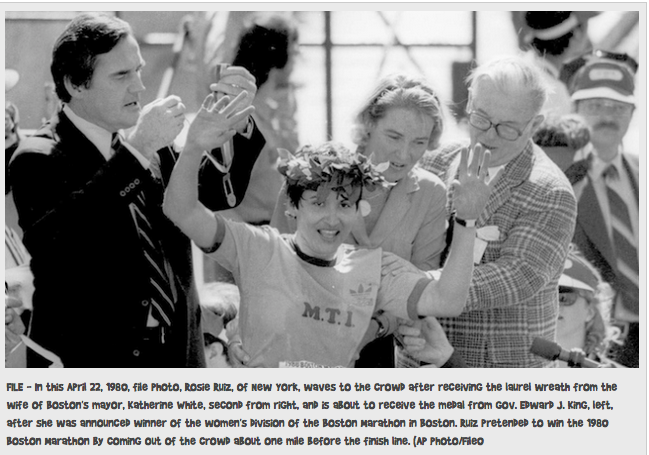
rushmore-07

Screen Shot 2014-11-26 at 6.52.55 PM