Integrity and Accountability—Going on two months and no winners stepping forward. Defend the MRO Procedurally, Ethically or Legally and you win all the prizes

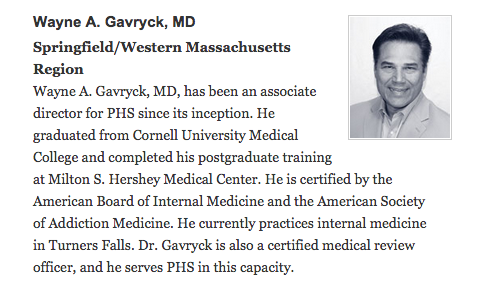
As the Medical Review Officer (MRO)  for the Massachusetts state Physician Health Program (PHP), Physician Health Services, Inc. (PHS, inc.), Dr. Wayne Gavryck’s responsibility is simple.  He is supposed to verify that the chain-of-custody  in any and all drug and alcohol testing is intact before reporting a test as positive.

Screen Shot 2014-12-03 at 12.53.49 AM

Note Dr Gavryck is: 1. Certified by ASAM; 2. A .Certified Medical Review Officer (MRO) who “serves PHS in this capacity.” Although Dr. Gavryck serves PHS I would beg to differ on the MRO function. Accessed from PHS Website 1/15/2015 http://www.massmed.org/Physician_Health_Services/About/PHS_Associate_Directors/#.VM1dZlXF-hY


Dr. Gavryck evidently did not do that here.  In fact for more than a year he helped cover up an alcohol test that was intentionally fabricated at the behest of PHS Director of Operations Linda Bresnahan (who told me when I confronted her with the fact that I have never had or ever even been suspected of having an alcohol problem “you have an Irish last name–good luck finding anyone who will believe you!”

It took a formal complaint with the College of American Pathologists to get the truth out.  The whole fiasco can be seen here and here.

What Gavryck and his co-conspirators did is egregious and ethically reprehensible.  It shows a complete lack of moral compass and personal integrity.  What was done from collection to report to coverup  and everything in-between is indefensible on all levels (procedurally, ethically, and legally).

The documentary evidence shows with clarity that this was not accident or oversight.  It was intentional and purposeful misconduct.  I think everyone would agree that there should be zero-tolerance for forensic fraud in positions of power.    Any person of honor and civility would agree.

Transparency, regulation, and accountability are necessary for these groups.   It is an issue that needs to be acknowledged and addressed not ignored and covered up.

If Dr. Gavryck can give a procedural, ethical, or legal explanation of what was done then I stand corrected. Just one will suffice.  I’ll erase my blog and vanish into the woodwork.  But If he cannot then this needs to be addressed openly and publicly.   And whether he was involved in the original fraud or not is irrelevant. As the MRO for PHS it is his responsibility to correct it–however late the hour may be.

Perhaps Dr. Gavryck needs to see some of the damage he has caused in order to take this responsibility. Known as a “bag man” who simply rubber stamps positive tests at the request of Sanchez and Bresnahan (much like Annie Dookhan)  he does not see the damage that is caused. Forensic fraud has grave and far reaching effects and in this case has severely impacted many people and include patient deaths.

Perhaps Dr. Gavryck needs to take a “moral inventory” and see that this this type of behavior causes real damage to real people and put a face on it.

It is people just like this who are killing physicians across the country.   The body count is vast and multiple.  And those who are caught doing dirty deeds such as this need to be held accountable.

Please help me get this exposed, corrected, and rectified.  The doctors of Massachusetts and the doctors of this entire country deserve better than this.

via Integrity and Accountability—Defend the MRO Procedurally, Ethically or Legally and win 100 Volumes of the Classics in Medicine Library and Salk and Sabin Autographs!.


Go back

Your message has been sent

Warning
Warning
Warning
Warning

Warning.

Screen Shot 2014-11-26 at 7.10.56 PM

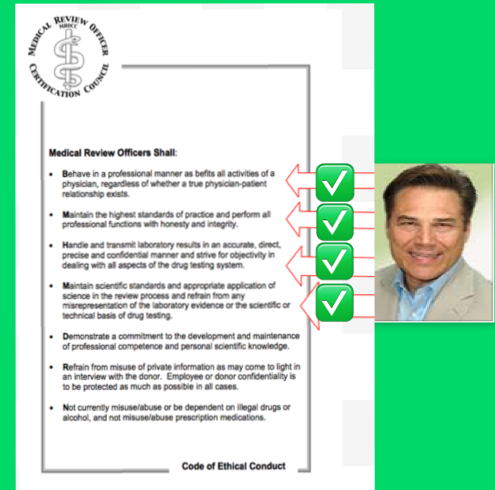
The MRO Code of Ethics--Seems like Dr. Gavryck's breaking them in sequential order!

The MRO Code of Ethics–Seems like Dr. Gavryck’s breaking them in sequential order!


Integrity and Accountability—Defend the MRO Procedurally, Ethically or Legally and win 100 Volumes of the Classics in Medicine Library and Salk and Sabin Autographs!

mllangan1's avatarDisrupted Physician

Integrity and Accountability—The Declining State of Physician Health and the Urgent Need for Ethical and Evidence-Based Leadership.

IMG_0576
Sabin and Salk Autographs

“The incompetent or unprincipled physician, licensed to practice medicine by a too complaisant State, is the greatest menace to scientific medicine – as great a menace as all the cultists put together.”  —Dr. Morris Fishbein  (The Medical Follies.  New York:  Boni Liverlight, 1925 p. 71)

“There is no place in science for consensus or opinion, only evidence”  —Claude Bernard


th-1

Sabin, Salk and the Classics in Medicine Library

Polio is nearly a thing of the past thanks to to Dr. Jonas Salk and Albert Sabin. In 1952 Salk discovered and developed the first successful vaccine for polio and combined with Albert Sabin’s 1961 oral vaccination the du0 effectively obliterated the contagious polio virus.  Once a deadly threat to our  country and future there were 93,000 cases of polio reported in the…

View original post 1,952 more words

The Plan to introduce non-FDA approved drug and alcohol tests into the Healthcare system and require doctors drug-test ALL PATIENTs including students and kids!

1285610338-quack-doctor1

The Plan to introduce non-FDA approved Laboratory Developed Tests (LDTs) into the Healthcare system and require doctors drug-test ALL PATIENTs including students and kids!

The ASAM plans to introduce non-FDA approved “forensic”  Laboratory Developed Tests (LDTs) into mainstream healthcare via a loophole.    This same group introduced most of these tests through a loophole and now they want to drug-and alcohol TEST EVERYBODY including STUDENTS AND KIDS through another loophole!   These tests are of unknown reliability and accuracy.  The LDT pathway does not even require proof that the test is even valid  (i.e. that the test is actually testing for the substance it claims to be testing) but with no FDA oversight or regulation the labs can claim anything they want in marketing it and they do.

If a doctor collects a test on a “patient”  the test is rendered “clinical” rather than “forensic” and by deeming this drug-testing  “clinical” rather than “forensic”  they can then call the consequences of a positive test “treatment” rather than “punishment.  ” It is via this loophole they plan to introduce and unleash the panoply of junk-science tests currently being used on other groups who have no say in the matter (probationers, parolees, private professional monitoring groups, etc. ) onto the general population at large.    A boon for the Drug and Alcohol Testing Industry Association and the assessment and treatment industry but a bane to the rest of society.    And to prevent this from happening more people need to be talking about this.

Physician Suicide

Physician Suicide.

Physician Suicide 101:  Secrets, lies and solutions by Dr. Pamela Wible, M.D., is now featured on KevinMD.com.  Please read and comment!   We need to use this as a stepping stone to start discussing the Elephant in the room; state Physician Health Programs (PHPs) organized under the Federation of State Physician Health Programs.  These programs once served the dual purpose of helping sick doctors and protecting the public from harm.

Taken over by the “impaired physician” movement the current manifestation is one of absolute power and unrestrained managerial authority with no meaningful oversight, regulation or accountability.  It is a culture of institutional injustice that is preventing doctors from seeking help for fear of being ensnared and monitored by them.  Those being monitored by them are subject to bullying, abuse and forced 12-step indoctrination under threat of loss of licensure.  Many of these doctors do not even have an addiction or substance use disorder.   Situational factors, a “one-off” or even a false accusation can result in monitoring by these programs that encourage confidential referral for things such as being behind on medical charts.  Sham peer-review is rampant.32-640x472

Moreover, the authority bestowed on this group is both illegitimate and irrational. The mechanics and mentality of the Federation of State Physician Health Programs conforms to that of the American Society of Addiction Medicine (ASAM). Although there are some Addiction Psychiatrists involved, the vast majority are  “specialists” in “Addiction Medicine.

The ASAM is not even recognized by the American Board of Medical Specialties as a bona fide specialty. It is a Self-Designated-Medical-Specialty; an AMA term used to keep track of what any group of doctors is calling themselves.

Screen Shot 2014-11-29 at 11.04.53 AM

Dr. Gregory H. Miday (1982-2012) A Doctor who would have made this world a better place.

In fact, American Board of Addiction Medicine (ABMS) “board certification” is little more than a diploma mill.

Yet these “specialists” are now in charge of ALL things related to PHYSICIAN HEALTH.

Many of the physicians running these programs had their licenses revoked and got them back by claiming salvation through the good graces of Alcoholics Anonymous and other 12-step methodology. Many have felony convictions. Some have double felonies.

At best we have unqualified zealots. But one major problem I have heard over and over again from physicians forced into these programs is an absolute lack of justice, empathy and even civility by those in charge.

A note from Dr. Karen Miday whose son Greg died by suicide after having a Corona in Peurto Rico while on vacation:

Dr. Gregory H. Miday ( 1982-2012) My physician son died of suicide 2 years ago while being monitored by the Missouri PHP. When he called to notify them of his relapse (while vacationing in Puerto Rico) and his intent to admit himself to a local public treatment center (decision made in consultation with his psychiatrist during an office visit that morning) the PHP said they did not approve of the plan. They told him to come speak with them instead. He chose otherwise. His phone calls to the PHP were the last ones he ever made. Clearly, he did not see them as benevolent. I sincerely doubt that he is their only casualty. Yet, where are the statistics? How many others have died under their watch. Strangely, the clinical director ( an RN, and likely recovering addict) told my husband that no internal review of my son’s case was planned. Such reviews after a suicide are mandatory at every public mental health facility I have practiced at. Our best and our brightest are being subjected to substandard care without any oversight or accountability. I can’t bring my son back. I do hope, however, that others will join me in an effort to pull the curtain back on these programs and perhaps save other lives. Karen Miday, MD, Cincinnati, OH

Misconduct, fraud, and even crimes are being reported.

Perhaps the 12-step salvation is just a ruse for some of them; a convenient cloak under which to hide all manner of abuse with impunity and immunity.

These individuals have been granted unrestrained managerial prerogative and absolute power over doctors. They decide not only who to monitor but how that monitoring proceeds in every last detail. Our fates, literally, lie in the hands of this group. No more physicians should die by this system of institutional injustice, bullying and pseudoscience. The conflicts-of-interest are abhorrent and would be incomprehensible in any other venue.

Isn’t it time we take charge? And the solution is fairly simple.

Oversight, regulation, and auditing by OUTSIDE groups. That is how it’s done everywhere else. Why do these guys get a pass?  Why would anyone be against procedural fairness and transparency in any situation? These are legitimate questions.

State Medical Societies, Departments of Public Health, the American Medical Association, the American Council on Graduate Medical Education, the Institute of Medicine and other Accreditation and Professional Organizations need to start addressing this.

This is a Public Health Emergency that is not going away.  It needs to be addressed directly and with urgency; not with kid gloves and temporization.

Accountability is without exception.  It requires both the provision of information and justification for actions.   Accountability also requires consequences for actions if they breach standards-of-care, ethics and the law.

 Hopefully this article will succeed in framing certain questions for the medical profession; questions that we all need to think about now before the door closes for good.

Physician Suicide 101: Secrets, Lies & Solutions by Pamela Wible, M.D.

Physician Suicide, the “Impaired Physician Movement” and ASAM:  The Dead Doctors at Ridgeview Institute under G. Douglas Talbott, by Michael Langan, M.D.

Wanted!–a Few Statisticians, Biostatisticians and Epidemiologists who want to make a difference in Medicine, Society and our Future

 “That everyone shall exert himself in that state of life in which he is placed, to practice true humanity towards his fellow men, on that depends the future of mankind.” – Albert Schweitzer 
“By and by never comes” –St Augustine

photo 1

“A day’s impact is better than a month of dead pull”-Justice Oliver Wendell Holmes, Jr.

 I am looking for a few honest and credible statisticians, biostatisticians or epidemiologists who want to make a difference in the spirit  of service and helping others.  I can’t pay you but you would be combating injustice, corruption and dishonesty.   You would be doing your part in helping the Medical Profession, honest and decent doctors, our country and  perhaps our future.  

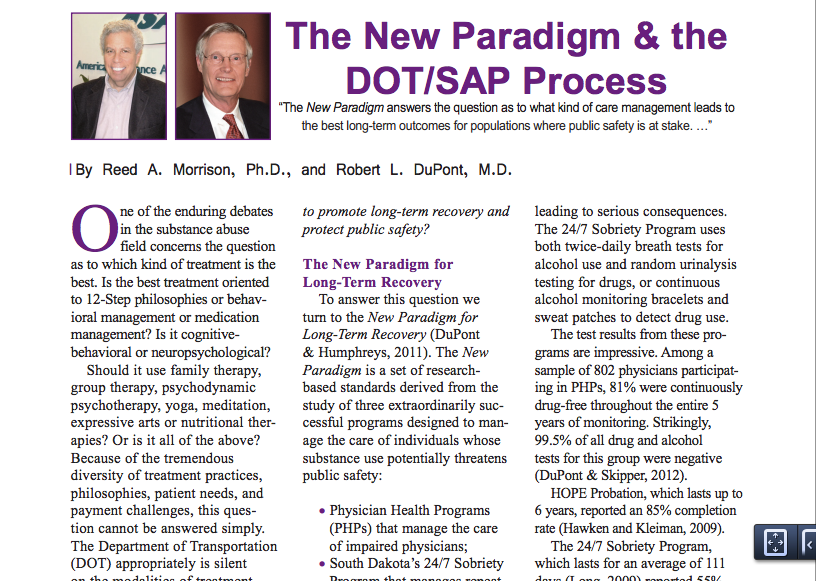
It is only a few public policy steps and minor changes in state regulatory statutes before what is described in the ASAM White Paper on Drug Testing comes to fruition.  Before we know it the Drug and Alcohol Testing Industries “New Paradigm” as described here by Robert Dupont will be ushered in as it did with doctors; not with a bang but a whimper.  From the ASAM white Paper:

“THIS WHITE PAPER ENCOURAGES WIDER AND “SMARTER” USE OF DRUG TESTING WITHIN THE PRACTICE OF MEDICINE AND, BEYOND THAT,BROADLY WITHIN AMERICAN SOCIETY. SMARTER DRUG TESTING MEANS INCREASED USE OF RANDOM TESTING* RATHER THAN THE MORE COMMON SCHEDULED TESTING,* AND IT MEANS TESTING NOT ONLY URINE BUT ALSO OTHER MATRICES SUCH AS BLOOD, ORAL FLUID (SALIVA), HAIR, NAILS, SWEAT AND BREATH WHEN THOSE MATRICES MATCH THE INTENDED ASSESSMENT PROCESS. IN ADDITION, SMARTER TESTING MEANS TESTING BASED UPON CLINICAL INDICATION FOR A BROAD AND ROTATING PANEL OF DRUGS RATHER THAN ONLY TESTING FOR THE TRADITIONAL FIVE-DRUG PANEL.”

To prevent this future drug testing dystopia, that includes testing schoolchildren, we need to take a step back and analyze the reliability and credibility of the “evidence-base” behind these multiple non-FDA approved forensic drug and alcohol tests and testing devices the ASAM proposes be used on the population at large utilizing the Medical Profession as a urine collection agency and bypassing forensic drug testing protocol by calling this “evaluation” and treatment rather than “monitoring” and punishment. New definitions, loopholes, secrecy and subterfuge are the bread and butter of these prohibitionist profiteers.

Amazingly, there has been no Academic review of these tests, let alone a Cochrane type critical analysis.  It is essentially untapped territory.  In addition there has been no Institute of Medicine type Conflict of Interest Analysis.  And that is why I am asking for help from statisticians, biostatisticians and epidemiologists.  The task would entail a review of the literature prior to the introduction of these tests for evidence base of forensic applicability (there essentially is none) and a review of the literature peri-and post marketing of these devices to assess the reliability and credibility of the underlying methodology and ascertain the evidence-base.  The goal would be publication in both academic journals and presentation to the general public through media publication with the assistance of investigative journalists and other writers. The goal is to get the truth out about these tests and allow both the medial profession and public at large to awaken to the menace this presents to medicine, our society and our future.

 Lack of Evidence-Base, Bias and Conflicts of Interest:  Making the Data Fit the Hypothesis

I am no epidemiologist or statistician but as with pornography I know junk-science when I see it.  Almost all of these tests were introduced with little or no evidence-base and, as with most of their endeavors, they did it below board via loopholes and cutting corners.

The overwhelming majority of papers are small, methodologically flawed, non-randomized, non-blinded  retrospective studies in that appear to make the data fit the hypothesis.   The authors can invariably be linked to those profiting from the tests of the testing process ( the patent holder, doctors associated with the drug testing labs, ASAM or FSPHP, Robert Dupont, Greg Skipper, etc.)


Ethyl Glucuronide (EtG) was introduced in 1999 as a biomarker for alcohol consumption,1 and was subsequently suggested as a tool to monitor health professionals by Dr. Gregory Skipper because of its high sensitivity to ethanol ingestion.2   

Screen Shot 2014-12-30 at 8.45.09 PM

Described as the  “innovator of EtG as an alcohol biomarker,” Skipper and  Friedrich Wurst,  “convinced” NMS labs in Pennsylvania “to start performing EtG testing in 2002.

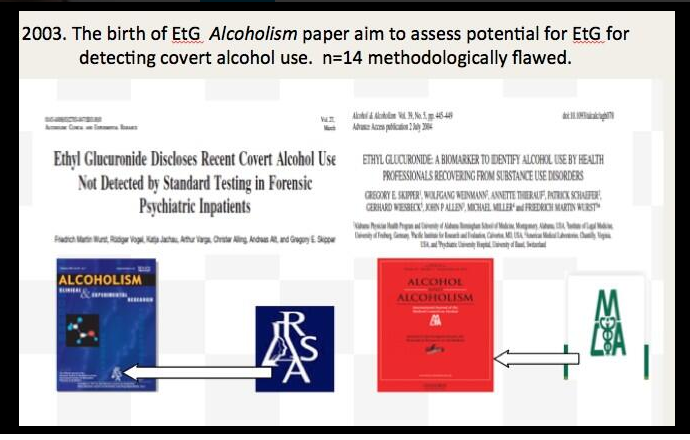
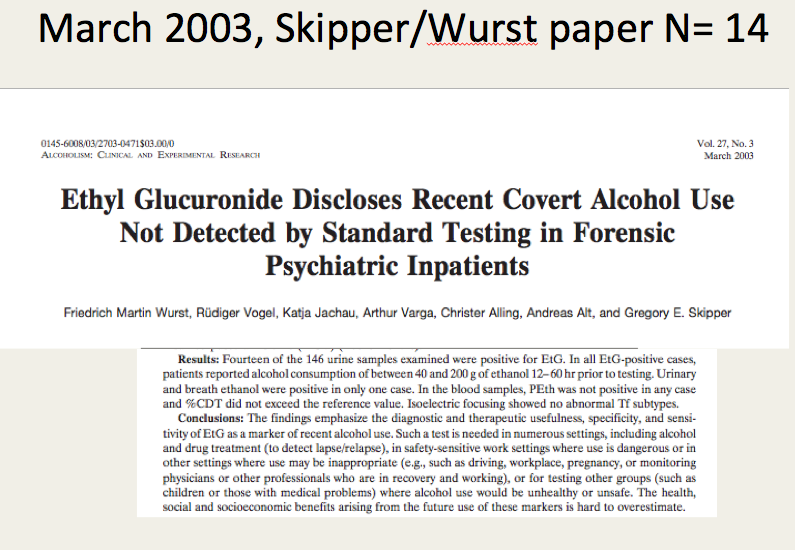
The study most often cited as 100% proof that there is 100% accuracy in EtG testing proving alcohol consumption involved a mere 35 forensic psychiatric inpatients in Germany that was published in 2003.3  

Shortly thereafter the Physician Health Programs began using it in monitoring doctors and other professional monitoring programs soon followed.

Screen Shot 2014-11-25 at 7.11.18 PM

Screen Shot 2014-11-29 at 5.16.18 PMLaboratory Developed Tests -A Loophole to Avoid FDA Approval and Accountability

Up until the birth of the EtG tests used for forensic drug and alcohol monitoring had to go through the arduous, expensive and necessary FDA approval process.   The LDT pathway was designed to develop simple tests with little risk that have  low market potential (i;e. the cost of the normal FDA approval process would prohibit them from coming to market).  The LDT pathway was designed to improve patient care and help improve diagnosis and treatment. It was not designed for forensic tests.  LDT approval does not require in vivo testing.  It is essentially an honor system and to develop an LDT it is not even necessary to prove that the test is actually testing what it is purportedly testing for (validity).

So with little to no evidence base they introduced the EtG, had it developed and marketed as a LDT in collusion with unscrupulous labs, and then began using it on physicians being monitored by State PHPs. This then spread to other monitoring organizations in which there was a large power-differential between those ordering the tests and those being tested (criminal-justice, other professional monitoring programs).  These biomarkers have never been used in Federal Drug Testing, SAMHSA approved, DOT, and other organizations where unions or other organizations are present and looking out for the best interests of those being tested.

Another example of how this group removes accountability.  There has been essentially no oversight or regulation of LDTs.  Although there was a recent push for regulation of these tests the Drug and Alcohol Testing Industry Association lobby made sure that forensic tests would be exempt.

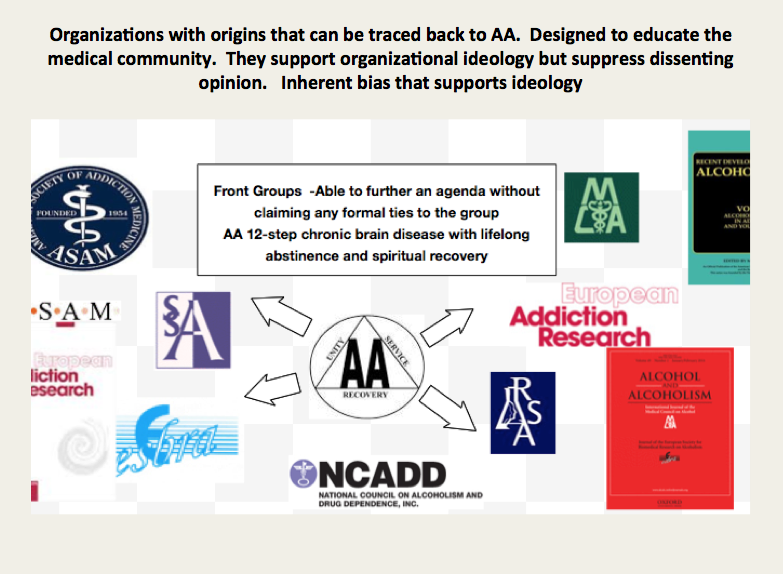
They then began publishing “research” on the EtG using the physicians being monitored as subjects. Many of the studies promoting the EtG and other biomarkers can be found  in  Journals that are linked to organizations that are linked to AA and were organized to educate the medical community.

Screen Shot 2014-11-29 at 5.16.39 PM
 
Screen Shot 2014-11-29 at 5.14.23 PM
These small, methodologically flawed studies amount to little more than opinion pieces but   This “evidence-base” is predominantly in biased journals published by biased medical “societies.  
The EtG was subsequently found to be so sensitive that it could measure incidental exposure to alcohol in foods, over the counter cold medications, mouthwash4,5, hand sanitizer gel6, nonalcoholic beer7, and nonalcoholic wine.8  Sauerkraut and bananas have even been shown to cause positive EtG levels.9
The United States Substance Abuse and Mental Health Services Administration warned against using a positive EtG as primary or sole evidence of drinking for disciplinary or legal action.10  The Wall Street Journal in 2006 reported the problems with the EtG to the general public.11   
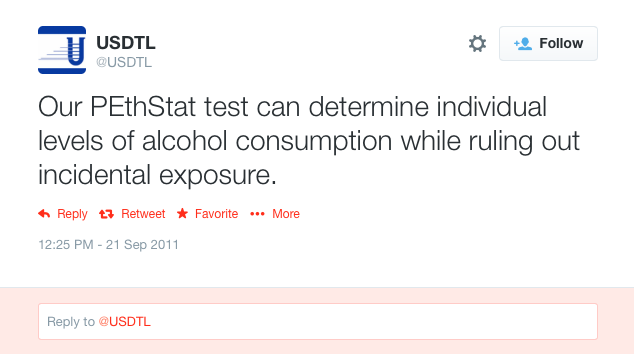
Screen Shot 2014-03-23 at 10.45.36 PMAs any rational authority would do, the majority of monitoring agencies abandoned the EtG after these flaws were revealed. The PHPs did not.  They continued to use the EtG on doctors uninterruptedly by telling them to avoid any products that could potentially contain alcohol; a ubiquitous substance in the environment. Since that time they have justified and rationalized (EtG)2,12 13  use by sequentially raising cutoff levels from 100 to 250 to 500 to 1000 to 2000 to now unknown and adding other LDTs as “confirmation tests such as Ethyl Sulfate (EtS)14,15 Phosphatidyl-Ethanol ( Peth)16 17 and other devices such as the Subcutaneous Remote Alcohol Monitoring Bracelet (SCRAM) and, their newest device the Cellular Photo Digital Breathalyzer (CPDB) that has recently been launched, just like the EtG Screen Shot 2014-02-23 at 10.00.22 PMwith little to no evidence base other than a pilot study done by Greg Skipper and Robert Dupont.18 
A  2013 article published in an ASAM incubated journal Alcoholism: Clinical and Experimental Research promotes the Phosphatidyl-ethanol (PEth ) test to confirm drinking.16  The study was done on physicians being monitored by the Alabama Physician Health Program who tested positive for EtG/EtS alcohol biomarkers. It is co-authored by Robert Dupont, Greg Skipper, and Friedrich Wurst and involved 18 subjects who tested positive for EtG/EtS of whom 7 claimed they did not drink.  After finding that 5 of the 7 tested negative for PEth they concluded that “positive PEth testing following positive EtG/EtS results confirms recent drinking.  Hard to wrap your head around the science in that one.Screen Shot 2014-04-30 at 1.06.53 PMSkipper is also using both Scram ankle bracelets and the CPDB monitoring in pilots in the Human Interventional Motivational Study (HIMS) Program that was developed in 2009 to “identify, treat and, eventually, re-certify airline pilots with substance abuse problems. 
 
IMG_0275

The Cochrane Collaboration does systematic reviews of the literature using conscientious, explicit, and judicious criteria to in order to produce and disseminate only high quality and evidenced based health care, exclude bias, and enhance transparency. The Cochrane database is a current and evolving database that includes the accuracy of diagnostic tests and is internationally recognized as the standard in evidence based health care.  This benchmark for evidence based health care and systematic reviews, records just 5 controlled trials under the topic ethyl glucuronide.8,19-21 These 5 studies represent the only high-quality evidence regarding EtG applying to EtG. Information provided by the five studies suggests the following, and only the following:

  1. EtG and EtS measurements increase with alcohol ingestion.
  2. The window of detection is shorter than what is commonly proposed (80 hours).
  3. Individual values are variable both within and between subjects.
  4. Non alcoholic wine can cause positive levels.

Notably, there are no studies that fit Cochrane Criteria, other than non-alcoholic wine, that look at the pharmacokinetics of EtG or EtS in terms of dose-response curves, cut-off levels, specificity drug and food interactions, or modes of ingestion.

SAMHSA notes that there is little research on PEth and that EtG, EtS, and PEth “do not have a strong research base,” and that “it is not known at this time how the test results might be affected by the presence of physical diseases, ethnicity, gender, time, or the use of other drugs. Until considerable more research has occurred, use of these markers should be considered experimental.”

Phosphatidylethanol (PEth), SCRAM, and the  yields no data as a test in the Cochrane library.

SAMHSA notes that there is little research on PEth and that EtG, EtS, and PEth “do not have a strong research base,” and that “it is not known at this time how the test results might be affected by the presence of physical diseases, ethnicity, gender, time, or the use of other drugs. Until considerable more research has occurred, use of these markers should be considered experimental.”

Evidence based medicine (EBM) can be defined as the conscientious, explicit, and judicious use of current best evidence in making decisions about the care of individual patients.22

Medical progress and scientific advancement is occurring so fast that the volume of medical literature is expanding at a rate of greater than 7% per year.23

Evidence based medicine is not restricted to randomized trials and meta-analyses. It involves tracking down the best external evidence with which to answer our clinical questions.22  

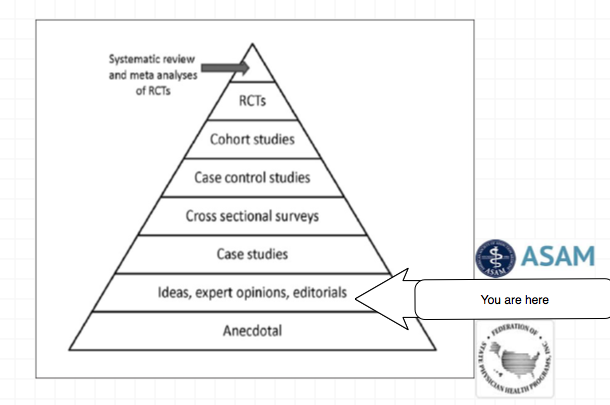
Expert opinion is the lowest level of evidence available in the EBM paradigm.24,25

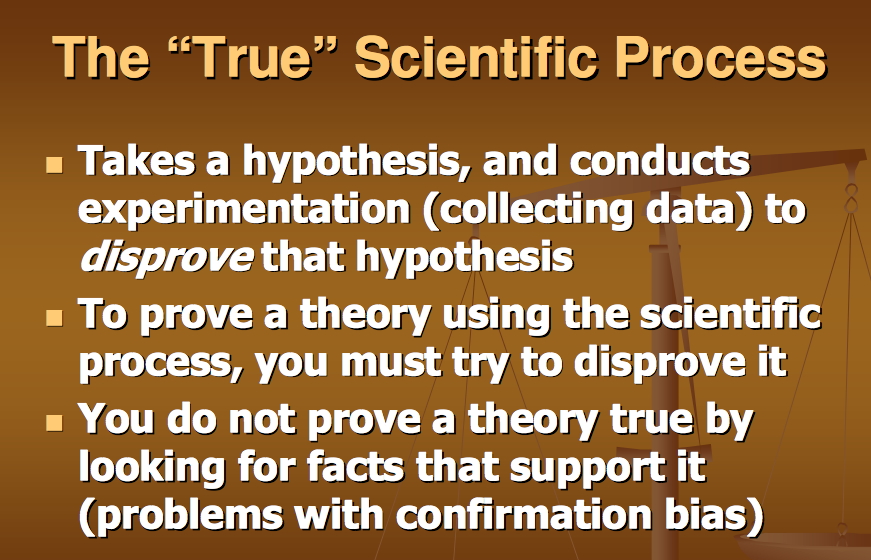
Fortunately, the scientific method is a tool to help people progress toward the truth despite their susceptibilities to confirmation bias and other errors.26

Unfortunately, due to a confluence of factors (including political) this has not been done.  But, unless we want a  future as envisioned by Robert Dupont and explained in the the ASAM White Paper on Drug Testing we need to act now.  This is not a “New Paradigm” but a “New Inquisition.”

Screen Shot 2014-11-25 at 7.10.47 PM

Screen Shot 2014-02-15 at 4.39.03 PM

  1. Wurst FM, Kempter C, Seidl S, Alt A. Ethyl glucuronide–a marker of alcohol consumption and a relapse marker with clinical and forensic implications. Alcohol Alcohol. Jan-Feb 1999;34(1):71-77.
  2. Skipper GE, Weinmann W, Thierauf A, et al. Ethyl glucuronide: a biomarker to identify alcohol use by health professionals recovering from substance use disorders. Alcohol Alcohol. Sep-Oct 2004;39(5):445-449.
  3. Wurst FM, Vogel R, Jachau K, et al. Ethyl glucuronide discloses recent covert alcohol use not detected by standard testing in forensic psychiatric inpatients. Alcohol Clin Exp Res. Mar 2003;27(3):471-476.
  4. Costantino A, Digregorio EJ, Korn W, Spayd S, Rieders F. The effect of the use of mouthwash on ethylglucuronide concentrations in urine. J Anal Toxicol. Nov-Dec 2006;30(9):659-662.
  5. Reisfield GM, Goldberger BA, Pesce AJ, et al. Ethyl glucuronide, ethyl sulfate, and ethanol in urine after intensive exposure to high ethanol content mouthwash. J Anal Toxicol. Jun 2011;35(5):264-268.
  6. Rosano TG, Lin J. Ethyl glucuronide excretion in humans following oral administration of and dermal exposure to ethanol. J Anal Toxicol. Oct 2008;32(8):594-600.
  7. Thierauf A, Gnann H, Wohlfarth A, et al. Urine tested positive for ethyl glucuronide and ethyl sulphate after the consumption of “non-alcoholic” beer. Forensic Sci Int. Oct 10 2010;202(1-3):82-85.
  8. Hoiseth G, Yttredal B, Karinen R, Gjerde H, Christophersen A. Levels of ethyl glucuronide and ethyl sulfate in oral fluid, blood, and urine after use of mouthwash and ingestion of nonalcoholic wine. J Anal Toxicol. Mar 2010;34(2):84-88.
  9. Musshoff F, Albermann E, Madea B. Ethyl glucuronide and ethyl sulfate in urine after consumption of various beverages and foods–misleading results? Int J Legal Med. Nov 2010;124(6):623-630.
  10. Administration SAaMHS. The role of biomarkers in the treatment of alcohol use disorders. In: Advisory SAT, ed2006:1-7.
  11. Helliker K. A test for alcohol–and its flaws. The Wall Street Journal2006.
  12. Wurst FM, Skipper GE, Weinmann W. Ethyl glucuronide–the direct ethanol metabolite on the threshold from science to routine use. Addiction. Dec 2003;98 Suppl 2:51-61.
  13. Wurst FM, Alling C, Aradottir S, et al. Emerging biomarkers: new directions and clinical applications. Alcoholism, clinical and experimental research. Mar 2005;29(3):465-473.
  14. Anton RF. Commentary on: ethyl glucuronide and ethyl sulfate assays in clinical trials, interpretation, and limitations: results of a dose ranging alcohol challenge study and 2 clinical trials. Alcoholism, clinical and experimental research. Jul 2014;38(7):1826-1828.
  15. Hernandez Redondo A, Schroeck A, Kneubuehl B, Weinmann W. Determination of ethyl glucuronide and ethyl sulfate from dried blood spots. International journal of legal medicine. Jul 2013;127(4):769-775.
  16. Skipper GE, Thon N, Dupont RL, Baxter L, Wurst FM. Phosphatidylethanol: the potential role in further evaluating low positive urinary ethyl glucuronide and ethyl sulfate results. Alcoholism, clinical and experimental research. Sep 2013;37(9):1582-1586.
  17. Hahn JA, Dobkin LM, Mayanja B, et al. Phosphatidylethanol (PEth) as a biomarker of alcohol consumption in HIV-positive patients in sub-Saharan Africa. Alcoholism, clinical and experimental research. May 2012;36(5):854-862.
  18. Skipper GE, Thon N, DuPont RL, Campbell MD, Weinmann W, Wurst FM. Cellular photo digital breathalyzer for monitoring alcohol use: a pilot study. European addiction research. 2014;20(3):137-142.
  19. Hoiseth G, Bernard JP, Stephanson N, et al. Comparison between the urinary alcohol markers EtG, EtS, and GTOL/5-HIAA in a controlled drinking experiment. Alcohol Alcohol. Mar-Apr 2008;43(2):187-191.
  20. Wojcik MH, Hawthorne JS. Sensitivity of commercial ethyl glucuronide (ETG) testing in screening for alcohol abstinence. Alcohol Alcohol. Jul-Aug 2007;42(4):317-320.
  21. Sarkola T, Dahl H, Eriksson CJ, Helander A. Urinary ethyl glucuronide and 5-hydroxytryptophol levels during repeated ethanol ingestion in healthy human subjects. Alcohol Alcohol. Jul-Aug 2003;38(4):347-351.
  22. Sackett DL, Rosenberg WM, Gray JA, Haynes RB, Richardson WS. Evidence based medicine: what it is and what it isn’t. BMJ. Jan 13 1996;312(7023):71-72.
  23. Norwitz ER, Greenberg JA. Promoting evidence-based medicine. Rev Obstet Gynecol. Summer 2008;1(3):93-94.
  24. Shaneyfelt TM, Centor RM. Reassessment of clinical practice guidelines: go gently into that good night. JAMA. Feb 25 2009;301(8):868-869.
  25. Straus SE, Green ML, Bell DS, et al. Evaluating the teaching of evidence based medicine: conceptual framework. BMJ. Oct 30 2004;329(7473):1029-1032.
 Screen Shot 2014-11-30 at 1.37.38 PM
images-3

The High PROFITS of the 12 Step Cult Religion and Bain Capital

“The belief that there are such things as witches is so essential a part of the faith that obstinately to maintain the opposite opinion manifestly savors of heresy.”

So begins Malleus Maleficarum , a witch hunters manual published in 1486 that launched a new paradigm for all those concerned with the identification and extirpation of witches. Used as a judicial case-book the Malleus set forth definitions of witchcraft, rules of evidence and the canonical procedures by which suspected witches were tortured and put to death. Written by Inquisitors for Inquisitor, the Malleus construct came to be regarded as irrefutable truth and contributed to the identification and execution of as many as 60,000 “witches”, predominantly women. The 29th and last edition was published in 1669.

Because of the nature of the enemy the evidentiary standard was lowered and any witness, no matter what his credentials, could testify against the accused.

Using the nebulous “witch label” anyone with a grudge or suspicion could accuse anyone of witchcraft .

From the 15th century through the early 17th century a confederacy of “authorities” calling themselves “demonologists” existed and made money off the misery of others.

Identification of witches was detailed in the Malleus including both physical and behavioral clues. Physical signs included things such as bushy eyebrows and thin lips. The Malleus declared that witches have a “Devil’s mark (stigmata diaboli) or Devils seal (sigilum diaboli) which was usually a scar, birthmark, or blemish. An extra nipple (polythelia) was a tell-tale sign. Behavioral manifestations included living alone, cultivating strange herbs in the garden, public singing or dancing and saying hello to a neighbors cat.

Physician oversight of witch persecution was standard.  So too was the involvement of “witch-prickers” who were able to provide their expertise and “medical” testing in the assessment and diagnosis of the witch.

Pricking them with needles, awes, and bodkins to prove they were indeed nefarious and non-human was a surefire way to line one’s pockets but for the pedophiles and pervs there was an added bonus—a thorough searching for that stigmata diaboli on someone else’s dime.

Through the witch trials clerics, doctors, and lawyers used their expertise as witnesses to increase their prestige. Witch hunts developed into a means of economic profit. Some gained a lot of money from the witch trials. The witch or her relatives paid for the salaries of those who worked the witch trials including judges, court officials, torturers, physicians, clergymen, scribes, guards, attendants.

Even the people who made the stakes and scaffolds for executions gained from the conviction and death of each witch.

“Witch hunting,” wrote the historian Rossell Hope Robbins, “was self-sustaining and became a major trade, employing many people, all battening on the savings of the victims.” The costs of a witch trial were usually paid for by the estate of the accused or their family.

And what my friend Laura Tompkin’s describes here in no different; except in place of “demonologists” we now have “addictionologists.”

Both faulty paradigms with a lot of people making money hand over fist.

In 1592 Father Cornelius Loos wrote:

“Wretched creatures are compelled by the severity of the torture to confess things they have never done and so by cruel butchery innocent lives are taken; and by new alchemy, gold and silver are coined from human blood.”

And this is no different. No different at all.

12 Step Cult Religion Exposed's avatar12 Step Cult Religion Exposed

The following article will educate you on the annual profits made by the 12 step industry.  Whenever steppers claim that their cult is free, you now have proof that it is most certainly not in any way, shape or form, free.  Just because people are too lazy, ignorant and/or brainwashed, is no excuse for perpetuating dangerous lies.  Please note that anything in parentheses is my addition and anything bolded is also mine.  This author is misinformed, as is the general public, and classifies alcohol disorders as diseases.  However, this misinformation does not disqualify the facts here about rehab profits and Bain Capital.

Bain Capital’s grip on addiction – The profit of 12-step treatment

By Jamie Wendland

Last year nearly 2.5 million people 12 years of age or older sought treatment for substance abuse in the U.S., according to the National Survey on Drugs and Health. 2.3 million Americans…

View original post 1,696 more words

Disrupted Physician 101.1: The “Impaired Physician Movement” and the History of the American Society of Addiction Medicine (ASAM)

Disrupted Physician 101.1: The “Impaired Physician Movement” and the History of the American Society of Addiction Medicine (ASAM).

Henry David Thoreau

“With one arm around the shoulder of religion and the other around the shoulder of medicine, we might change the world.”—Twelve Steps and Twelve Traditions, AA World Services, Inc (1953).

In 1985 the British sociologist G. V. Stimson wrote:

“The impaired physician movement is characterized by a number of evangelical recovered alcoholic and addict physicians, whose recovery has been accompanied by an involvement in medical society and treatment programs. Their ability to make authoritative pronouncements on physician impairment is based on their own claim to insider’s knowledge.”

The American Society of Addiction Medicine’s mission is to “establish addiction medicine as a specialty recognized by professional organizations, governments, physicians, purchasers, and consumers of health care products, and the general public.”  

In this they have succeeded.images-4

And in the year 2014 Stimson’s characterization of the “impaired physician movement” remains as accurate and apt as it was in 1985. But the “number of evangelical recovered alcoholic and addict physicians” has increased dramatically  (outnumbering Addiction Psychiatry by 4:1)  and their involvement in  medical society and treatment programs” has been realized and enforced through the state Physician Health Programs and their “PHP-approved’ assessment and treatment centers.

Their “ability to make authoritative pronouncements on physician impairment…based on their own claim to insider’s knowledge”  has become public policy and sanctified by Regulatory Medicine -essentially the Word of the Lord.

And the 1953 Alcoholics Anonymous prophecy that “With one arm around the shoulder of religion and the other around the shoulder of medicine, we might change the world” is also coming to pass.

But the world is not changing for the better as that arm around the shoulder of religion has its fingers deep in the pockets of the multi-billion dollar drug and alcohol testing and assessment and treatment industries.  And the arm around the shoulder of medicine has its fingers clamped tightly around its throat; a stranglehold in full throttle suffocating the Profession of Medicine with no meaningful opposition I can see.

Disrupted Physician 101.1: The “Impaired Physician Movement” and the History of the American Society of Addiction Medicine (ASAM)

“With one arm around the shoulder of religion and the other around the shoulder of medicine, we might change the world.”—Twelve Steps and Twelve Traditions, AA World Services, Inc (1953).
 
2055 

In order to comprehend the current plight of the Medical Profession and the dark clouds that lie ahead it is necessary to understand the history of the “impaired physician movement” and the American Society of Addiction Medicine.

In 1985 the British sociologist G. V. Stimson wrote:

“The impaired physician movement is characterized by a number of evangelical recovered alcoholic and addict physicians, whose recovery has been accompanied by an involvement in medical society and treatment programs. Their ability to make authoritative pronouncements on physician impairment is based on their own claim to insider’s knowledge.”1

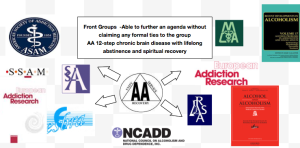
The impaired physician movement emphasizes disease and therapy rather than discipline and punishment and believes that addiction is a chronic relapsing brain disease requiring lifelong abstinence and 12-step spiritual recovery. The drug or alcohol abuser or addict is a person lacking adequate internal controls over his or her  behavior;  for his own protection as well as the protection of society external restraints are required including involuntary treatment.

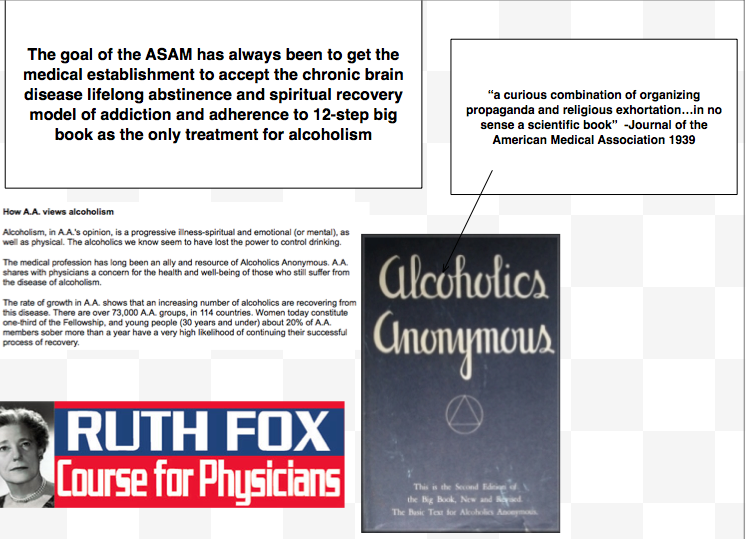
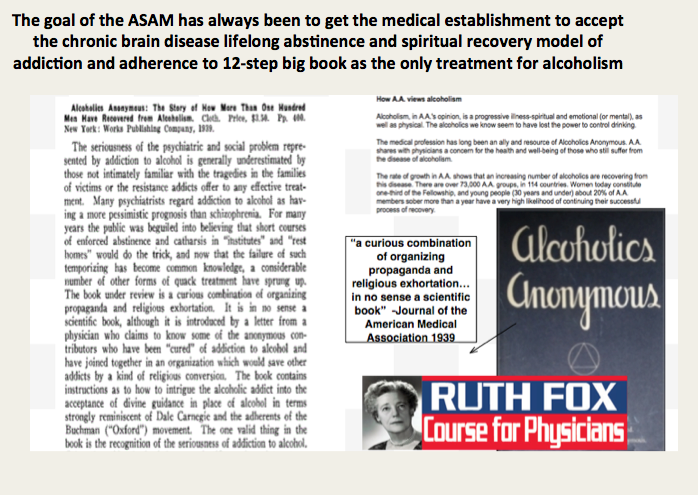
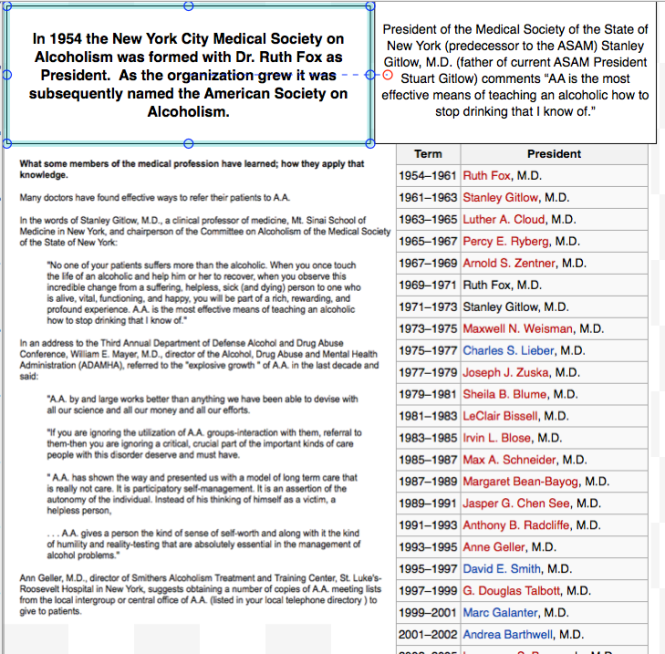
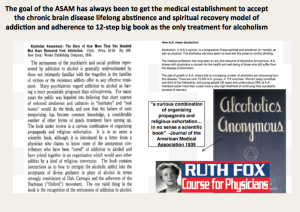
The American Society of Addiction Medicine can trace its roots to the 1954 founding of the New York City Medical Society on Alcoholism (NYCMSA) by Ruth Fox, M.D whose husband died from alcoholism.
Screen Shot 2014-02-23 at 4.42.15 PM

220px-ASAM_Logo

Finding that alcoholics in her psychoanalytic practice did not recover when she used conventional analytic approaches, she taught her patients about alcoholism as a disease and introduced “them to AA meetings held in her living room.”2

A number of physicians in the New York Medical Society were themselves recovering alcoholics who turned to Alcoholics Anonymous for care.3

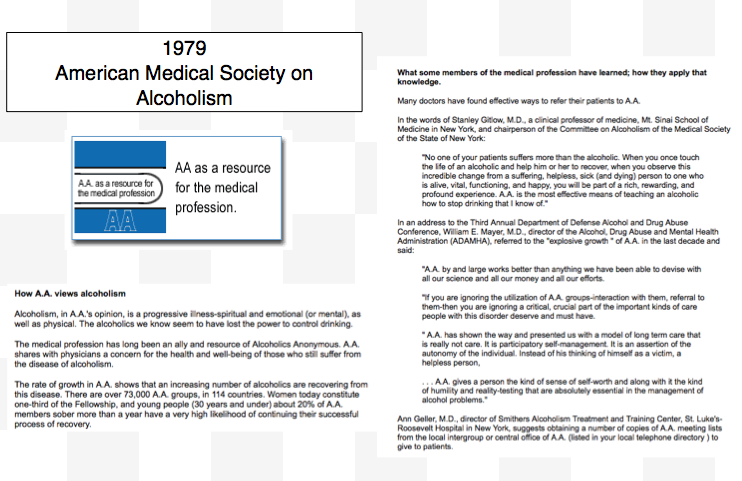
The society, numbering about 100 members, established itself as a national organization in 1967, the American Medical Society on Alcoholism (AMSA).3
Screen Shot 2014-02-23 at 4.52.08 PM

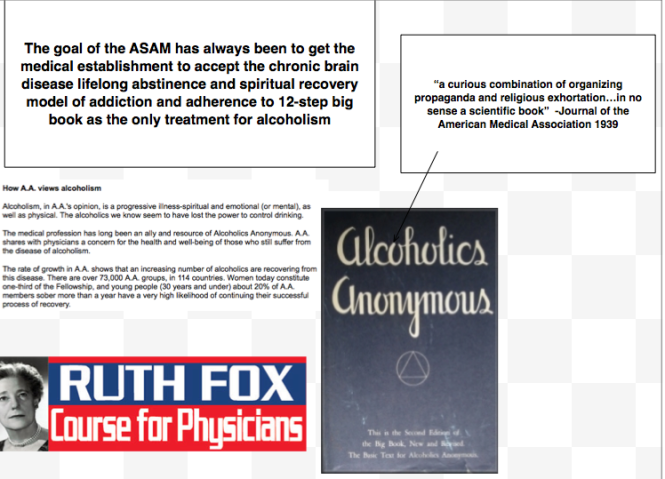
The group promoted the concept of alcoholism as a chronic relapsing disease requiring lifelong spiritual recovery through the 12-steps of AA.

By 1970 membership was nearly 500.2Screen Shot 2014-02-22 at 2.47.51 PM
In 1973 AMSA became a component of the National Council on Alcoholism (NCA), now the National Council on Alcoholism and Drug Dependence (NCADD) in a medical advisory capacity until 1983.

logo

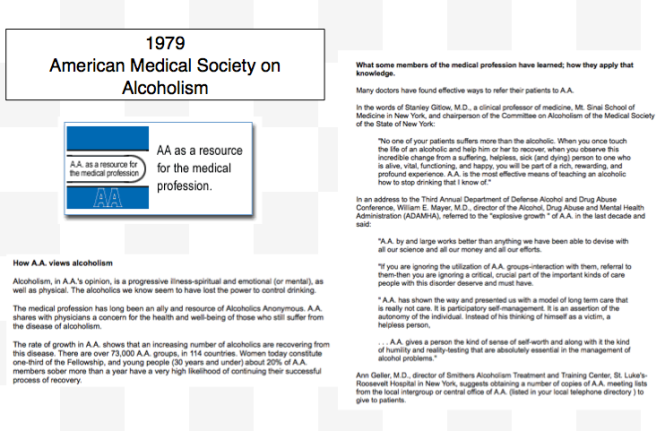
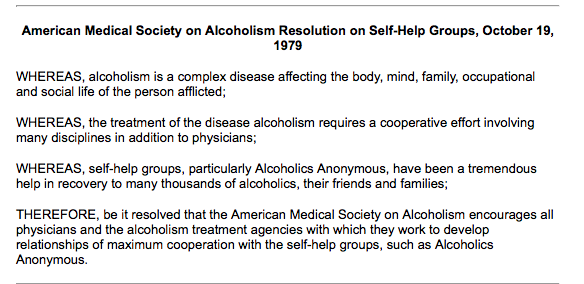
“Abstinence from alcohol is necessary for recovery from the disease of alcoholism” became the first AMSA Position Statement in 1974.2
Screen Shot 2014-02-22 at 3.55.08 PM

Screen Shot 2014-02-22 at 1.49.24 PM

Screen Shot 2014-02-22 at 1.59.25 PM

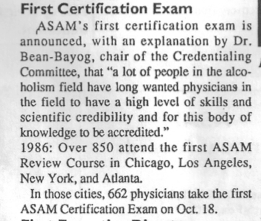
In 1985 ASAM’s first certification exam was announced. According to Dr. Bean-Bayog, chair of the Credentialing Committee:

“A lot of people in the alcoholism field have long wanted physicians in the field to have a high level of skills and scientific credibility and for this body of knowledge to be accredited.”2

And in 1986 662 physicians took the first ASAM Certification Exam.medical
By 1988 membership was over 2,800 with 1,275 of these physicians “certified” as:

“having demonstrated knowledge and expertise in alcoholism and other drug dependencies commensurate with the standards set forth by the society.”4
“While certification does not certify clinical skill or competence,” the Board explained, “it does identify physicians who have demonstrated knowledge in diagnosis and treatment of alcoholism and other drug dependencies.”5
Somehow, I don't think this is quite what they had in mind!

Somehow, I don’t think this is quite what they had in mind!

Achieving “recognized board status for chemical dependence” and fellowships in  “chemical dependency”  are among the five-year objectives identified by the group.  These are to come to fruition by  “careful discussion, deliberation, and consultation” to “determine its form and structure and how best to bring it about.”5

The formation of ASAM State Chapters begins with California, Florida, Georgia, and Maryland submitting requests.6

In 1988 the AMA House of Delegates votes to admit ASAM to the House. According to ASAM News this “legitimizes the society within the halls of organized medicine.”2

In 1989 the organization changes its name to the American Society of Addiction Medicine (ASAM).2

Since 1990, physicians have been able to list addiction medicine as a self-designated area of practice using the specialty code “ADM.”

By 1993 ASAM has a membership of 3,500 with a total of 2,619 certifications in Addiction Medicine.

The Membership Campaign Task Force sets  a goal to double its membership of 3,500 to 7,000 by the year 2000 to assure “the future of treatment for patients with chemicals. It represents a blueprint for establishing addiction medicine as a viable entity.”7
Screen Shot 2014-02-23 at 3.12.12 PM

Ninety physicians become Fellows of the American Society of Addiction Medicine (FASAM) in 1996 “to recognize substantial and lasting contributions to the Society and the field of addiction medicine.”8

Among the honorees are Robert DuPont, G. Douglas Talbott, Paul Earley, and Mel Pohl. In addition to at least five consecutive years of membership and certification by the Society, Fellows must have “taken a leadership role in ASAM through committee service, or have been an officer of a state chapter, and they must have made and continue to make significant contributions to the addictions field.”8

The American Board of Addiction Medicine (ABAM) is formed in 2007 as a non-profit 501(C)(6) organization “following conferences of committees appointed by the American Society of Addiction Medicine” to “examine and certify Diplomats.”9

In 2009 National Institute on Drug Abuse (NIDA) Director Nora Volkow, M.D., gives the keynote address at the first ABAM Screen Shot 2014-11-18 at 10.12.23 AMboard certification diploma ceremony.10
According to an article in Addiction Professional “Board certification is the highest level of practice recognition given to physicians.”

“A Physician membership society such as ASAM, however, cannot confer ‘Board Certification,’ ” but a“ “Medical Board such as ABAM has a separate and distinct purpose and mission: to promote and improve the quality of medical care through establishing and maintaining standards and procedures for credentialing and re-credentialing medical specialties.”

The majority of ASAM physicians meet these requirements by “working in a chemical dependency treatment facility, taking continuing medical education courses in addiction, or participating in research.”11

“In the United States accredited residency programs in addiction exist only for psychiatrists specializing in addiction psychiatry; nonpsychiatrists seeking training in addiction medicine can train in nonaccredited ‘fellowships,’ or can receive training in some ADP programs, only to not be granted a certificate of completion of accredited training.”11
Screen Shot 2014-02-28 at 1.13.17 PM

Specialty recognition by the American Board of Medical Specialties, fifty Addiction Medicine Fellowship training programs and a National Center for Physician Training in Addiction Medicine are listed as future initiatives of the ABAM Foundation in 2014.

The American Society of Addiction Medicine’s mission is to “establish addiction medicine as a specialty recognized by professional organizations, governments, physicians, purchasers, and consumers of health care products, and the general public’12   

In this they have succeeded.

And in the year 2014 G.V. Stimson’s characterization of the “impaired physician movement” remains as accurate and apt as it was in 1985. But the “number of evangelical recovered alcoholic and addict physicians” has increased dramatically  (outnumbering Addiction Psychiatry by 4:1)  and their involvement in  medical society and treatment programs” has been realized and enforced through the state Physician Health Programs and their “PHP-approved’ assessment and treatment centers.Screen Shot 2014-11-18 at 10.11.55 AM

Their “ability to make authoritative pronouncements on physician impairment…based on their own claim to insider’s knowledge”  has become public policy and sanctified by Regulatory Medicine -essentially the Word of the Lord.

And the 1953 Alcoholics Anonymous prophecy that “With one arm around the shoulder of religion and the other around the shoulder of medicine, we might change the world” is also coming to pass.

But the world is not changing for the better as that arm around the shoulder of religion has its fingers deep in the pockets of the multi-billion dollar drug and alcohol testing and assessment and treatment industries.  And the arm around the shoulder of medicine has its fingers clamped tightly around its throat; a stranglehold in full throttle suffocating the Profession of Medicine with no meaningful opposition I can see.

IMG_1686

  1. Stimson GV. Recent developments in professional control: the impaired physician movement in the USA. Sociology of health & illness. Jul 1985;7(2):141-166.
  2. Four Decades of ASAM. ASAM News. March-April 1994, 1994.
  3. Freed CR. Addiction medicine and addiction psychiatry in America: Commonalities in the medical treatment of addiction. Contemporary Drug Problems. 2010;37(1):139-163.
  4. . American Medical Society on Alcoholism & Other Drug Dependencies Newsletter. Vol III. New York, NY: AMSAODD; 1988:12.
  5. Ursery S. $1.3M verdict coaxes a deal for doctor’s coerced rehab. Fulton County Daily Report. May 12, 1999b 1999.
  6. . AMSAODD News. Vol III. New York, NY: American Medical Society on Alcoholism & Other Drug Dependencies; 1988.
  7. Membership Campaign Update. ASAM News. Vol VIII: American Society of Addiction Medicine; 1993:11.
  8. . ASAM News. Vol 12. Chevy Chase, MD: American Society of Addiction Medicine; 1997:20.
  9. http://www.abam.net/about/history/.
  10. Kunz KB, Gentiello LM. Landmark Recognition for Addiction Medicine: Physician certification by the American Board of Addiction Medicine will Benefit all Addiction Professionals. Addiction Professional. 2009. http://www.addictionpro.com/article/landmark-recognition-addiction-medicine.
  11. Tontchev GV, Housel TR, Callahan JF, Kunz KB, Miller MM, Blondell RD. Specialized training on addictions for physicians in the United States. Substance abuse : official publication of the Association for Medical Education and Research in Substance Abuse. Apr 2011;32(2):84-92.
  12. http://www.asam.org/about-us/mission-and-goals.

images-4Screen Shot 2014-07-24 at 4.15.40 PM


Integrity and Accountability—The Declining State of Physician Health and the Urgent Need for Ethical and Evidence-Based Leadership

Integrity and Accountability—The Declining State of Physician Health and the Urgent Need for Ethical and Evidence-Based Leadership.

Good leadership requires correct moral and ethical behavior of both the individual and the organization. .  Integrity is necessary for establishing relationships of trust.  It requires a true heart and an honest soul.  People of integrity instinctively do the “right thing” in any and all circumstances.  Adherence to ethical codes of the profession is a universal obligation.  It excludes all exceptions.  Without ethical integrity, falsity will flourish.

The documents below show fraud. It is intentional.  All parties involved knew what they were doing, knew it was wrong but did it anyway.  The schism between pious rhetoric and reality is wide.

One measure of integrity is truthfulness to words and deeds.  These people claim professionalism, ethics and integrity.  The documents show a reality of hypocrisy and sanctimony.   But the hypocrisy seen here is also a danger because the careers and lives of doctors are in these peoples hands.

Dr. Clive Body in his book  Corporate Psychopaths   writes that “Unethical leaders create unethical followers, which in turn create unethical companies and society suffers as a result.”  And according to Dr. Robert Hare in  Without Conscience  “If we can’t spot them, we are doomed to be their victims, both as individuals and as a society. ”

Abuse under the utility of  medical coloration is especially egregious.  It violates the fundamental ethical principles of Medicine -Autonomy, Beneficence, Nonmaleficence and justice.  Intentionally falsifying a laboratory or diagnostic test to refer for an evaluation or support a diagnosis or give unwarranted “treatment” is unconscionable.

Similar fraud is occurring across the country.

This is an example of the institutional injustice that is killing physicians.  Finding themselves entrapped with no way out, helpless and hopeless they are feeling themselves bereft of any shade of  justice and killing themselves.  These are nothing more than bullies and accountability is essential.

quote-laws-can-embody-standards-governments-can-enforce-laws-but-the-final-task-is-not-a-task-for-robert-kennedy-345838

Physician Health Programs:  The Need for Integrity and Accountability of Organizations

Slide41

Accountability, or answerability,  is necessary to prevent abuse and corruption.  This requires both the provision of information and justification for actions.  What was done and why?

Professional guidelines and standards of care, ethical codes of conduct and the law are all objective benchmarks that can be used to assess the actions and decisions of others.  In any free society this necessitates the existence of organizations of truly independent opinion capable of standing in this judgment.

State PHPs are Non-Governmental Organizations (NGOs) over which the state health department has no supervisory oversight.  There is no regulation, no transparency and no accountability.  There is no public scrutiny and they police themselves.

In Ethical and Managerial Considerations Regarding State Physician Health Programs Drs. John Knight and J. Wesley Boyd call for greater oversight and scrutiny of PHPs by the medical community at large.   They recommended periodic auditing, national standards and regulation.  They also attempted to convince the Massachusetts Medical Society to implement changes at PHS where they served as Associate Directors with over two decades of collective experience.

These efforts to promote transparency and accountability at both local and national levels, however,  fell on deaf ears.

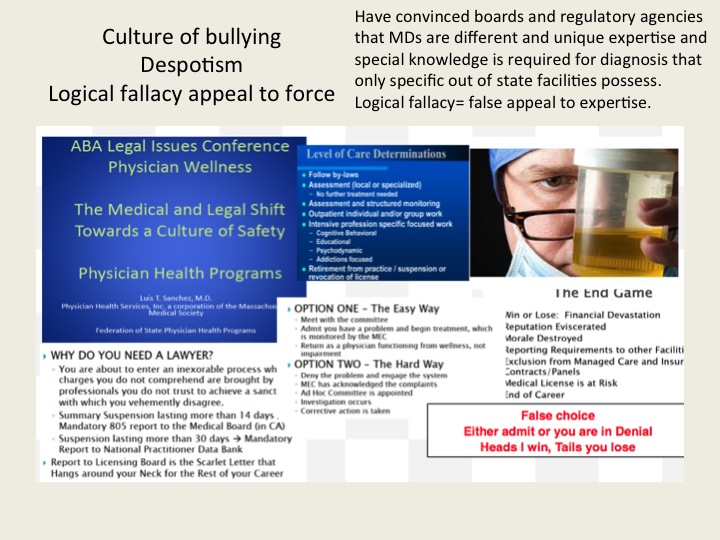
State PHPs have systematically removed those not conforming to groupthink.  Threatening them with litigation if they breached “peer-review” statutes and confidentiality agreements has effectively silenced them from reporting any misconduct, abuse or even crimes they may have witnessed.

In Massachusetts John Knight was removed in 2009 and J. Wesley Boyd in 2010.  In Ethical and Managerial Considerations Regarding State Physician Health Programs  they comment “if a PHP highlights a physician as particularly problematic, the evaluation center might–whether consciously or otherwisetailor its diagnosis and recommendations in a way that will support the PHP’s impression of that physician.”  So too will the clinical laboratories.  

How is this any different from the case of Dr. Farid Fata, the Michigan oncologist who intentionally diagnosed healthy patients with cancer so he could charge them for unneeded chemotherapy?  The U.S. Attorney called it the “most egregious” case of health care fraud ever. His acts may have contributed to one patient death.   The institutional injustice of the PHP system is causing countless deaths of physicians.

To consciously “tailor” a diagnosis is fraud.  To tailor a diagnosis of substance use disorder or any other psychiatric diagnosis is the political abuse of psychiatry.  Misrepresentation, dishonesty, deception, and distortion play no role in the Profession and Guild of Medicine.  To do so violates the basic moral principles of Medical Ethics–Autonomy, Beneficence, Non-Maleficence and Justice.

The “PHP-approved” assessment and treatment centers are all staffed by doctors of “like-mind.”  It is a rigged game.

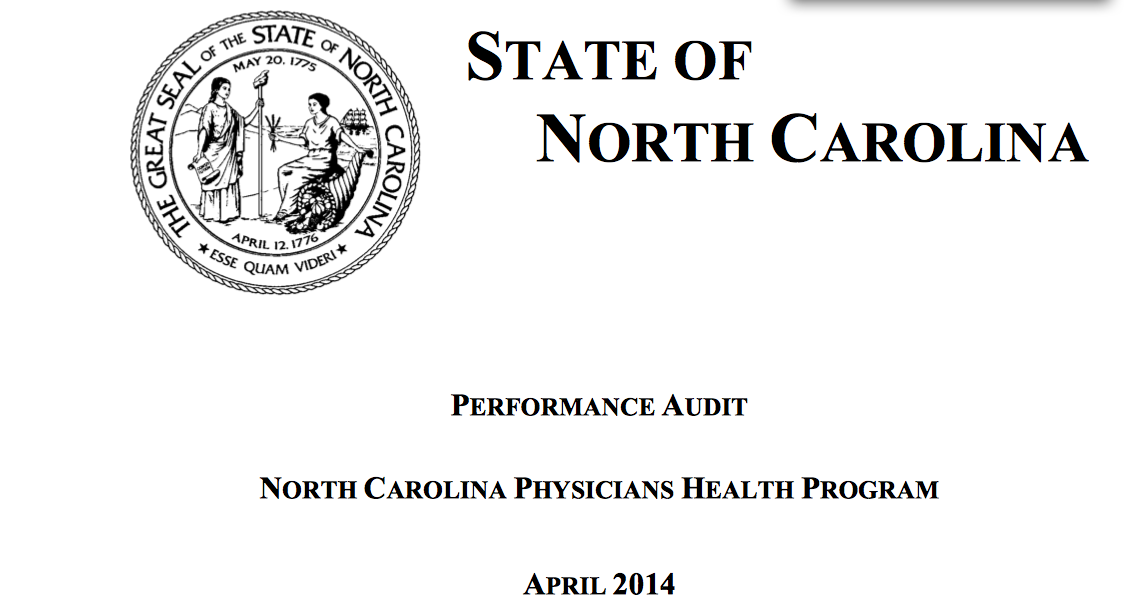
An audit of the North Carolina PHP found essentially no oversight from the Medical Board or Medical Society.  The audit found that “abuse could occur without being detected,” and this is by design.  By removing and blocking the provision of information necessary for accountability, restricting the liberties and freedoms of physicians, and increasing their power and control they have erected a framework of hidden abuse.

Screen Shot 2014-04-28 at 9.45.22 AM

The situation in North Carolina is standard operating procedure for PHPs under the Federation of State Physician Health Programs (FSPHP).  It is not the exception but the rule.

While outspoken in denouncing what they regard as unethical and unprofessional behavior by other doctors, they are resistant to apply even the most minimal standards to their own activities.

To whom are the PHPs accountable? Whom do they represent? There are legitimate concerns.

scotty