Monopolies, Self-Referral and Shell Games: The Need for Antitrust Investigation of Physician Health Programs and their “PHP-Approved” Assessment and Treatment Centers

On the above list can be found the Medical Directors of a number of drug and alcohol rehabilitation facilities. I did not make up this list. An updated version can be seen right here on the “like-minded doc” website.

Talbott, Marworth, Hazelden, Promises, and another two-dozen or so “PHP-approved” assessment and treatment centers are represented on this list. State Physician Health Programs (PHPs) refer doctors to these facilities for evaluations. PHPs are non-profit tax-exempt organizations. They do not evaluate or treat patients. If a physician is referred to a PHP for a suspected problem the assessment must be done at an outside facility which will invariably be linked to a name on the list of Like-Minded Docs.

What most people do not know, however, is that this is an exclusive arrangement. Evaluations are constrained to one of these facilities. It is mandated. No bargaining. No compromises. No choice. In other words it is a coercion.

mllangan1's avatarDisrupted Physician

Screen Shot 2014-02-18 at 11.06.22 PM

Three shells and a pea–ASAM, FSPHP, and LMD.

“PHP-Approved” Assessment and Treatment Centers

On the above list  can be found the Medical Directors of a number of drug and alcohol rehabilitation facilities.  I did not make up this list.  An updated version can be seen right here on the “like-minded doc” website.

Talbott, Marworth, Hazelden, Promises, and another two-dozen or so “PHP-approved”  assessment and treatment centers are represented on this list.    State Physician Health Programs (PHPs) refer doctors to these facilities for evaluations.  PHPs are non-profit tax-exempt organizations.  They do not evaluate or treat patients.   If a physician is referred to a PHP for a suspected problem the assessment must be done at an outside facility which will invariably be linked to a name on the list of Like-Minded Docs.

What most people do not know, however, is that this is an exclusive arrangement.    Evaluations are constrained to one of these facilities…

View original post 95 more words

The Role of Unions and Collective Bargaining in Combating Workplace Bullying

Herein lies the problem with the medical profession…..we have no unions or other collective bargaining organizations looking out for our best interests.Featured Image -- 52300

David Yamada's avatarMinding the Workplace

Organized labor can play an influential role in preventing and responding to workplace bullying, both as a safeguarding presence for workers and as a political and social force for positive change.  For many years, I have regarded that role as one of unrealized potential.  But recent developments give me considerable hope of ongoing partnerships with unions to address workplace bullying.  In particular, more unions are getting behind the Healthy Workplace Bill, anti-bullying legislation that I authored to fill a significant gap in worker protections. 

The Potential Role of Organized Labor to Combat Workplace Bullying

Unions can play an important role in preventing and responding to workplace bullying in at least four ways:

• Negotiate CBA Provisions — Unions should bargain for collective bargaining agreement provisions that protect their members against abusive supervision.

• Use Existing Contract Provisions — Even in the absence of specific protections against abusive supervision, the general…

View original post 568 more words

Beyond the Schoolyard: Workplace Bullying

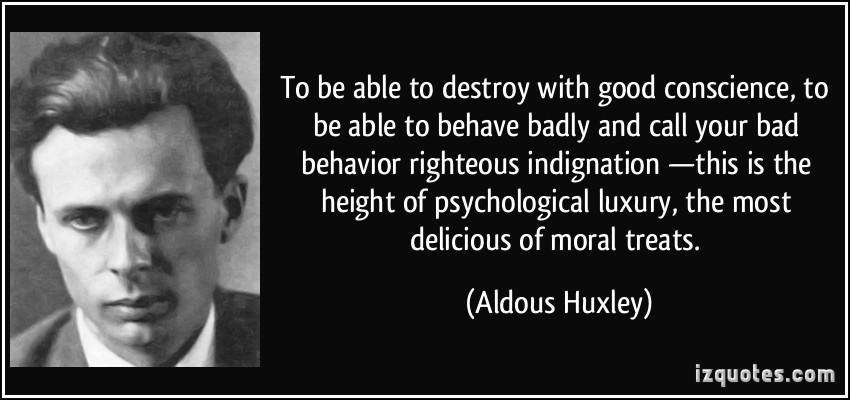
quote-to-be-able-to-destroy-with-good-conscience-to-be-able-to-behave-badly-and-call-your-bad-behavior-aldous-huxley-314332This infographic on workplace bullying was created by International Business Degree Guide to convey the message that workplace bullies not only hurt people, they can also hurt business–driving away good employees in their quest for control.

Adept at dissimulation, those in authority often see what the bully expressly feigns and pretends to be. Under observation by authority the bully hides his true self and often cultivates an image designed to please and impress.

Screen Shot 2015-06-08 at 1.47.25 PM

Veiling truth to those in power protects the bully.  Reports of abuse are disbelieved or ignored; dismissed or minimized as exaggeration; deemed a product of bellyachers and whiners.  In addition to hiding his true self the bully will often tell superiors what they want to hear. The workplace bully promotes an image of loyalty, dedication and hard work to superiors and may even feign common ideals and goals.   This  impression management often works.

When bullying ends in tragedy it is often revealed that those who could and should have done something about it knew about it and did nothing.  This failure to act may be the result of blinkered apathy, willful ignorance and even malicious complicity.  This is especially true when the  political and ideological views of the bully align closely with  those in charge and the victim of bullying is remotely aligned.   Moral superiority, bigotry, racism,  and other biases all too often factor into the equation.

Perhaps those without sufficient empathy of others to take action when reports of abuse and harassment are reported to them will do their jobs if they realize workplace bullying might harm them personally or what they value most.

via Beyond the Schoolyard: Workplace Bullying.

crop0002_3_3

Junk Science and the Need for Regulatory Oversight of Forensic Laboratory Developed Tests

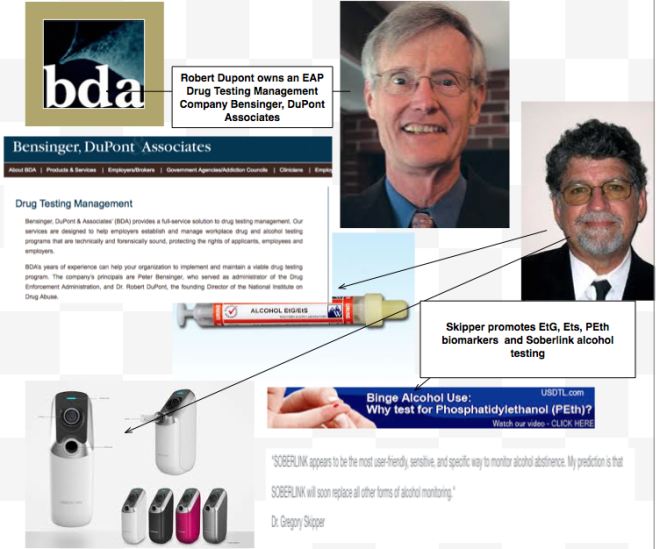
Screen Shot 2014-02-25 at 1.06.55 PMNumerous “forensic” tests of unknown validity using urine, blood, hair, fingernails breath and saliva have been developed and brought to market as LDTs since the first one was introduced in 2003 when ASAM physician Dr. Gregory Skipper, then Medical Director of the Alabama Physicians Health Program, “convinced the initial lab in the USA, NMS near Philadelphia to start performing EtG testing.” With essentially no evidence base Skipper then claimed the alcohol biomarker “appeared to be 100 percent specific” in detecting covert use of alcohol for several days after ingestion based on a study he coauthored that involved a mere 35 forensic psychiatric inpatients in Germany, all male.

mllangan1's avatarDisrupted Physician

Screen Shot 2015-01-12 at 10.43.08 PMScreen Shot 2014-02-21 at 11.38.29 AM


Laboratory Developed Tests

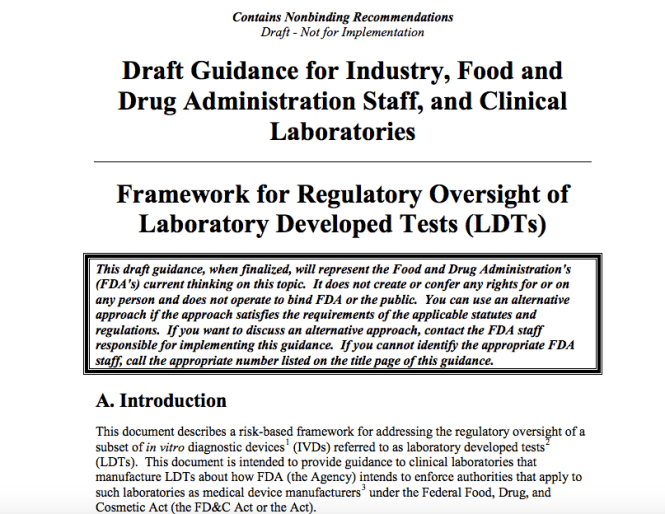
Questions about the accuracy and marketing of Laboratory Developed Tests (LDTs) have led to the current debate whether the U.S. Food and Drug Administration (FDA) should regulate a subset of diagnostic tests currently exempted from oversight. Designed to bring clinical tests to market that the costly FDA process would otherwise preclude, such as those for rare diseases, the LDT pathway bypasses Federal regulation and accountability.  Questions about the validity of these tests have raised concerns over patient safety and a call for oversight.  Among those asking for regulation are Massachusetts Senators Edward J. Markey and Elizabeth Warren.

Opponents of regulation argue the LDT  pathway enables new and pioneering tests to be developed quickly and improve patient care.  A recent viewpoint piece published in JAMA opposing regulation noted such advances have occurred “in large part because of the nimbleness of relatively small clinical and academic laboratories that can quickly respond to new…

View original post 1,541 more words

Diagnostic Testing 101.1: The Importance of Sensitivity, Specificity and Diagnostic Test Accuracy

Multiple factors need to be considered in evaluating the diagnostic accuracy of a test including diagnostic validation and verification. Is the test testing what it is supposed to be testing for and are we doing it correctly?

Diagnostic accuracy of a test necessitates a reference standard, The reference standard can be the best available method for establishing the presence or absence of a condition (such as the throat culture for strep throat) or a combination of methods (imaging, neuropsychological testing, clinical exam, etc. in Alzheimer’s disease.

Any test that is going to be used as a basis for decisions that impact other human beings needs to be validated before it is introduced on the market. The literature needs to be reviewed critically and trials must be designed using objective evidence that validates the test is testing for what it purports to be and verifies the correct methodology of the test. Verification that the test is being collected, handled, stored, transported and processed correctly is requisite.

Cutoff levels, , cross-reactivity and myriad other issues need to be worked out prior to bringing a diagnostic test to market.

mllangan1's avatarDisrupted Physician

To have striven, to have made an effort, to have been true to certain ideals — this alone is worth the struggle. We are here to add what we can to, not to get what we can from, life. – William Osler


IMG_8263

Diagnostic Medicine

Diagnostic medicine is the process of identifying the condition or disease that a patient has and  ruling out conditions or diseases the patient does not have through assessment of  the patient’s signs, symptoms, and results of various diagnostic tests.

Diagnostic Test Accuracy

Diagnostic test accuracy is simply the ability of the test to discriminate among alternative states of health (Zweig and Campbell, 1993).

If a test’s results do not differ between alternative states of health, then the test has insignificant accuracy; if the results do not overlap with other states of health then the test has perfect accuracy.  Most tests accuracies fall between these two extremes.

The intrinsic accuracy of…

View original post 1,792 more words

The Medical Profession, Moral Entrepreneurship, Moral Panics, and Social Control

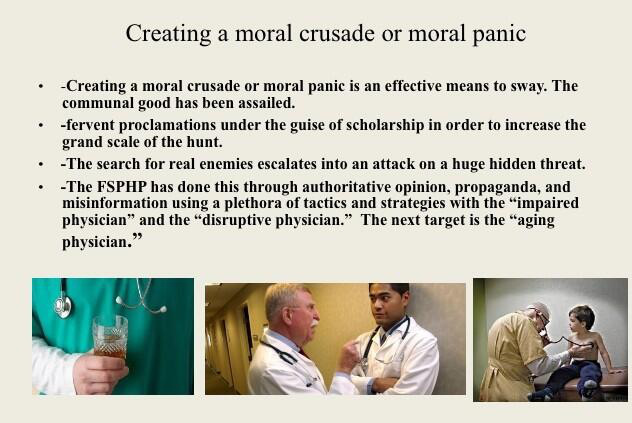
Blind-faith and unquestioning allegiance to expert authority deflects scrutiny and analysis. Few red flags are raised as this type of moral preening promotes misguided plausibility and complacency in the belief that these are indeed experts with good intentions. This needs to be addressed.

But if you look at any of the current “moral panics” that are being used to suggest random suspicion-less drug testing of doctors or promoting the Physician Health Programs as successful and replicable models, you will inevitably find a doctor on this list behind it. It is a given.

And the invitation goes out to Seppala to debate this in a public forum on a level playing field. Not gonna happen because it would be impossible for him to address and answer the questions rationally, directly and with any tiny scrap of evidence based data.ByQiW11IYAI2Cit

IMG_0728

mllangan1's avatarDisrupted Physician

The Medical Profession, Moral Entrepreneurship, Moral Panics, and Social Control.

 “Few, no matter how desperate, seek help of their own accord.”  says Dr. Marv Seppala, M.D., Chief Medical Officer at Hazelden, one of the “PHP-approved” drug and alcohol assessment and treatment centers located in Center City, Minnesota.  “Physicians are intelligent and skilled at hiding their addictions.”

“They’re often described as the best workers in the hospital,” he says. “They’ll overwork to compensate for other ways in which they may be falling short, and to protect their supply. They’ll sign up for extra call and show up for rounds they don’t have to do.”

In reality this is ludicrous–knee slapping absurd.   If the results of this authoritative opinion were not so dire these statements would, in fact, be comical.   Such is not the case, however, and opinions like Seppala’s have been taken at face value and, as a result, the aftermath has…

View original post 636 more words

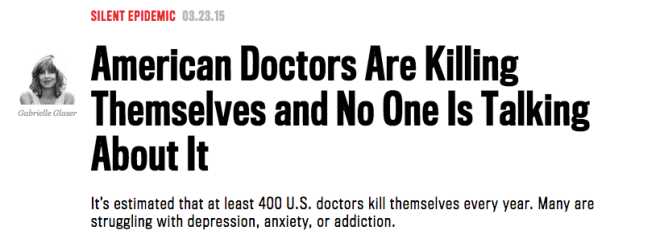
American Doctors Are Killing Themselves and No One Is Talking About It–By Gabrielle Glaser via the Daily Beast

mllangan1's avatarDisrupted Physician

Screen Shot 2015-03-23 at 7.31.40 PMVia the Daily Beast:   http://www.thedailybeast.com/articles/2015/03/23/american-doctors-are-killing-themselves-and-no-one-is-talking-about-it.html

Screen Shot 2015-03-23 at 7.32.01 PM

Excerpt:

“Doctors who acknowledge problems with substances or mental health are typically referred to a physicians health program, or PHP. These organizations evaluate, monitor, and treat physicians. Established initially in the 1970s, PHPs, which exist in almost every state, were intended to divert physicians suffering from alcohol or drug problems from censure from their state medical boards. PHPs are incorporated as nonprofits and have autonomy from the boards. But some PHPs breach confidentiality if they fear a doctor is a danger to the public. And some state medical boards also fund their PHPs. Since the boards hold the keys to licensure, many say this is a conflict of interest.

There are growing concerns about whether PHPs have the right approach to the job. They typically send doctors to rehab programs rooted in the faith-and-abstinence principles of Alcoholics Anonymous. While AA’s 12 steps might work…

View original post 119 more words

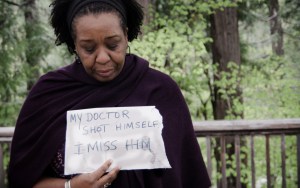
Physician Suicide

mllangan1's avatarDisrupted Physician

Physician Suicide.

Physician Suicide 101:  Secrets, lies and solutions by Dr. Pamela Wible, M.D., is now featured on KevinMD.com.  Please read and comment!   We need to use this as a stepping stone to start discussing the Elephant in the room; state Physician Health Programs (PHPs) organized under the Federation of State Physician Health Programs.  These programs once served the dual purpose of helping sick doctors and protecting the public from harm.

Taken over by the “impaired physician” movement the current manifestation is one of absolute power and unrestrained managerial authority with no meaningful oversight, regulation or accountability.  It is a culture of institutional injustice that is preventing doctors from seeking help for fear of being ensnared and monitored by them.  Those being monitored by them are subject to bullying, abuse and forced 12-step indoctrination under threat of loss of licensure.  Many of these doctors do not even have an addiction…

View original post 787 more words