An apt and accurate illustration of the professional regulation of medicine in 2016 via Mel Brooks History of the World Part 1

goodtobeking

It’s good to be the king!

Count De Monet: I have come on the most urgent of business. It is said that the people are revolting!
King Louis: You said it; they stink on ice.

countdemonet_thumb

Count de Monet: Gerald! Gerald: Count da Money! Count de Monet: de Monet… Monet! Say it! Monet! Gerald and Count de Monet: Moonnet, Moonnet, Moonnet Gerald, Count de Monet, Bearnaise: Mooonnnet! Count de Monet: Perfect, don’t forget! Give it to me again! Monet. Gerald and Bernaise: Monet.

Impoverished Paris Street Merchant: Rats, rats for sale. Get your rats. Good for rat stew, rat soup, rat pies, or the ever-popular ratatouille.

Other Street Merchant: Nothing, I have absolutely nothing for sale!
maxresdefault

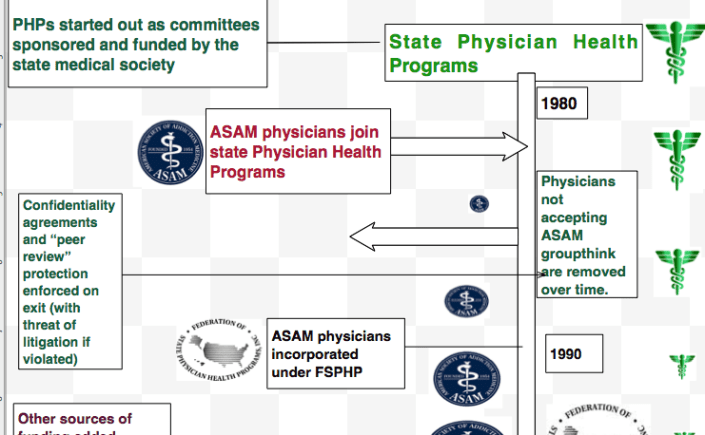
Disrupted Physician 101.4–The “Impaired Physician Movement” takeover of State Physician Health Programs

These ASAM “addiction experts” have become so numerous they have been able to take over almost all the state Physician Health Programs (PHPs). Their national association—the Federation of State Physician Health Programs (FSPHP)–has a stated goal of universal acceptance of the 12-step doctrine: lifelong abstinence, and spiritual recovery as the one and only treatment, as spelled out in the “PHP Blueprint.”

Very much like Straight, Inc in the 70s and 80s, they have cast a wide net with doctors to ensnare them in an endless loop of drug testing and rehab—whether the tests are fabricated or not. The doctors will enjoy no sympathy from the public, and complaining about it is deemed a sign of your “disease.” Furthermore, ASAM recommends that physicians only be referred to “PHP approved” facilities.

The medical directors of these facilities can all be found on this list of ”Like-Minded Docs.” Surprisingly, many Like-Minded Docs were former addicts and alcoholics, some even with criminal backgrounds. There are felons and even double-felons on the list.

It’s a rehab shell game. Heads I win tails you lose.

And the program is expanding. The organization that oversees the licensing for all medical doctors, the Federation of State Medical Boards, adopted a new policy and approved the concept of “potentially impairing illness” and the Orwellian notion of “relapse without use.”

Signals for “impairment can be as benign as not having “complete accurate, and up-to-date patient medical records” according to Physician Health Services, the Massachusetts PHP. Despite the overwhelming amount of paperwork Doctors now have, incomplete or illegible records could be construed as a red flag, since as Associate Direct of PHS Judith Eaton notes “when something so necessary is not getting done, it is prudent to explore what else might be going on.” The question is, who is next?”

mllangan1's avatarDisrupted Physician

Forget what you see
Some things they just change invisibly–Elliott Smith

IMG_8923

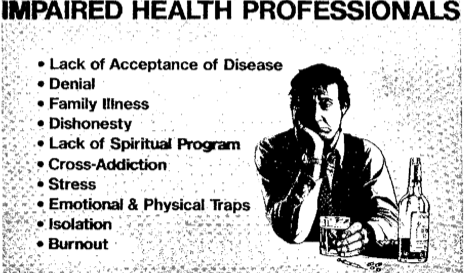
Physician Impairment

The Sick Physician: Impairment by Psychiatric Disorders, Including Alcoholism and Drug Dependence, published by the American Medical Association’s (AMA) Council on Mental Health in The Journal of the American Medical Association in 1973,1 recommended that physicians do a better job of helping colleagues impaired by mental illness, alcoholism or drug dependence. The AMA defined an “impaired physician” as “a physician who is unable to practice medicine with reasonable skill and safety to patients because of mental illness or excessive use or abuse of drugs, including alcohol.”

Recognition of physician impairment in the 1970s by both the medical community and the general public led to the development of “impaired physician” programs with the purpose of both helping impaired doctors and protecting the public from them.

IMG_1010The 1975 media coverage of the deaths of Drs. Stewart and…

View original post 766 more words

Physician Suicide, Organizational Justice and the “Cry of pain” Model: Hopelessness, Helplessness and Defeat

They can be a terror to your mind and show you how to hold your tongue
They got mystery written all over their forehead
They kill babies in the crib and say only the good die young
They don’t believe in mercy
Judgement on them is something that you’ll never see
They can exalt you up or bring you down main route
Turn you into anything that they want you to be–Bob Dylan, Foot of Pride

Screen Shot 2015-04-30 at 2.55.32 AM

Although no reliable statistics yet exist, anecdotal reports suggest a marked rise in physician suicide in recent years. From the reports I am receiving it is a lot more than the oft cited “medical school class” of 400 per year.

This necessitates an evaluation of predisposing risk factors such as substance abuse and depression, but also requires a critical examination of what external forces may be involved in the descent from suicidal ideation to suicidal planning to completed suicide.  What are the cumulative situational and psychosocial factors in physicians that make suicide a potential option and what acute events precipitate the final act?

Depression and Substance Abuse no Different from General Population

The prevalence of depression in physicians is close to that of the general population 1,2 and, if one looks critically at the evidence based literature, substance abuse in medical professionals approximates that of the general population.  Controlled studies using DSM diagnostic criteria indicate that physicians have the same rates (8-14%) of substance abuse and dependence as the general population,3 and slightly lower rates compared to other occupations.4,5 Epidemiological surveys reveal the same. Hughes, et al.6 reported a lifetime prevalence of drug or alcohol abuse or dependence in physicians of 7.9%, markedly less than the 14.6% prevalence reported in the general population by Kessler.7

Job Stress and Untreated Mental Illness Risk Factors

Job stress coupled with inadequate treatment for mental illness may be factors contributing to physician suicide according to one recent study. Using data from the National Violent Death Reporting System, Gold, Sen, & Schwenk, 2013 8 compared 203 physicians who had committed suicide to more than 31,000 non-physicians and found that having a known mental health disorder or a job problem that contributed to the suicide significantly predicted being a physician. Physicians were 3.12 times more likely to have a job problem as a contributing factor. In addition, toxicology testing showed low rates of medication treatment.  The authors concluded that inadequate treatment and increased problems related to job stress are potentially modifiable risk factors to reduce suicidal death among physicians. They also warned that the database used likely underestimated physician suicides because of “underreporting and even deliberate miscoding because of the stigma attached.”8

Few studies have evaluated the psychosocial stressors surrounding physician suicide but there is no reason to believe they are any different from the rest of the population. Although the triggering life events and specific stressors may vary outside, the inner psyche and undercurrent of thoughts and feelings should remains the same.   Perhaps the same drivers of suicide identified in other populations are contributing to physician suicide.
Screen Shot 2014-04-04 at 1.05.46 AM

Perceived Helplessness, Hopelessness, Bullying and Defeat

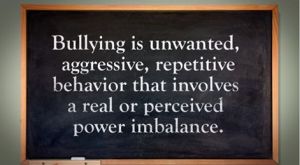
Perceived helplessness is significantly associated with suicide as is9 Hopelessness10,11 Bullying is known to be a predominant trigger for adolescent suicide12-14 One study found that adolescents in custody who were bullied were 9.22 times more likely to attempt suicide than those were not bullied.15

Heightened perceptions of defeat and entrapment are known to be powerful contributors to suicide.16,17 The “Cry of Pain” model 18,19 specifies that people are particularly prone to suicide when life experiences are interpreted as signaling defeat which is defined as a sense of “failed struggle” or loss of social position and resources.. The person is unable to identify an escape from or resolution to a defeating situation, a sense of entrapment proliferates with the perception of no way out, and this provides the central impetus for ending ones life. There is a helplessness and hopelessness that precipitates the descent from ideation, to planning, and then to finality.

Organizational Justice Important Protective Factor

In a study on Italian and Swedish female physicians, degrading experiences and harassment at work were found to be the most powerful independent variables contributing to suicidal thoughts.20 Degrading work experiences harassment, and lack of control over working conditions were found to be associated with suicidal thoughts among Italian and Swedish male university physicians.21

Evidence exists for the role of rescue factors (i.e. social support) as buffers against suicide in the face of varying degrees of life stress.22,23 The study of female physicians revealed meetings to discuss stressful work experiences as a potential protective factor, 20 and support at work when difficulties arose appeared to be a protective factor for the male physicians.21   In line with this, studies of Finnish physicians found that control over one’s work and organizational justice were the most important determinants of work-related wellbeing.24,25 Organizational justice has been identified as a psychosocial predictor of health and wellbeing26 27 Low organizational justice has been identified as a notable risk factor for psychological distress and depression.28,29
images-4

Historical Precedent-the Suicides at Ridgeview

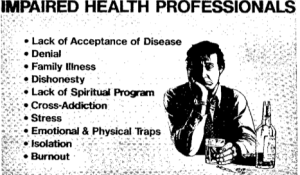
Could these factors be playing a role in physician suicide?   They evidently did at the Ridgeview Institute, a drug and alcohol treatment program for impaired physicians in Metropolitan Atlanta created by G. Douglas Talbott. Talbott helped organize and served as past president of the American Society of Addiction Medicine (ASAM) and was a formative figure in the American Medical Association’s (AMA’s) Impaired Physician Program. He has owned and directed a number of treatment facilities for impaired professionals, most recently the Talbott Recovery Campus in Atlanta, one of the preferred referrals for physicians ordered into evaluation and treatment by licensing boards.

After creating the DeKalb County Impaired Physicians Committee for the Medical Association of Georgia, Talbott founded the Georgia Disabled Doctors Program in 1975 in part because “traditional one-month treatment programs are inadequate for disabled doctors.” According to Talbott, rehabilitation programs that evaluate and treat the rest of the population for substance abuse issues are incapable of doing so in doctors as they are unlike others. He bases this uniqueness on “incredibly high denial”, and what he calls the “four MDs,” “M-Deity”, “Massive Denial” “Militant Defensiveness”, and “More Drugs.”30

Contingency Management = Extortion Using Medical License

According to Talbott, “impaired doctors must first acknowledge their addiction and overcome their ‘terminal uniqueness’ before they can deal with a drug or alcohol problem.” “Terminal uniqueness “ is a phrase Talbott uses to describe doctors’ tendency to think they can heal themselves. “M-Deity” refers to doctors “being trained to think they’re God,”31 an unfounded generalization considering the vast diversity of individuals that make up our profession. This attitude, according to some critics, stems from the personal histories of the treatment staff, including Talbott, who are recovering alcoholics and addicts themselves. One such critic was Assistant Surgeon General under C. Everett Koop John C. Duffy who said that Ridgeview suffered from a “boot-camp mentality” toward physicians under their care and “assume every physician suffering from substance abuse is the same lying, stealing, cheating, manipulating individual they were when they had the illness. Certainly some physicians are manipulative, but it’s naïve to label all physicians with these problems.”32

American Society of Addiction Medicine (ASAM) President (1981-1983) LeClair Bissell was also highly critical of Talbott’s approach. Bissell, co-author of the first textbook of ethics for addiction professionals33 when asked if there was any justification to the claim that doctors are sicker than other people and more vulnerable to addiction replied:

“Well, based on my treatment experience, I think they are less sick and much easier to treat than many other groups. I think one reason for that is that in order to become a physician…one has to have jumped over a great many hurdles. One must pass the exams, survive the screening tests and the interviews, be able to organize oneself well enough to do examinations and so on, and be observed by a good many colleagues along the way. Therefore I think the more grossly psychotic, or sicker, are frequently screened out along the way. The ones we get in treatment are usually people who are less brain-damaged, are still quite capable of learning, are reasonably bright. Not only that, but they are quite well motivated in most cases to hang on to their licenses, the threat of the loss of which is frequently what puts them in treatment in the first place. So are they hard to treat? No! Are they easy patients? Yes! Are they more likely to be addicted than other groups? We don’t know.”34

“I’m not much for the bullying that goes along with some of these programs,” Bissell commented to the Atlanta Journal and Constitution in 1987.31   The constitution did a series of reports after five inpatients committed suicide during a four-year period at Ridgeview.35 In addition there were at least 20 more who had killed themselves over the preceding 12 years after leaving the treatment center.32

ByQiW11IYAI2Cit

Bissell, the recipient of the 1997 Elizabeth Blackwell Award for outstanding contributions to the cause of women and medicine remarked: “When you’ve got them by the license, that’s pretty strong leverage. You shouldn’t have to pound on them so much. You could be asking for trouble.”31 According to Bissell: “There’s a lot of debate in the field over whether treatment imposed by threats is worthwhile…To a large degree a person has to seek the treatment on his own accord before it will work for him.”31

A jury awarded $1.3 million to the widow of one of the deceased physicians against Ridgeview,36 and other lawsuits initiated on behalf of suicides were settled out of court.35

The Constitution reported that doctors entered the program under threats of loss of licensure “even when they would prefer treatment that is cheaper and closer to home.” 37 The paper also noted that Ridgeview “enjoys unparalleled connections with many local and state medical societies that work with troubled doctors,” “licensing boards often seek recommendations from such groups in devising an approved treatment plan,” and those in charge are often “physicians who themselves have successfully completed Ridgeview’s program.”37

The cost of a 28-day program for nonprofessionals at Ridgeview in 1987 was $10,000 while the cost was “higher for those going through impaired-health professionals program,” which lasted months rather than 28 days.32

In 1997 William L. White interviewed Bissell whom he called “one of the pioneers in the treatment of impaired professionals.” The interview was not published until after hear death in 2008 per her request.   Noting her book Alcoholism in the Professions38 “remains one of the classics in the field”, White asked her when those in the field began to see physicians and other professionals as a special treatment population. She replied:

“When they started making money in alcoholism. As soon as insurance started covering treatment, suddenly you heard that residential treatment was necessary for almost everybody. And since alcoholic docs had tons of money compared to the rest of the public, they not only needed residential treatment, they needed residential treatment in a special treatment facility for many months as opposed to the shorter periods of time that other people needed.”39

Talbott claimed a “92.3 percent recovery rate, according to information compiled from a five-year follow-up survey based on complete abstinence and other treatment.”40

“There is nothing special about a doctor’s alcoholism,” said Bissel

“these special facilities will tell you that they come up with really wonderful recovery rates. They do. And the reason they do is that any time you can grab a professional person by the license and compel him or her into treatment and force them to cooperate with that treatment and then monitor them for years, you’ll get good outcomes—in the high 80s or low 90s in recovery rates—no matter what else you do.”39

“The ones I think are really the best ones were not specialized. There were other well-known specialty clinics that claimed all the docs they treated got well, which is sheer rot. They harmed a great many people, keeping them for long, unnecessary treatments and seeing to it that they hit their financial bottom for sure: kids being yanked out of college, being forced to sell homes to pay for treatment, and otherwise being blackmailed on the grounds that your husband has a fatal disease. It’s ugly.”39

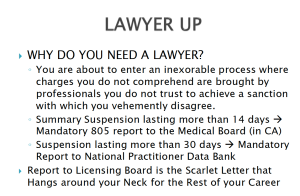
Stanton Peele’s “In the Belly of the American Society of Addiction Medicine Beast” describes the coercion, bullying, threats and indoctrination that are standard operating procedure in Talbott’s facilities.41 Uncooperative patients, “and this covers a range of sins of commission or omission including offering one’s opinion about one’s treatment,” are “threatened with expulsion and with not being certified-or advocated for with their Boards.”41 The cornerstone of treatment is 12-step spiritual recovery. All new patients are indoctrinated into A.A. and coerced to confess they are addicts or alcoholics. Failure to participate in A.A. and 12-step spirituality means expulsion from the program with the anticipated result being loss of one’s medical license.
Screen Shot 2013-11-17 at 4.18.47 PM

From a talk given by FSPHP

Fraud, Malpractice, False Diagnoses and False imprisonment

In May 1999 Talbott stepped down as president of the American Society of Addiction Medicine (ASAM) as a jury awarded Dr. Leonard Masters a judgment of $1.3 million in actual damages and an undisclosed sum in punitive damages for fraud, malpractice, and the novel claim of false imprisonment.42 The fraud finding required a finding that errors in the diagnosis were intentional. After being accused of excessive prescribing of narcotics to his chronic pain patients, Masters was told by the director of the Florida PHP that he could either surrender his medical license until the allegations were disproved or submit to a four-day evaluation. Masters agreed to the latter, thinking he would have an objective and fair evaluation, but was instead diagnosed as “alcohol dependent” and coerced into the Talbott recovery program. He was forced to stay in the program under threat of his medical license as staff would routinely threaten to report any doctor who questioned any aspect of their diagnosis or treatment to their state medical boards “as being an impaired physician, leaving necessary treatment against medical advice”42  which would mean the loss of his licensure. However, Masters was not an alcoholic. According to his attorney, Eric. S. Block,  “No one ever accused him of having a problem with alcohol. Not his friends, not his wife, not his seven children, not his fellow doctors, not his employees, not his employers, No one.” 43  He was released 4 months later and forced to sign a five-year “continuing care” contract with the PHP, also under continued threat of his medical license. Talbott faced no professional repercussions and no changes in the treatment protocols were made. Talbott continued to present himself and ASAM as the most qualified advocate for the assessment and treatment of medical professionals for substance abuse and addiction up until his death last year.44
bullying2

Same System Imposed on Doctors Today—Institutional Injustice Worse due to Laboratory Developed Tests. Fortified Scaffold and Tightened the Noose.

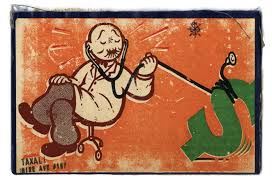
In almost all states today any physician referred for an assessment for substance abuse will be mandated to do so in a facility just like Ridgeview. There is no choice. There is one difference however.   When the Ridgeview suicides occurred the plethora of laboratory developed tests were not yet introduced. A decade ago Dr. Gregory Skipper introduced the first laboratory developed test for forensic testing and used it on doctors in physician health programs.   These non-FDA approved tests of unknown validity presented a new unpredictable variable into the mix with a positive test necessitating another assessment at an out of state treatment facility—a “PHP-approved” assessment facility. The addition of this laboratory Russian Roulette renders the current system much worse than it was at the time of the Ridgeview suicides.

And if a positive test occurs there are no safeguards protecting the donor. LDTs are unregulated by the FDA. There is no oversight and no one to file a complaint with.

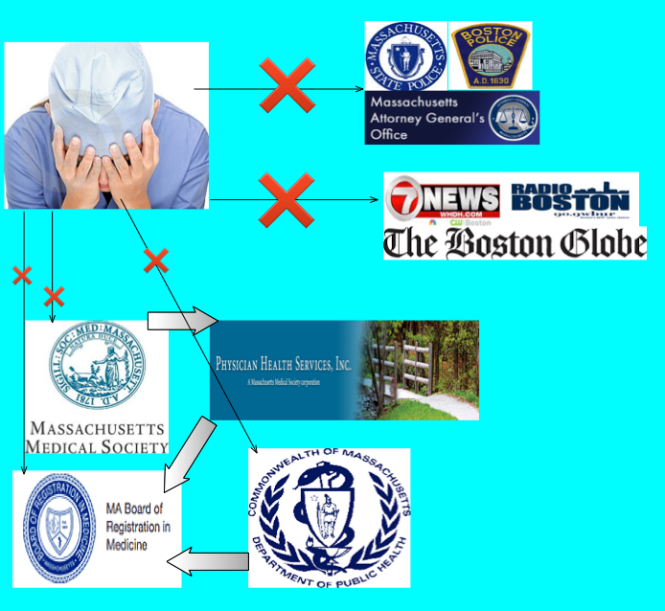
In addition the PHPs have no oversight by the medical boards, departments of health or medical societies. They police themselves. The PHPs have convinced law enforcement that when it comes to doctors it is a “parochial issue” best handled by the medical community. I have been hearing from doctors all over the country who have tried to report crimes to the local police, the state Attorney General and other law enforcement agencies only to be turned back over to the very perpetrators of the crimes. “He’s a sick doctor, we’ll take care of him.” The “swift and certain consequences” of this are an effective means of keeping the rest of the inmates silent.   Likewise doctors have been going to the media only to have the door slammed in their faces because the media has generally bought in to the “impaired” and “disruptive” physician construct these same people developed through propaganda, misinformation and moral panics and crusades.

tireddoctor

Urgent Need to Admit to the Problem

There has been an increase in physician suicide in the past decade.   By my estimate the numbers are going to be far higher than the oft-cited 400 per year. The speculation as to cause has been unenlightening and in fact frustrating.   Knowledge of anatomy, access to dangerous drugs, increased workload and even student loans have been proposed as contributing factors. Although there has been some tangential mention of physician health programs it has been indirect. Direct and defined discussion is necessary and state PHPs need to be named as a possible contributor to suicide.  Admitting the possibility there is a problem is the first crucial step in defining and addressing the problem.    The 1980s historical precedent is correlated with physician suicide.  The current system is not only based on Ridgeview but has been fortified in scope and power.  The physician health movement has effectively removed due process from doctors while removing answerability and accountability from themselves. And they have not only fortified the scaffold but widened it from substance abusing doctors to all doctors. “Potential impairment” and “relapse without use” were introduced without any meaningful resistance and they are now using a panoply of non-FDA approved laboratory developed tests of unknown validity to test for substances of abuse in a zero-tolerance abstinence based monitoring program.  With no regulatory oversight the stage is set not only for error but misuse as witch-pricking devices for punishment and control.  Doctors across the country are complaining of the very same abuses Leonard Masters did–false diagnoses, misdiagnosis, unneeded treatment and fraud.

In summary, any doctor who is referred to their state PHP today is required to have any assessment and treatment at a “PHP-approved” facility based on Ridgeview.  It is mandated.  There is no choice.  Coercion, control and abuse at Ridgeview was associated with multiple suicides in doctors in the 1980s.  The use of non-FDA approved tests of unknown validity worsens the abuse and fits the “cry of pain” model of hopelessness, helplessness and despair. Locus of control is  lost.  Organizational justice is absent.

The temporal relationship is clear.

Why is this still the elephant in the room?

This needs to be named, defined and openly discussed and debated.  How many more must die before we speak up?

Please help me get the conversation going.

images-34

  1. Ford DE, Mead LA, Chang PP, Cooper-Patrick L, Wang NY, Klag MJ. Depression is a risk factor for coronary artery disease in men: the precursors study. Archives of internal medicine. Jul 13 1998;158(13):1422-1426.
  2. Frank E, Dingle AD. Self-reported depression and suicide attempts among U.S. women physicians. The American journal of psychiatry. Dec 1999;156(12):1887-1894.
  3. Brewster JM. Prevalence of alcohol and other drug problems among physicians. JAMA : the journal of the American Medical Association. Apr 11 1986;255(14):1913-1920.
  4. Anthony J, Eaton W, Mandell W, al. e. Psychoactive Drug Dependence and abuse: More Common in Some Occupations than in Others? Journal of Employee Assistance Res. 1992;1:148-186.
  5. Stinson F, DeBakely S, Steffens R. Prevalence of DSM-III-R Alcohol abuse and/or dependence among selected occupations. Alchohol Health Research World. 1992;16:165-172.
  6. Hughes PH, Brandenburg N, Baldwin DC, Jr., et al. Prevalence of substance use among US physicians. JAMA : the journal of the American Medical Association. May 6 1992;267(17):2333-2339.
  7. Kessler RC, Berglund P, Demler O, Jin R, Merikangas KR, Walters EE. Lifetime prevalence and age-of-onset distributions of DSM-IV disorders in the National Comorbidity Survey Replication. Archives of general psychiatry. Jun 2005;62(6):593-602.
  8. Gold KJ, Sen A, Schwenk TL. Details on suicide among US physicians: data from the National Violent Death Reporting System. General hospital psychiatry. Jan-Feb 2013;35(1):45-49.
  9. Rivers I, Noret N. Potential suicide ideation and its association with observing bullying at school. The Journal of adolescent health : official publication of the Society for Adolescent Medicine. Jul 2013;53(1 Suppl):S32-36.
  10. Lester D, Walker RL. Hopelessness, helplessness, and haplessness as predictors of suicidal ideation. Omega. 2007;55(4):321-324.
  11. Beck AT. Hopelessness as a predictor of eventual suicide. Annals of the New York Academy of Sciences. 1986;487:90-96.
  12. Hinduja S, Patchin JW. Bullying, cyberbullying, and suicide. Archives of suicide research : official journal of the International Academy for Suicide Research. 2010;14(3):206-221.
  13. Hertz MF, Donato I, Wright J. Bullying and suicide: a public health approach. The Journal of adolescent health : official publication of the Society for Adolescent Medicine. Jul 2013;53(1 Suppl):S1-3.
  14. Kim YS, Leventhal B. Bullying and suicide. A review. International journal of adolescent medicine and health. Apr-Jun 2008;20(2):133-154.
  15. Kiriakidis SP. Bullying and suicide attempts among adolescents kept in custody. Crisis. 2008;29(4):216-218.
  16. Taylor PJ, Gooding P, Wood AM, Tarrier N. The role of defeat and entrapment in depression, anxiety, and suicide. Psychological bulletin. May 2011;137(3):391-420.
  17. Lester D. Defeat and entrapment as predictors of depression and suicidal ideation versus hopelessness and helplessness. Psychological reports. Oct 2012;111(2):498-501.
  18. Williams JMG. Cry of Pain. Harmondsworth: Penguin; 1997.
  19. Williams JMG, Crane C, Barnhofer T, Duggan DS. Psychology and suicidal behavior: elaborating the entrapment model. In: Hawton K, ed. Prevention and treatment of suicidal behavior: from science to practice. Oxford: Oxford University Press; 2005:71-89.
  20. Fridner A, Belkic K, Marini M, Minucci D, Pavan L, Schenck-Gustafsson K. Survey on recent suicidal ideation among female university hospital physicians in Sweden and Italy (the HOUPE study): cross-sectional associations with work stressors. Gender medicine. Apr 2009;6(1):314-328.
  21. Fridner A, Belkic K, Minucci D, et al. Work environment and recent suicidal thoughts among male university hospital physicians in Sweden and Italy: the health and organization among university hospital physicians in Europe (HOUPE) study. Gender medicine. Aug 2011;8(4):269-279.
  22. Borowsky IW, Ireland M, Resnick MD. Adolescent suicide attempts: Risks and protectors. Pediatrics. 2001;107(485).
  23. Clum GA, Febbraro GAR. Stress, social support and problem-solving appraisal/skill: Prediction of suicide severity within a college sample. Journal of Psychopathology and Behavioral Assessment. 1994;16:37-46.
  24. Lindfors PM, Meretoja OA, Toyry SM, Luukkonen RA, Elovainio MJ, Leino TJ. Job satisfaction, work ability and life satisfaction among Finnish anaesthesiologists. Acta anaesthesiologica Scandinavica. Aug 2007;51(7):815-822.
  25. Heponiemi T, Kuusio H, Sinervo T, Elovainio M. Job attitudes and well-being among public vs. private physicians: organizational justice and job control as mediators. European journal of public health. Aug 2011;21(4):520-525.
  26. Elovainio M, Kivimaki M, Vahtera J. Organizational justice: evidence of a new psychosocial predictor of health. Am J Public Health. Jan 2002;92(1):105-108.
  27. Lawson KJ, Noblet AJ, Rodwell JJ. Promoting employee wellbeing: the relevance of work characteristics and organizational justice. Health promotion international. Sep 2009;24(3):223-233.
  28. Hayashi T, Odagiri Y, Ohya Y, Tanaka K, Shimomitsu T. Organizational justice, willingness to work, and psychological distress: results from a private Japanese company. Journal of occupational and environmental medicine / American College of Occupational and Environmental Medicine. Feb 2011;53(2):174-181.
  29. Lang J, Bliese PD, Lang JW, Adler AB. Work gets unfair for the depressed: cross-lagged relations between organizational justice perceptions and depressive symptoms. The Journal of applied psychology. May 2011;96(3):602-618.
  30. Gonzales L. When Doctors are Addicts: For physicians getting Molly Kellogg is easy. Getting help is not. Chicago Reader. July 28, 1988, 1988.
  31. King M, Durcanin C. The suicides at Ridgeview Institute: A Doctor’s treatment program may be too tough, some say. Atlanta Journal and Constitution. December 18, 1987a, 1987: A12.
  32. Durcanin C, King M. The suicides at Ridgeview Institute: Suicides mar success at Ridgeview with troubled professionals. Atlanta Journal and Constitution. December 18, 1987, 1987: A13.
  33. Bissell L, Royce JE. Ethics for Addiction Professionals. Center City, Minnesota: Hazelden; 1987.
  34. Addiction Scientists from the USA: LeClair Bissell. In: Edwards G, ed. Addiction: Evolution of a Specialist Field. 1 ed: Wiley, John & Sons, Incorporated; 2002:408.
  35. Durcanin C. The suicides at Ridgeview Institute: Staff members didn’t believe Michigan doctor was suicidal. Atlanta Journal and Constitution. December 18, 1987, 1987: A8.
  36. Ricks WS. Ridgeview Institute loses $1.3 million in suit over suicide. Atlanta Journal and Constitution. October 11, 1987, 1987: A1.
  37. King M, Durcanin C. The suicides at Ridgeview Institute: Many drug-using doctors driven to Ridgeview by fear of losing licenses. Atlanta Journal and Constitution. December 18, 1987b, 1987: A1.
  38. Bissell L, Haberman PW. Alcoholism in the Professions. Oxford University Press; 1984.
  39. White W. Reflections of an addiction treatment pioneer. An Interview with LeClair Bissell, MD (1928-2008), conducted January 22, 1997. Posted at http://www.williamwhitepapers.com. 2011.
  40. Williams c. Health care field chemical dependency threat cited. The Tuscaloosa News. January 16, 1988, 1988: 16.
  41. Peele S. In the Belly of the American Society of Addiction Medicine Beast. The Stanton Peele Addiction Website (accessed March 28, 2014) http://web.archive.org/web/20080514153437/http://www.peele.net/debate/talbott.html.
  42. Ursery S. $1.3M verdict coaxes a deal for doctor’s coerced rehab. Fulton County Daily Report. May 12, 1999b 1999.
  43. Ursery S. I was wrongly held in alcohol center, doctor charges. Fulton Count y Daily Report. April 27, 1999a 1999.
  44. Parker J. George Talbott’s Abuse of Dr. Leon Masters MD ( http://medicalwhistleblowernetwork.jigsy.com/george-talbott-s-abuse-of-leon-masters ). Medical Whistelblower Advocacy Network.
crop0126

The Aging Physician—Goodbye Dr. Welby!

IMG_8901The methodology is not new–witches are real, witches are dangerous and witches need to be identified and exterminated at all costs. Convince the authorities to assist you in protecting the public from harm and advance the greater good

In this manner the Federation of State Physician Health Programs (FSPHP)  has convinced the Federation of State Medical Boards state medical boards (FSMB)  to adopt and enforce policies that have incrementally and systematically increased their own  autonomy, scope and power.   This began in 1995 when the FSPHP first cultivated a relationship with the FSMB and subsequently took an uninvited seat at the table of power by offering a non-disciplinary “safe harbor” as an alternative to discipline for doctors impaired by drugs or alcohol.IMG_8900

Since then they have increased their scope from the “impaired” to the “disruptive” to everything else. Arising from the “impaired physicians movement” as “addiction specialists” these doctors whose specialty of addiction is not even recognized by the American Board of Medical Specialties have now become the “experts” in all matters related to physician health. Jacks of all trades covering neurology, psychiatry, geriatrics, and occupational medicine.

A 2011 updated FSMB Policy on Physician Impairment states that Medical Boards should recognize the state Physician Heath Program (PHP) as their experts in all matters relating to licensed professionals with “potentially impairing illness,” and these include those potentially impairing maladies that increase as we age.  This has gone too far.  Isn’t it time we take back the profession of medicine from illegitimate and irrational authority?Slide15

mllangan1's avatarDisrupted Physician

IMG_8902

As a specialist in geriatric medicine I have experience in taking care of a number of  doctors who were referred to me for suspected memory problems. Still operating and teaching residents in his 70s, my first was a well-respected surgeon, a pioneer or Maverick who had made advances in his particular subspecialty.  Known for his detailed knowledge of the history of medicine and sharp clinical acumen, he had not seemed himself for a while.  His colleagues noted he appeared slower,  fatigued and forgetful at times (not remembering his keys, having trouble finding the right word).  An internist friend and co-worker who knew him for 50 years curb-sided me and asked if I would see him.  He did not have a primary care physician or even seen a doctor professionally for decades (a common phenomenon in this age cohort of doctors).

I met him the next week and he readily admitted to having difficulty concentrating and having trouble with his short term…

View original post 1,533 more words

Urgent Action Needed on Proposed Legislation in North Carolina–Removing Due Process from Doctors a Harbinger of Wide-Scale Political Abuse of Psychiatry

HIPAA_violators

I received the email below from Dr. Jesse Cavenar, Jr. regarding legislative changes that would severely infringe on the rights of doctors as licensees of the North Carolina Medical Board and subject them to distinctly non-impartial diagnostic psychiatric evaluations and remove all possibility of due process.  These developments could possibly herald the wide-scale abuse of psychiatric evaluation and treatment by two governmental agencies acting in collusion with utterly no oversight or accountability.  Namely the Federation of State Physician Health Programs (FSPHP) and the Federation of State Medical Boards (FSMB).  As a state Representative who is also a physician told me this morning –“this bill is representative of a prevailing attitude that does not realize what is really happening.”


Bill H453 can be seen here:  H543v2 – 04152015[10]

NC Audit can be seen here:  http://www.ncauditor.net/EPSWeb/Reports/Performance/PER-2013-8141.pdf

This is the bill, entitled H453  that is before the NC legislature this session.  My reading of the bill is that the bill is a disaster.  It seems to be an attempt by the lobbyists and lawyers to remove many existing features of the present law. In particular, I would direct your attention to two features:

1) It appears that all mention of due process has been removed from the law. The NC State Auditor found that the NCPHP had not afforded due process as required by law, so one simply changes the law to remove all mention of due process.

2) There is a clause inserted in the law to immunize the NCPHP against civil liability for the performance of the NCPHP function. In other words, the state statute declares that one cannot bring legal action against the NCPHP because they are immune. This is absurd. These people should be no more immune than any other doctor in the state of North Carolina.

In addition, the proposed statute seems to attempt to haze out whether the NCPHP record is or is not a medical record. As you will see, one would be entitled to a copy of an ³Assessment² but it would appear not the entire medical record. This is contrary to the NC Medical Board position paper on medical records. I would urge everyone to immediately contact his or her appropriate Senator and Representative to register opposition to this bill as written, and to urge that an expert panel of disinterested physicians and attorneys be appointed to write a new bill that would be appropriate.

A colleague of mine who is a medical ethicist has reviewed this and had the following to say: ³Well, well!  I think the most interesting thing here is that someone has tried to get the NC Legislature to immunize the existing system against any countering action.  This, it seems to me, is tacit admission of culpability.²  Well stated, I would say.

                 Jesse

Screen Shot 2015-04-17 at 4.19.26 PM

Bent Science and Bad Medicine: The Medical Profession, Moral Entrepreneurship and Social Control

mllangan1's avatarDisrupted Physician

IMG_9005The Medical Profession, Moral Entrepreneurship, and Social Control

Sociologist Stanley Cohen  used the term “”moral panic” to characterize the amplification of deviance by the media, the public, and agents of social control.1  Labeled as being outside the central core values of consensual society, the deviants in the designated group are perceived as posing a threat to both the values of society and society itself.   Belief in the seriousness of the situation justifies intolerance and unfair treatment of the accused.   The evidentiary standard is lowered.

Howard Becker describes the role of “moral entrepreneurs,” who crusade for making and enforcing rules that benefit their own interests by bringing them to the attention of the public and those in positions of power and authority under the guise of righting a society evil. 2

And according to cultural theorist Stuart Hall, the media obtain their information from the primary definers of social…

View original post 2,654 more words

Class Action Suit Filed Against Michigan PHP Alleging Constitutional Violations Related to Involuntary Treatment

Screen Shot 2015-01-09 at 1.59.40 AMA Federal class action lawsuit has been filed in the Eastern District of Michigan against the state PHP program alleging constitutional violations related to the forced medical treatment of health care professionals involved in the State’s  “Professionals Health Program” (PHP)  and the “callous and reckless termination of professional licenses without due process.”  According to the complaint:
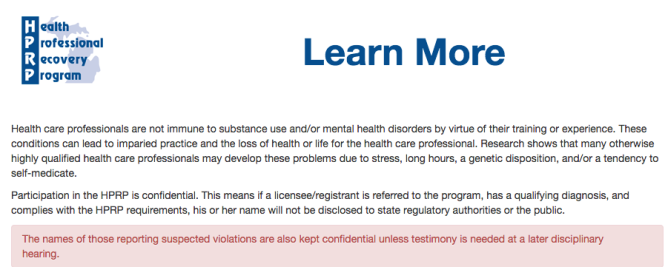
“The Health Professional Recovery Program (HPRP) was established by the Michigan Legislature as a confidential, non-disciplinary approach to support recovery from substance use or mental health disorders. The program was designed to encourage impaired health professionals to seek a recovery program before their impairment harms a patient or damages their careers through disciplinary action. Unfortunately, a once well-meaning program, HPRP, has turned into a highly punitive and involuntary program where health professionals are forced into extensive and unnecessary substance abuse/dependence treatment under the threat of the arbitrary application of pre-hearing deprivations (Summary Suspension) by LARA.filed in the the State of Michigan and a private contractor (Ulliance, Inc. of Troy, Michigan) engaged in a conspiracy to violate the civil rights of Michigan health professionals by involuntarily subjecting them to excessive and unnecessary treatment for substance abuse and suspending their licenses if they do not comply.”

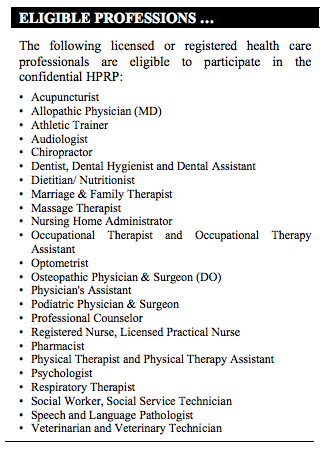
As is the case with most PHPs across the country taken over by the FSPHP the mechanics and mentality are the same.  Referrals can be made anonymously by “colleagues, partners, hospital administrations, patients, family members, or the State” to the PHP for any health professional (from acupuncturist to veterinarian) exhibiting “potential signs of impairment”

The HPRP website states the names of those reporting are kept confidential “unless testimony is needed at a later disciplinary hearing.”

Screen Shot 2015-03-16 at 3.28.39 AMAfter initial intake with HPRP, the licensee is referred to a “qualified evaluator” and “If the evaluation indicates a substance use and/or mental health disorder that represent a possible impairment” the HPRP makes referrals for treatment services to an “approved provider.Screen Shot 2015-03-16 at 3.29.35 AM
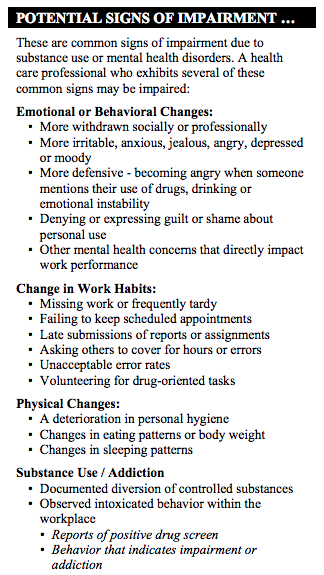
The “qualified evaluators” and “approved providers” are undoubtedly  the same out-of-state  facilities North Carolina state Auditor Beth Woods found her state program was referring to in her audit of the N.C. PHP under the undefinable justification they were “PHP-approved.”

As with North Carolina,  the Michigan PHP will be unable to provide what quality indicators and quantitative measurements are being used to “qualify” and “approve these facilities.    None exist as the common denominators in these “PHP-approved” and state mandated assessment and treatment centers are ideological and economic.  

The medical directors of almost if not all of them can be seen on this list of “like-minded docs.”  The conflicts-of-interest and intertwined relationships among this group is staggering.

The philosophy of Like-Minded Docs is the following:

“We believe that evidence from extensive, well-designed studies demonstrates the great benefits of Twelve-Step recovery modalities including Twelve Step Facilitation in promoting long-term recovery. Further, Twelve-Step modalities are compatible with other treatment strategies including medication-management. We believe that Addiction specialists need to facilitate a path for our patients toward the best possible state of wellness and recovery as they receive treatment for this chronic disease.  We believe a well-rounded educational and clinical preparation for physicians choosing to practice addiction medicine or addiction psychiatry requires a comprehensive exposure to the psychosocial and spiritual modalities of treatment as well as the neurobiological and psychopharmacological modalities.”

This connection needs to be made by both North Carolina and Michigan as the state is mandating treatment not only to assessment and treatment centers with economic conflicts of interest but with ideological ones as well.  Health care practitioners are being forced into evaluations exclusively at 12-step facilities and excluding non-12 step assessment and treatment centers.  This is a clear violation of the Establishment Clause of the 1st Amendment.

The complaint goes on to state the HPRP:

“has expanded its role to include making treatment decisions in place of the opinions of qualified providers. Licensees are subjected to intake evaluations by a pre-selected cadre of providers who profit from the enrollment of HPRP members. This process culminates in a large number of health professionals receiving a “Monitoring Agreement” which is essentially a nonnegotiable contract for treatment selected by HPRP. While HPRP’s contract with the State requires that treatment be selected by an approved provider and that it be tailored in scope and length to meet the individual licensee’s needs, licensees generally receive the same across-the-board treatment mandates regardless of their diagnosis or condition. Further, treatment providers are not permitted to recommend the specific treatment rendered and HPRP has a policy that only HPRP can set the terms of the treatment required in the contract. Failure to “voluntarily” submit to unnecessary and costly HPRP treatment results in automatic summary suspension..”

“Facing the threat of summary suspension in the event of non-compliance, licensed health professionals are induced into a contract as a punitive tool of BHCS and are often required to refrain from working without prior approval, refrain from taking prescription drugs prescribed by treating physicians, and sign broad waivers allowing HPRP to disclose their private health information to employers, the State of Michigan, and/or treating physicians.”

“Every licensee in the State of Michigan who has received a summary suspension, as a result of HPRP non-compliance, has had their private health data transmitted to the BHCS for use during administrative proceedings. In short, the mandatory requirements of HPRP, coupled with the threat of summary suspension, make involvement in HPRP an involuntary program circumventing the due process rights of licensees referred to the program. The involuntary nature of HPRP policies and procedures as outlined above and the unanimous application of suspension procedures upon HPRP case closure are clear violations of Procedural Due Process under the Fourteenth Amendment.”

This is exactly the same system of institutional injustice seen at Ridgeview under G. Douglas Talbott.  Multiple physician suicides were attributed to these same abuses–involuntary forced treatment under extortion of loss of licensure.  It is time this elephant in the room be addressed in terms of the marked increased in suicide we are seeing now.


http://www.chapmanlawgroup.com/hprp-class-action/

Health Professionals File Class Action Against HPRP

Jurisdiction: U.S. District Court for the Eastern District of Michigan

Subject: Plaintiff’s filed a class action lawsuit on behalf of Michigan health care professionals, alleging constitutional violations related to the forced medical treatment of health care professionals involved in the State’s substance abuse monitoring program (HPRP) and the callous and reckless termination of professional licenses without due process by HPRP and the Bureau of Healthcare Services.

Three Michigan health professionals filed a federal class action for due process violations arising out of execution of a State substance abuse monitoring program known as the Health Professionals Recovery Program. According to the class action lawsuit filed today in the Eastern District of Michigan, the State of Michigan and a private contractor (Ulliance, Inc. of Troy, Michigan) engaged in a conspiracy to violate the civil rights of Michigan health professionals by involuntarily subjecting them to excessive and unnecessary treatment for substance abuse and suspending their licenses if they do not comply.

HPRP, intended as a voluntary treatment program by the legislature, has become a highly punitive and involuntary tool designed to circumvent due process, the complaint states. However, according to the complaint, Carole Engle, the Former Director of the Bureau of Healthcare Services, implemented a policy that any person who does not voluntarily submit to this unnecessary treatment would be immediately suspended without a hearing and prevented from practicing as a health professional. Carole Engle recently resigned her position after Governor Snyder refused to renew her contract with the State of Michigan. It is unclear whether her recent resignation is related to the recently filed class action.

The controversial treatment program has generated a significant amount of criticism in recent years from Michigan health professionals who have called for a class action in an effort to stop HPRP’s abuse of their broad sweeping power. For years, HPRP subjected nurses to three years of intense addiction treatment sometimes on the basis of an anonymous tip.

“We turned to the courts for fairness because HPRP’s mandate of unnecessary treatment has ruined countless lives. My life has been ripped apart by HPRP despite the fact that two evaluators determined that I do not need treatment. I am only one of hundreds who have had to choose between suspension of my license and tens of thousands of dollars worth of treatment that was unnecessary – I just couldn’t afford it, and now I can no longer practice as a nurse” said Carol Lucas, a registered nurse and a Plaintiff in the class action.

Chapman Law Group, a Michigan health care law firm, filed the complaint on behalf of three named Plaintiffs, each of whom fell victim to HPRP’s demand that they submit to unnecessary treatment or have their license suspended. The class includes Michigan health professionals who are or were participants in the Health Professionals Recovery Program during the period from January 1, 2011 to present.

The complaint and amended complaint can be seen below:

Michigan Case 2-15-cv-10337

Michigan Amended Complaint 2-15-cv-10337


The Aging Physician—Goodbye Dr. Welby!

IMG_8902

As a specialist in geriatric medicine I have experience in taking care of a number of  doctors who were referred to me for suspected memory problems. Still operating and teaching residents in his 70s, my first was a well-respected surgeon, a pioneer or Maverick who had made advances in his particular subspecialty.  Known for his detailed knowledge of the history of medicine and sharp clinical acumen, he had not seemed himself for a while.  His colleagues noted he appeared slower,  fatigued and forgetful at times (not remembering his keys, having trouble finding the right word).  An internist friend and co-worker who knew him for 50 years curb-sided me and asked if I would see him.  He did not have a primary care physician or even seen a doctor professionally for decades (a common phenomenon in this age cohort of doctors).

I met him the next week and he readily admitted to having difficulty concentrating and having trouble with his short term memory.  On taking his history he told me of his life and career which started as an intern in Boston in 1942 and he was on duty the night 492 people were killed in the  Cocoanut Grove fire with many of the victims transported to his hospital.  “I can see every detail as if it were yesterday–beautiful young women wearing fashionable dresses and gowns and young men in formal evening wear who looked as if they were sleeping but were dead.”

“Gastric reflux ” was the only medical problem he reported, adding it was well controlled for the better part of a decade with anti-reflux medications from the office sample closet.   I tested his memory with several cognitive scales which showed some mild deficits in short-term memory and sent him to a neuropsychologist for more comprehensive testing.  His physical examination, including a comprehensive neurological exam was normal.  I ordered the usual lab work up for dementia to look for possible metabolic causes and his B12 level returned markedly low–a result of his long-term use of proton pump inhibitors.  He was given an intramuscular injection and started on high doses of oral B12.  As one of the “reversible’ causes of dementia he was back to his usual sprightly self several months later.

Another, a 70 old psychiatrist still teaching medical students and residents had asked a third-year psychiatric resident out on a date on two separate occasions. She reported him to administration on the second request.  When I  asked him about the incident he replied he didn’t see what was wrong with what he did and it was being blown out of proportion.  “She’s in her 20’s” I said to which he replied “Well I’m only 36.” Still giving lectures to first year medical students without error or pause from knowledge he learned long ago, he could not identify a pencil or a watch when I pointed to them and asked what there were. He knew neither the month, season or year.  After an MRI and neuropsychological testing he was given a diagnosis of probable Alzheimers disease.   He had no spouse or children and his work was his life.  After that he became  profoundly depressed and six months later was dead.

Another  elderly doctor, an internist, had a fairly sudden sudden onset of memory problems and symptoms of delirium.  It turned out he was having trouble sleeping and his cardiologist prescribed him Dalmane, a benzodiazepine similar to  Valium (medications that have a whole host of adverse effects in older patients including memory problems and falls).  But valium has a half-life of hours whereas Dalmane has a half life of days.   The medication was stopped and he was back to normal after a few days.

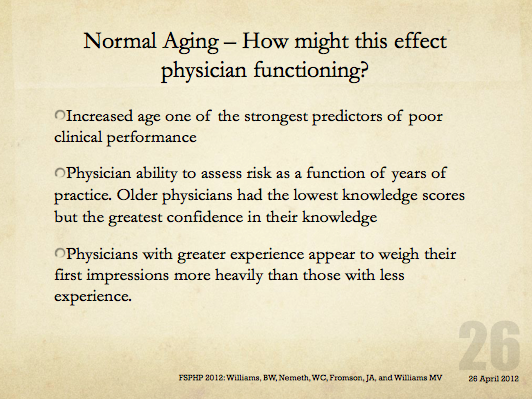
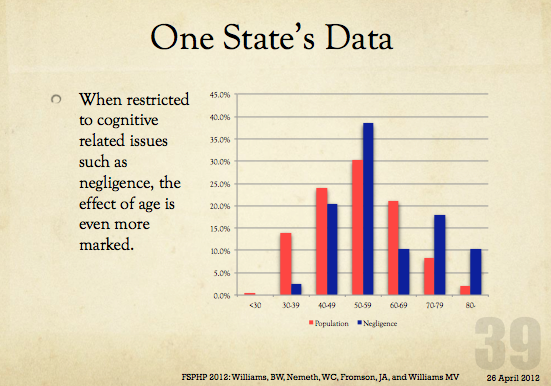
Aging  is associated with an increased  decline  in many areas including  cognition, motor-skills, muscle strength, and vision that can individually or cumulatively create risk to the person or others in a variety of situations (driving, living situation, occupation).

With advancing age comes advancing risk and the recognition and vigilance of others is often necessary for intervention. If the risk is recognized the problem can be addressed by the appropriate healthcare providers and specialists.

Doctors are not immune from cognitive impairment or dementia and the perspicacity of others is necessary should this occur.

Recognition and awareness are important.  So too is an assessment by a qualified physician Board Certified in Neurology, Geriatrics or Geriatric Psychiatry who has education and experience in the diagnosis and treatment of memory disorders.

Slide15

Recognition, Insight and Education Essential

In 2009 Dr. Ralph Blasier, M.D, J.D., published an article in the Journal  Clinical Orthopaedics and Related Research entitled “The Problem of the Aging Surgeon: When Surgeon Age Becomes a Surgical Risk Factor” discussing the ability of older physicians to practice medicine safely and effectively.

His primary message is that a decline in physical and cognitive abilities is associated with the aging process and that these issues are especially pertinent to the field of medicine.

An area  little researched, Blasier gives anecdotal examples such as a surgeon in his late 80s who had to regularly depend on younger colleagues to finish his operations. He concludes that these anecdotal examples suggest many surgeons lack insight into the degradation of their own skills and suggests recognition, insight, and education can help facilitate retirement of the aging surgeon  before  a decline in competency and skill creates a problem.

The awareness, education and insight of others is necessary to identify age associated illness in doctors who can then be referred to the proper specialists for evaluation.  And although no evidence base exists, anecdotal reports such as these caused some groups to see an opportunity to increase the grand scale of the hunt.

IMG_8901

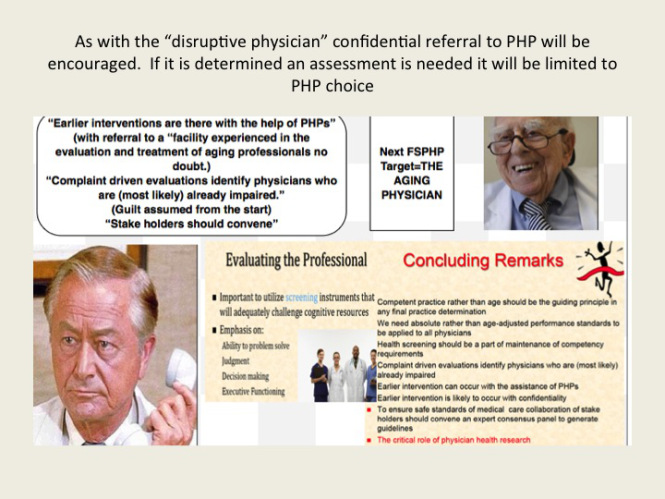
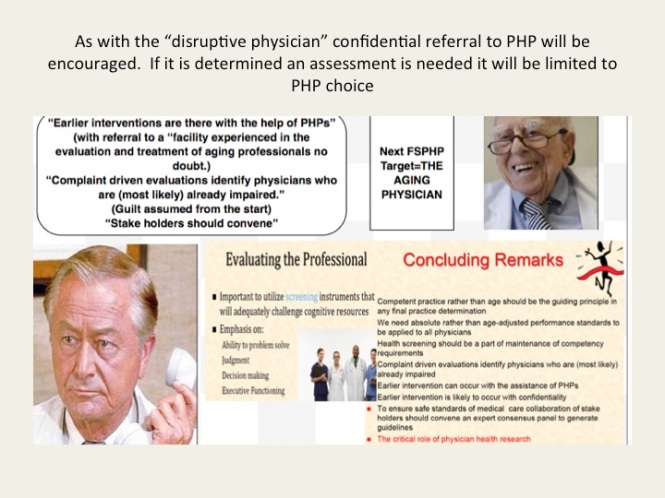
Aging Physicians Next Target of Physician Health Programs

As with the “impaired” and “disruptive” physician, the “physician health and wellness movement” organized as the Federation of State Physician Health Programs (FSPHP) is linking the “aging” physician with threats to patient safety and  hospital liability.  “Experts say doing nothing could result in lawsuits, higher liability insurance rates, ruined reputations for practices and all involved, and even possible losses of practices and the licenses of non-reporting physicians.”

And if you look at the articles and presentations aimed at  the administrative, regulatory, and legal arenas of medicine it appears a new moral panic is percolating in the “physician wellness” cauldron.

Labelling a group dangerous and creating fear in those responsible for that group is an effective means to sway policy and opinion.

With absolutely no evidence base these groups have acted as   “moral entrepreneurs ” and used this same methodology to successfully change policy and regulation in the medical profession and advance their goals.  The methodology is to

1. Label a group and link that group to danger

2. Offer to assist in identifying and eliminating that danger

3. Corner the market and control all aspects including assessment, testing and monitoring by swaying those in authority to make it public policy and regulation.  Screen Shot 2015-03-11 at 8.10.37 PM

The methodology is not new–witches are real, witches are dangerous and witches need to be identified and exterminated at all costs.  Convince the authorities to assist you in protecting the public from harm and advance  the greater good

In this manner the FSPHP has convinced state medical boards to adopt and enforce policies that have incrementally and systematically increased their autonomy, scope and power since they first cultivated a relationship with the Federation of State Medical Boards (FSMB).  This occurred in 1995 when they took an uninvited seat at the table of power by offering a non-disciplinary “safe harbor” as an alternative to discipline for doctors impaired by drugs or alcohol.

Since then they have increased their scope from  the “impaired” to the “disruptive” to everything else.  Arising from the “impaired physicians movement”  as “addiction specialists” these doctors whose specialty of addiction is not even recognized by the American Board of Medical Specialties have now become the “experts” in all matters related to physician health.  Jacks of all trades covering neurology, psychiatry, geriatrics, and occupational medicine.

A 2011 updated FSMB  Policy on Physician Impairment  states that Medical Boards should recognize the state Physician Heath Program (PHP) as their experts in all matters relating to licensed professionals with “potentially impairing illness,”   and these  include those potentially impairing maladies that increase as we age.

They are also using “everyone else does it why don’t we?” logical fallacy.  According to a Washington Post article “other professions are subject to age-related regulations. For example, airline pilots must undergo regular health screenings staring at age 40 and must retire at age 65. FBI agents must retire at age 57.”Screen Shot 2015-03-11 at 8.10.59 PM

Proposing drug testing in doctors a  JAMA article  uses this same logic stating when sentinel events occur in the airline, nuclear power and railway industry the get drug tested.  However all of these industries use FDA approved tests, certified labs, strict chain-of-custody and MRO review in their drug testing.  One of the authors of the JAMA paper, Dr. Greg Skipper, introduced the non-FDA approved and unvalidated Laboratory Developed Tests currently used in PHPs such as EtG.   He claims no conflicts-of-interest.   Comparing drug testing to industries that use the highest quality of testing and safeguards to protect the donor from false-positives to the junk science used in PHPs is comparing apples to oranges. Which one do you think they’s be using in the random drug testing of doctors?

Furthermore, airline pilots, railway engineers and nuclear power plant employees have a choice of assessment and treatment centers should they get a positive test.  Doctors do not.  They are mandated to “PHP-approved” facilities.  This is enforced by state medical boards as they adhere to an ASAM   Public Policy Statement  recommending only “PHP approved” treatment centers be used for assessment and treatment and a recent  audit  found the PHP in North Carolina could not provide any measurable indices  or qualitative indicators of how an assessment center is stamped “approved.” The best they could come up with is “reputation” and other ‘informal sources.  What the audit missed is all of the 19  out-of-state “PHP-approved” centers Medical Directors can be found on this list.

Screen Shot 2015-03-11 at 8.13.13 PM

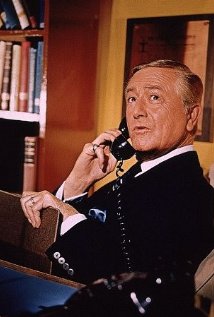
And what will happen with the “aging physician” is the same.  Doctors will be forced into “assessments” at “PHP-approved” facilities where they will be misdiagnosed, over-diagnosed and forced into monitoring contracts under threat of loss of licensure. Goodbye Dr. Welby!

IMG_8900

← Back

Thank you for your response. ✨

IMG_0933

IMG_0706

The Elephant in the Room: Physician Suicide and Physician Health Programs

The Elephant in the Room: Physician Suicide and Physician Health Programs.

images-2

Accountability is  rooted in organizational purpose and public trust.  Unfortunately, humanitarian ideals have been trampled by the imposition of corporate front groups who advance  hidden agendas under guises of science and scholarship  and patinas of benevolence.  Rife with conflicts of interest, these groups obfuscate, mislead and exploit us to further an underlying political and corporate agenda.  Healthcare and medicine has been infiltrated by various groups that pose a serious threat to both the humanitarian and evidence based aspects.

← Back

Thank you for your response. ✨

rushmore-07

Screen Shot 2014-11-26 at 6.52.55 PM

The “Impaired Physician”–Increasing the grand scale of the hunt

“Wretched creatures are compelled by the severity of the torture to confess things they have never done and so by cruel butchery innocent lives are taken; and by new alchemy, gold and silver are coined from human blood.”  Father Cornelius Loos  ( 1592 )


Screen Shot 2015-02-28 at 8.15.35 AM

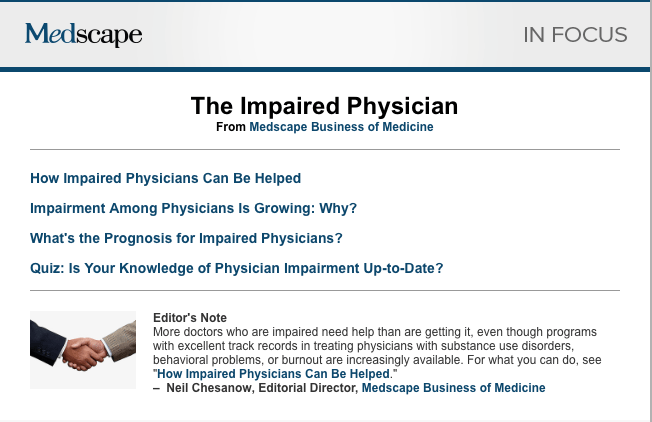
How Impaired Physicians Can be Helped–Medscape Business of Medicine Article Published February 24, 2015. Click on image to access


How can impaired Physicians be helped?

1.   Impairment among physicians is growing:  Why?  

Answer:  It is not.   State Physician Health Programs (PHPs) are “diagnosing” impairment when there is no impairment.  They are pathologizing the normal and expanding in scope to increase the grand scale of the hunt.

2.  What’s the Prognosis for Impaired Physicians?

Answer:  Not Good.   Those who need help (the truly impaired)  are afraid to get help for fear of being monitored by their state PHP while many of those ensnared by PHPs are not impaired.   There is absolutely no oversight, regulation or accountability.  This needs to be evaluated in the context of physician suicide.    The system is one of institutional injustice and abuse of power. 

3.  Is your knowledge of physician impairment up-to-date?  

Answer:   No.  This will only occur after an evidence-based Cochrane type review separates information from misinformation; An objective non-biased investigation by outside actors identifying any conflicts-of-interest, misconduct or lack of evidence-base in the current system and separating the art and science of the medical profession from the politicalization and exploitation of the medical profession.

The list of doctors on Like-Minded Docs  solves the final piece of a  puzzle. It explains why so many doctors across the country are claiming fabrication and manipulation of personality and cognitive tests to support nonexistent diagnoses at these “PHP-approved” assessment centers.    The relationship between the state PHP’s and the “PHP-approved” assessment centers is the same as it is between the state PHPs and the corrupt labs.

As Drs. John Knight and J. Wesley Boyd note in Ethical and Managerial Considerations Regarding State Physician Health Programs, published in the Journal of the American Society of Addiction Medicine,  this is what is known as “tailoring a diagnosis”–a euphemism for the political abuse of psychiatry.  According to the Global Initiative on Psychiatry “Political abuse of psychiatry refers to the misuse of psychiatric diagnosis, treatment and detention for the purposes of obstructing the fundamental human rights of certain individuals and groups in a given society.”   The shoe fits here.  In fact it fits very well.

Screen Shot 2015-01-09 at 1.59.40 AM

The Global Initiative on Psychiatry opposes the Political_Abuse_of_Psychiatry  wherever  it may occur and “supports those psychiatrists and psychiatric organizations that pressure the offending states to discontinue the practice and lobby vigorously those organizations which are wavering. The main way for individuals and organizations to work is through diplomatic channels. It is necessary to expose the practice and to embarrass countries that are at fault by expelling them from organizations such as the World Psychiatric Association. This can only be ensured by properly organized open investigation of psychiatric practice and interviews with the alleged victims”

Political abuse of psychiatry in the profession of medicine needs to be treated in the same way.

An evidence based Cochrane type assessment of their “research” and an Institute of Medicine Conflict of Interest review are long overdue.

In evaluating a physician for “impairment” or being “disruptive” the Physician Health Programs (PHPs)  under the Federation of State Physician Health Programs (FSPHP)  are not gathering data to form a hypothesis.  They are making data fit a hypothesis that arrived at the out-of-state “PHP-approved” assessment center well before the alleged miscreant doctor.

With guilt assumed from the start, no due process, no appeal, and no way out physicians are being bullied, demoralized, and dehumanized  to the point of hopelessness, helplessness and despair.

This needs to end now.

Medicine is predicated on competence, good-faith, and integrity. 

Medical ethics necessitates beneficence, respect, and autonomy. 

The scaffold erected here is designed for coercion and control. 

Exposure, transparency, and accountability are urgent. 

The emperor has no clothes.

Sunshine is the best disinfectant.

https://artbylisabelle.wordpress.com/2015/03/01/three-shells-and-a-pea-asam-fsphp-and-lmd/

Edit (in 5 minutes)