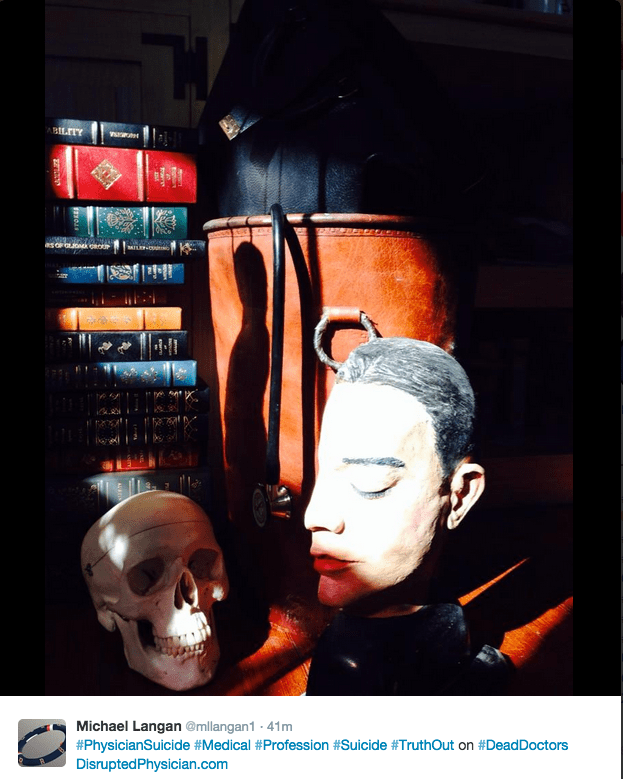
Physician Suicide, the “Impaired Physician Movement” and ASAM: The Dead Doctors at Ridgeview Institute under G. Douglas Talbott

cropped-hanging_witch_01.jpg

Gentlemen, it is a disagreeable custom to which one is too easily led by the harshness of the discussions, to assume evil intentions. It is necessary to be gracious as to intentions; one should believe them good, and apparently they are; but we do not have to be gracious at all to inconsistent logic or to absurd reasoning. Bad logicians have committed more involuntary crimes than bad men have done intentionally.”–Pierre S. du Pont (September 25, 1790)

“It is easier to believe a lie one has heard a hundred times than a truth one has never heard before.” –Robert S. Lynd


Ridgeview Institute was a drug and alcohol treatment program for “impaired physicians” in Georgia created by G. Douglas Talbott, a former cardiologist who lost control of his drinking and recovered through the 12-steps of Alcoholics Anonymous.

Up until his death on October 18, 2014 at the age of 90, Talbott  owned and directed a number of treatment facilities for impaired professionals, most recently the Talbott Recovery Campus in Atlanta, one of the preferred referrals for physicians ordered into evaluation and treatment by licensing boards today.

G. Douglas Talbott is a prototypical example of an “impaired physician movement” physician–in fact in many ways he may be considered the”godfather” of the current organization.  He helped organize and serve as past president of the American Society of Addiction Medicine (ASAM) and was a formative figure in the American Medical Association’s (AMA’s) Impaired Physician Program.

Screen-shot-2014-10-20-at-11.00.23-PM-1024x701

G. Douglas Talbott (center), with sons Mark (left) and Dave (right). (image: Ham Biggar)

The cost of a 28-day program for nonprofessionals at Ridgeview in 1987 was $10,000 while the cost was “higher for those going through impaired-health professionals program,” which lasted months rather than 28 days.1

In 1975 after creating the DeKalb County Impaired Physicians Committee for the Medical Association of Georgia, Talbott founded the Georgia Disabled Doctors Program for the assessment and treatment of physicians. Founded in part because “traditional one-month treatment programs are inadequate for disabled doctors,” and they required longer treatment to recover from addiction and substance abuse.   According to Talbott, rehabilitation programs that evaluate and treat the rest of the population for substance abuse issues are incapable of doing so in doctors as they are unlike any other of the inhabitants of our society. Physicians are unique. Unique because of their incredibly high denial”, and he includes this in what he calls the “Four MDs,” “M-Deity”, “Massive Denial” “Militant Defensiveness” and “More Drugs.”2   And these factors set doctors apart from the rest.

According to Talbott, “impaired doctors must first acknowledge their addiction and overcome their ‘terminal uniqueness’ before they can deal with a drug or alcohol problem.” “Terminal uniqueness “ is a phrase Talbott uses to describe doctors’ tendency to think they can heal themselves.

“M-Deity” refers to doctors “being trained to think they’re God;”3 blinded by an overblown sense of self-importance and thinking that they are invincible-an unfounded generalization considering the vast diversity of individuals that make up our profession.   Although this type of personality does exist in medicine,  it is a small minority -just one of many opinions with little probative value offered as factual expertise by the impaired physician movement and now sealed in stone.

Former Assistant Surgeon General (Ret) Admiral (Ret) John C. Duffy

Former Assistant Surgeon General (Ret) Admiral (Ret) John C. Duffy

This attitude, according to some critics, stems from the personal histories of the treatment staff, including Talbott, who are recovering alcoholics and addicts themselves. One such critic was Assistant Surgeon General under C. Everett Koop John C. Duffy who said that Ridgeview suffered from a “boot-camp mentality” toward physicians under their care and “assume every physician suffering from substance abuse is the same lying, stealing, cheating, manipulating individual they were when they had the illness. Certainly some physicians are manipulative, but it’s naïve to label all physicians with these problems.”1

001p3_xlg.preview

LeClair Bissell

American Society of Addiction Medicine (ASAM) President (1981-1983) LeClair Bissell was also highly critical of Talbott’s approach. Bissell, co-author of the first textbook of ethics for addiction professionals4 when asked if there was any justification to the claim that doctors are sicker than other people and more vulnerable to addiction replied:

“Well, based on my treatment experience, I think they are less sick and much easier to treat than many other groups. I think one reason for that is that in order to become a physician…one has to have jumped over a great many hurdles. One must pass the exams, survive the screening tests and the interviews, be able to organize oneself well enough to do examinations and so on, and be observed by a good many colleagues along the way. Therefore I think the more grossly psychotic, or sicker, are frequently screened out along the way. The ones we get in treatment are usually people who are less brain-damaged, are still quite capable of learning, are reasonably bright. Not only that, but they are quite well motivated in most cases to hang on to their licenses, the threat of the loss of which is frequently what puts them in treatment in the first place. So are they hard to treat? No! Are they easy patients? Yes! Are they more likely to be addicted than other groups? We don’t know.”5

“I’m not much for the bullying that goes along with some of these programs,” Bissell commented to the Atlanta Journal and Constitution in 1987.3

The constitution did a series of reports after five inpatients died by suicide during a four-year period at Ridgeview.6 In addition there were at least 20 more who had killed themselves over the preceding 12 years after leaving the treatment center.1

Bissell, the recipient of the 1997 Elizabeth Blackwell Award for outstanding contributions to the cause of women and medicine remarked: “When you’ve got them by the license, that’s pretty strong leverage. You shouldn’t have to pound on them so much. You could be asking for trouble.”3

According to Bissell: “There’s a lot of debate in the field over whether treatment imposed by threats is worthwhile…To a large degree a person has to seek the treatment on his own accord before it will work for him.”3

A jury awarded $1.3 million to the widow of one of the deceased physicians against Ridgeview,7 and other lawsuits initiated on behalf of suicides were settled out of court.6

The Constitution reported that doctors entered the program under threats of loss of licensure “even when they would prefer treatment that is cheaper and closer to home.” 8 The paper also noted that Ridgeview “enjoys unparalleled connections with many local and state medical societies that work with troubled doctors,” “licensing boards often seek recommendations from such groups in devising an approved treatment plan,” and those in charge are often “physicians who themselves have successfully completed Ridgeview’s program.”8

In 1997 William L. White interviewed Bissell whom he called “one of the pioneers in the treatment of impaired professionals.” The interview was not published until after her death in 2008 per her request.   Noting that her book Alcoholism in the Professions9 “remains one of the classics in the field”, White asked her when those in the field began to see physicians and other professionals as a special treatment population; to which she replied:

“When they started making money in alcoholism. As soon as insurance started covering treatment, suddenly you heard that residential treatment was necessary for almost everybody. And since alcoholic docs had tons of money compared to the rest of the public, they not only needed residential treatment, they needed residential treatment in a special treatment facility for many months as opposed to the shorter periods of time that other people needed.”10

Talbott claimed a “92.3 percent recovery rate according to information compiled from a five-year follow-up survey based on complete abstinence and other treatment.”11 A 1995 issue of The Federal Bulletin: The Journal of Medical Licensure and Discipline, published by the Federation of State Medical Boards, contains articles outlining impaired physician programs in 8 separate states. Although these articles were little more than descriptive puff-pieces written by the state PHP program directors and included no described study-design or methodology the Editor notes a success rate of about 90% in these programs and others like them 12 and concludes:

“cooperation and communication between the medical boards and the physician health programs must occur in an effort to protect the public while assisting impaired physicians in their recovery.” 12

No one bothered to examine the methodology to discern the validity of these claims and it is this acceptance of faith without objective assessment that has allowed the impaired physician movement through the ASAM and FSPH to advance their agenda;  confusing ideological opinions with professional knowledge.

“There is nothing special about a doctor’s alcoholism,” said Bissel

“These special facilities will tell you that they come up with really wonderful recovery rates. They do. And the reason they do is that any time you can grab a professional person by the license and compel him or her into treatment and force them to cooperate with that treatment and then monitor them for years, you’ll get good outcomes—in the high 80s or low 90s in recovery rates—no matter what else you do.”10
“The ones I think are really the best ones were not specialized. There were other well-known specialty clinics that claimed all the docs they treated got well, which is sheer rot. They harmed a great many people, keeping them for long, unnecessary treatments and seeing to it that they hit their financial bottom for sure: kids being yanked out of college, being forced to sell homes to pay for treatment, and otherwise being blackmailed on the grounds that your husband has a fatal disease. It’s ugly.”10

Stanton Peele’s “In the Belly of the American Society of Addiction Medicine Beast” describes the coercion, bullying, threats and indoctrination that are standard operating procedure in Talbott’s facilities.13  Uncooperative patients, “and this covers a range of sins of commission or omission including offering one’s opinion about one’s treatment,” are “threatened with expulsion and with not being certified-or advocated for with their Boards.”13

The cornerstone of treatment is 12-step spiritual recovery. All new patients are indoctrinated into A.A. and coerced to confess they are addicts or alcoholics. Failure to participate in A.A. and 12-step spirituality means expulsion from the program with the anticipated result being loss of one’s medical license.

In May 1999 Talbott stepped down as president of the American Society of Addiction Medicine (ASAM) as a jury awarded Dr. Leonard Masters a judgment of $1.3 million in actual damages and an undisclosed sum in punitive damages for fraud, malpractice, and the novel claim of false imprisonment.14

The fraud finding required a finding that errors in the diagnosis were intentional. Masters, who was accused of overprescribing narcotics to his patients was told by the director of the Florida PHP that he could either surrender his medical license until the allegations were disproved or submit to a four-day evaluation.

Masters agreed to the latter, thinking he would have an objective and fair evaluation. He was instead diagnosed as “alcohol dependent” and coerced into “treatment under threat of loss of his medical license. Staff would routinely threaten to report any doctor who questioned any aspect of their diagnosis or treatment to their state medical boards “as being an impaired physician, leaving necessary treatment against medical advice,”14  the equivalent of professional suicide.

Masters, however, was not an alcoholic.

According to his attorney, Eric. S. Block,  “No one ever accused him of having a problem with alcohol. Not his friends, not his wife, not his seven children, not his fellow doctors, not his employees, not his employers, No one.” 15

He was released 4 months later and forced to sign a five-year “continuing care” contract with the PHP, also under continued threat of his medical license.

Talbott faced no professional repercussions and no changes in their treatment philosophy or actions were made. They still haven’t.  They have simply tightened the noose and taken steps to remove accountability.

Up until his recent death, Talbott continued to present himself and ASAM as the most qualified advocates for the assessment and treatment of medical professionals for substance abuse and addiction.16

ASAM and like-minds still do.

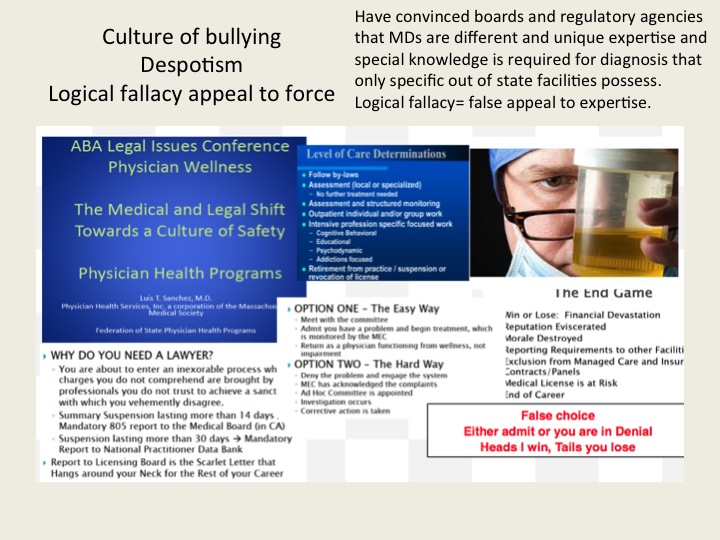
In most states today any physician referred for an assessment for substance abuse will be mandated to do so in a facility just like Ridgeview.

There is no choice.   In mechanics and mentality, this same system of coercion, control, and indoctrination has metastasized to almost every state only more powerful and opaque in an unregulated gauntlet protected from public scrutiny, answerable and accountable to no one.  Laissez faire Machiavellian egocentricity unleashed.    For what they have done is taken the Ridgeview model and replicated it over time state by state and tightened the noose.  By subverting the established Physician Health Programs (PHPs) started by state medical societies and staffed by volunteer physicians they eliminated those not believing in the mentality of the groupthink.   They then mandated assessment and treatment of all doctors be done at a “PHP-approved” facility which means a facility identical to Ridgeview.  This was done  under the scaffold of the Federation of State Physician Health Programs (FSPHP).  They are now in charge of all things related to physician wellness in doctors.

  1. Durcanin C, King M. The suicides at Ridgeview Institute: Suicides mar success at Ridgeview with troubled professionals. Atlanta Journal and Constitution. December 18, 1987, 1987: A13.
  2. Gonzales L. When Doctors are Addicts: For physicians getting Drugs is easy. Getting help is not. Chicago Reader. July 28, 1988, 1988.
  3. King M, Durcanin C. The suicides at Ridgeview Institute: A Doctor’s treatment program may be too tough, some say. Atlanta Journal and Constitution. December 18, 1987a, 1987: A12.
  4. Bissell L, Royce JE. Ethics for Addiction Professionals. Center City, Minnesota: Hazelden; 1987.
  5. Addiction Scientists from the USA: LeClair Bissell. In: Edwards G, ed. Addiction: Evolution of a Specialist Field. 1 ed: Wiley, John & Sons, Incorporated; 2002:408.
  6. Durcanin C. The suicides at Ridgeview Institute: Staff members didn’t believe Michigan doctor was suicidal. Atlanta Journal and Constitution. December 18, 1987, 1987: A8.
  7. Ricks WS. Ridgeview Institute loses $1.3 million in suit over suicide. Atlanta Journal and Constitution. October 11, 1987, 1987: A1.
  8. King M, Durcanin C. The suicides at Ridgeview Institute: Many drug-using doctors driven to Ridgeview by fear of losing licenses. Atlanta Journal and Constitution. December 18, 1987b, 1987: A1.
  9. Bissell L, Haberman PW. Alcoholism in the Professions. Oxford University Press; 1984.
  10. White W. Reflections of an addiction treatment pioneer. An Interview with LeClair Bissell, MD (1928-2008), conducted January 22, 1997. Posted at http://www.williamwhitepapers.com. 2011.
  11. Williams c. Health care field chemical dependency threat cited. The Tuscaloosa News. January 16, 1988, 1988: 16.
  12. Schneidman B. The Philosophy of Rehabilitation for Impaired Physicians. The Federal Bulletin: The Journal of Medical Licensure and Discipline. 1995;82(3):125-127.
  13. Peele S. In the Belly of the American Society of Addiction Medicine Beast. The Stanton Peele Addiction Website (accessed March 28, 2014) http://web.archive.org/web/20080514153437/http://www.peele.net/debate/talbott.html.
  14. Ursery S. $1.3M verdict coaxes a deal for doctor’s coerced rehab. Fulton County Daily Report. May 12, 1999b 1999.
  15. Ursery S. I was wrongly held in alcohol center, doctor charges. Fulton Count y Daily Report. April 27, 1999a 1999.
  16. Parker J. George Talbott’s Abuse of Dr. Leon Masters MD ( http://medicalwhistleblowernetwork.jigsy.com/george-talbott-s-abuse-of-leon-masters ). Medical Whistelblower Advocacy Network.

    There is enormous inertia—a tyranny of the status quo—in private and especially governmental arrangements. Only a crisis—actual or perceived—produces real change. When that crisis occurs, the actions that are taken depend on the ideas that are lying around. That, I believe, is our basic function: to develop alternatives to existing policies, to keep them alive and available until the politically impossible becomes politically inevitable.-Milton Friedman
    Screen Shot 2014-11-19 at 4.27.00 PM

Physician Suicide

Screen Shot 2014-11-19 at 8.09.52 AM

Physician Suicide 101: Secrets, Lies & Solutions by Pamela Wible, M.D.

Physician Suicide, the “Impaired Physician Movement” and ASAM:  The Dead Doctors at Ridgeview Institute under G. Douglas Talbott, by Michael Langan, M.D.

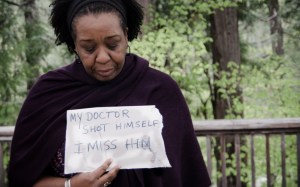
Patient-with-sign-1024x641-1

Screen Shot 2014-11-19 at 4.27.00 PM

The High PROFITS of the 12 Step Cult Religion and Bain Capital

“The belief that there are such things as witches is so essential a part of the faith that obstinately to maintain the opposite opinion manifestly savors of heresy.”

So begins Malleus Maleficarum , a witch hunters manual published in 1486 that launched a new paradigm for all those concerned with the identification and extirpation of witches. Used as a judicial case-book the Malleus set forth definitions of witchcraft, rules of evidence and the canonical procedures by which suspected witches were tortured and put to death. Written by Inquisitors for Inquisitor, the Malleus construct came to be regarded as irrefutable truth and contributed to the identification and execution of as many as 60,000 “witches”, predominantly women. The 29th and last edition was published in 1669.

Because of the nature of the enemy the evidentiary standard was lowered and any witness, no matter what his credentials, could testify against the accused.

Using the nebulous “witch label” anyone with a grudge or suspicion could accuse anyone of witchcraft .

From the 15th century through the early 17th century a confederacy of “authorities” calling themselves “demonologists” existed and made money off the misery of others.

Identification of witches was detailed in the Malleus including both physical and behavioral clues. Physical signs included things such as bushy eyebrows and thin lips. The Malleus declared that witches have a “Devil’s mark (stigmata diaboli) or Devils seal (sigilum diaboli) which was usually a scar, birthmark, or blemish. An extra nipple (polythelia) was a tell-tale sign. Behavioral manifestations included living alone, cultivating strange herbs in the garden, public singing or dancing and saying hello to a neighbors cat.

Physician oversight of witch persecution was standard.  So too was the involvement of “witch-prickers” who were able to provide their expertise and “medical” testing in the assessment and diagnosis of the witch.

Pricking them with needles, awes, and bodkins to prove they were indeed nefarious and non-human was a surefire way to line one’s pockets but for the pedophiles and pervs there was an added bonus—a thorough searching for that stigmata diaboli on someone else’s dime.
Through the witch trials clerics, doctors, and lawyers used their expertise as witnesses to increase their prestige. Witch hunts developed into a means of economic profit. Some gained a lot of money from the witch trials. The witch or her relatives paid for the salaries of those who worked the witch trials including judges, court officials, torturers, physicians, clergymen, scribes, guards, attendants.

Even the people who made the stakes and scaffolds for executions gained from the conviction and death of each witch.

“Witch hunting,” wrote the historian Rossell Hope Robbins, “was self-sustaining and became a major trade, employing many people, all battening on the savings of the victims.” The costs of a witch trial were usually paid for by the estate of the accused or their family.

And what my friend Laura Tompkin’s describes here in no different; except in place of “demonologists” we now have “addictionologists.”

Both faulty paradigms with a lot of people making money hand over fist.

In 1592 Father Cornelius Loos wrote:

“Wretched creatures are compelled by the severity of the torture to confess things they have never done and so by cruel butchery innocent lives are taken; and by new alchemy, gold and silver are coined from human blood.”

And this is no different. No different at all.

12 Step Cult Religion Exposed's avatar12 Step Cult Religion Exposed

The following article will educate you on the annual profits made by the 12 step industry.  Whenever steppers claim that their cult is free, you now have proof that it is most certainly not in any way, shape or form, free.  Just because people are too lazy, ignorant and/or brainwashed, is no excuse for perpetuating dangerous lies.  Please note that anything in parentheses is my addition and anything bolded is also mine.  This author is misinformed, as is the general public, and classifies alcohol disorders as diseases.  However, this misinformation does not disqualify the facts here about rehab profits and Bain Capital.

Bain Capital’s grip on addiction – The profit of 12-step treatment

By Jamie Wendland

Last year nearly 2.5 million people 12 years of age or older sought treatment for substance abuse in the U.S., according to the National Survey on Drugs and Health. 2.3 million Americans…

View original post 1,696 more words

Disrupted Physician 101.3 –“For What it’s Worth”— The ASAM/ABAM Diploma Mill

“In a time of universal deceit, telling the truth is a revolutionary act.”
— George Orwell

IMG_6274 2

I can think of no other specialty or subspecialty in the profession of medicine where non-existent expertise can be incontestably announced and implemented.  If I claimed to be an ace neurosurgeon or an expert otolaryngologist and started practicing my claimed skills in the hospital I would be called on it pretty quick by both colleagues and patients–deemed a delusional fraud and run out on a rail within a week.  Both law enforcement, attorneys and psychiatry would be called in short order.

Yet doctors who have not met the usual and customary standards for professional and educational quality that have been identified for medical specialties and subspecialties are able to claim expertise in “addiction medicine” and everybody just lets them.

To make this point I sat for the 2010 American Board of Addiction Medicine Certification Examination.  I did this to make a point–kind of like seeing how easy it is to buy a gun at a Walmart.

I simply went to the ABAM Website, completed the application and paid the fee.

Screen Shot 2014-11-24 at 1.59.02 AM

The requirements to sit for the exam included so many “practice experience hours” over the past five years and 50 CME credits related to addiction.

With a year of psychopharmacology research, a half-day per week moonlighting at the MBTA medical clinic giving drug tests to bus drivers and another overnight moonlighting job giving medical clearance to patients at a local psychiatric hospital detox unit I satisfied the first requirement.   For the latter I looked through the last five years of morning reports, noontime lectures and grand rounds I went to and added them up and, falling a little short supplemented the CME credits with some online modules.

And with that I was given a date at Pearson to take the test.

I have absolutely no training or education in the field of addiction medicine.  I didn’t pick up a book or study anything. I did not prepare at all. I did not even get a good night’s sleep the night before and stayed up until 2:30 a.m.   Nevertheless I went to the testing facility the next morning and finished the test within an hour and a half.  My score is below.  Aced it.   Passing score was 394 and I got a 459.

Screen Shot 2014-03-17 at 3.29.21 PM

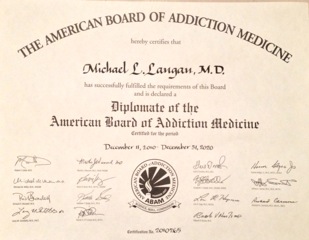
And the point I am trying to make is I am no expert in Addiction Medicine.  Neither is 4000 of me. Yet the letter below says I am.  Majority apparently rules.

Giving false expertise to the unqualified and granting them power over others is just as dangerous as the gun from Walmart.  They can both kill.

An interest in something does not an expert make. If we allow this then the ASAM 12-step chronic brain disease model not only swallows addiction medicine but tarnishes all of medicine.  An imposition by force and the deep pockets of the billion dollar drug and alcohol testing, assessment and treatment industry.

ASAM is not a true medical specialty. It is a special interest group.   ABAM is not recognized by the American Board of Medical Specialties (ABMS).

The arguments seem to be:

1) Addiction is a prevalent “disease”  that needs to be “treated;”

2) There are not enough Addiction Psychiatrists to diagnose and treat them.

3) Being an M.D. addict or alcoholic gives enough knowledge and apprenticeship skills to diagnose and treat others with the same affliction.

4) Let’s utilize them to fill the void.

This is logical fallacy and it is dangerous.

The validity and reliability of opinions lie in their underlying methodology and evidence base. Reliance on the personal authority of any expert or group of experts is the fallacy of appeal to authority.

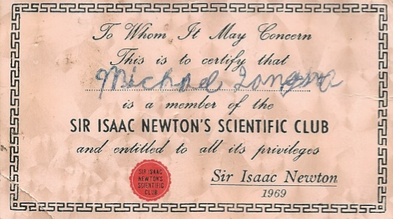
An interest in something does not an expert make.  I had an interest in science as a child but my certification as a member of Sir Isaac Newton’s Scientific Club did not make me a scientist.

Screen Shot 2015-05-10 at 2.27.52 AM

I have asthma but that does not make me a Pulmonologist.  That addiction “specialist” diagnosing and treating you may have 5 years prior been a proctologist; and maybe not even a very good one at that.

Somewhere there may be doctor with no post-graduate training in surgery wielding a scalpel and calling himself an expert surgeon, but it is difficult to imagine that he is a very good one.

I received my ABMS certification without meeting a single person. It was all done by mail.   This fits the very definition of “Diploma Mill.”  This is not to besmirch those with a sincere interest in helping others with addiction.  Many if not most of those involved are sincere. But this is not expertise.  This is not authority. And, as we have seen, this low bar opens the door for some very bad apples.

Screen Shot 2014-11-24 at 12.18.00 AM

“This election is not about issues,” Rick Davis, John McCain’s campaign manager said this week. “This election is about a composite view of what people take away from these candidates.” That’s a scary thought. For the takeaway is so often base, a reflection more of people’s fears and insecurities than of our hopes and dreams.
— Judith Warner, New York Times, September 4, 2008

images-2

Robin Williams Melancholy Suicide–Hopelessness, Helplessness, and Defeat

Robin Williams Melancholy Suicide–Hopelessness, Helplessness, and Defeat.


Robin Williams Melancholia

There’s something in his soul
O’er which his melancholy sits on brood,
And I do doubt the hatch and the disclose
Will be some danger—which for to prevent,
I have in quick determination……..
It shall be so.    Madness in great ones must not unwatched go.
—Hamlet Act III, Scene 1
According to Radar Online Robin Williams is looking “grim and focused.”  Grim? Yes. Focused? No.  His visage is one of entrapment, despair, and dread.
In  F. Scott Fitzgerald’s  The Great Gatsby, Nick Carraway observes that “the loneliest moment in someone’s life is when they are watching their whole world fall apart, and all they can do is stare blankly”   This is not focus but melancholia–hopelessness, helplessness, and defeat.

Allies

immaterialgrrl's avatarImmaterial Grrl

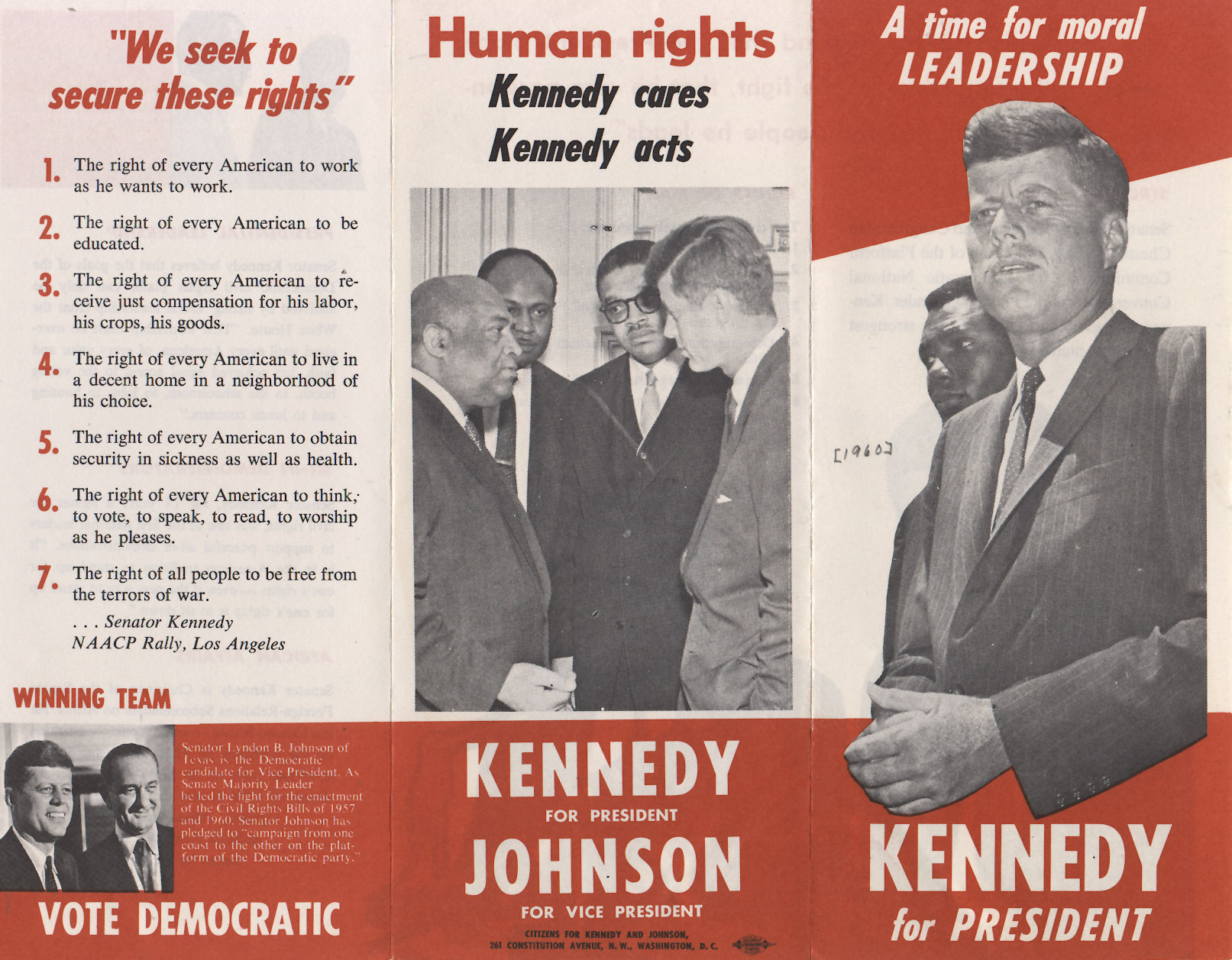
jfk-civilrights-flyer

(from http://library.duke.edu/rubenstein/scriptorium/americavotes/jfk-civilrights-flyer.jpeg)

First they came for the Socialists, and I did not speak out—
Because I was not a Socialist.

Then they came for the Trade Unionists, and I did not speak out—
Because I was not a Trade Unionist.

Then they came for the Jews, and I did not speak out—
Because I was not a Jew.

Then they came for me—and there was no one left to speak for me

I’m reminded of Martin Niemöller’s famous poem today not only because it’s Remembrance Day, but because I’ve been researching effective ways to confront oppression. Researchers have found that the motive for the oppression doesn’t determine how easily it’s stopped. Effective confrontations usually involved allies who didn’t belong to the oppressed group, so as I suspected, all oppression (or abuse) is about power.

I’m not as surprised at the obviousness of the results as I am at how long…

View original post 171 more words

Disrupted Physician 101.1: The “Impaired Physician Movement” and the History of the American Society of Addiction Medicine (ASAM)

Disrupted Physician 101.1: The “Impaired Physician Movement” and the History of the American Society of Addiction Medicine (ASAM).

Henry David Thoreau

“With one arm around the shoulder of religion and the other around the shoulder of medicine, we might change the world.”—Twelve Steps and Twelve Traditions, AA World Services, Inc (1953).

In 1985 the British sociologist G. V. Stimson wrote:

“The impaired physician movement is characterized by a number of evangelical recovered alcoholic and addict physicians, whose recovery has been accompanied by an involvement in medical society and treatment programs. Their ability to make authoritative pronouncements on physician impairment is based on their own claim to insider’s knowledge.”

The American Society of Addiction Medicine’s mission is to “establish addiction medicine as a specialty recognized by professional organizations, governments, physicians, purchasers, and consumers of health care products, and the general public.”  

In this they have succeeded.images-4

And in the year 2014 Stimson’s characterization of the “impaired physician movement” remains as accurate and apt as it was in 1985. But the “number of evangelical recovered alcoholic and addict physicians” has increased dramatically  (outnumbering Addiction Psychiatry by 4:1)  and their involvement in  medical society and treatment programs” has been realized and enforced through the state Physician Health Programs and their “PHP-approved’ assessment and treatment centers.

Their “ability to make authoritative pronouncements on physician impairment…based on their own claim to insider’s knowledge”  has become public policy and sanctified by Regulatory Medicine -essentially the Word of the Lord.

And the 1953 Alcoholics Anonymous prophecy that “With one arm around the shoulder of religion and the other around the shoulder of medicine, we might change the world” is also coming to pass.

But the world is not changing for the better as that arm around the shoulder of religion has its fingers deep in the pockets of the multi-billion dollar drug and alcohol testing and assessment and treatment industries.  And the arm around the shoulder of medicine has its fingers clamped tightly around its throat; a stranglehold in full throttle suffocating the Profession of Medicine with no meaningful opposition I can see.

Disrupted Physician 101.1: The “Impaired Physician Movement” and the History of the American Society of Addiction Medicine (ASAM)

“With one arm around the shoulder of religion and the other around the shoulder of medicine, we might change the world.”—Twelve Steps and Twelve Traditions, AA World Services, Inc (1953).
 
2055 

In order to comprehend the current plight of the Medical Profession and the dark clouds that lie ahead it is necessary to understand the history of the “impaired physician movement” and the American Society of Addiction Medicine.

In 1985 the British sociologist G. V. Stimson wrote:

“The impaired physician movement is characterized by a number of evangelical recovered alcoholic and addict physicians, whose recovery has been accompanied by an involvement in medical society and treatment programs. Their ability to make authoritative pronouncements on physician impairment is based on their own claim to insider’s knowledge.”1

The impaired physician movement emphasizes disease and therapy rather than discipline and punishment and believes that addiction is a chronic relapsing brain disease requiring lifelong abstinence and 12-step spiritual recovery. The drug or alcohol abuser or addict is a person lacking adequate internal controls over his or her  behavior;  for his own protection as well as the protection of society external restraints are required including involuntary treatment.

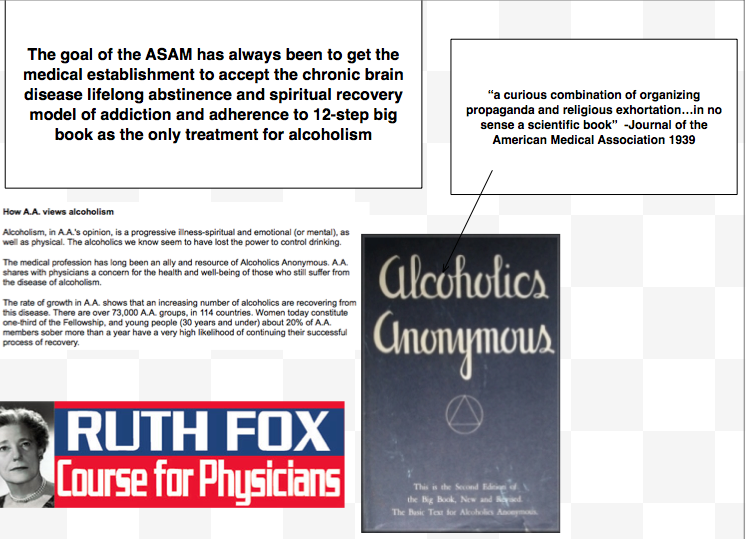
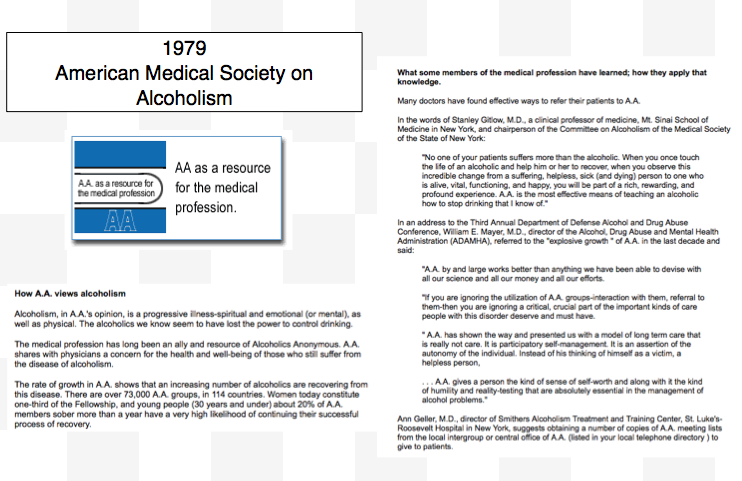
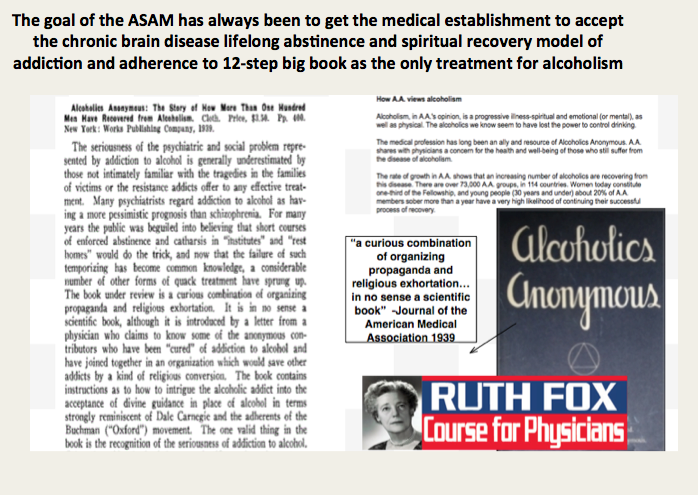
The American Society of Addiction Medicine can trace its roots to the 1954 founding of the New York City Medical Society on Alcoholism (NYCMSA) by Ruth Fox, M.D whose husband died from alcoholism.

Screen Shot 2014-02-23 at 4.42.15 PM

220px-ASAM_Logo

Finding that alcoholics in her psychoanalytic practice did not recover when she used conventional analytic approaches, she taught her patients about alcoholism as a disease and introduced “them to AA meetings held in her living room.”2

A number of physicians in the New York Medical Society were themselves recovering alcoholics who turned to Alcoholics Anonymous for care.3

The society, numbering about 100 members, established itself as a national organization in 1967, the American Medical Society on Alcoholism (AMSA).3

Screen Shot 2014-02-23 at 4.52.08 PM

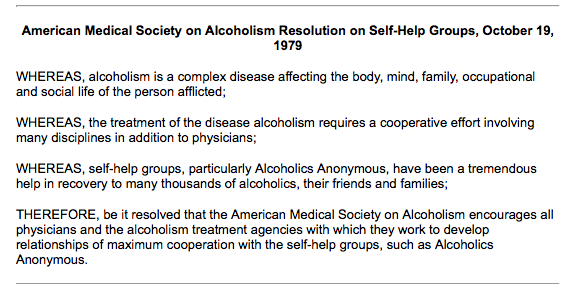
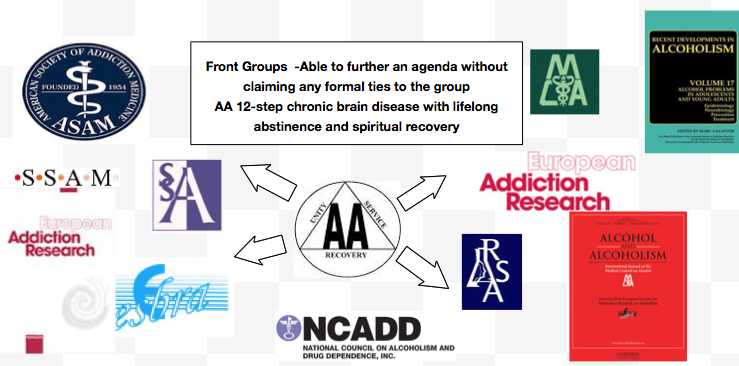
The group promoted the concept of alcoholism as a chronic relapsing disease requiring lifelong spiritual recovery through the 12-steps of AA.

By 1970 membership was nearly 500.2Screen Shot 2014-02-22 at 2.47.51 PM

In 1973 AMSA became a component of the National Council on Alcoholism (NCA), now the National Council on Alcoholism and Drug Dependence (NCADD) in a medical advisory capacity until 1983.

logo

“Abstinence from alcohol is necessary for recovery from the disease of alcoholism” became the first AMSA Position Statement in 1974.2

Screen Shot 2014-02-22 at 3.55.08 PM

Screen Shot 2014-02-22 at 1.49.24 PM

Screen Shot 2014-02-22 at 1.59.25 PM

In 1985 ASAM’s first certification exam was announced. According to Dr. Bean-Bayog, chair of the Credentialing Committee:

“A lot of people in the alcoholism field have long wanted physicians in the field to have a high level of skills and scientific credibility and for this body of knowledge to be accredited.”2

And in 1986 662 physicians took the first ASAM Certification Exam.medical

By 1988 membership was over 2,800 with 1,275 of these physicians “certified” as:

“having demonstrated knowledge and expertise in alcoholism and other drug dependencies commensurate with the standards set forth by the society.”4
“While certification does not certify clinical skill or competence,” the Board explained, “it does identify physicians who have demonstrated knowledge in diagnosis and treatment of alcoholism and other drug dependencies.”5
Somehow, I don't think this is quite what they had in mind!

Somehow, I don’t think this is quite what they had in mind!

Achieving “recognized board status for chemical dependence” and fellowships in  “chemical dependency”  are among the five-year objectives identified by the group.  These are to come to fruition by  “careful discussion, deliberation, and consultation” to “determine its form and structure and how best to bring it about.”5

The formation of ASAM State Chapters begins with California, Florida, Georgia, and Maryland submitting requests.6

In 1988 the AMA House of Delegates votes to admit ASAM to the House. According to ASAM News this “legitimizes the society within the halls of organized medicine.”2

In 1989 the organization changes its name to the American Society of Addiction Medicine (ASAM).2

Since 1990, physicians have been able to list addiction medicine as a self-designated area of practice using the specialty code “ADM.”

By 1993 ASAM has a membership of 3,500 with a total of 2,619 certifications in Addiction Medicine.

The Membership Campaign Task Force sets  a goal to double its membership of 3,500 to 7,000 by the year 2000 to assure “the future of treatment for patients with chemicals. It represents a blueprint for establishing addiction medicine as a viable entity.”7

Screen Shot 2014-02-23 at 3.12.12 PM

Ninety physicians become Fellows of the American Society of Addiction Medicine (FASAM) in 1996 “to recognize substantial and lasting contributions to the Society and the field of addiction medicine.”8

Among the honorees are Robert DuPont, G. Douglas Talbott, Paul Earley, and Mel Pohl. In addition to at least five consecutive years of membership and certification by the Society, Fellows must have “taken a leadership role in ASAM through committee service, or have been an officer of a state chapter, and they must have made and continue to make significant contributions to the addictions field.”8

The American Board of Addiction Medicine (ABAM) is formed in 2007 as a non-profit 501(C)(6) organization “following conferences of committees appointed by the American Society of Addiction Medicine” to “examine and certify Diplomats.”9

In 2009 National Institute on Drug Abuse (NIDA) Director Nora Volkow, M.D., gives the keynote address at the first ABAM Screen Shot 2014-11-18 at 10.12.23 AMboard certification diploma ceremony.10

According to an article in Addiction Professional “Board certification is the highest level of practice recognition given to physicians.”

“A Physician membership society such as ASAM, however, cannot confer ‘Board Certification,’ ” but a“ “Medical Board such as ABAM has a separate and distinct purpose and mission: to promote and improve the quality of medical care through establishing and maintaining standards and procedures for credentialing and re-credentialing medical specialties.”

The majority of ASAM physicians meet these requirements by “working in a chemical dependency treatment facility, taking continuing medical education courses in addiction, or participating in research.”11

“In the United States accredited residency programs in addiction exist only for psychiatrists specializing in addiction psychiatry; nonpsychiatrists seeking training in addiction medicine can train in nonaccredited ‘fellowships,’ or can receive training in some ADP programs, only to not be granted a certificate of completion of accredited training.”11

Screen Shot 2014-02-28 at 1.13.17 PM

Specialty recognition by the American Board of Medical Specialties, fifty Addiction Medicine Fellowship training programs and a National Center for Physician Training in Addiction Medicine are listed as future initiatives of the ABAM Foundation in 2014.

The American Society of Addiction Medicine’s mission is to “establish addiction medicine as a specialty recognized by professional organizations, governments, physicians, purchasers, and consumers of health care products, and the general public’12   

In this they have succeeded.

And in the year 2014 G.V. Stimson’s characterization of the “impaired physician movement” remains as accurate and apt as it was in 1985. But the “number of evangelical recovered alcoholic and addict physicians” has increased dramatically  (outnumbering Addiction Psychiatry by 4:1)  and their involvement in  medical society and treatment programs” has been realized and enforced through the state Physician Health Programs and their “PHP-approved’ assessment and treatment centers.Screen Shot 2014-11-18 at 10.11.55 AM

Their “ability to make authoritative pronouncements on physician impairment…based on their own claim to insider’s knowledge”  has become public policy and sanctified by Regulatory Medicine -essentially the Word of the Lord.

And the 1953 Alcoholics Anonymous prophecy that “With one arm around the shoulder of religion and the other around the shoulder of medicine, we might change the world” is also coming to pass.

But the world is not changing for the better as that arm around the shoulder of religion has its fingers deep in the pockets of the multi-billion dollar drug and alcohol testing and assessment and treatment industries.  And the arm around the shoulder of medicine has its fingers clamped tightly around its throat; a stranglehold in full throttle suffocating the Profession of Medicine with no meaningful opposition I can see.

IMG_1686

  1. Stimson GV. Recent developments in professional control: the impaired physician movement in the USA. Sociology of health & illness. Jul 1985;7(2):141-166.
  2. Four Decades of ASAM. ASAM News. March-April 1994, 1994.
  3. Freed CR. Addiction medicine and addiction psychiatry in America: Commonalities in the medical treatment of addiction. Contemporary Drug Problems. 2010;37(1):139-163.
  4. . American Medical Society on Alcoholism & Other Drug Dependencies Newsletter. Vol III. New York, NY: AMSAODD; 1988:12.
  5. Ursery S. $1.3M verdict coaxes a deal for doctor’s coerced rehab. Fulton County Daily Report. May 12, 1999b 1999.
  6. . AMSAODD News. Vol III. New York, NY: American Medical Society on Alcoholism & Other Drug Dependencies; 1988.
  7. Membership Campaign Update. ASAM News. Vol VIII: American Society of Addiction Medicine; 1993:11.
  8. . ASAM News. Vol 12. Chevy Chase, MD: American Society of Addiction Medicine; 1997:20.
  9. http://www.abam.net/about/history/.
  10. Kunz KB, Gentiello LM. Landmark Recognition for Addiction Medicine: Physician certification by the American Board of Addiction Medicine will Benefit all Addiction Professionals. Addiction Professional. 2009. http://www.addictionpro.com/article/landmark-recognition-addiction-medicine.
  11. Tontchev GV, Housel TR, Callahan JF, Kunz KB, Miller MM, Blondell RD. Specialized training on addictions for physicians in the United States. Substance abuse : official publication of the Association for Medical Education and Research in Substance Abuse. Apr 2011;32(2):84-92.
  12. http://www.asam.org/about-us/mission-and-goals.

images-4Screen Shot 2014-07-24 at 4.15.40 PM


Integrity and Accountability—The Declining State of Physician Health and the Urgent Need for Ethical and Evidence-Based Leadership

Integrity and Accountability—The Declining State of Physician Health and the Urgent Need for Ethical and Evidence-Based Leadership.

Good leadership requires correct moral and ethical behavior of both the individual and the organization. .  Integrity is necessary for establishing relationships of trust.  It requires a true heart and an honest soul.  People of integrity instinctively do the “right thing” in any and all circumstances.  Adherence to ethical codes of the profession is a universal obligation.  It excludes all exceptions.  Without ethical integrity, falsity will flourish.

The documents below show fraud. It is intentional.  All parties involved knew what they were doing, knew it was wrong but did it anyway.  The schism between pious rhetoric and reality is wide.

One measure of integrity is truthfulness to words and deeds.  These people claim professionalism, ethics and integrity.  The documents show a reality of hypocrisy and sanctimony.   But the hypocrisy seen here is also a danger because the careers and lives of doctors are in these peoples hands.

Dr. Clive Body in his book  Corporate Psychopaths   writes that “Unethical leaders create unethical followers, which in turn create unethical companies and society suffers as a result.”  And according to Dr. Robert Hare in  Without Conscience  “If we can’t spot them, we are doomed to be their victims, both as individuals and as a society. ”

Abuse under the utility of  medical coloration is especially egregious.  It violates the fundamental ethical principles of Medicine -Autonomy, Beneficence, Nonmaleficence and justice.  Intentionally falsifying a laboratory or diagnostic test to refer for an evaluation or support a diagnosis or give unwarranted “treatment” is unconscionable.

Similar fraud is occurring across the country.

This is an example of the institutional injustice that is killing physicians.  Finding themselves entrapped with no way out, helpless and hopeless they are feeling themselves bereft of any shade of  justice and killing themselves.  These are nothing more than bullies and accountability is essential.

quote-laws-can-embody-standards-governments-can-enforce-laws-but-the-final-task-is-not-a-task-for-robert-kennedy-345838

Physician Health Programs:  The Need for Integrity and Accountability of Organizations

Slide41

Accountability, or answerability,  is necessary to prevent abuse and corruption.  This requires both the provision of information and justification for actions.  What was done and why?

Professional guidelines and standards of care, ethical codes of conduct and the law are all objective benchmarks that can be used to assess the actions and decisions of others.  In any free society this necessitates the existence of organizations of truly independent opinion capable of standing in this judgment.

State PHPs are Non-Governmental Organizations (NGOs) over which the state health department has no supervisory oversight.  There is no regulation, no transparency and no accountability.  There is no public scrutiny and they police themselves.

In Ethical and Managerial Considerations Regarding State Physician Health Programs Drs. John Knight and J. Wesley Boyd call for greater oversight and scrutiny of PHPs by the medical community at large.   They recommended periodic auditing, national standards and regulation.  They also attempted to convince the Massachusetts Medical Society to implement changes at PHS where they served as Associate Directors with over two decades of collective experience.

These efforts to promote transparency and accountability at both local and national levels, however,  fell on deaf ears.

State PHPs have systematically removed those not conforming to groupthink.  Threatening them with litigation if they breached “peer-review” statutes and confidentiality agreements has effectively silenced them from reporting any misconduct, abuse or even crimes they may have witnessed.

In Massachusetts John Knight was removed in 2009 and J. Wesley Boyd in 2010.  In Ethical and Managerial Considerations Regarding State Physician Health Programs  they comment “if a PHP highlights a physician as particularly problematic, the evaluation center might–whether consciously or otherwisetailor its diagnosis and recommendations in a way that will support the PHP’s impression of that physician.”  So too will the clinical laboratories.  

How is this any different from the case of Dr. Farid Fata, the Michigan oncologist who intentionally diagnosed healthy patients with cancer so he could charge them for unneeded chemotherapy?  The U.S. Attorney called it the “most egregious” case of health care fraud ever. His acts may have contributed to one patient death.   The institutional injustice of the PHP system is causing countless deaths of physicians.

To consciously “tailor” a diagnosis is fraud.  To tailor a diagnosis of substance use disorder or any other psychiatric diagnosis is the political abuse of psychiatry.  Misrepresentation, dishonesty, deception, and distortion play no role in the Profession and Guild of Medicine.  To do so violates the basic moral principles of Medical Ethics–Autonomy, Beneficence, Non-Maleficence and Justice.

The “PHP-approved” assessment and treatment centers are all staffed by doctors of “like-mind.”  It is a rigged game.

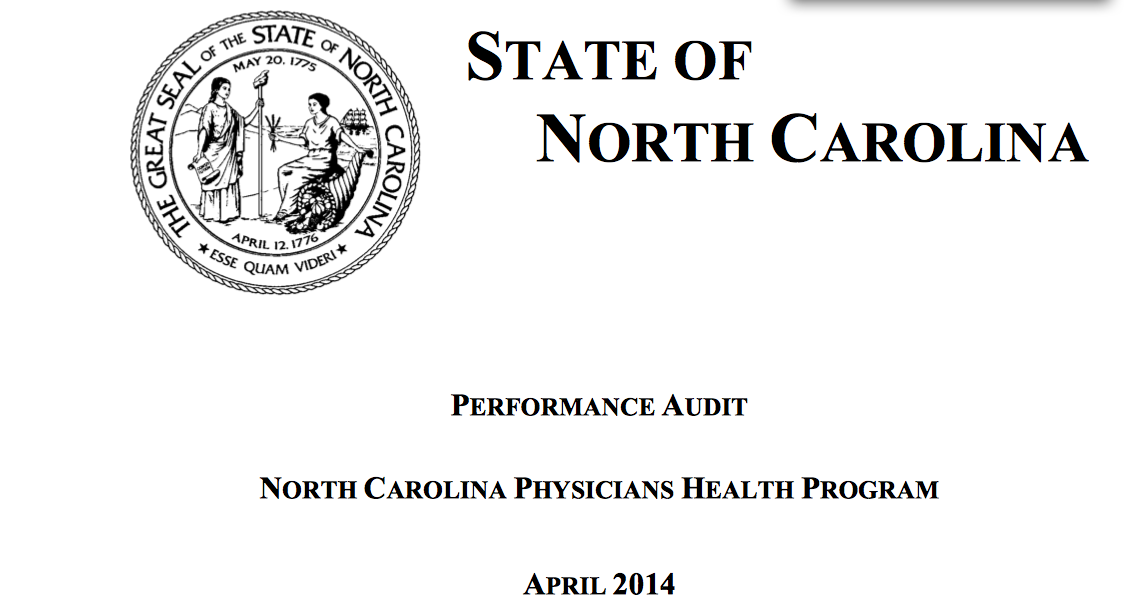
An audit of the North Carolina PHP found essentially no oversight from the Medical Board or Medical Society.  The audit found that “abuse could occur without being detected,” and this is by design.  By removing and blocking the provision of information necessary for accountability, restricting the liberties and freedoms of physicians, and increasing their power and control they have erected a framework of hidden abuse.

Screen Shot 2014-04-28 at 9.45.22 AM

The situation in North Carolina is standard operating procedure for PHPs under the Federation of State Physician Health Programs (FSPHP).  It is not the exception but the rule.

While outspoken in denouncing what they regard as unethical and unprofessional behavior by other doctors, they are resistant to apply even the most minimal standards to their own activities.

To whom are the PHPs accountable? Whom do they represent? There are legitimate concerns.

scotty