Psychopathy and the Medical Profession

IMG_9598Psychopathy is present in all professions. In The Wisdom of Psychopaths: What Saints, Spies, and Serial Killers Can Teach Us About Success, Kevin Dutton provides a side-by-side list of professions with the highest (CEO tops the list) and lowest (care-aid) percentage of psychopaths.   Interestingly surgeons come in at #5 among the professions with the highest percentage of psychopathy while doctors  (in general) are listed among the lowest.

Although by no means a scientific study, Psycopaths, by their very nature, seek power and it would make sense that a psychopath among us might pick surgery over pediatrics or pathology as they are drawn to power, prestige, and control. Be this as it may the incidence of psycopathy or psychopathic traits in doctors of any specialty is low. Statistics indicate that no more than 1% of men in general exhibit psychopathic traits. In Women these characteristics are far less.

Due to irresponsible behavior and a tendency to ignore or violate social conventions and rules,  psychopaths frequently find themselves engaged in conduct involving the criminal justice system or involved in other disciplinary action. Juvenile delinquency, arrests, school suspensions and misconduct related issues are barriers that preclude professional careers for many and, with around 15% of the prison population estimated to be psychopathic, incarceration and recidivism are common final pathways. Because of this tendency it would be highly unlikely for most sociopaths to follow a standard professional career pathway involving academic rigor and normal professional and societal expectations,  because impulsive irresponsible actions commonly blocks it. This would predict a probably much lower prevalence of psycopathy in physicians compared to the general population.

That being said, such self imposed removal from a potential  career is the sole product of getting caught for misconduct and being held accountable for it.   Psychopaths possess several traits that make this difficult.    With a talent for “reading people” and identifying their weak spots and vulnerabilities they are able to get people to see what they want them to see.  Psychopaths often exude charm, confidence and charisma.  They can lie effortlessly and are very convincing..

The natural history of psychopathy involves risky behavior and the ability to get away with it or out of it. The consequences of this depend on if and when it occurs. It is entirely conceivable that some may live their entire lives undetected. With a need for stimulation and a proneness to boredom the psychopath is particularly prone to drug abuse and addiction and twice as likely as the general population to be diagnosed.

 Psycopathy involves a path of risky behavior as well as the potential for being held accountable for it. At any age the behavior that brings they psychopath to the attention of the criminal justice system is often drug or alcohol related. The natural history of the average psychopath reveals an overrepresentation in prison with a 15x greater risk in general. Any statistics on psycopathy in a population is based on psychometric evaluations retrospectively in specific populations. Being arrested or getting caught for something does not reveal the pathology or the correlation. You have to look for it.

And nothing is known of subpopulations of psychopaths and the impact of intelligence, education, profession and other factors and how they relate to outcomes and consequences over time. Egocentricity and a sense of entitlement drives they do not adapt to the environment but try to make the environment adapt to them. Without empathy and lacking remorse the goal is always self-serving and a question of what they can get out of it.

 Many judges, as an alternative to incarceration, have been requiring people arrested for drug and alcohol related offenses to attend AA meetings and provide proof of participation. As misguided as this is on other levels it is also dangerous. Given a choice between incarceration and attending AA the majority of any population, including those with psychopathic traits, would choose the latter. And as in any situation they would use it to see what they could get out of it. Masters of manipulation and impression management in a room full of potential victims. The reports of rape and theft coming out is no surprise. It is in all likelihood much worse.

And in reality psychopaths exist in every profession, including medicine.

What is the natural history and final common pathway of M.D. psychopaths?  Where do these shape-shifters end up?

Screen Shot 2014-11-08 at 11.10.42 PM

In his book Without Conscience, Dr. Robert Hare notes “If we can’t spot them, we are doomed to be their victims, both as individuals and as a society. ” Dr. Clive Boddy in Corporate Psychopaths observes that unethical leaders create unethical followers, which in turn create unethical companies and society suffers as a result.” And if you look at the Federation of State Physician Health Programs (FSPHP) and those in charge of state physician health programs that is exactly what you will find.     Less than 1/% of the population are psychopaths but they represent more that 10% of those in prisons.  What is the natural history of the physician psychopath? You do the math.

images-4

http://psychopathyinfo.wordpress.com/2012/03/22/characteristics-of-corporate-psychopaths-and-their-corporations/

Organizational Purpose and Public Trust in Drug and Alcohol Testing

Organizational Purpose and Public Trust in Drug and Alcohol Testing

IMG_9150

http://www.nytimes.com/2014/03/13/opinion/why-arent-doctors-drug-tested.html?partner=rss&emc=rss&_r=0

In 2012 Robert Dupont delivered the keynote speech at the Drug and Alcohol Testing Industry Association annual conference and described a “new paradigm” for addiction and substance abuse treatment of zero tolerance for alcohol and drug use that is enforced by monitoring with frequent random drug and alcohol tests. Detection of any substances is met with swift and certain consequences. He proposed expansion of this paradigm to other populations including workplace, healthcare, and schools. Based on the state Physician Health Program model of “contingency management,” with frequent testing and a point of “leverage,” such as a medical license in doctors, that is used as a behavioral incentive.

The ASAM White Paper on drug testing seems to indicate a desire to liberalize drug testing by utilizing health care providers in the process. Currently forensic drug testing uses a strict chain-of-custody protocol with Medical Review Officer (MRO) review. But if the result of a positive test is “therapeutic” rather than “punitive” this is unnecessary. In the “new paradigm” a positive test simply requires an evaluation at a “PHP-approved” facility.

IMG_9516 Accountability needs to be rooted in organizational purpose and public trust.

A recent article in JAMA, “Identification of Physician Impairment”  suggests that undetected physician impairment  may be contributing to medical error and that sentinel-event and  random alcohol-drug testing could be implemented to address the problem as is being done in the  current “Physician Health Program (PHP)” system.

The most consequential and critical issue for physicians, if this comes to fruition, is who will be in organizational and managerial control of the system and what ideological influences will be guiding policy and practice.   It is concerning that one of the co-authors of this article, Greg Skipper, is a Fellow of the American Society of Addiction Medicine with strong ties to the 12-step treatment industry and drug testing industry.

History shows Lord Acton’s aphorism on absolute power to be repeatedly true.  Corruption is a virtually inevitable consequenphotoce of unchecked power. The only two factors that constrain corruption are moral virtue and deterrence.

Disregard for standards of care and violations of codes of conduct are common.  So too is the use of anything that furthers the agenda.  Pseudoscience, such as polygraph testing, previously deemed by the American Medical Association as an unscientific game of “chance,” and psychometric testing of dubious validity are being used for confirmation of diagnoses.

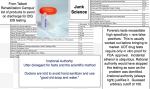
They introduced and brought to market junk science like the Ethyl Glucuronide  (EtG) biomarker for detecting alcohol use. The EtG was introduced by an FSPHP physician, marketed, and proselytized as an accurate and reliable test for alcohol. After setting an arbitrary cutoff of 100 to prove drinking he ruined countless careers and lives.

As the disaster toll increased it became clear the test was not very good. It became apparent the test was, in fact, very flawed and misguided as using an ultra sensitive poorly specific test for a substance environmentally ubiquitous precludes its forensic applicability.

Hand sanitizer, cosmetics, sauerkraut, and myriad other products were shown to result in an elevated EtG. Sensibly, the majority of drug testing and monitoring programs abandoned it. 

The market for the test decreased dramatically as the only customers left were drug monitoring programs in which the testers had absolute power and those being tested were absolutely powerless–programs like those run by the PHP.

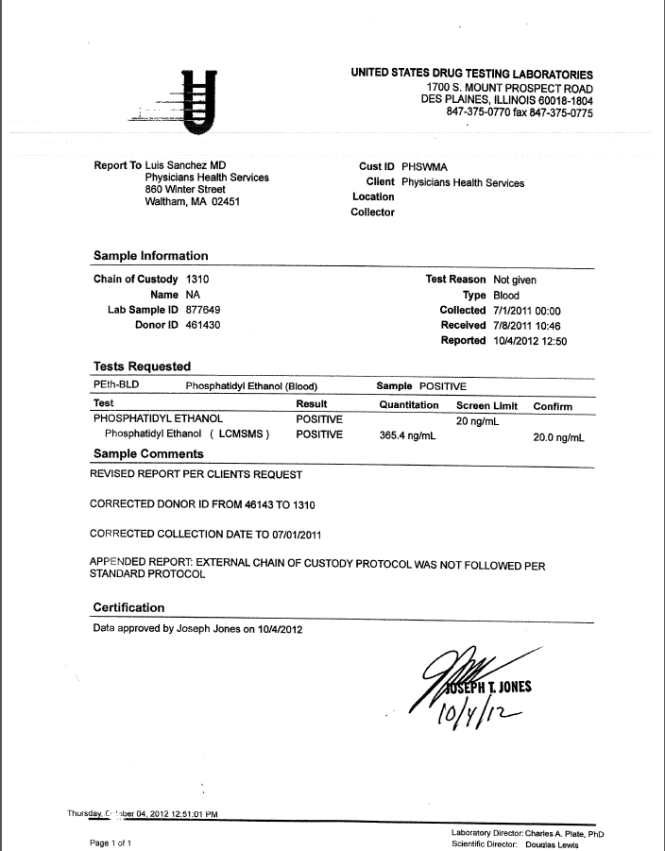
This group has now introduced the Phosphatidylethanol (PEth) test as a confirmation test for EtG and USDTL mScreen Shot 2014-04-05 at 2.08.11 PMarketed it as the PEthStat.  

State Physician Health Programs are now using the EtG  and adding the PEth to confirm alcohol ingestion. And just as they did with the EtG the claims of reliability are grand but without foundation. 
All speculative A=B oversimplified thinking that ignores the myriad other factors involved. The science is empty if you remove the dregs of filler and puff.  And the conflicts of interest are mind-boggling.

Corporate Front Groups and Corruption in Medicine-Forensic fraud, conflicts of Interest and the Erosion of Trust

The ASAM and FSPHP are corporate front groups that have infiltrated organized medicine and gained tremendous sway. Advancing the multi-billion dollar 12-step rehab and drug testing industry agenda control has replaced conduct and ideology has trampled science and reason. As organizations without transparency, accountability, or regulation they have become reservoirs of bad medicine and corruption.

Accountability is  rooted in organizational purpose and public trust.  Unfortunately, humanitarian ideals have been trampled by the imposition of corporate front groups who advance  hidden agendas under guises of science and scholarship  and patinas of benevolence.  Rife with conflicts of interest, these groups obfuscate, mislead, and exploit us to further an underlying political agenda.  Healthcare and medicine has been infiltrated by various groups that pose a serious threat to both the humanitarian and evidence based aspects.

Empaths are Targets

Human's avatarPsychopath Resistance

Empath Targets


Empathic people are natural targets
Often empaths are targeted by sociopaths because they pose the greatest threat. The empath is usually the first to detect that something is not right and express what s/he senses. As a consequence…


The Dance – Sociopath and Empath
They LOVE to watch their empath target squirm. They LOVE to watch as they manipulate everyone around them into believing it’s all the fault of the empath. They LOVE the feeling of absolute CONTROL…


Narcissists and Empaths: The Ego Dynamic | Let Me Reach
One popular theory is that Narcissists prey on Empaths and Sensitives because of their overly giving nature. While that is primarily true, there is another reason that goes even deeper, and it has to do with ego…


The Transitional Target | Narcissist, Sociopath, and Psychopath…
Targets often experience cognitive dissonance, trying to project their own reasoning onto an unreasonable person. But their…

View original post 65 more words

Oliver Wendell Holmes, the Massachusetts Medical Society, Tinsel Erudition and Pretended Science Redux

images-10As the oldest medical society in the United States the Massachusetts Medical Society can count some of the greatest minds in the history of American medicine as members.  My how far we have fallen.  This same author has previously unintelligibly compared the field of medicine to Barbra Streisand’s face and shamelessly and opportunistically blamed the Boston Marathon bombing on “marijuana withdrawal.” 
 
The sophomoric mnemonics are neither clever nor illuminating.  Unworthy of  Readers Digest circa 1957, this dumbing down of doctors needs to end.  The very soul and practice of medicine is being castrated and lobotomized by the same dull and very very blunt instrument. 
How does one reconcile the fact that the very same medical society that publishes the New England Journal of Medicine is allowing this type of tripe and rabble to get past editorial review?  In 1969, through an act of the state legislature, the Massachusetts Medical Society updated its mission to read:

“The purposes of the Massachusetts Medical Society shall be to do all things as may be necessary and appropriate to advance medical knowledge, to develop and maintain the highest professional and ethical standards of medical practice and health care, and to promote medical institutions formed on liberal principles for the health, benefit and welfare of citizens of the commonwealth.”

With a foundation and history built and based on of scholarship and critical thought we need to support the highest levels of science, fact, intelligence and reason.  Stupidity tries but it should not rein.    Before the Boston Society for the Diffusion of Useful Knowledge in 1842, Dr. Oliver Wendell Holmes delivered two long lectures entitled “Homeopathy and Its Kindred Delusions.” He characterized one of its popular practitioners, Dr. Robert Wesselhoeft, as one of those:  

“Emperics [quacks], ignorant barbers, and men of that sort…who announce themselves ready to relinquish all the accumulated treasure of our art, to trifle with life upon the strength of these fantastic theories.” That “pretended science” as Holmes called it, was “a mingled mass of perverse ingenuity, of tinsel erudition, of imbecile credulity, and artful misrepresentation, too often mingled in practice…with heartless and shameless imposition.”

And Holmes words are as apt and appropriate today as they were in mid 19th Century Boston!   Probably more so.

History has recurrently proved that false constructs and groundless concepts allow for endless error.

The Massachusetts Medical Society needs to come to the realization that Physician Health Services is engaging in procedural, ethical and legal breaches.  
The evidence is clear that past medical director Dr. Luis Sanchez and Director of operations Linda Bresnahan are engaging in not only unethical but criminal activity within the walls of the MMS.  Egregious misconduct including forensic fraud and political abuse of psychiatry can be seen in detail here, here and here.
This is not a matter  of opinion but a matter of fact.  It has been ascertained by outside agencies and can also be confirmed by two former associate directors at PHS.    What more does the MMS need?   This type of misconduct can have grave and far reaching consequences for referred doctors and needs to be addressed urgently with precise, firm methods.   To ignore the problem or suggest that it does not exist will only cause more damage.
The majority of Massachusetts Medical Society members are honest, thoughtful and responsible.   Most are unaware of the ethical and criminal allegations concerning PHS..  It is time they become aware as sunshine is the best disinfectant.   As the most crucial step in solving a problem is admitting it exists I am requesting this be ascertained or refuted based on the documents and examined procedurally, ethically and legally. If there is no problem then the MMS should have no problem supporting or justifying the actions of Dr. Luis Sanchez, Dr. Wayne Gavryck and Linda Bresnahan. If the MMS cannot justify, support or defend these actions then it must be concluded that these individuals have violated professional protocol,,  professional and community ethics and the law. And if that is the case it is the responsibility of the MMS to admit the problem exists, define it and address it.  It is the responsibility of the MMS to facilitate exposure and that those engaged in wrongdoing be held appropriately accountable for their actions.  I am sure no one at the MMS would disagree that forensic fraud be met with Zero-tolerance.    The criminal and ethical violations shown here do not comport with any codes of conduct including those of the medical society.   Those engaging in forensic fraud must be removed.
Screen Shot 2015-04-28 at 9.24.37 AM

Good leadership requires correct moral and ethical behavior of both the individual and the organization. .  Integrity is necessary for establishing relationships of trust.  It requires a true heart and an honest soul.  People of integrity instinctively do the “right thing” in any and all circumstances.  Adherence to ethical codes of the profession is a universal obligation.  It excludes all exceptions.  Without ethical integrity, falsity will flourish.

The documentary evidence here shows fraud. It is intentional.  All parties involved knew what they were doing, knew it was wrong but did it anyway.  The schism between pious rhetoric and reality is wide.

One measure of integrity is truthfulness to words and deeds.  These people claim professionalism, ethics and integrity.  The documents show a reality of hypocrisy and sanctimony.   But the hypocrisy seen here is also a danger because the careers and lives of doctors in Massachusetts are in these peoples hands.

-Michael Langan, M..D.
Screen Shot 2013-12-22 at 11.45.40 AM

mllangan1's avatarDisrupted Physician

images-10As the oldest medical society in the United States the Massachusetts Medical Society can count some of the greatest minds in the history of American medicine as members.  My how far we have fallen.  This same author has previously unintelligibly compared the field of medicine to Barbra Streisand’s face and shamelessly and opportunistically blamed the Boston Marathon bombing on “marijuana withdrawal.”
 
The sophomoric mnemonics are neither clever nor illuminating.  Unworthy of  Readers Digest circa 1957, this dumbing down of doctors needs to end.  The very soul and practice  of medicine is being castrated and lobotomized by the same dull and very very blunt instrument. 
How does one reconcile the fact that the very same medical society that publishes the New England Journal of Medicine is allowing this type of tripe and rabble to get past editorial review?  In 1969, through an act of the state legislature, the Massachusetts Medical…

View original post 250 more words

Where have you gone, Morris Fishbein? Our nation turns its lonely eyes to you.

1101370621_400

I count no man a Philosopher who hath not, be it before the court of his Conscience or at the assizes of his Intellect, accused himself of a scurrilous Invention, and stood condemned by his own Judgement a brazen Charlatan.’
      Robert Burton, The Anatomy of Melancholy (1621)

Morris Fishbein M.D. (July 22, 1889 – September 27, 1976) was the editor of the Journal of the American Medical Association (JAMA) from 1924 to 1950 and in 1961 became the founding Editor of Medical World News, a magazine for doctors. In 1970 he endowed the Morris Fishbein Center to encourage the study of the history of science and medicine.

Fishbein  was also notable for exposing quacks such as  John Romulus Brinkley, a physician (in the diploma-mill sense of the word–he paid $500 for diploma he purchased from the Eclectic Medical University of Kansas City, Missouri) who in 1917 pioneered the notion of the goat testicle “transplant” as treatment for erectile dysfunction. The procedure involved removing the testicles of young goats and sewing them to the abdominal walls and scrotal tissues of men without any attempt to connect either the nerves or blood vessels of the “grafted” tissues.

Clinically useless, Brinkley made a fortune over the next decade through his goat gonad rejuvenation procedure.  Although he never finished his degree at Bennett Medical College in Chicago (where he left after his third year) and often operated while inebriated, Brinkley became one of the most famous doctors in the United States.  He claimed that his procedure cured 27 ailments including emphysema, acne and obesity.   It didn’t cure or even impact any of them.    What planting goat parts into people did do was solely self-serving.  It lined  Brinkley’s pockets and fed his ego and in doing so killed a lot of patients.  His operation was often lethal.

curiosity-quack-medicine-pictures-6

Dr. John, R. Brinkley

Throughout his career this phony surgical grifter found himself incessantly challenged by Quack-buster extraordinaire Dr. Morris Fishbein.  Relentless in his pursuit of exposing the fakery, fraud and pseudoscience of this charlatan and quack, he eventually succeeded.

I am well aware of the criticisms of Dr.Fishbein–many are valid, some are exaggerated and some are utter nonsense.  He was, after all, human.

That being said, however, in the final rendering  Dr. Morris Fishbein left the profession of medicine a better place for having been here.  The same cannot be said of Dr. John R. Brinkley.

Similarly, the same cannot be said of Dr. Henry Andrews Cotton, M.D.,  (1876 – May 1933) a psychiatrist and Medical Director of New Jersey State Hospital at Trenton who used the emerging medical theory of infection-based psychological disorders to pull patient’s teeth under the premise they were suspected of harboring infections.  If this failed he subsequently removed the tonsils, sinuses, testicles, ovaries, gallbladders, stomachs, spleens, and cervixes of his patients. If these maneuvers failed Cotton then went for the colon–with special emphasis on the right side of the hindgut, which, he declared, had particularly ”decadent tendencies.”

From 1907 to 1930 he killed hundreds of patients and maimed many more.  Cotton reported cure rates as high as 85%. His fame in the U.S. spread rapidly and it took decades before his alarmingly high post-operative death rate of over 30% (mostly from peritonitis) raised any red flags.

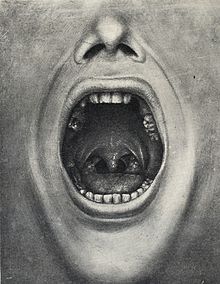
Illustration of a mouth with teeth removed from Cotton's book The defective delinquent and insane: the relation of focal infections to their causation, treatment and prevention.

Illustration of a mouth with teeth removed from Cotton’s book The defective delinquent and insane: the relation of focal infections to their causation, treatment and prevention.

The same can also not be said of  Dr, Walter Jackson Freeman II, M.D. (November 14, 1895 – May 31, 1972), a neurologist without surgical training who pioneered the ice-pick lobotomy in the U.S.. and performed nearly 3500 of them in 23 states.  Seeking a faster way to perform the procedure, Freeman adopted Amarro Fiamberti’s transorbital lobotomy and perfected it by using ice picks hammered into the frontal lobes through the back of each eye socket.   Without anesthesia he was able to do these procedures  quickly and outside the operating room.   And in doing so he popularized the lobotomy in the U.S..  I’ve seen the results of Freeman’s work.  During a workup of a patient who I was consulting on for dementia an MRI revealed bilateral atrophic genu of the corpus callosum.   The patient and his family initially denied any history of prior brain surgery or injury but on further questioning recalled having something done to him in college that left him with two black eyes.  He said he was suffering from depression over his final exams and this was done to him at the student medical clinic during the same time frame Freeman was traveling to college campuses in his lobotomobile offering his services.   Neither the patient nor his family realized he had had a lobotomy.  Many of Freeman’s victims were children as young as 12.

lobotomobile-150x150

Dr. Freeman and his “lobotomobile”

The Medical Follies

The following quotes are taken from The Medical Follies, by  Dr. Morris Fishbein. He writes:

“Folly in the singular is recorded as weakness of intellect, foolishness, imbecility, etc. But in the plural, whatever it may retain of the singular, it has taken upon itself a new glory. ‘The Follies,’ after two decades of association with the theater, have come to mean entertainment—a spectacle, bright, flashing, exotic, devoid of plot, nude of truth and easy to enjoy except by those to whom still adheres some early piety.

“The incompetent or unprincipled physician, licensed to practice medicine by a too complaisant State is the greatest menace to scientific medicine – as great a menace as all the cultists put together.”

“Now, scientific medicine offers no such system. It aims, by the utilization of all available knowledge, to determine the cause of disease, and then, by the use of all intelligent methods, to benefit and heal the disease. It does not promulgate any theory or principle to the exclusion of established facts. It does not say, for example, that all disease arises in the spine and all disease can be healed by manipulating the spine….”

“The great fallacy of all the ‘systems’ of disease and their healing lies in this ‘all or nothing’ policy. When that policy runs counter to demonstrable facts the result is invariably disaster.”

What do Brinkley, Cotton and Freeman all have in common?  They all gained public recognition and became rich from what they did, Scarcely anyone doubted them publicly in the medical profession,  and they all practiced unmitigated and unmolested murder for decades before any red flags were raised.  In all likelihood all three were also sociopaths.

In the final rendering  Dr. Morris Fishbein left the profession of medicine a better place for having been here.  Brinkley, Cotton and Freeman most assuredly did not.  Sociopaths seldom do.

The “Impaired Physician”–Increasing the grand scale of the hunt

mllangan1's avatarDisrupted Physician

“Wretched creatures are compelled by the severity of the torture to confess things they have never done and so by cruel butchery innocent lives are taken; and by new alchemy, gold and silver are coined from human blood.”  Father Cornelius Loos  ( 1592 )


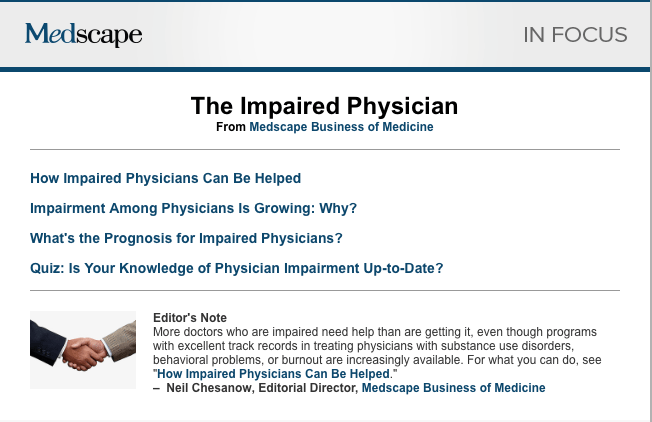
Screen Shot 2015-02-28 at 8.15.35 AM How Impaired Physicians Can be Helped–Medscape Business of Medicine Article Published February 24, 2015. Click on image to access

How can impaired Physicians be helped?

1.   Impairment among physicians is growing:  Why?  

Answer:  It is not.   State Physician Health Programs (PHPs) are “diagnosing” impairment when there is no impairment.  They are pathologizing the normal and expanding in scope to increase the grand scale of the hunt.

2.  What’s the Prognosis for Impaired Physicians?

Answer:  Not Good.   Those who need help (the truly impaired)  are afraid to get help for fear of being monitored by their state PHP while many of those…

View original post 534 more words

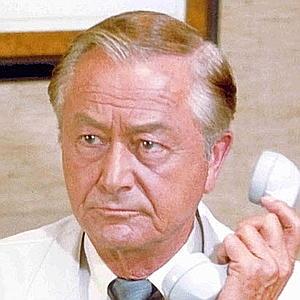
The Aging Physician—Goodbye Dr. Welby!

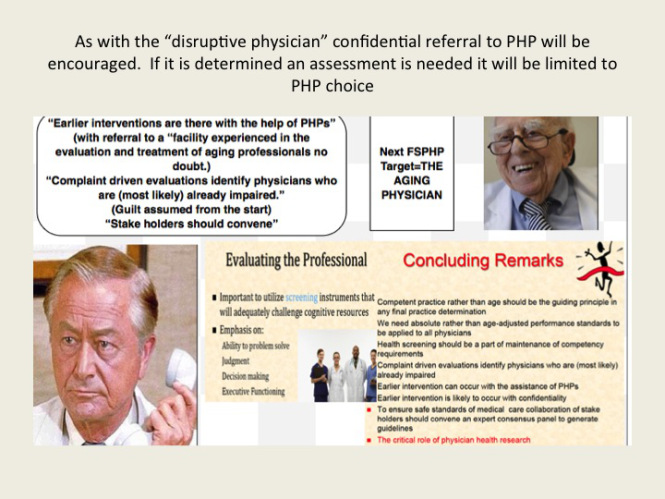
IMG_8901The methodology is not new–witches are real, witches are dangerous and witches need to be identified and exterminated at all costs. Convince the authorities to assist you in protecting the public from harm and advance the greater good

In this manner the Federation of State Physician Health Programs (FSPHP)  has convinced the Federation of State Medical Boards state medical boards (FSMB)  to adopt and enforce policies that have incrementally and systematically increased their own  autonomy, scope and power.   This began in 1995 when the FSPHP first cultivated a relationship with the FSMB and subsequently took an uninvited seat at the table of power by offering a non-disciplinary “safe harbor” as an alternative to discipline for doctors impaired by drugs or alcohol.IMG_8900

Since then they have increased their scope from the “impaired” to the “disruptive” to everything else. Arising from the “impaired physicians movement” as “addiction specialists” these doctors whose specialty of addiction is not even recognized by the American Board of Medical Specialties have now become the “experts” in all matters related to physician health. Jacks of all trades covering neurology, psychiatry, geriatrics, and occupational medicine.

A 2011 updated FSMB Policy on Physician Impairment states that Medical Boards should recognize the state Physician Heath Program (PHP) as their experts in all matters relating to licensed professionals with “potentially impairing illness,” and these include those potentially impairing maladies that increase as we age.  This has gone too far.  Isn’t it time we take back the profession of medicine from illegitimate and irrational authority?Slide15

mllangan1's avatarDisrupted Physician

IMG_8902

As a specialist in geriatric medicine I have experience in taking care of a number of  doctors who were referred to me for suspected memory problems. Still operating and teaching residents in his 70s, my first was a well-respected surgeon, a pioneer or Maverick who had made advances in his particular subspecialty.  Known for his detailed knowledge of the history of medicine and sharp clinical acumen, he had not seemed himself for a while.  His colleagues noted he appeared slower,  fatigued and forgetful at times (not remembering his keys, having trouble finding the right word).  An internist friend and co-worker who knew him for 50 years curb-sided me and asked if I would see him.  He did not have a primary care physician or even seen a doctor professionally for decades (a common phenomenon in this age cohort of doctors).

I met him the next week and he readily admitted to having difficulty concentrating and having trouble with his short term…

View original post 1,533 more words

The Irrational Authority

Jorge Ramírez's avatarChaos Theory and Pharmacology

Goodle F. Re: ‘Drug Policy: We Need Brave Politicians and Open Minds
The BMJ. December 17, 2014.

Drug policy: we probably need an “irrational authority”

“One thing is for certain. When society gives power of diagnosis and treatment to individuals
within a group schooled in just one uncompromising model of addiction with the majority attributing their very own sobriety to that model, they will exercise that power to diagnose and treat anyone and everyone according to that model. The birth of Addiction Medicine as an ABMS accepted discipline is sure to be a success for the drug and alcohol testing and 12-step treatment industry, but its spawn is sure to be an inauspicious mark on the Profession and Guild of Medicine and a bane of society for years to come.” ―Michael Lawrence Langan.(1)

References

1. DISRUPTED PHYSICIAN 101.2: “ADDICTION MEDICINE” IS A SELF-DESIGNATED PRACTICE SPECIALTY UNRECOGNIZED BY THE AMERICAN…

View original post 172 more words

An Open Letter to Senator Elizabeth Warren Regarding Laboratory Developed Tests, Physician Health Programs and Institutional Injustice

An Open Letter to Senator Elizabeth Warren Regarding Laboratory Developed Tests, Physician Health Programs and Institutional Injustice.

I can think of nothing more institutionally unjust than an unregulated zero-tolerance monitoring program with no oversight using unregulated drug and alcohol testing of unknown validity.   But that is what is occurring.   Some of us are trying to expose this corrupt system but barriers exist. As with the Laboratory Developed Tests (LDTs), those involved have intentionally taken steps to remove both answerability and accountability.  Both the tests and the body of individuals administering these tests are notable for their lack of transparency, oversight and regulation.  This renders them a power unto themselves.

Doctors (and others coerced into Professional Health Programs) across the country have reported going to law enforcement and state agencies only to be turned away.   The Federation of State Physician Health Programs (FSPHP)  has convinced these outside agencies that this is a “parochial” issue best handled by the medical profession..   Those reporting crimes are turned back over to the very people committing the crimes.

Screen Shot 2015-01-08 at 9.54.30 PM

—There is no place in science for consensus or opinion, only evidence.-Claude Bernard

Dear Senator Warren,

Thank you for your reply regarding laboratory developed tests (LDTs) and the need for regulatory oversight.   As you mention, LDTs are developed without FDA approval—a pathway in which is not even necessary to prove validity of a test (that it is actually testing what it claims to be testing for) to bring it to market. With no FDA oversight or regulation a commercial lab can claim any validity they want in marketing these tests. The regulation debate has focused on the reliability and validity of a number of clinical tests marketed with unverified claims of accuracy such as prenatal screening and Lyme disease and this lack of oversight is a direct threat to patient safety.

I am sure you would agree with me that the importance of tests diagnostic accuracy is directly proportional to its potential to cause patient harm if reported inaccurately. Sensitivity and specificity are important components of any diagnostic test as there are consequences associated with both false-positive and false negative results.

A test falsely indicating the absence of a condition in someone who truly has it can delay or prevent needed treatment wile a test falsely indicating the presence of a condition in someone who does not truly have it can result in unnecessary testing and treatment.

Incorrect treatment and false labeling of patients can also occur. Therefore diagnostic accuracy is paramount if a test is being used as the basis for further tests and treatment. Any test being used as a basis for further tests or treatment needs to be accurate. It needs to be reliable and valid. Moreover, if the consequences of a test can result in significant patient harm (such as unneeded chemotherapy) it needs to be either 100% accurate or be combined with other tests to confirm the true diagnosis.

 “Forensic” vs. “Clinical” Laboratory Testing

“Forensic” testing differs from “clinical” testing because of the consequences and the process is tightly controlled because false-positive results are unacceptable as the consequences can be grave, far-reaching and even permanent.

Forensic testing demands special handling and safeguards to protect the donor such as validated tests, certified labs, strict chain-of-custody procedures and MRO (Medical Review Officer) review. These safeguards of quality control assure the validity and integrity of the specimen.   The LDT pathway was not designed for forensic tests.

Forensic Laboratory Developed Tests (LDTs)

 Paradoxically, laboratory developed tests with the potential to cause  life-changing and possibly irreparable harm have been absent from the regulatory debate; LDT drug and alcohol tests used for “forensic” monitoring purposes.

A panoply of tests using urine, blood, hair, fingernails breath and saliva have been developed and brought to market since 2003 when the first one was introduced by Gregory Skipper, then Medical Director of the Alabama Physicians Health Program, who “convinced the initial lab in the USA, NMS near Philadelphia to start performing EtG testing.” 1

Developed as an LDT, Skipper and NMS then claimed the alcohol biomarker (which was discovered in the 1950s) “appeared to be 100 percent specific” in detecting covert use of alcohol based on a study he coauthored that involved a mere 35 forensic psychiatric inpatients in Germany, all male. 2   With this “evidence-base” and a not yet published paper in the pipeline,3   Skipper then pitched the test to the Federation of State Medical Boards (FSMB) as an accurate and reliable tool detect covert alcohol use in health care professionals.

Policy Entrepreneurship

In  “Agendas, Alternatives, and Public Policies,”4 John W. Kingdon describes the problem, policy and political streams involved in public policy making.   When these three streams come together a specific problem becomes important on the agenda, policies matching the problem get attention, and then policy change becomes possible.

Kingdon also describes “policy entrepreneurs’ who use their knowledge of the process to further their own policy ends. They ‘lie in wait… with their solutions at hand, waiting for problems to float by to which they can attach their solutions, waiting for a development in the political stream they can use to their advantage.”4

And due to a perfect confluence of streams ( Institute of Medicine report that 44,000 people die each year due to medical error,5 media reports of “impaired physicians,”  the the war-on-drugs, etc.)  the FSMB was swayed into accepting not just the validity but the necessity of using an alcohol biomarker of unknown reliability and validity on doctors referred to or monitored by state Physician Health Programs (PHPs) .

As the national organization that gives guidance to state medical boards through public policy development and recommendations, the individual state medical boards adopted use of the test without critical appraisal and no meaningful opposition.

Shortly after its founding in 1912, the FSMB began publishing a  journal called the Quarterly of the Federation of State Boards of the United States. Now known as the Journal of Medical Regulation, the publication has archived all issues with full articles dating back to 1967 and, as the official journal of the national organization involved in  medical licensing and regulation this facilitates an unskewed and impartial examination of how and when specific issues and problems were presented and who presented them and, in doing so, the “policy entrepreneurship” Kingdon describes can be seen quite clearly. For example a 1995 issue containing articles written by the program directors of PHPs in 8 different states contains an FSMB editorial acknowledging the reported 90% success rate claimed of these programs (in part attributed to the 90-day inpatient treatment programs) that concludes:

“Cooperation and communication between the medical boards and the physician health programs must occur in an effort to protect the public while assisting impaired physicians in their recovery.” 6

No one bothered to examine the methodology of these reports to discern the validity of the claims and it is this acceptance of faith without objective assessment that has allowed the passage of flawed public policy in medical regulation.

Nowhere  is “policy entrepreneurship” more glaringly displayed as it is in a 2004 issue promoting the use of EtG in monitoring doctors as under the same cover is an article identifying both the need7 for such a test and an article providing the solution.8  

“Detection of Alcohol Use in Monitored Aftercare Programs: A National Survey of State Physician Health Programs,” a survey of state Physician Health Programs (PHPs) concludes that “surreptitious alcohol use” is a significant concern” for PHPs, there is no current  “best method” for detection,  but a promising new test  with “exceptional specificity (100 percent) and sensitivity” in detecting small amounts of alcohol for up to 18 hours has recently become available.7

This same issue contains an article authored by Skipper about a new marker “not detectable unless alcohol has been consumed” recently introduced in the United States and now commercially available.”8

Notably absent from both of these articles is Skipper’s role in the commercial availability of the test. This conflict-of-interest is nowhere mentioned in this display of “creating a market then filling it.”

This “regulatory sanctification” of the test implied its tacit approval by the medical profession  (i.e. “if they are using it on doctors it must be valid”) and facilitated its marketing  to other monitoring agencies (nurses, airline pilots) as well as  Courts and Probation Departments where those doing the monitoring had absolute power while those being monitored had no voice.

Bent Science

In Bending Science: How Special Interests Corrupt Public Health Research9Thomas McGarity and Wendy Wagner describe how special interest groups scheme to advance their own economic or ideological goals by using carefully crafted distorted or “bent” science to influence legal, regulatory and public health policy.  The authors describe how those making these decisions often assume the information that reaches them has been sufficiently vetted by the scientific community as it flows through a pipeline of rigorous peer-review and professional oversight and that the final product that exits the pipeline is unbiased and produced in accordance with the norms and procedures of science.

McGarity and Wagner note the serious and sometimes horrific consequences of bent science and provide examples involving Tobacco and Big Pharma . The authors call for:

“..immediate action to reduce the role that bent science plays in regulatory and judicial decision making” and the need for the scientific community to be involved in “designing and implementing reform.”

“Shedding even a little light on how advocates bend policy -relevant science could go a long way toward remedying these problems.  Indeed, precisely because the advocates have overtaken the law in this area, heightened attention to the social costs of bending science could itself precipitate significant change.”

In the case of EtG this shedding of light is not very hard as no “carefully crafted” studies bending science were used to sway opinion.   None existed. The only items in the pipeline were directly related to Skipper.  If anyone dare to look, the Emperor has no clothes.

Lack of Answerability and Accountability

There are difficulties in challenging bent science including a general lack of recognition of the problem and an absence of counter-studies to oppose deliberately manufactured ends-oriented research.   This has proven true with the myriad LDTs introduced into the marketplace as no counter-forces or competing economic interests producing counter-studies exist.

Multiple lawsuits, including a class-action, have been decided in favor of the labs who have taken a stand-your-ground approach supported by a body of industry-related “research” they or their affiliates produced to support the validity and reliability of the tests.

Those affected by these tests either have no power or have had their power removed. Most do not have the resources to mount a defense let alone produce counter-studies questioning the reliability and validity of the tests.

Most employee drug testing follows Department of Health and Human Services (DHHS) guidelines using FDA-approved tests that have specific cutoff levels defining a positive-result in an effort to eliminate false-positive results.10  Procedural safeguards are in place in these programs to protect the donor.  Forensic testing programs using LDTs provide no such safeguards as the testing is unregulated and there is no oversight from outside actors.

Unlike clinical LDTs “forensic” LDTs are even exempt from CLIA oversight.   The only avenue for complaint is through the College of American Pathologists (CAP) and, as an accrediting agency, they can only address problems by ensuring compliance with CAP guidelines.   If an investigation concludes lab error or misconduct CAP can mandate the lab correct the test result and come into compliance with their guidelines under threat of loss of accreditation but no other consequences exist.  Accountability has been removed yet the  consequences to those harmed by these are significant and without remedy.

State Physician Health Programs

As is the case with the LDTs  they introduced, Physician Health Programs have no oversight or regulation.   A 2013 Audit of the North Carolina PHP 11 prompted by complaints from doctors and performed by State Auditor Beth Woods found absolutely no oversight of the program by either the state medical board or medical society and that “abuse could occur without being detected.”

The Audit also found that doctors were predominantly referred to the same “PHP-approved” out-of-state facilities to which they in part attribute their high success rates in treatment. Interestingly the PHP could not identify what quality indicators or quantitative measurements were used by the PHP to “approve” the “PHP-approved” facilities.

In January of 2015 a Federal class action lawsuit was filed in the Eastern District of Michigan against the state PHP program and found health care providers were subject to the same referral system using these out-of-state facilities. The suit alleges constitutional violations related to the forced medical treatment of health care professionals and the “callous and reckless termination of professional licenses without due process.” 12

As with North Carolina, the Michigan PHP will be unable to provide what quality indicators and quantitative measurements are being used to “qualify” and “approve these facilities.    None exist. The sole indicators for approving these assessment centers are ideological and economic. In fact, the medical directors of most, if not all, of these facilities can be seen on this list of “like-minded docs.” 

Institutional Injustice

You once said “People feel like the system is rigged against them. And here’s the painful part: they’re right. The system is rigged.”

So too is this system.

As the Michigan lawsuit notes: “Unfortunately, a once well-meaning program has turned into a highly punitive and involuntary program where health professionals are forced into extensive and unnecessary substance abuse/dependence treatment under the threat of the arbitrary application of pre-hearing deprivations.”

This has become the rule not the exception. The Federation of State Physician Health Programs (FSPHP), the same group to which Dr. Skipper belongs, has systematically taken over these programs state by state by removing competent and caring doctors not agreeing with the groupthink and silenced them under threat of litigation if they violate their confidentiality agreements and “peer review” statutes.

The same system of coercion, control and abuse exists in Massachusetts.  In the past week alone I have heard from a medical student, a resident and two doctors who complained of misconduct  misconduct involving fraudulent testing and falsified diagnoses.

In “Ethical and Managerial Considerations Regarding State Physician Health Programs,” published in the Journal of Addiction Medicine in 2012, Drs. John Knight, M.D. and J. Wesley Boyd, M.D., PhD who collectively have more than 20 years experience with the Massachusetts Physician Health Program (PHP) state that:

“Because PHP practices are unknown to most physicians before becoming a client of the PHP, many PHPs operate out- side the scrutiny of the medical community at large. Physicians referred to PHPs are often compromised to some degree, have very little power, and are, therefore, not in a position to voice what might be legitimate objections to a PHP’s practices.”13

Noting that “for most physicians, participation in a PHP evaluation is coercive, and once a PHP recommends monitoring, physicians have little choice but to cooperate with any and all recommendations if they wish to continue practicing medicine,” Knight and Boyd raise serious ethical and managerial questions about current PHP policies and practice including conflicts of interest in referrals for evaluation and treatment, lack of adherence to standards of care for forensic testing of substances of abuse, violations of ethical guidelines in PHP research, and conflicts of interest with state licensing boards.

Knight and Boyd recommend “the broader medical community begin to reassess PHP’s as a whole” and that “consideration be given toward the implementation of independent ethical oversight and establish and appeals process for PHP clients who feel they are being treated unfairly.” 13

They recommend the relationship between PHP’s and the evaluation and treatment centers and licensing boards be transparent and that national standards be developed “that can be debated by all physicians, not just those who work within PHPs.”13

Accountability, or answerability, is necessary to prevent corruption.  This requires both the provision of information and justification for actions.    What was done and why? Accountability also requires that consequences be imposed on those who engage in misconduct.

In discussing the financial conflicts-of-interest between PHPs and “PHP-approved” assessment centers Knight and Boyd state:

“..if a PHP highlights a physician as particularly problematic, the evaluation center might–whether consciously or otherwisetailor its diagnosis and recommendations in a way that will support the PHP’s impression of that physician.”  

To “consciously tailor a diagnosis” is fraud. It is political abuse of psychiatry. And it is not only the assessment and treatment centers willing to “tailor” a diagnosis; so too are the labs involved.

Physician Suicide

I can think of nothing more institutionally unjust than an unregulated zero-tolerance monitoring program with no oversight using unregulated drug and alcohol testing of unknown validity.   But that is what is occurring.   Some of us are trying to expose this corrupt system but barriers exist. As with the Laboratory Developed Tests (LDTs), those involved have intentionally taken steps to remove both answerability and accountability.  Both the tests and the body of individuals administering these tests are notable for their lack of transparency, oversight and regulation.  This renders them a power unto themselves.

Doctors (and others coerced into Professional Health Programs) across the country have reported going to law enforcement and state agencies only to be turned away.   The Federation of State Physician Health Programs (FSPHP)  has convinced these outside agencies that this is a “parochial” issue best handled by the medical profession..   Those reporting crimes are turned back over to the very people committing the crimes.

The Massachusetts Medical Society and Massachusetts DPH claim no oversight of the Massachusetts PHP, PHS.inc. The Massachusetts Board of Registration in Medicine (BORM) will not address ethical or even criminal complaints about the doctors involved in the PHP and there is good evidence that some members of the BORM are in fact complicit in unethical and even criminal behavior. As the Massachusetts AGO represents the BORM they defer issues back to them and dig no deeper.

Drs. Knight and Boyd have suggested State Audits and we are hoping that MA State Auditor Suzanne Bump will investigate the MA PHP and the Board of Registration in Medicine’s Physician Health and Compliance Unit shortly.

One major problem is that barriers have been put in place to prevent information from getting to the right people.

The majority of people at medical societies, boards, departments of public health and other organizations are individuals of integrity and honesty but the system has been erected so that valid complaints are deflected, delayed, dismissed or otherwise tabled by sympathizers, apologists and those complicity.   The criminal activity the Massachusetts PHP is engaging in is undeniable and indefensible but who is going to hold them to account?

It is going to take a while to reform this system of institutional abuse and it has to be done state by state. Please take a look at the facts and documentary evidence and help me hold them accountable. This needs to be exposed, acknowledged and addressed.   Doctors are dying from this system of institutional abuse. It is a public health emergency no one is talking about.  Yet those behind the PHP programs are claiming this system of coercion, abuse and control is the “gold standard” of addiction treatment and, using another loophole, they want to expand this system to mainstream healthcare.

Sincerely,

Michael L. Langan, M.D.

  1. Skipper G. Exploring the Reliability, Frequency, and Methods of Drug Testing: What is Enough to Ensure Compliance?:   Alcohol Markers and Devices. 2013; http://www.fsphp.org/Skipper, Exploring the Reliability Frequency and Methods 2 Presentation.pdf.
  2. Wurst FM, Vogel R, Jachau K, et al. Ethyl glucuronide discloses recent covert alcohol use not detected by standard testing in forensic psychiatric inpatients. Alcoholism, clinical and experimental research. Mar 2003;27(3):471-476.
  3. Skipper GE, Weinmann W, Thierauf A, et al. Ethyl glucuronide: a biomarker to identify alcohol use by health professionals recovering from substance use disorders. Alcohol Alcohol. Sep-Oct 2004;39(5):445-449.
  4. Kingdon JW. Agendas, alternatives, and public policies. Updated 2nd ed. Boston: Longman; 2011.
  5. Leape LL. Institute of Medicine medical error figures are not exaggerated. JAMA : the journal of the American Medical Association. Jul 5 2000;284(1):95-97.
  6. Schneidman B. The Philosophy of Rehabilitation for Impaired Physicians. The Federal Bulletin: The Journal of Medical Licensure and Discipline. 1995;82(3):125-127.
  7. Jansen M, Bell LB, Sucher MA, Stoehr JD. Detection of Alcohol Use in Monitored Aftercare Programs: A National Survey of State Physician Health Programs. Journal of Medical Licensure and Discipline. 2004;90(2):8-13
  8. Skipper G, Weinmann W, Wurst F. Ethylglucuronide (EtG): A New Marker to Detect Alcohol Use in Recovering Physicians. Journal of Medical Licensure and Discipline. 2004;90(2):14-17.
  9. McGarity TO, Wagner WE. Bending Science: How Special Interests Corrupt Public Health Research. Cambridge, MA: Harvard University Press; 2008.
  10. US Department of Health and Human Services. Mandatory guidelines and proposed revisions to mandatory guidelines for federal workplace drug testing programs: notices.Federal Register. April 13, 2004;69(71):19659-19660.
  11. Wood B. State of North Carolina Performance Audit North Carolina Physicians Health Program. . http://www.ncauditor.net/EPSWeb/Reports/Performance/PER-2013-8141.pdf. Accessed March 17, 2015.
  12. U.S. District Court Eastern District of Michigan, Case No: 2:15-cv-10337-AJT-RSW (2015). Carole Lucas, R.N., Tara Vialpandno, R.N., Scott Sanders, R.N., Kelly Schultz, P.A., and all other similarly situated health professionals v. Michigan Department of Licensing and Regulatory Affairs, Carole Engel, J.D.Former Director of Michigan Bureau of Health Professions, Ulliance, Inc. (State Contractor), Carolyn Batchelor (HPRP Contract Administrator), Stephen Batchelor (HPRP Contract Administrator), and Nikki Jones, LMSW.   Filed January 30, 2015.
  13. Boyd JW, Knight JR. Ethical and managerial considerations regarding state physician health programs. Journal of addiction medicine. Dec 2012;6(4):243-246.

Screen Shot 2014-07-28 at 12.40.13 PMScreen Shot 2014-08-06 at 4.50.02 PM


photo 2


Urgent Action Needed on Proposed Legislation in North Carolina–Removing Due Process from Doctors a Harbinger of Wide-Scale Political Abuse of Psychiatry

HIPAA_violators

I received the email below from Dr. Jesse Cavenar, Jr. regarding legislative changes that would severely infringe on the rights of doctors as licensees of the North Carolina Medical Board and subject them to distinctly non-impartial diagnostic psychiatric evaluations and remove all possibility of due process.  These developments could possibly herald the wide-scale abuse of psychiatric evaluation and treatment by two governmental agencies acting in collusion with utterly no oversight or accountability.  Namely the Federation of State Physician Health Programs (FSPHP) and the Federation of State Medical Boards (FSMB).  As a state Representative who is also a physician told me this morning –“this bill is representative of a prevailing attitude that does not realize what is really happening.”


Bill H453 can be seen here:  H543v2 – 04152015[10]

NC Audit can be seen here:  http://www.ncauditor.net/EPSWeb/Reports/Performance/PER-2013-8141.pdf

This is the bill, entitled H453  that is before the NC legislature this session.  My reading of the bill is that the bill is a disaster.  It seems to be an attempt by the lobbyists and lawyers to remove many existing features of the present law. In particular, I would direct your attention to two features:

1) It appears that all mention of due process has been removed from the law. The NC State Auditor found that the NCPHP had not afforded due process as required by law, so one simply changes the law to remove all mention of due process.

2) There is a clause inserted in the law to immunize the NCPHP against civil liability for the performance of the NCPHP function. In other words, the state statute declares that one cannot bring legal action against the NCPHP because they are immune. This is absurd. These people should be no more immune than any other doctor in the state of North Carolina.

In addition, the proposed statute seems to attempt to haze out whether the NCPHP record is or is not a medical record. As you will see, one would be entitled to a copy of an ³Assessment² but it would appear not the entire medical record. This is contrary to the NC Medical Board position paper on medical records. I would urge everyone to immediately contact his or her appropriate Senator and Representative to register opposition to this bill as written, and to urge that an expert panel of disinterested physicians and attorneys be appointed to write a new bill that would be appropriate.

A colleague of mine who is a medical ethicist has reviewed this and had the following to say: ³Well, well!  I think the most interesting thing here is that someone has tried to get the NC Legislature to immunize the existing system against any countering action.  This, it seems to me, is tacit admission of culpability.²  Well stated, I would say.

                 Jesse

Screen Shot 2015-04-17 at 4.19.26 PM