Free Educational Webinar: How to Position Yourself as an EXPERT!

IMG_6274 2

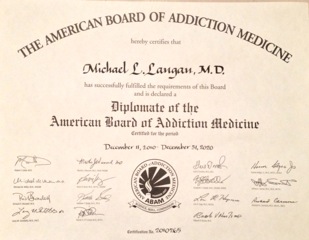
The validity and reliability of opinions lie in their underlying methodology and evidence base. Reliance on the personal authority of any expert or group of experts is the fallacy of appeal to authority.

I have asthma but that does not make me a Pulmonologist.  That addiction “specialist” diagnosing and treating you may have 5 years prior been a proctologist; and maybe not even a very good one at that.

Somewhere there may be doctor with no post-graduate training in surgery wielding a scalpel and calling himself an expert surgeon, but it is difficult to imagine that he is a very good one.

http://disruptedphysician.com/2014/11/18/disrupted-physician-101-2-for-what-its-worth-appeal-to-authority-and-the-logical-fallacy-of-special-or-secret-knowledge/


Screen Shot 2014-12-30 at 1.12.01 AM

← Back

Thank you for your response. ✨

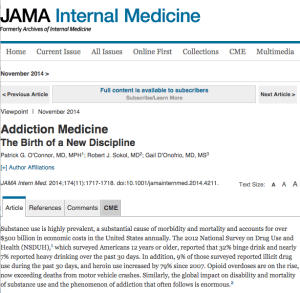
Addiction Medicine: The Birth of a New Discipline

Somehow, I don't think this is quite what they had in mind!

Ms Bella St John's avatarMs Bella St John ~ Notes


“How to Position Yourself as an EXPERT, Make More Money and Help More People, by Becoming a Published Author – Even if You Don’t Know Where to Start!” Think about it – if you need to see a chiropractor, for example, would you rather see a general chiropractor, or one who has positioned …
http://leighstjohn.com/free-educational-webinar-how-to-position-yourself-as-an-expert/

View original post

Physician Health Services, Inc. (PHS): a tale of corruption, crimes and unethical behavior

Jorge Ramírez's avatarChaos Theory and Pharmacology

 We need to stop them: please read, sign and share this petition


“If your doctor had a drug or alcohol problem, wouldn’t you want to know that help was available that your doctor would feel good about accessing? 

Approximately 10-12% of physicians will develop a drug or alcohol problem at some point during their career.  If physicians are impaired, they should be able to seek help from a firm but supportive and fair resource—one that demands sobriety and can determine when physicians are safe to practice. 

Physicians with substance use disorders often seek the assistance of a state physician health program (PHP). Some physicians engage willingly with PHPs, but most are compelled to do so either by their hospital or their board of medicine.  PHPs meet with, assess, and monitor physicians who have been referred to them for substance use or other mental and behavioral health problems.  In most states…

View original post 752 more words

Committed: Stories About Stays in Psychiatric Facilities

Em Perper's avatarLongreads

In this week’s list, I wanted to share the experiences of those committed—voluntarily or not—to a psychiatric facility. From One Flew Over the Cuckoo’s Nest to Nellie Bly’s 19th century expose to American Horror Story: Asylum, the “madhouse” occupies a weird space in America’s psyche, equal parts fascinating and feared. But the experiences of the patients and their caretakers are, obviously, very different than sensationalized cinematic accounts.

1. “Something More Wrong.” (Katherine B. Olson, The Big Roundtable, July 2013)

In this well-wrought essay, Katherine B. Olson profiles Alice Trovato, a woman and patient who mothers her unofficial charges and strives to make the most of her stay at Creedmoor Psychiatric Center in the greens of Queens.

View original post 147 more words

Psychopathy and the Medical Profession

IMG_4651In his book Without Conscience, Dr. Robert Hare notes “If we can’t spot them, we are doomed to be their victims, both as individuals and as a society. ” Dr. Clive Boddy in Corporate Psychopaths observes that unethical leaders create unethical followers, which in turn create unethical companies and society suffers as a result.” And if you look at the FSPHP branch of the ASAM that is exactly what you will find.  It is the perfect funnel for such personalities in our profession–relicensed by claiming the salvation card and an externalization of all blame.   “I didn’t do it it was my disease.”   In this manner felons, double felons, swindlers and pedophiles have not only gotten their medical licenses back but PUT IN CHARGE of evaluating other doctors in a rigged system with no regulation, transparency or oversight.  Bad idea.  It is a facade.  Less than 1/% of the general population are psychopaths but they represent more that 10% of those in prisons. What is the natural history of the physician psychopath? You do the math.

http://psychopathyinfo.wordpress.com/2012/03/22/characteristics-of-corporate-psychopaths-and-their-corporations/

Dr. David Edward Marcinko MBA MEd CMP™'s avatarThe Leading Business Education Network for Doctors, Financial Advisors and Health Industry Consultants

Join Our Mailing List 

Psychopathy Everywhere?

A SPECIAL ME-P REPORT

By Michael Lawrence Langan MD

Psychopathy is present in all professions.

In The Wisdom of Psychopaths: What Saints, Spies, and Serial Killers Can Teach Us About Success, Kevin Dutton provides a side-by-side list of professions with the highest (CEO tops the list) and lowest (care-aid) percentage of psychopaths.

Interestingly surgeons come in at #5 among the professions with the highest percentage of psychopathy while doctors  (in general) are listed among the lowest [more ……>]

Psychopathy and the Medical Profession

 holloween

More:

Channel Surfing the ME-P

Have you visited our other topic channels? Established to facilitate idea exchange and link our community together, the value of these topics is dependent upon your input. Please take a minute to visit. And, to prevent that annoying…

View original post 140 more words

Should Addicts Be Forced Into 12-Step Rehab Programs? No

Jorge Ramírez's avatarChaos Theory and Pharmacology

As a response to the original post “Should Addicts Be Forced Into 12-Step Rehab Programs?”
Author: Trevor Butterworth – URL: http://thestatsblog.wordpress.com/2007/11/28/should-addicts-be-forced-into-12-step-rehab-programs/


For some persons the remedy should be merely prescribed; in the case of others, it should be forced down their throats.” — Seneca: Letter 27 – On the Good which Abides


NO REMEDIES have to be forced down the throat of HUMANS unless the case involves an emergency situation (e.g., activated charcoal administered through a nasogastric tube in a patient seriously intoxicated with organophosphates).

Treatments have to be sought by a patient willing to receive medical treatment for their condition (e.g., drug addiction).

Prescriptions (pharmacological or non-pharmacological) must be discussed with the patient.

Forced interventions such as forced psychiatric therapy (used sometimes to addict patients) is considered as torture by governmental (e.g, United Nations) and non-profit organizations (e.g., Mad in America). I also name It as torture: red or blue…

View original post 115 more words

Should Addicts Be Forced Into 12-Step Rehab Programs? No (Part 2)

Jorge Ramírez's avatarChaos Theory and Pharmacology

I would like to start this post by sharing Dr. Langan response to the first part of this post: “Should Addicts Be Forced Into 12-Step Rehab Programs? No

“The argument is often advanced that without coercion there is insufficient incentive to enter treatment and, within a medical paradigm, not wanting to enter treatment is considered a symptom of the disease. Moreover, the greater the denial of the disease is considered directly proportional to the severity of the disease. Although both of these may be true in the throes of an acute addiction, the chronic relapsing brain disease with lifelong abstinence and 12-step recovery model is being used to coerce treatment on those who do not need it as “denial” can be present. according to these folks, long after the drugs and alcohol are gone.” –-Michael L. Langan.

Comments – Jorge R. –
– I agree with Dr…

View original post 614 more words

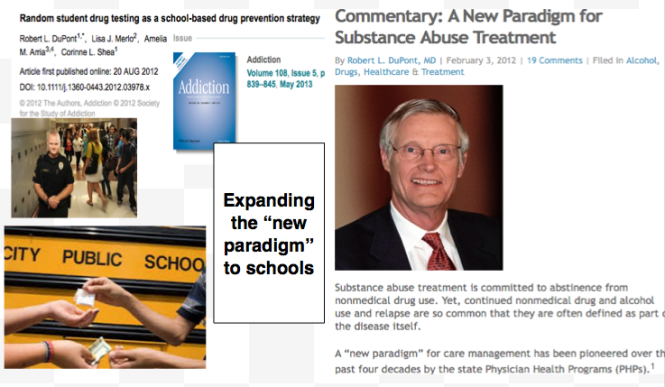
The Plan to introduce non-FDA approved drug and alcohol tests into the Healthcare system and require doctors drug-test ALL PATIENTs including students and kids!

1285610338-quack-doctor1

The Plan to introduce non-FDA approved Laboratory Developed Tests (LDTs) into the Healthcare system and require doctors drug-test ALL PATIENTs including students and kids!

The ASAM plans to introduce non-FDA approved “forensic”  Laboratory Developed Tests (LDTs) into mainstream healthcare via a loophole.    This same group introduced most of these tests through a loophole and now they want to drug-and alcohol TEST EVERYBODY including STUDENTS AND KIDS through another loophole!   These tests are of unknown reliability and accuracy.  The LDT pathway does not even require proof that the test is even valid  (i.e. that the test is actually testing for the substance it claims to be testing) but with no FDA oversight or regulation the labs can claim anything they want in marketing it and they do.

If a doctor collects a test on a “patient”  the test is rendered “clinical” rather than “forensic” and by deeming this drug-testing  “clinical” rather than “forensic”  they can then call the consequences of a positive test “treatment” rather than “punishment.  ” It is via this loophole they plan to introduce and unleash the panoply of junk-science tests currently being used on other groups who have no say in the matter (probationers, parolees, private professional monitoring groups, etc. ) onto the general population at large.    A boon for the Drug and Alcohol Testing Industry Association and the assessment and treatment industry but a bane to the rest of society.    And to prevent this from happening more people need to be talking about this.

Lapses into piety

James J. Conway's avatarStrange Flowers

For whosoever shall call upon the name of the Lord shall be saved.

– Romans 10:13

Harry Crosby, American poet and publisher, didn’t die on this day in 1917. Big deal, right? Well it was to Crosby, who was then serving at Verdun as an ambulance driver and survived a shell attack which, by rights, should have blown him to kingdom come.

Earlier the same day he had chanced upon the above passage in the Bible, and for a while afterwards attributed his miraculous survival to You-Know-Who. His friends teased him about his subsequent “lapses into piety”, during which he promised to forego his wayward ways in thanks for his deliverance.

Impatient to test himself in the theatre of war, Crosby had sailed in high summer from New York to Bordeaux on the French ship Espagne. Also on board was Cole Porter; like Crosby, born to fortune. But…

View original post 418 more words

Mandating Drug-Testing of Unknown Validity while removing the procedural safeguards of forensic drug testing: The plan to Introduce Laboratory Developed Tests into Mainstream Healthcare

Screen Shot 2013-09-04 at 6.14.30 PM

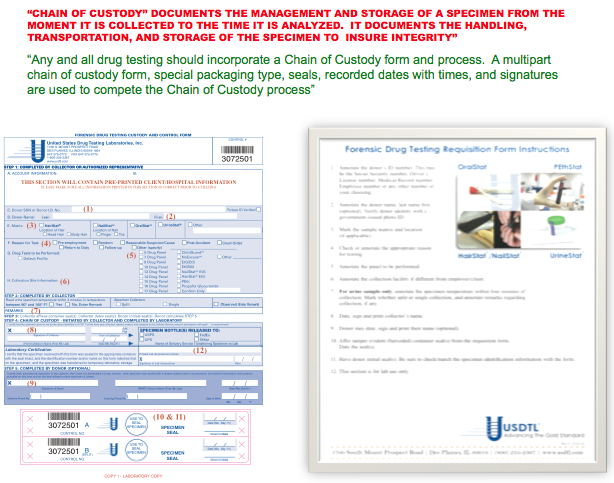
Chain-of-Custody refers to the document or paper trail showing the collection, control, transfer, analysis and disposition of laboratory tests.  It is the written documentation of a specimen from the moment of collection to the final destination to the review and reporting of the final results.   The multi-part chain-of-custody form or “custody and control” form is part and parcel of this process. It contains stickers to sign and seal the specimen so that it cannot be tampered with and the form itself is signed by the appropriate parties as the test specimen travels from place to place. Information is added to the form as it travels from person to person.  It has been given the status of a legal document as it has the ability to invalidate a specimen with incomplete information.  Once the sample is analyzed it is reviewed by a Medical Review Officer (MRO) for final review. In the case of a positive test it is the responsibility of the MRO to ascertain an intact  chain-of-custody, determine whether an alternative explanation exists for the positive test such as a prescribed medication, and then and only then report the test as a “true positive.”

The MRO looks for what are called “fatal flaws” and,  should one be present, invalidates the test.  A fatal flaw requires the test be rejected as it were never drawn.  It invalidates it and it cannot be used. screen-shot-2013-12-19-at-12-20-46-pmAny and all drug testing requires strict  chain-of-custody procedures. It documents not only the whereabouts of the specimen at any given time but the management and storage of the specimen. This is important because time and temperature can influence the results of certain tests.  One such test is alcohol.
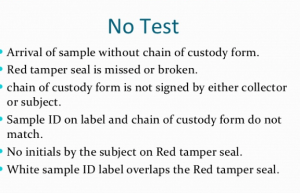
Specimen integrity is critical in forensic drug testing, but so too is the integrity of the people involved.


Forensic Versus Clinical Drug Testing

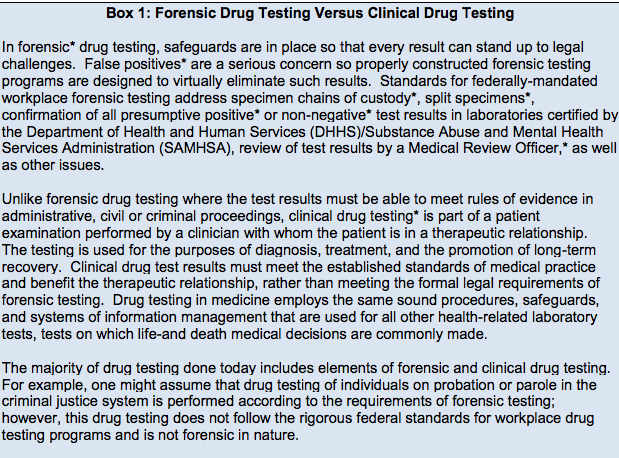
According to the ASAM White Paper on Drug Testing, clinical drug-testing “employs the same sound procedures, safeguard, and systems of information management that are used for all other health-related laboratory tests, tests on which life-and-death medical decisions are commonly made.”  In the box below they describe the multiple safeguards in place and requirements demanded of “forensic” drug testing but do not mention the reason these uncompromising and multiple specifications exist is to protect the donor from a false accusation of drug or alcohol use.  They proceed to define “clinical drug testing” as “part of a patient examination performed for the purposes of diagnosis, treatment, and the promotion of long term recovery” noting that clinical testing “must meet the established standards of medical practice and benefit the therapeutic relationship, rather than meeting the formal legal requirements of forensic testing.”  The authors then state that the “majority of drug testing done today” includes both forensic and clinical elements using individuals on parole and probation as examples.
Screen Shot 2015-01-14 at 12.32.11 AM

From the ASAM White Paper on Drug Testing

The logical fallacy here is striking.  It is comparing apples and oranges.  After detailing the specific quality assurance safeguards designed to prevent the donor of a drug or alcohol test from being falsely accused of illicit use, the authors give a general  definition and purpose of  “clinical” testing  then state that when testing for drugs the systems in place are up to snuff as they are already being used to make  “life-and-death medical decisions.”  The take-home message is that “forensic” testing is unnecessary hyperbole designed for legal challenges. The clinical lab  systems in place are used for critically  important testing and can therefore be used for drug-testing–after all, parolees and probationers don’t require it.

Forensic guidelines were developed in collaboration with occupational and environmental medicine specialists, clinical and forensic toxicologists, pathologists and others and the recommended  requirements agreed upon by this consortium exists solely to  assure validity and accuracy in the testing process.  These requirements exist to protect the donor and If the “clinical” testing context fit the bill then “forensic” testing would not have evolved.

Labs ordered clinically in the course of patient care are interpreted within the context of multiple other pieces of data.  Lab errors occur all the time and are interpreted in that context. Oftentimes a lab will not fit with the clinical picture and, when that happens, a repeat lab is ordered for verification.  Specimens get collected in the wrong tube and specimens get lost but in the clinical setting they simply get reordered and there are no consequences to patient care.   In contrast drug testing is an all-or-none one-shot test and the results have consequences. It is for that reason they must be valid.  Chain-of-custody and MRO review are critical and that is why most drug-testing programs follow the forensic protocol.  And the example of non-forensic drug-testing  parolees and probationers is misleading.   Any Employee Assistance Program that has a union or some other group looking out for their best interests uses strict “forensic” guidelines.   Parolees and probationers have no power  and have no choice.  Besides, the  National Association of Drug Court Professionals uses the Laboratory Developed Tests these same people introduced to test  individuals on probation or parole in the criminal justice system just as they do in the PHPs.

The  ASAM White Paper:

 “Encourages wider and “smarter” use of drug testing within the practice of medicine and, beyond that, broadly within American society. Smarter drug testing means increased use of random testing* rather than the more common scheduled testing,* and it means testing not only urine but also other matrices such as blood, oral fluid (saliva), hair, nails, sweatand breath when those matrices match the intended assessment process. In addition, smarter testing means testing based upon clinical indication for a broad and rotating panel of drugs”

As a physician-patient relationship renders drug testing “clinical” rather than “forensic” the consequences become “treatment” rather than “discipline.”  And that is the real reason behind all of this.    A positive “forensic” test in most employee random drug screening programs today will result in an “assessment” for substance abuse.  Most EAPs allow a choice in where that assessment takes place.  The model this system is based on, Physician Health Programs. do not allow choice as evaluations are mandated to “PHP-approved” assessment centers; a rigged game.

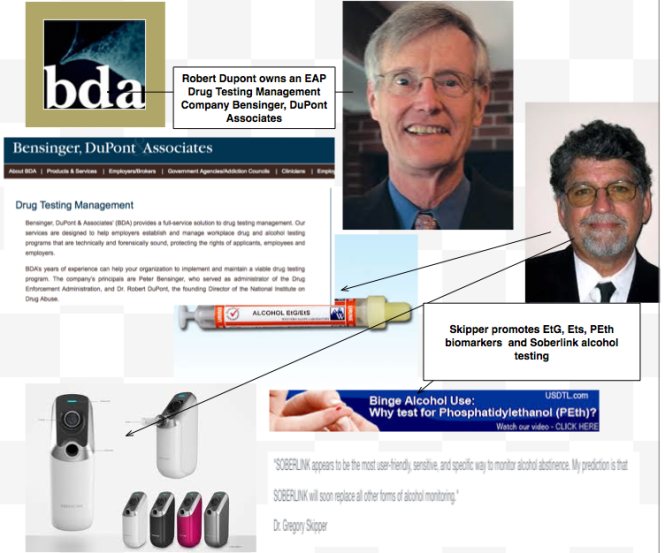
A positive “clinical” test will result in the same thing under the ASAM White Paper proposal.  But the assessment will be at an ASAM facility and if a Substance Use Disorder (SUD) is confirmed it will result in mandated abstinence of all substances (including alcohol) and lifelong spirituality involving 12-step recovery   And by using the healthcare system as a loophole and calling this testing “clinical” rather than “forensic” the ASAM will have successfully introduced widespread testing of a variety of Laboratory Developed Tests (LDTs) of unknown validity while removing  the safeguards provided by forensic testing including chain-of-custody and MRO review.
 

Screen Shot 2014-02-25 at 1.06.55 PM

← Back

Thank you for your response. ✨

Screen Shot 2014-02-25 at 1.04.35 PM