ASAM Responds to ‘Physician Health Programs: More Harm Than Good?’

Source: ASAM Responds to ‘Physician Health Programs: More Harm Than Good?’

The Federation of State Physician Health Programs (FSPHP) and American Society of Addiction Medicine (ASAM) have both responded critically and dismissively to the Medscape article Physician Health Programs- More Harm Than Good? by Pauline Anderson; Both presumably complacent in the belief that their dismissive criticisms, proclamations of altruistic expertise and brandishment of the “PHP-blueprint” would  sway the rank-and-file reader into acceptance without further investigation and stifle  further inquiry.  “Feel-good” rhetoric and “appeal to authority” are logical fallacies that have, after all worked very well for them so far.

But amidst a growing  body of severe, serious and remarkably similar criticisms (Over 1200 comments on this and related articles) both the FSPHP and ASAM remain silent.   98% of these comments reflect negatively on the current state of Physician Health Programs and warrant legitimate discussion.   This is not occurring and the  import of this needs to be recognized.  Scientific arguments are won or lost by the scientific method. Either the data supports a claim or it does not.  Those who don’t have data to support their arguments deliberately employ logical fallacies in an attempt to convince people that their claim is correct.   The 202 comments seen below show how “Social Medicine” commentary can amplify the voices of those previously unheard or who are intentionally silenced.  Please read through them and you will see multiple similar and serious concerns and criticisms and valid arguments addressing all manner of misconduct and abuse.   Only two individuals have made attempts to defend the current PHP system and both completely avoided the pertinent issues by skirting the key issues presented using all manner of logical fallacy from “appeal to authority” to ad hominem shotgun attacks by a Dr. A.M.  Conflicts-of_interest have been identified in both individuals who financially profit from the status quo and the ongoing complete absence of official response to  pointed, direct, serious and  specific questions involving scientific misconduct, fraud and abuse is patently unacceptable and the import of this must be recognized by both the medical community and general public.

TT Wilsons PHP Playbook–Feel Good Fallacies, False Dichotomies and Frontal Lobotomies

mllangan1's avatarDisrupted Physician

images-34Although my challenge to reveal his true identity  in “Rantings from the Bully Pulpit” remains unaddressed,  the doctor known as “TT Wilson” has put his two cents in on a couple of issues over the past month.  I previously posted his comments to illustrate the  groupthink and common tactics of doctors involved in state Physician Health Programs (PHPs) and Drug Courts.  Wilson’s comments are pathognomonic of these groups and his new comments are chock full of humdingers that reinforce my notion of Wilson’s LMD affiliation.  .Although Wilson never answered any of my questions his apparently piqued curiosity prompted him to query some my way.

The question is whether or not I would revise my posts concerning the legitimacy of addiction medicine when it is “embraced by the ABMS (American Board of Medical Specialties) in two years.”   My answer is no.

ABMS accepting addiction medicine into the fold is not a product of the discipline meeting the 

View original post 2,451 more words

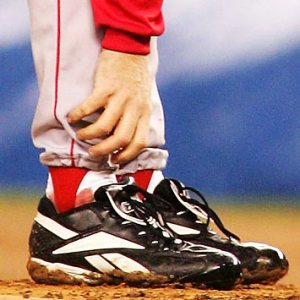
Without Dr. William Morgan the 2004 Red Sox World Series win would not exist–a true Boston Hero

mllangan1's avatarDisrupted Physician

Without Dr. William Morgan the 2004 Red Sox World Series win would not exist–a true Boston Hero.

The essay below found on 123HelpMe.com called The “Doctor Who Saved Boston.” is about Dr. William J. Morgan, the brilliant hand surgeon who helped the Red Sox win the World Series for the first time in 86 years.  Morgan performed  surgery on Curt Schilling’s severely damaged ankle that allowed him to pitch in game 6 of the ALCS against the Yankees when we were down three games to two.
No known medical or surgical options existed to allow Schilling the functionality to pitch.  But just as things were looking bleak Dr. Morgan miraculously performed an unprecedented procedure he invented that allowed Schilling to pitch seven innings winning the game 4-2.   He created a wall of stitches to hold Schillling’s torn tendon sheath in place before game 6’s win and again before game 2 of the World Series that we…

View original post 25 more words

Snakes in Smocks: Unrecognized Corporate Psychopathy in the Medical Profession

mllangan1's avatarDisrupted Physician

Screen Shot 2015-05-30 at 12.47.51 AM

A 2010 study, Corporate Psychopathy: Talking the Walk, found that 3 to 6 percent of corporate employees may be responsible for the majority of ethical breaches in corporations, with corporate psychopathy tending to be concentrated at the higher levels of organizations.

This group here, Like-minded Docs,  is largely responsible for what happens to any doctor referred to a state PHP because all of the medical directors of  the “PHP-approved” assessment and treatment centers can be found right here.

So too can Bob Dupont and Greg Skipper who have introduced the non-FDA approved drug and alcohol LDTs.  Stuart Gitlow, President of ASAM is also on the list.

This group is essentially in control of doctors and determines their fates and the percentage of psychopathy here is much much more than the  3-6% found at Enron.

Some of these doctors have done horrible things that most doctors would never do under any…

View original post 962 more words

Letters From Those Abused and Afraid–“Back-Alley” Surgeries

Screen Shot 2015-07-28 at 2.30.31 AMS

Source: Letters From Those Abused and Afraid

I get many e-mails, letters and phone calls from doctors, nurses and others who have been abused by  “professional health programs” (PHPs).

Most are anonymous.  Afraid of being identified and punished by the PHP, very few leave comments on my blog revealing their names or potentially identifiable information.

This is understandable.   By simply reporting “noncompliance” to the medical boards a state PHP can end their careers. As it was with the Inquisition this system relies above all else on silence and secrecy.   Speaking out can result in “swift and certain consequences.”

They are afraid.  Some are undoubtedly suffering from PTSD.  Most have developed a “learned-helplessness”   Many have reported abuse and even crimes to their medical societies, medical boards, law enforcement, the media and others only to have the door slammed in their faces.-myself included..   They have no advocacy or support and feel no one cares.   Their locus of control, identify and self-worth have been suddenly ripped from them without recourse. There is no lifeline.  Attempts at justice are often undermined by a concerted defiance of  the truth by their medical boards and even the attorneys who are purportedly working for them but will not  “bite the hand that feeds.”

PHPs are ostensibly  Employee Assistance Programs (EAPs) for doctors in both mechanics and mentality.   EAPs assist employees with substance abuse, personal problems and other issues.    They do not diagnose or treat “patients” but refer to outside professionals who do.  The critical difference between EAPs and PHPs is PHPs have mandated all assessment and treatment be done by their own.  These “PHP-approved” facilities are economically and ideologically intertwined with the PHP.  The conflicts of interest are serious and many.

PHPs also use non-FDA approved junk-science drug and alcohol testing they introduced.  The procedural safeguards most EAPs use to  protect the donor ( certified labs, FDA-approved validated tests, split-specimen, strict chain-of-custody, MRO review) have been reviewed.  Unvalidated “personality” assessments they also introduces are being used in “disruptive” physician evaluations guaranteed to find “character defects” to justify monitoring contracts. They implement polygraphs despite the AMAs previous conclusion they are scientifically unsupportable.

It is an institutionally unjust system of coercion, control and abuse that is unregulated, opaque and protected.  There is no answerability and they are accountable to no one.

But regulatory agencies have readily adopted policies not only unsupported by science and evidence-based research but outside the normative principles and practice of medicine.

Granting PHPs authority to limit assessments and treatment to their own facilities  offends the fundamental rights of the individual.

Informed consent (or refusal)  constitutes a basic rule of the lawfulness of medical practice according to national and state medical practice acts governing the profession.  It is a basic principle  of all published principles of medical ethics.

Involuntary treatment is motivated by either potential harm to others (for the good of society) or by need for treatment and/or potential self harm.

Involuntary treatment should be a confined to those gravely disabled by psychiatric disorders or substance abuse.  It necessitates reflection under the ethical principles of autonomy and beneficence.

A single DUI,  transient psychological issue such as grief or anxiety, and even sham peer-review can easily land a doctor into forced assessment and involuntary treatment at a “PHP-approved” facility.

Involuntary assessment and treatment involves legal, clinical ethical, and deontological consideration in its demarcation.

The economic and ideological aspects need to be considered here.

How is it this paradoxical assessment and treatment paradigm legitimized and justified within a profession that emphasizes evidenced based decision making and beneficence and autonomy as two of the basic principles of medical ethics?

  To sell the “PHP Blueprint” to other EAPs it is necessary to prevent doctors from speaking the truth.  Very few want their names, states or other unique identifiers published for fear of  consequences and retaliation.

The letters here have only been posted after being approved by their authors.  The letter below is a representative sample I received today.  The concept of our colleagues having to undergo “back alley” surgery under this regime is incomprehensible to me. -MLL


I was a victim of human rights violations committed by the PHP farmed out the group called Maximus. While in the “Diversion program” with 18 month clean sober, over 130,000 invested to date, I fractured and dislocated my shoulder. When arriving in the ED I told the MD of my circumstances and requested a drug test as part of my in addition to standard radiographs. The ED MD ordered  IV pain medication right away seeing my pain. I refused, until I could reach my “diversion nurse counselor”. The ED doc consulted Pain Management and Ortho given the added level of complexity. Ortho advised that they immediately give me dilaudid and place my fractured shoulder back in socket as my hand was numb and my pulses were weak., then I be admitted for surgery. When I finally reached the PHP monitor, her she told me that if I “take anything other than tylenol ( including for surgery)she would have my license” My team of 4 physicians now at this point( a hospitalist, ortho, PM and ED) all agreed that this was  ill advised and I must have my shoulder placed back into socket immediately. That assuredly, this nurse knew not what she spoke and as soon as Monday morning came and they could contact the medical board….I would certainly be  vindicated”post-procedure”, as even my contract read,that “medical care recommended by a reasonable licensed physician could not be prohibited” by participation in the program. I let the orthopedist, give me dilaudid and reduce my shoulder. I was admitted  to the hospital for one week, while the Orthopod tried to induce me to have the surgery. Pain Management managed my acute pain, with full knowledge of my situation. All the doctors tried to contact the medical board to tell them of my unique surgery. That I should not be kicked out of the program. And, I should have the surgery I needed.  The medical board took my license.  Upon discharge from the hospital, the the medical board detectives came to my door to inform me, that I couldn’t work. I knew I could not even get myself dressed. When the board detectives came to take my license I had my hospital wrist band on one hand, and a wrist band circulating around our beach community of Ladera Ranch, for the little girl whom I was just featured in the newspaper and on TV for saving her life. They told me I was a danger to the public.  My life fell apart. It has never been the same. I had already paid some 130-160,000 in fees to the PHP, and related expenses, even though I “had a strong case to fight the board” as one attorney said. I had no more money left. They had taken everything from me. My life was over. Suicide is something I still think about as I try to piece my life together. There were human rights violations occurring. There were anesthesiologist in Diversion forced to have “back alley” surgeries while in the program, at their friends surgery centers, using diprovan, as it wasn’t checked for. If you had a minor surgery or God forbid a situation such as mine….you were kicked out and lost everything.
Physician Health Programs: Outrage Over Abuse Increases

dranonymousmd's avatarphysicianhealthprograms

Doctors are coming forward all over the country to tell their stories of abuse by Physician Health Programs, quasi-governmental agencies that were originally intended to provide help to physicians who were suffering from mental illness or substance abuse problems. Unfortunately, these agencies have grown into abusive vehicles run without oversight and with a complete disregard for due process.

These programs were originally intended to provide an avenue for physicians in need of help with mental health problems or substance abuse/addiction.

Although the programs were often initiated with the best of intentions, they are now riddled with corruption and often used by unscrupulous former addicts or felons who identify themselves as “specialists” in addiction medicine. Control of these programs was ceded to private entities formed as nonprofits. In fact, addiction medicine is only a “self-identified medical specialty.” ABMS certification became a pathway for disgraced doctors to find a new career in…

View original post 99 more words

Do physician health programs increase physician suicides? —Pamela Wible, MD (Over 950 Comments Overwhelmingly Suggest they do!)

Patterns are appearing that involve abuse of power and control of information in a system that manages all aspects of testing, assessment and treatment without oversight or regulation; an opaque and rigged game that dismisses all outside opinion with no transparency or apparent accountability (including the provision of information and justification for actions). Due process has been removed and the coercion, control and abuse of power are seen in these comments that are not only believable but plausible. This is crystal clear.

These comments can be seen here: FSPHP Response to ‘Physician Health Programs_ More Harm Than Good_’ and I urge others to read them, form their own opinions. investigate this area and help expose these issues. If PHPs are causing this degree of harm and contributing to the suicide epidemic in doctors it needs to be exposed with dispatch and allies are urgently needed.

mllangan1's avatarDisrupted Physician

Source: Do physician health programs increase physician suicides? —Pamela Wible, MD

“Do Physician Health Programs Increase Physician Suicides?” 

“Do Physician Health Programs Increase Physician Suicides?” by Dr. Pamela Wible was published on Medscape August 28, 2015 and was subsequently posted on KevinMD on September 7 where it quickly became the #1 most popular article of the week and the #3 most popular article of the past six months. 323 comments have been left on Medscape thus far and 258 on KevinMD where comments are now closed.

Physician Health Programs: More harm Than Good?”  

Pauline Anderson’s article Physician Health Programs: More harm Than Good?” published August 19, 2015 on Medscape currently has 200 comments and the response from the President of their national organization the Federation of State Physician Health Programs (FSPHP) Doris Gunderson “FSPHP Response to ‘Physician Health Programs: More Harm than Good? published September 8 on Medscape…

View original post 1,176 more words

The Problems with Recognizing Problems as Problems: Medication Records, Firefighter Arsonists and Machiavellian Sociopaths

mllangan1's avatarDisrupted Physician

Pharmacard:  A Prescription Drug Monitoring System Designed to Record Drug Histories and Reduce the Incidence of “Drug Misadventuring.”
 
As a medical student in 1990 I saw a 79 year old woman in the emergency room with intractable nausea and vomiting.   Earlier that week she had seen her primary care physician for nausea and a mild cough.   Diagnosed with bronchitis,  she was given a prescription for erythromycin.  Her husband brought in her medications including digoxin which can cause nausea
when blood levels are too high.  A  markedly high level came back on the blood draw indicating  digitalis toxicity.  I spoke to her primary care physician who was unaware of her digoxin prescription; completely clueless that she was prescribed the foxglove plant extract by a cardiologist for an irregular heart beat.images-22
Digitalis was first described by William Withering in 1785 for heart conditions and this is considered the beginning of modern therapeutics.  Sometime after…

View original post 1,293 more words

The Irrational Authority

mllangan1's avatarDisrupted Physician

imgres-24

The Irrational Authority.  Originally posted on:

Chaos Theory and Pharmacology

A blog dedicated to the study of complex relationships in pharmacology. “Journalism is printing what someone else does not want printed: everything else is public relations.” ― George Orwell

The Irrational Authority

Goodle F. Re: ‘Drug Policy: We Need Brave Politicians and Open Minds
The BMJ. December 17, 2014.

Drug policy: we probably need an “irrational authority”

“One thing is for certain. When society gives power of diagnosis and treatment to individuals
within a group schooled in just one uncompromising model of addiction with the majority attributing their very own sobriety to that model, they will exercise that power to diagnose and treat anyone and everyone according to that model. The birth of Addiction Medicine as an ABMS accepted discipline is sure to be a success for the drug and…

View original post 223 more words