The “Impaired Physician Movement” and the History of the American Society of Addiction Medicine (ASAM): The need for critical appraisal by truly independent organizations


IMG_0706 Screen Shot 2014-12-30 at 8.45.09 PM


“With one arm around the shoulder of religion and the other around the shoulder of medicine, we might change the world.”—Twelve Steps and Twelve Traditions, AA World Services, Inc (1953).


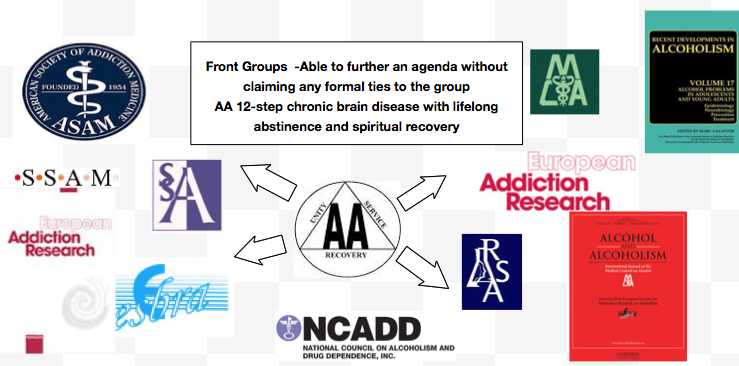
In order to comprehend the current plight of the medical profession and the dark clouds that lie ahead it is necessary to understand the history of the “impaired physician movement” and the American Society of Addiction Medicine (ASAM).

In 1985 the British sociologist G. V. Stimson wrote:

“The impaired physician movement is characterized by a number of evangelical recovered alcoholic and addict physicians, whose recovery has been accompanied by an involvement in medical society and treatment programs. Their ability to make authoritative pronouncements on physician impairment is based on their own claim to insider’s knowledge.”1

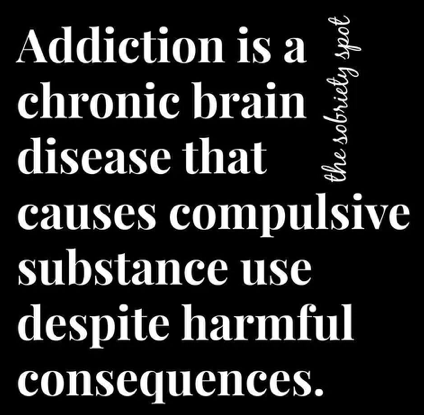
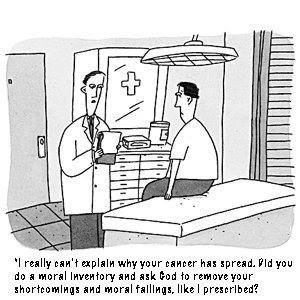
The impaired physician movement emphasizes disease and therapy rather than discipline and punishment and believes that addiction is a chronic relapsing brain disease requiring lifelong abstinence and 12-step spiritual recovery. The drug or alcohol abuser or addict is a person lacking adequate internal controls over his or her  behavior;  for his own protection as well as the protection of society external restraints are required including involuntary treatment.

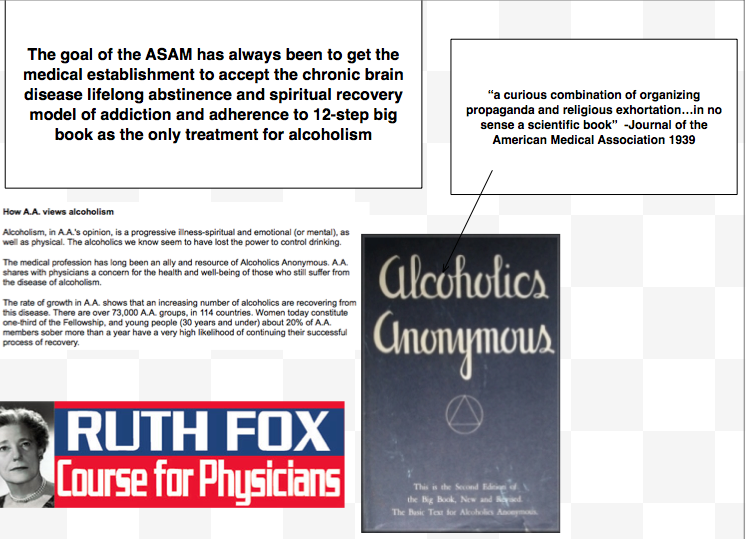
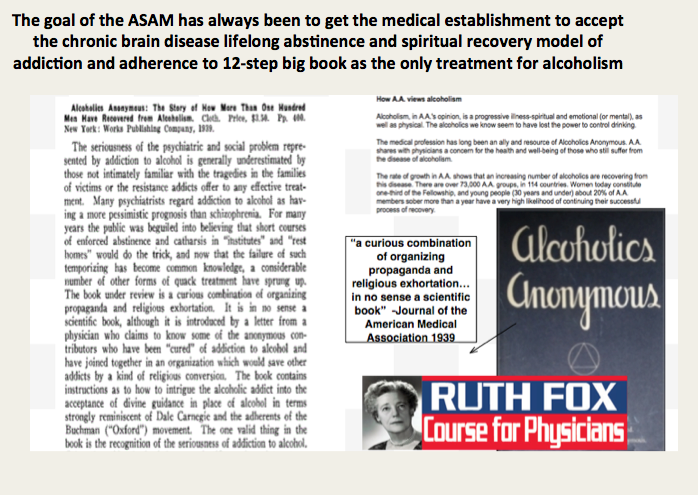
The American Society of Addiction Medicine (ASAM) can trace its roots to the 1954 founding of the New York City Medical Society on Alcoholism (NYCMSA) by Ruth Fox, M.D whose husband died from alcoholism.

Screen Shot 2014-02-23 at 4.42.15 PM

220px-ASAM_Logo

Finding that alcoholics in her psychoanalytic practice did not recover when she used conventional analytic approaches, she taught her patients about alcoholism as a disease and introduced “them to AA meetings held in her living room.”2

A number of physicians in the New York Medical Society were themselves recovering alcoholics who turned to Alcoholics Anonymous for care.3

The society, numbering about 100 members, established itself as a national organization in 1967, the American Medical Society on Alcoholism (AMSA).3
Screen Shot 2014-02-23 at 4.52.08 PM

The group promoted the concept of alcoholism as a chronic relapsing disease requiring lifelong spiritual recovery through the 12-steps of AA.

By 1970 membership was nearly 500.2Screen Shot 2014-02-22 at 2.47.51 PM
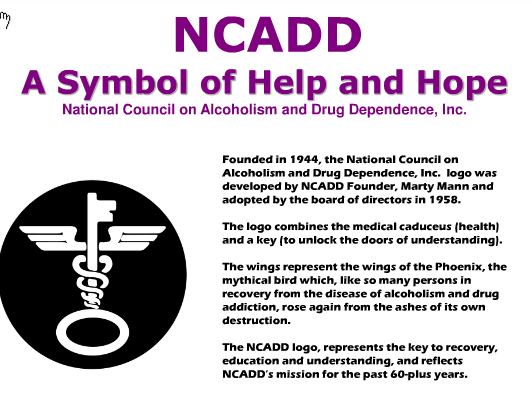
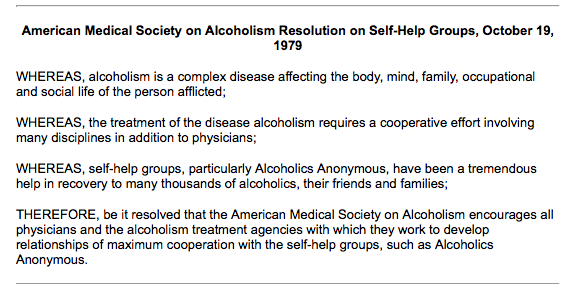
In 1973 AMSA became a component of the National Council on Alcoholism (NCA), now the National Council on Alcoholism and Drug Dependence (NCADD) in a medical advisory capacity until 1983.
logo

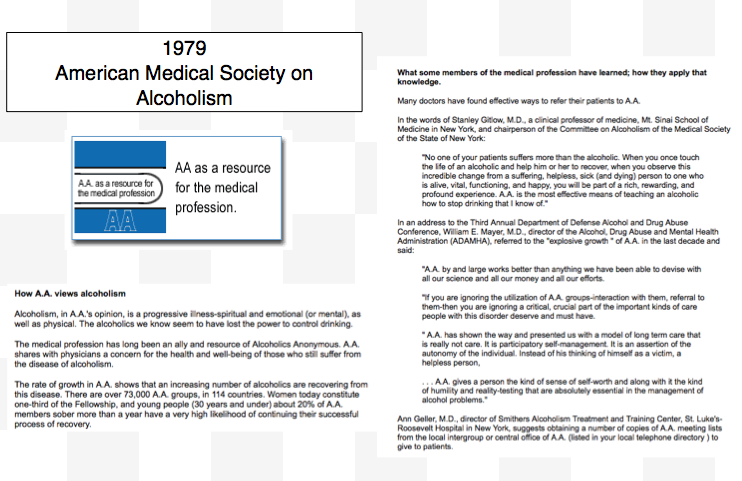
“Abstinence from alcohol is necessary for recovery from the disease of alcoholism” became the first AMSA Position Statement in 1974.2
Screen Shot 2014-02-22 at 3.55.08 PM

Screen Shot 2014-02-22 at 1.49.24 PM

Screen Shot 2014-02-22 at 1.59.25 PM

In 1985 ASAM’s first certification exam was announced. According to Dr. Bean-Bayog, chair of the Credentialing Committee:

“A lot of people in the alcoholism field have long wanted physicians in the field to have a high level of skills and scientific credibility and for this body of knowledge to be accredited.”2

And in 1986 662 physicians took the first ASAM Certification Exam.medical

By 1988 membership was over 2,800 with 1,275 of these physicians “certified” as:

“having demonstrated knowledge and expertise in alcoholism and other drug dependencies commensurate with the standards set forth by the society.”4
“While certification does not certify clinical skill or competence,” the Board explained, “it does identify physicians who have demonstrated knowledge in diagnosis and treatment of alcoholism and other drug dependencies.”5
Somehow, I don't think this is quite what they had in mind!

Somehow, I don’t think this is quite what they had in mind!

Achieving “recognized board status for chemical dependence” and fellowships in  “chemical dependency”  are among the five-year objectives identified by the group.  These are to come to fruition by  “careful discussion, deliberation, and consultation” to “determine its form and structure and how best to bring it about.”5

The formation of ASAM State Chapters begins with California, Florida, Georgia, and Maryland submitting requests.6

In 1988 the AMA House of Delegates votes to admit ASAM to the House. According to ASAM News this “legitimizes the society within the halls of organized medicine.”2

In 1989 the organization changes its name to the American Society of Addiction Medicine (ASAM).2

Since 1990, physicians have been able to list addiction medicine as a self-designated area of practice using the specialty code “ADM.”

By 1993 ASAM has a membership of 3,500 with a total of 2,619 certifications in Addiction Medicine.

The Membership Campaign Task Force sets  a goal to double its membership of 3,500 to 7,000 by the year 2000 to assure “the future of treatment for patients with chemicals. It represents a blueprint for establishing addiction medicine as a viable entity.”7
Screen Shot 2014-02-23 at 3.12.12 PM

Ninety physicians become Fellows of the American Society of Addiction Medicine (FASAM) in 1996 “to recognize substantial and lasting contributions to the Society and the field of addiction medicine.”8

Among the honorees are Robert DuPont, G. Douglas Talbott, Paul Earley, and Mel Pohl. In addition to at least five consecutive years of membership and certification by the Society, Fellows must have “taken a leadership role in ASAM through committee service, or have been an officer of a state chapter, and they must have made and continue to make significant contributions to the addictions field.”8

The American Board of Addiction Medicine (ABAM) is formed in 2007 as a non-profit 501(C)(6) organization “following conferences of committees appointed by the American Society of Addiction Medicine” to “examine and certify Diplomats.”9

In 2009 National Institute on Drug Abuse (NIDA) Director Nora Volkow, M.D., gives the keynote address at the first ABAM Screen Shot 2014-11-18 at 10.12.23 AMboard certification diploma ceremony.10

According to an article in Addiction Professional “Board certification is the highest level of practice recognition given to physicians.”

“A Physician membership society such as ASAM, however, cannot confer ‘Board Certification,’ ” but a“ “Medical Board such as ABAM has a separate and distinct purpose and mission: to promote and improve the quality of medical care through establishing and maintaining standards and procedures for credentialing and re-credentialing medical specialties.”

The majority of ASAM physicians meet these requirements by “working in a chemical dependency treatment facility, taking continuing medical education courses in addiction, or participating in research.”11

“In the United States accredited residency programs in addiction exist only for psychiatrists specializing in addiction psychiatry; nonpsychiatrists seeking training in addiction medicine can train in nonaccredited ‘fellowships,’ or can receive training in some ADP programs, only to not be granted a certificate of completion of accredited training.”11
Screen Shot 2014-02-28 at 1.13.17 PM

Specialty recognition by the American Board of Medical Specialties, fifty Addiction Medicine Fellowship training programs and a National Center for Physician Training in Addiction Medicine are listed as future initiatives of the ABAM Foundation in 2014.

The American Society of Addiction Medicine’s mission is to “establish addiction medicine as a specialty recognized by professional organizations, governments, physicians, purchasers, and consumers of health care products, and the general public’12   

In this they have succeeded.

And in the year 2014 G.V. Stimson’s characterization of the “impaired physician movement” remains as accurate and apt as it was in 1985. But the “number of evangelical recovered alcoholic and addict physicians” has increased dramatically  (outnumbering Addiction Psychiatry by 4:1)  and their involvement in  medical society and treatment programs” has been realized and enforced through the state Physician Health Programs and their “PHP-approved’ assessment and treatment centers.Screen Shot 2014-11-18 at 10.11.55 AM

Their “ability to make authoritative pronouncements on physician impairment…based on their own claim to insider’s knowledge”  has become public policy and sanctified by Regulatory Medicine -essentially the Word of the Lord.

And the 1953 Alcoholics Anonymous prophecy that “With one arm around the shoulder of religion and the other around the shoulder of medicine, we might change the world” is also coming to pass.

But the world is not changing for the better as that arm around the shoulder of religion has its fingers deep in the pockets of the multi-billion dollar drug and alcohol testing and assessment and treatment industries.  And the arm around the shoulder of medicine has its fingers clamped tightly around its throat; a stranglehold in full throttle suffocating the Profession of Medicine with no meaningful opposition I can see.


IMG_1686

  1. Stimson GV. Recent developments in professional control: the impaired physician movement in the USA. Sociology of health & illness. Jul 1985;7(2):141-166.
  2. Four Decades of ASAM. ASAM News. March-April 1994, 1994.
  3. Freed CR. Addiction medicine and addiction psychiatry in America: Commonalities in the medical treatment of addiction. Contemporary Drug Problems. 2010;37(1):139-163.
  4. . American Medical Society on Alcoholism & Other Drug Dependencies Newsletter. Vol III. New York, NY: AMSAODD; 1988:12.
  5. Ursery S. $1.3M verdict coaxes a deal for doctor’s coerced rehab. Fulton County Daily Report. May 12, 1999b 1999.
  6. . AMSAODD News. Vol III. New York, NY: American Medical Society on Alcoholism & Other Drug Dependencies; 1988.
  7. Membership Campaign Update. ASAM News. Vol VIII: American Society of Addiction Medicine; 1993:11.
  8. . ASAM News. Vol 12. Chevy Chase, MD: American Society of Addiction Medicine; 1997:20.
  9. http://www.abam.net/about/history/.
  10. Kunz KB, Gentiello LM. Landmark Recognition for Addiction Medicine: Physician certification by the American Board of Addiction Medicine will Benefit all Addiction Professionals. Addiction Professional. 2009. http://www.addictionpro.com/article/landmark-recognition-addiction-medicine.
  11. Tontchev GV, Housel TR, Callahan JF, Kunz KB, Miller MM, Blondell RD. Specialized training on addictions for physicians in the United States. Substance abuse : official publication of the Association for Medical Education and Research in Substance Abuse. Apr 2011;32(2):84-92.
  12. http://www.asam.org/about-us/mission-and-goals.
images-410271616_1417366195200940_5101328752156758607_n


Screen Shot 2014-07-24 at 4.15.40 PM


The Brain Disease Model of Addiction: is it Supported by the Evidence and has it Delivered on its Promises?

Dr. Allwissend 01

The brain disease model of addiction: is it supported by the evidence and has it delivered on its promises?

Prof Wayne Hall, PhD
Adrian Carter, PhD
Cynthia Forlini, PhD

Sign up for Lancet Psychiatry to read the full article. An overview is below.

We need a similar critique of the American Society of Addiction Medicine (ASAM)  and its affiliates on this side of the Atlantic as “addiction medicine” is slated to be approved  by the  American Board of Medical Specialties in 2016 even though the discipline falls far short of the educational and professional standards for quality practice developed and implemented by all other ABMS member boards.    According to the ABMS these 24 boards are:

“committed to the principle of examining doctors based on six general competencies designed to encompass quality care: patient care, medical knowledge, practice-based learning and improvement, interpersonal and communication skills, professionalism, and systems-based practice.”

These areas have been collectively identified by the ABMS, the American College of Graduate Medical Education (ACGME) and the Institute of Medicine (IOM) in order to standardize graduate medical education.

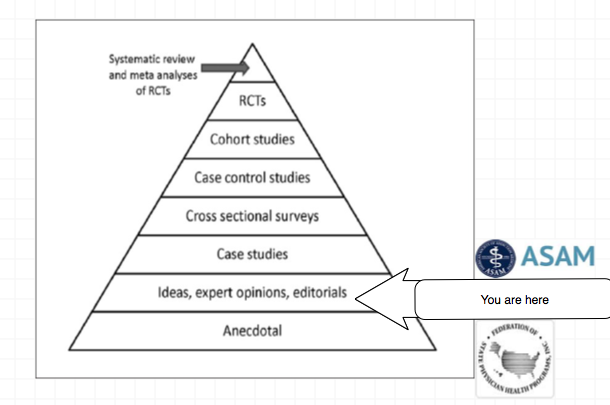
Any critique of the ASAM would find a number of issues antithetical to the six general competencies which stress “learning and improvement.”   In contrast the ASAM rests on the conviction that their views are absolutely certain and patently rejects open-minded inquiry.  An academic analysis of addiction medicine  from the vantage point of the ASAM would reveal false assumptions, bias, dogmatism, and data-dredging.  It would also reveal that those claiming expertise are in fact illegitimate and irrational authority who believe in an ends-justifies-the-means approach to push forth the chronic relapsing brain disease with lifelong abstinence an d imposed 12-step recovery. These are false experts who rationalize unethical, unprofessional and even criminal behavior as zeal for the faith if it aligns with the brain disease model of addiction (BDMA)   Their viewpoints are fixed and final.

They have not been held to truly objective judging, analysis, evaluation or outside critique.  The purpose of critique is the same as the purpose of critical thinking: to appreciate strengths as well as weaknesses, virtues as well as failings. Critical thinkers critique in order to redesign, remodel, and make better. This direly needs to be done.  The evidence-base for both the BDMA and the drug and alcohol testing, assessment and treatment is poor.     They are claiming physician health programs are the crown jewel of addiction treatment– a replicable model to be replicated in other populations.  It is all hyperbole and propaganda.  In reality they are using medical assessment and treatment as tools to repress and punish doctors.  Those running the state physician health programs are typically morally disengaged bullies with Machiavellian egocentricity.   And all the congratulatory backslapping is based on a singe poorly designed opinion piece.

Science and medicine need to be predicated on competence, thoughtfulness, good faith, civility, honesty, and integrity. This is universally applicable.  What they are doing betrays the trust of society and breaches the most basic ethical obligations of not only doctors but human beings.

But no one seems to be challenging them. Why is no one questioning this self-appointed authority. If people do not start talking, writing, discussing and debating the current paradigm then what Robert Dupont describes in the ASAM White Paper on Drug Testing will be ushered in.  As with doctors you won’t know it until it hits you.    If the ASAM becomes an ABMS medical specialty then it will be too late. They will impose their authority on you as a patient and their won’t be a damn thing you will be able to do about it.

Once illegitimate and irrational authority are sanctified by the American Board of Medical Specialties there will be nothing left to do except watch the profession of medicine go up in flames.

Right now it’s just doctors and pilots.   What you need to see is that you are next.  I base that prediction on past public-policy, regulatory, administrative and medical practice tinkering as well as the documented paper trail of “research” and opinion. And even though all of this can be explained using documentary evidence, fact and critical analysis no one seems alarmed.

If you map it out you will see the trajectory is aimed at the transportation industry,  students with federal loans,  high school athletes, schools, gun owners, and eventually schools.

If you have something to lose that is affiliated with a state or federal agency they will hold it hostage if you get a positive hair, nail, sweat blood, or urine test at your doctors visit.    The positive test is the golden ticket for them and a ticket to an assessment facility in Kansas, Arkansas, Mississippi and some other places for you on your dime.    And these are one-way tickets. No return to normality available.  One way ticket.    No return flight.

See full article through the following link:

http://www.thelancet.com/journals/lanpsy/article/PIIS2215-0366(14)00126-6/fulltext

Screen Shot 2014-12-30 at 2.10.24 AM


Proponents of the brain disease model of addiction (BDMA) have been very influential in setting the funding priorities of NIDA, and by extension the bulk of publicly supported research on addiction. In 1998, Leshner testified that NIDA supports more than 85% of the world’s research on drug abuse and addiction.3 The American Society of Addiction Medicine has defined addiction as a “primary, chronic disease of brain reward, motivation, memory, and related circuitry”.4 In July, 2014, newly appointed Acting Director of US National Drug Control Policy, Michael Botticelli, launched a reformist strategy nationally, claiming decades of research have demonstrated that addiction is a brain disorder—one that can be prevented and treated.5 The BDMA has also been widely discussed in leading scientific research journals3, 6 and most recently in a positive editorial in Nature.7

In the USA, proponents of the BDMA have argued that it will help to deliver more effective medical treatments for addiction with the cost covered by health insurance, making treatment more accessible for people with addictions.1, 2, 6 An increased acceptance of the BDMA is also predicted to reduce the stigma associated with drug addiction by replacing the commonly held notion that people with drug addiction are weak or bad with a more scientific viewpoint that depicts them as having a brain disease that needs medical treatment.

In this Personal View, we critically assess the scientific evidence for the BDMA reported in leading general scientific journals and the extent of the social benefits that advocates of the BDMA claim it has produced, or is likely to produce, with its widespread acceptance among clinicians, policy makers, and the public. The BDMA is not co-extensive with neuroscience-based explanations of addiction. This review is not intended as a critique of all neuroscience research on addiction. We focus instead on the popular simplification of work in this specialty that has had a major influence on popular discourse on addiction in scientific journals and mainstream media.


images-3Conclusions

Considerable scientific value exists in the research into the neurobiology and genetics of addiction, but this research does not justify the simplified BDMA that dominates discourse about addiction in the USA and, increasingly, elsewhere. Editors of Nature were mistaken in their assumption that the BDMA represents the consensus view in the addictions specialty,7 as shown by a letter signed by 94 addiction researchers and clinicians (including one of the authors of this Personal View).74Understanding of addiction, and the policies adopted to treat and prevent problem drug use, should give biology its due, but no more than it is due. Chronic drug use can affect brain systems in ways that might make cessation more difficult for some people. Economic, epidemiological, and social scientific evidence shows that the neurobiology of addiction should not be the over-riding factor when formulating policies toward drug use and addiction.

The BDMA has not helped to deliver the effective treatments for addiction that were originally promised by Leshner and its effect on public health policies toward drug addiction has been modest. Arguably, the advocacy of the BDMA led to overinvestment by US research agencies in biological interventions to cure addiction that will have little effect on drug addiction as a public health issue. Increased access to more effective treatment for addiction is a worthy aim that we support but this aim should not be pursued at the expense of simple, cost effective, and efficient population-based policies to discourage the whole population from smoking tobacco and drinking heavily. Nor should the pursuit of high technology cures distract from the task of increasing access to available psychosocial and drug treatments for addiction, which most people with addictive disorder are still unable to access.

Our rejection of the BDMA is not intended as a defence of the moral model of addiction.65 We share many of the aspirations of those who advocate the BDMA, especially the delivery of more effective treatment and less punitive responses to people with addiction issues. Addiction is a complex biological, psychological, and social disorder that needs to be addressed by various clinical and public health approaches.65 Research into the neuroscience of addiction has provided insights into the neurobiology of decision-making, motivation, and behavioural control in addiction. Chronic use of addictive drugs can impair cognitive and motivational processes and might partly explain why some people are more susceptible than others to developing an addiction. The challenge for all addiction researchers—including neurobiologists—is to integrate emerging insights from neuroscience research with those from economics, epidemiology, sociology, psychology, and political science to decrease the harms caused by drug misuse and all forms of addiction.46

Slide09


References

  1. Leshner, A. Addiction is a brain disease, and it matters. Science. 1997; 278: 45–47
  2. Dackis, C and O’Brien, C. Neurobiology of addiction: treatment and public policy ramifications.Nat Neurosci. 2005; 8: 1431–1436
  3. US Government Printing Office. Senate Hearing 105-573. Drug addiction and recovery.http://www.gpo.gov/fdsys/pkg/CHRG-105shrg49670/html/CHRG-105shrg49670.html. ((accessed Sept 26, 2014).)
  4. American Society of Addiction Medicine. Public policy statement: definition of addiction. Chevy Chase, MD. http://www.webcitation.org/62jXWo8dq; 2011. ((accessed July 15, 2014).)
  5. Botticelli, M. National blueprint for drug policy reform released today in Roanoke, VA. Office of National Drug Control Policy media release July 9, 2014.http://www.whitehouse.gov/blog/2014/07/09/national-blueprint-drug-policy-reform-released-today-roanoke-va. ((accessed July 15, 2014).)
  6. Volkow, N and Li, T. Drug addiction: the neurobiology of behaviour gone awry. Nat Rev Neurosci.2004; 5: 963–970
  7. Animal farm. Nature. 2014; 506: 5
  8. Ahmed, S. The science of making drug-addicted animals. Neuroscience. 2012; 211: 107–125
  9. Koob, G. The neurobiology of addiction: a neuroadaptational view relevant for diagnosis.Addiction. 2006; 101: 23–30
  10. Feltenstein, M and See, R. The neurocircuitry of addiction: an overview. Br J Pharmacol. 2008;154: 261–274
  11. Hyman, S, Malenka, R, and Nestler, E. Neural mechanisms of addiction: the role of reward-related learning and memory. Annu Rev Neurosci. 2006; 29: 565–598
  12. Koob, G and Le Moal, M. Neurobiology of addiction. Academic Press, New York; 2006
  13. Panlilio, L and Goldberg, S. Self-administration of drugs in animals and humans as a model and an investigative tool. Addiction. 2007; 102: 1863–1870
  14. Vanderschuren, L and Ahmed, S. Animal studies of addictive behavior. Cold Spring Harb Perspect Med. 2013; 3: a011932
  15. Volkow, N, Wang, G, Fowler, J, Tomasi, D, and Baler, R. Neuroimaging of addiction. in: P Seeman, B Madras (Eds.) Imaging of the human brain in health and disease. Elsevier, San Diego; 2014: 1–26
  16. Volkow, N, Fowler, J, Wang, G, Teland, F, and Baler, R. Imaging dopamine’s role in drug abuse and addiction. in: L Iversen, S Iversen, S Dunnett, A Bjorklund (Eds.) Dopamine handbook. Oxford University Press, Oxford; 2010: 407–417
  17. Volkow, N and Baler, R. Addiction science: uncovering neurobiological complexity.Neuropharmacology. 2014; 76: 235–249
  18. Volkow, N, Fowler, J, Wang, G, Baler, R, and Telang, F. Imaging dopamine’s role in drug abuse and addiction. Neuropharmacology. 2009; 56: 3–8
  19. Reske, M and Paulus, M. A neuroscientific approach to addiction: ethical issues. in: J Illes, B Sahakian (Eds.) Oxford handbook of neuroethics. Oxford University Press, Oxford; 2011: 177–202
  20. Kendler, K, Chen, X, Dick, D et al. Recent advances in the genetic epidemiology and molecular genetics of substance use disorders. Nat Neurosci. 2012; 15: 181–189
  21. Ball, D. Addiction science and its genetics. Addiction. 2008; 103: 360–367
  22. Satel, S and Lilienfeld, S. Brainwashed: the seductive appeal of mindless neuroscience. Perseus Books Group, New York; 2013
  23. Heyman, G. Addiction: a disorder of choice. Harvard University Press, Cambridge, MA; 2009
  24. Kincaid, H and Sullivan, J. Medical models of addiction. in: D Ross, H Kincaid, D Spurrett, P Collins (Eds.) What is addiction?MIT, Cambridge, MA; 2010: 353
  25. Robins, L, Helzer, J, Hesselbrock, M, and Wish, E. Vietnam veterans three years after Vietnam: how our study changed our view of heroin. Am J Addict. 2010; 19: 203–211
  26. Kleiman, M. When brute force fails: how to have less crime and less punishment. Princeton University Press, Princeton; 2009
  27. Bachman, J, Wadsworth, K, O’Malley, P, Johnston, L, and Schulenberg, J. Smoking, drinking, and drug use in young adulthood: the impacts of new freedoms and new responsibilities. Lawrence Erlbaum, Mahwah, NJ; 1997
  28. Ahmed, S, Lenoir, M, and Guillem, K. Neurobiology of addiction versus drug use driven by lack of choice. Curr Opin Neurobiol. 2013; 23: 581–587
  29. Alexander, B, Coambs, R, and Hadaway, P. The effect of housing and gender on morphine self-administration in rats. Psychopharmacology (Berl). 1978; 58: 175–179
  30. Hall, WD, Gartner, CE, and Carter, A. The genetics of nicotine addiction liability: ethical and social policy implications. Addiction. 2008; 103: 350–359
  31. Gartner, CE, Barendregt, J, and Hall, WD. Multiple genetic tests for susceptibility to smoking do not outperform simple family history. Addiction. 2009; 104: 118–126
  32. Roberts, N, Vogelstein, J, Parmigiani, G, Kinzler, K, Vogelstein, B, and Velculescu, V. The predictive capacity of personal genome sequencing. Sci Transl Med. 2012; 4: 133ra58
  33. Button, K, Ioannidis, J, Mokrysz, C et al. Power failure: why small sample size undermines the reliability of neuroscience. Nat Rev Neurosci. 2013; 14: 365–376
  34. Ioannidis, J. Excess significance bias in the literature on brain volume abnormalities. Arch Gen Psychiatry. 2011; 68: 773–780
  35. Ioannidis, J, Munafò, M, Fusar-Poli, P, Nosek, B, and David, S. Publication and other reporting biases in cognitive sciences: detection, prevalence, and prevention. Trends Cogn Sci. 2014; 18: 235–241
  36. Hall, WD, Gartner, CE, Mathews, R, and Munafò, M. Technical, ethical and social issues in the bioprediction of addiction liability and treatment response. in: A Carter, W Hall, J Illes (Eds.)Addiction neuroethics: The ethics of addiction research and treatment. Elsevier, New York; 2012:116–138
  37. Lingford-Hughes, A, Welch, S, Peters, L, and Nutt, D. BAP updated guidelines: evidence-based guidelines for the pharmacological management of substance abuse, harmful use, addiction and comorbidity: recommendations from BAP. J Psychopharmacol. 2012; 26: 899–952
  38. Ersche, K, Williams, G, Robbins, T, and Bullmore, E. Meta-analysis of structural brain abnormalities associated with stimulant drug dependence and neuroimaging of addiction vulnerability and resilience. Curr Opin Neurobiol. 2013; 23: 615–624
  39. Hyman, S. The neurobiology of addiction: implications for the voluntary control of behaviour. in:J Illes, B Sahakian (Eds.) Oxford handbook of neuroethics. Oxford University Press, Oxford; 2011:203–217
  40. Goldstein, R and Volkow, N. Dysfunction of the prefrontal cortex in addiction: neuroimaging findings and clinical implications. Nat Rev Neurosci. 2011; 12: 652–669
  41. Volkow, N, Wang, G, Fowler, J, and Tomasi, D. Addiction circuitry in the human brain. Annu Rev Pharmacol Toxicol. 2012; 52: 321–326
  42. National Institute on Drug Abuse. Drugs, brains and behavior: the science of addiction. Washington, DC. http://www.drugabuse.gov/publications/science-addiction; 2007. ((accessed July 15, 2014).)
  43. Nutt, D and Lingford-Hughes, A. Addiction: the clinical interface. Br J Pharmacol. 2008; 154: 397–405
  44. Volkow, N and Li, T. Drugs and alcohol: treating and preventing abuse, addiction and their medical consequences. Pharmacol Ther. 2005; 108: 3–17
  45. Lingford-Hughes, A, Watson, B, Kalk, N, and Reid, A. Neuropharmacology of addiction and how it informs treatment. Br Med Bull. 2010; 96: 93–110
  46. Kalant, H. What neurobiology cannot tell us about addiction. Addiction. 2010; 105: 780–789
  47. Koob, G, Lloyd, G, and Mason, B. Development of pharmacotherapies for drug addiction: a Rosetta Stone approach. Nat Rev Drug Discov. 2009; 8: 500–515
  48. Cahill, K, Stead, L, and Lancaster, T. Nicotine receptor partial agonists for smoking cessation.Cochrane Database Syst Rev. 2011; 2 (CD006103.)
  49. Rösner, S, Hackl-Herrwerth, A, Leucht, S, Lehert, P, Vecchi, S, and Soyka, M. Acamprosate for alcohol dependence. Cochrane Database Syst Rev. 2010; 9 (CD004332.)
  50. Minozzi, S, Amato, L, Vecchi, S, Davoli, M, Kirchmayer, U, and Verster, A. Oral naltrexone maintenance treatment for opioid dependence. Cochrane Database Syst Rev. 2011; 4 (CD001333.)
  51. Kosten, T, Domingo, C, Shorter, D et al. Vaccine for cocaine dependence: a randomized double-blind placebo-controlled efficacy trial. Drug Alcohol Depend. 2014; 140: 42–47
  52. Hartmann-Boyce, J, Cahill, K, Hatsukami, D, and Cornuz, J. Nicotine vaccines for smoking cessation. Cochrane Database Syst Rev. 2012; 8 (CD007072.)
  53. Hall, WD and Gartner, CE. Ethical and policy issues in using vaccines to treat and prevent cocaine and nicotine dependence. Curr Opin Psychiatry. 2011; 24: 191–196
  54. Paul, S, Mytelka, D, Dunwiddie, C et al. How to improve R&D productivity: the pharmaceutical industry’s grand challenge. Nat Rev Drug Discov. 2010; 9: 203–214
  55. Djulbegovic, B, Hozo, I, and Ioannidis, J. Improving the drug development process: more not less randomized trials. JAMA. 2014; 311: 355–356
  56. Prinz, F, Schlange, T, and Asadullah, K. Believe it or not: how much can we rely on published data on potential drug targets?. Nat Rev Drug Discov. 2011; 10: 712
  57. Tsilidis, K, Panagiotou, O, Sena, E et al. Evaluation of excess significance bias in animal studies of neurological diseases. PLoS Biol. 2013; 11: e1001609
  58. Hall, WD. Stereotactic neurosurgical treatment of addiction: minimising the chances of another ‘great and desperate cure’. Addiction. 2006; 101: 1–3
  59. Luigjes, J, van den Brink, W, Feenstra, M et al. Deep brain stimulation in addiction: a review of potential brain targets. Mol Psychiatry. 2012; 17: 572–583
  60. Stephen, J, Halpern, C, Barrios, C et al. Deep brain stimulation compared with methadone maintenance for the treatment of heroin dependence: a threshold and cost-effectiveness analysis.Addiction. 2012; 107: 624–634
  61. Rouaud, T, Lardeux, S, Panayotis, N, Paleressompoulle, D, Cador, M, and Baunez, C. Reducing the desire for cocaine with subthalamic nucleus deep brain stimulation. Proc Natl Acad Sci USA.2010; 107: 1196–1200
  62. Carter, A and Hall, WD. Proposals to trial deep brain stimulation to treat addiction are premature. Addiction. 2011; 106: 235–237
  63. Baltuch, G and Stern, M. Deep brain stimulation for Parkinson’s disease. Informa Healthcare,New York; 2007
  64. Rose, G. The strategy of preventive medicine. Oxford University Press, Oxford; 1992
  65. Carter, A and Hall, WD. Addiction neuroethics: the promises and perils of neuroscience research on addiction. Cambridge University Press, London; 2012
  66. National Institute on Drug Abuse. Fiscal Year 2015 Budget information—congressional justification for National Institute on Drug Abuse. Rockville, MD. http://www.drugabuse.gov/about-nida/legislative-activities/budget-information/fiscal-year-2015-budget-information-congressional-justification-national-institute-drug-abuse; 2014. ((accessed July 15, 2014).)
  67. White, V, Hill, D, Siahpush, M, and Bobevski, I. How has the prevalence of cigarette smoking changed among Australian adults? Trends in smoking prevalence between 1980 and 2001. Tob Control. 2003; 12: ii67
  68. Pierce, J, Gilpin, E, Emery, S, White, M, Rosbrook, B, and Berry, C. Has the California tobacco control program reduced smoking?. JAMA. 1998; 280: 893
  69. Hall, WD, Madden, P, and Lynskey, M. The genetics of tobacco use: methods, findings and policy implications. Tob Control. 2002; 11: 119–124
  70. Doran, C, Hall, WD, Shakeshaft, A, Vos, T, and Cobiac, L. Alcohol policy reform in Australia: what can we learn from the evidence. Med J Aust. 2010; 192: 468–470
  71. Miller, P, Carter, A, and De Groot, F. Investment and vested interests in neuroscience research of addiction: why research ethics requires more than informed consent. in: A Carter, W Hall, J Illes (Eds.) Addiction neuroethics: the ethics of addiction research and treatment. Elsevier, New York;2012: 278–301
  72. Courtwright, D. The NIDA brain-disease paradigm: history, resistance, and spinoffs. BioSocieties.2010; 5: 137–147
  73. Nutt, D, King, L, Saulsbury, W, and Blakemore, C. Development of a rational scale to assess the harm of drugs of potential misuse. Lancet. 2007; 369: 1047–1053
  74. Heim, D. Addiction: not just brain malfunction. Nature. 2014; 507: 40

Making the Data fit the Hypothesis is not Science: The American Society of Addiction Medicine (ASAM), “Weasel Phrases,” “Framing” and “Data-Dredging.”

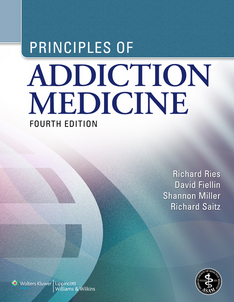
Screen Shot 2014-12-30 at 1.12.01 AMPrinciples of Addiction Medicine devotes a chapter to Physician Health Programs. Written by Paul Earley, M.D., FASAM,1 Earley states that the lifetime prevalence of substance abuse or addiction in physicians found by Hughes2 is “somewhat less than the percentage in the general population reported by Kessler” of 14.6%.3

Although he specifies the numerical percentage “in physicians at 7.9%,”3 he avoids the use of numbers (14.6%) in the general population. He instead uses the qualifier “somewhat less.” Why is this?

My guess is because it understates the statistical fact that the prevalence found by Kessler in the general population was almost twice that found by Hughes in physicians.

You see, “Somewhat less” is a “detensifier.” It creates an impression of a small disparity between doctors and the general population.

In propaganda this is what is known as a “weasel phrase.”   Weasel phrases are used to obfuscate the truth.   Weasel phrases mislead those either without the time, or without the sense to see or look any deeper. The problem is it works.

“Methodologic differences may account for this difference,” Earley states, as the Hughes study “surveyed 9, 600 physicians by mail” and “relied on honest and denial-free reports by the physicians; the Kessler study utilized face-to-face interviews with trained interviewers.”1

This is an example of language framing. Language framing uses words and phrases to direct attention to a point of view to advance a vested interest.

In this case the use of the phrase “honest and denial free” in the context of physician reporting imparts associative meaning to the reader.

As denial is a recurring motif and cardinal attribute of physician addiction according to the paradigm, the connotation is that the reports by physicians may have been influenced by dishonesty and denial while face-to-face interviews done by “trained” interviewers were not.

“Framing” is another propaganda technique designed to tell the audience how to interpret the information given through context.   The message here is that the somewhat less lifetime prevalence of substance abuse and addiction in physicians found by anonymous mail survey may be underreported as a result of both methodology and denial.

But in actual fact there is a large body of research regarding “social desirability bias” that shows the converse to be true.

One of the most consistent findings of studies of this kind is that socially desirable responding is significantly more likely with face-to-face administered data collection compared with self-administered anonymous modes.4-6

Tourangeau et al. reviewed seven studies comparing self-reports of drug use in surveys conducted in different modes. For each estimate obtained in the studies they calculated the ratio of drug use reported in self-reported surveys to the corresponding estimates in interviewer administered surveys and found that 57 of 63 different comparisons showed higher levels of reporting of drug use in the self-reported mode.7

The principal cause of social desirability bias is the level of perceived anonymity of the reporting situation.7

Evidence-based research does not support Earley’s claim that methodological differences in study design explain the difference in reported lifetime prevalence of substance abuse or addiction between physicians and the general population in these two studies.

Evidence based research would, in fact, make the findings more robust.

Moreover, I find it hard to comprehend the psychodynamics, motivation, and logic of denial and dishonesty in influencing an anonymous survey. So too would anyone else who dare peer beneath the veil. It is, in fact, a Potemkin village. In reality the emperor has no clothes.

  1. Earley PE. Physician Health Programs and Addiction among Physicians. In: Ries R, Fiellin D, Miller S, Saitz R, eds. Principles of Addiction Medicine. 4 ed. Baltimore: Lippincott Williams & Wilkens; 2009:531-547.
  2. Hughes PH, Brandenburg N, Baldwin DC, Jr., et al. Prevalence of substance use among US physicians. JAMA : the journal of the American Medical Association. May 6 1992;267(17):2333-2339.
  3. Kessler RC, Berglund P, Demler O, Jin R, Merikangas KR, Walters EE. Lifetime prevalence and age-of-onset distributions of DSM-IV disorders in the National Comorbidity Survey Replication. Archives of general psychiatry. Jun 2005;62(6):593-602.
  4. Sudman S, Bradburn NM. Response effects in surveys: A review and synthesis. Chicago: Aldine Publishing; 1974.
  5. Tourangeau R, Smith TW. Collecting sensitive information with different modes of data collection. In: Couper MP, Baker RP, Bethlehem J, et al., eds. Computer assisted survey information collection. New York: John Wiley & Sons, Inc.; 1998.
  6. Dillman DA. Mail and telephone surveys: The total design method. New York: Wiley-Interscience; 1978.
  7. Tourangeau R, Rips LJ, Rasinski KA. The Psychology of Survey Response. Cambridge: Cambridge University Press; 2000.
  8. American Society of Addiction Medicine: Patient Placement Criteria. Chevy Chase, MD: American Society of Addiction Medicine; 2000.
  9. Merlo LJ, Gold MS. Successful Treatment of Physicians With Addictions: Addiction Impairs More Physicians Than Any Other Disease. Psychiatric Times. 2009;26(9):1-8.

In Mechanics and Mentality the Physician Health Program “Blueprint” is Essentially Straight, Inc. for Doctors.

The Physician Health Program “Blueprint” is Essentially Straight, Inc. in both Mechanics and Mentality.

In 2012 former Nixon Drug Czar Robert Dupont, MD delivered the keynote speech at the Drug and Alcohol Testing Industry Association (DATIA) annual conference and described a “new paradigm” for addiction and substance abuse treatment. He advocated zero tolerance for alcohol and drug use enforced by monitoring with frequent random drug and alcohol tests. Detection of any substances is met with “swift and certain consequences.”

And then he proposed expansion of this paradigm to other populations including workplace, healthcare, and schools.

Disrupted Physician 101.4–The “Impaired Physician Movement” takeover of State Physician Health Programs

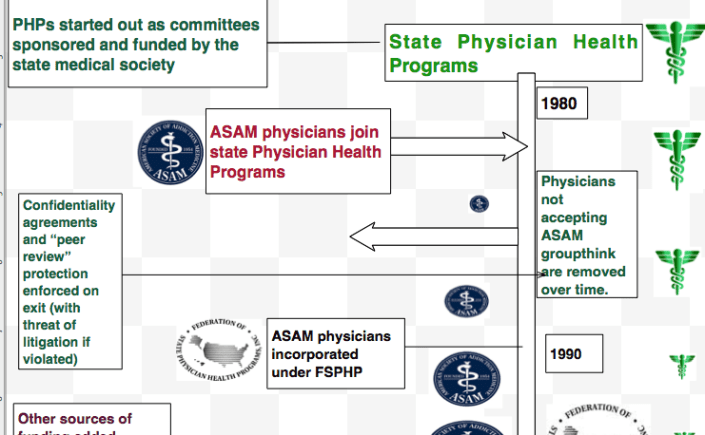
These ASAM “addiction experts” have become so numerous they have been able to take over almost all the state Physician Health Programs (PHPs). Their national association—the Federation of State Physician Health Programs (FSPHP)–has a stated goal of universal acceptance of the 12-step doctrine: lifelong abstinence, and spiritual recovery as the one and only treatment, as spelled out in the “PHP Blueprint.”

Very much like Straight, Inc in the 70s and 80s, they have cast a wide net with doctors to ensnare them in an endless loop of drug testing and rehab—whether the tests are fabricated or not. The doctors will enjoy no sympathy from the public, and complaining about it is deemed a sign of your “disease.” Furthermore, ASAM recommends that physicians only be referred to “PHP approved” facilities.

The medical directors of these facilities can all be found on this list of ”Like-Minded Docs.” Surprisingly, many Like-Minded Docs were former addicts and alcoholics, some even with criminal backgrounds. There are felons and even double-felons on the list.

It’s a rehab shell game. Heads I win tails you lose.

And the program is expanding. The organization that oversees the licensing for all medical doctors, the Federation of State Medical Boards, adopted a new policy and approved the concept of “potentially impairing illness” and the Orwellian notion of “relapse without use.”

Signals for “impairment can be as benign as not having “complete accurate, and up-to-date patient medical records” according to Physician Health Services, the Massachusetts PHP. Despite the overwhelming amount of paperwork Doctors now have, incomplete or illegible records could be construed as a red flag, since as Associate Direct of PHS Judith Eaton notes “when something so necessary is not getting done, it is prudent to explore what else might be going on.” The question is, who is next?”

mllangan1's avatarDisrupted Physician

Forget what you see
Some things they just change invisibly–Elliott Smith

IMG_8923

Physician Impairment

The Sick Physician: Impairment by Psychiatric Disorders, Including Alcoholism and Drug Dependence, published by the American Medical Association’s (AMA) Council on Mental Health in The Journal of the American Medical Association in 1973,1 recommended that physicians do a better job of helping colleagues impaired by mental illness, alcoholism or drug dependence. The AMA defined an “impaired physician” as “a physician who is unable to practice medicine with reasonable skill and safety to patients because of mental illness or excessive use or abuse of drugs, including alcohol.”

Recognition of physician impairment in the 1970s by both the medical community and the general public led to the development of “impaired physician” programs with the purpose of both helping impaired doctors and protecting the public from them.

IMG_1010The 1975 media coverage of the deaths of Drs. Stewart and…

View original post 766 more words

Carl Sagan’s Baloney Detection Kit and the Birth of “Addiction Medicine” as a New Discipline: The Need for an in Utero Diagnostic Assessment Prior to Delivery

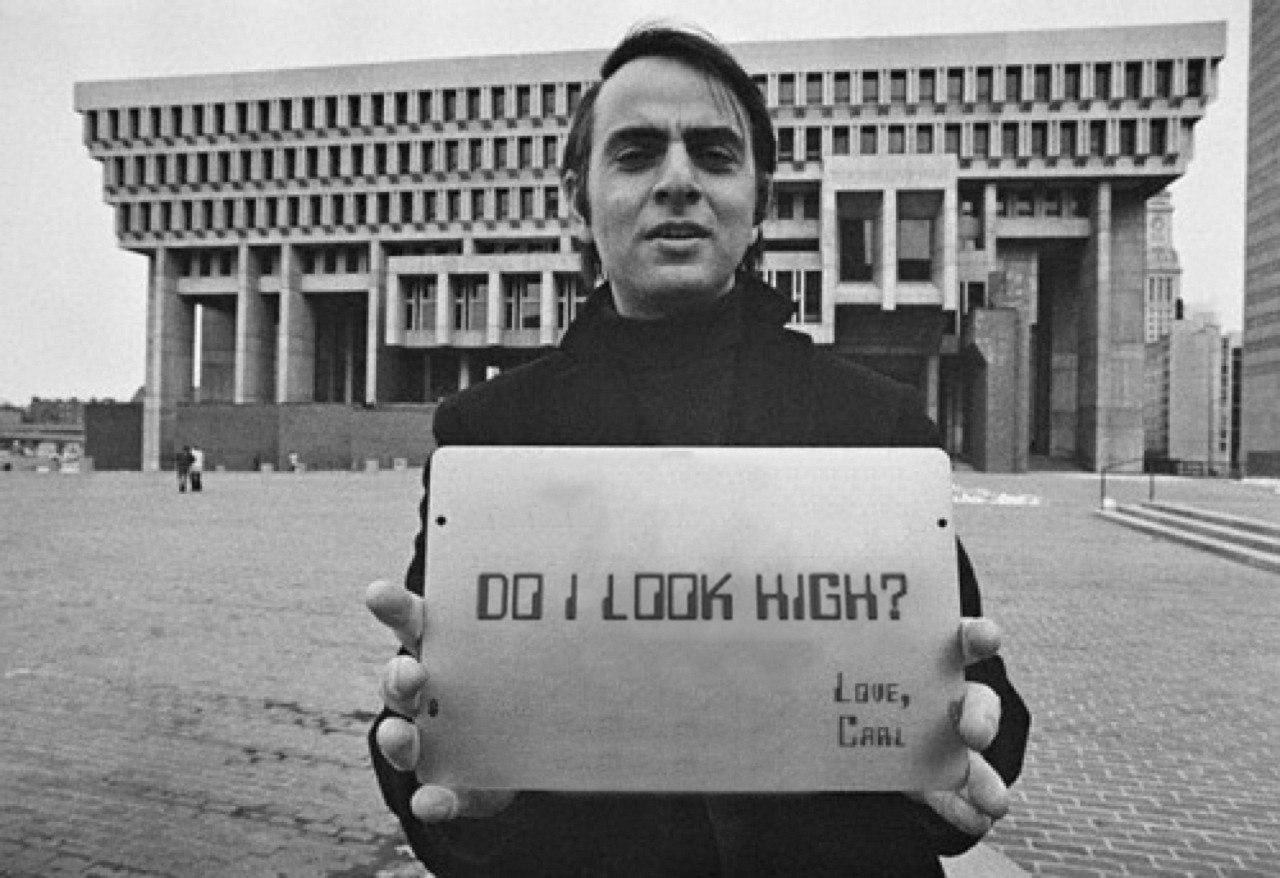
3b67f56268909f1dfa2a168a352ad09a“One of the saddest lessons of history is this: If we’ve been bamboozled long enough, we tend to reject any evidence of the bamboozle. We’re no longer interested in finding out the truth. The bamboozle has captured us. It’s simply too painful to acknowledge, even to ourselves, that we’ve been taken. Once you give a charlatan power over you, you almost never get it back.”

― Carl Sagan, The Demon-Haunted World: Science as a Candle in the Dark


Carl Sagan devised a toolkit for nonsense-busting and critical thinking, which includes these nine rules:

  1. Wherever possible there must be independent confirmation of the “facts.”
  2. Encourage substantive debate on the evidence by knowledgeable proponents of all points of view.
  3. Arguments from authority carry little weight — “authorities” have made mistakes in the past. They will do so again in the future. Perhaps a better way to say it is that in science there are no authorities; at most, there are experts.2Q==
  4. Spin more than one hypothesis. If there’s something to be explained, think of all the different ways in which it could be explained. Then think of tests by which you might systematically disprove each of the alternatives. What survives, the hypothesis that resists disproof in this Darwinian selection among “multiple working hypotheses,” has a much better chance of being the right answer than if you had simply run with the first idea that caught your fancy.
  5. Try not to get overly attached to a hypothesis just because it’s yours. It’s only a way station in the pursuit of knowledge. Ask yourself why you like the idea. Compare it fairly with the alternatives. See if you can find reasons for rejecting it. If you don’t, others will.

  6. Quantify. If whatever it is you’re explaining has some measure, some numerical quantity attached to it, you’ll be much better able to discriminate among competing hypotheses. What is vague and qualitative is open to many explanations. Of course there are truths to be sought in the many qualitative issues we are obliged to confront, but finding them is more challenging.
  7. If there’s a chain of argument, every link in the chain must work (including the premise) — not just most of them.carli
  8. Occam’s Razor. This convenient rule-of-thumb urges us when faced with two hypotheses that explain the data equally well to choose the simpler.
  9. Always ask whether the hypothesis can be, at least in principle, falsified. Propositions that are untestable, unfalsifiable are not worth much. Consider the grand idea that our Universe and everything in it is just an elementary particle — an electron, say — in a much bigger Cosmos. But if we can never acquire information from outside our Universe, is not the idea incapable of disproof? You must be able to check assertions out. Inveterate skeptics must be given the chance to follow your reasoning, to duplicate your experiments and see if they get the same result.

Screen Shot 2015-05-10 at 1.21.52 AM

A November 2014 Viewpoint article in the Journal of the American Medical Association entitled Addiction Medicine: Birth of a new Discipline describes the need for “integration of addiction specialty physicians throughout the health care system” and how they plan to accomplish this. Citing the 2012 “National Survey on Drug Use and Health” findings that only 11% of Americans in need of treatment recevied it, the authors conclude that the number of addiction psychiatry diplomates (1139) is not meeting the country’s “overwhelming need for addiction specialists. To close this “addiction treatment gap” they propose “greatly expanding addiction physician specialists to include physicians from internal medicine and other specialties.”

Lax Standards

The American Society of Addiction Medicine (ASAM) only requires that you complete a residency — any residency, even dermatology or surgery — plus one year of work in the field and then 50 hours of “education.”  I took the test in 2010 and passed by a large margin without any preparation.

Screen Shot 2014-03-17 at 3.29.21 PM

Remarkably, I received my “diploma” in the mail without every meeting or speaking with anyone.   I simply paid the fee and took the test at one of the local testing centers.   This is concerning as my prior board certifications required accredited residency and training programs and were dependent on not only successfully completing those programs academically but on the reports of my superiors documentation of my character and integrity.  Screen Shot 2014-03-03 at 1.22.02 PM

With these lax standards, the ASAM have been able to create a legion of board certified addictions specialists – outnumbering psychiatrists in the field by 3 to 1.

Takeover of state Physician Health Programs (PHPs)

These ASAM “addiction experts” have become so numerous they have been able to take over almost all the state Physician Health Programs (PHPs). Their national association—the Federation of State Physician Health Programs (FSPHP)–has a stated goal of universal acceptance of the 12-step doctrine: lifelong abstinence, and spiritual recovery as the one and only treatment, as spelled out in the “PHP Blueprint.”

Very much like Straight, Inc in the 70s and 80s, they have cast a wide net with doctors to ensnare them in an endless loop of drug testing and rehab—whether the tests are fabricated or not. The doctors will enjoy no sympathy from the public, and complaining about it is deemed a sign of your “disease.”   Furthermore, ASAM recommends that physicians only be referred to “PHP approved” facilities.  

The medical directors of these facilities can all be found on this list of ”Like-Minded Docs.”  Surprisingly, many Like-Minded Docs were former addicts and alcoholics, some even with criminal backgrounds.  There are felons and even double-felons on the list.

It’s a rehab shell game. Heads I win tails you lose.

And the program is expanding. The organization that oversees the licensing for all medical doctors, the Federation of State Medical Boards, adopted a new policy and approved the concept of “potentially impairing illness” and the Orwellian notion of  “relapse without use.”

Signals for “impairment can be as benign as not having “complete accurate, and up-to-date patient medical records” according to Physician Health Services, the Massachusetts PHP.  Despite the overwhelming amount of paperwork physicians now have, incomplete or illegible records could be construed as a red flag, since as Associate Direct of PHS Judith Eaton notes “when something so necessary is not getting done, it is prudent to explore what else might be going on.” The question is, who is next?”

Not Just For Doctors, But for Everyone

Most of us are unaware of this quiet operation to police and punish our private choices. This is the New Inquisition: a move to expand this program to virtually all professions, all Americans. They want to replace the system currently being used in pilots, bus drivers, and Federal Employees with “comprehensive drug and alcohol testing” that consists of the Laboratory Developed Tests (LDTs) they introduced. Their goal is 24/7 sobriety with complete abstinence, and zero tolerance using tests of unverified validity and unknown reliability.

And they have an implementation plan.  The American Society of Addiction Medicine (ASAM), bolstered by billions of dollars from forced rehab and mandatory drug testing, has a long reach and powerful political friends. ASAM plans to force your physicians to collect your urine in the name of preventive care.

That’s right, that free preventive care you’re getting under Obamacare might soon come packaged with drug screening, as outlined in the ASAM White Paper on Drug Testing.  . Drug testing, they say, is  “vastly underutilized” throughout healthcare. The White Paper—which is well worth reading—describes the use of drug testing “within the practice of medicine and, beyond that, broadly within American Society.”

No matter your profession, if you come for a check up, you may be unwittingly looped into being referred for  “assessment” and “treatment” in a “PHP-approved” facility, where to get free, among other things, you will have to admit you are powerless and surrender to God.

If we don’t start pushing back now, soon there will be mandatory drug testing for every citizen..  A good case can be made for forced drug testing for virtually every profession –a few well-placed opeds in The New York Times and pretty soon we’ll begin to think it’s reasonable to test teachers, food handlers, you name it. They are even recruiting pediatricians to test children.      And in the new system they will not have to change your test from “forensic” to “clinical.”   A doctor-patient relationship renders the test “clinical” and by having doctors collect these specimens and calling the consequences “treatment” they can successfully use these unverified and unregulated tests introduced and marketed through a loophole into mainstream medical practice through a loophole.

One of the major goals of ASAM is recognition by the American Board of Medical Specialties. Should this occur it will inevitably lead to the end of Addiction Psychiatry and, by outnumbering them 3:1 it will be enveloped into the all encompassing field of “addiction medicine.” “Who needs two specialties?” they will argue, especially since most medical experts have accepted that addiction is a chronic relapsing “brain” disease.

And this legion of “authority” will infest our hospitals and mainstream medicine where they will join hospital formulary, ethics, research and other committees where they will be able to outnumber and outvote those of open mind and critical thought just as they did in the PHP system and the field of medicine will then be subverted to the guiding philosophy of the “impaired physicians movement.”

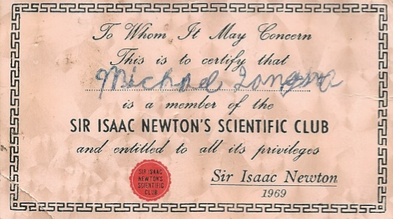
Addiction is a serious problem and those afflicted with it need proper assessment, diagnosis and treatment.  This illegitimate and irrational authority does not provide that.  Having had a disease does not confer authority status–I have asthma but that does not make me an expert in reactive airway disease.    Neither does interest in something, no matter how sincere, make one an expert.  I’ve had a sincere interest in science since I was a child but did not claim to be an expert in science when I was 7 because I was a member of Sir Isaac Newton’s Scientific Club.   Aside from the $2200 I had to pay and sitting through the exam gaining  ABAM certification was not all that different. This is not “expertise.”

Screen Shot 2015-05-10 at 2.27.52 AM

Prior to accepting “addiction medicine” as an ABMS approved specialty their research, tenets and basic principles of should be subjected to critical reasoning and academic analysis of the Cochrane caliber to see if they are actually valid.  This includes their claims of remarkable success in treatment and the non-FdA approved laboratory developed tests (LDTs) that they introduce.d.    The authorities and experts involved in promoting the ideology, testing and treatment should  be subject to and Institute of Medicine (IOM) conflict of interest analysis.   Who is profiting? And all of the statements, claims and suppositions regarding addiction and the guiding philosophy of the group should be subjected to Carl Sagan’s Baloney Detection kit.   If this were done the results would be failure on all three counts. False premises lead to false constructs.

61141_121358938015778_1369375864_n

One thing is for certain. When society gives power of diagnosis and treatment to individuals within a group schooled in just one uncompromising model of addiction with the majority attributing their very own sobriety to that model, they will exercise that power to diagnose and treat anyone and everyone according to that model.

The birth of Addiction Medicine as an ABMS accepted discipline is sure to be a success for the LDT drug and alcohol testing and 12-step assessment and treatment industry, but its spawn is sure to be an inauspicious mark on the Profession and Guild of Medicine and a bane of society for years to come.images

Neuropsychological Misconduct –Making the Data fit the Diagnosis Part 2: Cognitive Impairment

IQ_Dağılımı

Screen Shot 2014-06-23 at 2.24.51 PM

Doctored Wechsler IQ–Boilerplate subtraction of subsets -diagnsosis = cognitive impairment

In May 1999, Dr. G. Douglas Talbott stepped down as president of the American Society of Addiction Medicine (ASAM) down as a jury awarded  Dr. Leonard Masters a judgment of $1.3 million in actual damages and an undisclosed sum in punitive damages for malpractice, fraud, and false imprisonment.  The fraud finding required that the errors in the diagnosis were intentional.

The lawsuit apparently resulted in some changes in the evaluation process.  The errors were deemed intentional in the Masters case as the charts lacked sufficient data for the false diagnosis. Judging by what we see here they are generating intentionally erroneous tests to support an intentionally erroneous diagnosis.

In 2008 I went to Talbott Recovery Center in Atlanta for a 96-hour evaluation due to a positive urine test reported for a substance closely related to a medication I was prescribed.  Despite obtaining a letter from the pharmaceutical manufacturer stating that the drug found in my urine was, in fact, the parent compound of the drug I was prescribed and despite a negative forensic fingernail test  (done by USDTL) I was forced by Linda Bresnahan to have an “assessment.”

I arrived with 4500.00 which was about 500 dollars short for the evaluation. I had requested a forensic hair test  and did not realize they were so expensive.   The primary concern for most of the morning I arrived was when the remaining 500 dollars would arrive. In fact I was told that I would not be able to be admitted until I paid in full.

I had an appointment with an internist, Dr George MacNabb that he cancelled when he found out  I had not  yet paid in full. I have to admit that I, nor anybody I know at MGH, has refused care to a patient based on pre-payment.

The 96-hour assessment included the physical exam, neuropsychological and cognitive testing in addition to drug and alcohol testing by urine and hair.  After finding out my hair test and toxicology screens were negative and in light of my supporting negative nail tests and letter from the pharmaceutical manufacturer I was pretty confident I was good to go but ended up wishing they would have told me the hair test didn’t count before I paid the extra cash.

At the completion of the  96-hour assessment I was brought to their conference room and  told by Dr. Paul Earley and his his assessment team that I needed to stay for treatment.   “I don’t understand,” I said..”I have negative hair (3 months) and nails (6 months), an explanation for the positive test and have never had any problems at work.   I was then told that based on my neuropsychological and cognitive testing I was in denial and “cognitively impaired”  and that they could not advocate for my safely practicing medicine.

I was then taken to accounting to see how I would come up with the 18-25K for treatment. On the last page of my assessment report it states that “Dr Langan agreed with this assessment and recommendations and requested to return home to collect his funds to return for treatment at the Talbott Recovery Campus.”

It is well documented that Talbott will “keep you until the money runs out.”

I had given them a list of people to contact who could verify my work performance was excellent and there were no concerns from anyone including nurses, patients and students.  I asked why they had not contacted my Chief, nurse practitioner or any of my coworkers and was told they had enough information from the PHP Besides, one of them told me “they might cover for you so we can’t put much weight in their opinions.”

My first impression when I started reading the report was that it was another persons assessment given to me by mistake.  The neuropsychology report indicating “denial” I knew was wrong as I recognized the language reporting an elevated L-scale.  Thinking at the time it was an unintentional mistake I asked it be looked at as it was impossible. The L-scale or “Lie-scale” is a “validity” scale that picks up someone trying to portray himself in a positive light so you have to take the rest of the results with a grain of salt. It only works in unsophisticated naive individuals who answer blanket questions related to essentially good an bad behaviors or traits (such as “have you ever lied?”)  believing that is what the audience is looking for.   As a result,  only people bereft of enough common sense to understand that concrete blanket statements are implausible.

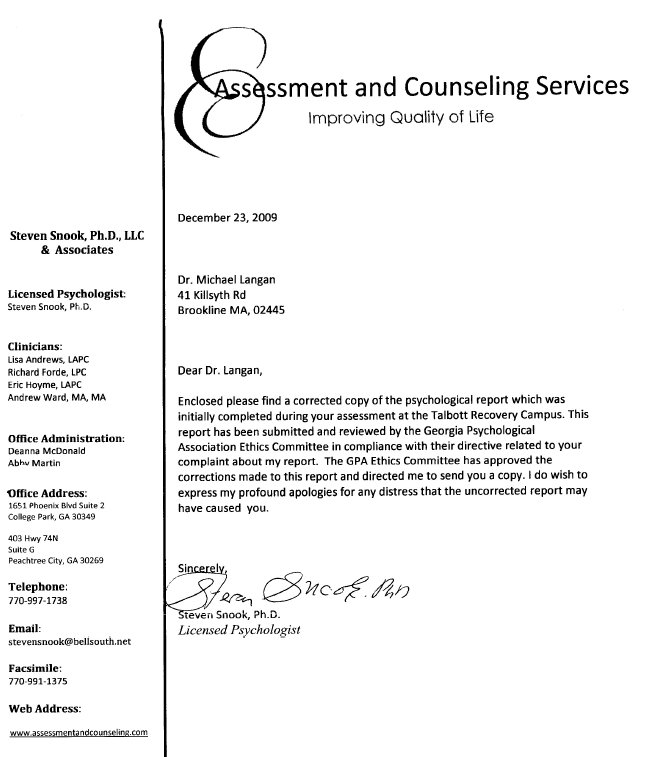
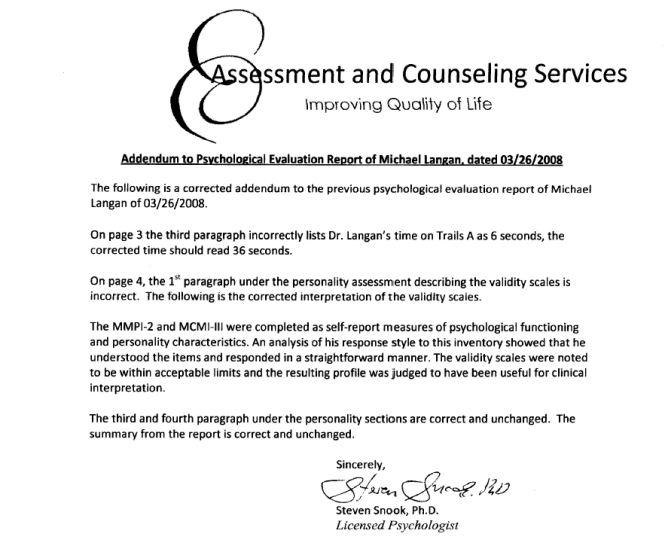
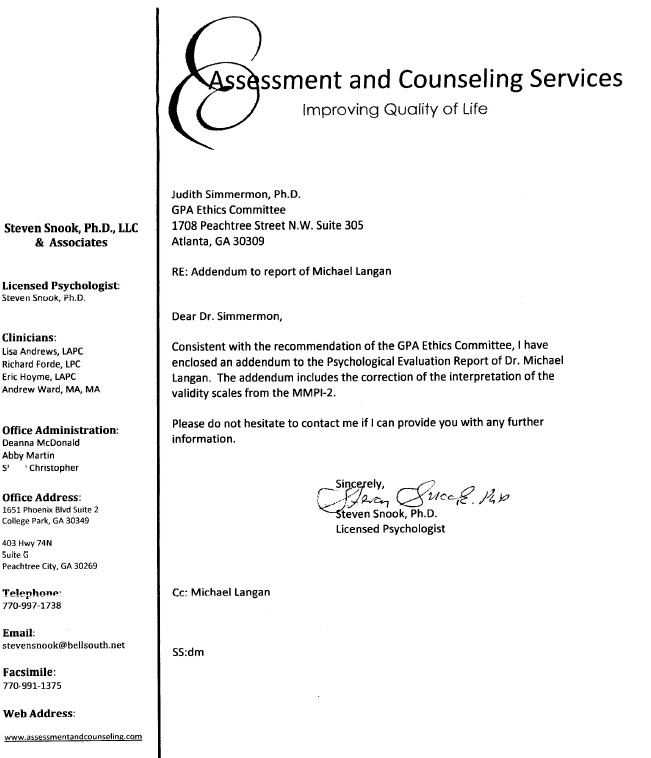
Dr. Snook wrote an interpretation of my L-scale as if it were positive ( > 65).  It was later confirmed to be 49 (as normal as normal can be on this) after obtaining the scoring sheet and raw data but even confronted with this he refused to correct it and only did so after the Georgia Psychological Association forced him to.  He engaged in intentional fraud at the request of PHS to show pathology where there is none and in terms of medical ethics there should be zero tolerance for this.  Zero!  Political abuse of psychiatry to give a false diagnosis for economic or political gain is antithetical to both medical and societal ethics.    It is unconscionable in light of all of the doctors who have killed themselves after being evaluated by these programs.

And although I can’t prove it, the  IQ test above was also doctored as I have taken it before and “comprehension” was my best score.   The computer shaves off points to lower comprehension and reasoning subscales and they give a diagnosis of “cognitive impairment.”    I subsequently took it in Boston two weeks later and went back up again!  I wonder what happened in Atlanta?   I could not disprove this one however as there is no raw data generated to prove whether I incorrectly interpreted a proverb or couldn’t tell him what I would do if I found a stamped envelope on the street.


Neuropsychological Misconduct –Making the Data fit the Diagnosis Part 1:  Denial

To further complicate matters, many evaluation/treatment centers are dependent on state PHP referrals for their financial viability. Because of this if, in its referral of a physician, the PHP highlights a physician as particularly problematic, the evaluation center might–whether consciously or otherwise–tailor its diagnoses and recommendations in a way that will support the PHP’s impression of the physician.”  -John Knight and J. Wesley Boyd.  in “Ethical and Managerial Considerations Regarding State Physician Health Programs,”  Journal of Addiction Medicine  2012

imgres-2

Dr. Stephen Snook, PhD

Confirmatory Distortion

“Confirmatory distortion” is the process by which an evaluator, motivated by the desire to bolster a favored hypothesis, intentionally engages in selective reporting or skewed interpretations of data thereby producing a distorted picture. It is an “indisputable conscious endeavor to find and report information that is supportive of one’s favored hypothesis.10

In other words it is a conscious decision and not an unconscious bias..

I requested Talbot and Dr. Snook address the fraud and rewrite the interpretation and recommendations.  I then complained to PHS not knowing at the time that they were the ones who requested it.  The requests were ignored.

I then filed a complaint with the Georgia Psychological Association. They confirmed the fraud and forced Dr. Snook to correct the test. Below is his apology. An apology received only because his back was to the wall. “Profound apologies”–Give me a break.  There would not be one if the Georgia Psychological Association did not force him to.

Screen Shot 2015-02-08 at 10.28.46 PM

Screen Shot 2015-02-08 at 6.59.19 PM

Screen Shot 2015-02-08 at 10.29.03 PM

I have since spoken to a couple dozen doctors who have the same template on their evaluations.   An elevated L-scale would be unusual in any doctor even if he were an alcoholic or addict. It is only the very naïve and unsophisticated who would think they can show themselves in a positive light by answering questions of obvious attempt such as “I never lie.” And if a class action lawsuit comes about this is one of the items that could be used to prove the systemic fraud. Obtain the score sheets from the facilities on anyone with this same interpretation and it will most likely show fabrication in the same manner.

Next up is the cognitive impairment piece.  Just like the MMPI they manipulate the IQ tests to show cognitive impairment by shaving off points in the executive function subcategories.

Snook is one cog in this system of fraud. He and others like him should have their licenses revoked permanently. There is no excuse. How many careers have ended because of his contribution to this scam? How many have died?

As always with my posts, if he cares to contest it and can disprove the fraud I’ll take the post down. As with all the others they can’t. If they could’ve they would’ve.

And this is the reason I was targeted by Linda Bresnahan.  Upset that I got one of their own in trouble she threatened retribution.   “You won’t be a doctor in five years” she said.   “Dead, relapsed or in jail  I don’t care.”  “Dead?” I said.

“Either that or you’ll wish you were”.   And when Drs. John Knight  and J. Wesley Boyd were removed from PHS and were no longer there to protect me she made good on her threat.  She and Luis Sanchez fabricated an alcohol test in retribution for calling out one of their own.

Disrupted Physician 101.1: The “Impaired Physician Movement” and the History of the American Society of Addiction Medicine (ASAM).

Disrupted Physician 101.1: The “Impaired Physician Movement” and the History of the American Society of Addiction Medicine (ASAM).

Henry David Thoreau

“With one arm around the shoulder of religion and the other around the shoulder of medicine, we might change the world.”—Twelve Steps and Twelve Traditions, AA World Services, Inc (1953).

In 1985 the British sociologist G. V. Stimson wrote:

“The impaired physician movement is characterized by a number of evangelical recovered alcoholic and addict physicians, whose recovery has been accompanied by an involvement in medical society and treatment programs. Their ability to make authoritative pronouncements on physician impairment is based on their own claim to insider’s knowledge.”

The American Society of Addiction Medicine’s mission is to “establish addiction medicine as a specialty recognized by professional organizations, governments, physicians, purchasers, and consumers of health care products, and the general public.”  

In this they have succeeded.images-4

And in the year 2014 Stimson’s characterization of the “impaired physician movement” remains as accurate and apt as it was in 1985. But the “number of evangelical recovered alcoholic and addict physicians” has increased dramatically  (outnumbering Addiction Psychiatry by 4:1)  and their involvement in  medical society and treatment programs” has been realized and enforced through the state Physician Health Programs and their “PHP-approved’ assessment and treatment centers.

Their “ability to make authoritative pronouncements on physician impairment…based on their own claim to insider’s knowledge”  has become public policy and sanctified by Regulatory Medicine.

And the 1953 Alcoholics Anonymous prophecy that “With one arm around the shoulder of religion and the other around the shoulder of medicine, we might change the world” is also coming to pass.

But the world is not changing for the better as that arm around the shoulder of religion has its fingers deep in the pockets of the multi-billion dollar drug and alcohol testing and assessment and treatment industries.  And the arm around the shoulder of medicine has its fingers clamped tightly around its throat; a stranglehold in full throttle suffocating the Profession of Medicine with no meaningful opposition I can see.

British Medical Journal 17 December 2014: Drug Policy: We Need Brave Politicians and Open Minds

Screen Shot 2014-12-30 at 3.38.59 PM

http://www.bmj.com/content/349/bmj.g7603/rr

Go back

Your message has been sent

Warning
Warning
Warning
Warning

Warning.


Screen Shot 2013-10-23 at 2.56.31 PM