A knowing smile must have come across Sonja Farak’s face if she ever read the above quote from Fear and Loathing in Las Vegas during her nearly eight-years as a chemist for the Massachusetts crime lab. The list of illicit pharmaceuticals found in the trunk of Dr. Gonzo’s red Chevrolet convertible was not unlike her very own workstation stash in terms of diversity and color. Farak’s personal bindle, however, just happened to reside within the walls of the Amherst facility where she worked as a chemist analyzing seized substances brought in by police and the buffet of illicit pharmaceuticals and industrial quantities Farak snorted, smoked and swallowed while testing drugs for criminal cases is jaw dropping.
Referring to his own drug use, Charlie Sheen once said …”I probably took more than anybody could survive,” during an ABC interview. “I was banging seven-gram rocks. Because that’s how I roll. I have one speed. I have one gear.” Sheen noted his most recent binge was “radical. … The run I was on made Sinatra, Flynn, Jagger, Richards look like droopy-eyed, armless children.” But Farak’s run would make even the most hardcore drug user stand up and take notice as this woman was not just under the influence but over the rainbow and her eclectic pharmacopeia and hepatic fortitude alone is breathtaking but the kicker is this; she did it all within the walls of the state run crime lab and no one noticed.
Farak’s drug use started in 2004 when she started sampling from the “primary standards” chemists use as a reference to compare to the the seized samples brought in by police. “Primary samples” are of very high quality and the Amherst lab maintained samples of everything from heroin to marijuana. Farak developed a penchant for Meth and by 2005 had increased her usage to multiple times per day. By 2009 she had nearly exhausted the labs entire methamphetamine supply.
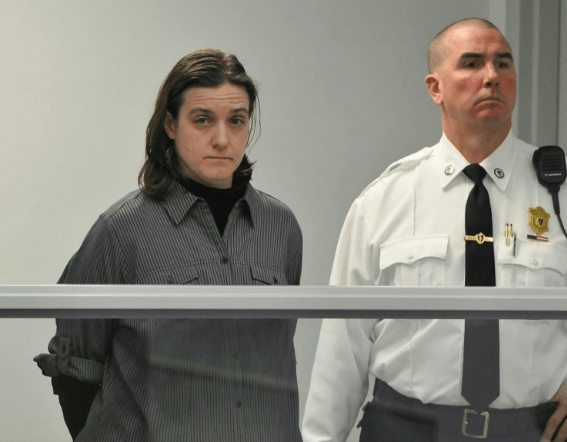
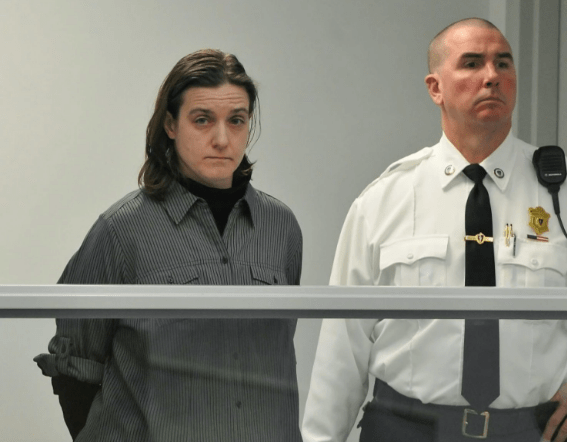
Farak told investigators that she smoked crack every single day at work. When police in Chicopee, Mass. seized a kilo of cocaine, Farak utilized that lab’s facilities to freebase about 100 grams of it and free is a very good price. When it struck her fancy she also took methamphetamine, amphetamine, ketamine, ecstasy LSD, Marijuana and MDMA at work and at home and probably to and fro. She testified in court while addled by drugs and even hit the crack pipe prior to a 2012 state police accreditation inspection of the lab with no eyebrows apparently raised. Farak remained undetected amongst those trained to detect. Throughout this entire marathon binge no one noticed a decline in her work with one colleague even calling her “meticulous” and “dedicated to her work.”
Farak was arrested in 2013 after it was inexplicably discovered that her lab samples that she had been tampering with for nearly eight-years had been tampered with. Chunks of crack were found at her work station and a crack pipe in her car.
She pleaded guilty in January 2014 to tampering with a handful of drug samples and served an 18-month sentence. She was prosecuted and the Massachusetts attorney general’s office said at the time they did “not believe Farak’s alleged tampering would undermine any cases” but three years later, an investigation by Attorney General Maura Healey reveals otherwise.
Farak’s pursuit to oblivion rivals that of Permanent Midnight, Jerry Stahl’s autobiographical account his prodigious drug use as he wrote television shows but the potential consequences of Farak’s diehard addiction and penchant for psychotropics are more than just shabby dialogue on Moonlighting or Alf. Losses of liberties and freedoms can result from positive drug tests and the consequences can be grave and far reaching. Positive drug tests can tear apart families end careers and trigger suicides.
A spokeswoman for Attorney General Maura Healey said the information gathered about Farak “will no doubt have implications for many cases.” One defense attorney told the Boston Herald that Farak handled about 30,000 cases over the course of her career.
Some defense attorneys maintain that prosecutorial misconduct kept the details of Farak’s drug-induced work secret for almost two years after her problems were discovered.
Cyndi Ray Gonzalez, chief spokeswoman for Massachusetts Attorney General Maura Healey, said that the state’s district attorneys, the defense bar and the courts “are going to have to collectively work on determining the universe of cases that could be affected. And they’re going to have to determine how best to notify the people in each case.”
Matthew Segal of the American Civil Liberties Union of Massachusetts has been fighting Massachusetts prosecutors for almost four years to learn the names of all those affected by Dookhan’s misconduct. “This is why it’s not just about two chemists, it’s about an entire system that allowed this to happen, and once it did happen didn’t take steps to remedy it.”
The newly released investigation was prompted by a ruling from the state Supreme Judicial Court last April, which said top state law enforcement officials failed to fully investigate how many times Farak tampered with drug evidence after her arrest in 2013. “This is a statewide problem,” said attorney Luke Ryan, who helped bring the scope of Farak’s drug use and evidence tampering to light, and who represents several defendants whose samples purportedly were tested by Farak. “The fact that we’re doing this in 2016 instead of 2013 makes the job so much harder. . . . The chances of people falling through the cracks really increases.” According to spokesman Jake Wark state’s district attorneys are undertaking research similar to that performed in the wake of the Dookhan scandal
“Our experience with the Hinton Lab crisis has provided us with a framework for identifying and acting on these cases,” Wark said, referring to ex-chemist Annie Dookhan, who was found to have been falsifying her analysis reports to police and the courts for years and potentially tainting up to 40,000 cases. Identifying and acting? How about preventing?
Farak and Dookhan’s misdeeds were initially dismissed as a minor issue by government lawyers. -These egregious debacles are not just a matter of “bad apples” but a complete organizational systems failure in a culture of deference with no internal controls and an absence of outside accountability. In both cases the blinkered apathy is glaringly obvious and some people felt it was easier not to examine or look too deeply into the matter.


 Employee Assistance Programs (EAPs)
 With time these programs broadened to include other issues that could potentially impact job performance. Worker Assistance Programs (WAPs) emerged in the 1950s when companies such as Consolidated Edison, Standard Oil of New…



 Alexis de Toqueville once observed that a key feature of American government was the decentralized character of administration. “Written laws exist in America,” he wrote, “and one sees the daily execution of them; but although everything moves regularly, the mover can nowhere be discovered. The hand which directs the social machine is invisible.”2Administrative law is the body of law that allows for the creation of public regulatory agencies and contains all of the statutes, judicial decisions and regulations that govern them. Administrative agencies implement their powers in the form of rules, regulations, orders and decisions. State medical boards are the regulatory agencies responsible for the licensure and discipline of physicians. They grant the right to practice medicine in the form of a medical license and each state has Medical Practice Act that governs and defines the practice of medicine. The medical board is empowered to take action against a doctor for substandard care, unprofessional behavior and other violations as defined by the state Medical Practice Act.Administrative Code governs the licensure and disciplinary process and the State Administrative Procedure Act governs the legal process (due process, discovery, etc.). Regulatory changes are enacted through procedural, interpretive and legislative rules.Both medical practice acts and administrative procedure acts are subject to change. Changes in medical practice acts can redefine what is acceptable practice and what constitutes professional behavior. This can increase the power and control these agencies have over doctors both professionally and socially.






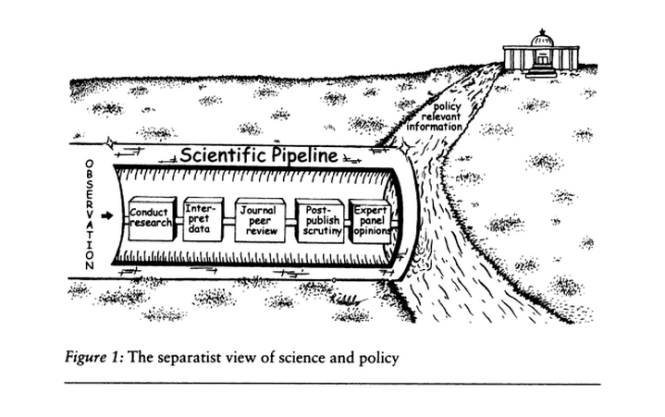 In Bending Science: How Special Interests Corrupt Public Health Research 1 Thomas McGarity and Wendy Wagner describe how special interest groups scheme to advance their own economic or ideological goals by using distorted or “bent” science to influence legal, regulatory and public health policy.The authors describe a “separatist view” of science and policy that assumes scientific research is sufficiently reliable for public policy deliberations and legal proceedings when it reaches them. This is illustrated as a pipeline in which it is presumed the scientific community has properly vetted the information flow through rigorous peer-review and professional oversight. The final product that exits the pipeline is understood to be unbiased and produced in accordance with the professional norms and procedures of science. The reliability, integrity and validity of the final product is indubitably accepted.The separatist view does not consider the possibility that the scientific work exiting the pipeline could be intentionally shaped and contaminated by biasing influences as it flows through the pipeline. When this occurs the final product exiting the pipeline is distorted or “bent” and bent science can result in bad decision making and bad policy.Bent science starts with a pre-determined outcome and works backward from a desired result. It is not true science. Those orchestrating the deception (“benders”) use a variety of tactics and strategies to shape, package and spin science to support their own hidden agenda and suppress opposing science.Benders attempt to hide, dismiss and debunk contrarian research and unsupportive science. Benders will attack and harass the science and scientists that pose a threat to their interests. Using carefully crafted studies designed to confirm a desired outcome, the pre-determined conclusions are subsequently promoted and publicized to the relevant stakeholders who are often unable ( or sometimes unwilling) to discern real science from junk-science.

 The system is almost foolproof. It is a culture of impunity and deference. To make matters worse states Attorney Generals defer to the medical-board and their physician health experts. The AGO represents the state agency and its expert in legal challenges and crimes reported by doctors are dismissed at the outset. The agency responsible for investigating rackets and laboratory and healthcare fraud as well as civil rights violations and color of law abuse is the states AGO. No one is minding the minders.

 Disrupted Physician