The Problems with Recognizing Problems as Problems: Medication Records, Firefighter Arsonists and Machiavellian Sociopaths

mllangan1's avatarDisrupted Physician

Pharmacard:  A Prescription Drug Monitoring System Designed to Record Drug Histories and Reduce the Incidence of “Drug Misadventuring.”
 
As a medical student in 1990 I saw a 79 year old woman in the emergency room with intractable nausea and vomiting.   Earlier that week she had seen her primary care physician for nausea and a mild cough.   Diagnosed with bronchitis,  she was given a prescription for erythromycin.  Her husband brought in her medications including digoxin which can cause nausea
when blood levels are too high.  A  markedly high level came back on the blood draw indicating  digitalis toxicity.  I spoke to her primary care physician who was unaware of her digoxin prescription; completely clueless that she was prescribed the foxglove plant extract by a cardiologist for an irregular heart beat.images-22
Digitalis was first described by William Withering in 1785 for heart conditions and this is considered the beginning of modern therapeutics.  Sometime after…

View original post 1,293 more words

The Irrational Authority

mllangan1's avatarDisrupted Physician

imgres-24

The Irrational Authority.  Originally posted on:

Chaos Theory and Pharmacology

A blog dedicated to the study of complex relationships in pharmacology. “Journalism is printing what someone else does not want printed: everything else is public relations.” ― George Orwell

The Irrational Authority

Goodle F. Re: ‘Drug Policy: We Need Brave Politicians and Open Minds
The BMJ. December 17, 2014.

Drug policy: we probably need an “irrational authority”

“One thing is for certain. When society gives power of diagnosis and treatment to individuals
within a group schooled in just one uncompromising model of addiction with the majority attributing their very own sobriety to that model, they will exercise that power to diagnose and treat anyone and everyone according to that model. The birth of Addiction Medicine as an ABMS accepted discipline is sure to be a success for the drug and…

View original post 223 more words

Physician Suicide and Physician Wellness Programs: We Really Need to Start Talking About the Elephant in the Room.

mllangan1's avatarDisrupted Physician

Physician Suicide

Physician Suicide and the Elephant in the Room

Michael Langan, M.D.

Although no reliable statistics exist, anecdotal reports suggest an alarming upsurge in physician suicide. This necessitates a reappraisal of known predisposing risk factors such as substance abuse and depression but also requires a critical examination of what external forces or vulnerabilities might be unique to doctors and how they might be involved in the descent from suicidal ideation to suicidal planning to completed suicide.

Depression and Substance Abuse Comparable to General Population

Depression and substance abuse are the two biggest risk factors for suicide. The prevalence of depression in physicians is close to that of the general population 1,2 and, if one looks critically at the evidence based literature, substance abuse in medical professionals approximates that of the general population.  Controlled studies using DSM diagnostic criteria suggest that physicians have the same rates (8-14%) of substance abuse…

View original post 3,327 more words

Physician Health Programs: More Harm Than Good? State-Based Programs Under Fire- Pauline Anderson

images-34

Physician Health Programs:  More Harm Than Good?

State-Based Programs Under Fire

Pauline Anderson

|August 19, 2015

There is growing scrutiny of US physician health programs (PHPs), which are state-based plans for doctors with substance abuse or other mental health problems.

Detractors of the PHP system claim physicians who voluntarily disclose they have mental health or drug problems can be forced into treatment without recourse, face expensive contracts, and are frequently sent out of their home state to receive the prescribed therapy. Some physicians allege that during their interaction with the treatment centers, large amounts of money were demanded up front before any assessment was even conducted.

In addition, critics assert that there is no real oversight and regulation of these programs.

Called by turns coercive, controlling, and secretive, with possible conflicts of interest, some say the PHP experience has led vulnerable physicians to contemplate suicide.

Two states ― North Carolina and Michigan ― have already been asked to step in and investigate many of the issues raised by PHP critics. In North Carolina, the state agreed with many of the concerns raised and recommended “better oversight” by its medical board and society. And in Michigan, litigation in the form of a class action lawsuit has been launched against the Health Professional Recovery Program (HPRP), a program similar to PHPs.

Michael Langan, MD, an internal medicine specialist in Boston, has first-hand experience with a PHP.

Dr Langan was at Massachusetts General and Harvard University in Boston when he approached the Massachusetts state PHP to help him get off an opioid analgesic. He had begun taking the drug to help him sleep after developing shingles and said he spent several months in prescribed PHP treatment after “signing on the dotted line.”

On his first day at the assessment center, Dr Langan said he was asked how he was going to pay $80,000 cash. “This was before they even evaluated me,” he told Medscape Medical News. Subsequently, Dr Langan said he underwent an independent hair and fingernail analysis that turned out to be negative “for all substances of abuse.”

Since then, he has been documenting possible cases of negative interaction with these organizations. The system, he says, leaves physicians “without rights, depersonalized and dehumanized.”

He fears that the role of PHPs has expanded well beyond its original scope, becoming monitoring programs that have the power to refer physicians for evaluation and treatment even on the basis of administrative failings, such as being behind on chart notes, he said.

He has heard reports of “disruptive physicians” being diagnosed with “character defects.” The monitored physician, he added, “is forced to abide by any and all demands of the PHP ― no matter how unreasonable ― under the coloration of medical utility and without any evidentiary standard or right to appeal. Once in, it’s a nightmare.”

Disempowered, Without Recourse

It is estimated that 10% to 12% of physicians will develop a drug or alcohol problem at some point during their careers.

PHPs were initially established to help physicians grappling with a substance abuse or mental health problem and to provide them with access to confidential treatment while avoiding professional investigation and potential disciplinary action.

Often staffed by volunteer physicians and funded by state medical societies, the original intent of these programs was to help health professionals recover while protecting the public from potentially unsafe practitioners.

PHPs assess and monitor the physicians referred to them. In most states, physicians who comply with PHP recommendations can continue to work, provided they undergo regular drug testing and other testing to ensure sobriety.

Some PHPs are run by independent nonprofit corporations, others by state medical societies. Still others receive support from state medical licensing boards. The relationship of each PHP to the state medical board varies. The scope of services offered through PHPs also differs.

Today, such programs exist in every state except California, Nebraska, and Wisconsin and are represented by an umbrella organization known as the Federation of State Physician Health Programs (FSPHP).

According to its mission statement, the FSPHP’s mandate is to “support physician health programs in improving the health of medical professionals, thereby contributing to quality patient care.”

Coercive Process

Concerns about the PHP system have been percolating for a number of years. In 2012, an editorial by J. Wesley Boyd, MD, PhD, Cambridge Health Alliance and Harvard Medical School, and John R Knight, MD, Boston Children’s Hospital and Harvard Medical School, published in the Journal of Addiction Medicine brought many of the issues to the profession’s attention.

In their editorial, Dr Boyd and Dr Knight alleged that once a mental health issue has been disclosed, doctors are “compelled” to enter a PHP and are instructed to comply with any PHP recommendations or face disciplinary action.

“Thus, for most physicians, participation in a PHP evaluation is coercive, and once a PHP recommends monitoring, physicians have little choice but to cooperate with any and all recommendations, if they wish to continue practicing medicine.”

In an interview with Medscape Medical News, Dr Boyd, who was associate director of the Massachusetts PHP for 6 years, elaborated on what he sees as the lack of due process afforded physicians by such programs.

“In general, these programs are given a free pass because it’s doctors helping doctors, and the feeling is that they wouldn’t be doing that if they weren’t generally nice people concerned about the well-being of others.”

Although many PHPs and the individuals running them are well intentioned, “there are generally few avenues for meaningful appeal” for doctors wishing to dispute PHP treatment recommendations, said Dr Boyd.

Approached on this question, the FSPHP’s director of program operations, Linda Bresnahan, maintains in a written response to Medscape Medical News that “options exist for a physician to seek an additional independent evaluation” and to appeal to the medical board or workplace.

Not so, said Dr Boyd, who counters that physicians have been made to feel “disempowered” and without recourse. “People tend to think that if you raise complaints, you’re just bellyaching and your complaint can’t be legitimate.”

Dr Boyd also said he has heard anecdotal reports of a number of doctors whose interactions with a PHP were so difficult they became suicidal.

“It’s not surprising that if you have your licensing board crawling up your rear end, rates of depression go up and rates of suicide go up,” he said.

Regular Audits in Order?

More and more physicians, even those involved in a PHP, feel that regular monitoring of such programs is in order. For example, Dr Boyd said there should be routine audits “to ensure that rampant abuses of power are not happening.”

Asked whether she believes random audits for state PHPs are warranted, the FSPHP’s Bresnahansaid that the federation “supports quality assurance processes, utilizing both internal and external approaches, and is working to develop guidelines for PHPs to promote accountability, consistency, and excellence.”

Michael Myers, MD, professor of clinical psychiatry, Department of Psychiatry and Behavioral Sciences, SUNY Downstate Medical Center, in New York City, who is on the advisory board of the New York PHP, also favors audits.

Dr Myers has been in practice for 35 years, the last 20 of which have been devoted to caring for physicians and their families. There is no doubt, he told Medscape Medical News, that his state’s PHP program has been “absolutely lifesaving” for some doctors.

However, he acknowledged that there have also been “a lot of unhappy campers” who took issue with the program’s process. At the same time, though, he can recall only one physician who made a formal complaint. Dr Myers noted that the PHP program was initiated on the premise, “if we don’t govern ourselves, then someone else will do it for us.”

“We are trying to have some autonomy, but if a person is unhappy, there isn’t the same mechanism that would exist, say, at a university, where there’s a whole protocol that a professor with a grievance can follow.”

This lack of mechanism for due process was at issue in a recent Michigan class action lawsuit launched by three health care professionals (two registered nurses and one physician assistant), who claim in the statement of complaint to represent the “hundreds, and potentially thousands of licensed health professionals injured by the arbitrary application of summary suspension procedures.”

Although the state program was originally designed to simply monitor the treatment of health professionals recommended by providers, the HPRP has recently “unilaterally expanded its role to include making treatment decisions,” according to the complaints.

They state that “the mandatory requirements of HPRP, coupled with the threat of summary suspension, make involvement in HPRP an involuntary program circumventing the due process rights of licensees referred to the program.”

They also claim the “involuntary” nature of HPRP policies and procedures and the unanimous application of suspension procedures upon HPRP case closure “are clear violations of procedural due process under the Fourteenth Amendment,” the plaintiffs claim.

Initially, the three plaintiffs had their licenses arbitrarily suspended. But in each case, the suspension was promptly overturned by a judge.

For some who have been watching these events, this lawsuit just might be the catalyst to make much needed changes to physician health programs across the country.

“Kafkaesque Nightmare”

Jesse Cavenar, Jr, MD, vice chairman and professor emeritus, Department of Psychiatry, Duke University School of Medicine, Durham, North Carolina, calls the PHP experience a “Kafkaesque nightmare.” Although he himself has not been referred to a PHP, he said a psychiatrist colleague of his, who was anonymously accused of smelling like alcohol, was evaluated and subsequently diagnosed with alcohol abuse.

According to Dr Cavenar, there was nothing to support the diagnosis. The doctor also claimed that the “thorough” physical examination noted in his record was never conducted. In the end, said Dr Cavenar, the psychiatrist was in treatment for 13 months. His medical and legal bills topped $90,000.

Dr Cavenar, who obtained power of attorney in this case, tried but failed to communicate with the treatment facility on behalf of his colleague. He also failed to obtain the medical record.

“When you have a facility that has made a diagnosis and they refuse to talk to anybody about how they made that diagnosis, you say, ‘Something is wrong here.’ ”

During his brush with the PHP system, Dr Cavenar also discovered that at least one evaluation facility has an “understanding” with the referring PHP that a physician will be diagnosed and spend a minimum 90-day interaction period in the treatment facility.

Medscape Medical News spoke to another knowledgeable, highly placed source, who asked not to be identified. He supported Dr Cavenar’s assertion of a mandatory 90-day assessment period, saying he had heard from two other physicians who had undergone treatment in the PHP system that there was in fact such a mandatory period proscribed for them in advance even of an evaluation to determine their level of need.

“I’m no bleeding heart; if you do the crime, you do the time,” said Dr Cavenar. “That’s not what we’re seeing here. We’re seeing people who didn’t do the crime but who are getting tapped with time.”

Bresnahan told Medscape Medical News via email that FSPHP is not aware of a blanket “90-day minimum interaction period” with treatment centers. Rather, among the many treatment centers familiar to PHPs, there are a variety of “programs” within the treatment centers that vary in length, and a variety of programs such as outpatient, intensive outpatient to residential treatment, and variations of residential treatment.

“Treatment centers often offer a 1- to 5-day multidisciplinary evaluation to determine treatment needs, including length of stay and outpatient vs inpatient treatment options. In general, residential treatment centers offer different programming that vary in length of stay from 30-day treatment programs to 45-day treatment programs to 90-day treatment programs.

“Along with these options, PHPs do utilize treatment centers that will provide clients with a variable number of days of treatment. In these examples, the treatment center determines the recommended length of stay during the course of treatment based on clinical needs,” she notes.

Asked about treatment costs to physicians, Bresnahan responded that she is unaware of reports of large lump sums expected on admission.

“FSPHP is unaware of excessive up-front fees in the $80,000 range,” she writes. “It is our understanding that a treatment phase can range from $5000 to $50,000 depending upon the days and the type of programs.

“A number of healthcare professional programs are now having progress with insurance reimbursement to offset portions of the cost,” she adds. “Some offer financial assistance based on a needs assessments, and some may also offer payment plans,” Bresnahan told Medscape Medical News.

Dr Cavenar felt so strongly about his colleague not having due process that he lobbied for an audit of North Carolina’s PHP.

His initial efforts were ignored by the state medical board, he said, so he approached the state governor’s office. Finally, Dr Cavenar said he and three other concerned psychiatrists successfully secured a state audit of North Carolina’s PHP system, the results of which were released in April 2014.

PHP Originator Speaks Out

According to psychiatrist Nicholas Stratas, MD, one of the problems with the North Caroline PHP is that decisions regarding a referred physician are vetted by a legal team.

Dr Stratas has a unique vantage point. He was the originator of the North Carolina PHP, was the first-ever psychiatrist and president of the North Carolina Medical Board, and still holds numerous affiliations with both Duke University and the University of North Carolina.

“In our state, the PHP has turned into something that was never intended…. [It] has become bureaucratized and legalized,” he told Medscape Medical News. “When I was on the board, we had one attorney; now, they must have six or seven attorneys, and the whole job of triaging physicians is left to the legal department.”

Dr Stratas said that at least until the state audit, the North Carolina PHP left physicians with no legal recourse once they were referred to a treatment facility.

“They have taken the position that because they are a peer review mechanism, they don’t have to comply with the nationally recognized condition that everybody should have access to their own records; they will not provide records to the physician.”

Dr Stratas related the case of a psychiatrist who after a detailed assessment was determined to have no addiction or mental health problems. This psychiatrist got caught up in the PHP system after an anonymous caller complained about “weird” behavior, according to Dr Stratas.

On questionable advice from his attorney, the psychiatrist voluntarily suspended his medical licence, thinking it was temporary and would help sort the situation out, but now he cannot get it back until he undergoes “treatment,” said Dr Stratas. After almost 2 years, said Dr Stratas, this psychiatrist is still without his medical licence.

Auditor’s Report: Potential for Undetected Abuse

The state auditor’s report found no abuse by North Carolina’s PHP. However, there was a caveat ― the report determined that abuse could occur and potentially go undetected.

It also found that the North Carolina PHP created the appearance of conflicts of interest by allowing the centers to provide both patient evaluation and treatments and that procedures did not ensure that physicians receive quality evaluations and treatment because the PHP had no documented criteria for selecting treatment centers and did not adequately monitor them.

“Abuse could occur and not be detected…because physicians were not allowed to effectively represent themselves when disputing evaluations… [and because] the North Carolina Medical Board did not periodically evaluate the Program and the North Carolina Medical Society did not provide adequate oversight,” the auditor’s report noted.

The North Carolina PHP “did not use documented criteria to select treatment centers” and “did not conduct periodic evaluation of the treatment centers to ensure compliance with established operating criteria.”

The auditor added that the program’s “predominant” use of out-of-state treatment centers placed an undue burden on physicians.

Furthermore, according to the report, the North Carolina PHP “created the appearance of conflicts of interest by allowing treatment centers that receive Program referrals to fund its retreats, paying scholarships for physicians who could not afford treatment directly to treatment centers, and allowing the center to provide both patient evaluations and treatments.”

The report recommended that physicians have access to “objective independent due process procedures” developed by the state medical board and medical society and that plans be implemented for “better oversight” of the program.

The report also stated that North Carolina’s PHP was required to make it clear that physicians “may choose separate evaluation and treatment providers” and that the PHP undertake efforts to identify qualified in-state treatment centers for physicians.

Since its release almost a year ago, many of these recommendations have been addressed by the North Carolina Medical Board.

“We absolutely embrace the auditor’s recommendations and are working really hard to implement them,” Thom Mansfield, the board’s chief legal counsel, told Medscape Medical News.

North Carolina’s PHP has undertaken to provide periodic reports to the medical board, and an independent audit of the program will be carried out every 3 years, Mansfield added.

Physicians who disagree with their assessment or treatment can now have their case reviewed by a committee independent of the PHP compliance committee and of the medical board, he said.

Mansfield also noted that the state PHP has established criteria for identifying suitable centers to conduct assessments and offer treatment, with an emphasis on developing more in-state resources. “I know the PHP is now referring people to at least two in-state centers,” he said.

In taking these actions, said Mansfield, the North Carolina Medical Board hopes it is “showing leadership” for other states.

Looking for an Investigative Reporter to Question MRO—-Procedural, Ethical and Legal Justification Needed

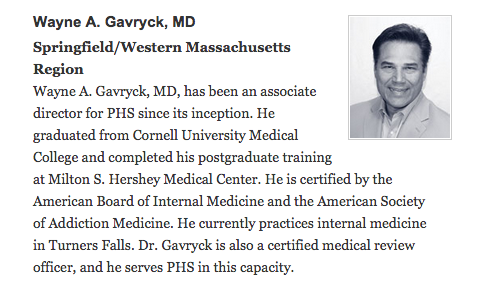
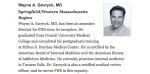
As the Medical Review Officer (MRO)  for the Massachusetts state Physician Health Program (PHP), Physician Health Services, Inc. (PHS, inc.), Dr. Wayne Gavryck’s responsibility is simple.  He is supposed to verify that the chain-of-custody  in any and all drug and alcohol testing is intact before reporting a test as positive.

Screen Shot 2014-12-03 at 12.53.49 AM

Note Dr Gavryck is: 1. Certified by ASAM; 2. A .Certified Medical Review Officer (MRO) who “serves PHS in this capacity.” Although Dr. Gavryck serves PHS I would beg to differ on the MRO function. Accessed from PHS Website 1/15/2015 http://www.massmed.org/Physician_Health_Services/About/PHS_Associate_Directors/#.VM1dZlXF-hY

Dr. Gavryck evidently did not do that here.  In fact for more than a year he helped cover up an alcohol test that was intentionally fabricated at the behest of PHS Director of Operations Linda Bresnahan (who told me when I confronted her with the fact that I have never had or ever even been suspected of having an alcohol problem “you have an Irish last name–good luck finding anyone who will believe you!”

It took a formal complaint with the College of American Pathologists to get the truth out.  The whole fiasco can be seen here and here.

What Gavryck and his co-conspirators did is egregious and ethically reprehensible.  It shows a complete lack of moral compass and personal integrity.  What was done from collection to report to coverup  and everything in-between is indefensible on all levels (procedurally, ethically, and legally).

The documentary evidence shows with clarity that this was not accident or oversight.  It was intentional and purposeful misconduct.  I think everyone would agree that there should be zero-tolerance for forensic fraud in positions of power.    Any person of honor and civility would agree.

Transparency, regulation, and accountability are necessary for these groups.   It is an issue that needs to be acknowledged and addressed not ignored and covered up.

If Dr. Gavryck can give a procedural, ethical, or legal explanation of what was done then I stand corrected. Just one will suffice.  I’ll erase my blog and vanish into the woodwork.  But If he cannot then this needs to be addressed openly and publicly.   And whether he was involved in the original fraud or not is irrelevant. As the MRO for PHS it is his responsibility to correct it–however late the hour may be.

Perhaps Dr. Gavryck needs to see some of the damage he has caused in order to take this responsibility. Known as a “bag man” who simply rubber stamps positive tests at the request of Sanchez and Bresnahan (much like Annie Dookhan)  he does not see the damage that is caused. Forensic fraud has grave and far reaching effects and in this case has severely impacted many people and include patient deaths.

Perhaps Dr. Gavryck needs to take a “moral inventory” and see that this this type of behavior causes real damage to real people and put a face on it.

Perhaps Gavryck needs to be asked these questions directly from an investigative reporter.

It is people just like this who are killing physicians across the country.   The body count is vast and multiple. This has recently been underscored by the horror stories mounting in recent Medscape and KevinMD articles associating PHP programs like this one with the recent epidemic of suicides in doctors.

These people have removed themselves from accountability.  One way they do this is by withholding information and suppressing the truth.  This is facilitated by willing sympathizers and apologists who refuse to acknowledge or investigate wrongdoing.   Gavryck believes he is beyond reproach and is complacent that his friends will protect him and insulate him from harm.  The evidence, however, is not going away. Neither am I.

Those who are caught doing dirty deeds such as this need to be held accountable.  This requires the provision of information, justification for actions and the ability to be punished by outside groups.

I have the information.  Gavryck needs to provide justification for his actions and held accountable for them.  Perhaps an investigative journalist could interview him and ask him directly.

Help me get this exposed, corrected, and rectified.  The doctors of Massachusetts and the doctors of this entire country deserve better than this.

via Integrity and Accountability—Defend the MRO Procedurally, Ethically or Legally and win 100 Volumes of the Classics in Medicine Library and Salk and Sabin Autographs!.
Screen Shot 2014-11-26 at 7.10.56 PM

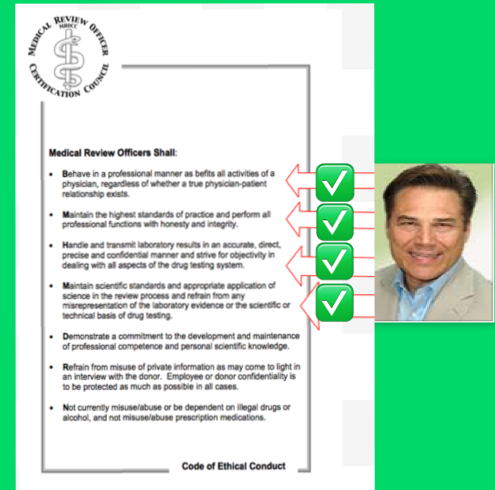
The MRO Code of Ethics--Seems like Dr. Gavryck's breaking them in sequential order!

The MRO Code of Ethics–Seems like Dr. Gavryck’s breaking them in sequential order!

Documentary Evidence of Top-Down Corruption–See how PHP Colludes with USDTL Labs in Forensic Fraud

IMG_9516“A body of men holding themselves accountable to nobody ought not to be trusted by anybody.”
― Thomas Paine 

USDTL drug testing laboratory claims to advance the”Gold Standard in Forensic Toxicology.”  “Integrity: Results that you can trust, based on solid science” is listed as a corporate value. “Unlike other laboratories, our drug and alcohol testing begins and ends with strict chain of custody.” “When people’s lives are on the line, we don’t skip steps.”  Joseph Jones, Vice President of Laboratory Operations explains the importance of chain-of-custody in this USDTL video presentation.

Dr. Luis Sanchez, M.D. recently published an article entitled Disruptive Behaviors Among Physicians in the Journal of the American Medical Association discussing the importance of  of a “medical culture of safety” with “clear expectations and standards.”  Stressing the importance of values and codes-of-conduct in the practice of medicine, he calls on physician leaders  “commit to professional behavior.”

Sanchez is Past President of the Federation of State Physician Health Programs (FSPHP).  According to their website the FSPHP “serves as an educational resource about physician impairment, provides advocacy for physicians and their health issues at local, state, and national levels, and assists state programs in their quest to protect the public.”  In addition the FSPHP “helps to establish monitoring standards.”  The FSPHP is the umbrella organization of the individual State PHPs.

Sanchez is also the previous Medical Director of the Massachusetts state PHP, Physician Health Services, Inc. (PHS).  According to their website PHS is a “nonprofit corporation that was founded by the Massachusetts Medical Society to address issues of physician health. PHS is designed to help identify, refer to treatment, guide, and monitor the recovery of physicians and medical students with substance use disorders, behavioral health concerns, or mental or physical illness.

PHPs recommend referral of physicians if there are any concerns such as getting behind on medical records.  As PHS Associate DirectorJudith Eaton explains “when something so necessary is not getting done, it is prudent to explore what else might be going on.”  If the PHP feels that doctor needs an assessment they will send that doctor to a “PHP-approved” facility “experienced in the assessment and treatment of health care professionals.” The physician must comply with any and all recommendations of the assessment center.  To assure this the physician must sign a monitoring contract with the PHP (usually five years). USDTL is one of the labs PHPs have contracted with for forensic drug and alcohol testing.


Forensic Drug and Alcohol Tests: The Need For Integrity and Accountability of the Sample
Screen Shot 2013-09-04 at 6.14.30 PM

“Forensic” drug-testing differs from “clinical” drug-testing in how the results are used. “Clinical” tests are used for medical purposes in diagnosing and treating a patient.

A “forensic” test is used for  non-medical purposes.  It is not used for patient care, but for detecting licit and illicit substances in those who should not be using them. Pre-employment and employee assistance and professional monitoring programs are examples.Screen Shot 2014-05-08 at 2.17.18 AM
Forensic testing is held to a higher standards because the consequences of a positive result can be grave and far reaching. A positive forensic test can result in loss of rights of the individual being tested and his or her loved ones. Mistakes are unacceptable.

The Federation of State Medical Boards Policy on Physician Impairment supports this position stating “chain-of-custody forensic testing is critical” (page 14) and the “use of a Medical Review Officer (MRO) for screening samples and confirming sample results” (page 21).

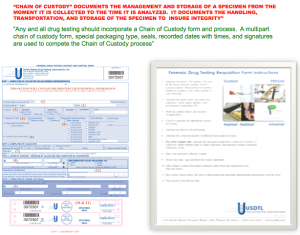
Any and all drug testing requires chain-of-custody. The custody-and-control form is given the status of a legal document because it has the ability to invalidate a test that lacks complete information.  Chain-of-custody provides assures specimen integrity. It provides accountability. 
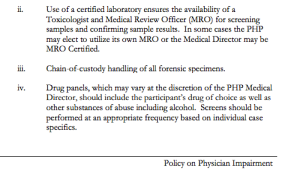
Screen Shot 2014-11-06 at 7.25.46 PM The job of the MRO is to ensure that the drug testing process is followed to the letter and reviews the Custody and Control form for accuracy.  The MRO also rules out any other possible explanations for a positive test (such as legitimately prescribed medications).  Only then is the test reported as positive.

The legal issues involved in forensic testing mandate MRO review. According to The Medical Review Officer Manual for Federal Workplace Drug Testing ProgramsScreen Shot 2013-12-19 at 12.20.46 PM
the sole responsibility of the MRO is to”ensure that his or her involvement in the review and interpretation of results is consistent with the regulations and will be forensically and scientifically supportable.”

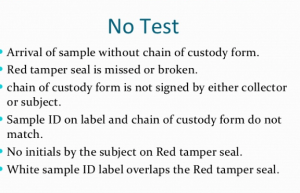
“Fatal flaws” such as lack of chain-of-custody form, missing tamper proof seal, missing signatures, or a mismatch of the sample ID and chain of custody ID invalidate the test.   It is not reported.  Tight chain-of-custody and MRO review is critical for the accountability and integrity of the sample.

The Medical Review Officer Certification Council  provides a certification process for MROs. They Screen Shot 2014-04-30 at 12.47.25 PMalso  follow their own Code of Ethics.   In accordance with these standards PHS has an MRO to review all positive tests.  As added assurance the FSPHP guidelines state that all positive tests must be approved by the Medical Director.

Regulation and the Medical Profession–The need for Integrity and Accountability in Physician Leadership and Health Care Policy.
Screen Shot 2014-11-09 at 12.26.14 PM

Good leadership requires correct moral and ethical behavior of both the individual and the organization. .  Integrity is necessary for establishing relationships of trust.  It requires a true heart and an honest soul.  People of integrity instinctively do the “right thing” in any and all circumstances.  The majority of doctors belong to this group.

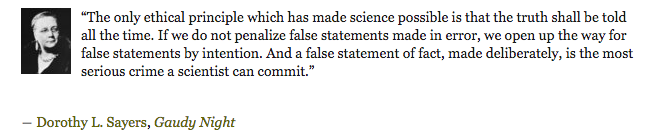
Adherence to ethical codes of the profession is a universal obligation.  It excludes all exceptions.  Without ethical integrity, falsity will flourish.

The documents below show fraud. It is intentional.  All parties involved knew what they were doing, knew it was wrong but did it anyway.  The schism between pious rhetoric and reality is wide.
Screen Shot 2014-08-20 at 12.01.33 PM

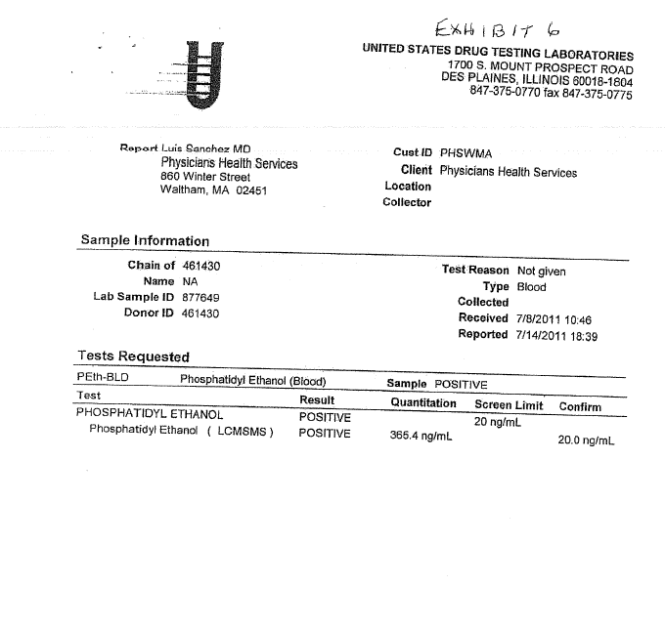
Positive Phosphatidyl Ethanol test at level of 365.4 (cutoff =20) No date of collection. place of collection or name of collector. Donor ID # = 461430 My Unique Identifier #1310 is nowhere on this document.

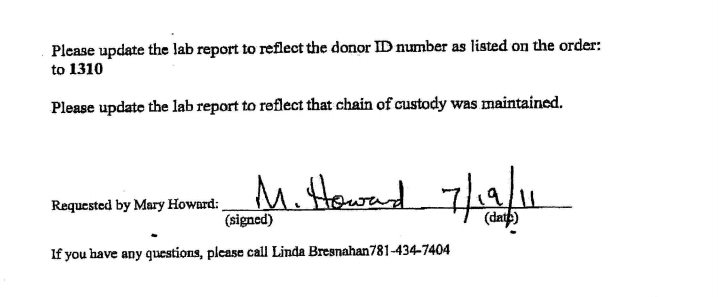
The  July 19th, 2011 fax from PHS seen below is in reference to the lab report from USDTL seen above.  In it PHS requests the report be “updated”to donor ID number “1310” and  to “reflect that the chain of custody was maintained.”

The lab report is a positive test for the alcohol biomarker (Phosphatidyl Ethanol) or PEth, an alcohol biomarker introduced by the Federation of State Physician Health programs and marketed by USDTL and other labs to detect  covert alcohol use..

There is no record of where, when or by whom it was collected.
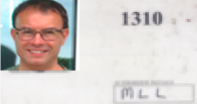
Screen Shot 2014-11-06 at 11.17.32 PMBoth the donor ID # and chain of custody are listed as 461430.

The purpose of chain-of-custody is to document the location of  a specimen in real time.  “Updating” it is not an option.  It is prohibited.  Updating the “chain of custody to reflect that chain of custody was maintained”  is a clear indicator that it was not maintained.

ID #1310 is the unique identifier I was issued by PHS.  It is used as a unique identifier, just like a name or social security number, to link me to any sample collected for random drug and alcohol screening. #1310 identifies me as me in the chain-of-custody.    On July 1st, 2011 I had a blood test collected at Quest Diagnostics.
IMG_8756 2

The sample was collected at Quest Diagnostics on July 1, 2011 but these documents were not obtained until December 3, 2011 and were included in the “litigation packet” which documents chain-of-custody and is generated on any and all forensic drug testing.   It provides proof that the test was done on who it was supposed to have been done and that all required procedure and protocol was followed. It protects the donor form being falsely accused of illicit substance use.  In most employee drug-testing programs the litigation-packet is provided on request immediately.  It is a transparent process.  This is not the case, however, at PHS.

I requested the litigation packet immediately after the positive test was reported on July 19, 2011.  PHS first refused, then tried to dissuade me.  They finally agreed but warned there would be “unintended consequences.    The entire litigation packet can be seen here:   Litigation Packet 12:3:2011

The positive sample has no chain-of-custody linked to me, no date, and no indication where it was collected or who collected it.   In addition there was no “external” chain of custody for the sample. The custody-and-control form was missing.

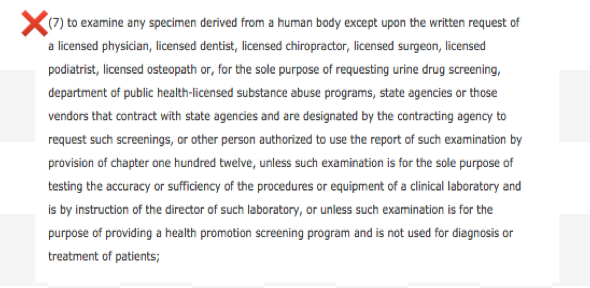
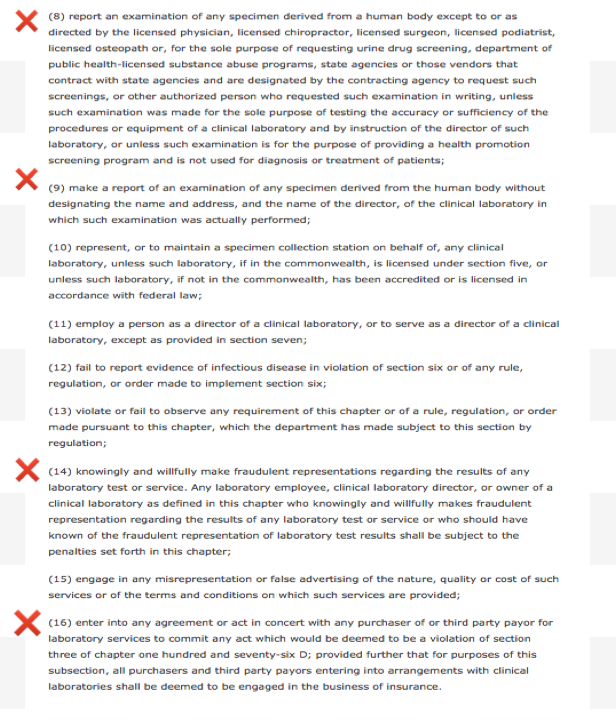
With multiple fatal flaws (6/6)  rendering it invalid, USDTL should have rejected it by their own written protocol.

Screen Shot 2013-12-19 at 12.20.46 PM

6/6 Fatal Flaws–Just one invalidates the Test

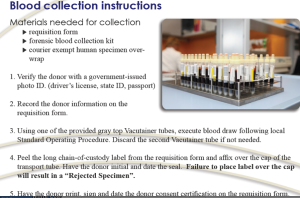
USDTL did not reject it. The document below shows that USDTL added my ID # 1310 and added a collection date of July 1, 2011–the day I submitted the sample.
Screen Shot 2014-09-15 at 5.27.21 AM

“REVISED REPORT PER CLIENTS REQUEST”  

And in doing so the lab that claims “integrity” and “strict chain of custody” readily, and with no apparent compunction” manufactured a chain-of-custody and added a unique identifier by faxed request.

The litigation packet was signed by Joseph Jones on December 3, 2011.   There was no record of where the sample was from July 1st to July 8, 2011. No external chain-of-custody or custody-and-control form was evident in the litigation packet.
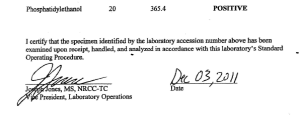
Screen Shot 2014-07-28 at 6.50.01 PM

The V.P. for Laboratory operations for the lab that claims “strict chain of custody” and that “doesn’t skip steps” “when “peoples lives are on the line” verified a positive test as positive with no custody and control form, no external chain of custody and 6/6 fatal flaws.  What is so shocking is that  this was done without compunction or pause.  As a forensic test ordered by a monitoring program Jones knew full well it would result in significant consequences for someone.  He knew that someones “life was on the line,” knew it was wrong, and did it anyway.

A person of conscience would never do this.  It is unethical decision making  that goes against professional and societal norms.  A “moral disengagement” that represents a lack of empathy and a callous disregard for others.  I would not consider doing something like this for any price and here it appears to be standard operating procedure.

PHS reported the positive test to the Medical Board on July 19, 2011 Positive PEth July 19, 2011-1.  It was used as a stepping-stone to request an evaluation at one of three  “PHP-approved” facilities (Marworth, Hazelden and Bradford). The Medical Directors of all three facilities can be seen on this list list called “Like-Minded Docs.”  The MRO for PHS, Dr.Wayne Gavryck,  whose job was to review the chain-of-custody and validate its integrity before reporting it as positive is also on the list.  See this simplified schematic of how it works in Massachusetts.  It shows how this is a rigged game.

Expecting to be diagnosed with a non-existent problem and admitted for non-needed treatment I requested an evaluation at a non-12 step facility with no conflicts-of-interest.  Both PHS and the Medical Board refused this request in one of four violations of the Establishment Clause of the 1st amendment.
Screen Shot 2014-07-27 at 7.55.16 PM copy

I chose Hazelden.  The Medical Director was aware that I had just signed  a patent license agreement for an epinephrine auto-injector and he had a child with a peanut allergy.  We talked about the device and discussed the problems with current management.  I think it was because of this added personal interaction that he did not “tailor my diagnosis” as PHS most certainly requested.  Seeing me as a person rather than an object, I believe,  enabled his conscience to reject it. My discharge diagnosis found no history of alcohol issues but they could not explain the positive test. Unable to rule out that I drank in violation of my PHS contract they recommended I attend AA.

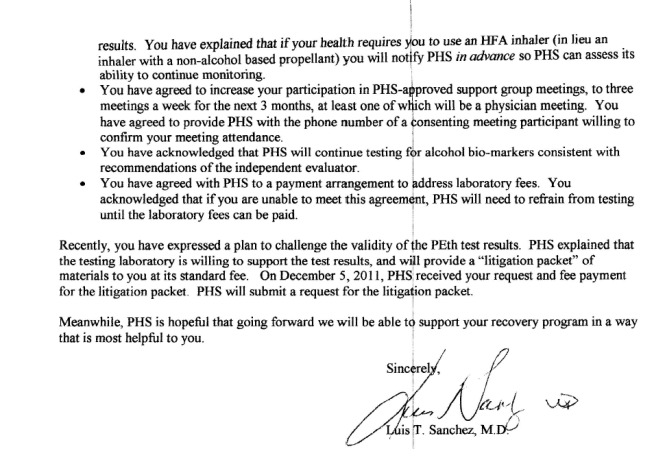
PHS mandated that I attend 3 12-step meetings per week and requested that I obtain names and phone numbers of fellow attendees so they could contact them to verify my attendance.  They also mandated that I discontinue my asthma inhalers (as the propellant contains small amounts of ethanol) that had been controlling my asthma and preventing serious attacks for the previous ten years.  I was threatened that if I had to use the inhalers or one day late on the increased payments I would be reported to the Board and lose my license.

Screen Shot 2014-11-09 at 10.03.16 PM

Screen Shot 2014-11-08 at 11.57.25 PM

Sanchez states that my request for the “litigation packet” was processed on December 5, 2011 (two days after Jones signed off on it) and adds the “testing laboratory is willing to support the test results.”

In the interim I filed a complaint with the College of American Pathologists.  I also requested the missing external chain of custody documents from Quest.
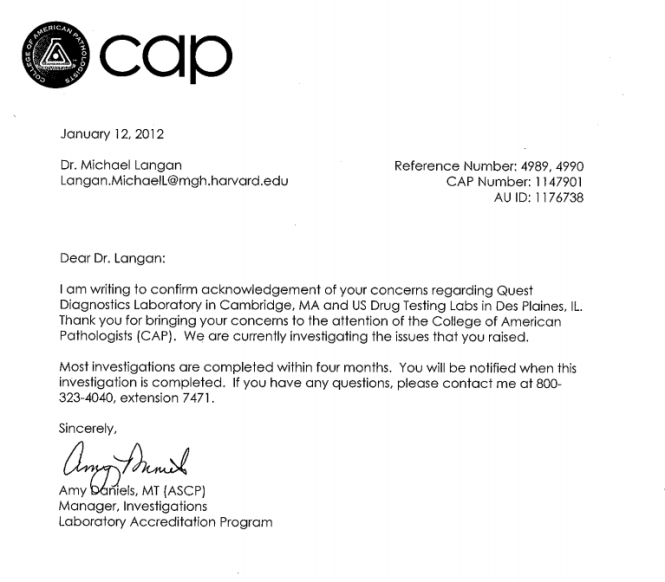
Screen Shot 2014-08-20 at 12.15.52 PM

I never received the chain of custody from Quest.  Instead I received a letter from Nina Tobin, Compliance Manager for Quest documenting all the errors but written to sound as if some sort of protocol was maintained.  Tobin claimed the specimen was inadvertently logged as a clinical specimen but sent on to USDTL a week later.  (See Quest Letter )
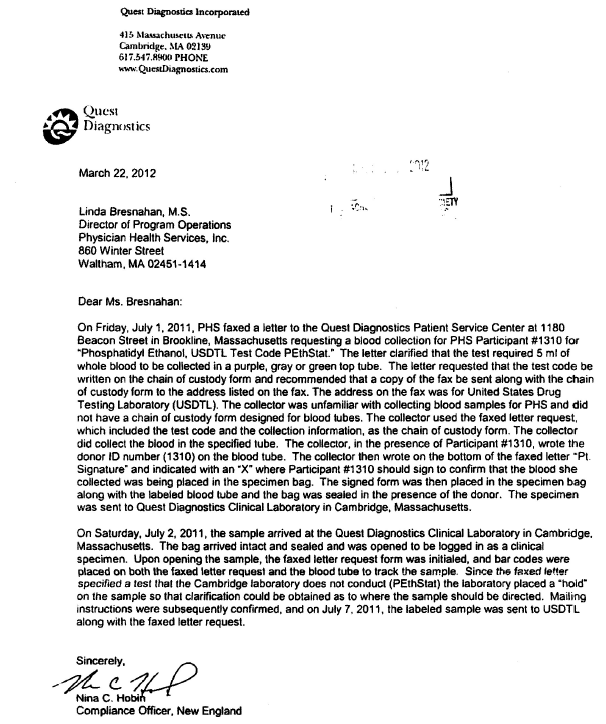
Screen Shot 2014-11-09 at 10.06.46 PM

The Chief of Toxicology at MGH wrote a letter to the Board documenting all of the misconduct and irregularities stating that it was an “intentional act” perpetrated by PHS.  MLLv3finalJacob_Hafter_Esq_copy.

This letter, as well as the opinions of everyone outside of PHS was ignored. So too were any opinions of my two former Associate Directors at PHS.   The e-mail below dated October 10th, 2011 is to to Drs. John Knight and J. Wesley Boyd and I am referring to their article Ethical and Managerial Considerations Regarding State Physician Health Programs  that was about to be published. We had hoped that it would draw more attention to the problems with PHPs.
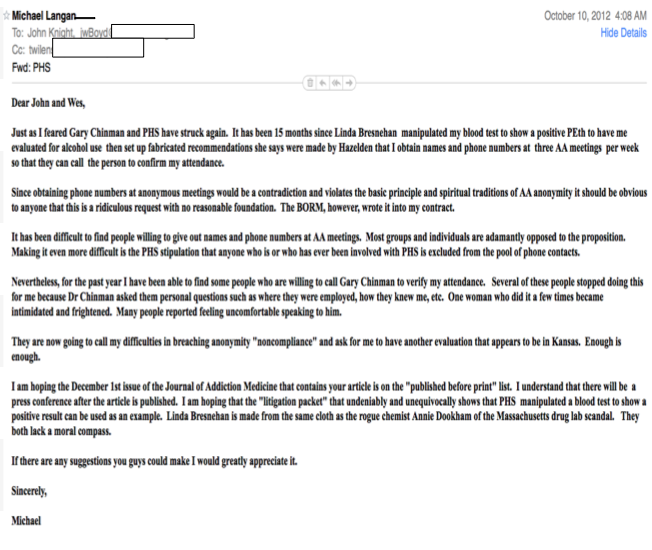
Screen Shot 2014-11-10 at 10.36.13 AM

I was subsequently reported as “non-compliant” with AA meetings.    They could not give any details of where or when.  They then misrepresented a declaration of fact (I stated that I had started going to a specific meeting on a specific date) as an admission of guilt by saying I was referring to a different meeting.     10:23:12 PHS Letter to BORM-noncompliance.

My Chief at MGH, his Chief and others held a  conference with PHS and attempted to remove me from PHS and replace the monitoring contract with one of their own.  They refused.   When confronted with the fabricated test they dismissed it and focused on sending me to Kansas to one of the “disruptive physician” Psikhuskas where they are using polygraphs (despite the AMAs stance that it is junk science) and non-validated neuropsychological instruments that detect “character defects” to pathologize the normal.

I refused. Had I gone to Kansas I would have been given a false diagnosis and my career would be over. This is what they do.
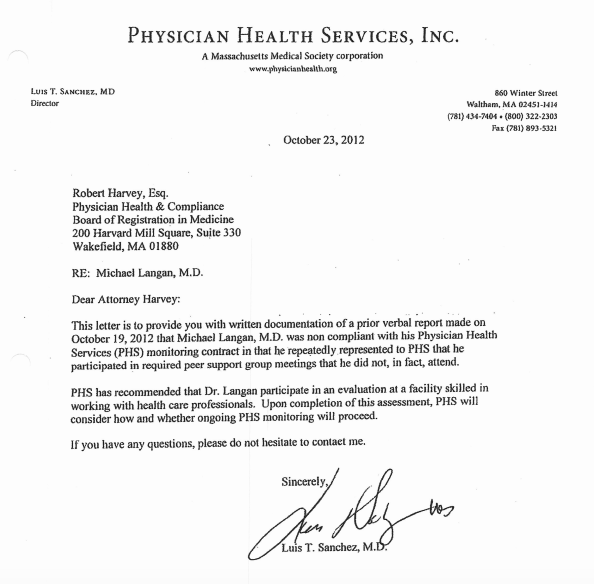
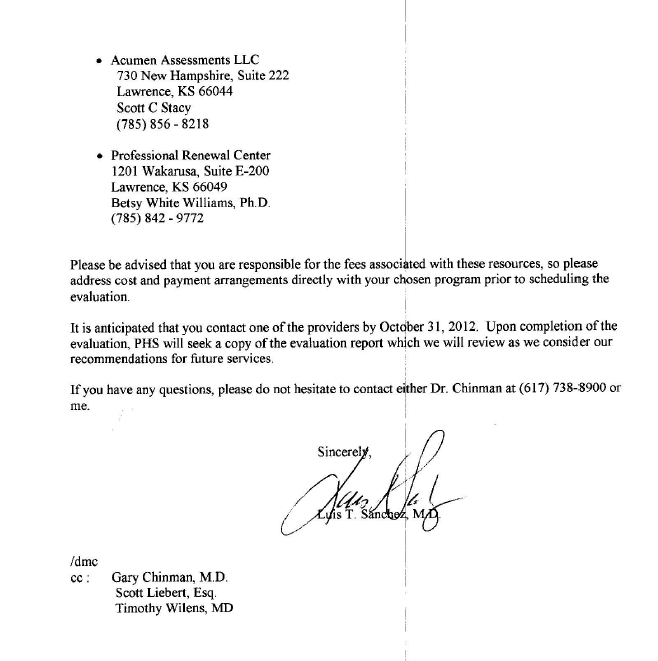
Screen Shot 2014-11-08 at 12.05.52 AM

Screen Shot 2014-09-05 at 7.28.02 PM

Amy Daniels, the investigator for the College of American Pathologists contacted me in December of 2012 to see how things were going since USDTL “amended” the test.  Daniels told me that the College of American Pathologists confirmed my allegations and, as an Accrediting Agency for Forensic Toxicology mandated that USDTL correct it.  (Labs can lose accreditation if they do not comply with CAP  Standards for Forensic Drug Testing). This was done on October 4, 2012.

PHS denied any knowledge of an amended test.  I also wrote an e-mail to Joseph Jones requesting the document but he did not reply.

I contacted CAP.   On December 11, 2012 Dr. Luis Sanchez wrote a letter stating  “Yesterday, December 10 2012, Physician Health Services (PHS) received a revision to a laboratory test result”

 “The amended report indicates that the external chain of custody protocol [for that sample] was not followed per standard protocol]” 

Sanchez dismisses this test as irrelevant, rationalizing neither PHS nor the Board based any actions on the test and they would “continue to disregard” it.
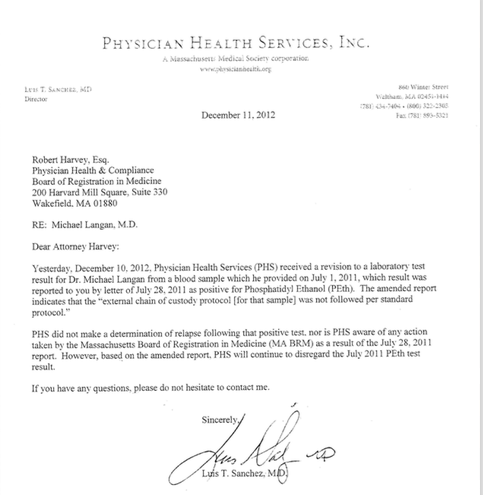
Screen Shot 2014-11-08 at 1.19.44 AM

The  logic is that it was my behavior that resulted in any consequences.  My “non-compliance” in October led to my suspension and the test had nothing to do with it.   The sole reason for reporting me to the Board in 2011 was the positive test.  There is no other pretext to use.  It is misattribution of blame as without the test, now invalidated, there would have been no AA meetings to say I was non-compliant with.

In response to a civil complaint PHS, Quest and USDTL all took the position that the results of the fraudulent testing had absolutely nothing to do with anything.

And in response to the allegations of forensic fraud the labs claimed there was no forensic fraud because this was not a “Forensic” test but a “clinical” test.     The argument was that “clinical” tests do not require chain-of-custody and it was his behavior not these tests that resulted in consequences.   

As a “clinical” test I knew it was considered Protected Health Information (PHI)  under the HIPAA-Privacy Rule.  A patient must give written consent for any outside entities to see it.  Obtaining lab tests previously required the consent of both the patient and the ordering provider.  What PHS and the labs were apparently unaware of was the changes to the HIPAA-Privacy rule giving patients increased rights to access their PHI.   The changes removed the ordering provider requirements.  A patient has a right to obtain lab test results directly from the labs and has 30 days to do it.  CAP agreed.   USDTL sent me all of the documents.  They can be seen below:

August 6, 2014 to Langan with health materials.

The documents sent by USDTL are notable for two things:

1.  The e-mail from me to Joseph Jones dated December 10, 2012.  It can be seen on page 22 of the USDTL documents.  Screen Shot 2014-11-10 at 11.21.18 AM
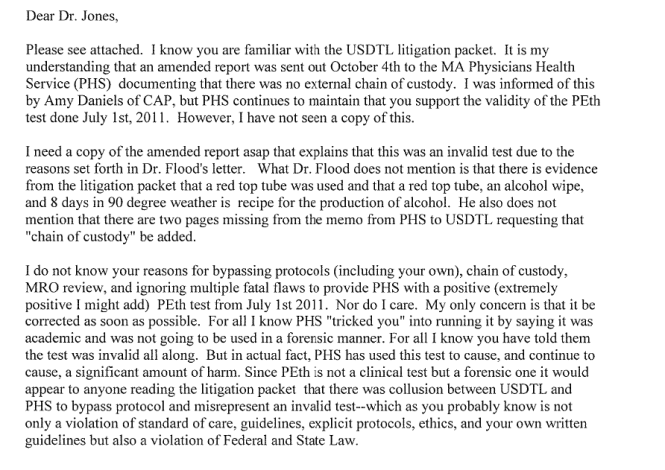
Screen Shot 2014-11-10 at 11.22.00 AM

2. USDTL document confirming PHS knew the test was amended 67-days before they said they did.Screen Shot 2014-08-06 at 4.50.02 PM
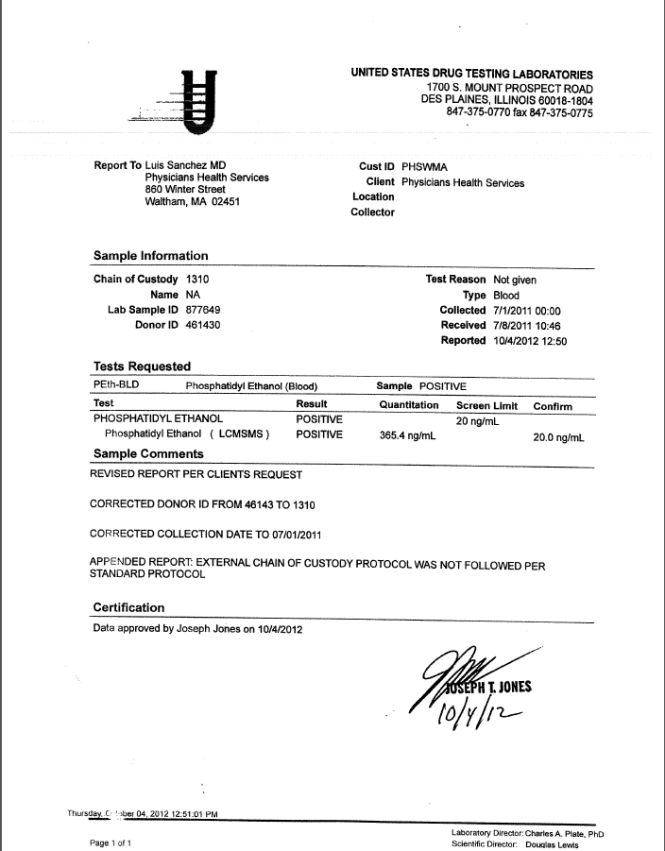
The document shows PHS and Sanchez were aware of the invalidity of the test on October 4, 2012.   Instead of correcting things they initiated machinations to throw me under the bus.  They officially reported me to the Board for non-compliance on October 19, 2012.

The December 11, 2012 letter signed by Sanchez states “Yesterday, December 10, 2012, PHS received a “revised report” regarding the test.  The documents show he knew about it 67-days prior.
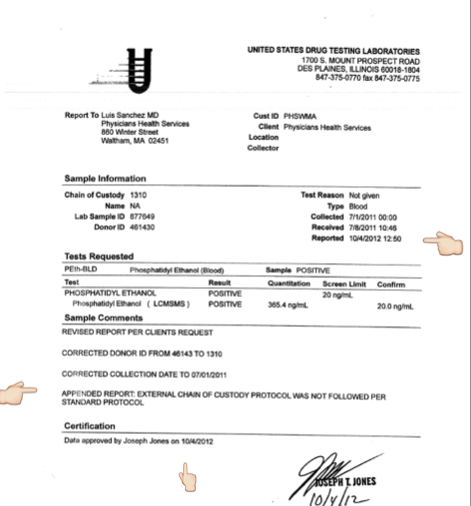
Screen Shot 2014-11-04 at 10.51.24 PM

Although USDTL complied with the HIPAA-Privacy Rule and CAP, Quest did not.   Quest Diagnostics refused to send me copies of their lab reports claiming it was confidential and protected information that required PHS consent.  Quest required I sign a consent form with multiple stipulations regarding PHS.  I refused and contacted the Department of Justice -Office of Civil Rights.  The DOJ-OCR agreed with me and I received the Quest documents

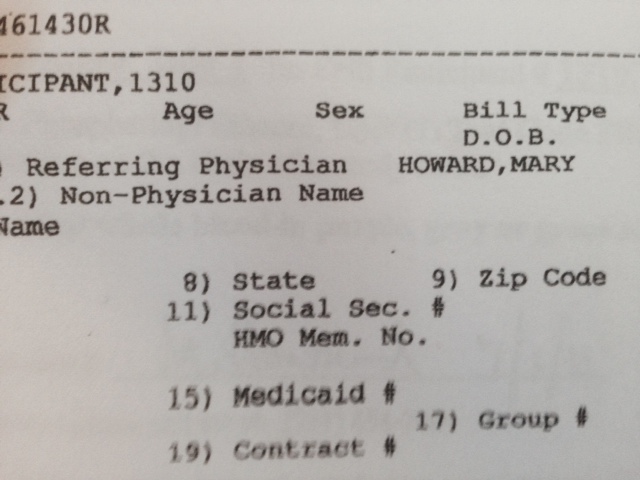
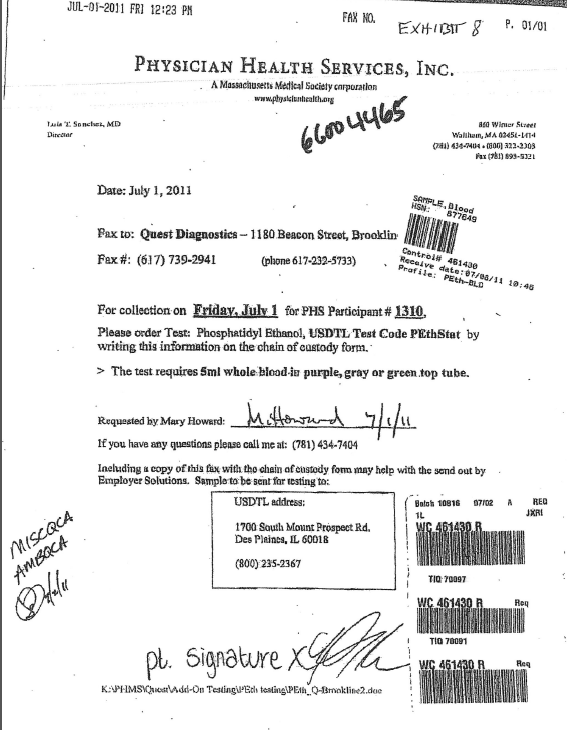
Remember a “clinical” test can only be ordered by a physician in the course of medical treatment.  It requires authorization from the patient to obtain a “clinical” specimen and it requires written authorization as to who sees it.  Referring physician was Mary Howard.
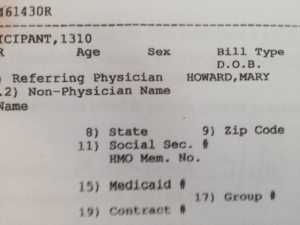
image

And below is the fax from PHS to Quest from July 1, 2011 also requested by Mary Howard.  The signature on the front is not mine.  In addition I gave the blood at 9:30 and was in my clinic at MGH at 12:23 so it couldn’t be. The WC 461430 R are dated July 2, 2011.  This is a “clinical” not “forensic” sticker.  The “R” indicates a red top tube.  The other sticker is USDTL and indicates it was logged in on July 8, 2011.
Screen Shot 2014-09-15 at 7.18.25 PM

What does it all mean?    Blood left in a red top tube ferments. This is basic chemistry.  The PEth test needs to be refrigerated and shipped overnight to prevent this.  In addition it needs to be collected with a non-alcohol wipe in a tube that has an anti-coagulant or preservative so that it does not ferment.    It requires strict procedure and protocol.

When I gave my blood on July 1st, 2011 it was as a “forensic” test per my contractual agreement with PHS.

On July 2, 2011 it was changed to “clinical.”   Why?  because “forensic” protocol would have invalidated it.

The only conceivable reason for doing this was to bypass chain-of-custody procedures.  My unique identifier #1310 was removed and the clinical specimen number was used for chain-of-custody.    The R in 461430R indicates a red top tube.

By holding on to it for one week the blood fermented.    As it was July with an average temperature close to 90 they overshot their mark a bit.   My level of 365 is consistent with heavy alcohol use–end stage half-gallon a day type drinking.

Quest then forwarded it to USDTL with specific instructions to process it as a “clinical” sample.  USDTL complied and  processed it as a clinical specimen which was reported it to PHS on July 14, 2011.
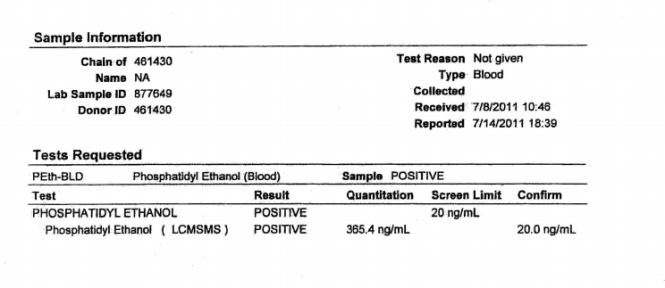
Screen Shot 2014-07-28 at 12.41.01 PM

PHS then asked USDTL to add my forensic  ID # 1310 and add a collection date of July 1, 2011 so it would appear “forensic” protocol was followed.    The reason Jones signed the “litigation packet” on December 3, 2011 was because that was when the “litigation packet” was manufactured.  A “clinical” sample does not produce one.
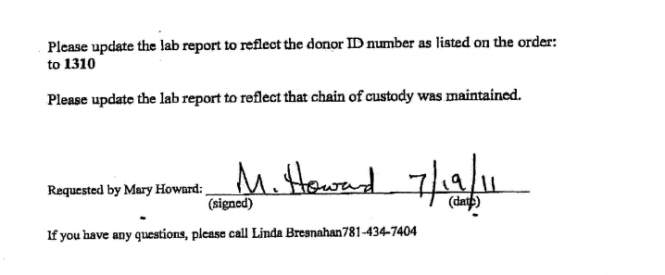
Screen Shot 2014-07-28 at 12.40.13 PM

USDTL willingly complied with this request.
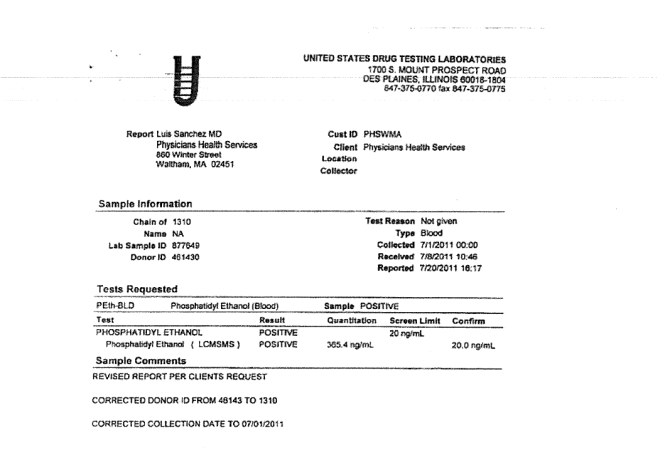
Screen Shot 2014-08-20 at 11.59.24 AM

PHS then reported this as a “forensic” test to the Medical Board on July 19, 2011 and requested a reevaluation.
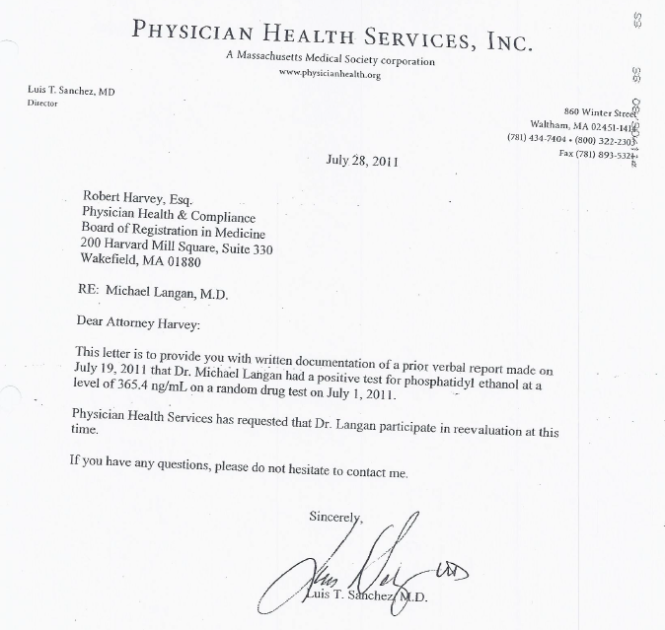
Screen Shot 2014-11-09 at 1.17.24 PM

The distinction between “forensic” and “clinical” drug and alcohol testing is black and white. PHS is a monitoring program not a treatment provider. The fact that a monitoring agency with an MRO asked the lab to process and report it as a clinical sample and then used it forensically is an extreme outlier in terms of forensic fraud. The fact that they collected it forensically, removed the forensic components and let it sit in a warehouse for a week is  abhorrent.  The fact they then specifically requested it be processed as a clinical sample deepens the malice. The fact that they then reported it to the Board as a forensic sample and maintained it was forensic up until just recently makes it egregious. But the fact that the test was changed from “positive” to “invalid” on October 4th, 2012 and they then reported me to the Board on October 8th,  2012 for “noncompliance,” suppressed it and tried to send me to Kansas where I would be given a non-existent diagnosis to delegitimize me for damage control makes it wantonly egregious.  This is political abuse of psychiatry.

Accountability requires both the provision of information and justification of what was done.

For doctors it is very difficult to obtain the information. As seen here, they put up a gauntlet to prevent the provision of what is immediate in all other drug testing programs.  I now have all of the information. What it shows is clear. This was intentional.  It was no accident.  They knew what they were doing, knew it was wrong but did it anyway.

Accountability also requires that those who commit misconduct suffer consequences. The PHPs have also put up barriers to this.    With no regulation or oversight they have no apparent accountability.

My understanding is that it works this way.   The Medical Board, Medical Society and Departments of Public Health have no oversight.   The MMS has an ethics committee but all they can do is “educate” the person if they feel there was a violation.  The DPH won’t even look at it and the Board is complicit.

My understanding is that they have convinced law enforcement that this is a “parochial” issue that is best kept within the medical community.  They have also created the impression that they are “friends” of law enforcement.  I have heard from many doctors that they have tried to report misconduct, civil rights violations and crimes to the police, AGO, and other law enforcement agencies only to be turned back over to the PHP.     By saying the physician is “impaired” it delegitimizes and invalidates the truth.  “He’s just a sick doctor,  we’ll take care of him.”  That physician then suffers consequences effectively silencing the rest.

PHS uses the Board to enforce punitive measures and temporize.   The Board puts blind faith in PHS.  Blind faith that defies common sense ( mandating phone numbers at anonymous meetings)  and disregards the law (Establishment Clause violations that are clear and well established).    The Board also temporizes to cause damage.

In my case they required a psychiatric behavioral evaluation.  I was given the choice of Kansas and a few other Like-minded assessment centers.

After petitioning for  multiple qualified psychiatrists that were summarily rejected months later for no reason one of the Board Attorneys suggested  Dr. Patricia Recupero, M.D., J.D. who is Board Certified in Forensic Psychiatry and Addiction Psychiatry.   The Board had used her in the past but not recently.  Seeing that she had been used by the Board for fit-for-duty evaluations in the past the Board accepted my petition.

Dr. Recupero wrote an 87-page report. She concluded I was safe to practice medicine without supervision, that I had never had an alcohol use, abuse or dependence problem, and that PHS request for phone numbers was inappropriate. She also documented PHS misconduct throughout my contract and concluded it was PHS actions, not mine, that led to my suspension.   What she describes is consistent with criminal harassment.  She documents the falsification of neuropsychological tests and confirms the forensic fraud.  What did the Board do?  Ignored their very own recommended and approved evaluator.

One measure of integrity is truthfulness to words and deeds.  These people claim professionalism, ethics and integrity.  The documents show otherwise.  The careers and lives of doctors are in these peoples hands.

Similar fraud is occurring across the country.  This is an example of the institutional injustice that is killing physicians.  Finding themselves entrapped with no way out, helpless and hopeless they are feeling themselves bereft of any shade of  justice and killing themselves.  These are nothing more than bullies and accountability is essential.  The “disruptive physician” moral panic has harmed the Medical Profession.

Dr. Clive Body in his book  Corporate Psychopaths   writes that “Unethical leaders create unethical followers, which in turn create unethical companies and society suffers as a result.”  And according to Dr. Robert Hare in  Without Conscience  “If we can’t spot them, we are doomed to be their victims, both as individuals and as a society. ”

Wes Boyd notes that valid complaints from physicians are often dismissed as “bellyaching” by the PHPs.  Complacent that these are just good guys helping doctors and protecting the public the complaints are dismissed, tabled, deflected or otherwise ignored.  Bellyaching??   Is this bellyaching.

It is my opinion that what you see here is indefensible  Procedurally, Ethically, and Legally.

Procedurally it goes beyond negligence and represents fraud.  It violates every procedural guideline, regulation and standard of care including their very own.

Ethically it violates everything from the Hippocratic Oath to  AMA Medical Ethics to the MRO Code of Conduct.

And where was PHS MRO Wayne Gavryck? By my count he violated at least 4 of the 6 Codes of Ethical Conduct.
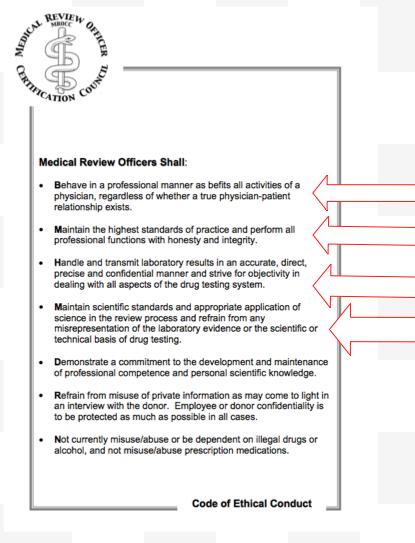
Screen Shot 2014-11-10 at 1.04.20 PM

What was done here violates the most fundamental ethical principles of Medicine -Autonomy, Beneficence, Nonmaleficence and justice.

Intentionally falsifying a laboratory or diagnostic test to refer for an evaluation or support a diagnosis or give unwarranted “treatment” is unconscionable.  Abuse under the utility of  medical coloration is especially egregious.

The information provided herein should negate any “peer-review” protection or immunity afforded PHS as it is undeniably and egregiously in “bad faith.” Moreover, the ordering a “clinical” test is outside PHS scope, practice, and function of PHS. According to M.G.L. c. 111, § 203 (c):

An individual or institution, including a licensed or public hospital, physician credentialing verification service operated by a society or organization of medical professionals for the purpose of providing credentialing information to health care entities, or licensed nursing home reporting, providing information, opinion, counsel or services to a medical peer review committee, or participation in the procedures required by this section, shall not be liable in a suit for damages by reason of having furnished such information, opinion, counsel or services or by reason of such participation, provided, that such individual or institution acted in good faith and with a reasonable belief that said actions were warranted in connection with or in furtherance of the function of said committee or the procedures required by this section.

Dr. Luis Sanchez and Dr. Wayne Gavryck need to be held to the same professional standards as the rest of us.

If you can support either of them procedurally, ethically, or legally, any one of them, then I will turn in my medical license with a bow on it.  If they did not commit negligent fraud by standards of care and procedural guidelines, egregious moral disengagement in violation of ALL ethical codes for the medical profession and society and break the law then disprove me.  Just one will do.

But you can’t do this then I ask that you speak up and take a stand. Either defend them or help me hold them accountable.  If a crime is committed it needs to be addressed.  Ignoring encourages more of the same.

And if this cannot be supported procedurally, ethically or legally then I want to know what is going to be done about it?

How low does the moral compass have to go before someone takes action?

Doctors are dying across the country because of people just like this.  They have set up a scaffold that removes the usual checks and balances and removed accountability.   It is this institutional justice that is driving many doctors to suicide.

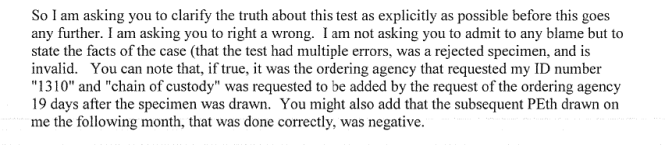
So the evidence is above.  Either defend them or help me draw unwanted attention to this culture of bullying and abuse. So I am asking you to contemplate if  what you see here is ethically, procedurally or legally sound.   If you can show just one of these then I stand corrected. But if you cannot justify this on any level then I want you to help me expose this criminal enterprise. Either defend it or fight it. Silence and obfuscation are not acceptable.
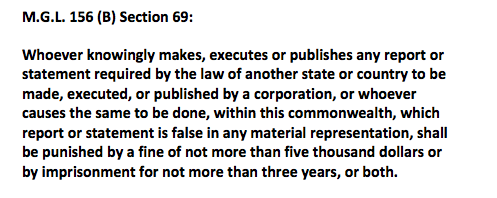
Screen Shot 2014-11-10 at 1.34.48 PM

Screen Shot 2014-11-10 at 1.36.13 PM

Screen Shot 2014-11-10 at 10.24.58 AM

Screen Shot 2013-09-04 at 2.22.36 AM

Screen Shot 2014-11-10 at 9.15.46 PMScreen Shot 2014-11-10 at 9.23.36 PMScreen Shot 2014-11-10 at 9.19.08 PMScreen Shot 2014-11-10 at 8.54.21 PMget-attachment.aspx

Medical Science Under Dictatorship–Exposing the Physician Health Program (PHP) Menace

Dictatorships can be indeed defined as systems in which there is a prevalence of thinking in destructive rather than in ameliorative terms in dealing with social problems. The ease with which destruction of life is advocated for those considered either socially useless or socially disturbing instead of educational or ameliorative measures may be the first danger sign of loss of creative liberty in thinking, which is the hallmark of democratic society. All destructiveness ultimately leads to self-destruction—Leo Alexander

Screen Shot 2015-04-08 at 9.36.31 AM


“Let it be considered, too, that the present inquiry is not concerning a matter of right, if I may say so, but concerning a matter of fact.”–Adam Smith

“Most men endure the sacrifice of the intellect more easily than the sacrifice of their daydreams.  They cannot bear that their utopias should run aground on the unalterable necessities of human existence”  -Ludwig von Mises


The  importance of a recent article published in Medscape critical of state Physician Health Programs (PHPs) cannot be overemphasized. Physician Health Programs- More Harm Than Good? by Pauline Anderson breaks new ground as it is the first mainstream medical publication to address the serious concerns so many of us are aware of  but can do nothing about.  Physician Health Programs (PHPs) were Originally funded by medical societies and staffed by volunteers and existed in every state by 1980.,  The equivalent of Employee Assistance Programs (EAPs) for other occupations. Their purpose was to help sick doctors and protect the public from harm.   Over time, however, these programs have been subverted by special interest groups representing the drug and alcohol testing, assessment and treatment industries whose primary agenda is to sell the  “PHP-Blueprint” to other occupations and groups.  This is being done by falsely claiming  unparalleled success for doctors treated by PHPs and they are touting it as , the “new paradigm” when in reality this model. subjects doctors to all manner of abuse in a system of institutional injustice and a culture of harm.    Many of these horror stories are now being told in the comments section of the Medscape article and a subsequent article by Dr. Pamela Wible, MD entitled Do Physician Health Programs Increase Physician Suicides?  

Yes they most assuredly do and the stories we are hearing are articulate, consistent, believable and very sad.  T Those who were previously silent out of fear and due to threats are now coming forward.  It can no longer be ignored or deflected. The Federation of State Physician Health Programs (FSPHP), however, has remained silent. We are hoping this will make the mainstream media as the FSPHP needs to be held accountable for their actions and that requires answerability and justification. The silence of the FSPHP speaks volumes.

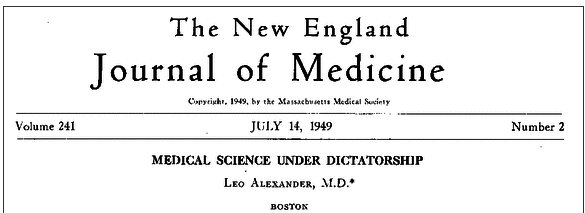
“Science under dictatorship becomes subordinated to the guiding philosophy of the dictatorship.” So begins Medical Science Under Dictatorship1 written in 1949 by Leo Alexander and published in the New England Journal of Medicine. Alexander acted as consultant to the Secretary of war and the Chief Counsel for the Nuremberg trials.

The guiding philosophic principle is Hegelian or “rational utility” and “corresponding doctrine and planning”, Alexander said “replaced moral, ethical and religious values” and Nazi propaganda was highly effective in perverting public opinion and public conscience. He explains how this expressed itself in a rapid decline in standards of professional ethics in the medical profession.   This all “started from small beginnings” with subtle shifts in the attitudes of physicians to accept the belief that there is such a thing as “a life not worthy to be lived.”

In 1985 the British Sociologist G.V. Stimson wrote of a new form of professional control in the United States that had emerged in the preceding decade whose “success rests on the ability to take certain areas of conduct such as alcoholism and drug abuse (which are formally disciplinary issues) and handle them as diseases.”2

Stimson writes:

“The impaired physician movement is characterized by a number of evangelical recovered alcoholic and addict physicians, whose recovery has been accompanied by an involvement in medical society and treatment programs. Their ability to make authoritative pronouncements on physician impairment is based on their own claim to insider’s knowledge.”2

Among these authoritative pronouncements was the use of specialized treatment centers. Many professionals were critical of these programs including Assistant Surgeon General John C. Duffy who criticized the “boot-camp mentality”4 toward doctors and American Society of Addiction Medicine President Leclair Bissel who when asked in a 1997 interview when the field began to see physicians as a specialized treatment population replied “when they started making money..” .” 5

Amid reports of abuse, coercion and control in facilities using a doctor’s medical license as “leverage,” the Atlanta Journal Constitution ran a series of reports in 1987 documenting the multiple suicides of health care practitioners at one of these programs (5 while in the facility and at least 20 after discharge).6   Neither these suicides nor a large settlement against the same facility (finding a non-alcoholic doctor was intentionally misdiagnosed as an alcoholic and forced into months of treatment)  for fraud, malpractice, and false imprisonment involving intentional misdiagnosis7 generated any interest among the medical community at large.

And by 1995 the door had closed as the Federation of State Physician Health Programs ( FSPHP ) relationship with the Federation of State Medical Boards (FSMB), the national organization responsible for the licensing and discipline of doctors,  was forged.  A 1995 issue of The Federal Bulletin: The Journal of Medical Licensure and Discipline, contains articles outlining the high success rates of these programs in 8 states with an editorial comment from the FSMB that concludes:

“cooperation and communication between the medical boards and the physician health programs must occur in an effort to protect the public while assisting impaired physicians in their recovery.”8

The Federation of State Medical Boards (FSMB) has approved any and all policy and regulation put forth by the impaired physician movement  then organized under the Federation of State Physician Health Programs (FSPHP) with no apparent inquiry or opposition.

In 2003 Dr. Gregory Skipper, one of the key players of the impaired physician movement partnered with NMS labs to develop the alcohol metabolite ethyl-glucuronide (EtG) as a laboratory developed test13 14 he proposed be used as a monitoring tool for covert alcohol use in physicians after a pilot study involving just 14 psychiatric inpatients.15

The policy entrepreneurship this group so effectively uses to advance their goals can be seen in the August 25, 2004 Journal of Medical Licensure and Discipline which contains articles both presenting the problem 11 and providing the solution.11   The EtG was then introduced as an accurate and reliable indicator of covert alcohol use and the impact of this cannot be underestimated as it introduce to the market not only unregulated non FDA approved tests for forensic use but tests reaching further back into history then those used by workplace drug-testing programs.

The limitations of any test needs to be understood both in the forensic and clinical context but there is a lot less flexibility in the forensic context when people’s liberties, freedoms or property rights ( as with a medical license) are in jeopardy.

Sensitivity and specificity need to be carefully considered.  The positive predictive value of a test is the true positives over the true positives plus false positives.  If you are going to sanction somebody as a result of a single test that test needs to have 100% sensitivity.

When workplace drug testing was introduced debates over both the accuracy and scope of tests occurred. The employees right to privacy and the employers right to have a drug-free workplace were discussed with the general consensus being testing for impairment was a legitimate concern but preservation of private life should remain.

What was done here dissolves both.

PHP programs require abstinence from all substances including alcohol and strict adherence to 12-step doctrine9 yet many of the physicians monitored by them are neither addicts nor alcoholics. Requiring abstinence from drugs and alcohol while using non-FDA approved Laboratory Developed Tests in monitoring programs is a dangerous combination. The suicides reported by the Atlanta Journal Constitution in 1987 were prior to the introduction of these tests. Adding these tests of unknown validity to an already abusive program of coercion and control would only worsen the situation.

I have been hearing of multiple suicides involving both the fear of results and false results. I have also been hearing of doctors who have killed themselves because they were suffering from depression but did not seek help as their fear of being ensnared into the PHP outweighed the need to get help.

Three decades after G.V. Stimson so accurately defined the impaired physician movement the impaired physician movement defines the professional control of medicine..   Their involvement in medical society physician health programs (PHPs) and treatment programs has evolved into absolute control of both. Pronouncements on physician impairment have evolved from insider’s claims to written edict.   And their reach has extended from impairment due to drugs and alcohol to “potential impairment” and “relapse without use.” Their reach has extended from drug and alcohol impairment to all other aspects of medicine and the impact has been profound.   Medicine has been subordinated to the guiding philosophy of the impaired physician movement and doctors are dying in droves du to institutional injustice.

How does the profession of medicine reconcile the fact that we have allowed an as yet non ABMS recognized “self-certification” specialty full reign over those who are ABMS recognized?  How is it that we allow non-FDA approved Laboratory Developed Tests (LDTs) of unknown validity on doctors coerced into state Physician Health Programs (PHPs)?    A recent debate in Washington calling for regulation of  “clinical”  LDTs just took place and the fact that they are being used for “forensic” purposes in doctors is incomprehensible.   Has anyone noticed it is the same people introducing the tests who are claiming PHPs are the “gold standard,” trying to push them on other EAPs and calling for more widespread use of these tests?

The use of non-FDA approved Laboratory Developed Tests (LDTs) for drug and alcohol testing  is currently limited to PHPs and the criminal justice system. (i.e. monitoring programs in which those doing the testing have power and those being tested have no power). That may soon change. See  Drug Testing and the Future of American Drug Policy and The American Society of Addiction Medicine White Paper on Drug Testing describing the plans for widespread expansion of this drug testing to other groups including kids.

Those involved in the Massachusetts General Hospital Laboratory Medicine, Toxicology and addiction medicine departments looked critically at these tests and decided hands down against using them. Why? Because no evidence base exists and the potential harm far outweighs any perceived benefit.  “Research” has been done on those being monitored by PHPs and the criminal justice system and Drs. J Wesley Boyd, M.D., PhD, and John Knight, M.D. of Harvard Medical School who collectively have over two decades of experience as Associate Directors with the Massachusetts PHP, Physician Health Services, Inc. addressed this research in a 2012 article published in the Journal of the American Society of Addiction Medicine entitle Ethical and Managerial Considerations Regarding State Physician Health Programs.  The allegations that PHPs are engaging in research in violation of the Nuremberg code ( that was a direct result of the Nuremberg trials for which Dr. Alexander acted as consultant ) should have raised some eyebrows.   It hasn’t.

Screen Shot 2015-04-13 at 9.53.44 AM

If the ASAM becomes recognized by the ABMS  “addiction medicine” specialists will inevitably join hospital formulary, clinical laboratory and ethics committees to erect the same scaffold seen in the PHPs and those with hidden agenda will be able to outvote those of good conscience and critical reasoning.  Patient care will then be subordinated to the guiding philosophy of the impaired physicians movement.

This system of institutional injustice is killing doctors by suicide as the medical societies and Departments of Public Health have given PHPs full autonomy and authority and it is poised to impact patient care.

I challenge you to name any other company, organization, group or agency within or related to the profession of medicine and the field of science that is bereft of absolutely all  transparency,  regulation or oversight?  It does not exist.

The PHP scaffold has deliberately  removed themselves from all aspects of accountability including answerability, justification of actions and the ability of outside actors to hold them in judgment of any information provided by answerability.   Heads I win, tails you lose.   That is a big red flag in itself. and those not currently being held accountable they may very well be after you next as their plans include expansion to other groups includes EAPs, the Department of Transportation, athletes, students and even kids!

Doctors have been afraid to talk about this for fear of being ensnared themselves.  Those already in these programs have remained silent out of fear, threats and punishment.  It is my hope that the articles published by Paula Anderson and Pamela Wible will open the door to mainstream media coverage and result in the outrage this deserves.    As Leo Alexander states in the closing words of this paper–“Yes, we are our brother’s keepers.

In The Argument of Fascism Ludwig von Mises wrote:

It cannot be denied that Fascism and similar movements aiming at the establishment of dictatorships are full of the best intentions and that their intervention has, for the moment, saved European civilization. The merit that Fascism has thereby won for itself will live on eternally in history. But though its policy has brought salvation for the moment, it is not of the kind which could promise continued success. Fascism was an emergency makeshift. To view it as something more would be a fatal error.

4-stage-plan1

Carl Sagan’s Baloney Detection Kit and the Birth of “Addiction Medicine” as a New Discipline: The Need for an in Utero Diagnostic Assessment Prior to Delivery

mllangan1's avatarDisrupted Physician

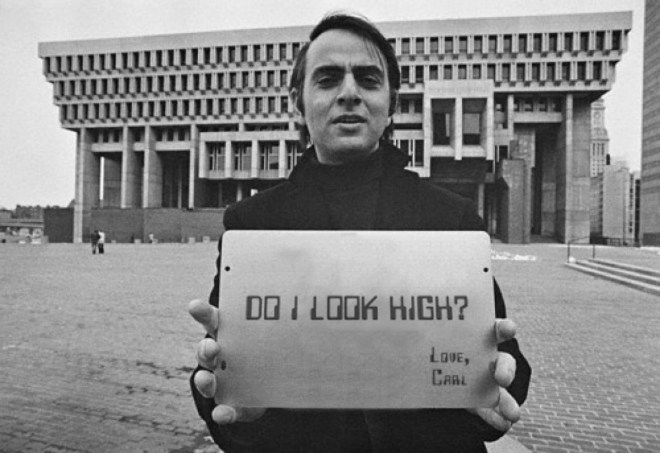
3b67f56268909f1dfa2a168a352ad09a“One of the saddest lessons of history is this: If we’ve been bamboozled long enough, we tend to reject any evidence of the bamboozle. We’re no longer interested in finding out the truth. The bamboozle has captured us. It’s simply too painful to acknowledge, even to ourselves, that we’ve been taken. Once you give a charlatan power over you, you almost never get it back.”

― Carl Sagan, The Demon-Haunted World: Science as a Candle in the Dark


Carl Sagan devised a toolkit for nonsense-busting and critical thinking, which includes these nine rules:

  1. Wherever possible there must be independent confirmation of the “facts.”
  2. Encourage substantive debate on the evidence by knowledgeable proponents of all points of view.
  3. Arguments from authority carry little weight — “authorities” have made mistakes in the past. They will do so again in the future. Perhaps a better way to say it is that in…

View original post 1,744 more words

Medscape Article Critical of Physician Health Programs (PHPs): An Important Milestone in Exposing Abuse and Injustice

Screen Shot 2015-09-04 at 5.46.10 PM

Mainstream Media, Societal Beliefs and Perceived Authority

Iris Martyn’s article below concerns mainstream media bias and the powerful role social media can play in combatting it. Tangential dissident voices often go unheard (or are silenced) when they oppose perceived authority or mainstream societal beliefs and majority mores.

Martyn gives the example of Suffragettes who were frequently accused of “having ‘magnificently succeeded … in their intention of making themselves a nuisance’, a dismissive claim that covers up the threat” and downplays both the validity of the cause and the character of those behind it.

According to cultural theorist Stuart Hall, the media obtain their information from the primary definers of social reality in authoritative positions and amplify those opinions irrespective of the foundation or veracity of those opinions.

Dissenting voices are all too frequently met with a wall of blinkered apathy or openly dismissed or opposed by mainstream media.

As a result valid complaints and concerns are either unreported, underreported or reported as invalid or misguided hyperbole.

Screen Shot 2015-09-12 at 4.03.48 PM

Medscape Article Critical of  Physician Health Programs (PHPs) Opens Door to a more focused attack

The  importance of a recent article published in Medscape  and critical of state Physician Health Programs (PHPs) cannot be overemphasized.

Physician Health Programs- More Harm Than Good? by Pauline Anderson breaks new ground as it is the first mainstream medical publication to address serious and pervasive concerns of the unregulated and unchecked power of these monitoring programs for doctors as an increasing number of reports involving threats, intimidation and fraud come in from doctors across the country.

Originally funded by medical societies and staffed by volunteers, these programs existed in every state by 1980.   PHPs are the equivalent of Employee Assistance Programs (EAPs) for other occupations and meet with, assess and monitor doctors who have been referred for substance use or other mental or behavioral health problems.

Over time these programs have been subverted.  They have become a power unto themselves.  They no longer represent doctors or the public but the interests of the “recovery related racket.”   Doctors are being diagnosed with illnesses they don’t have to provide treatment they don’t need all to line the purses of the drug and alcohol testing, assessment and treatment industry and their associates.  At the same time doctors who are ill and do need help are not getting the proper treatment. They don’t get better but worse and never return to practice.   How many doctors who are perfectly healthy or recovered from illness properly treated are we losing each year to suicide?    How many suffer in silence out of fear of being ensnared by these punitive, rigid and one-size fits all programs that claim to exist to protect the public?

PHPs are needed.  Doctors who develop problems with addiction or psychiatric problems need to be removed from practice and protect the public, receive treatment until they are healthy enough to return to practice and monitored for a period of time to make sure they remain health.   But under current management by the Federation of State Physician Health Programs (FSPHP) this is not happening.   PHPs have become Frankenstein’s of coercion, control and abuse that help a few doctors and cause a great deal of harm to the rest.  Doctors across the country have been going to local media, law enforcement, the state’s  Attorney General,  the ACLU and other agencies only to be turned a deaf ear.  With the PHP as perceived authority these doctors have been labeled “impaired” and the delegitimization and stigma has prevented their truth from being heard.

To date there have been 187 comments on this article and 301 comments on Dr. Pamela Wible’s related piece entitled “Do Physician Health Programs Increase Physician Suicides?” which was published August 28, 2015 on Medscape and subsequently on KevinMD where it has become the most popular article this week with 243 comments to date.  And the consensus so far from reading the more than 700 comments is that PHPs are not only causing harm but serious harm on a large scale.  This is by a landslide. The comments raise specific and serious questions that are not being answered by the FSPHP or their sympathizers and apologists.

The FSPHP is tongue-tied in the face of facts and reason as the  individual horror stories mount.  The testimonials and criticisms are articulate, specific and remarkably similar.   It appears to be a rigged game in which all outside opinion is dismissed and no due process exists. Coercion, control, threats, abuse, intimidation and abuse of power are seen crystal clear.

Minor infractions, one-offs, situational problems, anonymous referrals and even false-reports have led doctors into a system in which they have absolutely no control that includes fabricated drug and alcohol tests, diagnosis rigging and unneeded treatment for three months or longer in “PHP-approved”  cash only inpatient facilities with close ideological and financial ties to the PHPs.  This is political abuse of psychiatry and institutional injustice and it is undoubtedly the cause of the marked increase in physician suicide.

So hats off to Pauline Anderson and Caroline Cassels for having the perspicacity. persistence and courage to shine a light on what was previously ignored or deflected.  As a perceived authority the FSPHP and state PHPs believe they are beyond reproach. Specific serious concerns accumulating testimonials of doctors across the country with similar stories are being met with silence and mainstream media need take note of this.  We need to shine a larger light in this direction and with dispatch.    Sunshine is after all  the best disinfectant

Screen Shot 2015-09-12 at 4.00.15 PM


Injustice In The Media

By Iris Martyn, Form 6 •

In 1903, outspoken suffragettes “defaced” thousands of one-penny coins by stamping “Votes for Women” onto them and releasing them back into circulation. In fact, ever since complex human social structures came into existence, those who have suffered under their dividing, categorising, and often somewhat arbitrary rules have sought to express themselves in ways that bring to light their humanity and the harsh reality of oppressive conditions.

Often, established media such as print journalism, only enforces the values of a biased society in which the privileged are accustomed to the predominance of their views.

This occurs at the expense of dissident voices. To continue the earlier example, “Suffragettes on the War Path” were frequently accused of having “magnificently succeeded … in their intention of making themselves a nuisance”, a dismissive claim that covers up the threat felt by male politicians at the thought of universal suffrage, and also downplays the aim of the Suffragettes’ cause, reducing them to nothing more than rowdy troublemakers as far as the media is concerned.

However, this is not a carefully preserved historical phenomenon from the bad old days when societal inequality was present, as opposed to our shining, gender-equal, race-blind present. We cannot describe the times when the oppressed spoke out against the status quo, armed with today’s perfect values and the smugness of hindsight.

Even the epicentres of Western civilisation, which hold themselves to be the pinnacle of human creation, by which I mean North America and Western Europe, are riddled with deeply-ingrained bias towards white, old, rich heterosexual men.

When the media outlets cease to present an accurate and unbiased account of events, today’s protestors rely on social media to organise demonstrations, collect evidence of bias, unfair treatment, and eyewitness accounts of injustice.

On the 8th of June, 2014, two right-wing white Neo-Nazis entered a restaurant in Las Vegas, shot two policemen dead, and left a swastika on one of the bodies. This went unreported by Fox News, a major US “news” programme.

On the 9th of August, 2014, an 18-year-old named Michael Brown was shot six times in Ferguson, Missouri, by a police officer in broad daylight. His body lay in the street for several hours. A grand jury chose not to indict his killer. Multiple Fox News hosts were “outraged” at the public anger towards the murderer of an innocent, unarmed boy, as the officer was “doing his job”. The resulting protests from Ferguson’s Black community, during which many civilians were illegally arrested, tear-gassed and shot with rubber-coated metal bullets, were dismissed as having nothing to do with Michael’s murder. Fox News correspondent Rudolph Giuliani, former New York City mayor, claimed that “the racial arsonists … have worked these people up so much with propaganda that facts don’t matter”.

Meanwhile, as support from nearby politicians was lacking, support for Ferguson protestors came, over the internet, from victims of attacks in Palestine. They sent messages of solidarity to the city’s inhabitants, along with advice on how to protect oneself, and recover, from the effects of canisters full of tear gas that were thrown into peaceful protests. As local schools that usually provide a daily meal for schoolchildren closed, a crowdfunding campaign raised $155,000 for the Ferguson foodbank, another raised $130,000 to help Michael Brown’s parents with legal fees, and yet another raised nearly $25,000 to provide college education for his siblings.

Social media was not only used to provide support for the Ferguson community, but to create eyewitness reports on police brutality and racism and to raise public awareness of injustice. In the shooting of yet another young black man, Antonio Martin, witnesses with camera phones documented the mysterious appearance of a gun at the crime scene nearly three hours after his death – planted by the police department.  On one tumultuous night of protests, demonstrators moved aside respectfully to allow an ambulance to pass through. As multiple witnesses assert, the ambulance was full of armed police officers, in defiance of international law.

Yet even this is not the most shocking demonstration of the power of the US police force in recent times. In July 2014, a 43-year-old asthmatic black man was put into an illegal chokehold by a police officer in New York City. His head was hit against the pavement multiple times by another officer. Eric Gartner, described as “just a big teddy bear” by his family, shouted “I can’t breathe” six times as he was choked to death. Despite video evidence from multiple bystanders who filmed his murder, unable to do anything else for fear of attack from the police, again a grand jury chose not to indict his killers. The slogan “I can’t breathe” swept the world when the details of this murder were posted on Twitter, sparking worldwide protests.

When national news outlets focused on the possibility that Michael Brown had just robbed a corner store before his death, or that Eric Gartner was a drug addict, in an attempt to justify their deaths, those who were close to the victims used social media, primarily Facebook and Twitter, to speak out against these character assassinations. Michael Brown’s mother spoke about her son’s kind nature, and her difficulty in persuading him to finish high school – black children are much more unlikely to succeed in the US education system.

Eric Gartner’s friends and family spoke about their disappointment in the judicial system, while photographs of his mother wearing an “I can’t breathe” t-shirt to the grand jury hearing circulated quickly over the internet. When a 13-year-old Black boy was shot dead in North California for carrying a BB gun, a white former robber recalled his aspirations to crime on Tumblr, where the police underwent an hour of patient negotiation to convince him to put down his very real firearm, which contrasts with the utter lack of communication with the friendly, innocent, eighth-grader, Andy Lopez.

Besides filling the role that should be occupied with an unbiased and impartial press, social media is used by individuals to criticise the internalised racism of mainstream media, and its idolatry of the police.

One image in widespread online circulation is a composition of two different edited versions of a New York Daily News article which describes a violent incident in a subway. In the first version, a woman was “grabbed” by a “hulking brute” who “shoved her onto the platform and began choking her in an unprovoked attack, authorities said”. When the attacker turned out to be a police officer, details of the victim, that provoke sympathy in readers, were removed. Now she was “allegedly put into a bear hug, thrown to the floor, and choked”. The addition of the word “allegedly”, the description of the assault as a “bear hug”, and the use of the passive voice all disassociate the officer from his crime.

The majority of people tend to see social media as a harmless diversion from reality, a way of boasting about one’s achievements or reconnecting with old friends.

In our world, which still contains so much injustice, this powerful tool brings together those whose voices go unheard by mainstream media.

It allows them to support one another, collect evidence of injustices that go unreported, humanise the victims of violent crimes, and bring light to the bias and agenda of news corporations.