Silence and Secrecy are often the most effective tools of Power

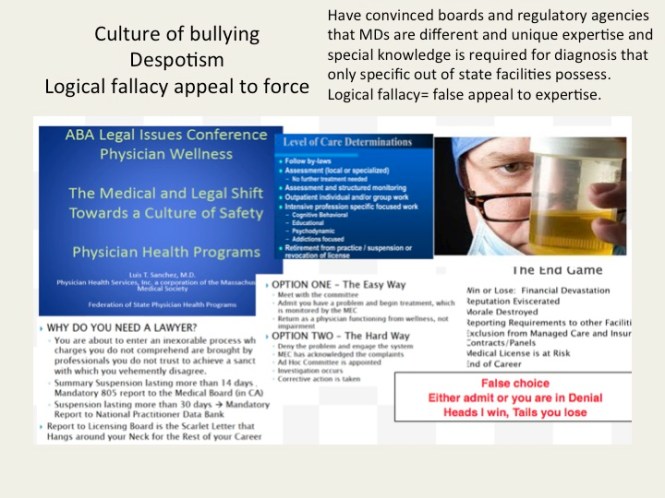
Screen Shot 2015-05-31 at 5.23.51 PM

Screen Shot 2015-05-31 at 5.24.44 PM

History teaches us that silence and secrecy are often the most effective tools of power.   It hides things.

“At times to be silent is to lie. You will win because you have enough brute force. But you will not convince. For to convince you need to persuade. And in order to persuade you would need what you lack: Reason and Right”
― Miguel de Unamuno

“I have always found it odd that people who think passive aggressively ignoring a person is making a point to them. The only point it makes to anyone is your inability to articulate your point of view because deep down you know you can’t win. It’s better to assert yourself and tell the person you are moving on without them and why, rather than leave a lasting impression of cowardness on your part in a person’s mind by avoiding them.”
― Shannon L. Alder

Staying silent is like a slow growing cancer to the soul and a trait of a true coward. There is nothing intelligent about not standing up for yourself. You may not win every battle. However, everyone will at least know what you stood for—YOU.”
― Shannon L. Alder

Request that Massachusetts Medical Society acknowledge or refute professional, ethical and criminal misconduct by Physician Health Services (PHS, Inc.)

Screen Shot 2014-11-26 at 7.10.56 PMAphorisms

Kim Sawyer

The bystander
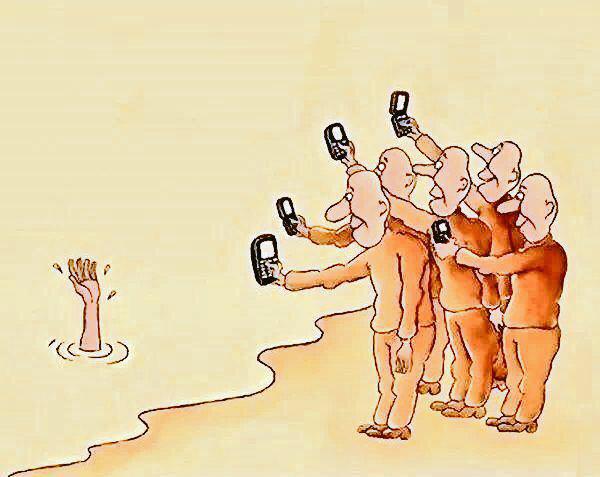
The silence of one bystander is agag
powerful voice.
Their silence is more powerful than
the silence of none.
The silence of two bystanders more
powerful than one.Featured Image -- 48380
The silence of three bystanders
more powerful than two.
The silence of four bystanders
more powerful than three.
And in the limit, the silence of the
bystanders converges to
the voice of the wrongdoer.


mllangan1's avatarDisrupted Physician

Oliver Wendell Holmes, the Massachusetts Medical Society, Tinsel Erudition and Pretended Science Redux

images-10As the oldest medical society in the United States the Massachusetts Medical Society can count some of the greatest minds in the history of American medicine as members.  My how far we have fallen.  This same author has previously unintelligibly compared the field of medicine to Barbra Streisand’s face and shamelessly and opportunistically blamed the Boston Marathon bombing on “marijuana withdrawal.” 
The sophomoric mnemonics are neither clever nor illuminating.  Unworthy of  Readers Digest circa 1957, this dumbing down of doctors needs to end.  The very soul and practice  of medicine is being castrated and lobotomized by the same dull and very very blunt instrument. 
How does one reconcile the fact that the very same medical society that publishes the New England Journal of Medicine is allowing this type of tripe and rabble to get past editorial review?  In…

View original post 1,846 more words

The ASAM plan to exploit the doctor-patient relationship to drug test everyone they can using non-FDA approved tests they introduced: And you and your doctor won’t have a choice in the matter.

Screen Shot 2015-05-30 at 3.41.27 PM


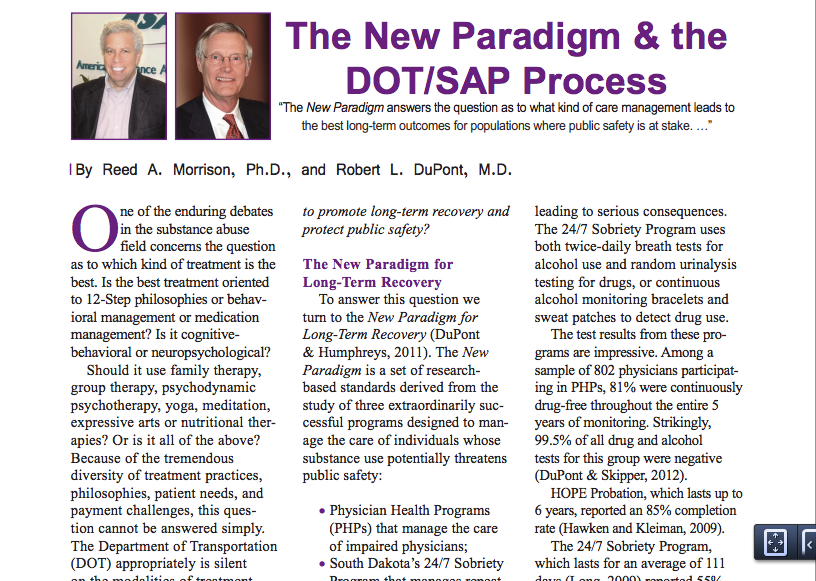
Before the  2012 Drug and Alcohol Testing Industry Association (DATIA)  annual conference, former Nixon Drug Czar Dr. Robert Dupont delivered a speech entitled “Drug Testing and the Future of American Drug Policy.”   Dupont describes a “New Paradigm” for substance abuse treatment that enforces “zero tolerance for alcohol and drug use”  enforced by monitoring with frequent random drug and alcohol tests in which positive tests are “met with swift, certain, but not draconian, consequences.” The paradigm is based on the current Physician Health Programs blueprint.  Dupont states:

“…physician health programs , have set the standard for effective use of drug testing. These pioneering state programs provide services to health care professionals with substance use disorders. The programs are run by physicians, some of whom in recovery themselves. PHPs feature relatively brief but highly focused treatment followed by active lifelong participation in the 12-step fellowships of Alcoholics Anonymous and Narcotics Anonymous. The key to the success of the PHP system of care management is the enforcement of the standard of zero tolerance for any alcohol or other drug use by intensive long-term random testing for both alcohol and drugs with swift and certain consequences for even a single use of alcohol or any other drugs of abuse. PHPs use drug panels of 20 or more drugs. The PHPs commonly use EtG and EtS tests to detect recent alcohol use. Similar comprehensive programs have been developed for commercial pilots and attorneys. These innovative programs of care management produce unprecedented long-term, outcomes.”

Physician Health Programs (PHPs) use a doctor’s medical license as “leverage” in what they call “contingency management.”  The doctor must comply with any and all demands made under threat of being reported to their medical board for “non-compliance.”  The national organization representing PHPs, the Federation of State Physician Health Programs (FSPHP) has convinced the national organization representing state medical boards, the Federation of State Medical Boards (FSMB) that “second-guessing” PHP authority “undermines a culture of professionalism.”   As with every other ware the FSPHP has pitched the FSMB they accepted this notion in blind faith and without critical analysis. If they did look a little deeper they would find the “PHPs-blueprint” more resembles a paradigm of “racketeering” then it does “rehabilitation” or “recovery” and the terms they use are euphemisms.  Taking a medical license “hostage” and holding it for “ransom”  while putting coins in your pocket by “extortion” doesn’t fit in with a “culture of professionalism” though.  They are very good at impression management–have to give them that.

Declaring the PHP model the “gold standard” of substance abuse treatment they now want to spread the wealth to others, including kids.    But instead of a medical license it will be your student loan, right to participate in school sports, teaching license, hairdressing license, commercial truck driving license, gun license, and even license to drive they will be after.  If you got it and it is in any way tied to state or federal government benefits or rights they will threaten you with removing it.  And as is being seen in doctors there will not be a damned thing you will be able to do about it.

This is all outlined in the 2013 American Society of Addiction Medicine White Paper on Drug Testing.   If you have not read it yet you need to.   If you read one thing this year make it this as it is under the radar and no one is talking about it.

A Modest Proposal

I implore you to do two things:

1.  Read the ASAM White Paper on Drug Testing in its entirety.  It can be found here and here.

2.  If you like what you see do nothing.  If this is the predominant response then it will surely come to fruition as has every other public policy recommendation the ASAM has pushed.  ( See policy entrepreneurship, bent science,  moral crusades).

3. If you don’t like what you see then stand up!  Make your voice known.  Make your voice known in every venue you can.  Write and call your local and state politicians,  comment in the news media, tweet, Instagram, post to FaceBook, send links to your connections on Linkedin. Do everything you can because we do not have long.  The ASAM is slated to become recognized by the American Board of Medical Specialties in 2016 and that will be the beginning of the end.  What is described in the ASAM White Paper will be ushered in and, as we have seen with what has happened to doctors, there will not be a thing you will be able to do about it.

The ASAM is not a medical “specialty” but a “special interest group representing the billion dollar drug and alcohol testing, assessment and treatment industry.   Although they say they exist to help addicts and benefit the public their plans as outlined below suggest they do neither.   Moreover, many of the architects of this future drug-testing dystopia can be found right here on this list.

In order to prevent this we need voices now!  Please take the ASAM White Paper on Drug Testing Challenge.  Read it, form an opinion and state, yell and shout  your opinion everywhere and anywhere you can.


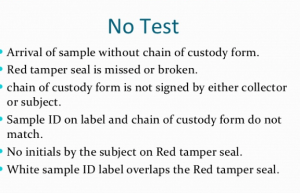
The 2013 American Society of Addiction Medicine White Paper on Drug Testing describes the organizational structure of the “New Paradigm” which includes utilization of the medical profession as a urine collection agency for their drug and alcohol testing. When a doctor-patient relationship exists the testing is rendered “clinical” rather than “forensic.” Thus the consequences of a positive test can be deemed “treatment” rather than punishment. This bypasses the strict chain-of-custody and Medical Review Officer requirements designed to ensure accuracy and minimize false-positives.  Forensic drug testing is tightly regulated because the results a positive test can be grave and far reaching.  Erroneous results are unacceptable.

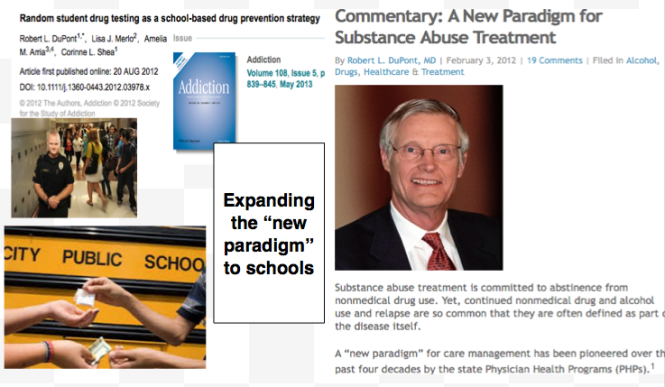
And then he proposed expansion of this paradigm to other populations including workplace, healthcare, and schools.

Screen Shot 2013-09-04 at 6.14.30 PM

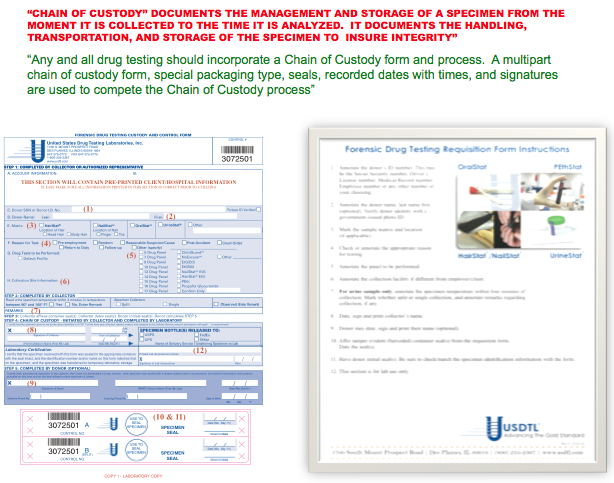
Chain-of-Custody refers to the document or paper trail showing the collection, control, transfer, analysis and disposition of laboratory tests.  It is the written documentation of a specimen from the moment of collection to the final destination to the review and reporting of the final results.   The multi-part chain-of-custody form or “custody and control” form is part and parcel of this process. It contains stickers to sign and seal the specimen so that it cannot be tampered with and the form itself is signed by the appropriate parties as the test specimen travels from place to place. Information is added to the form as it travels from person to person.  It has been given the status of a legal document as it has the ability to invalidate a specimen with incomplete information.  Once the sample is analyzed it is reviewed by a Medical Review Officer (MRO) for final review. In the case of a positive test it is the responsibility of the MRO to ascertain an intact  chain-of-custody, determine whether an alternative explanation exists for the positive test such as a prescribed medication, and then and only then report the test as a “true positive.”

The MRO looks for what are called “fatal flaws” and,  should one be present, invalidates the test.  A fatal flaw requires the test be rejected as it were never drawn.  It invalidates it and it cannot be used. screen-shot-2013-12-19-at-12-20-46-pmAny and all drug testing requires strict  chain-of-custody procedures. It documents not only the whereabouts of the specimen at any given time but the management and storage of the specimen. This is important because time and temperature can influence the results of certain tests.  One such test is alcohol.
Specimen integrity is critical in forensic drug testing, but so too is the integrity of the people involved.


Forensic Versus Clinical Drug Testing

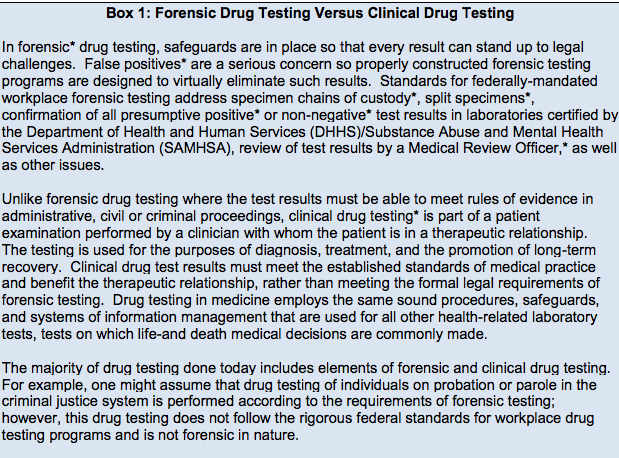
According to the ASAM White Paper on Drug Testing, clinical drug-testing “employs the same sound procedures, safeguard, and systems of information management that are used for all other health-related laboratory tests, tests on which life-and-death medical decisions are commonly made.”  In the box below they describe the multiple safeguards in place and requirements demanded of “forensic” drug testing but do not mention the reason these uncompromising and multiple specifications exist is to protect the donor from a false accusation of drug or alcohol use.  They proceed to define “clinical drug testing” as “part of a patient examination performed for the purposes of diagnosis, treatment, and the promotion of long term recovery” noting that clinical testing “must meet the established standards of medical practice and benefit the therapeutic relationship, rather than meeting the formal legal requirements of forensic testing.”  The authors then state that the “majority of drug testing done today” includes both forensic and clinical elements using individuals on parole and probation as examples.
Screen Shot 2015-01-14 at 12.32.11 AM

From the ASAM White Paper on Drug Testing

The logical fallacy here is striking.  It is comparing apples and oranges.  After detailing the specific quality assurance safeguards designed to prevent the donor of a drug or alcohol test from being falsely accused of illicit use, the authors give a general  definition and purpose of  “clinical” testing  then state that when testing for drugs the systems in place are up to snuff as it is already being used to make  life-and-death medical decisions.  The take-home message is that “forensic” testing is unnecessary hyperbole designed for legal challenges. The clinical lab  systems in place are used for critically  important testing so it can be used for drug-testing.   After all, parolees and probationers don’t require it.

Forensic guidelines were developed in collaboration with occupational and environmental medicine specialists, clinical and forensic toxicologists, pathologists and others and the recommended  requirements agreed upon by this consortium exists solely to  assure validity and accuracy in the testing process.  These requirements exist to protect the donor and If the “clinical” testing context fit the bill then “forensic” testing would not have evolved.

Labs ordered clinically in the course of patient care are interpreted within the context of multiple other pieces of data.  Lab errors occur all the time and are interpreted in that context. Oftentimes a lab will not fit with the clinical picture and, when that happens, a repeat lab is ordered for verification.  Specimens get collected in the wrong tube and specimens get lost but in the clinical setting they simply get reordered and there are no consequences to patient care.   In contrast drug testing is an all-or-none one-shot test and the results have consequences. It is for that reason they must be valid.  Chain-of-custody and MRO review are critical and that is why most drug-testing programs follow the forensic protocol.  And the example of non-forensic drug-testing  parolees and probationers is misleading.   Any Employee Assistance Program that has a union or some other group looking out for their best interests uses strict “forensic” guidelines.   Parolees and probationers have no power  and have no choice.  Besides, the  National Association of Drug Court Professionals uses the Laboratory Developed Tests these same people introduced to test  individuals on probation or parole in the criminal justice system just as they do in the PHPs.

The  ASAM White Paper:

 “Encourages wider and “smarter” use of drug testing within the practice of medicine and, beyond that, broadly within American society. Smarter drug testing means increased use of random testing* rather than the more common scheduled testing,* and it means testing not only urine but also other matrices such as blood, oral fluid (saliva), hair, nails, sweatand breath when those matrices match the intended assessment process. In addition, smarter testing means testing based upon clinical indication for a broad and rotating panel of drugs”

As a physician-patient relationship renders drug testing “clinical” rather than “forensic” the consequences become “treatment” rather than “discipline.”  And that is the real reason behind all of this.    A positive “forensic” test in most employee random drug screening programs today will result in an “assessment” for substance abuse.  Most EAPs allow a choice in where that assessment takes place.  The model this system is based on, Physician Health Programs. does not allow choice as evaluations are mandated to “PHP-approved” assessment centers; a rigged game.

A positive “clinical” test will result in the same thing under the ASAM White Paper proposal.  But the assessment will be at an ASAM facility and if a Substance Use Disorder (SUD) is confirmed it will result in mandated abstinence of all substances (including alcohol) and lifelong spirituality involving 12-step recovery   And by using the healthcare system as a loophole and calling this testing “clinical” rather than “forensic” the ASAM will have successfully introduced widespread testing of a variety of Laboratory Developed Tests (LDTs) of unknown validity while removing  the safeguards provided by forensic testing including chain-of-custody and MRO review.
Screen Shot 2014-02-25 at 1.06.55 PM

Screen Shot 2014-02-25 at 1.04.35 PM17855_1257443328661_5061955_n

In Mechanics and Mentality the Physician Health Program “Blueprint” is Essentially Straight, Inc. for Doctors.

Screen Shot 2014-02-07 at 8.38.55 AMIn 2012 former Nixon Drug Czar Robert Dupont, MD delivered the keynote speech at the Drug and Alcohol Testing Industry Association (DATIA) annual conference and described a “new paradigm” for addiction and substance abuse treatment. He advocated zero tolerance for alcohol and drug use enforced by monitoring with frequent random drug and alcohol tests. Detection of any substances is met with “swift and certain consequences.”

And then he proposed expansion of this paradigm to other populations including workplace, healthcare, and schools.

Screen Shot 2014-12-02 at 1.18.54 AMRobert Dupont was a key figure in launching the “war on drugs” — now widely viewed as the failed policy that has turned the US into the largest jailer in the world.

In the 1970s, Dupont administered the experimental drug rehab program called “The Seed” – that was later deemed by congress to use methods similar to those used on American POW’s in North Korea. He would later go on to consult for “Straight, Inc”, a rehab program that treated troubled teens as “addicts”, often for minor infractions or normal teenage behavior.

Screen Shot 2014-12-02 at 10.27.30 PMDeemed the “family oriented treatment program,” Dupont encouraged organization and expansion. Targeting the children of wealthy white families parents fears were used to refer their kids to the programs. Signs of hidden drug use such as use of Visine, altered sleep patterns, and changes in clothing style were used as indications for referral. Any child who arrived would be considered an addict in need of their services. Coercion, confrontation, command and control were the guiding principles. Submit or face the consequences. We know what’s right. The idea was to strip the child of all self-esteem and then build him back up again in the straight image.

Abused, dehumanized, delegitimized and stigmatized-the imposition of guilt, shame, and helplessness was used for ego deflation to facilitate canned and condensed 12-step as a preparatory step on the path of lifelong spiritual recovery.

Children were coaxed or terrorized into signing confessions, berated, and told they were in “denial.” Inaccurate and false diagnoses were given to wield greater control. Reports and witness accounts now indicate that many of the kids did not even have drug problems but by creating a “moral panic” about teenage drug use they exploited parents fears for profit. Straight, Inc. became the biggest juvenile rehabilitation center in the world for rehabilitation and treatment of addiction.

Screen Shot 2014-11-25 at 7.10.47 PMA 12 year old girl was admitted to inpatient addiction rehabilitation for sniffing a “magic marker”–Once!

A Deficiency Correction Order was issued by the Executive Office of Human Services, Office of Children, Commonwealth of Massachusetts Services to Straight, Boston in 1990 that read in part:

“Although Straight’s statement of services states that Straight serves chemically dependent adolescents, a review of records and interviews with staff demonstrate that Straight admits children who are not chemically dependent. For example, one twelve-year-old girl was admitted to the program although the only information in the file regarding use of chemicals was her admission that she had sniffed a magic marker.”

Screen Shot 2014-02-15 at 4.39.03 PM
Straight was always making outlandish claims of success but there was no scientific evidence based data to support it. In September 1986 USA TODAY ran an article headlined: DRUGS: Teen abusers start by age 12 which opened with: “Almost half of the USA’s teen drug abusers got involved before age 12…”The article was based on a study conducted by Straight, Inc.

Many former patients of Straight were so devastated by the abuse that they took their own lives. Since then, Dupont has been a key figure in the proliferation of workplace drug testing programs, and once advocated for drug testing anyone in the workplace under the age of 40.Slide39

crop0002_3_3

mllangan1's avatarDisrupted Physician

Screen Shot 2015-03-30 at 8.44.59 PM

In 2012 former Nixon Drug Czar Robert Dupont, MD delivered the keynote speech at the Drug and Alcohol Testing Industry Association (DATIA) annual conference and described a “new paradigm” for addiction and substance abuse treatment. He advocated zero tolerance for alcohol and drug use enforced by monitoring with frequent random drug and alcohol tests. Detection of any substances is met with “swift and certain consequences.”

And then he proposed expansion of this paradigm to other populations including workplace, healthcare, and schools.

Robert Dupont was a key figure in launching the “war on drugs” — now widely viewed as the failed policy that has turned the US into the largest jailer in the world.

Screen Shot 2014-02-23 at 8.06.56 PMIn the 1970s, Dupont administered the experimental drug rehab program called “The Seed” – that was later deemed by congress to use methods similar to those used on American POW’s in North Korea. He would later…

View original post 2,611 more words

Competent, Ethical and Fair Legal Representation for Doctors —A Possible New Niche area for Lawyers.

Wretched creatures are compelled by the severity of the torture to confess things they have never done and so by cruel butchery innocent lives are taken; and by new alchemy, gold and silver are coined from human blood.– Father Cornelius Loos (1592)


17th-century-tribunal

 “PHP-Approved Attorneys”

My survey has revealed an additional factor stacking the deck and removing accountability from PHPs.  The attorneys ostensibly representing doctors are also part of the racket.

A doctor referred to a PHP will be given a list of 3 or 4 attorneys by the PHP who are “experienced in working with the medical board.” What they do not tell you is that theses attorneys are hand-picked or cultivated to abide by the rules dictated by the PHP.

They will not “bite the hand that feeds” and any procedural, ethical or criminal misconduct by the PHP will not be addressed.     Laboratory fraud, false diagnoses, and Establishment Clause violations are off limits.

The primary purpose of these attorneys is to enforce payment for laboratory fees and demand compliance with whatever the PHP demands.  Their primary purpose is to keep doctors powerless under the PHP and prevent misconduct, including crimes, from being discovered.

The attorney pool is currently over-served by those serving two clients and most of those outside simply do not know enough about the “physician health”  legal issues related to doctors.  When they appear before the board it is as if they are a deer in the headlights.  It is a new terrain where all due process and familiar protocol have been removed.  Of course this was all facilitated by changes in administrative and medical practice acts orchestrated by the physician health movement “in the interests of protecting the public.  This must be recognized and addressed.

Skilled negotiators and lawyers with administrative law experience would do well to consider representation for doctors before medical boards regarding “physician health” matters.

It is not that esoteric, complicated or difficult.   As with the rest of the population, most have just not critically analyzed the issues behind the curtain.

Slide41

IMG_0847 Screen Shot 2014-12-02 at 3.18.45 AM


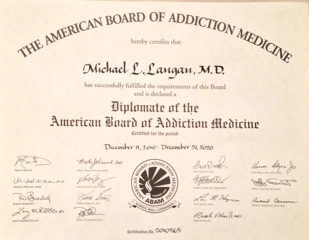
Disrupted Physician 101.3 –“For What it’s Worth”— The ASAM/ABAM Diploma Mill

mllangan1's avatarDisrupted Physician

“In a time of universal deceit, telling the truth is a revolutionary act.”
— George Orwell

IMG_6274 2

I can think of no other specialty or subspecialty in the profession of medicine where non-existent expertise can be incontestably announced and implemented.  If I claimed to be an ace neurosurgeon or an expert otolaryngologist and started practicing my claimed skills in the hospital I would be called on it pretty quick by both colleagues and patients–deemed a delusional fraud and run out on a rail within a week.  Both law enforcement, attorneys and psychiatry would be called in short order.

Yet doctors who have not met the usual and customary standards for professional and educational quality that have been identified for medical specialties and subspecialties are able to claim expertise in “addiction medicine” and everybody just lets them.

To make this point I sat for the 2010 American Board of Addiction Medicine Certification Examination.  I did this…

View original post 704 more words

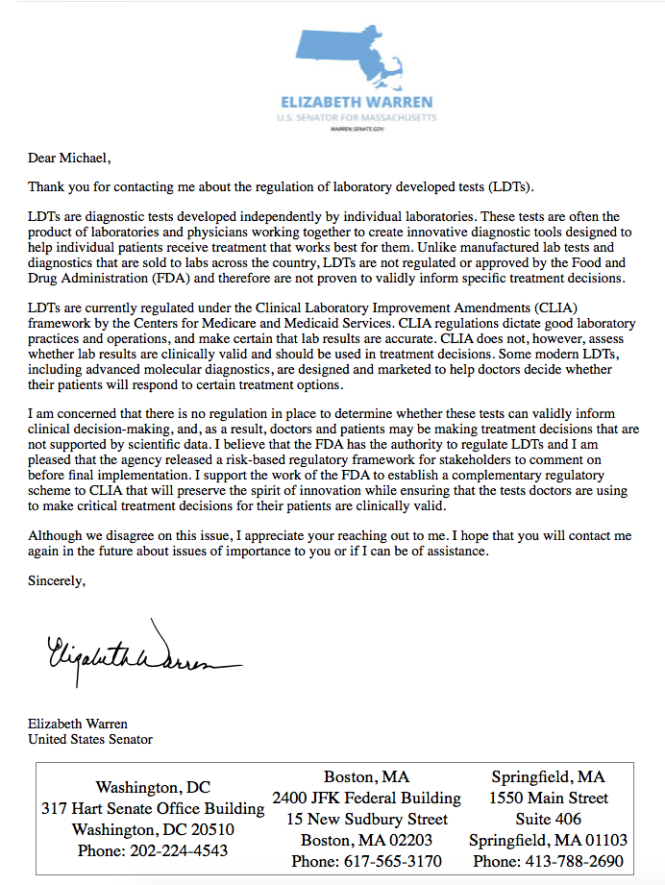
An Open Letter to Senator Elizabeth Warren Regarding Laboratory Developed Tests, Physician Health Programs and Institutional Injustice

Links

1.  Open letter to Senator Warren

2.  Information on laboratory developed tests (LDTs)

3.  How laboratory developed tests (LDTs) were introduced without FDA approval and have no oversight or regulation

4.  How laboratory developed tests (LDTs) are killing doctors

5.  How these same people plan on bringing these same non-FDA approved LDT tests of unknown validity to others (including students and children) to  put more coins in their purses

Originally sent March 17, 12015. I Have not yet received a reply from Senator Warren and am concerned it may not be reaching her. Perhaps others can help me ensure she receives it.  Please help get this addressed and contact Senator Warren through her office contacts below.  I will keep you updated.

Washington Office
317 Hart Senate Office Building
Washington, DC 20510
Phone: (202) 224-4543

Boston Office
2400 JFK Federal Building
15 New Sudbury Street
Boston, MA 02203
Phone: (617) 565-3170

Springfield Office
1550 Main Street
Suite 406
Springfield, MA 01103
Phone: (413) 788-2690Screen Shot 2015-01-08 at 9.54.30 PM

mllangan1's avatarDisrupted Physician

An Open Letter to Senator Elizabeth Warren Regarding Laboratory Developed Tests, Physician Health Programs and Institutional Injustice.

I can think of nothing more institutionally unjust than an unregulated zero-tolerance monitoring program with no oversight using unregulated drug and alcohol testing of unknown validity.   But that is what is occurring.   Some of us are trying to expose this corrupt system but barriers exist. As with the Laboratory Developed Tests (LDTs), those involved have intentionally taken steps to remove both answerability and accountability.  Both the tests and the body of individuals administering these tests are notable for their lack of transparency, oversight and regulation.  This renders them a power unto themselves.

Doctors (and others coerced into Professional Health Programs) across the country have reported going to law enforcement and state agencies only to be turned away.   The Federation of State Physician Health Programs (FSPHP)  has convinced these outside agencies that this…

View original post 3,416 more words

The Problems with Recognizing Problems as Problems: Medication Records, Firefighter Arsonists and Machiavellian Sociopaths

Pharmacard:  A Prescription Drug Monitoring System Designed to Record Drug Histories and Reduce the Incidence of “Drug Misadventuring.”
 
As a medical student in 1990 I saw a 79 year old woman in the emergency room with intractable nausea and vomiting.   Earlier that week she had seen her primary care physician for nausea and a mild cough.   Diagnosed with bronchitis,  she was given a prescription for erythromycin.  Her husband brought in her medications including digoxin which can cause nausea
when blood levels are too high.  A  markedly high level came back on the blood draw indicating  digitalis toxicity.  I spoke to her primary care physician who was unaware of her digoxin prescription; completely clueless that she was prescribed the foxglove plant extract by a cardiologist for an irregular heart beat.images-22
Digitalis was first described by William Withering in 1785 for heart conditions and this is considered the beginning of modern therapeutics.  Sometime after erythromycin became available in 1952 it was discovered that taking the two drugs together increased digoxin levels. This simplest  type of drug interaction is called interference and occurs when one drug either accelerates of slows down the metabolism or excretion of the other.
Based on the progression of symptoms her husband reported and the elevated levels on admission this woman undoubtedly had elevated digitalis levels when she was seen by her doctor earlier in the week.   Unaware of the digitalis he inadvertently worsened her condition by giving her a medication that elevated her levels even further. She was lucky.
introduction-to-adverse-drug-reactions-14-638The Boston Collaborative Drug Surveillance Program found digoxin to be the second most commonly implicated drug in causing death in hospitalized patients and the most commonly implicated drug implicated in hospital admissions (N Engl J Med 291:824–828, 1974).
Digitalis toxicity in those who die outside of the hospital often goes unrecognized as most are elderly and assumed to have died from age related causes.
Seeing several more cases of drug related problems caused by ignorance of current medications and lack of communication prompted an  interest in drug misadventures.  I also became interested in developing a computerized up to date and accurate record accessible by all health care providers in real time , a closed loop system of “portable” information easily transferred among all health care providers be they primary doctors, pharmacists or emergency room personnel.
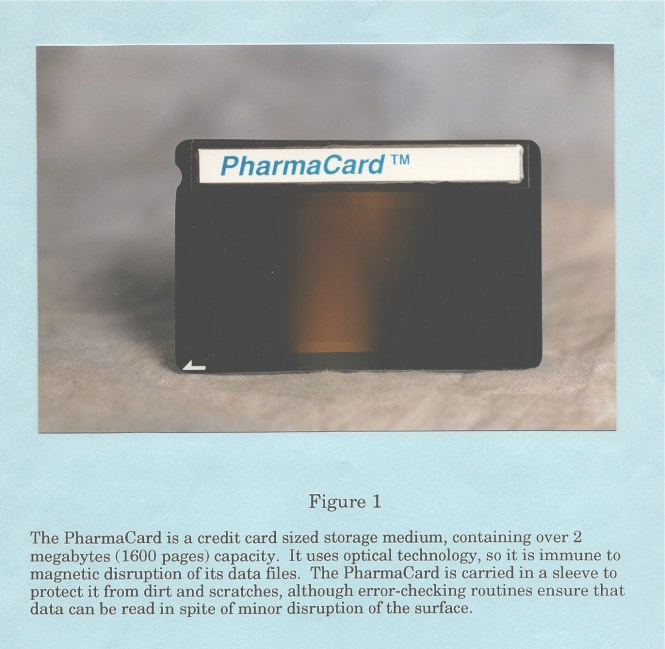
Research pharmacologist Dr. Edward Gallaher and I brainstormed over ideas and eventually came up with a computer program using  WORM (write-once-read-many) optical technology used in compact disc systems. much like a CD-R but without the spinning disc.  The credit-card sized disk could store up to two megabytes of data on an optical layer that could be written once and never changed. An optical card-reader interfaced with any IBM compatible PC.   The plan was to place card readers at pharmacies, medical offices and emergency rooms.  We called it Pharmacard.
Screen Shot 2015-05-26 at 6.33.49 PM

Pharmacard System Developed. ASTI Connections. Vol 4. Eugene, OR: Advanced Science and Technology Institute; 1992.

PHARMACARD3
Although computerized medical records existed in 1992 they were predominantly stand alone with many just replicating the paper record without word search capability.  Moreover these programs did not communicate with one another so no information portability existed between the entities involved.  Communication of information from pharmacy to doctors to emergency room was not an option.  The system was fragmented and the search for information long.
But drug mishaps were a real problem.  As with digoxin they could be fatal.  Multiple reports of drug induced morbidity and mortality were found in literature searches.  An obvious problem existed. . Many were drug interactions such as that with digitalis and erythromycin.  From my viewpoint the need for addressing the problems caused by inadequate and and incomplete records was not only self-evident but a priority.   Solutions however were few.  “Brown-bag” sessions in which patients bring in a paper bag containing all of their meds were held periodically.  Little booklets titled “patient medication records” were given to patients to update and record their new and current prescriptions.
PHARMACARD4In addition to an up to date medication list we decided to put in the bare but essential elements of the medical record that would be needed in an emergency; these consisted of demographics, emergency contacts, a basic problem list, allergies and a baseline EKG.
An available baseline EKG was decided based on its presence making it much easier to detect a problem by looking for differences.  A baseline EKG would conceivably facilitate the timing and accuracy of diagnosis.  In addition it would save money because without a comparison the default is admission.
We then applied for multiple research grants for funding to do a pilot study.  All were rejected and contained comments suggesting we pitch our wares to the computer people not the medical people-this is computer science not medical science.
We received very little interest at an AMA poster presentation in Washington D.C.  Few people would even read the poster with most taking a quick glance and redirecting straight ahead as if they were avoiding a street-corner pollster.   Those who did read it were either non-plussed, perplexed or cynical.
A research psychopharmacologist M.D.,PhD from France  asked permission to give me some advice.   He then told me it would not work.   He said the idea was great, it would work as intended and probably help prevent drug related problems.  But that did not matter because no one
gets it yet.”
   Aside from a handful of people intimately involved in the research most everyone else finds this useless as do most people at the  conference.  This means nothing to them.
PHARMACARD5 They don’t see the problem and they don’t see a need for a solution. Many believe it is the patient’s responsibility to keep track of their medications and that any problem associated with not providing their medication list up to date were self-inflicted.”  He said it will be a different story in five or ten years when the problem is acknowledged and accepted by the rank and file.
In 1999 the Institute of Medicine published To Err is Human: Building a Safer Health Care System placing  patient safety high on the nation’s health care agenda.  Medical errors, adverse drug reactions and interactions were deemed a big problem. Identifying ways to keep track of medications became a priority and multiple business ventures popped up and got their hats in the ring.    Suddenly everyone not only recognized the problem but imparted the sense they knew it all along.  Seven years had gone by and our project had then fallen by the wayside. In addition our optical platform was obsolete.
As with firefighter arson this illustrates the most crucial step in addressing a problem is admitting the problem exists.  Firefighter arson had been documented for over a century but not properly addressed.  The  extent of the problem was not publicly recognized until  a  Special Report: Firefighter Arson was done by the Department of Homeland Security, the United States Fire Administration and the National Fire Data Center in 2003.   The most crucial step was admitting the problem exists.  The second was defining the problem. The third was having zero tolerance for those engaged in the problem.  States that have taken this approach have found a marked reduction in firefighter arson.
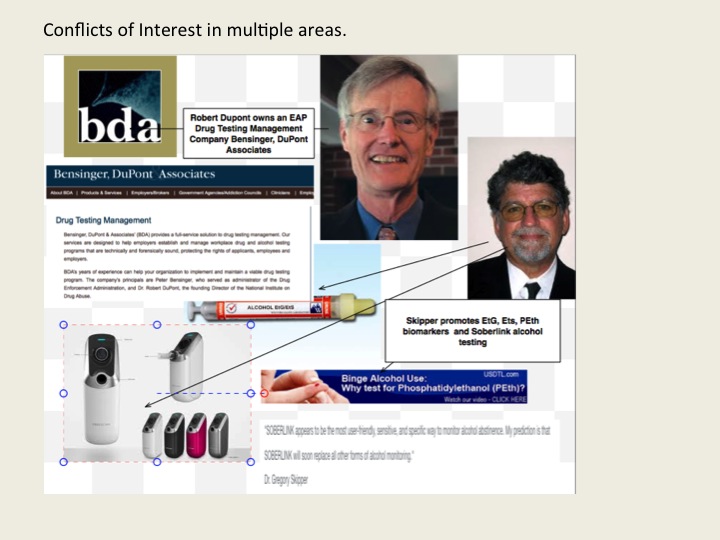
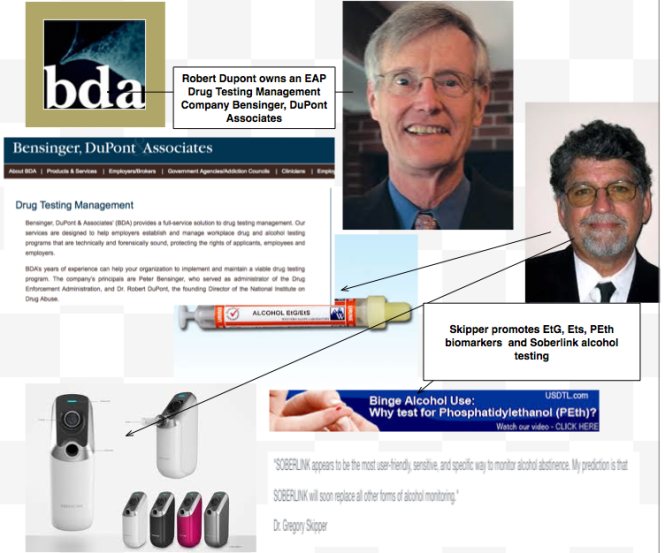
PHARMACARD1The  problem of not recognizing  problems as problems can also be applied to individuals;  Bill Cosby comes to mind.  So too does FSPHP self-appointed drug-testing expert Dr. Gregory Skipper whose irresponsible introduction of junk-science drug testing into the marketplace through a loophole  has undoubtedly caused many more deaths than Dr. Harold Shipman who killed more than 250 patients in the U.K. by injecting them with morphine.
Skipper’s introduction of junk science drug and alcohol testing and use of cutoff points he pulls out of a hat and then moves upward as the problems are exposed is shameful.     The fact that he unleashed this on other doctors knowing full well what would happen in a zero tolerance program needs to be revealed.
My survey is revealing many suicides as a direct result of these tests, including those of medical students and residents.  And most of those who have died were not  even remotely addicts or alcoholics.  They were reported anonymously,  given one of these tests and asked to be evaluated at a “PHP-approved” assessment center  where a diagnosis was confirmed followed by  3-4 months of inpatient treatment.   I am finding out most of the doctors referred to PHPs do not have any problems but the PHPs and their affiliates are giving false diagnoses, false drug testing and using threats to control them and there is little they can do about it.    Skipper’s complete lack of empathy for his victims as he continues to put  coins in his purse is abhorrent.       Meanwhile the death  count continues to rise.Slide39Screen Shot 2015-03-12 at 11.17.53 PM

The Brain Disease Model of Addiction: is it Supported by the Evidence and has it Delivered on its Promises?

Dr. Allwissend 01

The brain disease model of addiction: is it supported by the evidence and has it delivered on its promises?

Prof Wayne Hall, PhD
Adrian Carter, PhD
Cynthia Forlini, PhD

Sign up for Lancet Psychiatry to read the full article. An overview is below.

We need a similar critique of the American Society of Addiction Medicine (ASAM)  and its affiliates on this side of the Atlantic as “addiction medicine” is slated to be approved  by the  American Board of Medical Specialties in 2016 even though the discipline falls far short of the educational and professional standards for quality practice developed and implemented by all other ABMS member boards.    According to the ABMS these 24 boards are:

“committed to the principle of examining doctors based on six general competencies designed to encompass quality care: patient care, medical knowledge, practice-based learning and improvement, interpersonal and communication skills, professionalism, and systems-based practice.”

These areas have been collectively identified by the ABMS, the American College of Graduate Medical Education (ACGME) and the Institute of Medicine (IOM) in order to standardize graduate medical education.

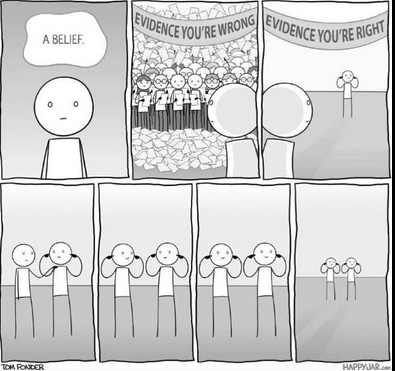
Any critique of the ASAM would find a number of issues antithetical to the six general competencies which stress “learning and improvement.”   In contrast the ASAM rests on the conviction that their views are absolutely certain and patently rejects open-minded inquiry.  An academic analysis of addiction medicine  from the vantage point of the ASAM would reveal false assumptions, bias, dogmatism, and data-dredging.  It would also reveal that those claiming expertise are in fact illegitimate and irrational authority who believe in an ends-justifies-the-means approach to push forth the chronic relapsing brain disease with lifelong abstinence an d imposed 12-step recovery. These are false experts who rationalize unethical, unprofessional and even criminal behavior as zeal for the faith if it aligns with the brain disease model of addiction (BDMA)   Their viewpoints are fixed and final.

They have not been held to truly objective judging, analysis, evaluation or outside critique.  The purpose of critique is the same as the purpose of critical thinking: to appreciate strengths as well as weaknesses, virtues as well as failings. Critical thinkers critique in order to redesign, remodel, and make better. This direly needs to be done.  The evidence-base for both the BDMA and the drug and alcohol testing, assessment and treatment is poor.     They are claiming physician health programs are the crown jewel of addiction treatment– a replicable model to be replicated in other populations.  It is all hyperbole and propaganda.  In reality they are using medical assessment and treatment as tools to repress and punish doctors.  Those running the state physician health programs are typically morally disengaged bullies with Machiavellian egocentricity.   And all the congratulatory backslapping is based on a singe poorly designed opinion piece.

Science and medicine need to be predicated on competence, thoughtfulness, good faith, civility, honesty, and integrity. This is universally applicable.  What they are doing betrays the trust of society and breaches the most basic ethical obligations of not only doctors but human beings.

But no one seems to be challenging them. Why is no one questioning this self-appointed authority. If people do not start talking, writing, discussing and debating the current paradigm then what Robert Dupont describes in the ASAM White Paper on Drug Testing will be ushered in.  As with doctors you won’t know it until it hits you.    If the ASAM becomes an ABMS medical specialty then it will be too late. They will impose their authority on you as a patient and their won’t be a damn thing you will be able to do about it.

Once illegitimate and irrational authority are sanctified by the American Board of Medical Specialties there will be nothing left to do except watch the profession of medicine go up in flames.

Right now it’s just doctors and pilots.   What you need to see is that you are next.  I base that prediction on past public-policy, regulatory, administrative and medical practice tinkering as well as the documented paper trail of “research” and opinion. And even though all of this can be explained using documentary evidence, fact and critical analysis no one seems alarmed.

If you map it out you will see the trajectory is aimed at the transportation industry,  students with federal loans,  high school athletes, schools, gun owners, and eventually schools.

If you have something to lose that is affiliated with a state or federal agency they will hold it hostage if you get a positive hair, nail, sweat blood, or urine test at your doctors visit.    The positive test is the golden ticket for them and a ticket to an assessment facility in Kansas, Arkansas, Mississippi and some other places for you on your dime.    And these are one-way tickets. No return to normality available.  One way ticket.    No return flight.

See full article through the following link:

http://www.thelancet.com/journals/lanpsy/article/PIIS2215-0366(14)00126-6/fulltext

Screen Shot 2014-12-30 at 2.10.24 AM


Proponents of the brain disease model of addiction (BDMA) have been very influential in setting the funding priorities of NIDA, and by extension the bulk of publicly supported research on addiction. In 1998, Leshner testified that NIDA supports more than 85% of the world’s research on drug abuse and addiction.3 The American Society of Addiction Medicine has defined addiction as a “primary, chronic disease of brain reward, motivation, memory, and related circuitry”.4 In July, 2014, newly appointed Acting Director of US National Drug Control Policy, Michael Botticelli, launched a reformist strategy nationally, claiming decades of research have demonstrated that addiction is a brain disorder—one that can be prevented and treated.5 The BDMA has also been widely discussed in leading scientific research journals3, 6 and most recently in a positive editorial in Nature.7

In the USA, proponents of the BDMA have argued that it will help to deliver more effective medical treatments for addiction with the cost covered by health insurance, making treatment more accessible for people with addictions.1, 2, 6 An increased acceptance of the BDMA is also predicted to reduce the stigma associated with drug addiction by replacing the commonly held notion that people with drug addiction are weak or bad with a more scientific viewpoint that depicts them as having a brain disease that needs medical treatment.

In this Personal View, we critically assess the scientific evidence for the BDMA reported in leading general scientific journals and the extent of the social benefits that advocates of the BDMA claim it has produced, or is likely to produce, with its widespread acceptance among clinicians, policy makers, and the public. The BDMA is not co-extensive with neuroscience-based explanations of addiction. This review is not intended as a critique of all neuroscience research on addiction. We focus instead on the popular simplification of work in this specialty that has had a major influence on popular discourse on addiction in scientific journals and mainstream media.


images-3Conclusions

Considerable scientific value exists in the research into the neurobiology and genetics of addiction, but this research does not justify the simplified BDMA that dominates discourse about addiction in the USA and, increasingly, elsewhere. Editors of Nature were mistaken in their assumption that the BDMA represents the consensus view in the addictions specialty,7 as shown by a letter signed by 94 addiction researchers and clinicians (including one of the authors of this Personal View).74Understanding of addiction, and the policies adopted to treat and prevent problem drug use, should give biology its due, but no more than it is due. Chronic drug use can affect brain systems in ways that might make cessation more difficult for some people. Economic, epidemiological, and social scientific evidence shows that the neurobiology of addiction should not be the over-riding factor when formulating policies toward drug use and addiction.

The BDMA has not helped to deliver the effective treatments for addiction that were originally promised by Leshner and its effect on public health policies toward drug addiction has been modest. Arguably, the advocacy of the BDMA led to overinvestment by US research agencies in biological interventions to cure addiction that will have little effect on drug addiction as a public health issue. Increased access to more effective treatment for addiction is a worthy aim that we support but this aim should not be pursued at the expense of simple, cost effective, and efficient population-based policies to discourage the whole population from smoking tobacco and drinking heavily. Nor should the pursuit of high technology cures distract from the task of increasing access to available psychosocial and drug treatments for addiction, which most people with addictive disorder are still unable to access.

Our rejection of the BDMA is not intended as a defence of the moral model of addiction.65 We share many of the aspirations of those who advocate the BDMA, especially the delivery of more effective treatment and less punitive responses to people with addiction issues. Addiction is a complex biological, psychological, and social disorder that needs to be addressed by various clinical and public health approaches.65 Research into the neuroscience of addiction has provided insights into the neurobiology of decision-making, motivation, and behavioural control in addiction. Chronic use of addictive drugs can impair cognitive and motivational processes and might partly explain why some people are more susceptible than others to developing an addiction. The challenge for all addiction researchers—including neurobiologists—is to integrate emerging insights from neuroscience research with those from economics, epidemiology, sociology, psychology, and political science to decrease the harms caused by drug misuse and all forms of addiction.46

Slide09


References

  1. Leshner, A. Addiction is a brain disease, and it matters. Science. 1997; 278: 45–47
  2. Dackis, C and O’Brien, C. Neurobiology of addiction: treatment and public policy ramifications.Nat Neurosci. 2005; 8: 1431–1436
  3. US Government Printing Office. Senate Hearing 105-573. Drug addiction and recovery.http://www.gpo.gov/fdsys/pkg/CHRG-105shrg49670/html/CHRG-105shrg49670.html. ((accessed Sept 26, 2014).)
  4. American Society of Addiction Medicine. Public policy statement: definition of addiction. Chevy Chase, MD. http://www.webcitation.org/62jXWo8dq; 2011. ((accessed July 15, 2014).)
  5. Botticelli, M. National blueprint for drug policy reform released today in Roanoke, VA. Office of National Drug Control Policy media release July 9, 2014.http://www.whitehouse.gov/blog/2014/07/09/national-blueprint-drug-policy-reform-released-today-roanoke-va. ((accessed July 15, 2014).)
  6. Volkow, N and Li, T. Drug addiction: the neurobiology of behaviour gone awry. Nat Rev Neurosci.2004; 5: 963–970
  7. Animal farm. Nature. 2014; 506: 5
  8. Ahmed, S. The science of making drug-addicted animals. Neuroscience. 2012; 211: 107–125
  9. Koob, G. The neurobiology of addiction: a neuroadaptational view relevant for diagnosis.Addiction. 2006; 101: 23–30
  10. Feltenstein, M and See, R. The neurocircuitry of addiction: an overview. Br J Pharmacol. 2008;154: 261–274
  11. Hyman, S, Malenka, R, and Nestler, E. Neural mechanisms of addiction: the role of reward-related learning and memory. Annu Rev Neurosci. 2006; 29: 565–598
  12. Koob, G and Le Moal, M. Neurobiology of addiction. Academic Press, New York; 2006
  13. Panlilio, L and Goldberg, S. Self-administration of drugs in animals and humans as a model and an investigative tool. Addiction. 2007; 102: 1863–1870
  14. Vanderschuren, L and Ahmed, S. Animal studies of addictive behavior. Cold Spring Harb Perspect Med. 2013; 3: a011932
  15. Volkow, N, Wang, G, Fowler, J, Tomasi, D, and Baler, R. Neuroimaging of addiction. in: P Seeman, B Madras (Eds.) Imaging of the human brain in health and disease. Elsevier, San Diego; 2014: 1–26
  16. Volkow, N, Fowler, J, Wang, G, Teland, F, and Baler, R. Imaging dopamine’s role in drug abuse and addiction. in: L Iversen, S Iversen, S Dunnett, A Bjorklund (Eds.) Dopamine handbook. Oxford University Press, Oxford; 2010: 407–417
  17. Volkow, N and Baler, R. Addiction science: uncovering neurobiological complexity.Neuropharmacology. 2014; 76: 235–249
  18. Volkow, N, Fowler, J, Wang, G, Baler, R, and Telang, F. Imaging dopamine’s role in drug abuse and addiction. Neuropharmacology. 2009; 56: 3–8
  19. Reske, M and Paulus, M. A neuroscientific approach to addiction: ethical issues. in: J Illes, B Sahakian (Eds.) Oxford handbook of neuroethics. Oxford University Press, Oxford; 2011: 177–202
  20. Kendler, K, Chen, X, Dick, D et al. Recent advances in the genetic epidemiology and molecular genetics of substance use disorders. Nat Neurosci. 2012; 15: 181–189
  21. Ball, D. Addiction science and its genetics. Addiction. 2008; 103: 360–367
  22. Satel, S and Lilienfeld, S. Brainwashed: the seductive appeal of mindless neuroscience. Perseus Books Group, New York; 2013
  23. Heyman, G. Addiction: a disorder of choice. Harvard University Press, Cambridge, MA; 2009
  24. Kincaid, H and Sullivan, J. Medical models of addiction. in: D Ross, H Kincaid, D Spurrett, P Collins (Eds.) What is addiction?MIT, Cambridge, MA; 2010: 353
  25. Robins, L, Helzer, J, Hesselbrock, M, and Wish, E. Vietnam veterans three years after Vietnam: how our study changed our view of heroin. Am J Addict. 2010; 19: 203–211
  26. Kleiman, M. When brute force fails: how to have less crime and less punishment. Princeton University Press, Princeton; 2009
  27. Bachman, J, Wadsworth, K, O’Malley, P, Johnston, L, and Schulenberg, J. Smoking, drinking, and drug use in young adulthood: the impacts of new freedoms and new responsibilities. Lawrence Erlbaum, Mahwah, NJ; 1997
  28. Ahmed, S, Lenoir, M, and Guillem, K. Neurobiology of addiction versus drug use driven by lack of choice. Curr Opin Neurobiol. 2013; 23: 581–587
  29. Alexander, B, Coambs, R, and Hadaway, P. The effect of housing and gender on morphine self-administration in rats. Psychopharmacology (Berl). 1978; 58: 175–179
  30. Hall, WD, Gartner, CE, and Carter, A. The genetics of nicotine addiction liability: ethical and social policy implications. Addiction. 2008; 103: 350–359
  31. Gartner, CE, Barendregt, J, and Hall, WD. Multiple genetic tests for susceptibility to smoking do not outperform simple family history. Addiction. 2009; 104: 118–126
  32. Roberts, N, Vogelstein, J, Parmigiani, G, Kinzler, K, Vogelstein, B, and Velculescu, V. The predictive capacity of personal genome sequencing. Sci Transl Med. 2012; 4: 133ra58
  33. Button, K, Ioannidis, J, Mokrysz, C et al. Power failure: why small sample size undermines the reliability of neuroscience. Nat Rev Neurosci. 2013; 14: 365–376
  34. Ioannidis, J. Excess significance bias in the literature on brain volume abnormalities. Arch Gen Psychiatry. 2011; 68: 773–780
  35. Ioannidis, J, Munafò, M, Fusar-Poli, P, Nosek, B, and David, S. Publication and other reporting biases in cognitive sciences: detection, prevalence, and prevention. Trends Cogn Sci. 2014; 18: 235–241
  36. Hall, WD, Gartner, CE, Mathews, R, and Munafò, M. Technical, ethical and social issues in the bioprediction of addiction liability and treatment response. in: A Carter, W Hall, J Illes (Eds.)Addiction neuroethics: The ethics of addiction research and treatment. Elsevier, New York; 2012:116–138
  37. Lingford-Hughes, A, Welch, S, Peters, L, and Nutt, D. BAP updated guidelines: evidence-based guidelines for the pharmacological management of substance abuse, harmful use, addiction and comorbidity: recommendations from BAP. J Psychopharmacol. 2012; 26: 899–952
  38. Ersche, K, Williams, G, Robbins, T, and Bullmore, E. Meta-analysis of structural brain abnormalities associated with stimulant drug dependence and neuroimaging of addiction vulnerability and resilience. Curr Opin Neurobiol. 2013; 23: 615–624
  39. Hyman, S. The neurobiology of addiction: implications for the voluntary control of behaviour. in:J Illes, B Sahakian (Eds.) Oxford handbook of neuroethics. Oxford University Press, Oxford; 2011:203–217
  40. Goldstein, R and Volkow, N. Dysfunction of the prefrontal cortex in addiction: neuroimaging findings and clinical implications. Nat Rev Neurosci. 2011; 12: 652–669
  41. Volkow, N, Wang, G, Fowler, J, and Tomasi, D. Addiction circuitry in the human brain. Annu Rev Pharmacol Toxicol. 2012; 52: 321–326
  42. National Institute on Drug Abuse. Drugs, brains and behavior: the science of addiction. Washington, DC. http://www.drugabuse.gov/publications/science-addiction; 2007. ((accessed July 15, 2014).)
  43. Nutt, D and Lingford-Hughes, A. Addiction: the clinical interface. Br J Pharmacol. 2008; 154: 397–405
  44. Volkow, N and Li, T. Drugs and alcohol: treating and preventing abuse, addiction and their medical consequences. Pharmacol Ther. 2005; 108: 3–17
  45. Lingford-Hughes, A, Watson, B, Kalk, N, and Reid, A. Neuropharmacology of addiction and how it informs treatment. Br Med Bull. 2010; 96: 93–110
  46. Kalant, H. What neurobiology cannot tell us about addiction. Addiction. 2010; 105: 780–789
  47. Koob, G, Lloyd, G, and Mason, B. Development of pharmacotherapies for drug addiction: a Rosetta Stone approach. Nat Rev Drug Discov. 2009; 8: 500–515
  48. Cahill, K, Stead, L, and Lancaster, T. Nicotine receptor partial agonists for smoking cessation.Cochrane Database Syst Rev. 2011; 2 (CD006103.)
  49. Rösner, S, Hackl-Herrwerth, A, Leucht, S, Lehert, P, Vecchi, S, and Soyka, M. Acamprosate for alcohol dependence. Cochrane Database Syst Rev. 2010; 9 (CD004332.)
  50. Minozzi, S, Amato, L, Vecchi, S, Davoli, M, Kirchmayer, U, and Verster, A. Oral naltrexone maintenance treatment for opioid dependence. Cochrane Database Syst Rev. 2011; 4 (CD001333.)
  51. Kosten, T, Domingo, C, Shorter, D et al. Vaccine for cocaine dependence: a randomized double-blind placebo-controlled efficacy trial. Drug Alcohol Depend. 2014; 140: 42–47
  52. Hartmann-Boyce, J, Cahill, K, Hatsukami, D, and Cornuz, J. Nicotine vaccines for smoking cessation. Cochrane Database Syst Rev. 2012; 8 (CD007072.)
  53. Hall, WD and Gartner, CE. Ethical and policy issues in using vaccines to treat and prevent cocaine and nicotine dependence. Curr Opin Psychiatry. 2011; 24: 191–196
  54. Paul, S, Mytelka, D, Dunwiddie, C et al. How to improve R&D productivity: the pharmaceutical industry’s grand challenge. Nat Rev Drug Discov. 2010; 9: 203–214
  55. Djulbegovic, B, Hozo, I, and Ioannidis, J. Improving the drug development process: more not less randomized trials. JAMA. 2014; 311: 355–356
  56. Prinz, F, Schlange, T, and Asadullah, K. Believe it or not: how much can we rely on published data on potential drug targets?. Nat Rev Drug Discov. 2011; 10: 712
  57. Tsilidis, K, Panagiotou, O, Sena, E et al. Evaluation of excess significance bias in animal studies of neurological diseases. PLoS Biol. 2013; 11: e1001609
  58. Hall, WD. Stereotactic neurosurgical treatment of addiction: minimising the chances of another ‘great and desperate cure’. Addiction. 2006; 101: 1–3
  59. Luigjes, J, van den Brink, W, Feenstra, M et al. Deep brain stimulation in addiction: a review of potential brain targets. Mol Psychiatry. 2012; 17: 572–583
  60. Stephen, J, Halpern, C, Barrios, C et al. Deep brain stimulation compared with methadone maintenance for the treatment of heroin dependence: a threshold and cost-effectiveness analysis.Addiction. 2012; 107: 624–634
  61. Rouaud, T, Lardeux, S, Panayotis, N, Paleressompoulle, D, Cador, M, and Baunez, C. Reducing the desire for cocaine with subthalamic nucleus deep brain stimulation. Proc Natl Acad Sci USA.2010; 107: 1196–1200
  62. Carter, A and Hall, WD. Proposals to trial deep brain stimulation to treat addiction are premature. Addiction. 2011; 106: 235–237
  63. Baltuch, G and Stern, M. Deep brain stimulation for Parkinson’s disease. Informa Healthcare,New York; 2007
  64. Rose, G. The strategy of preventive medicine. Oxford University Press, Oxford; 1992
  65. Carter, A and Hall, WD. Addiction neuroethics: the promises and perils of neuroscience research on addiction. Cambridge University Press, London; 2012
  66. National Institute on Drug Abuse. Fiscal Year 2015 Budget information—congressional justification for National Institute on Drug Abuse. Rockville, MD. http://www.drugabuse.gov/about-nida/legislative-activities/budget-information/fiscal-year-2015-budget-information-congressional-justification-national-institute-drug-abuse; 2014. ((accessed July 15, 2014).)
  67. White, V, Hill, D, Siahpush, M, and Bobevski, I. How has the prevalence of cigarette smoking changed among Australian adults? Trends in smoking prevalence between 1980 and 2001. Tob Control. 2003; 12: ii67
  68. Pierce, J, Gilpin, E, Emery, S, White, M, Rosbrook, B, and Berry, C. Has the California tobacco control program reduced smoking?. JAMA. 1998; 280: 893
  69. Hall, WD, Madden, P, and Lynskey, M. The genetics of tobacco use: methods, findings and policy implications. Tob Control. 2002; 11: 119–124
  70. Doran, C, Hall, WD, Shakeshaft, A, Vos, T, and Cobiac, L. Alcohol policy reform in Australia: what can we learn from the evidence. Med J Aust. 2010; 192: 468–470
  71. Miller, P, Carter, A, and De Groot, F. Investment and vested interests in neuroscience research of addiction: why research ethics requires more than informed consent. in: A Carter, W Hall, J Illes (Eds.) Addiction neuroethics: the ethics of addiction research and treatment. Elsevier, New York;2012: 278–301
  72. Courtwright, D. The NIDA brain-disease paradigm: history, resistance, and spinoffs. BioSocieties.2010; 5: 137–147
  73. Nutt, D, King, L, Saulsbury, W, and Blakemore, C. Development of a rational scale to assess the harm of drugs of potential misuse. Lancet. 2007; 369: 1047–1053
  74. Heim, D. Addiction: not just brain malfunction. Nature. 2014; 507: 40