Integrity and Accountability—Defend the MRO Procedurally, Ethically or Legally and win 100 Volumes of the Classics in Medicine Library and Salk and Sabin Autographs!

Screen Shot 2015-06-18 at 11.46.50 PMIntegrity and Accountability—The Declining State of Physician Health and the Urgent Need for Ethical and Evidence-Based Leadership.

IMG_0576
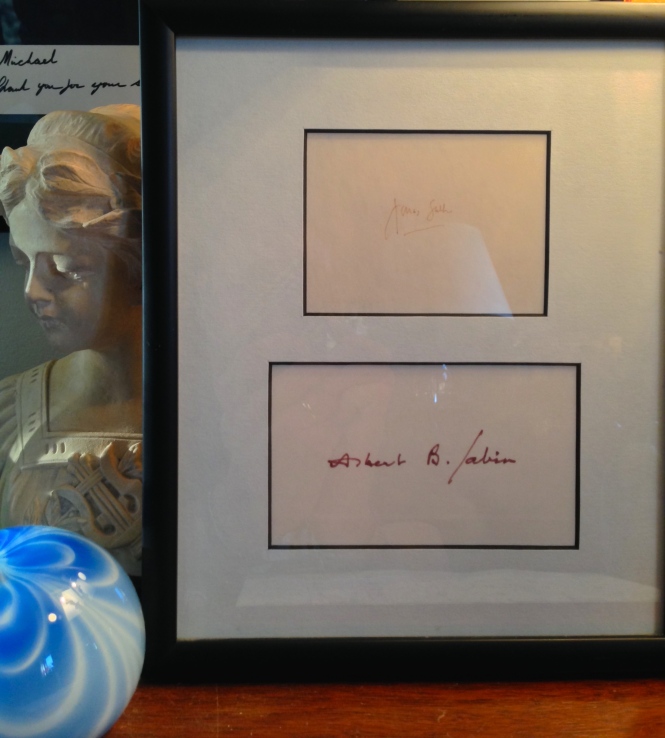
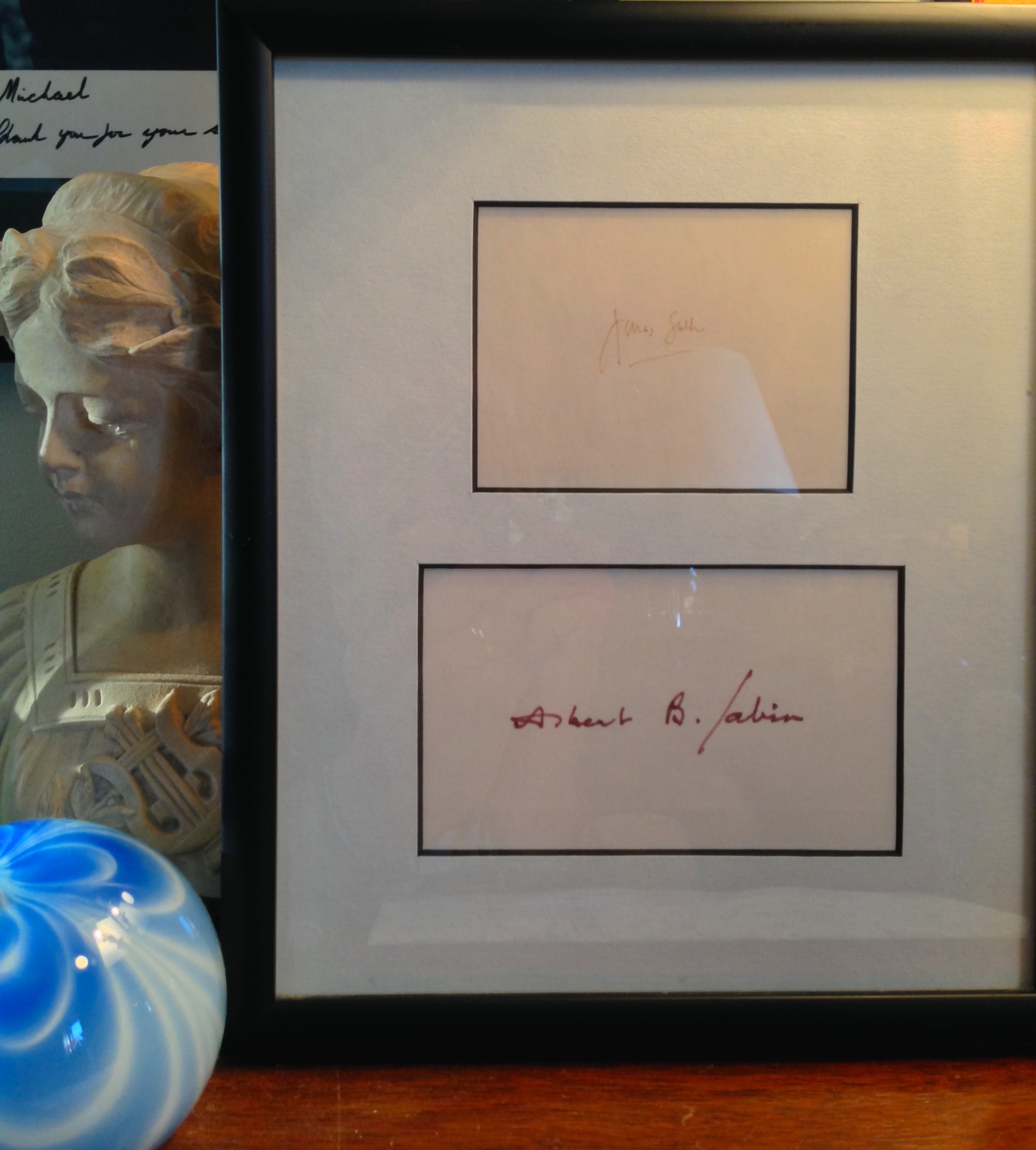
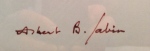
Sabin and Salk Autographs

“The incompetent or unprincipled physician, licensed to practice medicine by a too complaisant State, is the greatest menace to scientific medicine – as great a menace as all the cultists put together.”  —Dr. Morris Fishbein  (The Medical Follies.  New York:  Boni Liverlight, 1925 p. 71)

“There is no place in science for consensus or opinion, only evidence”  —Claude Bernard


th-1

Sabin, Salk and the Classics in Medicine Library

Polio is nearly a thing of the past thanks to to Dr. Jonas Salk and Albert Sabin. In 1952 Salk discovered and developed the first successful vaccine for polio and combined with Albert Sabin’s 1961 oral vaccination the duo effectively obliterated the contagious polio virus.  Once a deadly threat to our  country and future there were 93,000 cases of polio reported in the U.S. Between 1952 and 1953 alone. ElaineBurnsBut thanks to Sabin and Salk the last case of naturally occurring polio in the U.S. occurred in 1979.

 
full body respirator or “iron lung” needed to treat patients whose respiratory muscles became paralyzed by polio

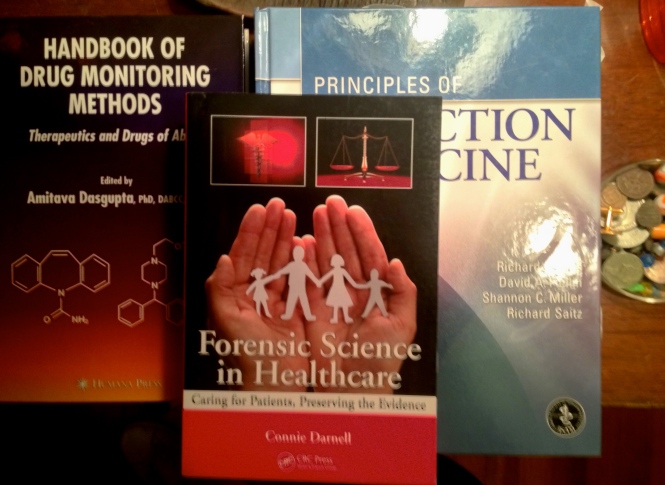
October 23, 2014 was the centenary of Jonas Salk’s birth and in honor of his 100th birthday I am sponsoring a contest to win framed autographs of both Jonas Salk and Albert Sabin as seen above.  In addition,  you will receive 100 volumes of the Classics in Medicine Library published by Gryphon Editions whose “mission is the preservation of the literary and intellectual heritage of the noble professions that we serve”

These are exact facsimiles of the original classics bound in leather and include works by William Osler, Harvey Cushing and Paul Dudley White.

 IMG_8993

Background

According to British sociologist G. V. Stimson the  “impaired physician movement” is characterized by a “number of evangelical recovered alcoholic and addict physicians, whose recovery has been accompanied by involvement in medical society and treatment programs.” Their “authoritative pronouncements on physician impairment is based on their own claim to insider’s knowledge.”

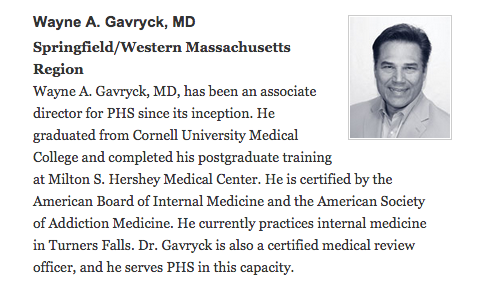
In this regard Dr. Wayne Gavryck, M.D. is a prototypical example.

An ex-alcoholic with a history of malpractice, Gavryck quit drinking through Alcoholics Anonymous, became “board certified” in “Addiction Medicine” and became involved with the Massachusetts PHP,  Physician Health Services, Inc. (PHS) where he has been an Associate Director since 1988.  He serves as their Medical Review Officer (MRO).

Screen Shot 2014-12-03 at 12.53.49 AM

The “impaired physician movement” has gained tremendous sway through the American Society of Addiction Medicine and the Federation of State Physician Health Programs.  The ASAM is not a valid medical specialty but a “special interest group” that represents the chronic relapsing brain disease with lifelong abstinence and 12-step recovery model of addiction and the companies that profit from it financially ( drug and alcohol testing labs,  12-step inpatient assessment and treatment centers) and politically  (Drug War advocates,  Anti -Medical Marijuana advocates).   The impaired physician movement gained a seat at the table of power in medicine by bamboozling regulatory and administrative medicine.   This illegitimate and irrational authority is in charge of almost every state PHP in the United States.     ASAM physicians joined their state PHPs, gained power, and then removed those who did not agree with the groupthink and doublethink.  Blind obedience and control  are favored over fairness, truth and evidence-base.   As with other states under the FSPHP, blindly obedient doctors are kept on while those who  question the science  and ethics of the groupthink are removed.  The  PHP-Drug Testing Laboratory and  “PHP approved” assessment and treatment center industrial complex requires a Medical Review Officer of blind faith who places the goals of the FSPHP above all other considerations including the Hippocratic Oath.  The system requires doctors who are willing to participate in “moral disengagement” of wrongdoing including professional, ethical and legal violations.    To erect this scaffold they have put in place barriers to exposure and accountability. By declaring themselves “experts” they have used logical fallacy to temporize  deflect and otherwise stifle accountability. With no oversight or regulation they are, in fact, accountable to no one.   The appeal to authority and esoteric knowledge is an effective means of  extinguishing valid concerns.  Complacent that this is a group of benevolent organizational purpose those who should know better and could do something about it rationalize their apathy and indifference.   A necessary step in exposing and addressing this  problem is imposing accountability.    If an organization is able to  engage in conduct that is the antithesis of accepted professional guidelines and standards of care,  in violation of professional and societal mores and codes-of-conduct and  is illegal then there is a systemic problem.  This problem can fortuitously be addressed by examining standards of care, conduct and criminal codes for breaches.   If a breach is found then it needs to be explained and justified.  One of the tactics of the FSPHP is to deflect criticism under the logical fallacy of appeal to authority.  We are the experts. We know better.  That is where it usually ends.   But accountability requires both the provision of information and justification of actions.  My hypothesis is that this group is committing fraud, violating ethics and flouting the law in an irrefutable manner.  If this is not true then my hypothesis should be able to be refuted.  It cannot.  And for that reason I am putting my money where my mouth is.


Accountability

In all fairness,  If Gavryck can justify his actions either procedurally, ethically or  legally and back it up by any written protocol, guideline or standard then he wins and I will refrain from any more criticisms.  In addition I will hand deliver to him the Salk and Sabin autographs and 100 volumes of the classics in medicine, apologize and remove this entire blog.

Accountability requires both the provision of information and justification of actions.  One way of examining this is to look at the body professional and ethical standards and state and federal law.   The FSPHP has blocked the provision of information regarding drug-testing.  Although it has taken over three years I have obtained the all of the information pertaining to a July 1, 2011  test that should have immediately been rejected by the MRO. It is an invalid test.

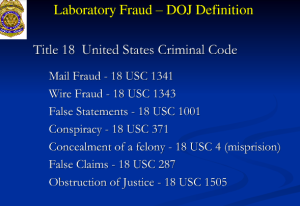
Dr. Gavryck violated every conceivable procedural guideline and standard-of-care there is for an MRO,  the Medical Review Officer Certification Council’s Codes of Ethical Conduct and both State and Federal Law.   This can be ascertained by looking at the documentation.  I have done this and found hundreds of documents that support the accusation that as an MRO Wayne Gavryck breached protocol, engaged in unethical behavior and broke the law.  Prove me otherwise with just one credible source and  the prizes are yours.

 IMG_0635

Contest Rules

Your job is to review the documentary evidence and records from PHS, Quest Diagnostics and USDTL and assess the actions and decisions made by the MRO.S)

If you can show that  these decisions were the result of  legitimate reasoning based on published guidelines or protocol, ethically defensible or did not break any laws and cite one credible source that concurs with this point of view then you have won.

If you can show that these decisions were the product of legitimate and thoughtful reasoning in accordance with established guideline, ethical codes then I will hand-deliver the items to you.

 If you can justify, support or defend the actions of the Medical Review Officer (MRO):

  1. Procedurally;IMG_0580

  2. Ethically; 

  3. or Legally;IMG_0577 - Version 2 

You win all of the prizes! Simple as that!

In fact, If you can support  just one of these the entire lot is yours.

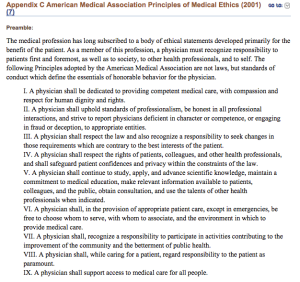
If you can show Dr. Gavryck did not breach any and all published Standards-of-Care and Professional Protocols and Guidelines regarding drugs-of-abuse testing, OR that he did not violate any and all Codes of Conduct and Ethical Guidelines of the Medical Profession from Hippocrates to the American Medical Association OR that he did not violate multiple State and Federal Laws you win Salk and Sabin autographs and all of the books.

IMG_8994

All of the documents and details regarding the forensic fraud, concealment, coverup and deliberate misrepresentation to a state agency under color of law can be seen here:

Integrity and Accountability—The Declining State of Physician Health and the Urgent Need for Ethical and Evidence-Based Leadership.

To Review:   Any and all drug testing requires chain-of-custody.   “Forensic” drug testing differs from “clinical”drug testing because the consequences of a falsely positive test can be grave and far reaching.  Because the results of  a positive test can result in the loss of rights and liberties of the person taking the test it is essential that it be done correctly.  False-positive tests are unacceptable so strict chain-of-custody procedure and MRO review assure specimen integrity.    This provides accountability and the custody

The custody-and-control form records chain-of-custody and is given the status of a legal document as it has the ability to invalidate a test that lacks complete information.  The job of the MRO is to invalidate specimens without intact chain-of-custody.

The MRO job is fairly simple.  If a lab reports a positive test for any substance the MRO must check that the signatures, dates, times and other information on the custody-and-control form are correct and per protocol.  Chain-of-custody must be accurate and complete.   The MRO looks for “fatal flaws” on the chain-of-custody form.  If a “fatal flaw is present then the test is invalidated and the test is not reported as “positive” but “invalid.”

Screen Shot 2013-12-19 at 12.20.46 PM

The sole  job of the MRO is to ensure that the drug testing process and chain-of-custody procedure is followed to the letter.  The MRO reviews the Custody and Control form for accuracy and completeness.  The MRO also rules out any other possible explanations for a positive test (such as legitimately prescribed medications).  Only then is a test reported as positive.

Screen Shot 2013-09-04 at 6.14.30 PM

The legal issues involved in forensic testing mandate MRO review. According to The Medical Review Officer Manual for Federal Workplace Drug Testing Programs

“the sole responsibility of the MRO is to”ensure that his or her involvement in the review and interpretation of results is consistent with the regulations and will be forensically and scientifically supportable.”

IMG_8993

Corruption is misuse of entrusted power.  It occurs when those who have been given authority to carry out expected goals instead use their position and power to benefit themselves and others close to them. Abuse of power is particularly egregious when that person is doing the opposite of what he or she is supposed to do.

Accountability is necessary to prevent corruption and necessitates both the provision of information and justification for actions;  what was done and why?   The other defining factor of accountability is the ability of outside actors to punish and sanction those who commit misconduct or wrongdoing.    Without these constraints corruption is inevitable.

Screen Shot 2014-08-06 at 4.50.02 PM

Screen Shot 2014-12-05 at 2.02.29 AM

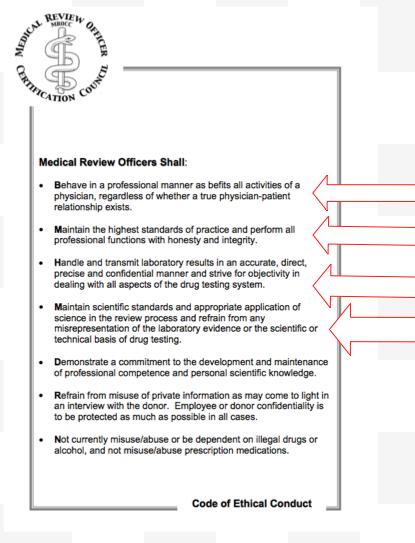
Although Gavryck may serve PHS, it is not in the capacity of a certified medical review officer; by my count  the documentary evidence alone shows that he violated four of the seven Medical Review Officer Certification Council Codes of Ethical Conduct.  In addition to violating the MRO  Ethical Conduct he violated every other code I can think of from the Hippocratic Oath to the AMA Code of Ethics. and everything in between.

As the MRO for PHS Gavryck’s responsibility is simple.  He is supposed to verify that the chain-of-custody  of the sample was intact before reporting a test as positive.

This is indefensible on all levels (procedurally, ethically and legally). The documents show with clarity that this was not accident or oversight, but intentional and purposeful misconduct

There should be zero-tolerance for forensic fraud of this sort.   Those of integrity and moral compass would agree.     Transparency, regulation, and accountability are necessary.  It is an issue that needs to be acknowledged and addressed not ignored and covered up.

If Dr. Gavryck can give a procedural, ethical, or legal explanation of what was done then I stand corrected. Just one will suffice. If he cannot then this needs to be addressed openly and publicly.   And whether he was involved in the original fraud or not is irrelevant. As the MRO for PHS it is his responsibility to correct it–however late the hour may be.

Perhaps Dr. Gavryck needs to see some of the damage he has caused in order to take this responsibility. Known as a “bag man” who simply rubber stamps positive tests at the request of Linda Bresnahan, much like Annie Dookhan, he does not see the damage that is caused. Forensic fraud has grave and far reaching effects and in this case has severely impacted many people and include patient deaths. Perhaps Dr. Gavryck needs to take a “moral inventory” and see that this this type of behavior causes real damage to real people and put a face on it.

Please help me get this exposed, corrected, and rectified. The physicians of Massachusetts deserve better than this.

IMG_0581


IMG_0584IMG_0702IMG_0701

[Screen Shot 2013-10-28 at 10.24.14 PM

Screen Shot 2014-11-26 at 6.52.55 PM

Wanted!–a Few Statisticians, Biostatisticians and Epidemiologists who want to make a difference in Medicine, Society and our Future

 “That everyone shall exert himself in that state of life in which he is placed, to practice true humanity towards his fellow men, on that depends the future of mankind.” – Albert Schweitzer 
“By and by never comes” –St Augustine

photo 1

“A day’s impact is better than a month of dead pull”-Justice Oliver Wendell Holmes, Jr.

 I am looking for a few honest and credible statisticians, biostatisticians or epidemiologists who want to make a difference in the spirit  of service and helping others.  I can’t pay you but you would be combating injustice, corruption and dishonesty.   You would be doing your part in helping the Medical Profession, honest and decent doctors, our country and  perhaps our future.  

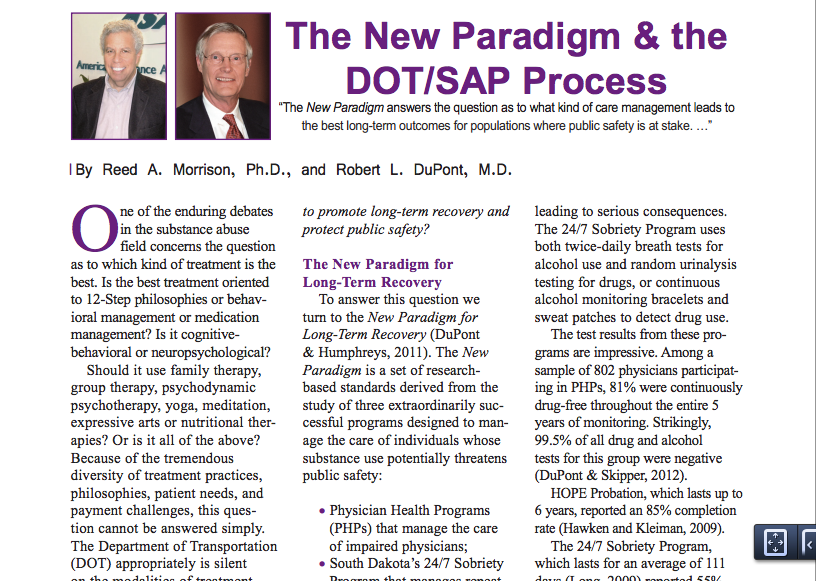
It is only a few public policy steps and minor changes in state regulatory statutes before what is described in the ASAM White Paper on Drug Testing comes to fruition.  Before we know it the Drug and Alcohol Testing Industries “New Paradigm” as described here by Robert Dupont will be ushered in as it did with doctors; not with a bang but a whimper.  From the ASAM white Paper:

“THIS WHITE PAPER ENCOURAGES WIDER AND “SMARTER” USE OF DRUG TESTING WITHIN THE PRACTICE OF MEDICINE AND, BEYOND THAT,BROADLY WITHIN AMERICAN SOCIETY. SMARTER DRUG TESTING MEANS INCREASED USE OF RANDOM TESTING* RATHER THAN THE MORE COMMON SCHEDULED TESTING,* AND IT MEANS TESTING NOT ONLY URINE BUT ALSO OTHER MATRICES SUCH AS BLOOD, ORAL FLUID (SALIVA), HAIR, NAILS, SWEAT AND BREATH WHEN THOSE MATRICES MATCH THE INTENDED ASSESSMENT PROCESS. IN ADDITION, SMARTER TESTING MEANS TESTING BASED UPON CLINICAL INDICATION FOR A BROAD AND ROTATING PANEL OF DRUGS RATHER THAN ONLY TESTING FOR THE TRADITIONAL FIVE-DRUG PANEL.”

To prevent this future drug testing dystopia, that includes testing schoolchildren, we need to take a step back and analyze the reliability and credibility of the “evidence-base” behind these multiple non-FDA approved forensic drug and alcohol tests and testing devices the ASAM proposes be used on the population at large utilizing the Medical Profession as a urine collection agency and bypassing forensic drug testing protocol by calling this “evaluation” and treatment rather than “monitoring” and punishment. New definitions, loopholes, secrecy and subterfuge are the bread and butter of these prohibitionist profiteers.

Amazingly, there has been no Academic review of these tests, let alone a Cochrane type critical analysis.  It is essentially untapped territory.  In addition there has been no Institute of Medicine type Conflict of Interest Analysis.  And that is why I am asking for help from statisticians, biostatisticians and epidemiologists.  The task would entail a review of the literature prior to the introduction of these tests for evidence base of forensic applicability (there essentially is none) and a review of the literature peri-and post marketing of these devices to assess the reliability and credibility of the underlying methodology and ascertain the evidence-base.  The goal would be publication in both academic journals and presentation to the general public through media publication with the assistance of investigative journalists and other writers. The goal is to get the truth out about these tests and allow both the medial profession and public at large to awaken to the menace this presents to medicine, our society and our future.

 Lack of Evidence-Base, Bias and Conflicts of Interest:  Making the Data Fit the Hypothesis

I am no epidemiologist or statistician but as with pornography I know junk-science when I see it.  Almost all of these tests were introduced with little or no evidence-base and, as with most of their endeavors, they did it below board via loopholes and cutting corners.

The overwhelming majority of papers are small, methodologically flawed, non-randomized, non-blinded  retrospective studies in that appear to make the data fit the hypothesis.   The authors can invariably be linked to those profiting from the tests of the testing process ( the patent holder, doctors associated with the drug testing labs, ASAM or FSPHP, Robert Dupont, Greg Skipper, etc.)


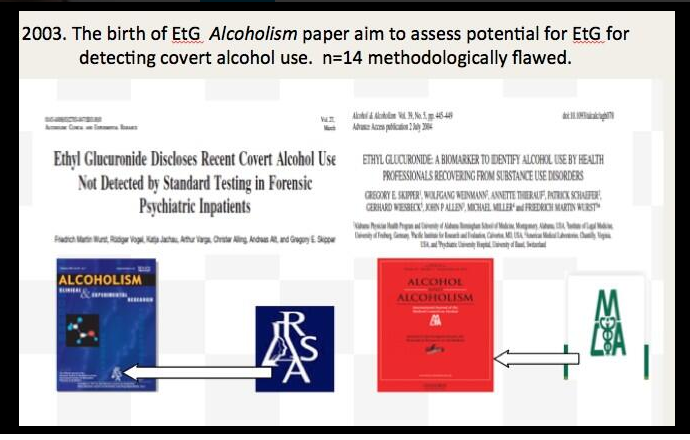
Ethyl Glucuronide (EtG) was introduced in 1999 as a biomarker for alcohol consumption,1 and was subsequently suggested as a tool to monitor health professionals by Dr. Gregory Skipper because of its high sensitivity to ethanol ingestion.2   

Screen Shot 2014-12-30 at 8.45.09 PM

Described as the  “innovator of EtG as an alcohol biomarker,” Skipper and  Friedrich Wurst,  “convinced” NMS labs in Pennsylvania “to start performing EtG testing in 2002.

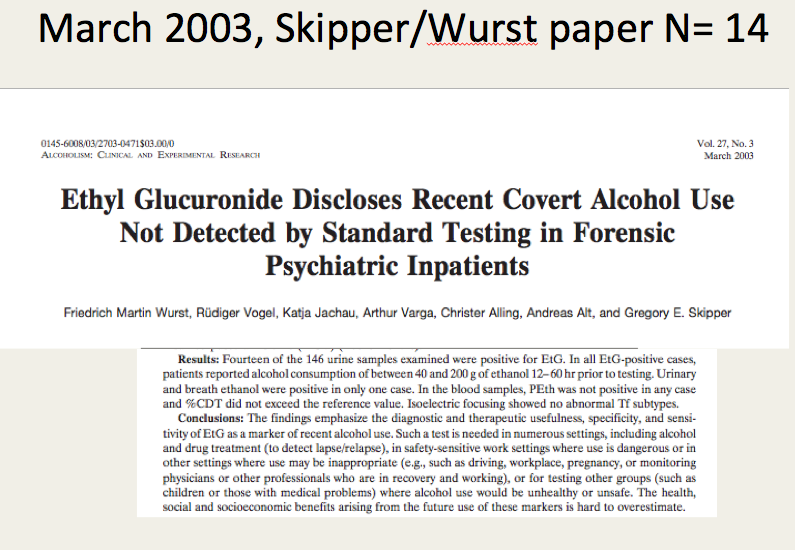
The study most often cited as 100% proof that there is 100% accuracy in EtG testing proving alcohol consumption involved a mere 35 forensic psychiatric inpatients in Germany that was published in 2003.3  

Shortly thereafter the Physician Health Programs began using it in monitoring doctors and other professional monitoring programs soon followed.

Screen Shot 2014-11-25 at 7.11.18 PM

Screen Shot 2014-11-29 at 5.16.18 PMLaboratory Developed Tests -A Loophole to Avoid FDA Approval and Accountability

Up until the birth of the EtG tests used for forensic drug and alcohol monitoring had to go through the arduous, expensive and necessary FDA approval process.   The LDT pathway was designed to develop simple tests with little risk that have  low market potential (i;e. the cost of the normal FDA approval process would prohibit them from coming to market).  The LDT pathway was designed to improve patient care and help improve diagnosis and treatment. It was not designed for forensic tests.  LDT approval does not require in vivo testing.  It is essentially an honor system and to develop an LDT it is not even necessary to prove that the test is actually testing what it is purportedly testing for (validity).

So with little to no evidence base they introduced the EtG, had it developed and marketed as a LDT in collusion with unscrupulous labs, and then began using it on physicians being monitored by State PHPs. This then spread to other monitoring organizations in which there was a large power-differential between those ordering the tests and those being tested (criminal-justice, other professional monitoring programs).  These biomarkers have never been used in Federal Drug Testing, SAMHSA approved, DOT, and other organizations where unions or other organizations are present and looking out for the best interests of those being tested.

Another example of how this group removes accountability.  There has been essentially no oversight or regulation of LDTs.  Although there was a recent push for regulation of these tests the Drug and Alcohol Testing Industry Association lobby made sure that forensic tests would be exempt.

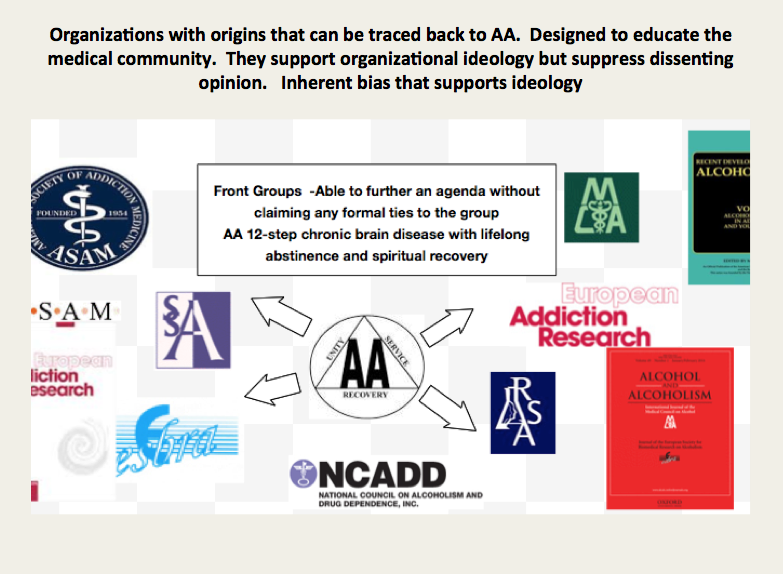
They then began publishing “research” on the EtG using the physicians being monitored as subjects. Many of the studies promoting the EtG and other biomarkers can be found  in  Journals that are linked to organizations that are linked to AA and were organized to educate the medical community.

Screen Shot 2014-11-29 at 5.16.39 PM
 
Screen Shot 2014-11-29 at 5.14.23 PM
These small, methodologically flawed studies amount to little more than opinion pieces but   This “evidence-base” is predominantly in biased journals published by biased medical “societies.  
The EtG was subsequently found to be so sensitive that it could measure incidental exposure to alcohol in foods, over the counter cold medications, mouthwash4,5, hand sanitizer gel6, nonalcoholic beer7, and nonalcoholic wine.8  Sauerkraut and bananas have even been shown to cause positive EtG levels.9
The United States Substance Abuse and Mental Health Services Administration warned against using a positive EtG as primary or sole evidence of drinking for disciplinary or legal action.10  The Wall Street Journal in 2006 reported the problems with the EtG to the general public.11   
Screen Shot 2014-03-23 at 10.45.36 PMAs any rational authority would do, the majority of monitoring agencies abandoned the EtG after these flaws were revealed. The PHPs did not.  They continued to use the EtG on doctors uninterruptedly by telling them to avoid any products that could potentially contain alcohol; a ubiquitous substance in the environment. Since that time they have justified and rationalized (EtG)2,12 13  use by sequentially raising cutoff levels from 100 to 250 to 500 to 1000 to 2000 to now unknown and adding other LDTs as “confirmation tests such as Ethyl Sulfate (EtS)14,15 Phosphatidyl-Ethanol ( Peth)16 17 and other devices such as the Subcutaneous Remote Alcohol Monitoring Bracelet (SCRAM) and, their newest device the Cellular Photo Digital Breathalyzer (CPDB) that has recently been launched, just like the EtG Screen Shot 2014-02-23 at 10.00.22 PMwith little to no evidence base other than a pilot study done by Greg Skipper and Robert Dupont.18 
A  2013 article published in an ASAM incubated journal Alcoholism: Clinical and Experimental Research promotes the Phosphatidyl-ethanol (PEth ) test to confirm drinking.16  The study was done on physicians being monitored by the Alabama Physician Health Program who tested positive for EtG/EtS alcohol biomarkers. It is co-authored by Robert Dupont, Greg Skipper, and Friedrich Wurst and involved 18 subjects who tested positive for EtG/EtS of whom 7 claimed they did not drink.  After finding that 5 of the 7 tested negative for PEth they concluded that “positive PEth testing following positive EtG/EtS results confirms recent drinking.  Hard to wrap your head around the science in that one.Screen Shot 2014-04-30 at 1.06.53 PMSkipper is also using both Scram ankle bracelets and the CPDB monitoring in pilots in the Human Interventional Motivational Study (HIMS) Program that was developed in 2009 to “identify, treat and, eventually, re-certify airline pilots with substance abuse problems. 
 
IMG_0275

The Cochrane Collaboration does systematic reviews of the literature using conscientious, explicit, and judicious criteria to in order to produce and disseminate only high quality and evidenced based health care, exclude bias, and enhance transparency. The Cochrane database is a current and evolving database that includes the accuracy of diagnostic tests and is internationally recognized as the standard in evidence based health care.  This benchmark for evidence based health care and systematic reviews, records just 5 controlled trials under the topic ethyl glucuronide.8,19-21 These 5 studies represent the only high-quality evidence regarding EtG applying to EtG. Information provided by the five studies suggests the following, and only the following:

  1. EtG and EtS measurements increase with alcohol ingestion.
  2. The window of detection is shorter than what is commonly proposed (80 hours).
  3. Individual values are variable both within and between subjects.
  4. Non alcoholic wine can cause positive levels.

Notably, there are no studies that fit Cochrane Criteria, other than non-alcoholic wine, that look at the pharmacokinetics of EtG or EtS in terms of dose-response curves, cut-off levels, specificity drug and food interactions, or modes of ingestion.

SAMHSA notes that there is little research on PEth and that EtG, EtS, and PEth “do not have a strong research base,” and that “it is not known at this time how the test results might be affected by the presence of physical diseases, ethnicity, gender, time, or the use of other drugs. Until considerable more research has occurred, use of these markers should be considered experimental.”

Phosphatidylethanol (PEth), SCRAM, and the  yields no data as a test in the Cochrane library.

SAMHSA notes that there is little research on PEth and that EtG, EtS, and PEth “do not have a strong research base,” and that “it is not known at this time how the test results might be affected by the presence of physical diseases, ethnicity, gender, time, or the use of other drugs. Until considerable more research has occurred, use of these markers should be considered experimental.”

Evidence based medicine (EBM) can be defined as the conscientious, explicit, and judicious use of current best evidence in making decisions about the care of individual patients.22

Medical progress and scientific advancement is occurring so fast that the volume of medical literature is expanding at a rate of greater than 7% per year.23

Evidence based medicine is not restricted to randomized trials and meta-analyses. It involves tracking down the best external evidence with which to answer our clinical questions.22  

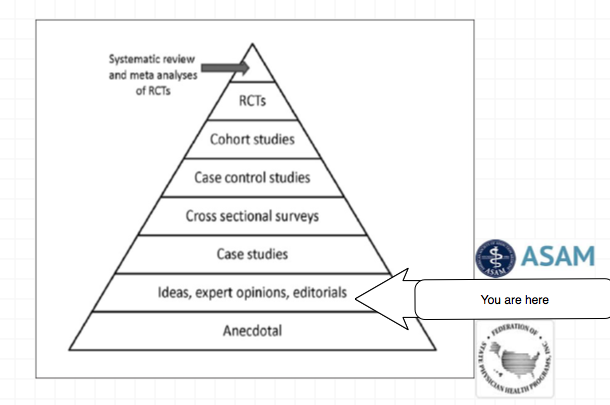
Expert opinion is the lowest level of evidence available in the EBM paradigm.24,25

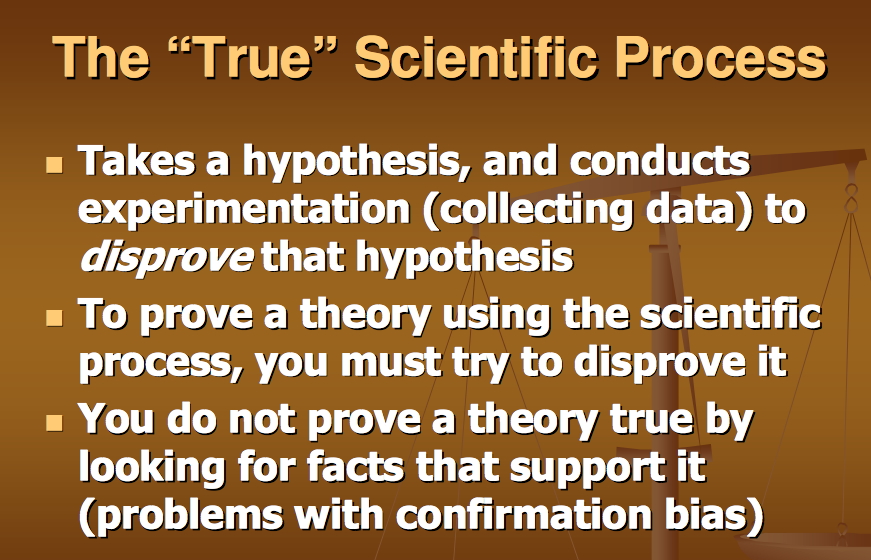
Fortunately, the scientific method is a tool to help people progress toward the truth despite their susceptibilities to confirmation bias and other errors.26

Unfortunately, due to a confluence of factors (including political) this has not been done.  But, unless we want a  future as envisioned by Robert Dupont and explained in the the ASAM White Paper on Drug Testing we need to act now.  This is not a “New Paradigm” but a “New Inquisition.”

Screen Shot 2014-11-25 at 7.10.47 PM

Screen Shot 2014-02-15 at 4.39.03 PM

  1. Wurst FM, Kempter C, Seidl S, Alt A. Ethyl glucuronide–a marker of alcohol consumption and a relapse marker with clinical and forensic implications. Alcohol Alcohol. Jan-Feb 1999;34(1):71-77.
  2. Skipper GE, Weinmann W, Thierauf A, et al. Ethyl glucuronide: a biomarker to identify alcohol use by health professionals recovering from substance use disorders. Alcohol Alcohol. Sep-Oct 2004;39(5):445-449.
  3. Wurst FM, Vogel R, Jachau K, et al. Ethyl glucuronide discloses recent covert alcohol use not detected by standard testing in forensic psychiatric inpatients. Alcohol Clin Exp Res. Mar 2003;27(3):471-476.
  4. Costantino A, Digregorio EJ, Korn W, Spayd S, Rieders F. The effect of the use of mouthwash on ethylglucuronide concentrations in urine. J Anal Toxicol. Nov-Dec 2006;30(9):659-662.
  5. Reisfield GM, Goldberger BA, Pesce AJ, et al. Ethyl glucuronide, ethyl sulfate, and ethanol in urine after intensive exposure to high ethanol content mouthwash. J Anal Toxicol. Jun 2011;35(5):264-268.
  6. Rosano TG, Lin J. Ethyl glucuronide excretion in humans following oral administration of and dermal exposure to ethanol. J Anal Toxicol. Oct 2008;32(8):594-600.
  7. Thierauf A, Gnann H, Wohlfarth A, et al. Urine tested positive for ethyl glucuronide and ethyl sulphate after the consumption of “non-alcoholic” beer. Forensic Sci Int. Oct 10 2010;202(1-3):82-85.
  8. Hoiseth G, Yttredal B, Karinen R, Gjerde H, Christophersen A. Levels of ethyl glucuronide and ethyl sulfate in oral fluid, blood, and urine after use of mouthwash and ingestion of nonalcoholic wine. J Anal Toxicol. Mar 2010;34(2):84-88.
  9. Musshoff F, Albermann E, Madea B. Ethyl glucuronide and ethyl sulfate in urine after consumption of various beverages and foods–misleading results? Int J Legal Med. Nov 2010;124(6):623-630.
  10. Administration SAaMHS. The role of biomarkers in the treatment of alcohol use disorders. In: Advisory SAT, ed2006:1-7.
  11. Helliker K. A test for alcohol–and its flaws. The Wall Street Journal2006.
  12. Wurst FM, Skipper GE, Weinmann W. Ethyl glucuronide–the direct ethanol metabolite on the threshold from science to routine use. Addiction. Dec 2003;98 Suppl 2:51-61.
  13. Wurst FM, Alling C, Aradottir S, et al. Emerging biomarkers: new directions and clinical applications. Alcoholism, clinical and experimental research. Mar 2005;29(3):465-473.
  14. Anton RF. Commentary on: ethyl glucuronide and ethyl sulfate assays in clinical trials, interpretation, and limitations: results of a dose ranging alcohol challenge study and 2 clinical trials. Alcoholism, clinical and experimental research. Jul 2014;38(7):1826-1828.
  15. Hernandez Redondo A, Schroeck A, Kneubuehl B, Weinmann W. Determination of ethyl glucuronide and ethyl sulfate from dried blood spots. International journal of legal medicine. Jul 2013;127(4):769-775.
  16. Skipper GE, Thon N, Dupont RL, Baxter L, Wurst FM. Phosphatidylethanol: the potential role in further evaluating low positive urinary ethyl glucuronide and ethyl sulfate results. Alcoholism, clinical and experimental research. Sep 2013;37(9):1582-1586.
  17. Hahn JA, Dobkin LM, Mayanja B, et al. Phosphatidylethanol (PEth) as a biomarker of alcohol consumption in HIV-positive patients in sub-Saharan Africa. Alcoholism, clinical and experimental research. May 2012;36(5):854-862.
  18. Skipper GE, Thon N, DuPont RL, Campbell MD, Weinmann W, Wurst FM. Cellular photo digital breathalyzer for monitoring alcohol use: a pilot study. European addiction research. 2014;20(3):137-142.
  19. Hoiseth G, Bernard JP, Stephanson N, et al. Comparison between the urinary alcohol markers EtG, EtS, and GTOL/5-HIAA in a controlled drinking experiment. Alcohol Alcohol. Mar-Apr 2008;43(2):187-191.
  20. Wojcik MH, Hawthorne JS. Sensitivity of commercial ethyl glucuronide (ETG) testing in screening for alcohol abstinence. Alcohol Alcohol. Jul-Aug 2007;42(4):317-320.
  21. Sarkola T, Dahl H, Eriksson CJ, Helander A. Urinary ethyl glucuronide and 5-hydroxytryptophol levels during repeated ethanol ingestion in healthy human subjects. Alcohol Alcohol. Jul-Aug 2003;38(4):347-351.
  22. Sackett DL, Rosenberg WM, Gray JA, Haynes RB, Richardson WS. Evidence based medicine: what it is and what it isn’t. BMJ. Jan 13 1996;312(7023):71-72.
  23. Norwitz ER, Greenberg JA. Promoting evidence-based medicine. Rev Obstet Gynecol. Summer 2008;1(3):93-94.
  24. Shaneyfelt TM, Centor RM. Reassessment of clinical practice guidelines: go gently into that good night. JAMA. Feb 25 2009;301(8):868-869.
  25. Straus SE, Green ML, Bell DS, et al. Evaluating the teaching of evidence based medicine: conceptual framework. BMJ. Oct 30 2004;329(7473):1029-1032.
 Screen Shot 2014-11-30 at 1.37.38 PM
images-3

Physician Health Programs:  The Need for Integrity and Accountability of Organizations

Slide41

Accountability, or answerability,  is necessary to prevent abuse and corruption.  This requires both the provision of information and justification for actions.  What was done and why?

Professional guidelines and standards of care, ethical codes of conduct and the law are all objective benchmarks that can be used to assess the actions and decisions of others.  In any free society this necessitates the existence of organizations of truly independent opinion capable of standing in this judgment.

State PHPs are Non-Governmental Organizations (NGOs) over which the state health department has no supervisory oversight.  There is no regulation, no transparency and no accountability.  There is no public scrutiny and they police themselves.

In Ethical and Managerial Considerations Regarding State Physician Health Programs Drs. John Knight and J. Wesley Boyd call for greater oversight and scrutiny of PHPs by the medical community at large.   They recommended periodic auditing, national standards and regulation.  They also attempted to convince the Massachusetts Medical Society to implement changes at PHS where they served as Associate Directors with over two decades of collective experience.

These efforts to promote transparency and accountability at both local and national levels, however,  fell on deaf ears.

State PHPs have systematically removed those not conforming to groupthink.  Threatening them with litigation if they breached “peer-review” statutes and confidentiality agreements has effectively silenced them from reporting any misconduct, abuse or even crimes they may have witnessed.

In Massachusetts John Knight was removed in 2009 and J. Wesley Boyd in 2010.  In Ethical and Managerial Considerations Regarding State Physician Health Programs  they comment “if a PHP highlights a physician as particularly problematic, the evaluation center might–whether consciously or otherwisetailor its diagnosis and recommendations in a way that will support the PHP’s impression of that physician.”  So too will the clinical laboratories.  

How is this any different from the case of Dr. Farid Fata, the Michigan oncologist who intentionally diagnosed healthy patients with cancer so he could charge them for unneeded chemotherapy?  The U.S. Attorney called it the “most egregious” case of health care fraud ever. His acts may have contributed to one patient death.   The institutional injustice of the PHP system is causing countless deaths of physicians.

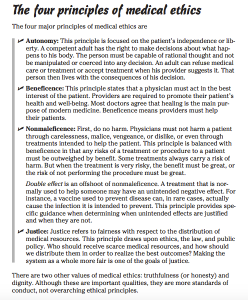
To consciously “tailor” a diagnosis is fraud.  To tailor a diagnosis of substance use disorder or any other psychiatric diagnosis is the political abuse of psychiatry.  Misrepresentation, dishonesty, deception, and distortion play no role in the Profession and Guild of Medicine.  To do so violates the basic moral principles of Medical Ethics–Autonomy, Beneficence, Non-Maleficence and Justice.

The “PHP-approved” assessment and treatment centers are all staffed by doctors of “like-mind.”  It is a rigged game.

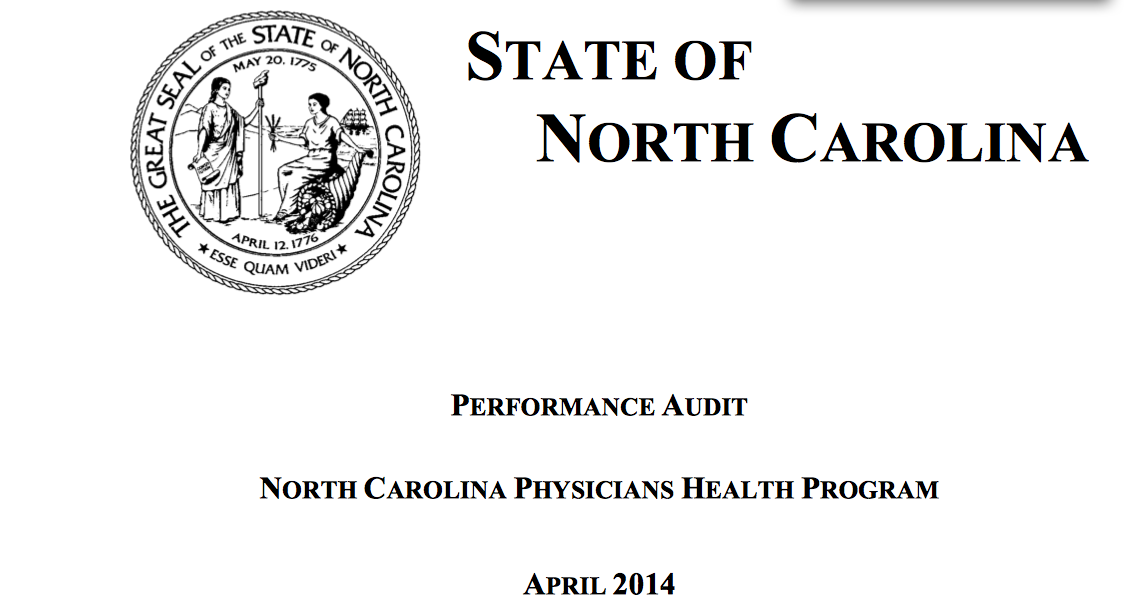
An audit of the North Carolina PHP found essentially no oversight from the Medical Board or Medical Society.  The audit found that “abuse could occur without being detected,” and this is by design.  By removing and blocking the provision of information necessary for accountability, restricting the liberties and freedoms of physicians, and increasing their power and control they have erected a framework of hidden abuse.

Screen Shot 2014-04-28 at 9.45.22 AM

The situation in North Carolina is standard operating procedure for PHPs under the Federation of State Physician Health Programs (FSPHP).  It is not the exception but the rule.

While outspoken in denouncing what they regard as unethical and unprofessional behavior by other doctors, they are resistant to apply even the most minimal standards to their own activities.

To whom are the PHPs accountable? Whom do they represent? There are legitimate concerns.

scotty

Integrity and Accountability—The Declining State of Physician Health and the Urgent Need for Ethical and Evidence-Based Leadership


IMG_9516
“A body of men holding themselves accountable to nobody ought not to be trusted by anybody.”

― Thomas Paine 

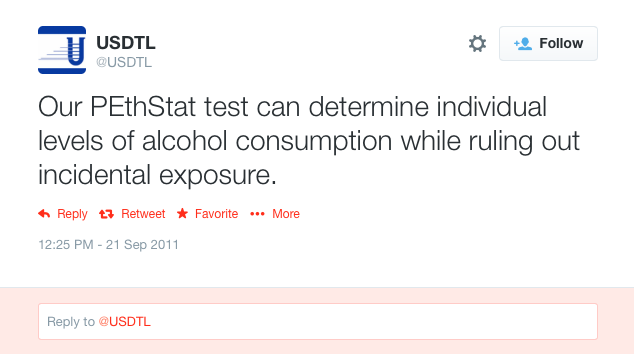
USDTL drug testing laboratory claims to advance the”Gold Standard in Forensic Toxicology.”  “Integrity: Results that you can trust, based on solid science” is listed as a corporate value. “Unlike other laboratories, our drug and alcohol testing begins and ends with strict chain of custody.” “When people’s lives are on the line, we don’t skip steps.”  Joseph Jones, Vice President of Laboratory Operations explains the importance of chain-of-custody in this USDTL video presentation.

Dr. Luis Sanchez, M.D. recently published an article entitled Disruptive Behaviors Among Physicians in the Journal of the American Medical Association discussing the importance of  of a “medical culture of safety” with “clear expectations and standards.”  Stressing the importance of values and codes-of-conduct in the practice of medicine, he calls on physician leaders  “commit to professional behavior.”

Sanchez is Past President of the Federation of State Physician Health Programs (FSPHP).  According to their website the FSPHP “serves as an educational resource about physician impairment, provides advocacy for physicians and their health issues at local, state, and national levels, and assists state programs in their quest to protect the public.”  In addition the FSPHP “helps to establish monitoring standards.”  The FSPHP is the umbrella organization of the individual State PHPs.

Sanchez is also the previous Medical Director of the Massachusetts state PHP, Physician Health Services, Inc. (PHS).  According to their website PHS is a “nonprofit corporation that was founded by the Massachusetts Medical Society to address issues of physician health. PHS is designed to help identify, refer to treatment, guide, and monitor the recovery of physicians and medical students with substance use disorders, behavioral health concerns, or mental or physical illness.

PHPs recommend referral of physicians if there are any concerns such as getting behind on medical records.  As PHS Associate DirectorJudith Eaton explains “when something so necessary is not getting done, it is prudent to explore what else might be going on.”  If the PHP feels that doctor needs an assessment they will send that doctor to a “PHP-approved” facility “experienced in the assessment and treatment of health care professionals.” The physician must comply with any and all recommendations of the assessment center.  To assure this the physician must sign a monitoring contract with the PHP (usually five years). USDTL is one of the labs PHPs have contracted with for forensic drug and alcohol testing.


Forensic Drug and Alcohol Tests: The Need For Integrity and Accountability of the Sample
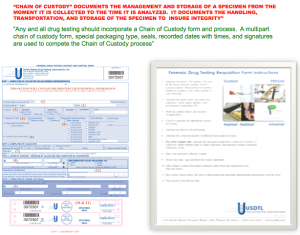
Screen Shot 2013-09-04 at 6.14.30 PM

“Forensic” drug-testing differs from “clinical” drug-testing in how the results are used. “Clinical” tests are used for medical purposes in diagnosing and treating a patient.

A “forensic” test is used for  non-medical purposes.  It is not used for patient care, but for detecting licit and illicit substances in those who should not be using them. Pre-employment and employee assistance and professional monitoring programs are examples.Screen Shot 2014-05-08 at 2.17.18 AM
Forensic testing is held to a higher standards because the consequences of a positive result can be grave and far reaching. A positive forensic test can result in loss of rights of the individual being tested and his or her loved ones. Mistakes are unacceptable.

The Federation of State Medical Boards Policy on Physician Impairment supports this position stating “chain-of-custody forensic testing is critical” (page 14) and the “use of a Medical Review Officer (MRO) for screening samples and confirming sample results” (page 21).

Any and all drug testing requires chain-of-custody. The custody-and-control form is given the status of a legal document because it has the ability to invalidate a test that lacks complete information.  Chain-of-custody provides assures specimen integrity. It provides accountability. 
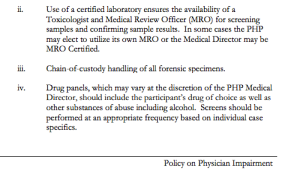
Screen Shot 2014-11-06 at 7.25.46 PM The job of the MRO is to ensure that the drug testing process is followed to the letter and reviews the Custody and Control form for accuracy.  The MRO also rules out any other possible explanations for a positive test (such as legitimately prescribed medications).  Only then is the test reported as positive.

The legal issues involved in forensic testing mandate MRO review. According to The Medical Review Officer Manual for Federal Workplace Drug Testing ProgramsScreen Shot 2013-12-19 at 12.20.46 PM
the sole responsibility of the MRO is to”ensure that his or her involvement in the review and interpretation of results is consistent with the regulations and will be forensically and scientifically supportable.”

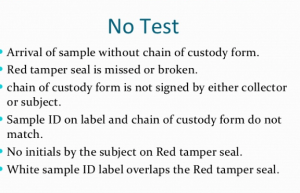
“Fatal flaws” such as lack of chain-of-custody form, missing tamper proof seal, missing signatures, or a mismatch of the sample ID and chain of custody ID invalidate the test.   It is not reported.  Tight chain-of-custody and MRO review is critical for the accountability and integrity of the sample.

The Medical Review Officer Certification Council  provides a certification process for MROs. They Screen Shot 2014-04-30 at 12.47.25 PMalso  follow their own Code of Ethics.   In accordance with these standards PHS has an MRO to review all positive tests.  As added assurance the FSPHP guidelines state that all positive tests must be approved by the Medical Director.

Regulation and the Medical Profession–The need for Integrity and Accountability in Physician Leadership and Health Care Policy.
Screen Shot 2014-11-09 at 12.26.14 PM

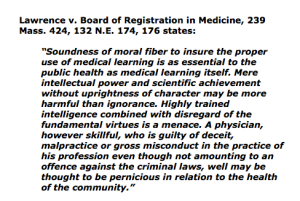
Good leadership requires correct moral and ethical behavior of both the individual and the organization. .  Integrity is necessary for establishing relationships of trust.  It requires a true heart and an honest soul.  People of integrity instinctively do the “right thing” in any and all circumstances.  The majority of doctors belong to this group.

Adherence to ethical codes of the profession is a universal obligation.  It excludes all exceptions.  Without ethical integrity, falsity will flourish.

The documents below show fraud. It is intentional.  All parties involved knew what they were doing, knew it was wrong but did it anyway.  The schism between pious rhetoric and reality is wide.
Screen Shot 2014-08-20 at 12.01.33 PM

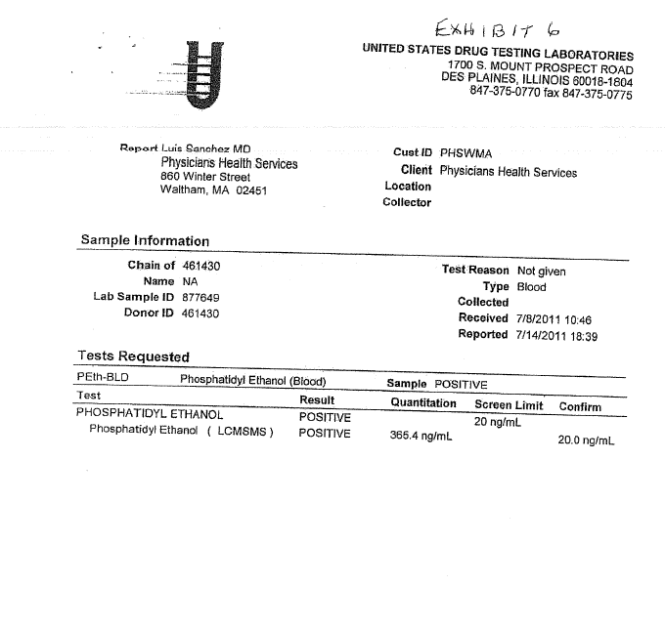
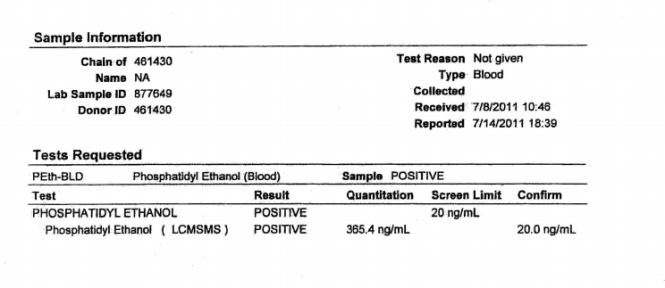
Positive Phosphatidyl Ethanol test at level of 365.4 (cutoff =20) No date of collection. place of collection or name of collector. Donor ID # = 461430 My Unique Identifier #1310 is nowhere on this document.

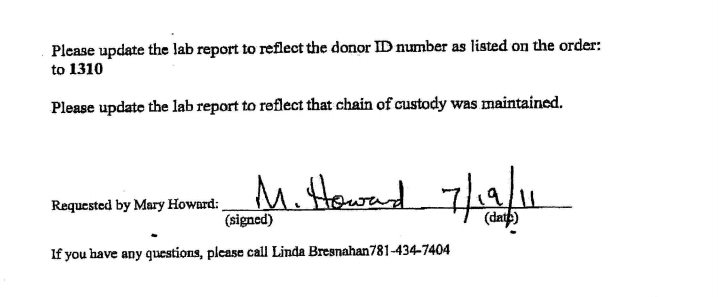
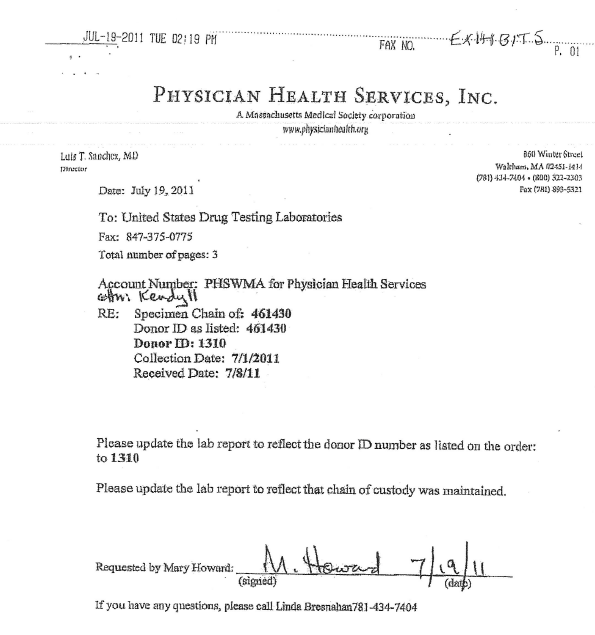
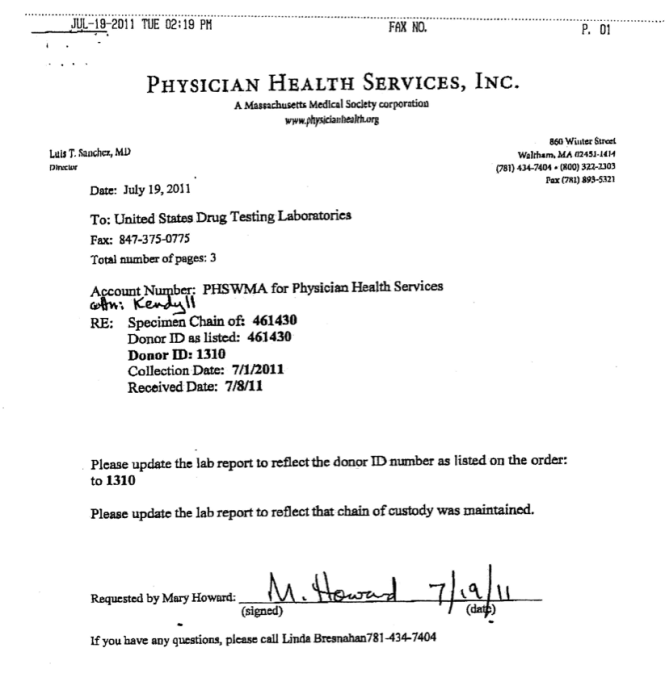
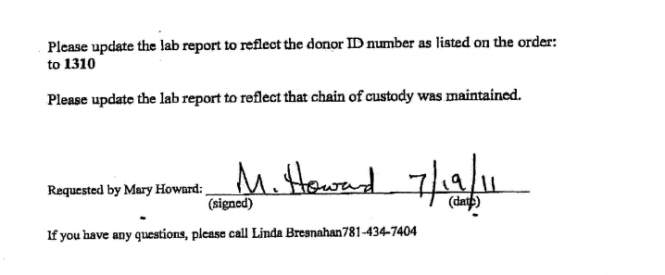
The  July 19th, 2011 fax from PHS seen below is in reference to the lab report from USDTL seen above.  In it PHS requests the report be “updated”to donor ID number “1310” and  to “reflect that the chain of custody was maintained.”

The lab report is a positive test for the alcohol biomarker (Phosphatidyl Ethanol) or PEth, an alcohol biomarker introduced by the Federation of State Physician Health programs and marketed by USDTL and other labs to detect  covert alcohol use..

There is no record of where, when or by whom it was collected.
Screen Shot 2014-11-06 at 11.17.32 PMBoth the donor ID # and chain of custody are listed as 461430.

The purpose of chain-of-custody is to document the location of  a specimen in real time.  “Updating” it is not an option.  It is prohibited.  Updating the “chain of custody to reflect that chain of custody was maintained”  is a clear indicator that it was not maintained.

ID #1310 is the unique identifier I was issued by PHS.  It is used as a unique identifier, just like a name or social security number, to link me to any sample collected for random drug and alcohol screening. #1310 identifies me as me in the chain-of-custody.    On July 1st, 2011 I had a blood test collected at Quest Diagnostics.
IMG_8756 2

The sample was collected at Quest Diagnostics on July 1, 2011 but these documents were not obtained until December 3, 2011 and were included in the “litigation packet” which documents chain-of-custody and is generated on any and all forensic drug testing.   It provides proof that the test was done on who it was supposed to have been done and that all required procedure and protocol was followed. It protects the donor form being falsely accused of illicit substance use.  In most employee drug-testing programs the litigation-packet is provided on request immediately.  It is a transparent process.  This is not the case, however, at PHS.

I requested the litigation packet immediately after the positive test was reported on July 19, 2011.  PHS first refused, then tried to dissuade me.  They finally agreed but warned there would be “unintended consequences.    The entire litigation packet can be seen here:   Litigation Packet 12:3:2011

The positive sample has no chain-of-custody linked to me, no date, and no indication where it was collected or who collected it.   In addition there was no “external” chain of custody for the sample. The custody-and-control form was missing.

With multiple fatal flaws (6/6)  rendering it invalid, USDTL should have rejected it by their own written protocol.

Screen Shot 2013-12-19 at 12.20.46 PM

6/6 Fatal Flaws–Just one invalidates the Test

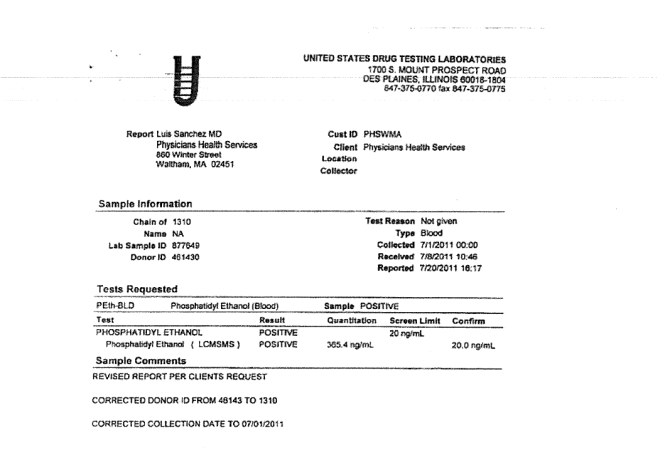
USDTL did not reject it. The document below shows that USDTL added my ID # 1310 and added a collection date of July 1, 2011–the day I submitted the sample.
Screen Shot 2014-09-15 at 5.27.21 AM

“REVISED REPORT PER CLIENTS REQUEST”  

And in doing so the lab that claims “integrity” and “strict chain of custody” readily, and with no apparent compunction” manufactured a chain-of-custody and added a unique identifier by faxed request.

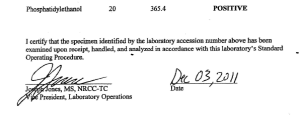
The litigation packet was signed by Joseph Jones on December 3, 2011.   There was no record of where the sample was from July 1st to July 8, 2011. No external chain-of-custody or custody-and-control form was evident in the litigation packet.
Screen Shot 2014-07-28 at 6.50.01 PM

The V.P. for Laboratory operations for the lab that claims “strict chain of custody” and that “doesn’t skip steps” “when “peoples lives are on the line” verified a positive test as positive with no custody and control form, no external chain of custody and 6/6 fatal flaws.  What is so shocking is that  this was done without compunction or pause.  As a forensic test ordered by a monitoring program Jones knew full well it would result in significant consequences for someone.  He knew that someones “life was on the line,” knew it was wrong, and did it anyway.

A person of conscience would never do this.  It is unethical decision making  that goes against professional and societal norms.  A “moral disengagement” that represents a lack of empathy and a callous disregard for others.  I would not consider doing something like this for any price and here it appears to be standard operating procedure.

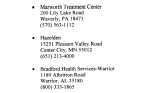
PHS reported the positive test to the Medical Board on July 19, 2011 Positive PEth July 19, 2011-1.  It was used as a stepping-stone to request an evaluation at one of three  “PHP-approved” facilities (Marworth, Hazelden and Bradford). The Medical Directors of all three facilities can be seen on this list list called “Like-Minded Docs.”  The MRO for PHS, Dr.Wayne Gavryck,  whose job was to review the chain-of-custody and validate its integrity before reporting it as positive is also on the list.  See this simplified schematic of how it works in Massachusetts.  It shows how this is a rigged game.

Expecting to be diagnosed with a non-existent problem and admitted for non-needed treatment I requested an evaluation at a non-12 step facility with no conflicts-of-interest.  Both PHS and the Medical Board refused this request in one of four violations of the Establishment Clause of the 1st amendment.
Screen Shot 2014-07-27 at 7.55.16 PM copy

I chose Hazelden.  The Medical Director was aware that I had just signed  a patent license agreement for an epinephrine auto-injector and he had a child with a peanut allergy.  We talked about the device and discussed the problems with current management.  I think it was because of this added personal interaction that he did not “tailor my diagnosis” as PHS most certainly requested.  Seeing me as a person rather than an object, I believe,  enabled his conscience to reject it. My discharge diagnosis found no history of alcohol issues but they could not explain the positive test. Unable to rule out that I drank in violation of my PHS contract they recommended I attend AA.

PHS mandated that I attend 3 12-step meetings per week and requested that I obtain names and phone numbers of fellow attendees so they could contact them to verify my attendance.  They also mandated that I discontinue my asthma inhalers (as the propellant contains small amounts of ethanol) that had been controlling my asthma and preventing serious attacks for the previous ten years.  I was threatened that if I had to use the inhalers or one day late on the increased payments I would be reported to the Board and lose my license.

Screen Shot 2014-11-09 at 10.03.16 PM

Screen Shot 2014-11-08 at 11.57.25 PM

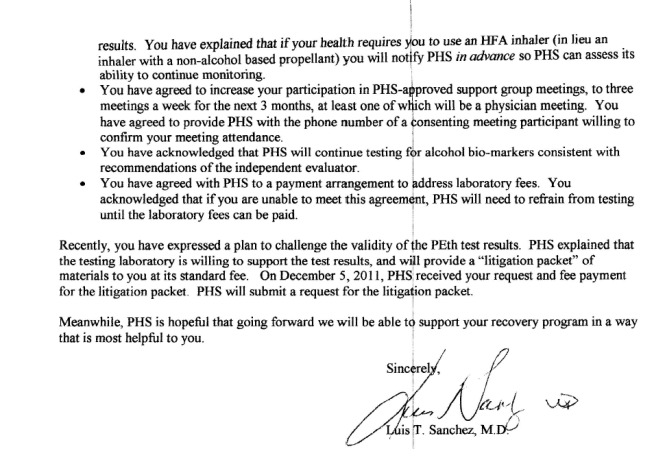
Sanchez states that my request for the “litigation packet” was processed on December 5, 2011 (two days after Jones signed off on it) and adds the “testing laboratory is willing to support the test results.”

In the interim I filed a complaint with the College of American Pathologists.  I also requested the missing external chain of custody documents from Quest.
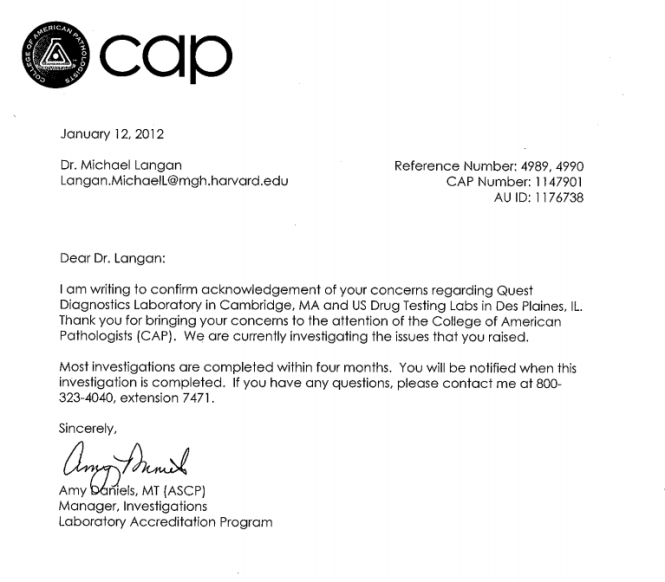
Screen Shot 2014-08-20 at 12.15.52 PM

I never received the chain of custody from Quest.  Instead I received a letter from Nina Tobin, Compliance Manager for Quest documenting all the errors but written to sound as if some sort of protocol was maintained.  Tobin claimed the specimen was inadvertently logged as a clinical specimen but sent on to USDTL a week later.  (See Quest Letter )
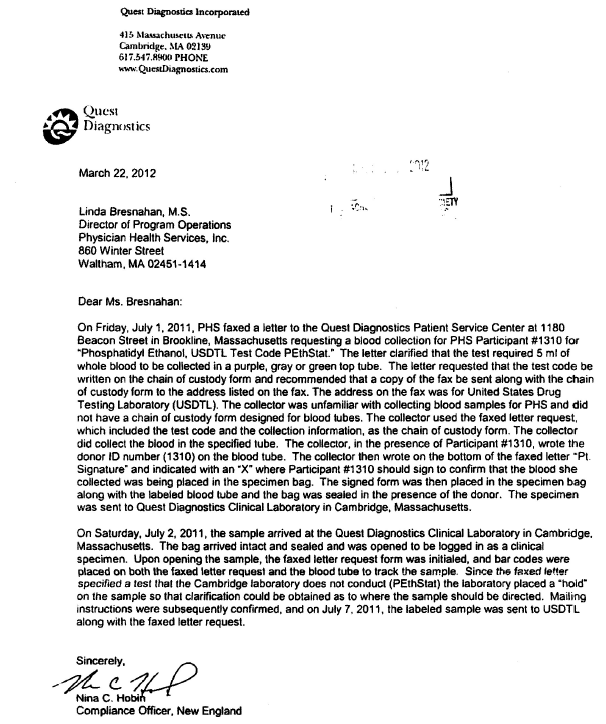
Screen Shot 2014-11-09 at 10.06.46 PM

The Chief of Toxicology at MGH wrote a letter to the Board documenting all of the misconduct and irregularities stating that it was an “intentional act” perpetrated by PHS.  MLLv3finalJacob_Hafter_Esq_copy.

This letter, as well as the opinions of everyone outside of PHS was ignored. So too were any opinions of my two former Associate Directors at PHS.   The e-mail below dated October 10th, 2011 is to to Drs. John Knight and J. Wesley Boyd and I am referring to their article Ethical and Managerial Considerations Regarding State Physician Health Programs  that was about to be published. We had hoped that it would draw more attention to the problems with PHPs.
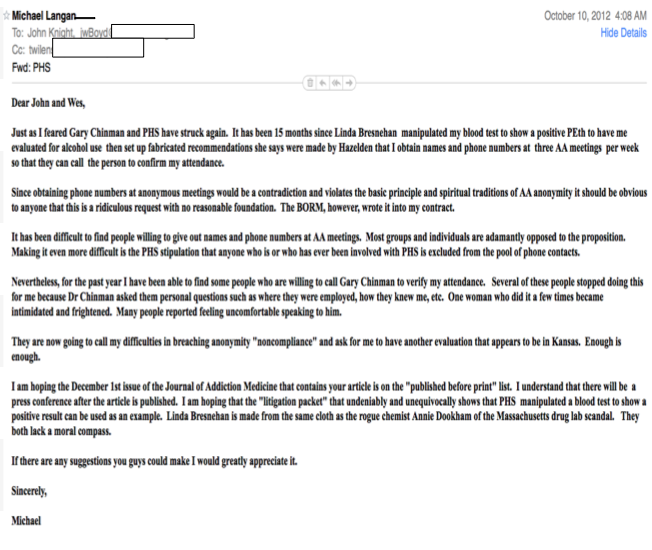
Screen Shot 2014-11-10 at 10.36.13 AM

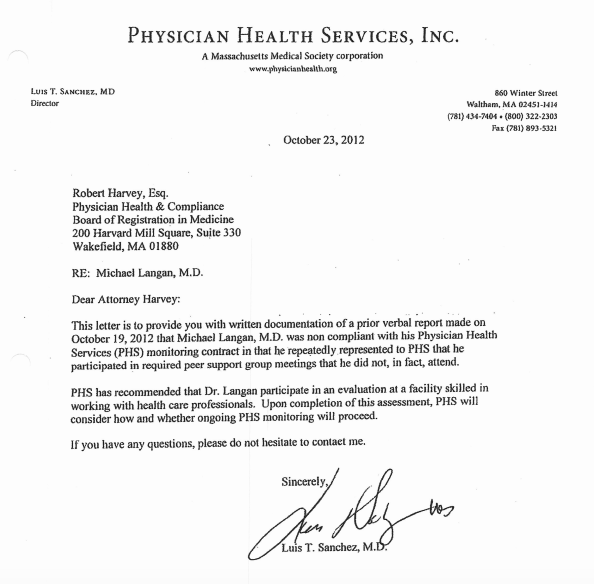
I was subsequently reported as “non-compliant” with AA meetings.    They could not give any details of where or when.  They then misrepresented a declaration of fact (I stated that I had started going to a specific meeting on a specific date) as an admission of guilt by saying I was referring to a different meeting.     10:23:12 PHS Letter to BORM-noncompliance.

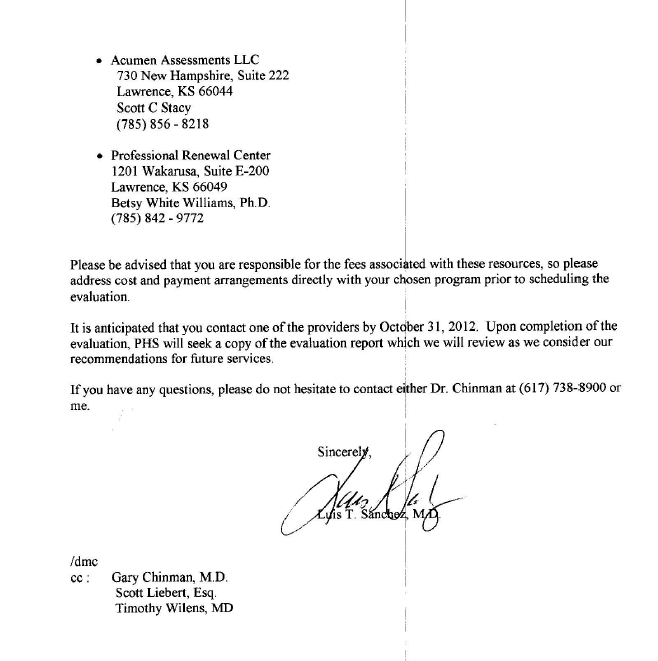
My Chief at MGH, his Chief and others held a  conference with PHS and attempted to remove me from PHS and replace the monitoring contract with one of their own.  They refused.   When confronted with the fabricated test they dismissed it and focused on sending me to Kansas to one of the “disruptive physician” Psikhuskas where they are using polygraphs (despite the AMAs stance that it is junk science) and non-validated neuropsychological instruments that detect “character defects” to pathologize the normal.

I refused. Had I gone to Kansas I would have been given a false diagnosis and my career would be over. This is what they do.
Screen Shot 2014-11-08 at 12.05.52 AM

Screen Shot 2014-09-05 at 7.28.02 PM

Amy Daniels, the investigator for the College of American Pathologists contacted me in December of 2012 to see how things were going since USDTL “amended” the test.  Daniels told me that the College of American Pathologists confirmed my allegations and, as an Accrediting Agency for Forensic Toxicology mandated that USDTL correct it.  (Labs can lose accreditation if they do not comply with CAP  Standards for Forensic Drug Testing). This was done on October 4, 2012.

PHS denied any knowledge of an amended test.  I also wrote an e-mail to Joseph Jones requesting the document but he did not reply.

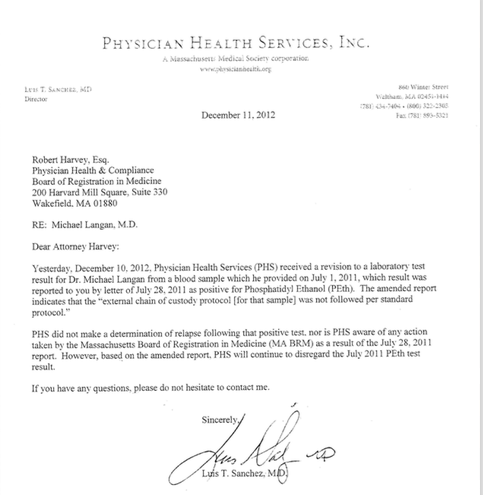
I contacted CAP.   On December 11, 2012 Dr. Luis Sanchez wrote a letter stating  “Yesterday, December 10 2012, Physician Health Services (PHS) received a revision to a laboratory test result”

 “The amended report indicates that the external chain of custody protocol [for that sample] was not followed per standard protocol]” 

Sanchez dismisses this test as irrelevant, rationalizing neither PHS nor the Board based any actions on the test and they would “continue to disregard” it.
Screen Shot 2014-11-08 at 1.19.44 AM

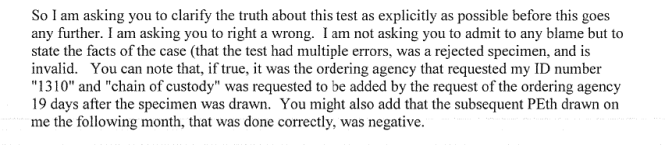
The  logic is that it was my behavior that resulted in any consequences.  My “non-compliance” in October led to my suspension and the test had nothing to do with it.   The sole reason for reporting me to the Board in 2011 was the positive test.  There is no other pretext to use.  It is misattribution of blame as without the test, now invalidated, there would have been no AA meetings to say I was non-compliant with.

In response to a civil complaint PHS, Quest and USDTL all took the position that the results of the fraudulent testing had absolutely nothing to do with anything.

And in response to the allegations of forensic fraud the labs claimed there was no forensic fraud because this was not a “Forensic” test but a “clinical” test.     The argument was that “clinical” tests do not require chain-of-custody and it was his behavior not these tests that resulted in consequences.   

As a “clinical” test I knew it was considered Protected Health Information (PHI)  under the HIPAA-Privacy Rule.  A patient must give written consent for any outside entities to see it.  Obtaining lab tests previously required the consent of both the patient and the ordering provider.  What PHS and the labs were apparently unaware of was the changes to the HIPAA-Privacy rule giving patients increased rights to access their PHI.   The changes removed the ordering provider requirements.  A patient has a right to obtain lab test results directly from the labs and has 30 days to do it.  CAP agreed.   USDTL sent me all of the documents.  They can be seen below:

August 6, 2014 to Langan with health materials.

The documents sent by USDTL are notable for two things:

1.  The e-mail from me to Joseph Jones dated December 10, 2012.  It can be seen on page 22 of the USDTL documents.  Screen Shot 2014-11-10 at 11.21.18 AM
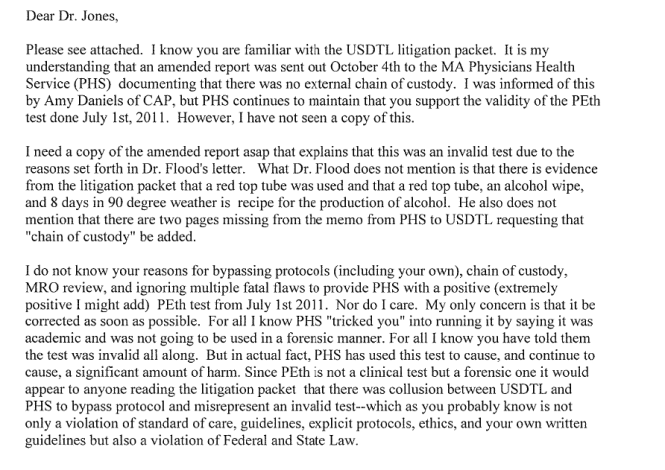
Screen Shot 2014-11-10 at 11.22.00 AM

2. USDTL document confirming PHS knew the test was amended 67-days before they said they did.Screen Shot 2014-08-06 at 4.50.02 PM
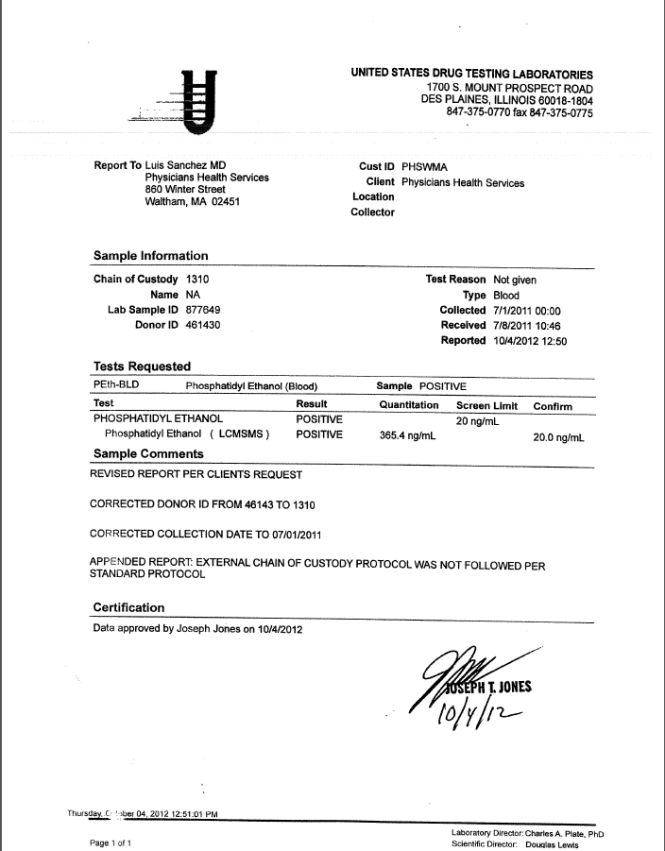
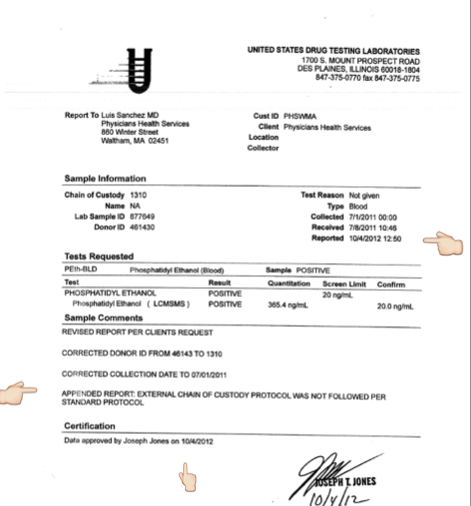
The document shows PHS and Sanchez were aware of the invalidity of the test on October 4, 2012.   Instead of correcting things they initiated machinations to throw me under the bus.  They officially reported me to the Board for non-compliance on October 19, 2012.

The December 11, 2012 letter signed by Sanchez states “Yesterday, December 10, 2012, PHS received a “revised report” regarding the test.  The documents show he knew about it 67-days prior.
Screen Shot 2014-11-04 at 10.51.24 PM

Although USDTL complied with the HIPAA-Privacy Rule and CAP, Quest did not.   Quest Diagnostics refused to send me copies of their lab reports claiming it was confidential and protected information that required PHS consent.  Quest required I sign a consent form with multiple stipulations regarding PHS.  I refused and contacted the Department of Justice -Office of Civil Rights.  The DOJ-OCR agreed with me and I received the Quest documents

Remember a “clinical” test can only be ordered by a physician in the course of medical treatment.  It requires authorization from the patient to obtain a “clinical” specimen and it requires written authorization as to who sees it.  Referring physician was Mary Howard.
image

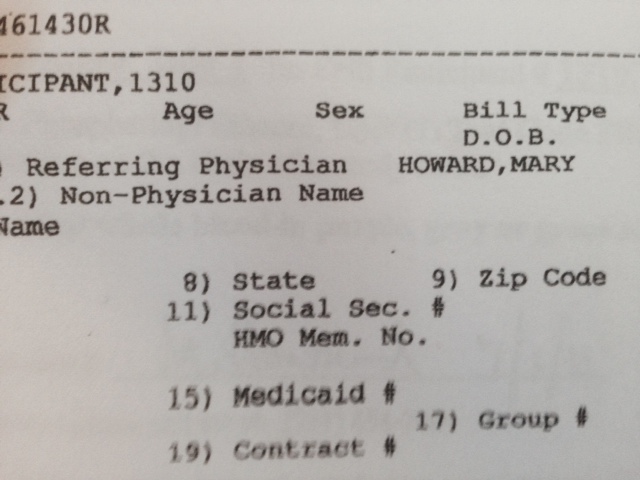
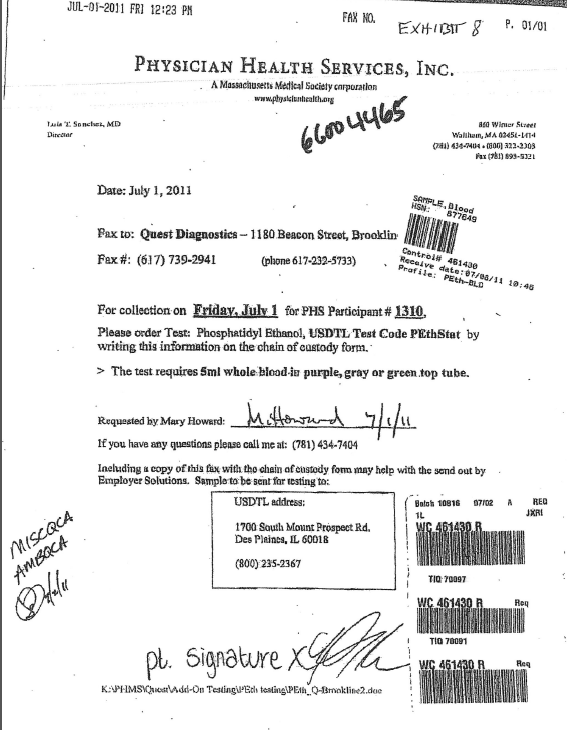
And below is the fax from PHS to Quest from July 1, 2011 also requested by Mary Howard.  The signature on the front is not mine.  In addition I gave the blood at 9:30 and was in my clinic at MGH at 12:23 so it couldn’t be. The WC 461430 R are dated July 2, 2011.  This is a “clinical” not “forensic” sticker.  The “R” indicates a red top tube.  The other sticker is USDTL and indicates it was logged in on July 8, 2011.
Screen Shot 2014-09-15 at 7.18.25 PM

What does it all mean?    Blood left in a red top tube ferments. This is basic chemistry.  The PEth test needs to be refrigerated and shipped overnight to prevent this.  In addition it needs to be collected with a non-alcohol wipe in a tube that has an anti-coagulant or preservative so that it does not ferment.    It requires strict procedure and protocol.

When I gave my blood on July 1st, 2011 it was as a “forensic” test per my contractual agreement with PHS.

On July 2, 2011 it was changed to “clinical.”   Why?  because “forensic” protocol would have invalidated it.

The only conceivable reason for doing this was to bypass chain-of-custody procedures.  My unique identifier #1310 was removed and the clinical specimen number was used for chain-of-custody.    The R in 461430R indicates a red top tube.

By holding on to it for one week the blood fermented.    As it was July with an average temperature close to 90 they overshot their mark a bit.   My level of 365 is consistent with heavy alcohol use–end stage half-gallon a day type drinking.

Quest then forwarded it to USDTL with specific instructions to process it as a “clinical” sample.  USDTL complied and  processed it as a clinical specimen which was reported it to PHS on July 14, 2011.
Screen Shot 2014-07-28 at 12.41.01 PM

PHS then asked USDTL to add my forensic  ID # 1310 and add a collection date of July 1, 2011 so it would appear “forensic” protocol was followed.    The reason Jones signed the “litigation packet” on December 3, 2011 was because that was when the “litigation packet” was manufactured.  A “clinical” sample does not produce one.
Screen Shot 2014-07-28 at 12.40.13 PM

USDTL willingly complied with this request.
Screen Shot 2014-08-20 at 11.59.24 AM

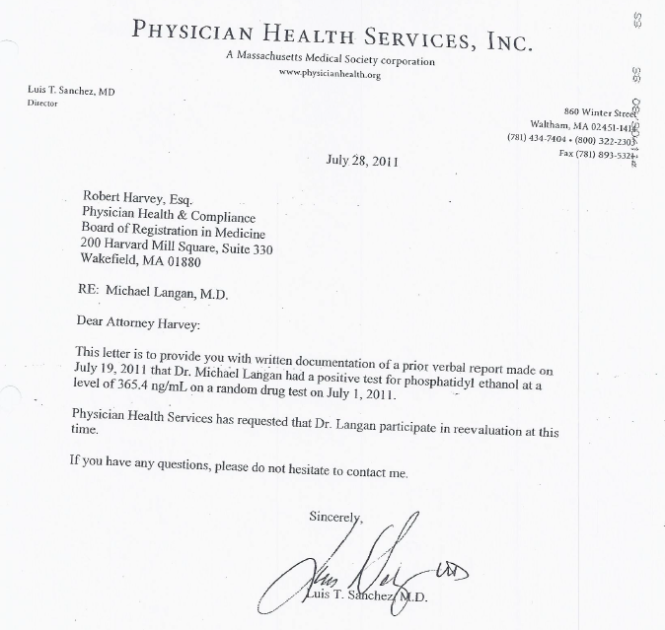
PHS then reported this as a “forensic” test to the Medical Board on July 19, 2011 and requested a reevaluation.
Screen Shot 2014-11-09 at 1.17.24 PM

The distinction between “forensic” and “clinical” drug and alcohol testing is black and white. PHS is a monitoring program not a treatment provider. The fact that a monitoring agency with an MRO asked the lab to process and report it as a clinical sample and then used it forensically is an extreme outlier in terms of forensic fraud. The fact that they collected it forensically, removed the forensic components and let it sit in a warehouse for a week is  abhorrent.  The fact they then specifically requested it be processed as a clinical sample deepens the malice. The fact that they then reported it to the Board as a forensic sample and maintained it was forensic up until just recently makes it egregious. But the fact that the test was changed from “positive” to “invalid” on October 4th, 2012 and they then reported me to the Board on October 8th,  2012 for “noncompliance,” suppressed it and tried to send me to Kansas where I would be given a non-existent diagnosis to delegitimize me for damage control makes it wantonly egregious.  This is political abuse of psychiatry.

Accountability requires both the provision of information and justification of what was done.

For doctors it is very difficult to obtain the information. As seen here, they put up a gauntlet to prevent the provision of what is immediate in all other drug testing programs.  I now have all of the information. What it shows is clear. This was intentional.  It was no accident.  They knew what they were doing, knew it was wrong but did it anyway.

Accountability also requires that those who commit misconduct suffer consequences. The PHPs have also put up barriers to this.    With no regulation or oversight they have no apparent accountability.

My understanding is that it works this way.   The Medical Board, Medical Society and Departments of Public Health have no oversight.   The MMS has an ethics committee but all they can do is “educate” the person if they feel there was a violation.  The DPH won’t even look at it and the Board is complicit.

My understanding is that they have convinced law enforcement that this is a “parochial” issue that is best kept within the medical community.  They have also created the impression that they are “friends” of law enforcement.  I have heard from many doctors that they have tried to report misconduct, civil rights violations and crimes to the police, AGO, and other law enforcement agencies only to be turned back over to the PHP.     By saying the physician is “impaired” it delegitimizes and invalidates the truth.  “He’s just a sick doctor,  we’ll take care of him.”  That physician then suffers consequences effectively silencing the rest.

PHS uses the Board to enforce punitive measures and temporize.   The Board puts blind faith in PHS.  Blind faith that defies common sense ( mandating phone numbers at anonymous meetings)  and disregards the law (Establishment Clause violations that are clear and well established).    The Board also temporizes to cause damage.

In my case they required a psychiatric behavioral evaluation.  I was given the choice of Kansas and a few other Like-minded assessment centers.

After petitioning for  multiple qualified psychiatrists that were summarily rejected months later for no reason one of the Board Attorneys suggested  Dr. Patricia Recupero, M.D., J.D. who is Board Certified in Forensic Psychiatry and Addiction Psychiatry.   The Board had used her in the past but not recently.  Seeing that she had been used by the Board for fit-for-duty evaluations in the past the Board accepted my petition.

Dr. Recupero wrote an 87-page report. She concluded I was safe to practice medicine without supervision, that I had never had an alcohol use, abuse or dependence problem, and that PHS request for phone numbers was inappropriate. She also documented PHS misconduct throughout my contract and concluded it was PHS actions, not mine, that led to my suspension.   What she describes is consistent with criminal harassment.  She documents the falsification of neuropsychological tests and confirms the forensic fraud.  What did the Board do?  Ignored their very own recommended and approved evaluator.

One measure of integrity is truthfulness to words and deeds.  These people claim professionalism, ethics and integrity.  The documents show otherwise.  The careers and lives of doctors are in these peoples hands.

Similar fraud is occurring across the country.  This is an example of the institutional injustice that is killing physicians.  Finding themselves entrapped with no way out, helpless and hopeless they are feeling themselves bereft of any shade of  justice and killing themselves.  These are nothing more than bullies and accountability is essential.  The “disruptive physician” moral panic has harmed the Medical Profession.

Dr. Clive Body in his book  Corporate Psychopaths   writes that “Unethical leaders create unethical followers, which in turn create unethical companies and society suffers as a result.”  And according to Dr. Robert Hare in  Without Conscience  “If we can’t spot them, we are doomed to be their victims, both as individuals and as a society. ”

Wes Boyd notes that valid complaints from physicians are often dismissed as “bellyaching” by the PHPs.  Complacent that these are just good guys helping doctors and protecting the public the complaints are dismissed, tabled, deflected or otherwise ignored.  Bellyaching??   Is this bellyaching.

It is my opinion that what you see here is indefensible  Procedurally, Ethically, and Legally.

Procedurally it goes beyond negligence and represents fraud.  It violates every procedural guideline, regulation and standard of care including their very own.

Ethically it violates everything from the Hippocratic Oath to  AMA Medical Ethics to the MRO Code of Conduct.

And where was PHS MRO Wayne Gavryck? By my count he violated at least 4 of the 6 Codes of Ethical Conduct.
Screen Shot 2014-11-10 at 1.04.20 PM

What was done here violates the most fundamental ethical principles of Medicine -Autonomy, Beneficence, Nonmaleficence and justice.

Intentionally falsifying a laboratory or diagnostic test to refer for an evaluation or support a diagnosis or give unwarranted “treatment” is unconscionable.  Abuse under the utility of  medical coloration is especially egregious.

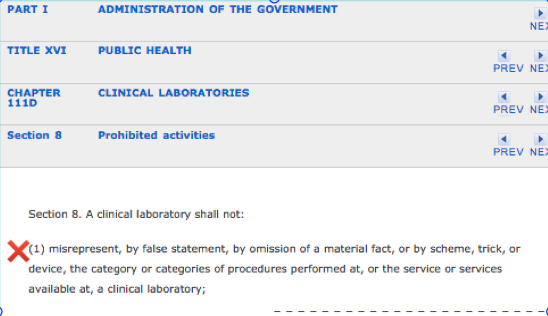
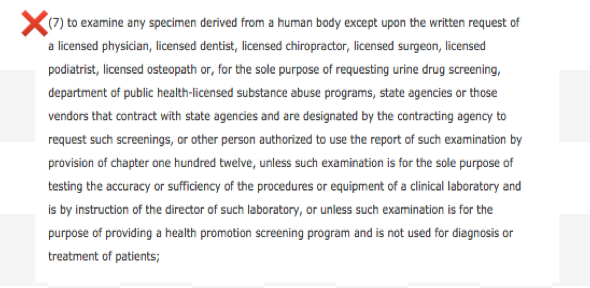
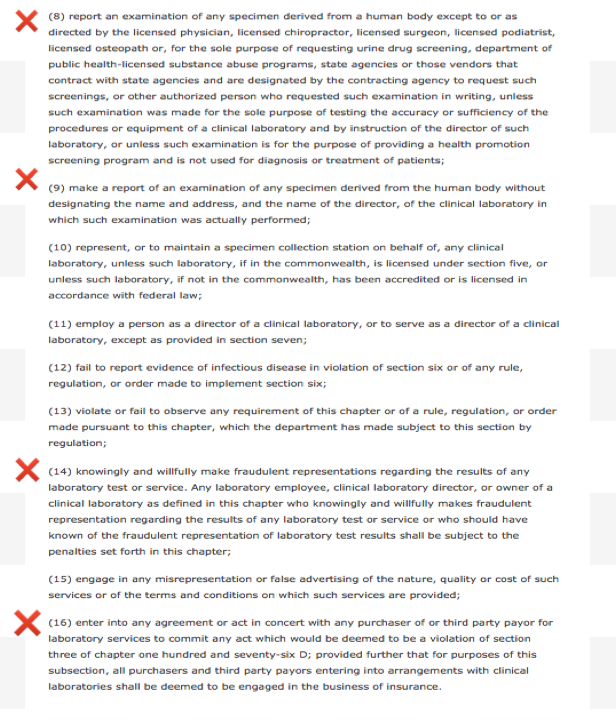
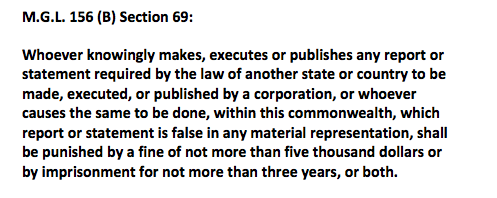
The information provided herein should negate any “peer-review” protection or immunity afforded PHS as it is undeniably and egregiously in “bad faith.” Moreover, the ordering a “clinical” test is outside PHS scope, practice, and function of PHS. According to M.G.L. c. 111, § 203 (c):

An individual or institution, including a licensed or public hospital, physician credentialing verification service operated by a society or organization of medical professionals for the purpose of providing credentialing information to health care entities, or licensed nursing home reporting, providing information, opinion, counsel or services to a medical peer review committee, or participation in the procedures required by this section, shall not be liable in a suit for damages by reason of having furnished such information, opinion, counsel or services or by reason of such participation, provided, that such individual or institution acted in good faith and with a reasonable belief that said actions were warranted in connection with or in furtherance of the function of said committee or the procedures required by this section.

Dr. Luis Sanchez and Dr. Wayne Gavryck need to be held to the same professional standards as the rest of us.

If you can support either of them procedurally, ethically, or legally, any one of them, then I will turn in my medical license with a bow on it.  If they did not commit negligent fraud by standards of care and procedural guidelines, egregious moral disengagement in violation of ALL ethical codes for the medical profession and society and break the law then disprove me.  Just one will do.

But you can’t do this then I ask that you speak up and take a stand. Either defend them or help me hold them accountable.  If a crime is committed it needs to be addressed.  Ignoring encourages more of the same.

And if this cannot be supported procedurally, ethically or legally then I want to know what is going to be done about it?

How low does the moral compass have to go before someone takes action?

Doctors are dying across the country because of people just like this.  They have set up a scaffold that removes the usual checks and balances and removed accountability.   It is this institutional justice that is driving many doctors to suicide.

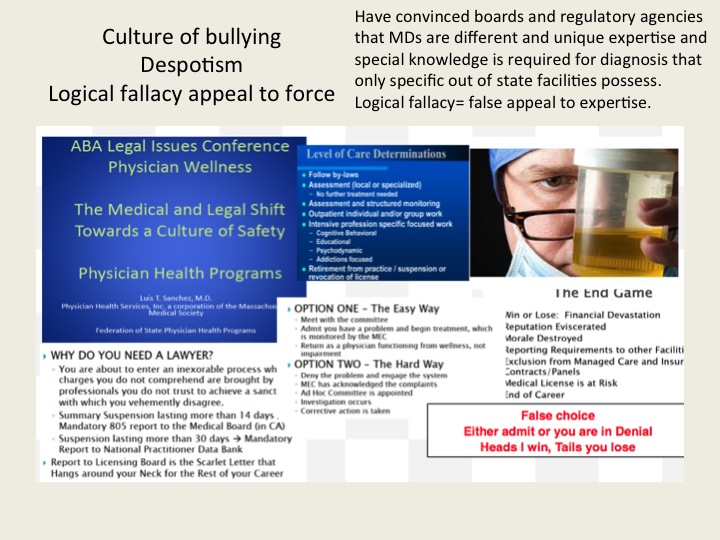
So the evidence is above.  Either defend them or help me draw unwanted attention to this culture of bullying and abuse. So I am asking you to contemplate if  what you see here is ethically, procedurally or legally sound.   If you can show just one of these then I stand corrected. But if you cannot justify this on any level then I want you to help me expose this criminal enterprise. Either defend it or fight it. Silence and obfuscation are not acceptable.
Screen Shot 2014-11-10 at 1.34.48 PM

Screen Shot 2014-11-10 at 1.36.13 PM

Screen Shot 2014-11-10 at 10.24.58 AM

Screen Shot 2013-09-04 at 2.22.36 AM

Screen Shot 2014-11-10 at 9.15.46 PMScreen Shot 2014-11-10 at 9.23.36 PMScreen Shot 2014-11-10 at 9.19.08 PMScreen Shot 2014-11-10 at 8.54.21 PMget-attachment.aspx

Screen Shot 2013-09-04 at 2.21.51 AM

Screen Shot 2014-11-07 at 8.02.36 PM

Screen Shot 2014-11-07 at 7.35.18 PM

The Medical Profession, Moral Entrepreneurship, Moral Panics, and Social Control

The Medical Profession, Moral Entrepreneurship, Moral Panics, and Social Control.

As a society governed by organizations, associations,  institutions and regulatory bodies, the medical profession is not immune to “moral panics” and “moral crusades.”

A threat to patient care or the values of the profession can be identified and amplified.   A buildup of public concern fueled by media attention ensues creating a need for governing bodies to act. Medical Professionalism and the Public Health has been assailed.

Unbeknownst to the general population and most members of the medical profession at large, certain groups have gained tremendous sway within organizational and regulatory medicine. Through  moral entrepreneurship they have gained authority and become  the primary definers of the governance of the medical profession and the social control of  doctors.  To benefit their own interests they have fostered and fueled “moral panics.” Exhorting authorities to fight these  threats by any means necessary  they have successfully made and enforced rules and  regulations and introduced new self-serving definitions and tools that neither help doctors nor protect the public.

Anatomy of a Forensic Fraud: The Reality of Drug and Alcohol Testing

Screen Shot 2014-09-15 at 7.16.09 PMDec 11, 2012

The juxtaposed documents in and of themselves reveal a number of red flags.  How does one “revise” a chain-of-custody”?    If you do a google search you will not find “chain-of-custody” as an object of the verb revise. It is an oxymoron.  A document or opinion can be revised.  A chain-of-custody, by its very definition, cannot.  This collusion to fabricate a positive test has coined a new oxymoron—“revised chain-of-custody.”     Go ahead and look it up. It is a novel one.     As it should be.

What these documents show is, in fact, indefensible ethically, procedurally and legally.  The first document signed by Dr. Luis Sanchez, past President of the FSPHP and past Medical Director of Physician Health Services, Inc.  (PHS) was sent to the Board of Registration in Medicine on December 11, 2012 and is notable for two statements.   The letter from Dr. Sanchez asserts that “Yesterday, December 10, 2012, Physician Health Services, PHS received a revision of a laboratory test result,” but it did not matter because PHS was {unaware} ” of any action taken by the Massachusetts Board of Registration in Medicine as a result of the July 28th, 2011 report.   However, based on the amended report, PHS will continue to disregard the July 21st PEth test result.”

The second document, addressed to Dr. Luis Sanchez, is dated October 4, 2012 (67 days earlier) and shows the first document to be a bald-faced lie.

On July 28h 2011 Dr. Luis Sanchez reported to the Medical Board that I had a positive alcohol test.

Although I knew that Dr. Sanchez had fabricated the test I  had no way of proving it. I requested the “litigation packet,” which records “chain-of-custody” from collection to analysis in August of 2011.  At first they  refused.  PHS then tried to dissuade me (“it will be costly, involve attorneys, etc). Finally they agreed but threatened me with “unintended consequences.”

I was finally able to get a copy of the “litigation packet”  in December of 2011.  Remarkably, it  showed that Sanchez had requested my ID # and a “chain-of-custody” be added to an already positive specimen. I reported this to the Board but they ignored it. I also filed a complaint with the College of American Pathologists.Screen Shot 2014-11-06 at 11.17.32 PM

On October 23, 2012 Sanchez reported to the Medical Board that I was “noncompliant” with requirements with A.A.  meetings that I was supposed to go to as a direct result of the positive test and my license to practice medicine was suspended as a result in December 2012.

On December 10, 2012 I contacted the College of American Pathologists who told me the test was “amended” from “positive” to “invalid” on October 4, 2012. I confronted Sanchez and PHS and they said they did not know anything about it.

The following day, December 11, 2012, they sent out a letter saying that the test was invalid but that they were “unaware of any action taken against my license as a result of the test.”  

The documents show that on  July 19th, 2011 Sanchez requested my ID # 1310 and a “chain-of-custody” be added to an already positive specimen and on October 4th 2012 the test was “appended” to “external chain of custody not followed per standard protocol.”

Please note again that  Dr. Sanchez stated on December 11, 2012 that he “just learned” about this on December 10, 2012. He reported me to the Board as “noncompliant” on October 23, 2012 and my license was suspended in December 2012.   These documents show he had full knowledge that the test was invalid and as an agent of the Board this is under “color of law.”   Both he, and PHS, need to be held accountable for this.

Screen Shot 2014-09-21 at 12.22.30 AM

Lies, Lies, and More Lies

10:19:12-Verbal Compliant Noncompliance f:u written 10:19:12–BORM Complaint Committee

The contradictory documents from Sanchez alone constitute a crime (withholding information in concealment and providing false information to a state agency).  But what he did is far far worse.

I just obtained the October 4th document. Although I knew it existed, PHS suppressed it and refused to acknowledge it.   But in response to a complaint I filed against PHS and the labs it was revealed by USDTL that the test in question (phosphatidyl-ethanol) was not sent as a “forensic” specimen but collected as a “forensic” specimen, then changed to a “clinical” specimen at the request of PHS Program Director, Linda Bresnahan.   The specimen was kept at the collecting lab (Quest) for 7 days as a  “clinical” specimen, then sent to the analyzing lab (USDTL) with specific instructions from Quest to process it and report it as a “clinical” specimen.  PHS then used it as a “forensic” specimen by reporting me to the Board of Registration in Medicine and  requesting I undergo an evaluation for alcohol abuse.

As a “clinical” specimen it is rendered “Protected Health Information” (PHI) and thus under the HIPAA Privacy-Rule.   So with the help of the College of American Pathologists I requested my PHI from both Quest and USDTL. Quest refused (for obvious reasons) but USDTL complied.   And that is how I was able to obtain the October 4th document revealing that Dr. Sanchez lied to the Medical Board.     I would love to hear him, or PHS MRO Wayne Gavryck, defend the indefensible (and unconscionable).

Dr. Sanchez is correct when he pleads ignorance of any action taken by the Board as a result of the July 21st PEth result.   It was his report to the Medical Board  that I was “noncompliant” with attending AA meetings (that I was supposed to go to as the direct and sole result of the positive test)   that he reported to the Board just two weeks after the October 4th appended test.

The test was sent as a “clinical” specimen intentionally. PHS is not a clinical provider but a monitoring agency. They cannot send clinical samples.   But since clinical samples are “protected health information” and under HIPAA the lab had to give me the records and here you have them.

The distinction between “forensic” and “clinical” drug and alcohol testing is black and white.  PHS is a monitoring program not a treatment provider.  The fact that a monitoring agency with an MRO asked the lab to process and report it as a clinical sample and then used it forensically is an extreme outlier in terms of forensic fraud.  The fact that they collected it forensically, held it for 7 days and changed it from “forensic” to “clinical” to bypass strict “chain-of-custody” requirements  deepens the malice.  The fact that they then reported it to the Board as a forensic sample and maintained it was forensic up until now makes it egregious.   But the fact that the test was changed from “positive” to “invalid” on October 4th, 2012 and Sanchez then reported me to the Board on October 23rd 2012 for “noncompliance,” suppressed it and tried to send me to Kansas for damage control makes it wantonly egregious.   (they didn’t think I’d ever find out).

Add on that the fact that I’ve been questioning the validity of the test since day 1 and they violated the HIPAA Privacy Rule over and over and this is reckless and major health care fraud.

Screen Shot 2014-09-15 at 7.19.15 PM

Fax from PHS to USDTL on July 19th, 2011 asking that my ID #1310 be added to an already positive test and a “chain-of-custody” be “updated”

Screen Shot 2014-09-15 at 7.18.51 PM

USDTL complies with PHS request to and adds my ID #1310 and a date of collection (July 1, 2011) to an already positive specimen

Screen Shot 2014-09-15 at 7.18.06 PM

No date of collection, no unique identifier linking specimen to me. Multiple “fatal flaws.”

Screen Shot 2014-09-15 at 7.17.49 PM

I file complaint with CAP January 12, 2102. CAP forces USDTL to amend test from “positive” to “invalid” which they do on October 4, 2012. PHS conceals this fact until December 11, 2012

Letter from Chief of Toxicology at MGH–Ignored by PHS, USDTL, and the BORM         11:5:12-Dr. Flood Letter–Ignored by PHS:USDTL:BORM

Screen Shot 2014-09-05 at 7.32.59 PM

Screen Shot 2014-09-06 at 3.23.20 AM

Screen Shot 2013-09-04 at 6.14.30 PM

Please Sign Petition and Call (617-727-6200) MA State Auditor Suzanne Bump to Demand Audit of Corrupt Physician Health Services and the MA BORM Physician Health and Compliance Unit

Screen Shot 2013-11-26 at 10.37.42 AMOr better yet, sign the petition and call her.  The evidence that Physician Health Services, Inc. (PHS) is committing crimes has been free-floating for the past two years.   It has been posted on Reddit, Twitter, Facebook, Linkedin, blogged, faxed, and phoned.  The response?  Absolute silence.

The procedural, ethical and criminal violations are clear and many.     The incontrovertible evidence has been directly delivered to individuals who should address this but for some reason do not.  This is not a matter of opinion folks but a matter of fact.    Time and time again we hear of  egregious misconduct hidden for decades because of  cognitive dissonance and blinkered apathy.

What evidentiary standard is required for action?   Over the past three years and under a lot of duress I have obtained indefensible documentary prima facie  proof of  crimes committed by individuals that should elicit immediate action but produced nothing but silence.

The crimes are many and they are of significance.  Accountability necessitates both the provision of information and justification for one’s actions.   This group has effectively blocked both of these. With much effort and under threat I have obtained proof of criminal activity with the expectation that the provision of this information would  result in those who should and could do something about it would.   They have not.

The documentary evidence of crimes is self-evident.  It is indefensible.    It is inexcusable that criminal activity is taking place within the walls of the Massachusetts Medical Society.   The fact that PHS is unregulated and without any meaningful accountability is irrelevant.  They are engaging in criminal activity within the walls of an institution that whose foundation is the antithesis of this groups actions and it must be addressed. Either support what the documents show or do something about it.

So please sign this petition and call  Massachusetts State Auditor Suzanne Bump at 617-727-6200

Institutional injustice just like that being committed by Luis Sanchez, Linda Bresnahan and the corrupt MRO Wayne Gavryck is killing doctors across the country.  They need to be held accountable.  Help me hold them accountable.


IMG_8564Please Sign Petition to Expose Corruption in the Medical Profession

A Golden Age

BY TIMOTHY STEELE

Even in fortunate times,
The nectar is spiked with woe.
Gods are incorrigibly
Capricious, and the needy
Beg in Nineveh or sleep
In paper-gusting plazas
Of the New World’s shopping malls.
Meantime, the tyrant battens
On conquest, while advisers,
Angling for preferment, seek
Expedient paths. Heartbroken,
The faithful advocate looks
Back on cities of the plain
And trudges into exile.
And if any era thrives,
It’s only because, somewhere,
In a plane tree’s shade, friends sketch
The dust with theorems and proofs,
Or because, instinctively,
A man puts his arm around
The shoulder of grief and walks
It (for an hour or an age)
Through all its tears and telling.

Timothy Steele, “Golden Age” from Sapphics and Uncertainties: Poems 1970-1986. Copyright � 1986, 1995 by Timothy Steele. Reprinted with the permission of the University of Arkansas Press, www.uapress.com.

Source: Sapphics Against Anger and Other Poems (1986)

Screen Shot 2014-08-13 at 11.08.55 PMScreen Shot 2014-08-13 at 11.12.09 PM
Disappointed that his grandiose proposal to test the urine of half the U.S. population for illicit drugs was declined in the 1980’s, Bob realizes such a large swath was too tall an order. Acknowledging that his dream of lifelong urine drops for each and every one of the riffraff at least once a fortnight will take time, he decides to focus his attention on specific subsets of the great unwashed such as school-children, welfare mothers, the unemployed and whatever they are calling Hippies these days.

Medical Urban Legend–The Legacy of the 4 MDs and why B.S. Needs to be Identified from the Get-Go!

photo

“Because I can Biotches! That’s right..because I can!” 

According to G. Douglas Talbott, rehabilitation programs that evaluate and treat the rest of the population for substance abuse issues are incapable of doing so in doctors as they are unlike any other inhabitants of our society.   Physicians are unique. Unique because of their incredibly high denial”, and this genetically inherent denial is part of what he calls the “four MDs.” Used to justify the thrice lengthier length of stay in physicians the “four-MDs” are as follows: “M-Deity”, “Massive Denial” “Militant Defensiveness” and “More Drugs.”

He states that “Impaired doctors must first acknowledge their addiction and overcome their ‘terminal uniqueness’ before they can deal with a drug or alcohol problem.”
Now some  doctors are arrogant undisciplined egotists but narcissistic personalities exist in any profession and expanding traits that may apply to a small percentage of doctors to include all doctors as a universal truth contradicts reality. Applying a stereotypical paternalistic length of treatment in doctors three times as long as non-doctors to force a “one-size” fits all treatment on them has no evidence base.

tumblr_kuwuugSEmN1qz6z0no1_500This dicto simpliciter argument can, in fact, be refuted simply by pointing it out! Sadly, no one ever did so the ASAM front-group hasbeen able to establish this caricature of the arrogant paternalistic know it all needing 3 months or more of treatment as standard of care for our profession. They did this by getting medical boards and the FSMB to accept fantasy as fact by relying on board members tendency to accept expert evidence at face value–which they always do and that is a personality characteristic that I would argue is not dicto simpliciter.

Physicians are unique only insofar as the unique elements required of the profession to become and be a physician such as going to medical school and completing the required board examinations.

Any and all doctors referred to a PHP for assessment will spend at least 3 months in treatment if the facility feels it is indicated. It is inevitable. No one has challenged a patently absurd generalization that has absolutely no evidence base or plausible scientific or medical explanation. Of course those sentenced to the 3 or more months have complained but by that time they are de-legitimized and stigmatized. No one to complain to.  After all, these are just redeemed altruistic non-profit  good guys protecting the public and helping colleagues forge a path to salvation!
All the ASAM/FSPHP quacks have to do at that point to deflect legitimate concerns is point out the one doing the complaining is an “addict” who is “in denial” and it is part of his “disease.”  The mere accusation of substance abuse is used to disregard the claims of the accused.
Authoritative opinion entrenched. Someone should have called B.S. long ago.  But no one did and if they had we would not be in the current situation which is only going to go from bad to worse as the ASAM plan for universal contingency-management and urine usury unfolds-–A “golden age.” And the 4MDs Talbott attributes to doctors are all wrong. There is only one MD and it is “medical license.” On second thought that may not be entirely true.  “More money” may be another. And I am not talking about a doctor’s income. I am referring to insurance and the specter of depleting home and hearth.   Fiscal annihilation. Your license or your life.   And the only true  and plausible answer that Talbott could give to justify the lengthy stay is “Because I can biotches!” And “contingency-management” sounds better than extortion doesn’t it?  And  using your medical license as “leverage” sounds a helluva lot better than holding it for ransom.
10561776_1446076165663276_673756111807603530_n-1
The ‘A’ Word: Are Doctors Arrogant?
Leslie Kane
June 17, 2014
Good Doctors Have Some Bad MomentsDoctors’ personalities have become a hot topic, not only because warmth and pleasantness count toward patient satisfaction, but also because positive patient interactions have a role in better outcomes.Physicians’ personalities are under the microscope as patients post reviews of doctors on numerous Websites. In some reviews, the word “arrogant” has shown up. But calling doctors arrogant is nothing new.Are there really so many arrogant doctors? No doubt, some physicians deserve the label, but it seems to be a stereotype that has blossomed and taken on its own life.”Arrogance among doctors is not the norm”, says Marion Stuart, PhD, co-author of The 15 Minute Hour: Therapeutic Talk in Primary Care, and Professor Emeritus in the Department of Family Medicine at UMDNJ-Robert Wood Johnson Medical School. “Someone who has done the hard work and has gone into medicine because they care about people, and are interested in helping peoples’ lives and making the world a better place, is not going to be arrogant.”So how did the arrogant doctor epithet arise?In the past, doctors were considered authorities who told compliant patients what to do and treated them with a paternalistic attitude. Some doctors may retain those behaviors today.Another possibility is overgeneralizing. A patient sees a doctor who has a difficult personality and assumes that the trait is more widespread within the profession than it really is.

Arrogance or Self-confidence?

“Arrogance is totally different from self-confidence,” says Dr. Stuart. “When you’re confident, that’s your assessment of your own competence. You have the experience and the wisdom, you know what you can do, and your confidence says that. It’s your relationship to yourself and your own expertise,” she says.

Arrogance is a different ballgame. “This has to do with your judging that other people are inferior,” she says. “It has more to do with not seeing other people as being up to your standards.”

Could the confidence that comes with being accomplished and successful make someone arrogant? Typically no, says Dr. Stuart. The trait of arrogance develops or resides within a person at a much earlier stage, arising from one of two paths:

“I am indeed better.” Someone who has always lived a privileged life, feels entitled to all of the finer things, or has always been looked up to may take it as a given that he or she is better than others. “People who had a sheltered, protected existence with no perception of what the real world is like for other people may consider themselves an elite group, entitled to feel superior,” says Dr. Stuart.

“I made it, so why can’t you?” By contrast, a person who was deprived as a child and worked very hard to pull himself up by the bootstraps may then look down on others who don’t have the same perseverance or initiative to take charge of their life and create similar success.

Doctors Are Harried and Pressured; Patients Are More Demanding

Some doctors have admitted that at times it’s hard to maintain their patience, and frustration triggers a snappish response. Throw into the mix the fact that doctors may have less time to see each patient and answer questions, and you have the ingredients for a negative interaction.

“I’ve had eight years of medical education and I’ve been trying to get my patient to make healthy lifestyle changes, and he comes in with a page ripped out of a tabloid, convinced that the information is right…there’s a limit to how much time I can spend ‘educating’ or convincing them that their ‘cure’ has no scientific basis,” one physician told me.

People have come to expect the stance of “the customer is always right” and get annoyed if doctors don’t accede to all of their requests. But because of new medical practice guidelines, a doctor may not readily give the patient the test or medication they ask for. “Now, with healthcare insurers and companies setting limits on doctors, many times the patient feels that the doctor is not so much on their side, and this could be perceived as arrogant,” says Dr. Stuart.

Is There an Outbreak of Rudeness?

Barry Silverman, MD, a cardiologist and coauthor with pediatrician Saul Adler, MD, of Your Doctors’ Manners Matter: Better Health Through Civility in the Doctor’s Office and in the Hospital, says, “While most doctors are appreciated and respected by their patients, there’s a general perception that professionalism has declined.

“Patients are often more informed, ask detailed questions, and demand a high level of service, while demands on the doctor’s time increase and reimbursements fall,” says Dr. Silverman. “What patients interpret as arrogance is many times a rushed and harried doctor, not an uncaring one. Medicine can be mentally and physically exhausting, but the bottom line is that the doctor must listen and communicate with the patient to deliver quality medical care.”

Still, remaining pleasant and calm is easier for some doctors than for others. There’s no uniform physician personality; many doctors have a natural “people person” inclination, while others are more stoic.

Are doctors expected to smile and be nice in every circumstance, no matter what?

“Professionalism is not about putting on a happy face or being someone you are not; it is about providing quality care for the patient,” says Dr. Adler. “Patients are more informed and have access to more information than ever before. Much of that information is incorrect and sometimes harmful. That means that part of the professional duty is to teach as well as treat.

“Patients understand that doctors have significant restraints on their time, and it is not unreasonable for doctors to use preprinted written materials, educational resources outside the doctor’s personal office, and honest and informative Websites,” says Dr. Adler. “However, under no circumstances should the doctor be rude or abrupt; a smile and kind, considerate behavior is always appropriate.”

It would be naive to say that there aren’t arrogant doctors. But there are far more doctors trying to do their best for patients and relate to them.

Medscape Business of Medicine © 2014 WebMD, LLC

Go back

Your message has been sent

Warning
Warning
Warning
Warning

Warning.

Organizational Purpose and Public Trust in Drug and Alcohol Testing

IMG_9150


http://www.nytimes.com/2014/03/13/opinion/why-arent-doctors-drug-tested.html?partner=rss&emc=rss&_r=0


In 2012 Robert Dupont delivered the keynote speech at the Drug and Alcohol Testing Industry Association annual conference and described a “new paradigm” for addiction and substance abuse treatment of zero tolerance for alcohol and drug use that is enforced by monitoring with frequent random drug and alcohol tests. Detection of any substances is met with swift and certain consequences. He proposed expansion of this paradigm to other populations including workplace, healthcare, and schools. Based on the state Physician Health Program model of “contingency management,” with frequent testing and a point of “leverage,” such as a medical license in doctors, that is used as a behavioral incentive.

The ASAM White Paper on drug testing seems to indicate a desire to liberalize drug testing by utilizing health care providers in the process. Currently forensic drug testing uses a strict chain-of-custody protocol with Medical Review Officer (MRO) review. But if the result of a positive test is “therapeutic” rather than “punitive” this is unnecessary. In the “new paradigm” a positive test simply requires an evaluation at a “PHP-approved” facility.

IMG_9516 Accountability needs to be rooted in organizational purpose and public trust.
A recent article in JAMA, “Identification of Physician Impairment”  suggests that undetected physician impairment  may be contributing to medical error and that sentinel-event and  random alcohol-drug testing could be implemented to address the problem as is being done in the  current “Physician Health Program (PHP)” system.

The most consequential and critical issue for physicians, if this comes to fruition, is who will be in organizational and managerial control of the system and what ideological influences will be guiding policy and practice.   It is concerning that one of the co-authors of this article, Greg Skipper, is a Fellow of the American Society of Addiction Medicine with strong ties to the 12-step treatment industry and drug testing industry.

History shows Lord Acton’s aphorism on absolute power to be repeatedly true.  Corruption is a virtually inevitable consequenphotoce of unchecked power. The only two factors that constrain corruption are moral virtue and deterrence.
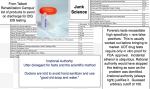
Disregard for standards of care and violations of codes of conduct are common.  So too is the use of anything that furthers the agenda.  Pseudoscience, such as polygraph testing, previously deemed by the American Medical Association as an unscientific game of “chance,” and psychometric testing of dubious validity are being used for confirmation of diagnoses.

They introduced and brought to market junk science like the Ethyl Glucuronide  (EtG) biomarker for detecting alcohol use. The EtG was introduced by an FSPHP physician, marketed, and proselytized as an accurate and reliable test for alcohol. After setting an arbitrary cutoff of 100 to prove drinking he ruined countless careers and lives.

As the disaster toll increased it became clear the test was not very good. It became apparent the test was, in fact, very flawed and misguided as using an ultra sensitive poorly specific test for a substance environmentally ubiquitous precludes its forensic applicability.

Hand sanitizer, cosmetics, sauerkraut, and myriad other products were shown to result in an elevated EtG. Sensibly, the majority of drug testing and monitoring programs abandoned it. 

The market for the test decreased dramatically as the only customers left were drug monitoring programs in which the testers had absolute power and those being tested were absolutely powerless–programs like those run by the PHP.

This group has now introduced the Phosphatidylethanol (PEth) test as a confirmation test for EtG and USDTL mScreen Shot 2014-04-05 at 2.08.11 PMarketed it as the PEthStat.  

State Physician Health Programs are now using the EtG  and adding the PEth to confirm alcohol ingestion. And just as they did with the EtG the claims of reliability are grand but without foundation. 
All speculative A=B oversimplified thinking that ignores the myriad other factors involved. The science is empty if you remove the dregs of filler and puff.  And the conflicts of interest are mind-boggling.

Corporate Front Groups and Corruption in Medicine-Forensic fraud, conflicts of Interest and the Erosion of Trust

The ASAM and FSPHP are corporate front groups that have infiltrated organized medicine and gained tremendous sway. Advancing the multi-billion dollar 12-step rehab and drug testing industry agenda control has replaced conduct and ideology has trampled science and reason. As organizations without transparency, accountability, or regulation they have become reservoirs of bad medicine and corruption.

Accountability is  rooted in organizational purpose and public trust.  Unfortunately, humanitarian ideals have been trampled by the imposition of corporate front groups who advance  hidden agendas under guises of science and scholarship  and patinas of benevolence.  Rife with conflicts of interest, these groups obfuscate, mislead, and exploit us to further an underlying political agenda.  Healthcare and medicine has been infiltrated by various groups that pose a serious threat to both the humanitarian and evidence based aspects.