Michael, thank you for your years of effort – you have made a huge difference to hundreds (thousands?) of us individually, and have changed the system. I wish I had 45K to fund you. I discovered the Disrupted Physician in April and have read every post and link. It has given me hope and strength as I work to recover and rebuild my life. -Kathryn Neraas M.D.
Michael, I have witnessed your efforts for 2-3 years now and I completely understand what you’re trying to do. Your work is so important. I have been doing similar work and wish I could donate enough to keep you able to do this as long as it takes until this is resolved completely. Talking to brick walls is expensive. Something needs to give.–Tom Gleason
With a team of criminals and incompetents running the show unconscionable misconduct inevitably ensues. The malfeasance and unprofessionalism in state physician health programs (PHPs) and medical boards is staggering. One can only hope that, in time, a wiser system will emerge. I have been told the audit of the Robert Harvey’s sham “physician health and compliance unit” is going to proceed. This is good news and what the state auditor is going to find ( barring outside interference from those fattening and battening off this racket) is that incorrigible corruption has remained unchecked for decades. The dissembling reach of the odious individuals is tremendous. They have deliberately denied victims justice and permitted the physician health predators to roam free among the vulnerable for decades. The Massachusetts Board of Registration in Medicine needs a drastic rejiggering as do many others. The corruption needs to be addressed, the cognitive dissonance needs to end and the heinous individuals responsible need to be held accountable for their misdeeds. We have made significant gains in exposing this corruption over the past few years and the I am counting on you to please contribute whatever you can. I need to raise some immediate funds (a few thousand dollars ) to meet a December 31st deadline that is going to create a significant setback if I do not do so. So please get this out and help.
“PHPs provide a much-needed and wanted service. But if the goal is to provide mental health and substance abuse services to physicians who are struggling – to prevent physicians from burning out, leaving medicine, and dying of suicide – then any whiff of corruption and any fear of professional repercussions become a reason not to use these services. If they are to be helpful, physicians must feel safe using them.”
As medicine struggles with rising rates of physician burnout, dissatisfaction, depression, and suicide, one solution comes in the form of Physician Health Programs, or PHPs. These organizations were originally started by volunteer physicians, often doctors in recovery, and funded by medical societies, as a way of providing help while maintaining confidentiality. Now, they are run by independent corporations, by medical societies in some states, and sometimes by hospitals or health systems. The services they offer vary by PHP, and they may have relationships with state licensing boards. While they can provide a gateway to help for a troubled doctor, there has also been concern about the services that are being provided.
Physicians find their way to PHPs in a number of ways. A doctor whose behavior suggests impairment can be referred to the PHP by his employer, or by a licensing board, following a complaint. In these instances, participation often is a condition of employment or of continued licensure, and the PHP serves as an agent of the hospital or the state. Doctors may also be referred to PHPs for monitoring if they ascribed to having a diagnosis of psychiatric illness or substance abuse, either now or in the past, and are with or without obvious impairment. Finally, PHPs serve as a portal to treatment for physicians who self-identify and self-refer in an effort to get help. Their use is encouraged in an effort to prevent bad outcomes from mental health conditions, stress, and substance abuse, in those who are suffering in ways that would not otherwise call attention to their plights. In these situations, the PHP may serve as the agent of the patient or client, but there may remain dual-agency issues if the physician says something that leads the PHP to be concerned about the doctor’s fitness. Compliance with PHP recommendations, including drug screening, might be mandated, and physicians may resent these requirements.Louise Andrew, MD, JD, served as the liaison from the American College of Emergency Physicians (ACEP) to the the Federation of State Medical Boards from 2006 to 2014. In an online forum called Collective Wisdom, Andrew talked about the benefits of Physician Health Programs as entities that are helpful to stuggling doctors and urged her colleagues to use them as a safe alternative to suffering in silence.
More recently, Dr. Andrew has become concerned that PHPs may have taken on the role of what is more akin to “diagnosing for dollars.” In her May, 2016 column in Emergency Physician’s Monthly, Andrew noted, “A decade later, and my convictions have changed dramatically. Horror stories that colleagues related to me while I chaired ACEP’s Personal and Professional WellBeing Committee cannot all be isolated events. For example, physicians who self-referred to the PHP for management of stress and depression were reportedly railroaded into incredibly expensive and inconvenient out-of-state drug and alcohol treatment programs, even when there was no coexisting drug or alcohol problem.”
Dr. Andrew is not the only one voicing concerns about PHPs. In “Physician Health Programs: More harm than good?” (Medscape, Aug. 19, 2015), Pauline Anderson wrote about a several problems that have surfaced. In North Carolina, the state audited the PHPs after complaints that they were mandating physicians to lengthy and expensive inpatient programs. The complaints asserted that the physicians had no recourse and were not able to see their records. “The state auditor’s report found no abuse by North Carolina’s PHP. However, there was a caveat – the report determined that abuse could occur and potentially go undetected.
“It also found that the North Carolina PHP created the appearance of conflicts of interest by allowing the centers to provide both patient evaluation and treatments and that procedures did not ensure that physicians receive quality evaluations and treatment because the PHP had no documented criteria for selecting treatment centers and did not adequately monitor them.”
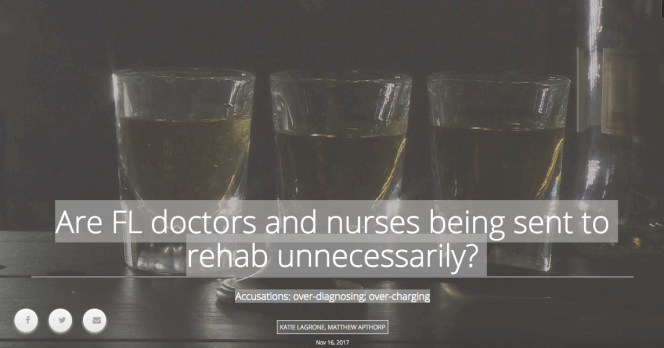
Finally, in a Florida Fox4News story, “Are FL doctors and nurses being sent to rehab unnecessarily? Accusations: Overdiagnosing; overcharging” (Nov. 16, 2017), reporters Katie Lagrone and Matthew Apthorp wrote about financial incentives for evaluators to refer doctors to inpatient substance abuse facilities.
Dr. Dinah Miller
“Medical professionals who enter the programs must pay for all treatment out-of-pocket, which could add up to thousands of dollars each year. There are also no standards on how much treatment can cost.”The American Psychiatric Association has made it a priority to address physician burnout and mental health. Richard F. Summers, MD, APA Trustee-at-Large noted: “State PHPs are an essential resource for physicians, but there is a tremendous diversity in quality and approach. It is critical that these programs include attention to mental health problems as well as addiction, and that they support individual physicians’ treatment and journey toward well-being. They need to be accessible, private, and high quality, and they should be staffed by excellent psychiatrists and other mental health professionals.”
PHPs provide a much-needed and wanted service. But if the goal is to provide mental health and substance abuse services to physicians who are struggling – to prevent physicians from burning out, leaving medicine, and dying of suicide – then any whiff of corruption and any fear of professional repercussions become a reason not to use these services. If they are to be helpful, physicians must feel safe using them.
Dr. Miller is coauthor with Annette Hanson, MD, of “Committed: The Battle Over Involuntary Psychiatric Care” (Baltimore: Johns Hopkins University Press, 2016).
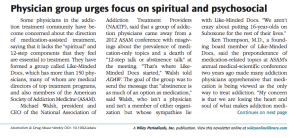
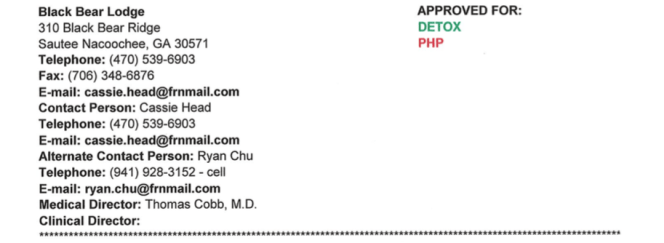
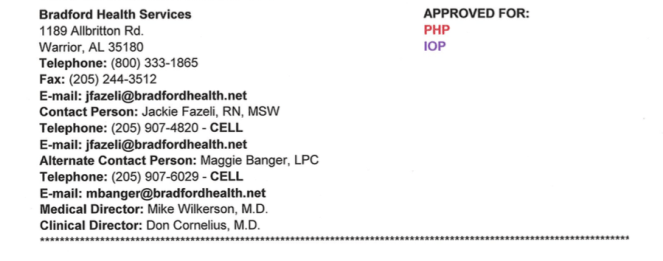
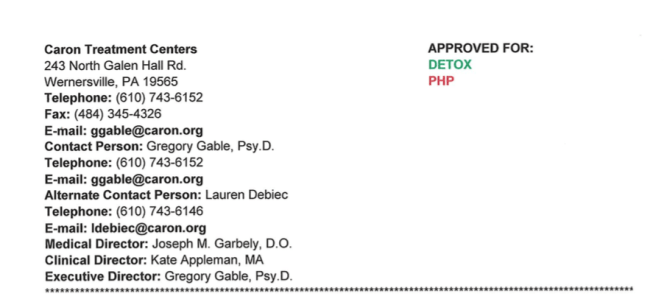
The Federation of State Medical Boards (FSMB) House of Delegates adopted an updated Policy on Physician Impairment at their 2011 annual meeting distinguishing “impairment” and “illness” stating that “..Regulatory Agencies should recognize the PHP [physician health programs] as their expert in all matters relating to licensed professionals with “potentially impairing illness.” In 2011 The American Society of Addiction Medicine (ASAM) issued a Public Policy Statement on coordination between physician health programs (PHPs), medical boards and treatment providers recommending only “PHP approved” treatment centers be used in the assessment and treatment of doctors. The Federation of State Physician Health Programs (FSPHP) is an appendage of the American Society of Addiction Medicine (ASAM) and the FSPHP cultivated a relationship with the Federation of State Medical Boards (FSMB) in the mid 1990s by offering “treatment” rather than”punishment” and the influence on regulatory medicine can be historically and systematically tracked in the Journal of Medical Regulation and similar publications. This group gained a seat at the table by by touting grandiose success rates in treating “addicted doctors.” The Washington PHP claimed a success rate of 95.4%, Tennessee 93% and Alabama 90%. These breathtaking success rates were attributed to specialized treatment centers for doctors such as Ridgeview where they required inpatient stays lasting three times longer than average folks; cash-on-the-barrel and at three times the cost mind you. The truth is the majority of doctors referred for assessments do not meet the diagnostic criteria for problems they are receiving treatment. It is unneeded. Very few are “addicts.” Most of those being referred to these programs are like Leonard Masters who was accused of overprescribing and was told by the director of the Florida PHP he could either relinquish his license or have an evaluation. Masters chose the evaluation thinking he would be returning in 4-days. but was diagnosed as an alcoholic and spent 4-months. The man didn’t even have a drinking problem! He successfully sued G. Douglas Talbott and the facility for false imprisonment, malpractice and fraud.
The Federation of State Medical Boards (FSMB) House of Delegates adopted an updated Policy on Physician Impairment at their 2011 annual meeting distinguishing “impairment” and “illness” stating that Regulatory Agencies should recognize the PHP as their expert in all matters relating to licensed professionals with “potentially impairing illness.” In 2011 The American Society of Addiction Medicine (ASAM) issued a Public Policy Statement on coordination between physician health programs (PHPs), medical boards and treatment providers recommending only “PHP approved” treatment centers be used in the assessment and treatment of doctors. The Federation of State Physician Health Programs (FSPHP) is an appendage of the American Society of Addiction Medicine (ASAM) that cultivated a relationship with the Federation of State Medical Boards (FSMB) by offering “treatment” rather than”punishment and their influence on regulatory medicine can be historically tracked in the Journal of Medical Regulation and similar publications when they began touting grandiose success rates in treating “addicted doctors.” The Washington PHP claimed a success rate of 95.4%, Tennessee 93% and Alabama 90%. These breathtaking success rates were attributed to specialized treatment centers for doctors such as Ridgeview where they required inpatient stays lasting three times longer than average folks; cash-on-the-barrel and at three times the cost mind you. The truth is the majority of doctors referred for assessments do not meet the diagnostic criteria for problems they are receiving treatment. It is unneeded. Very few are “addicts.” Most of those being referred to these programs are like Leonard Masters who was accused of overprescribing and was told by the director of the Florida PHP he could either relinquish his license or have an evaluation. Masters chose the evaluation thinking he would be returning in 4-days. but was diagnosed as an alcoholic and spent 4-months. The man didn’t even have a drinking problem! He successfully sued G. Douglas Talbott and the facility for false imprisonment, malpractice and fraud.
The North Carolina State Audit specifically noted the predominant use of these out-of-state treatment centers. In addition to “creating an undue burden on” those being evaluated the audit states that:
“Program procedures did not ensure that physicians received quality evaluations and treatment because the Program had no documented criteria for selecting treatment centers and did not adequately monitor them”
In fact the audit found no documented policy for selecting treatment centers. The very organizations demanding documentation of policy for approval and charged with approving the treatment centers could not even give a comprehensible, plausible or even simple explanation for what any of these things even mean.
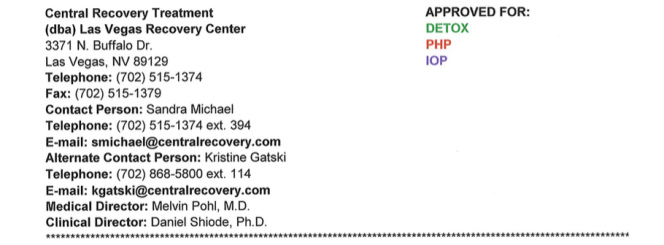
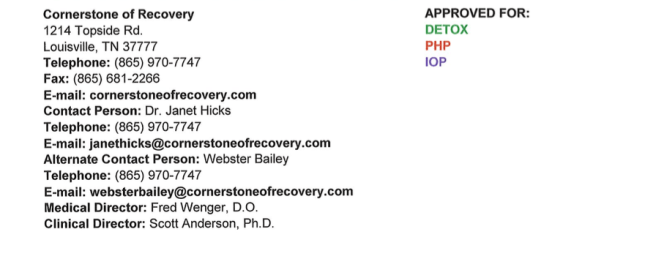
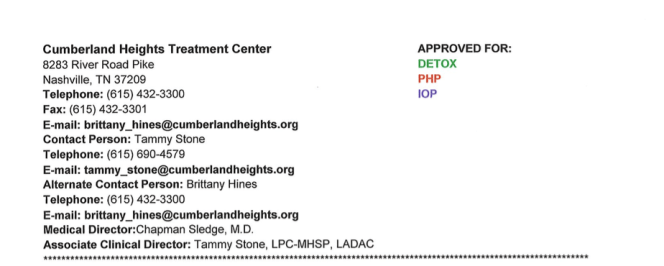
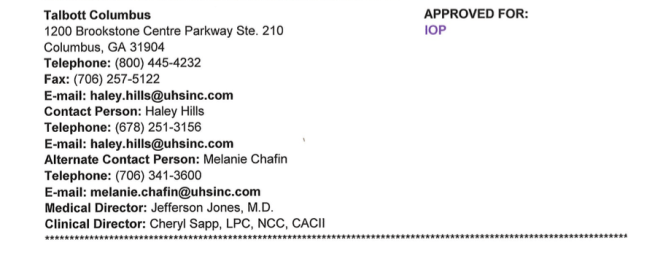
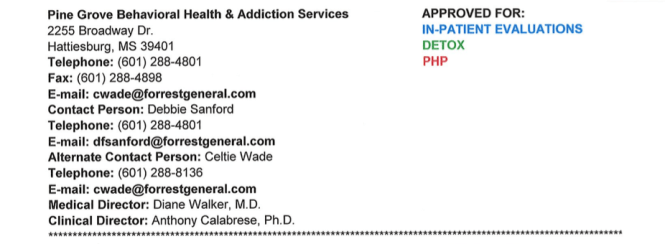
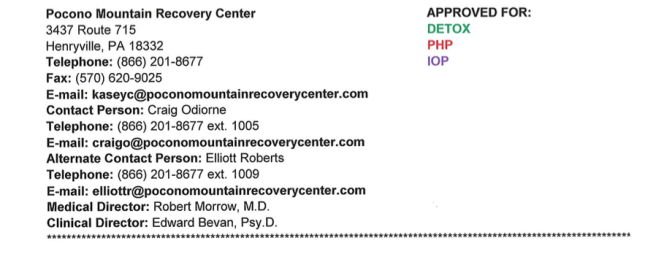
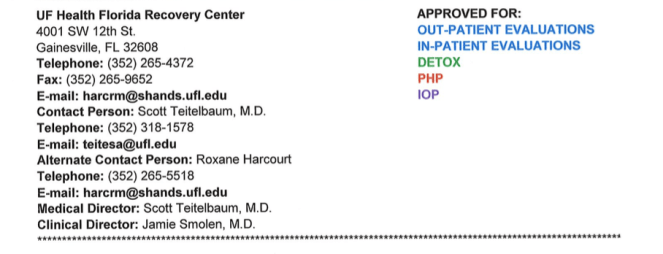
When the NC PHP was asked to define these characteristics they explained that they learned of “new treatment centers through professional networks and other informal sources” and used the “treatment centers’ reputation as a basis for establishing a referral relationship.” Staff credentials, quality of care, treatment methods and modalities, patient choice, follow-up data, outcomes and other objective information apparently took a back-seat to what appears to be ill-defined and subjective word-on-the-street.
None of these facilities take insurance. It is all out-of-pocket with the average cost for a 4-day assessment $5K and another $80-120K for at least three months of inpatient treatment Reports of “diagnosis rigging” and unneeded treatment are rampant and if my survey is an accurate reflection of what is occurring more than 90% of those treated do not even meet the diagnostic criteria for what they are being treated for.
This “failure to use FSPHP recommended criteria to select treatment centers,” the Audit concluded “could cause the Program to enter into referral arrangements with service providers that do not meet quality standards”
Ironically the NC PHP failed to follow guidelines they themselves introduced and demanded be followed but could produce no documented criteria they existed. They could not even provide plausible criteria. Professional networks, reputation and other informal sources are fine for some choices. That’s how I picked out my first skateboard. These resources can play in important role in choosing a shirt, new sneakers or even a car but they do not constitute selection criteria for an assessment in which the consequences and recommendations made for the person being assessed are significant, potentially life-altering and possibly permanent!
And to top it off the Medial Director of the North Carolina PHP, Dr. Warren Pendergast, was the President of the FSPHP at the time of the audit. PHPs are not clinical providers but monitoring agencies. They meet with, assess and refer doctors for evaluations and and monitor doctors through drug and alcohol testing and the monthly reports of others. As such the PHP is tasked with two jobs-referring doctors for evaluation and then monitoring them after they have been evaluated. The fact that they could not produce the facts and reasoning of the very basis for which they exist is incomprehensible. The President of the FSPHP being unable to define the selection criteria for approved and mandated facilities is like Anthony Bourdain being unable to explain the ingredients of an omelette.
To summarize, doctors in North Carolina were being forced by the PHP to have evaluations at “PHP-approved” assessment and treatment centers but the PHP was unable to explain anything substantive in defining any of it. Why? Because no qualitative objective selection criteria exist and that is the case in every state. This is especially concerning when it is realized that these evaluations are limited to facilities and people tied financially and ideologically to the groups and individuals who are mandating the referral.
This Sunday marks the beginning of Sunshine Week, a national celebration started in Florida 15 years ago to promote open government. Transparency is about shedding light. Transparency brings accountability, and, often, meaningful reform.
On June 3, 2016 Governor Charlie Baker signed into law the first update to Massachusetts public records law since 1973. House Bill 4333 imposes shorter time frames for agencies to respond to records requests. Most agencies need to respond within 10-days but can be granted a 20-day extension provided they show good cause for it. Those who believe a state agency has violated its legal obligations can petition the Supervisor of Records and agencies are also subject to punitive damages for failure to comply with the requirements.
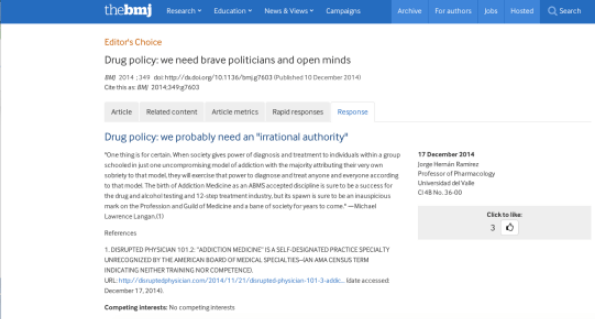
“One thing is for certain. When society gives power of diagnosis and treatment to individuals within a group schooled in just one uncompromising model of addiction with the majority attributing their very own sobriety to that model, they will exercise that power to diagnose and treat anyone and everyone according to that model. The birth of Addiction Medicine as an ABMS accepted discipline is sure to be a success for the drug and alcohol testing and 12-step treatment industry, but its spawn is sure to be an inauspicious mark on the Profession and Guild of Medicine and a bane of society for years to come.” ―Michael Lawrence Langan.(1)
References
1. DISRUPTED PHYSICIAN 101.2: “ADDICTION MEDICINE” IS A SELF-DESIGNATED PRACTICE SPECIALTY UNRECOGNIZED BY THE AMERICAN BOARD OF MEDICAL SPECIALTIES–(AN AMA CENSUS TERM INDICATING NEITHER TRAINING NOR COMPETENCE).
URL: http://disruptedphysician.com/2014/11/21/disrupted-physician-101-3-addic… (date accessed: December 17, 2014).
He’s a practicing Florida doctor, she’s a licensed mental health counselor. Both are staying in the dark out of fear of repercussions but speaking out about the state’s rehab program for doctors.
“There are some serious flaws in the system and I’m here firsthand to tell you that’s true,” said the physician.
“I think its purpose is to help people but it’s not doing that, it’s abusing them,” said the mental health counselor.
In 2013, while applying to get her license to practice mental health in Florida, the mental health counselor we spoke with said she was thrust into a 5-year state contract with PRN for drug and alcohol addiction after admitting on her license application that she was hospitalized and treated for depression four years earlier.
“I felt humiliated and frustrated,” she said.
Frustrated doesn’t begin to explain how another practitioner felt about his journey in and out of the state’s rehab program.
After admittedly battling drugs and alcohol, he was 3-years clean in state rehab only to learn a routine drug screening tested “mildly positive,” for alcohol.
“I didn’t drink, I hadn’t had a drink in 3 years,” the doctor said. “There isn’t a test in the world that we do that can’t have a false positive,” he said.
He disputed it, paid for additional drugs tests to prove his innocence and says he even spent another $500 to take a lie detector.
“It made no difference to them. They said no, we have the original test and it’s positive so no matter what the retest shows we still think that you relapsed,” he said.
Relapse would have meant starting over in rehab and stopping his practice for 3 months.
“There’s no way I could have done that without completely ruining my practice. I’m just not going to suffer consequences for something that I didn’t do,” the doctor said.
Both practitioners say while the programs are necessary and a needed resource for practitioners struggling with addiction or mental health, they both believe PRN took its power too far. They hired Sarasota-based attorney Steve Brownlee of Chapman Law Group. He’s made a business out of defending doctors and nurses sent to these state contracted rehab programs.
“The impaired practitioner programs play a very important role but it seems like everyone who gets into the net, gets caught and there are a lot of people who don’t belong in that net,” he told us.
As of January 2017, there were approximately 928 practitioners enrolled in the state’s doctor rehab. The nurse’s program was providing services to 1,216 individuals. Individuals sent to these rehab programs are evaluated and recommended for the program by the same PRN or IPN-approved doctors who will treat them once they’re in the program.
“The doctor could be biased because they’re paid handsomely for the referral. There’s incentive to suggest the person is impaired,” he said.
“I hear a lot about some questionable cases,” said Dr. Jay Wolfson, Associate Vice President of USF Health in Tampa. While Wolfson also says there is a critical need for programs like IPN and PRN in the state, he also believes the programs should be investigated by an independent third party.
“They operate very independently. They become judge, jury and prosecutors,” he said. “It becomes a business as well as a service and that’s where it can get difficult,” Wolfson explained.
Medical professionals who enter the programs must pay for all treatment out-of-pocket which could add up to thousands of dollars each year. There are also no standards on how much treatment can cost. So one PRN-approved doctor can charge $250 for an evaluation while another doctor can charge $750 for a similar evaluation. PRN’s medical director, Dr. Alexis Polles, told us in a statement that lab testing provided to practitioners in the program are “at or below the national average for similar toxicology testing. In fact, the State of Florida’s toxicology lab testing is among the lowest of similar programs,” she said.
When asked about the allegations, PRN’s medical director Dr. Polles said “we vehemently deny strong-arming anyone into the state’s impaired practitioner program. It is of utmost importance that our health providers understand the need to enter an evaluation process if they have a potentially impairing condition.” According to PRN’s Chief Administrative Officer, since 2012 the program has enrolled 737 practitioners and 854 practitioners, including 18 students, have successfully completed the PRN program.
In an annual compliancy report conducted last year by the FL Department of Health, files for 24 participants were reviewed randomly by FDOH staff and PRN was found to be in full compliance with all contractual responsibilities. In her statement Polles added, “PRN is independently audited annually for oversight and accountability.”
After one year, the state’s medical board agreed the mental health counselor we spoke to did not need to continue in the program’s drug and alcohol treatment program.
“It was a nightmare, a nightmare, I would not recommend PRN to anybody,” she said. She also told us after all the drug testing and evaluations, she spent a total of $10,000 to get her license to practice mental health. Had she waited 8 months to fill out her application, she could have bypassed PRN all together since it would have been over 5 years since her hospitalization and she would not have been obligated to disclose it. She remains in treatment for depression and takes medication under a psychiatrists’ care.
While the doctor we spoke with continues his battle to prove he’s clean and ready to move on.
“I no longer trust them. I am fighting for my reputation. It’s been too hard to come back from where I was to let that go,” he said.
In May, PRN terminated its contract with the doctor for his failure to fulfill obligations of the program. The doctor is now taking his case to the Board of Medicine who will ultimately determine his future in the state’s rehab program and whether he gets to keep his license to practice medicine.
A spokesperson for the FL Department of Health declined to respond to the allegations. A spokesperson told us PRN and IPN are contracted vendors to the Department and serve as consultants. “The Department would have no control over policies of PRN or IPN.”
It adds some additional regulation to the state’s impaired practitioner programs. Among the measures in that law prohibiting consultants like PRN or IPN from providing evaluations and treatment services. The bill became law in May.





 “PHPs provide a much-needed and wanted service. But if the goal is to provide mental health and substance abuse services to physicians who are struggling – to prevent physicians from burning out, leaving medicine, and dying of suicide – then any whiff of corruption and any fear of professional repercussions become a reason not to use these services. If they are to be helpful, physicians must feel safe using them.”



 via
via 











 via
via





 Disrupted Physician
References
1. DISRUPTED PHYSICIAN 101.2: “ADDICTION MEDICINE” IS A SELF-DESIGNATED PRACTICE SPECIALTY UNRECOGNIZED BY THE AMERICAN BOARD OF MEDICAL SPECIALTIES–(AN AMA CENSUS TERM INDICATING NEITHER TRAINING NOR COMPETENCE).
URL: http://disruptedphysician.com/2014/11/21/disrupted-physician-101-3-addic… (date accessed: December 17, 2014).
Competing interests: No competing interests