Physician Suicide and Physician Wellness Programs: We Really Need to Start Talking About the Elephant in the Room.

mllangan1's avatarDisrupted Physician

Physician Suicide

Physician Suicide and the Elephant in the Room

Michael Langan, M.D.

Although no reliable statistics exist, anecdotal reports suggest an alarming upsurge in physician suicide. This necessitates a reappraisal of known predisposing risk factors such as substance abuse and depression but also requires a critical examination of what external forces or vulnerabilities might be unique to doctors and how they might be involved in the descent from suicidal ideation to suicidal planning to completed suicide.

Depression and Substance Abuse Comparable to General Population

Depression and substance abuse are the two biggest risk factors for suicide. The prevalence of depression in physicians is close to that of the general population 1,2 and, if one looks critically at the evidence based literature, substance abuse in medical professionals approximates that of the general population.  Controlled studies using DSM diagnostic criteria suggest that physicians have the same rates (8-14%) of substance abuse…

View original post 3,327 more words

Looking for an Investigative Reporter to Question MRO—-Procedural, Ethical and Legal Justification Needed

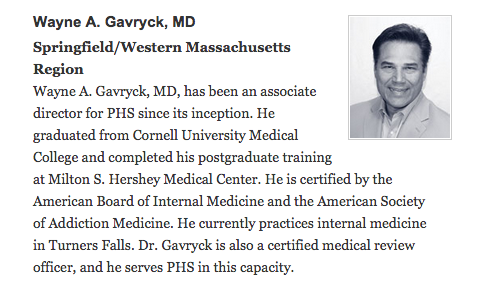
As the Medical Review Officer (MRO)  for the Massachusetts state Physician Health Program (PHP), Physician Health Services, Inc. (PHS, inc.), Dr. Wayne Gavryck’s responsibility is simple.  He is supposed to verify that the chain-of-custody  in any and all drug and alcohol testing is intact before reporting a test as positive.

Screen Shot 2014-12-03 at 12.53.49 AM

Note Dr Gavryck is: 1. Certified by ASAM; 2. A .Certified Medical Review Officer (MRO) who “serves PHS in this capacity.” Although Dr. Gavryck serves PHS I would beg to differ on the MRO function. Accessed from PHS Website 1/15/2015 http://www.massmed.org/Physician_Health_Services/About/PHS_Associate_Directors/#.VM1dZlXF-hY

Dr. Gavryck evidently did not do that here.  In fact for more than a year he helped cover up an alcohol test that was intentionally fabricated at the behest of PHS Director of Operations Linda Bresnahan (who told me when I confronted her with the fact that I have never had or ever even been suspected of having an alcohol problem “you have an Irish last name–good luck finding anyone who will believe you!”

It took a formal complaint with the College of American Pathologists to get the truth out.  The whole fiasco can be seen here and here.

What Gavryck and his co-conspirators did is egregious and ethically reprehensible.  It shows a complete lack of moral compass and personal integrity.  What was done from collection to report to coverup  and everything in-between is indefensible on all levels (procedurally, ethically, and legally).

The documentary evidence shows with clarity that this was not accident or oversight.  It was intentional and purposeful misconduct.  I think everyone would agree that there should be zero-tolerance for forensic fraud in positions of power.    Any person of honor and civility would agree.

Transparency, regulation, and accountability are necessary for these groups.   It is an issue that needs to be acknowledged and addressed not ignored and covered up.

If Dr. Gavryck can give a procedural, ethical, or legal explanation of what was done then I stand corrected. Just one will suffice.  I’ll erase my blog and vanish into the woodwork.  But If he cannot then this needs to be addressed openly and publicly.   And whether he was involved in the original fraud or not is irrelevant. As the MRO for PHS it is his responsibility to correct it–however late the hour may be.

Perhaps Dr. Gavryck needs to see some of the damage he has caused in order to take this responsibility. Known as a “bag man” who simply rubber stamps positive tests at the request of Sanchez and Bresnahan (much like Annie Dookhan)  he does not see the damage that is caused. Forensic fraud has grave and far reaching effects and in this case has severely impacted many people and include patient deaths.

Perhaps Dr. Gavryck needs to take a “moral inventory” and see that this this type of behavior causes real damage to real people and put a face on it.

Perhaps Gavryck needs to be asked these questions directly from an investigative reporter.

It is people just like this who are killing physicians across the country.   The body count is vast and multiple. This has recently been underscored by the horror stories mounting in recent Medscape and KevinMD articles associating PHP programs like this one with the recent epidemic of suicides in doctors.

These people have removed themselves from accountability.  One way they do this is by withholding information and suppressing the truth.  This is facilitated by willing sympathizers and apologists who refuse to acknowledge or investigate wrongdoing.   Gavryck believes he is beyond reproach and is complacent that his friends will protect him and insulate him from harm.  The evidence, however, is not going away. Neither am I.

Those who are caught doing dirty deeds such as this need to be held accountable.  This requires the provision of information, justification for actions and the ability to be punished by outside groups.

I have the information.  Gavryck needs to provide justification for his actions and held accountable for them.  Perhaps an investigative journalist could interview him and ask him directly.

Help me get this exposed, corrected, and rectified.  The doctors of Massachusetts and the doctors of this entire country deserve better than this.

via Integrity and Accountability—Defend the MRO Procedurally, Ethically or Legally and win 100 Volumes of the Classics in Medicine Library and Salk and Sabin Autographs!.
Screen Shot 2014-11-26 at 7.10.56 PM

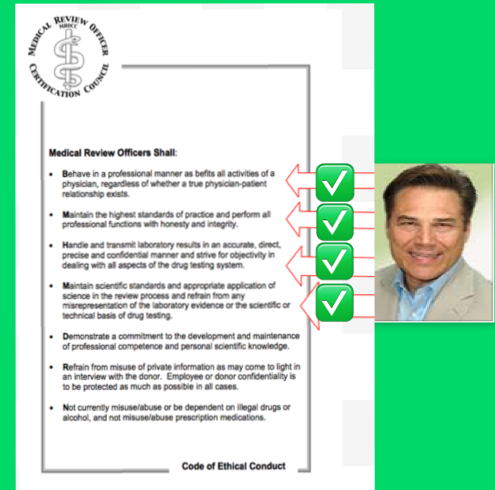
The MRO Code of Ethics--Seems like Dr. Gavryck's breaking them in sequential order!

The MRO Code of Ethics–Seems like Dr. Gavryck’s breaking them in sequential order!

Carl Sagan’s Baloney Detection Kit and the Birth of “Addiction Medicine” as a New Discipline: The Need for an in Utero Diagnostic Assessment Prior to Delivery

mllangan1's avatarDisrupted Physician

3b67f56268909f1dfa2a168a352ad09a“One of the saddest lessons of history is this: If we’ve been bamboozled long enough, we tend to reject any evidence of the bamboozle. We’re no longer interested in finding out the truth. The bamboozle has captured us. It’s simply too painful to acknowledge, even to ourselves, that we’ve been taken. Once you give a charlatan power over you, you almost never get it back.”

― Carl Sagan, The Demon-Haunted World: Science as a Candle in the Dark


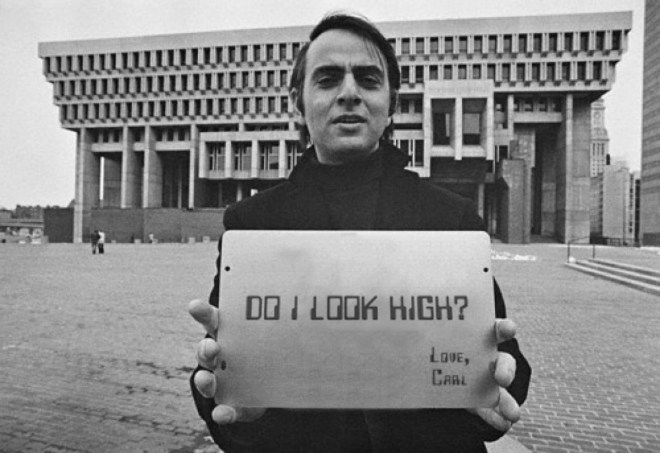
Carl Sagan devised a toolkit for nonsense-busting and critical thinking, which includes these nine rules:

  1. Wherever possible there must be independent confirmation of the “facts.”
  2. Encourage substantive debate on the evidence by knowledgeable proponents of all points of view.
  3. Arguments from authority carry little weight — “authorities” have made mistakes in the past. They will do so again in the future. Perhaps a better way to say it is that in…

View original post 1,744 more words

Medscape Article Critical of Physician Health Programs (PHPs): An Important Milestone in Exposing Abuse and Injustice

Screen Shot 2015-09-04 at 5.46.10 PM

Mainstream Media, Societal Beliefs and Perceived Authority

Iris Martyn’s article below concerns mainstream media bias and the powerful role social media can play in combatting it. Tangential dissident voices often go unheard (or are silenced) when they oppose perceived authority or mainstream societal beliefs and majority mores.

Martyn gives the example of Suffragettes who were frequently accused of “having ‘magnificently succeeded … in their intention of making themselves a nuisance’, a dismissive claim that covers up the threat” and downplays both the validity of the cause and the character of those behind it.

According to cultural theorist Stuart Hall, the media obtain their information from the primary definers of social reality in authoritative positions and amplify those opinions irrespective of the foundation or veracity of those opinions.

Dissenting voices are all too frequently met with a wall of blinkered apathy or openly dismissed or opposed by mainstream media.

As a result valid complaints and concerns are either unreported, underreported or reported as invalid or misguided hyperbole.

Screen Shot 2015-09-12 at 4.03.48 PM

Medscape Article Critical of  Physician Health Programs (PHPs) Opens Door to a more focused attack

The  importance of a recent article published in Medscape  and critical of state Physician Health Programs (PHPs) cannot be overemphasized.

Physician Health Programs- More Harm Than Good? by Pauline Anderson breaks new ground as it is the first mainstream medical publication to address serious and pervasive concerns of the unregulated and unchecked power of these monitoring programs for doctors as an increasing number of reports involving threats, intimidation and fraud come in from doctors across the country.

Originally funded by medical societies and staffed by volunteers, these programs existed in every state by 1980.   PHPs are the equivalent of Employee Assistance Programs (EAPs) for other occupations and meet with, assess and monitor doctors who have been referred for substance use or other mental or behavioral health problems.

Over time these programs have been subverted.  They have become a power unto themselves.  They no longer represent doctors or the public but the interests of the “recovery related racket.”   Doctors are being diagnosed with illnesses they don’t have to provide treatment they don’t need all to line the purses of the drug and alcohol testing, assessment and treatment industry and their associates.  At the same time doctors who are ill and do need help are not getting the proper treatment. They don’t get better but worse and never return to practice.   How many doctors who are perfectly healthy or recovered from illness properly treated are we losing each year to suicide?    How many suffer in silence out of fear of being ensnared by these punitive, rigid and one-size fits all programs that claim to exist to protect the public?

PHPs are needed.  Doctors who develop problems with addiction or psychiatric problems need to be removed from practice and protect the public, receive treatment until they are healthy enough to return to practice and monitored for a period of time to make sure they remain health.   But under current management by the Federation of State Physician Health Programs (FSPHP) this is not happening.   PHPs have become Frankenstein’s of coercion, control and abuse that help a few doctors and cause a great deal of harm to the rest.  Doctors across the country have been going to local media, law enforcement, the state’s  Attorney General,  the ACLU and other agencies only to be turned a deaf ear.  With the PHP as perceived authority these doctors have been labeled “impaired” and the delegitimization and stigma has prevented their truth from being heard.

To date there have been 187 comments on this article and 301 comments on Dr. Pamela Wible’s related piece entitled “Do Physician Health Programs Increase Physician Suicides?” which was published August 28, 2015 on Medscape and subsequently on KevinMD where it has become the most popular article this week with 243 comments to date.  And the consensus so far from reading the more than 700 comments is that PHPs are not only causing harm but serious harm on a large scale.  This is by a landslide. The comments raise specific and serious questions that are not being answered by the FSPHP or their sympathizers and apologists.

The FSPHP is tongue-tied in the face of facts and reason as the  individual horror stories mount.  The testimonials and criticisms are articulate, specific and remarkably similar.   It appears to be a rigged game in which all outside opinion is dismissed and no due process exists. Coercion, control, threats, abuse, intimidation and abuse of power are seen crystal clear.

Minor infractions, one-offs, situational problems, anonymous referrals and even false-reports have led doctors into a system in which they have absolutely no control that includes fabricated drug and alcohol tests, diagnosis rigging and unneeded treatment for three months or longer in “PHP-approved”  cash only inpatient facilities with close ideological and financial ties to the PHPs.  This is political abuse of psychiatry and institutional injustice and it is undoubtedly the cause of the marked increase in physician suicide.

So hats off to Pauline Anderson and Caroline Cassels for having the perspicacity. persistence and courage to shine a light on what was previously ignored or deflected.  As a perceived authority the FSPHP and state PHPs believe they are beyond reproach. Specific serious concerns accumulating testimonials of doctors across the country with similar stories are being met with silence and mainstream media need take note of this.  We need to shine a larger light in this direction and with dispatch.    Sunshine is after all  the best disinfectant

Screen Shot 2015-09-12 at 4.00.15 PM


Injustice In The Media

By Iris Martyn, Form 6 •

In 1903, outspoken suffragettes “defaced” thousands of one-penny coins by stamping “Votes for Women” onto them and releasing them back into circulation. In fact, ever since complex human social structures came into existence, those who have suffered under their dividing, categorising, and often somewhat arbitrary rules have sought to express themselves in ways that bring to light their humanity and the harsh reality of oppressive conditions.

Often, established media such as print journalism, only enforces the values of a biased society in which the privileged are accustomed to the predominance of their views.

This occurs at the expense of dissident voices. To continue the earlier example, “Suffragettes on the War Path” were frequently accused of having “magnificently succeeded … in their intention of making themselves a nuisance”, a dismissive claim that covers up the threat felt by male politicians at the thought of universal suffrage, and also downplays the aim of the Suffragettes’ cause, reducing them to nothing more than rowdy troublemakers as far as the media is concerned.

However, this is not a carefully preserved historical phenomenon from the bad old days when societal inequality was present, as opposed to our shining, gender-equal, race-blind present. We cannot describe the times when the oppressed spoke out against the status quo, armed with today’s perfect values and the smugness of hindsight.

Even the epicentres of Western civilisation, which hold themselves to be the pinnacle of human creation, by which I mean North America and Western Europe, are riddled with deeply-ingrained bias towards white, old, rich heterosexual men.

When the media outlets cease to present an accurate and unbiased account of events, today’s protestors rely on social media to organise demonstrations, collect evidence of bias, unfair treatment, and eyewitness accounts of injustice.

On the 8th of June, 2014, two right-wing white Neo-Nazis entered a restaurant in Las Vegas, shot two policemen dead, and left a swastika on one of the bodies. This went unreported by Fox News, a major US “news” programme.

On the 9th of August, 2014, an 18-year-old named Michael Brown was shot six times in Ferguson, Missouri, by a police officer in broad daylight. His body lay in the street for several hours. A grand jury chose not to indict his killer. Multiple Fox News hosts were “outraged” at the public anger towards the murderer of an innocent, unarmed boy, as the officer was “doing his job”. The resulting protests from Ferguson’s Black community, during which many civilians were illegally arrested, tear-gassed and shot with rubber-coated metal bullets, were dismissed as having nothing to do with Michael’s murder. Fox News correspondent Rudolph Giuliani, former New York City mayor, claimed that “the racial arsonists … have worked these people up so much with propaganda that facts don’t matter”.

Meanwhile, as support from nearby politicians was lacking, support for Ferguson protestors came, over the internet, from victims of attacks in Palestine. They sent messages of solidarity to the city’s inhabitants, along with advice on how to protect oneself, and recover, from the effects of canisters full of tear gas that were thrown into peaceful protests. As local schools that usually provide a daily meal for schoolchildren closed, a crowdfunding campaign raised $155,000 for the Ferguson foodbank, another raised $130,000 to help Michael Brown’s parents with legal fees, and yet another raised nearly $25,000 to provide college education for his siblings.

Social media was not only used to provide support for the Ferguson community, but to create eyewitness reports on police brutality and racism and to raise public awareness of injustice. In the shooting of yet another young black man, Antonio Martin, witnesses with camera phones documented the mysterious appearance of a gun at the crime scene nearly three hours after his death – planted by the police department.  On one tumultuous night of protests, demonstrators moved aside respectfully to allow an ambulance to pass through. As multiple witnesses assert, the ambulance was full of armed police officers, in defiance of international law.

Yet even this is not the most shocking demonstration of the power of the US police force in recent times. In July 2014, a 43-year-old asthmatic black man was put into an illegal chokehold by a police officer in New York City. His head was hit against the pavement multiple times by another officer. Eric Gartner, described as “just a big teddy bear” by his family, shouted “I can’t breathe” six times as he was choked to death. Despite video evidence from multiple bystanders who filmed his murder, unable to do anything else for fear of attack from the police, again a grand jury chose not to indict his killers. The slogan “I can’t breathe” swept the world when the details of this murder were posted on Twitter, sparking worldwide protests.

When national news outlets focused on the possibility that Michael Brown had just robbed a corner store before his death, or that Eric Gartner was a drug addict, in an attempt to justify their deaths, those who were close to the victims used social media, primarily Facebook and Twitter, to speak out against these character assassinations. Michael Brown’s mother spoke about her son’s kind nature, and her difficulty in persuading him to finish high school – black children are much more unlikely to succeed in the US education system.

Eric Gartner’s friends and family spoke about their disappointment in the judicial system, while photographs of his mother wearing an “I can’t breathe” t-shirt to the grand jury hearing circulated quickly over the internet. When a 13-year-old Black boy was shot dead in North California for carrying a BB gun, a white former robber recalled his aspirations to crime on Tumblr, where the police underwent an hour of patient negotiation to convince him to put down his very real firearm, which contrasts with the utter lack of communication with the friendly, innocent, eighth-grader, Andy Lopez.

Besides filling the role that should be occupied with an unbiased and impartial press, social media is used by individuals to criticise the internalised racism of mainstream media, and its idolatry of the police.

One image in widespread online circulation is a composition of two different edited versions of a New York Daily News article which describes a violent incident in a subway. In the first version, a woman was “grabbed” by a “hulking brute” who “shoved her onto the platform and began choking her in an unprovoked attack, authorities said”. When the attacker turned out to be a police officer, details of the victim, that provoke sympathy in readers, were removed. Now she was “allegedly put into a bear hug, thrown to the floor, and choked”. The addition of the word “allegedly”, the description of the assault as a “bear hug”, and the use of the passive voice all disassociate the officer from his crime.

The majority of people tend to see social media as a harmless diversion from reality, a way of boasting about one’s achievements or reconnecting with old friends.

In our world, which still contains so much injustice, this powerful tool brings together those whose voices go unheard by mainstream media.

It allows them to support one another, collect evidence of injustices that go unreported, humanise the victims of violent crimes, and bring light to the bias and agenda of news corporations.

The Need for Anti-Trust and OIG Investigation of Physician Health Programs—Sunshine is the Best Disinfectant!

mllangan1's avatarDisrupted Physician

She likes a rigged game, you know what I mean?”
— R.P. Murphy in Ken Kesey’s One Flew Over the Cuckoo’s Nest


Unknown-3An article published in the March 17, 2014 newsletter Alcoholism and Drug Abuse Weeklyentitled “Physician group urges focus on spiritual and psychosocial” describes a group of doctors emphasizing “that for all addictions, the psychosocial and spiritual interventions, including 12-step interventions must be included in the treatment process.”   “According to founding board member Dr. Ken Thompson, M.D., “to not do so falls short of practicing good addiction medicine.”
With a “significant percentage” in 12-step recovery themselves, “they have formed group called “Like-Minded Docs.”  This group now has close to 300 physicians, “many of whom are medical directors of top treatment programs and also members of the American Society of Addiction Medicine (ASAM).”

ADAW March 17 2014

Screen Shot 2014-03-15 at 7.38.33 PM

Dr. Thompson is  the Medical Director of Caron treatment center in Pennsylvania. The…

View original post 1,320 more words

When Dentists Go Too Far: North Carolina Board of Dental Examiners v. Federal Trade Commission

Originally posted on Article 8:Antitrust litigation hasn’t disappeared, but rather changed its focus. Instead of targeting the great railroad empires of the late 19th century, today’s antitrust efforts focus on more minute industries, like dentistry. In October, the Supreme Court heard arguments for North Carolina State Board of Dental Examiners v. Federal Trade Commission, in which…

http://disruptedphysician.com/2015/03/20/when-dentists-go-too-far-north-carolina-board-of-dental-examiners-v-federal-trade-commission/

Competent, Ethical and Fair Legal Representation for Doctors —A Possible New Niche area for Lawyers.

Wretched creatures are compelled by the severity of the torture to confess things they have never done and so by cruel butchery innocent lives are taken; and by new alchemy, gold and silver are coined from human blood.– Father Cornelius Loos (1592)  “PHP-Approved Attorneys” My survey has revealed an additional factor stacking the deck and removing accountability from […]

http://disruptedphysician.com/2015/05/29/competent-ethical-and-fair-legal-representation-for-doctors-a-possible-new-niche-area-for-lawyers/

Recovery Related Racket: The Federation of State Physician Health Programs (FSPHP) represents the drug and alcohol testing, assessment and treatment industry not us. We need to name the enemy.

Screen Shot 2016-09-02 at 9.56.01 AM.png

“It is easier to believe a lie one has heard a hundred times than a truth one has never heard before.” –Robert S. Lynd

images-18


1980s–Your Money or Your Medical License

Ridgeview Institute was a drug and alcohol treatment program for “impaired physicians” in Georgia created by G. Douglas Talbott, a former cardiologist who lost control of his drinking and recovered through the 12-steps of Alcoholics Anonymous. Up until his death on October 18, 2014 at the age of 90, Talbott owned and directed a number of treatment facilities for impaired professionals, most recently the Talbott Recovery Campus in Atlanta, one of the preferred referrals for physicians ordered into evaluation and treatment by licensing boards today.

G. Douglas Talbott is a prototypical example of an “impaired physician movement”physician–in fact in many ways he may be considered the”godfather” of the current organization.  He helped organize and serve as past president of the American Society of Addiction Medicine (ASAM) and was a formative figure in the American Medical Association’s (AMA’s) Impaired Physician Program.

The cost of a 28-day program for nonprofessionals at Ridgeview in 1987 was $10,000 while the cost was “higher for those going through impaired-health professionals program,” which lasted months rather than 28 days.1

In 1975 after creating the DeKalb County Impaired Physicians Committee for the Medical Association of Georgia, Talbott founded the Georgia Disabled Doctors Program for the assessment and treatment of physicians. Founded in part because “traditional one-month treatment programs are inadequate for disabled doctors,” and they required longer treatment to recover from addiction and substance abuse.   According to Talbott, rehabilitation programs that evaluate and treat the rest of the population for substance abuse issues are incapable of doing so in doctors as they are unlike any other of the inhabitants of our society. Physicians are unique. Unique because of their incredibly high denial”, and he includes this in what he calls the “Four MDs,” “M-Deity”, “Massive Denial” “Militant Defensiveness” and “More Drugs.”2   And these factors set doctors apart from the rest.

According to Talbott, “impaired doctors must first acknowledge their addiction and overcome their ‘terminal uniqueness’ before they can deal with a drug or alcohol problem.” “Terminal uniqueness “ is a phrase Talbott uses to describe doctors’ tendency to think they can heal themselves.“M-Deity” refers to doctors “being trained to think they’re God;”3 blinded by an overblown sense of self-importance and thinking that they are invincible-an unfounded generalization considering the vast diversity of individuals that make up our profession.   Screen Shot 2015-07-28 at 1.14.49 AM

Although this type of personality does exist in medicine,  it is a small minority -just one of many opinions with little probative value offered as factual expertise by the impaired physician movement and now sealed in stone.

This attitude, according to some critics, stems from the personal histories of the treatment staff, including Talbott, who are recovering alcoholics and addicts themselves. One such critic was Assistant Surgeon General under C. Everett Koop John C. Duffy who said that Ridgeview suffered from a “boot-camp mentality” toward physicians under their care and “assume every physician suffering from substance abuse is the same lying, stealing, cheating, manipulating individual they were when they had the illness. Certainly some physicians are manipulative, but it’s naïve to label all physicians with these problems.”1

American Society of Addiction Medicine (ASAM) President (1981-1983) LeClair Bissell was also highly critical of Talbott’s approach. Bissell, co-author of the first textbook of ethics for addiction professionals4 when asked if there was any justification to the claim that doctors are sicker than other people and more vulnerable to addiction replied:

“Well, based on my treatment experience, I think they are less sick and much easier to treat than many other groups. I think one reason for that is that in order to become a physician…one has to have jumped over a great many hurdles. One must pass the exams, survive the screening tests and the interviews, be able to organize oneself well enough to do examinations and so on, and be observed by a good many colleagues along the way. Therefore I think the more grossly psychotic, or sicker, are frequently screened out along the way. The ones we get in treatment are usually people who are less brain-damaged, are still quite capable of learning, are reasonably bright. Not only that, but they are quite well motivated in most cases to hang on to their licenses, the threat of the loss of which is frequently what puts them in treatment in the first place. So are they hard to treat? No! Are they easy patients? Yes! Are they more likely to be addicted than other groups? We don’t know.”5“I’m not much for the bullying that goes along with some of these programs,” Bissell commented to the Atlanta Journal and Constitution in 1987.3

The constitution did a series of reports after five inpatients died by suicide during a four-year period at Ridgeview.6 In addition there were at least 20 more who had killed themselves over the preceding 12 years after leaving the treatment center.1

Bissell, the recipient of the 1997 Elizabeth Blackwell Award for outstanding contributions to the cause of women and medicine remarked: “When you’ve got them by the license, that’s pretty strong leverage. You shouldn’t have to pound on them so much. You could be asking for trouble.”3

According to Bissell: “There’s a lot of debate in the field over whether treatment imposed by threats is worthwhile…To a large degree a person has to seek the treatment on his own accord before it will work for him.”3

A jury awarded $1.3 million to the widow of one of the deceased physicians against Ridgeview,7 and other lawsuits initiated on behalf of suicides were settled out of court.6

The Constitution reported that doctors entered the program under threats of loss of licensure “even when they would prefer treatment that is cheaper and closer to home.”8 The paper also noted that Ridgeview “enjoys unparalleled connections with many local and state medical societies that work with troubled doctors,” “licensing boards often seek recommendations from such groups in devising an approved treatment plan,” and those in charge are often “physicians who themselves have successfully completed Ridgeview’s program.”8

In 1997 William L. White interviewed Bissell whom he called “one of the pioneers in the treatment of impaired professionals.” The interview was not published until after her death in 2008 per her request.   Noting that her book Alcoholism in the Professions9“ remains one of the classics in the field”, White asked her when those in the field began to see physicians and other professionals as a special treatment population; to which she replied:

“When they started making money in alcoholism. As soon as insurance started covering treatment, suddenly you heard that residential treatment was necessary for almost everybody. And since alcoholic docs had tons of money compared to the rest of the public, they not only needed residential treatment, they needed residential treatment in a special treatment facility for many months as opposed to the shorter periods of time that other people needed.”10


1995 –The Big Con

In 1995 the impaired physicians movement gained an uninvited seat at the table of power. They accomplished this by offering “treatment” as an alternative to “discipline” and reporting remarkably high success rates.  Talbott reported a “92.3% recovery rate according to information compiled from a five-year follow-up survey based on complete abstinence and other treatment.”11

A 1995 issue of The Federal Bulletin: The Journal of Medical Licensure and Discipline, published by the Federation of State Medical Boards, contains articles outlining impaired physician programs in 8 separate states. Although these articles were little more than descriptive puff-pieces written by the state PHP program directors and included no described study-design or methodology the Editor notes a success rate of about 90% in these programs and others like them 12 and concludes:

“cooperation and communication between the medical boards and the physician health programs must occur in an effort to protect the public while assisting impaired physicians in their recovery.” 12No one bothered to examine the methodology to discern the validity of these claims and it is this acceptance of faith without objective assessment that has allowed the impaired physician movement through the ASAM and FSPH to advance their agenda;  confusing ideological opinions with professional knowledge.

“There is nothing special about a doctor’s alcoholism,” said Bissel

“These special facilities will tell you that they come up with really wonderful recovery rates. They do. And the reason they do is that any time you can grab a professional person by the license and compel him or her into treatment and force them to cooperate with that treatment and then monitor them for years, you’ll get good outcomes—in the high 80s or low 90s in recovery rates—no matter what else you do.”10“The ones I think are really the best ones were not specialized. There were other well-known specialty clinics that claimed all the docs they treated got well, which is sheer rot. They harmed a great many people, keeping them for long, unnecessary treatments and seeing to it that they hit their financial bottom for sure: kids being yanked out of college, being forced to sell homes to pay for treatment, and otherwise being blackmailed on the grounds that your husband has a fatal disease. It’s ugly.”10Stanton Peele’s “In the Belly of the American Society of Addiction Medicine Beast” describes the coercion, bullying, threats and indoctrination that are standard operating procedure in Talbott’s facilities.13  Uncooperative patients, “and this covers a range of sins of commission or omission including offering one’s opinion about one’s treatment,” are “threatened with expulsion and with not being certified-or advocated for with their Boards.”13

The cornerstone of treatment is 12-step spiritual recovery. All new patients are indoctrinated into A.A. and coerced to confess they are addicts or alcoholics. Failure to participate in A.A. and 12-step spirituality means expulsion from the program with the anticipated result being loss of one’s medical license.

In May 1999 Talbott stepped down as president of the American Society of Addiction Medicine (ASAM) as a jury awarded Dr. Leonard Masters a judgment of $1.3 million in actual damages and an undisclosed sum in punitive damages for fraud, malpractice, and the novel claim of false imprisonment.14

The fraud finding required a finding that errors in the diagnosis were intentional. Masters, who was accused of overprescribing narcotics to his patients was told by the director of the Florida PHP that he could either surrender his medical license until the allegations were disproved or submit to a four-day evaluation.

Masters agreed to the latter, thinking he would have an objective and fair evaluation. He was instead diagnosed as “alcohol dependent” and coerced into “treatment under threat of loss of his medical license. Staff would routinely threaten to report any doctor who questioned any aspect of their diagnosis or treatment to their state medical boards “as being an impaired physician, leaving necessary treatment against medical advice,”14  the equivalent of professional suicide.

Masters, however, was not an alcoholic.

According to his attorney, Eric. S. Block,  “No one ever accused him of having a problem with alcohol. Not his friends, not his wife, not his seven children, not his fellow doctors, not his employees, not his employers, No one.” 15

He was released 4 months later and forced to sign a five-year “continuing care” contract with the PHP, also under continued threat of his medical license.

Talbott faced no professional repercussions and no changes in their treatment philosophy or actions were made. They still haven’t.  They have simply tightened the noose and taken steps to remove accountability.


2011–The Federation of State Medical Boards (FSMB)  as Pawn of the  Federation of State Physician Health Programs (FSPHP)

 Up until his death, Talbott continued to present himself and ASAM as the most qualified advocates for the assessment and treatment of medical professionals for substance abuse and addiction.16

The 2011 FSMB Policy on Physician Impairment identifies, defines, and essentially legitimizes “potential impairment” and “relapse without use.”

A PHP Should be empowered to conduct an intervention based on clinical reasons suggestive of potential impairment.  

Unlike the Board which must build a case capable of withstanding
legal challenge, a PHP can quickly intervene based on reasonable concern."

“Empowered” to conduct an “Intervention” for reasons “suggestive” of “potential” impairment means a doctor can be pulled out of practice for anything.  It essentially gives them carte blanche authority. The disregard for physician rights, due process and validity is self-evident.

in 2011 The ASAM issued a Public Policy Statement on coordination between PHPs, regulatory agencies, and treatment providers recommending  that  only “PHP approved” treatment centers be used in the assessment and treatment of doctors.  A recent audit of the  North Carolina PHP found financial conflicts of interest and no  documented criteria for selecting the out of state treatment centers they used.  The common denominator the audit missed was that the 19  “PHP-approved” centers were all ASAM facilities whose medical directors can be seen on this list.

The FSMB House of Delegates adopted an updated Policy on Physician Impairment at their 2011 annual meeting distinguishing “impairment” and “illness”  stating that Regulatory Agencies should recognize the PHP as their expert in all matters relating to licensed professionals with “potentially impairing illness.”

In most states today any physician referred for an assessment for substance abuse will be mandated to do so in a facility just like Ridgeview.

There is no choice.   In mechanics and mentality, this same system of coercion, control, and indoctrination has metastasized to almost every state only more powerful and opaque in an unregulated gauntlet protected from public scrutiny, answerable and accountable to no one.  Laissez faire Machiavellian egocentricity unleashed.    For what they have done is taken the Ridgeview model and replicated it over time state by state and tightened the noose.  By subverting the established Physician Health Programs (PHPs) started by state medical societies and staffed by volunteer physicians they eliminated those not believing in the mentality of the groupthink.   They then mandated assessment and treatment of all doctors be done at a “PHP-approved” facility which means a facility identical to Ridgeview.  This was done  under the scaffold of the Federation of State Physician Health Programs (FSPHP).  They are now in charge of all things related to physician wellness in doctors.

G. Douglas Talbott defines  “relapse without use”  as  “emotional behavioral abnormalities” that often precede relapse or “in A A language –stinking thinking.”  AA language has entered the Medical Profession and no one even blinked.  It will get worse.

The ASAM has  monopolized addiction treatment in the United States.   It has imposed  it on doctors through the FSPHP.  The FSPHP political apparatus exerts a monopoly of force. It selects who will be monitored and dictates every aspect of what that entails.  It is a, in fact, a  rigged game.


PHPs no longer represent the interests of doctors or the public but the interests of the drug and alcohol testing, assessment and treatment industry.

It is important to recognize that PHPs do not represent the interests of doctors or the public.  PHPs represent the interests of the “recovery industry” including the multi-billion dollar drug and alcohol testing, assessment and treatment industries. Claiming an 80% success rate in doctors this system of institutional injustice is being brandished as the “new paradigm” of addiction treatment. Claiming it a replicable model, the plan is to convince other employee assistance programs to implement the “PHP-blueprint.”

There is enormous inertia—a tyranny of the status quo—in private and especially governmental arrangements. Only a crisis—actual or perceived—produces real change. When that crisis occurs, the actions that are taken depend on the ideas that are lying around. That, I believe, is our basic function: to develop alternatives to existing policies, to keep them alive and available until the politically impossible becomes politically inevitable.-Milton Friedman

  1. Durcanin C, King M. The suicides at Ridgeview Institute: Suicides mar success at Ridgeview with troubled professionals. Atlanta Journal and Constitution. December 18, 1987, 1987: A13.
  2. Gonzales L. When Doctors are Addicts: For physicians getting Drugs is easy. Getting help is not. Chicago Reader. July 28, 1988, 1988.
  3. King M, Durcanin C. The suicides at Ridgeview Institute: A Doctor’s treatment program may be too tough, some say. Atlanta Journal and Constitution. December 18, 1987a, 1987: A12.
  4. Bissell L, Royce JE. Ethics for Addiction Professionals. Center City, Minnesota: Hazelden; 1987.
  5. Addiction Scientists from the USA: LeClair Bissell. In: Edwards G, ed. Addiction: Evolution of a Specialist Field. 1 ed: Wiley, John & Sons, Incorporated; 2002:408.
  6. Durcanin C. The suicides at Ridgeview Institute: Staff members didn’t believe Michigan doctor was suicidal. Atlanta Journal and Constitution. December 18, 1987, 1987: A8.
  7. Ricks WS. Ridgeview Institute loses $1.3 million in suit over suicide. Atlanta Journal and Constitution. October 11, 1987, 1987: A1.
  8. King M, Durcanin C. The suicides at Ridgeview Institute: Many drug-using doctors driven to Ridgeview by fear of losing licenses. Atlanta Journal and Constitution. December 18, 1987b, 1987: A1.
  9. Bissell L, Haberman PW. Alcoholism in the Professions. Oxford University Press; 1984.
  10. White W. Reflections of an addiction treatment pioneer. An Interview with LeClair Bissell, MD (1928-2008), conducted January 22, 1997. Posted athttp://www.williamwhitepapers.com. 2011.
  11. Williams c. Health care field chemical dependency threat cited. The Tuscaloosa News. January 16, 1988, 1988: 16.
  12. Schneidman B. The Philosophy of Rehabilitation for Impaired Physicians. The Federal Bulletin: The Journal of Medical Licensure and Discipline. 1995;82(3):125-127.
  13. Peele S. In the Belly of the American Society of Addiction Medicine Beast. The Stanton Peele Addiction Website (accessed March 28, 2014)http://web.archive.org/web/20080514153437/http://www.peele.net/debate/talbott.html.
  14. Ursery S. $1.3M verdict coaxes a deal for doctor’s coerced rehab. Fulton County Daily Report. May 12, 1999b 1999.
  15. Ursery S. I was wrongly held in alcohol center, doctor charges. Fulton Count y Daily Report. April 27, 1999a 1999.
  16. Parker J. George Talbott’s Abuse of Dr. Leon Masters MD (http://medicalwhistleblowernetwork.jigsy.com/george-talbott-s-abuse-of-leon-masters ). Medical Whistelblower Advocacy Network.

Physician Suicide: The Role of Hopelessness, Helplessness and Defeat.

mllangan1's avatarDisrupted Physician

stewart_1

Although no reliable statistics yet exist, anecdotal reports suggest a marked rise inphysician suicide in recent years. From the reports I am receiving it is a lot more than the oft cited “medical school class” of 400 per year.

This necessitates an evaluation of predisposing risk factors such as substance abuse and depression, but also requires a critical examination of what external forces may be involved.  What acute and cumulative situational and psychosocial factors are involved in the descent from suicidal ideation to planning to completion?   What makes suicide a potential option for doctors and what acute events precipitate and trigger the final act?

Depression and Substance Abuse no Different from General Population

The prevalence of depression in physicians is close to that of the general population1,2 and, if one looks critically at the evidence based literature, substance abuse in medical professionals approximates that of the…

View original post 4,094 more words