Physician Suicide, the “Impaired Physician Movement” and ASAM: The Dead Doctors at Ridgeview Institute under G. Douglas Talbott


FullSizeRenderThe Elephant in the room is the state Physician Health Programs organized under the FSPHP.    Nothing has changed–they have only grown more powerful and opaque and removed themselves from accountability and culpability.  Moreover,  they are expanding to other fields. Just ask the airline pilots. They eventually want to expand to students and children.   Just take a look at the ASAM White Paper on Drug Testing or Dupont’s Keynote Speech before the Drug and Alcohol Testing Industry Association.

If this does not affect you yet it eventually will and by then it will probably be too late.

Illegitimate and irrational power is very dangerous.  But no one is really paying attention.   This is just a few public policy steps away from you. Speak now before the door closes for good!


FullSizeRender


← Back

Thank you for your response. ✨


Screen Shot 2014-11-26 at 7.12.48 PM

mllangan1's avatarDisrupted Physician

cropped-hanging_witch_01.jpg

“It is easier to believe a lie one has heard a hundred times than a truth one has never heard before.” –American sociologist Robert S. Lynd

Ridgeview Institute was a drug and alcohol treatment program for “impaired physicians” in Georgia created by G. Douglas Talbott, a former cardiologist who lost control of his drinking and recovered through the 12-steps of Alcoholics Anonymous.

Up until his death on October 18, 2014 at the age of 90, Talbott  owned and directed a number of treatment facilities for impaired professionals, most recently the Talbott Recovery Campus in Atlanta, one of the preferred referrals for physicians ordered into evaluation and treatment by licensing boards today.

G. Douglas Talbott is a prototypical example of an “impaired physician movement” physician–in fact in many ways he may be considered the”godfather” of the current organization.  He helped organize and serve as past president of the American Society of Addiction Medicine (ASAM) and was a formative…

View original post 2,262 more words

Abuse Hidden Under a Veil of Benevolence: Bill Cosby, Physician Health Programs and Cognitive Dissonance

Fake ASAM ‘Doctors’ Push AA Cult For Profit.

The blue slides below are from a  presentation at the 2014 FSPHP spring meeting in Denver, Colorado and can be seen here.   The presentation was given by past FSPHP President Gary Carr, MD, Current FSPHP President Warren Prendergast, MD, West Virginia PHP Director Brad Hall, MD and Montana PHP Director Mike Ramirez, MS.
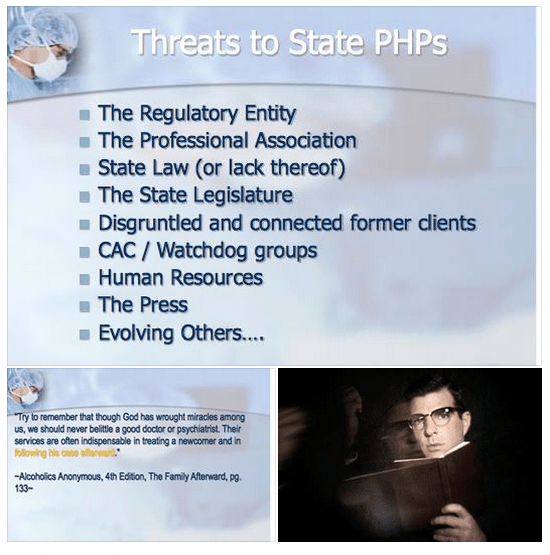
 

This needs to be seen as a "to-do" list.

This needs to be seen as a “to-do” list.

A.A. = ASAM = FSPHP 

The quote is from Alcoholics Anonymous and the full passage is as follows:

“We are convinced that a spiritual mode of living is a most powerful health restorative. We, who have recovered from serious drinking, are miracles of mental health. But we have seen remarkable transformations in our bodies. Hardly one of our crowd now shows any mark of dissipation.
      But this does not mean that we disregard human health measures. God has abundantly supplied this world with fine doctors, psychologists, and practitioners of various kinds. Do not hesitate to take your health problems to such persons. Most of them give freely of themselves, that their fellows may enjoy sound minds and bodies. Try to remember that though God has wrought miracles among us, we should never belittle a good doctor or psychiatrist. Their services are often indispensable in treating a newcomer and in following his case afterward.”–Alcoholics Anonymous, 4th Edition,  The Family Afterward

Federation of State Physician Health Program (FSPHP) physicians often quote A.A. because they are defined by A.A. in both mechanics and mentality.  The “impaired physician” movement began with evangelical recovered addict and alcoholic physicians whose recovery was based on 12- step spirituality.  As this group molded into the American Society of Addiction Medicine (ASAM) many of them found employment at 12-step rehabilitation facilities and others joined their state Physician Health Programs and organized under the FSPHP.   Their ability to make authoritative pronouncements on physician impairment is  based on their own claim to insiders knowledge of recovery as brandished in this A.A. passage which I find condescending toward the medical profession and oddly narcissistic.

This special knowledge, of course, was based on the chronic relapsing brain disease model with lifelong abstinence and participation in 12-step recovery.

These “miracles of mental health” joined their state PHPs and those who did not agree with their rigid inflexible views were removed.   Those with access to special secret knowledge were eventually able to outvote those with intelligence and open minds as this groupthink infested and eventually monopolized  PHPs.


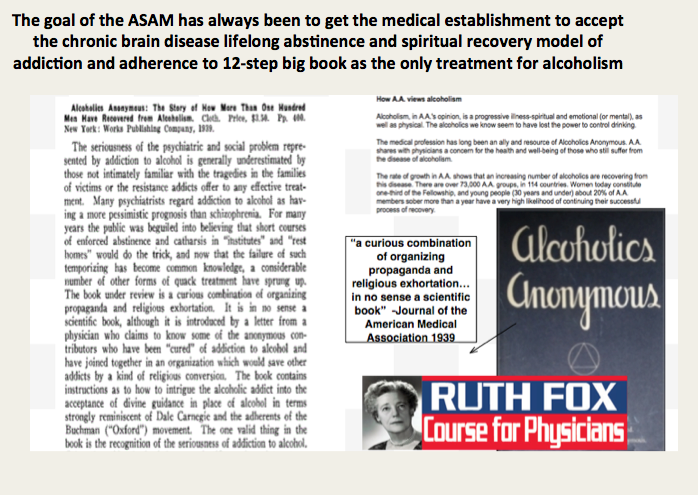
It is important to understand that the ideology of  A.A. is the ideology of the ASAM is the ideology of the FSPHP 

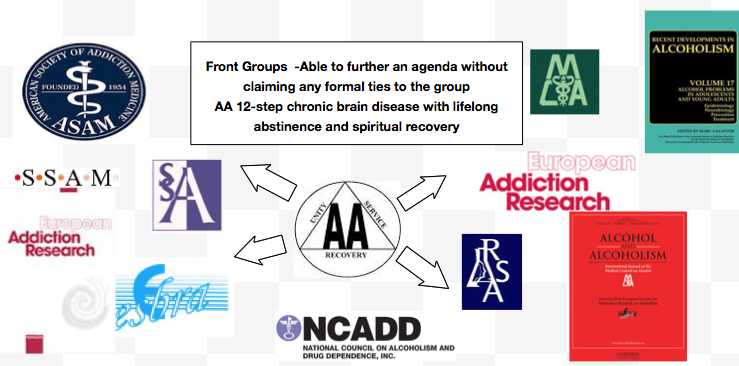
Like all “front-groups” the ASAM purports to serve one agenda while in reality serving another.  The ASAM claims to be a “physician society with a focus on addiction and its treatment” According to their website their mission is to

  • increase access to and improve the quality of addiction treatment;
  • to educate physicians (including medical and osteopathic students), other health care providers and the public;
  • to support research and prevention;
  • to promote the appropriate role of the physician in the care of patients with addiction;
  • and to establish addiction medicine as a specialty recognized by professional organizations, governments, physicians, purchasers and consumers of health care services, and the general public

In order to accomplish this the  American Board of Addiction Medicine certifies doctors  to “provide assurance to the American public that Addiction Medicine physicians have the knowledge and skills to prevent, recognize and treat addiction.”

Ostensibly these are laudable goals that are almost universally endorsed.   The perceived organizational purpose and public persona are altruistic and humanitarian.  Treating addiction not only saves individual lives but improves the community.  It is for the common good.


Abuse Hidden Under Benevolence and Torture as Treatment

History reveals that all manner of abuse can lie underneath a patina of benevolence.   In the past few months alone we have both Bill Cosby and the  British Parliamentary pedophile ring as prototypical examples.  Both cases reveal a decades long coverup of allegations in which the abusers escaped little or no investigation into their alleged crimes. Abuse of power with a large gap between the power of the abuser and the powerlessness of the abused is a common denominator.  If the abuser endorses our own beliefs systems it creates a discord that promotes disbelief.  It does not fit.   Accusations are dismissed, deflected or otherwise suppressed.   Power effectively extinguishes the truth.  Disbelieved and delegitimized, information is suppressed, charges are not filed and law enforcement and the media turn a blinkered eye for decades. Indifference, disbelief, rationalization and cognitive dissonance prevent exposure and accountability. Hidden in plain site the truth was there and easy to find.  The problem was no one was looking. Most did not want to look.

It does not take much sleuthing to uncover what is beneath the veil of the American Society of Addiction Medicine.  The history, mentality and mechanics are well documented and reveal where they came from,  how they evolved and what they have planned.    It is a complicated web and hard to explain but once the pieces of the puzzle are fit together it is clear.  But it involves assembling a complex puzzle by finding the individual pieces scattered in disparate areas including the regulatory, clinical, administrative and professional niches of the medical profession,  Alcoholics Anonymous and 12-step related organization, public policy, all levels of the political arena and other areas. Once put together the portrait is clear.

In reality the ASAM is a political action group or special interest group that is designed to cement the chronic relapsing brain disease model with lifelong abstinence and spiritual recovery as the one and only treatment for addiction.   A.A. is used as the energy source of the operation.  By labeling addiction a “disease” requiring “treatment” in which someone is helpless they are able to dictate all aspects by coercion and control.  But in my opinion the A.A. ideology is just used as a ruse to support the multi-billion dollar drug and alcohol testing, assessment and treatment industry.  The zero-tolerance mindset of the “treaters” combined with the “helplessness” of the diseased enables them to erect a revolving door of testing, assessment and treatment that provides them with both control and a steady stream of money.

IMG_0873


The FSPHP mandates 12-step ideology on all doctors in a zero-tolerance system of abuse and control while at the same time putting out misinformation that the PHP programs are the “new paradigm.”  The page below is from the book Drug-Impaired Professionals by Robert Holman Coombs.
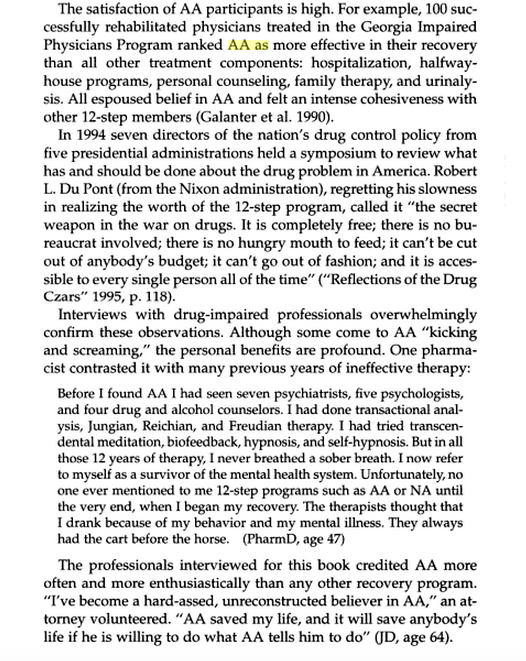
Screen Shot 2014-12-11 at 8.06.00 PM

This is they type of propaganda these groups have propagated.   What is described above is absurd and unrealistic but it is reported, reproduced and repeated to the point that it is accepted as the truth.

The majority of physicians referred to these programs are not even addicts. These programs of Zero-tolerance and 12-step indoctrination are based on coercion and control.  They are causing many doctors to die by suicide as they are feeling hopeless, helpless and defeated.    This portrayal of a group of blissful 12-stepping doctors over the moon because they found spirituality is nonsense.

But you will not find many doctors speaking out against them for fear of “contingency management.”  Disagreeing or even questioning PHP practices including the validity of 12-step can literally cost you your license.

I have spoken to multiple physicians and nurses and have encouraged them to tell their stories here but they are afraid of retribution and “unintended consequences.”  And who can blame them?

They can send you back to one of the “PHP-approved” facilities for “stinkin thinkin.”

Unfortunately the ASAM and FSPHP have successfully bamboozled others into believing they are true experts with noble intent.  They have bamboozled the Federation of State Medical Boards (FSMB) to the point where they have gained autonomy and unrestrained managerial prerogative.    They essentially use the state Boards to impose sanction on doctors who they report doctors for “noncompliance” which includes disagreeing with or questioning mandated A.A  or refusing to admit you have a chronic relapsing brain disease when you in fact do not.    They are in fact imposing A.A. on doctors and forcing them to accept their thinking under threat of loss of licensure.  This  violates the Establishment Clause and is a very serious problem that is being ignored.  It is a slippery slope we are on.

The FSMB House of Delegates adopted an updated Policy on Physician Impairment at their 2011 annual meeting distinguishing “impairment” and “illness”  stating that Regulatory Agencies should recognize the PHP as their expert in all matters relating to licensed professionals with “potentially impairing illness” that predates impairment often by many years.”  

It also defines “relapse without use” as “behavior without chemical use that is suggestive of impending relapse.”Screen shot 2013-05-13 at 1.30.29 PM

G. Douglas Talbott defines  “relapse without use”  as  “emotional behavioral abnormalities” that often precede relapse or “in A. A. language –stinking thinking.”

The ASAM has  monopolized addiction treatment in the United States.  But what the FSPHP arm has done is far more sinister.   A.A. has effectively taken over regulatory medicine and the private lives of doctors as a form of social control.  A doctor can be referred to a PHP for virtually anything and if the PHP believes he or she is in need of an assessment it will be done by a “PHP-approved” facility which means it will be done by a 12-step facility.  The PHP selects who will be monitored and dictates every aspect of what that entails and the entire process is done within the confines of A.A. ideology.  It is a, in fact, a  rigged game as the medical directors of the PHP approved facilities can all be seen on this list of like-minded docs who refer to theselves as “trusted servants” and “believe that evidence from extensive, well-designed studies demonstrates the great benefits of Twelve-Step recovery modalities including Twelve Step Facilitation in promoting long-term recovery.”

A.A. is imposed  on doctors through the FSPHP.  The FSPHP political apparatus exerts a monopoly of force.    And the bottom line is that A.A. has taken over all aspects of “physician health” and is forcing doctors to accept doctrine that is perhaps helpful to a few, useless or unneeded for many, and harmful and sometimes lethal to others.  This is unacceptable and it needs to be recognized.


“New Paradigm” of Zero-Tolerance and 12-step Spirituality Based on “success” of PHP to Move to Other Occupations and Kids.

To move this “new paradigm” to other populations they had to gain control of the doctors first.  They have not only created a monopoly but buffered themselves from physicians who may disagree with what they are doing to others.  This current system essentially stifles them.

The power, immunity and impunity this group yields over doctors was done silently and with no opposition. It was done by sequential public-policy steps.  This is why anyone interested in civil liberties and human rights should recognize the menace this presents to society.   The scaffold is in place and they are just adding more nooses.  Just ask the airline pilots.  They plan to impose similar systems on teachers, students and athletes.

And this is all spelled out in the ASAM White Paper on Drug Testing.   What people need to realized is what is described therein is just a few public policy steps away from them.  The only organization they have to convince is the organization that regulates any type of professional license, employment or benefit.

Gaining regulatory sway in the medical field and control over individual doctors was necessary to move this model to other populations.  It is merely a stepping stone for things to come.  It is only a few public policy steps from us to you.

This impacts us all.   It enables control of research, public policy and public health.   It is a system that suppresses dissent and shapes conformity.  The FSPHP  encourages the confidential referral of outliers.

The ASAM is pro-drug war and anti-medical marijuana.  This essentially silences most doctors for fear of being recognized and being brought in.  I know many doctors who will not even talk about it in public.

This is fixed doctrine and will not change.

That is why the ACLU and other groups who promote civil rights, those who are against the drug war and anyone involved in Medical Marijuana need to step in.    These  groups need to recognize the reality of who these people are, what they have planned and understand why they need to be stopped.   They are currently not even in the public eye and by outward appearances they appear to be benign.   In truth they are malignant and rapidly metastasizing without any symptoms.

In Order to Stop This the Following Must be Done

1) get a team of epidemiologists/statisticians to attack the “evidence-base” and “research” that the ASAM/FSPHP has used to support their claims (junk science, pseudoscience, success of 12-step, etc) and do a Cochrane type meta-analysis that will show there is little to no basis for it.

2) Demand accountability of the PHPs. Assign accountability to the Medical Societies and Departments of Public Health. Demand they be accountable for state-contractors with the Medical Boards (many of whom are complicit–in Massachusetts the Board of Registration in Medicine is simply an extension of the state PHP-i.e. Like-minds.

3) Demand that the criminal activity taking place within these PHPs be addressed by law enforcement.

4) Demand the Attorney General enforce the rampant Establishment Clause Violations occurring with mass 12-step coercion.

5) Identify and expose the  backgrounds of many of the individuals involved including felons and double felons who reinvented themselves as “addiction medicine” doctors. Many of these individuals are repeat offenders with a history of manipulating the system who should have never had their licenses returned.  In my opinion the ASAM/FSPHP/LMD rigged system is an example of corporate psychopathy.  While corporate level psychopathy is estimated at around 3% the numbers here appear to be much higher if one looks at the moral disengagement, unethical decision making, lack of empathy and externalization of blame evident in their personal histories.

6) Correctly identify that this system of institutional injustice is responsible for the astronomical suicide rate in physicians. This is due to the fact that doctors who need help are not getting it for fear of being ensnared by the state PHP and those already ensnared are being subject to coercion, abuse, institutional injustice, degradation, dehumanization, delegitimization and civil and human rights abuses and that this is a public health emergency that needs to be addressed.

7) reveal the scam set up between the PHPs, rogue labs, and “PHP-preferred” assessment and treatment gulags.

8) show how this is only a few public policy steps from Doctors to Pilots to Teachers to students to kids. etc. etc.

This necessitates that we get the conversation going before it is too late.

B1A19yWIMAAQf7E


Screen Shot 2014-11-30 at 1.37.38 PM

Integrity and Accountability—Defend the MRO Procedurally, Ethically or Legally and win 100 Volumes of the Classics in Medicine Library and Salk and Sabin Autographs!

Screen Shot 2015-06-18 at 11.46.50 PMIntegrity and Accountability—The Declining State of Physician Health and the Urgent Need for Ethical and Evidence-Based Leadership.

IMG_0576
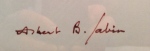
Sabin and Salk Autographs

“The incompetent or unprincipled physician, licensed to practice medicine by a too complaisant State, is the greatest menace to scientific medicine – as great a menace as all the cultists put together.”  —Dr. Morris Fishbein  (The Medical Follies.  New York:  Boni Liverlight, 1925 p. 71)

“There is no place in science for consensus or opinion, only evidence”  —Claude Bernard


th-1

Sabin, Salk and the Classics in Medicine Library

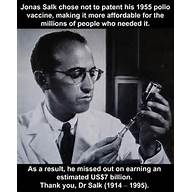
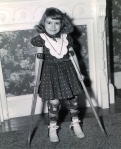
Polio is nearly a thing of the past thanks to to Dr. Jonas Salk and Albert Sabin. In 1952 Salk discovered and developed the first successful vaccine for polio and combined with Albert Sabin’s 1961 oral vaccination the duo effectively obliterated the contagious polio virus.  Once a deadly threat to our  country and future there were 93,000 cases of polio reported in the U.S. Between 1952 and 1953 alone. ElaineBurnsBut thanks to Sabin and Salk the last case of naturally occurring polio in the U.S. occurred in 1979.

 
full body respirator or “iron lung” needed to treat patients whose respiratory muscles became paralyzed by polio

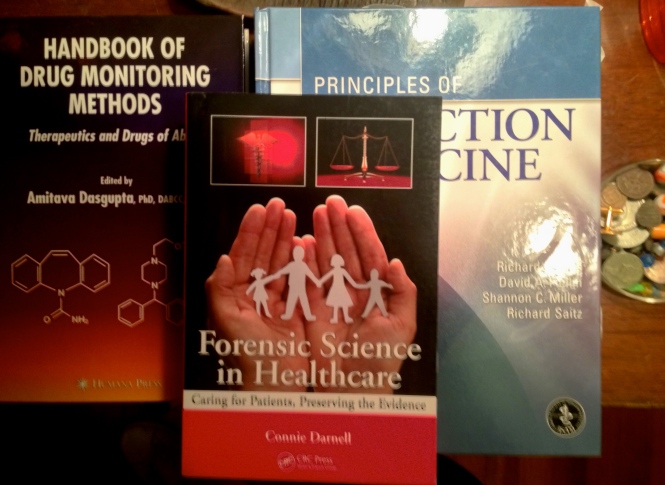
October 23, 2014 was the centenary of Jonas Salk’s birth and in honor of his 100th birthday I am sponsoring a contest to win framed autographs of both Jonas Salk and Albert Sabin as seen above.  In addition,  you will receive 100 volumes of the Classics in Medicine Library published by Gryphon Editions whose “mission is the preservation of the literary and intellectual heritage of the noble professions that we serve”

These are exact facsimiles of the original classics bound in leather and include works by William Osler, Harvey Cushing and Paul Dudley White.

 IMG_8993

Background

According to British sociologist G. V. Stimson the  “impaired physician movement” is characterized by a “number of evangelical recovered alcoholic and addict physicians, whose recovery has been accompanied by involvement in medical society and treatment programs.” Their “authoritative pronouncements on physician impairment is based on their own claim to insider’s knowledge.”

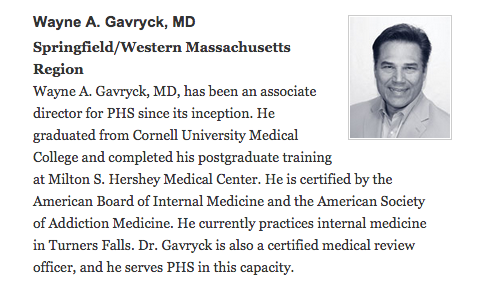
In this regard Dr. Wayne Gavryck, M.D. is a prototypical example.

An ex-alcoholic with a history of malpractice, Gavryck quit drinking through Alcoholics Anonymous, became “board certified” in “Addiction Medicine” and became involved with the Massachusetts PHP,  Physician Health Services, Inc. (PHS) where he has been an Associate Director since 1988.  He serves as their Medical Review Officer (MRO).

Screen Shot 2014-12-03 at 12.53.49 AM

The “impaired physician movement” has gained tremendous sway through the American Society of Addiction Medicine and the Federation of State Physician Health Programs.  The ASAM is not a valid medical specialty but a “special interest group” that represents the chronic relapsing brain disease with lifelong abstinence and 12-step recovery model of addiction and the companies that profit from it financially ( drug and alcohol testing labs,  12-step inpatient assessment and treatment centers) and politically  (Drug War advocates,  Anti -Medical Marijuana advocates).   The impaired physician movement gained a seat at the table of power in medicine by bamboozling regulatory and administrative medicine.   This illegitimate and irrational authority is in charge of almost every state PHP in the United States.     ASAM physicians joined their state PHPs, gained power, and then removed those who did not agree with the groupthink and doublethink.  Blind obedience and control  are favored over fairness, truth and evidence-base.   As with other states under the FSPHP, blindly obedient doctors are kept on while those who  question the science  and ethics of the groupthink are removed.  The  PHP-Drug Testing Laboratory and  “PHP approved” assessment and treatment center industrial complex requires a Medical Review Officer of blind faith who places the goals of the FSPHP above all other considerations including the Hippocratic Oath.  The system requires doctors who are willing to participate in “moral disengagement” of wrongdoing including professional, ethical and legal violations.    To erect this scaffold they have put in place barriers to exposure and accountability. By declaring themselves “experts” they have used logical fallacy to temporize  deflect and otherwise stifle accountability. With no oversight or regulation they are, in fact, accountable to no one.   The appeal to authority and esoteric knowledge is an effective means of  extinguishing valid concerns.  Complacent that this is a group of benevolent organizational purpose those who should know better and could do something about it rationalize their apathy and indifference.   A necessary step in exposing and addressing this  problem is imposing accountability.    If an organization is able to  engage in conduct that is the antithesis of accepted professional guidelines and standards of care,  in violation of professional and societal mores and codes-of-conduct and  is illegal then there is a systemic problem.  This problem can fortuitously be addressed by examining standards of care, conduct and criminal codes for breaches.   If a breach is found then it needs to be explained and justified.  One of the tactics of the FSPHP is to deflect criticism under the logical fallacy of appeal to authority.  We are the experts. We know better.  That is where it usually ends.   But accountability requires both the provision of information and justification of actions.  My hypothesis is that this group is committing fraud, violating ethics and flouting the law in an irrefutable manner.  If this is not true then my hypothesis should be able to be refuted.  It cannot.  And for that reason I am putting my money where my mouth is.


Accountability

In all fairness,  If Gavryck can justify his actions either procedurally, ethically or  legally and back it up by any written protocol, guideline or standard then he wins and I will refrain from any more criticisms.  In addition I will hand deliver to him the Salk and Sabin autographs and 100 volumes of the classics in medicine, apologize and remove this entire blog.

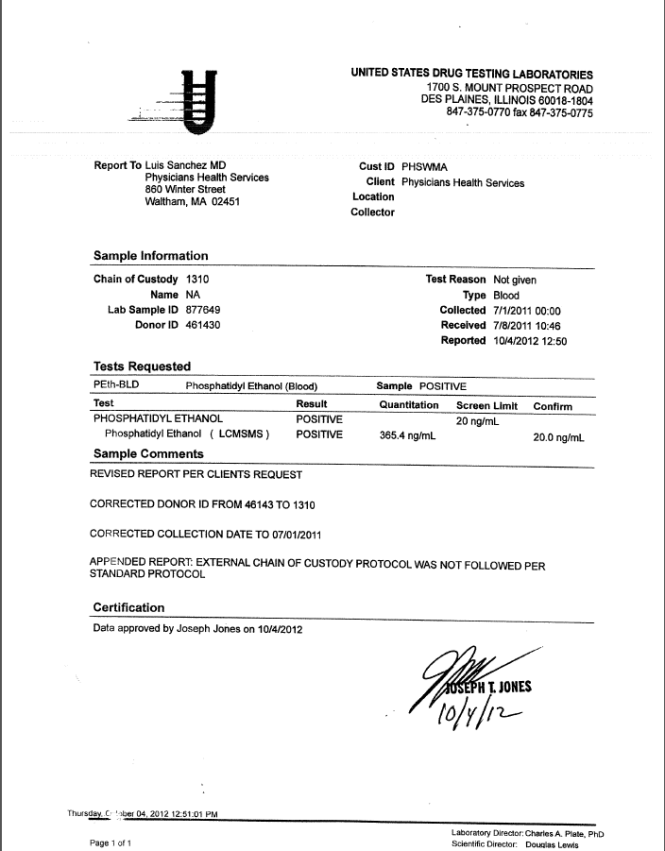
Accountability requires both the provision of information and justification of actions.  One way of examining this is to look at the body professional and ethical standards and state and federal law.   The FSPHP has blocked the provision of information regarding drug-testing.  Although it has taken over three years I have obtained the all of the information pertaining to a July 1, 2011  test that should have immediately been rejected by the MRO. It is an invalid test.

Dr. Gavryck violated every conceivable procedural guideline and standard-of-care there is for an MRO,  the Medical Review Officer Certification Council’s Codes of Ethical Conduct and both State and Federal Law.   This can be ascertained by looking at the documentation.  I have done this and found hundreds of documents that support the accusation that as an MRO Wayne Gavryck breached protocol, engaged in unethical behavior and broke the law.  Prove me otherwise with just one credible source and  the prizes are yours.

 IMG_0635

Contest Rules

Your job is to review the documentary evidence and records from PHS, Quest Diagnostics and USDTL and assess the actions and decisions made by the MRO.S)

If you can show that  these decisions were the result of  legitimate reasoning based on published guidelines or protocol, ethically defensible or did not break any laws and cite one credible source that concurs with this point of view then you have won.

If you can show that these decisions were the product of legitimate and thoughtful reasoning in accordance with established guideline, ethical codes then I will hand-deliver the items to you.

 If you can justify, support or defend the actions of the Medical Review Officer (MRO):

  1. Procedurally;IMG_0580

  2. Ethically; 

  3. or Legally;IMG_0577 - Version 2 

You win all of the prizes! Simple as that!

In fact, If you can support  just one of these the entire lot is yours.

If you can show Dr. Gavryck did not breach any and all published Standards-of-Care and Professional Protocols and Guidelines regarding drugs-of-abuse testing, OR that he did not violate any and all Codes of Conduct and Ethical Guidelines of the Medical Profession from Hippocrates to the American Medical Association OR that he did not violate multiple State and Federal Laws you win Salk and Sabin autographs and all of the books.

IMG_8994

All of the documents and details regarding the forensic fraud, concealment, coverup and deliberate misrepresentation to a state agency under color of law can be seen here:

Integrity and Accountability—The Declining State of Physician Health and the Urgent Need for Ethical and Evidence-Based Leadership.

To Review:   Any and all drug testing requires chain-of-custody.   “Forensic” drug testing differs from “clinical”drug testing because the consequences of a falsely positive test can be grave and far reaching.  Because the results of  a positive test can result in the loss of rights and liberties of the person taking the test it is essential that it be done correctly.  False-positive tests are unacceptable so strict chain-of-custody procedure and MRO review assure specimen integrity.    This provides accountability and the custody

The custody-and-control form records chain-of-custody and is given the status of a legal document as it has the ability to invalidate a test that lacks complete information.  The job of the MRO is to invalidate specimens without intact chain-of-custody.

The MRO job is fairly simple.  If a lab reports a positive test for any substance the MRO must check that the signatures, dates, times and other information on the custody-and-control form are correct and per protocol.  Chain-of-custody must be accurate and complete.   The MRO looks for “fatal flaws” on the chain-of-custody form.  If a “fatal flaw is present then the test is invalidated and the test is not reported as “positive” but “invalid.”

Screen Shot 2013-12-19 at 12.20.46 PM

The sole  job of the MRO is to ensure that the drug testing process and chain-of-custody procedure is followed to the letter.  The MRO reviews the Custody and Control form for accuracy and completeness.  The MRO also rules out any other possible explanations for a positive test (such as legitimately prescribed medications).  Only then is a test reported as positive.

Screen Shot 2013-09-04 at 6.14.30 PM

The legal issues involved in forensic testing mandate MRO review. According to The Medical Review Officer Manual for Federal Workplace Drug Testing Programs

“the sole responsibility of the MRO is to”ensure that his or her involvement in the review and interpretation of results is consistent with the regulations and will be forensically and scientifically supportable.”

IMG_8993

Corruption is misuse of entrusted power.  It occurs when those who have been given authority to carry out expected goals instead use their position and power to benefit themselves and others close to them. Abuse of power is particularly egregious when that person is doing the opposite of what he or she is supposed to do.

Accountability is necessary to prevent corruption and necessitates both the provision of information and justification for actions;  what was done and why?   The other defining factor of accountability is the ability of outside actors to punish and sanction those who commit misconduct or wrongdoing.    Without these constraints corruption is inevitable.

Screen Shot 2014-08-06 at 4.50.02 PM

Screen Shot 2014-12-05 at 2.02.29 AM

Although Gavryck may serve PHS, it is not in the capacity of a certified medical review officer; by my count  the documentary evidence alone shows that he violated four of the seven Medical Review Officer Certification Council Codes of Ethical Conduct.  In addition to violating the MRO  Ethical Conduct he violated every other code I can think of from the Hippocratic Oath to the AMA Code of Ethics. and everything in between.

As the MRO for PHS Gavryck’s responsibility is simple.  He is supposed to verify that the chain-of-custody  of the sample was intact before reporting a test as positive.

This is indefensible on all levels (procedurally, ethically and legally). The documents show with clarity that this was not accident or oversight, but intentional and purposeful misconduct

There should be zero-tolerance for forensic fraud of this sort.   Those of integrity and moral compass would agree.     Transparency, regulation, and accountability are necessary.  It is an issue that needs to be acknowledged and addressed not ignored and covered up.

If Dr. Gavryck can give a procedural, ethical, or legal explanation of what was done then I stand corrected. Just one will suffice. If he cannot then this needs to be addressed openly and publicly.   And whether he was involved in the original fraud or not is irrelevant. As the MRO for PHS it is his responsibility to correct it–however late the hour may be.

Perhaps Dr. Gavryck needs to see some of the damage he has caused in order to take this responsibility. Known as a “bag man” who simply rubber stamps positive tests at the request of Linda Bresnahan, much like Annie Dookhan, he does not see the damage that is caused. Forensic fraud has grave and far reaching effects and in this case has severely impacted many people and include patient deaths. Perhaps Dr. Gavryck needs to take a “moral inventory” and see that this this type of behavior causes real damage to real people and put a face on it.

Please help me get this exposed, corrected, and rectified. The physicians of Massachusetts deserve better than this.

IMG_0581


IMG_0584IMG_0702IMG_0701

[Screen Shot 2013-10-28 at 10.24.14 PM

Screen Shot 2014-11-26 at 6.52.55 PM

Wanted!–a Few Statisticians, Biostatisticians and Epidemiologists who want to make a difference in Medicine, Society and our Future

 “That everyone shall exert himself in that state of life in which he is placed, to practice true humanity towards his fellow men, on that depends the future of mankind.” – Albert Schweitzer 
“By and by never comes” –St Augustine

photo 1

“A day’s impact is better than a month of dead pull”-Justice Oliver Wendell Holmes, Jr.

 I am looking for a few honest and credible statisticians, biostatisticians or epidemiologists who want to make a difference in the spirit  of service and helping others.  I can’t pay you but you would be combating injustice, corruption and dishonesty.   You would be doing your part in helping the Medical Profession, honest and decent doctors, our country and  perhaps our future.  

It is only a few public policy steps and minor changes in state regulatory statutes before what is described in the ASAM White Paper on Drug Testing comes to fruition.  Before we know it the Drug and Alcohol Testing Industries “New Paradigm” as described here by Robert Dupont will be ushered in as it did with doctors; not with a bang but a whimper.  From the ASAM white Paper:

“THIS WHITE PAPER ENCOURAGES WIDER AND “SMARTER” USE OF DRUG TESTING WITHIN THE PRACTICE OF MEDICINE AND, BEYOND THAT,BROADLY WITHIN AMERICAN SOCIETY. SMARTER DRUG TESTING MEANS INCREASED USE OF RANDOM TESTING* RATHER THAN THE MORE COMMON SCHEDULED TESTING,* AND IT MEANS TESTING NOT ONLY URINE BUT ALSO OTHER MATRICES SUCH AS BLOOD, ORAL FLUID (SALIVA), HAIR, NAILS, SWEAT AND BREATH WHEN THOSE MATRICES MATCH THE INTENDED ASSESSMENT PROCESS. IN ADDITION, SMARTER TESTING MEANS TESTING BASED UPON CLINICAL INDICATION FOR A BROAD AND ROTATING PANEL OF DRUGS RATHER THAN ONLY TESTING FOR THE TRADITIONAL FIVE-DRUG PANEL.”

To prevent this future drug testing dystopia, that includes testing schoolchildren, we need to take a step back and analyze the reliability and credibility of the “evidence-base” behind these multiple non-FDA approved forensic drug and alcohol tests and testing devices the ASAM proposes be used on the population at large utilizing the Medical Profession as a urine collection agency and bypassing forensic drug testing protocol by calling this “evaluation” and treatment rather than “monitoring” and punishment. New definitions, loopholes, secrecy and subterfuge are the bread and butter of these prohibitionist profiteers.

Amazingly, there has been no Academic review of these tests, let alone a Cochrane type critical analysis.  It is essentially untapped territory.  In addition there has been no Institute of Medicine type Conflict of Interest Analysis.  And that is why I am asking for help from statisticians, biostatisticians and epidemiologists.  The task would entail a review of the literature prior to the introduction of these tests for evidence base of forensic applicability (there essentially is none) and a review of the literature peri-and post marketing of these devices to assess the reliability and credibility of the underlying methodology and ascertain the evidence-base.  The goal would be publication in both academic journals and presentation to the general public through media publication with the assistance of investigative journalists and other writers. The goal is to get the truth out about these tests and allow both the medial profession and public at large to awaken to the menace this presents to medicine, our society and our future.

 Lack of Evidence-Base, Bias and Conflicts of Interest:  Making the Data Fit the Hypothesis

I am no epidemiologist or statistician but as with pornography I know junk-science when I see it.  Almost all of these tests were introduced with little or no evidence-base and, as with most of their endeavors, they did it below board via loopholes and cutting corners.

The overwhelming majority of papers are small, methodologically flawed, non-randomized, non-blinded  retrospective studies in that appear to make the data fit the hypothesis.   The authors can invariably be linked to those profiting from the tests of the testing process ( the patent holder, doctors associated with the drug testing labs, ASAM or FSPHP, Robert Dupont, Greg Skipper, etc.)


Ethyl Glucuronide (EtG) was introduced in 1999 as a biomarker for alcohol consumption,1 and was subsequently suggested as a tool to monitor health professionals by Dr. Gregory Skipper because of its high sensitivity to ethanol ingestion.2   

Screen Shot 2014-12-30 at 8.45.09 PM

Described as the  “innovator of EtG as an alcohol biomarker,” Skipper and  Friedrich Wurst,  “convinced” NMS labs in Pennsylvania “to start performing EtG testing in 2002.

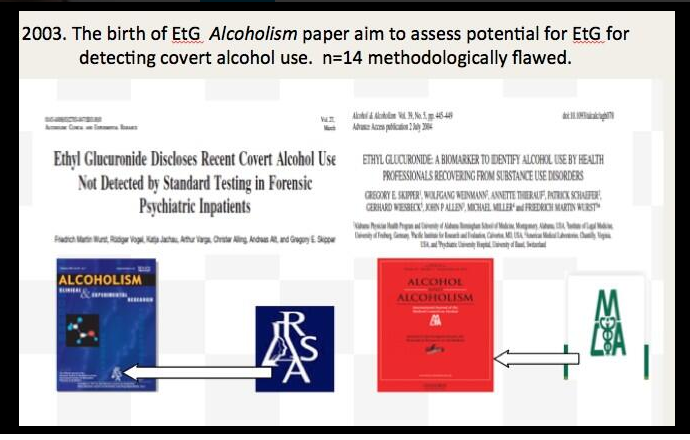
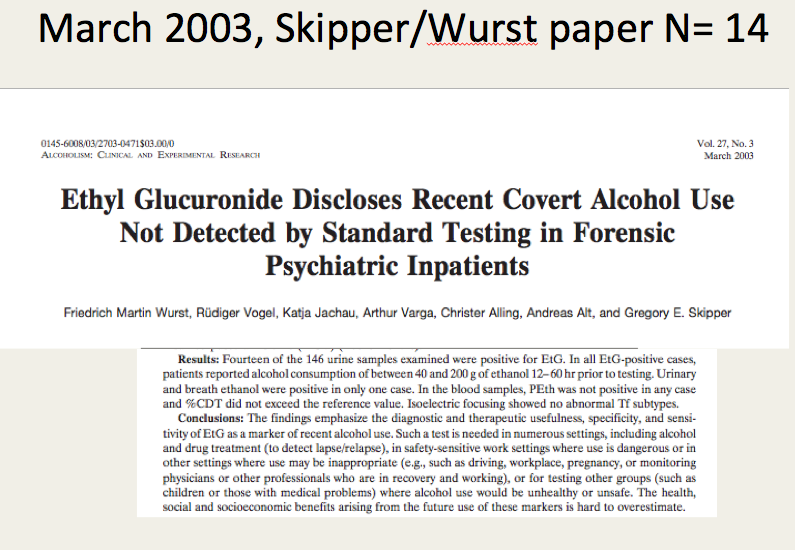
The study most often cited as 100% proof that there is 100% accuracy in EtG testing proving alcohol consumption involved a mere 35 forensic psychiatric inpatients in Germany that was published in 2003.3  

Shortly thereafter the Physician Health Programs began using it in monitoring doctors and other professional monitoring programs soon followed.

Screen Shot 2014-11-25 at 7.11.18 PM

Screen Shot 2014-11-29 at 5.16.18 PMLaboratory Developed Tests -A Loophole to Avoid FDA Approval and Accountability

Up until the birth of the EtG tests used for forensic drug and alcohol monitoring had to go through the arduous, expensive and necessary FDA approval process.   The LDT pathway was designed to develop simple tests with little risk that have  low market potential (i;e. the cost of the normal FDA approval process would prohibit them from coming to market).  The LDT pathway was designed to improve patient care and help improve diagnosis and treatment. It was not designed for forensic tests.  LDT approval does not require in vivo testing.  It is essentially an honor system and to develop an LDT it is not even necessary to prove that the test is actually testing what it is purportedly testing for (validity).

So with little to no evidence base they introduced the EtG, had it developed and marketed as a LDT in collusion with unscrupulous labs, and then began using it on physicians being monitored by State PHPs. This then spread to other monitoring organizations in which there was a large power-differential between those ordering the tests and those being tested (criminal-justice, other professional monitoring programs).  These biomarkers have never been used in Federal Drug Testing, SAMHSA approved, DOT, and other organizations where unions or other organizations are present and looking out for the best interests of those being tested.

Another example of how this group removes accountability.  There has been essentially no oversight or regulation of LDTs.  Although there was a recent push for regulation of these tests the Drug and Alcohol Testing Industry Association lobby made sure that forensic tests would be exempt.

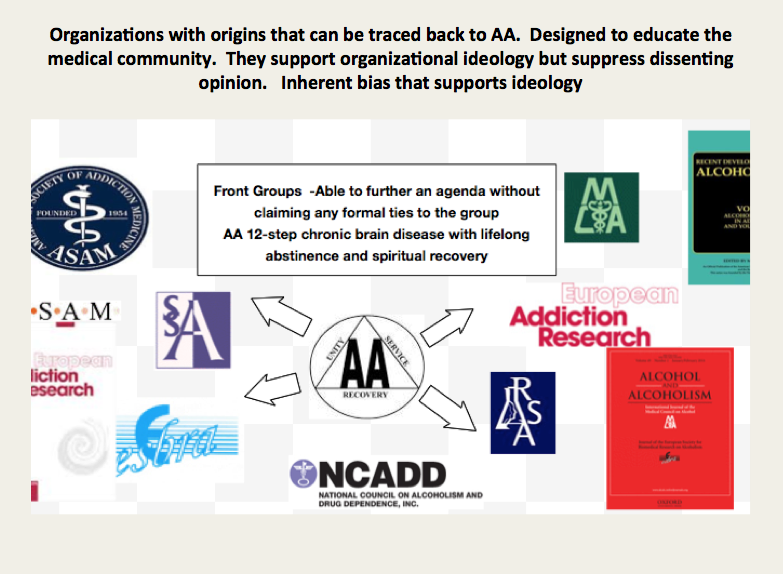
They then began publishing “research” on the EtG using the physicians being monitored as subjects. Many of the studies promoting the EtG and other biomarkers can be found  in  Journals that are linked to organizations that are linked to AA and were organized to educate the medical community.

Screen Shot 2014-11-29 at 5.16.39 PM
 
Screen Shot 2014-11-29 at 5.14.23 PM
These small, methodologically flawed studies amount to little more than opinion pieces but   This “evidence-base” is predominantly in biased journals published by biased medical “societies.  
The EtG was subsequently found to be so sensitive that it could measure incidental exposure to alcohol in foods, over the counter cold medications, mouthwash4,5, hand sanitizer gel6, nonalcoholic beer7, and nonalcoholic wine.8  Sauerkraut and bananas have even been shown to cause positive EtG levels.9
The United States Substance Abuse and Mental Health Services Administration warned against using a positive EtG as primary or sole evidence of drinking for disciplinary or legal action.10  The Wall Street Journal in 2006 reported the problems with the EtG to the general public.11   
Screen Shot 2014-03-23 at 10.45.36 PMAs any rational authority would do, the majority of monitoring agencies abandoned the EtG after these flaws were revealed. The PHPs did not.  They continued to use the EtG on doctors uninterruptedly by telling them to avoid any products that could potentially contain alcohol; a ubiquitous substance in the environment. Since that time they have justified and rationalized (EtG)2,12 13  use by sequentially raising cutoff levels from 100 to 250 to 500 to 1000 to 2000 to now unknown and adding other LDTs as “confirmation tests such as Ethyl Sulfate (EtS)14,15 Phosphatidyl-Ethanol ( Peth)16 17 and other devices such as the Subcutaneous Remote Alcohol Monitoring Bracelet (SCRAM) and, their newest device the Cellular Photo Digital Breathalyzer (CPDB) that has recently been launched, just like the EtG Screen Shot 2014-02-23 at 10.00.22 PMwith little to no evidence base other than a pilot study done by Greg Skipper and Robert Dupont.18 
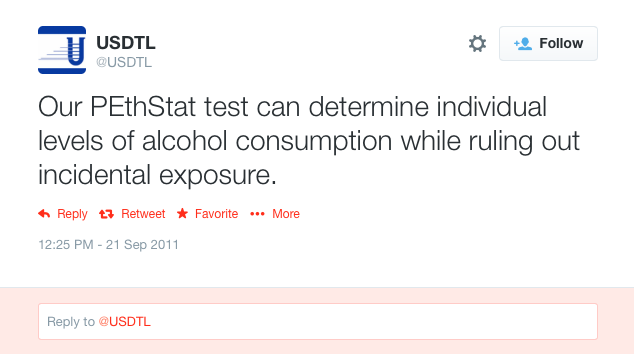
A  2013 article published in an ASAM incubated journal Alcoholism: Clinical and Experimental Research promotes the Phosphatidyl-ethanol (PEth ) test to confirm drinking.16  The study was done on physicians being monitored by the Alabama Physician Health Program who tested positive for EtG/EtS alcohol biomarkers. It is co-authored by Robert Dupont, Greg Skipper, and Friedrich Wurst and involved 18 subjects who tested positive for EtG/EtS of whom 7 claimed they did not drink.  After finding that 5 of the 7 tested negative for PEth they concluded that “positive PEth testing following positive EtG/EtS results confirms recent drinking.  Hard to wrap your head around the science in that one.Screen Shot 2014-04-30 at 1.06.53 PMSkipper is also using both Scram ankle bracelets and the CPDB monitoring in pilots in the Human Interventional Motivational Study (HIMS) Program that was developed in 2009 to “identify, treat and, eventually, re-certify airline pilots with substance abuse problems. 
 
IMG_0275

The Cochrane Collaboration does systematic reviews of the literature using conscientious, explicit, and judicious criteria to in order to produce and disseminate only high quality and evidenced based health care, exclude bias, and enhance transparency. The Cochrane database is a current and evolving database that includes the accuracy of diagnostic tests and is internationally recognized as the standard in evidence based health care.  This benchmark for evidence based health care and systematic reviews, records just 5 controlled trials under the topic ethyl glucuronide.8,19-21 These 5 studies represent the only high-quality evidence regarding EtG applying to EtG. Information provided by the five studies suggests the following, and only the following:

  1. EtG and EtS measurements increase with alcohol ingestion.
  2. The window of detection is shorter than what is commonly proposed (80 hours).
  3. Individual values are variable both within and between subjects.
  4. Non alcoholic wine can cause positive levels.

Notably, there are no studies that fit Cochrane Criteria, other than non-alcoholic wine, that look at the pharmacokinetics of EtG or EtS in terms of dose-response curves, cut-off levels, specificity drug and food interactions, or modes of ingestion.

SAMHSA notes that there is little research on PEth and that EtG, EtS, and PEth “do not have a strong research base,” and that “it is not known at this time how the test results might be affected by the presence of physical diseases, ethnicity, gender, time, or the use of other drugs. Until considerable more research has occurred, use of these markers should be considered experimental.”

Phosphatidylethanol (PEth), SCRAM, and the  yields no data as a test in the Cochrane library.

SAMHSA notes that there is little research on PEth and that EtG, EtS, and PEth “do not have a strong research base,” and that “it is not known at this time how the test results might be affected by the presence of physical diseases, ethnicity, gender, time, or the use of other drugs. Until considerable more research has occurred, use of these markers should be considered experimental.”

Evidence based medicine (EBM) can be defined as the conscientious, explicit, and judicious use of current best evidence in making decisions about the care of individual patients.22

Medical progress and scientific advancement is occurring so fast that the volume of medical literature is expanding at a rate of greater than 7% per year.23

Evidence based medicine is not restricted to randomized trials and meta-analyses. It involves tracking down the best external evidence with which to answer our clinical questions.22  

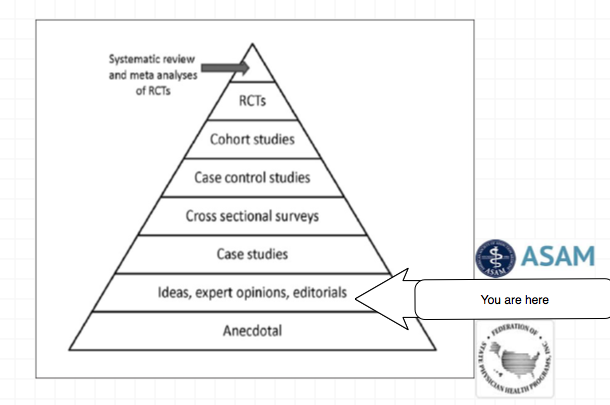
Expert opinion is the lowest level of evidence available in the EBM paradigm.24,25

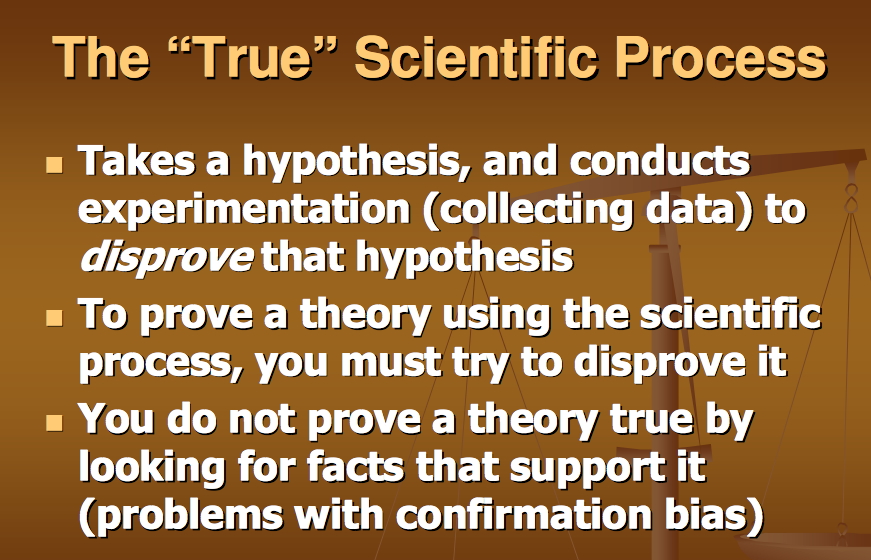
Fortunately, the scientific method is a tool to help people progress toward the truth despite their susceptibilities to confirmation bias and other errors.26

Unfortunately, due to a confluence of factors (including political) this has not been done.  But, unless we want a  future as envisioned by Robert Dupont and explained in the the ASAM White Paper on Drug Testing we need to act now.  This is not a “New Paradigm” but a “New Inquisition.”

Screen Shot 2014-11-25 at 7.10.47 PM

Screen Shot 2014-02-15 at 4.39.03 PM

  1. Wurst FM, Kempter C, Seidl S, Alt A. Ethyl glucuronide–a marker of alcohol consumption and a relapse marker with clinical and forensic implications. Alcohol Alcohol. Jan-Feb 1999;34(1):71-77.
  2. Skipper GE, Weinmann W, Thierauf A, et al. Ethyl glucuronide: a biomarker to identify alcohol use by health professionals recovering from substance use disorders. Alcohol Alcohol. Sep-Oct 2004;39(5):445-449.
  3. Wurst FM, Vogel R, Jachau K, et al. Ethyl glucuronide discloses recent covert alcohol use not detected by standard testing in forensic psychiatric inpatients. Alcohol Clin Exp Res. Mar 2003;27(3):471-476.
  4. Costantino A, Digregorio EJ, Korn W, Spayd S, Rieders F. The effect of the use of mouthwash on ethylglucuronide concentrations in urine. J Anal Toxicol. Nov-Dec 2006;30(9):659-662.
  5. Reisfield GM, Goldberger BA, Pesce AJ, et al. Ethyl glucuronide, ethyl sulfate, and ethanol in urine after intensive exposure to high ethanol content mouthwash. J Anal Toxicol. Jun 2011;35(5):264-268.
  6. Rosano TG, Lin J. Ethyl glucuronide excretion in humans following oral administration of and dermal exposure to ethanol. J Anal Toxicol. Oct 2008;32(8):594-600.
  7. Thierauf A, Gnann H, Wohlfarth A, et al. Urine tested positive for ethyl glucuronide and ethyl sulphate after the consumption of “non-alcoholic” beer. Forensic Sci Int. Oct 10 2010;202(1-3):82-85.
  8. Hoiseth G, Yttredal B, Karinen R, Gjerde H, Christophersen A. Levels of ethyl glucuronide and ethyl sulfate in oral fluid, blood, and urine after use of mouthwash and ingestion of nonalcoholic wine. J Anal Toxicol. Mar 2010;34(2):84-88.
  9. Musshoff F, Albermann E, Madea B. Ethyl glucuronide and ethyl sulfate in urine after consumption of various beverages and foods–misleading results? Int J Legal Med. Nov 2010;124(6):623-630.
  10. Administration SAaMHS. The role of biomarkers in the treatment of alcohol use disorders. In: Advisory SAT, ed2006:1-7.
  11. Helliker K. A test for alcohol–and its flaws. The Wall Street Journal2006.
  12. Wurst FM, Skipper GE, Weinmann W. Ethyl glucuronide–the direct ethanol metabolite on the threshold from science to routine use. Addiction. Dec 2003;98 Suppl 2:51-61.
  13. Wurst FM, Alling C, Aradottir S, et al. Emerging biomarkers: new directions and clinical applications. Alcoholism, clinical and experimental research. Mar 2005;29(3):465-473.
  14. Anton RF. Commentary on: ethyl glucuronide and ethyl sulfate assays in clinical trials, interpretation, and limitations: results of a dose ranging alcohol challenge study and 2 clinical trials. Alcoholism, clinical and experimental research. Jul 2014;38(7):1826-1828.
  15. Hernandez Redondo A, Schroeck A, Kneubuehl B, Weinmann W. Determination of ethyl glucuronide and ethyl sulfate from dried blood spots. International journal of legal medicine. Jul 2013;127(4):769-775.
  16. Skipper GE, Thon N, Dupont RL, Baxter L, Wurst FM. Phosphatidylethanol: the potential role in further evaluating low positive urinary ethyl glucuronide and ethyl sulfate results. Alcoholism, clinical and experimental research. Sep 2013;37(9):1582-1586.
  17. Hahn JA, Dobkin LM, Mayanja B, et al. Phosphatidylethanol (PEth) as a biomarker of alcohol consumption in HIV-positive patients in sub-Saharan Africa. Alcoholism, clinical and experimental research. May 2012;36(5):854-862.
  18. Skipper GE, Thon N, DuPont RL, Campbell MD, Weinmann W, Wurst FM. Cellular photo digital breathalyzer for monitoring alcohol use: a pilot study. European addiction research. 2014;20(3):137-142.
  19. Hoiseth G, Bernard JP, Stephanson N, et al. Comparison between the urinary alcohol markers EtG, EtS, and GTOL/5-HIAA in a controlled drinking experiment. Alcohol Alcohol. Mar-Apr 2008;43(2):187-191.
  20. Wojcik MH, Hawthorne JS. Sensitivity of commercial ethyl glucuronide (ETG) testing in screening for alcohol abstinence. Alcohol Alcohol. Jul-Aug 2007;42(4):317-320.
  21. Sarkola T, Dahl H, Eriksson CJ, Helander A. Urinary ethyl glucuronide and 5-hydroxytryptophol levels during repeated ethanol ingestion in healthy human subjects. Alcohol Alcohol. Jul-Aug 2003;38(4):347-351.
  22. Sackett DL, Rosenberg WM, Gray JA, Haynes RB, Richardson WS. Evidence based medicine: what it is and what it isn’t. BMJ. Jan 13 1996;312(7023):71-72.
  23. Norwitz ER, Greenberg JA. Promoting evidence-based medicine. Rev Obstet Gynecol. Summer 2008;1(3):93-94.
  24. Shaneyfelt TM, Centor RM. Reassessment of clinical practice guidelines: go gently into that good night. JAMA. Feb 25 2009;301(8):868-869.
  25. Straus SE, Green ML, Bell DS, et al. Evaluating the teaching of evidence based medicine: conceptual framework. BMJ. Oct 30 2004;329(7473):1029-1032.
 Screen Shot 2014-11-30 at 1.37.38 PM
images-3

Disrupted Physician 101.4–The “Impaired Physician Movement” takeover of State Physician Health Programs

Forget what you see
Some things they just change invisibly–Elliott Smith

IMG_8923

Physician Impairment

The Sick Physician: Impairment by Psychiatric Disorders, Including Alcoholism and Drug Dependence, published by the American Medical Association’s (AMA) Council on Mental Health in The Journal of the American Medical Association in 1973,1 recommended that physicians do a better job of helping colleagues impaired by mental illness, alcoholism or drug dependence. The AMA defined an “impaired physician” as “a physician who is unable to practice medicine with reasonable skill and safety to patients because of mental illness or excessive use or abuse of drugs, including alcohol.”

Recognition of physician impairment in the 1970s by both the medical community and the general public led to the development of “impaired physician” programs with the purpose of both helping impaired doctors and protecting the public from them.

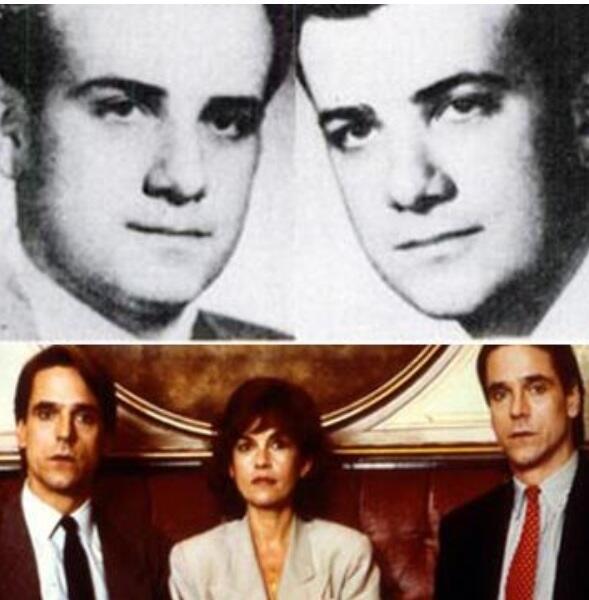
IMG_1010The 1975 media coverage of the deaths of Drs. Stewart and Cyril Marcus brought the problem of impaired physicians into the public eye. IMG_0940Leading experts in the field of Infertility Medicine, the twin gynecologists were found dead in their Upper East Side apartment from drug withdrawal that New York Hospital was aware of but did nothing about. Performing surgery with trembling hands and barely able to stand, an investigation revealed that nothing had been done to help the Marcus brothers with their addiction or protect patients. They were 45 –years old.

Top: Twin Gynecologists Stewart and Cyril Marcus Bottom: The Movie

Top: Twin Gynecologists Stewart and Cyril Marcus
Bottom: The Movie “Dead Ringers” starring Jeremy Irons based on the Marcus twins

Although the New York State Medical Society had set up its own voluntary program for impaired physicians three years earlier, the Marcus case prompted the state legislature to pass a law that doctors had to report any colleague suspected of misconduct to the state medical board and those who didn’t would face misconduct charges themselves.


Physician Health Programs

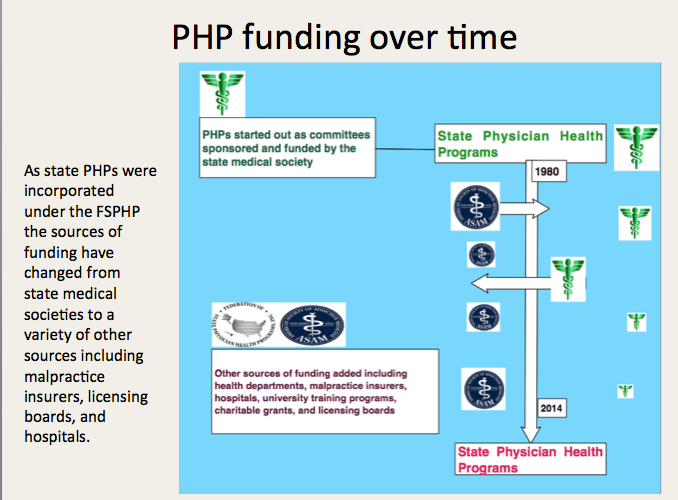
Physician health programs (PHPs)  existed in almost every state by 1980. Often staffed by volunteer physicians and funded by State Medical Societies, these programs served the dual purpose of helping sick colleagues and protecting the public. Preferring rehabilitation to probation or license revocation so long as the public was protected from imminent danger, most medical boards accepted the concept with support and referral.

As an alternative to discipline the introduction of PHPs created a perception of medical boards as “enforcers” whose job was to sanction and discipline whereas PHPs were perceived as “rehabilitators” whose job was to help sick physicians recover. One of many false dichotomies this group uses and it is perhaps this perceived benevolence that created an absence of the need to guard.


Employee Assistance Programs for Doctors

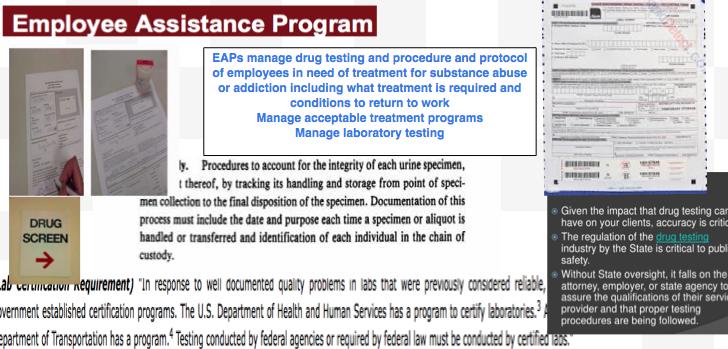
Physician Health Programs (PHPs) are the equivalent of Employee Assistance Programs (EAPs) for other occupations. PHPs meet with, assess, and monitor doctors who have been referred to them for substance use or other mental or behavioral health problems.

Most EAPs, however, were developed with the collaboration of workers unions or some other group supporting the rights and best interests of the employees. PHPs were created and evolved without any oversight or regulation.

Screen Shot 2014-02-24 at 10.32.36 PM

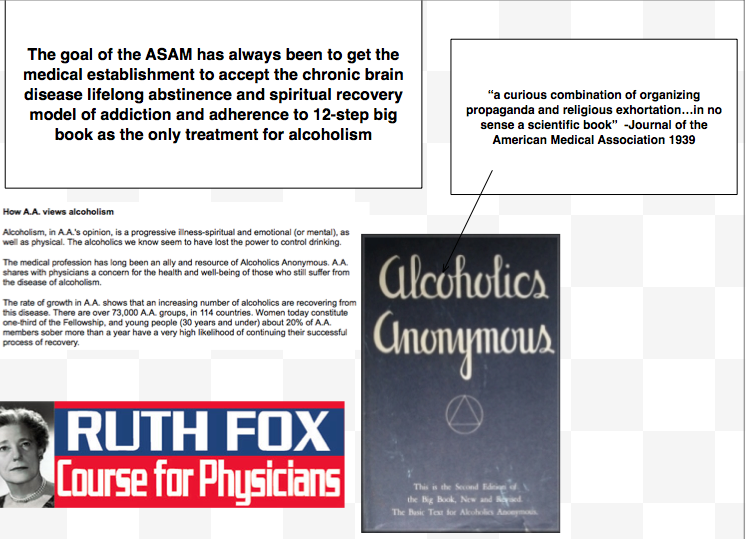
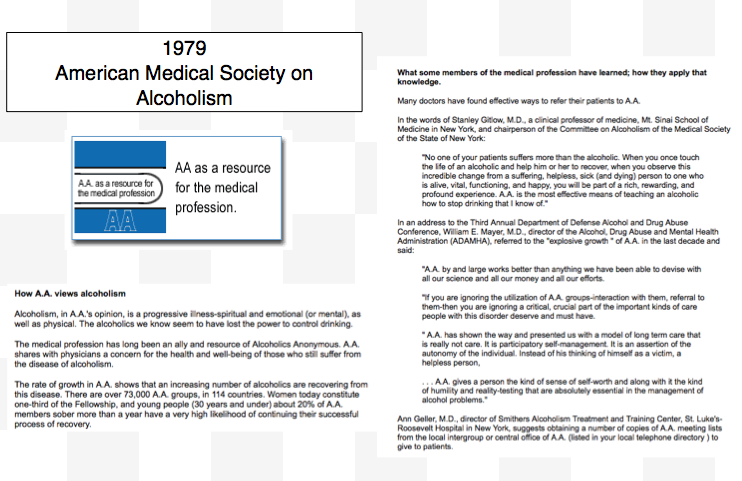
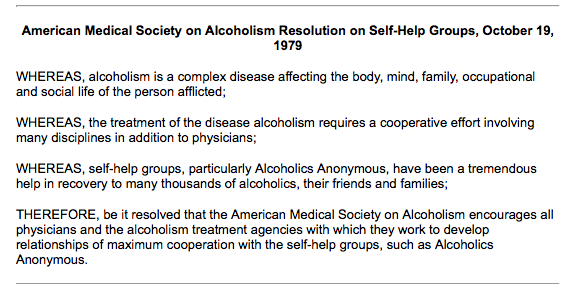
The American Society of Addiction Medicine can trace its roots to the 1954 founding of theNew York City Medical Society on Alcoholism (NYCMSA) by Ruth Fox, M.D whose husband died from alcoholism.

The society, numbering about 100 members, established itself as a national organization in1967, the American Medical Society on Alcoholism (AMSA).

By 1970 membership was nearly 500.

In 1973 AMSA became a component of the National Council on Alcoholism (NCA) in a medical advisory capacity until 1983.

But by the mid 1980’s ASAM’s membership became so large that they no longer needed to remain under the NCADD umbrella.

In 1985 ASAM’s first certification exam was announced. According to Dr. Bean-Bayog, chair of the Credentialing Committee, “a lot of people in the alcoholism field have long wanted physicians in the field to have a high level of skills and scientific credibility and for this body of knowledge to be accredited.”2 And in 1986 662 physicians took the first ASAM Certification Exam.

Slide16

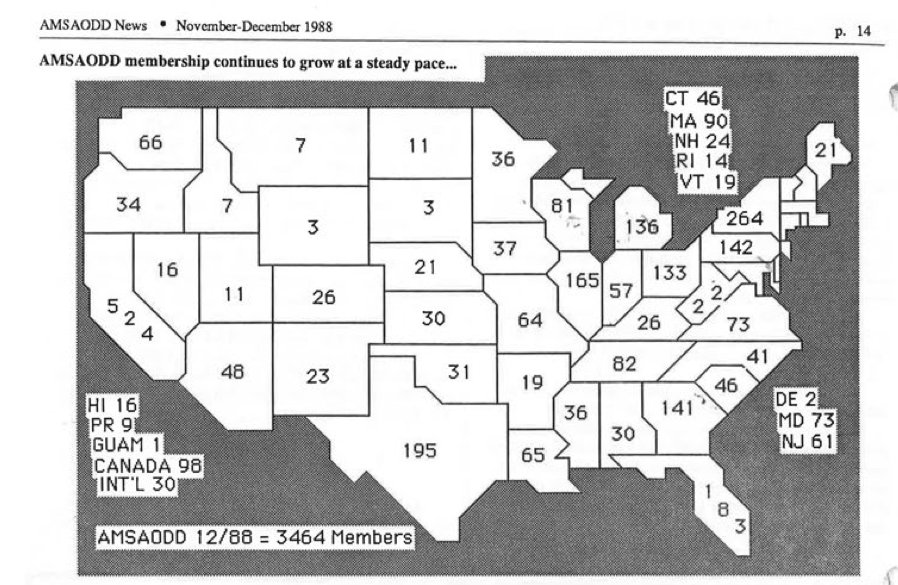
By 1988 membership was over 2,800 with 1,275 of these physicians “certified” as “having demonstrated knowledge and expertise in alcoholism and other drug dependencies commensurate with the standards set forth by the society.”3 “The formation of State Chapters began with California, Florida, Georgia, and Maryland submitting requests.4

Screen Shot 2014-03-31 at 10.09.31 AM

In 1988 the AMA House of Delegates voted to admit ASAM to the House. According to ASAM News this “legitimizes the society within the halls of organized medicine.”2

By 1993 ASAM had a membership of 3,500 with a total of 2,619IMG_8919certifications in Addiction Medicine. The Membership Campaign Task Force sets a goal to double its membership of 3,500 to 7,000 by the year 2000 to assure “the future of treatment for patients with chemicals. It represents a blueprint for establishing addiction medicine as a viable entity.”5

Screen Shot 2014-11-09 at 11.30.55 PM

Many of these physicians joined state PHPs and over time have taken over under the umbrella of the FSPHP.

Others became medical directors of treatment centers such as Hazelden, Marworth and Talbott.


  1. The sick physician. Impairment by psychiatric disorders, including alcoholism and drug dependence. JAMA : the journal of the American Medical Association. Feb 5 1973;223(6):684-687.
  2. Four Decades of ASAM. ASAM News. March-April 1994, 1994.
  3. . American Medical Society on Alcoholism & Other Drug Dependencies Newsletter. Vol III. New York, NY: AMSAODD; 1988:12.
  4. . AMSAODD News. Vol III. New York, NY: American Medical Society on Alcoholism & Other Drug Dependencies; 1988.
  5. Membership Campaign Update. ASAM News. Vol VIII: American Society of Addiction Medicine; 1993:11.

Inquisition_10_Pushing_Off_Bridge

johnnyLawrence

The Medical Profession, Moral Entrepreneurship, Moral Panics, and Social Control

The Medical Profession, Moral Entrepreneurship, Moral Panics, and Social Control.

 “Few, no matter how desperate, seek help of their own accord.”  says Dr. Marv Seppala, M.D., Chief Medical Officer at Hazelden, one of the “PHP-approved” drug and alcohol assessment and treatment centers located in Center City, Minnesota.  “Physicians are intelligent and skilled at hiding their addictions.”

“They’re often described as the best workers in the hospital,” he says. “They’ll overwork to compensate for other ways in which they may be falling short, and to protect their supply. They’ll sign up for extra call and show up for rounds they don’t have to do.”

In reality this is ludicrous–knee slapping absurd.   If the results of this authoritative opinion were not so dire these statements would, in fact, be comical.   Such is not the case, however, and opinions like Seppala’s have been taken at face value and, as a result, the aftermath has been and continues to be tragedy.IMG_0706

Addiction, alcoholism and substance abuse to any significant degree produce both physiological and behavioral manifestations in the user. It is cause and effect.  Pathophysiology conforms to law of nature and not the whims of the impaired physician movement.

What anomalous  aspect of intelligence or special skill set would enable a doctor to hide an addiction?

The ASAM definition of addiction is characterized by cognitive, behavioral and emotional changes which include “impaired control” so how would intelligence rein it in?  Furthermore, what unique logical, rational, analytical, factual, abstract, intuitive or objective aspect of intelligence is responsible for this preternatural fortitude?

How is the intelligence of a doctor any different from the intelligence of any other human being?  And what prodigious abilities do doctors have that enable them them to cloak the  behavioral manifestations and stave off the physical consequences chemical addiction to such a degree that they are able to maintain the facade of being  “described as the best workers in the hospital?”  Is it an innate inborn endowment or an esoteric knack acquired during medical training?

IMG_0728What ability and artistry would allow a profession to weave such a web of fortitude that they can convincingly shroud the myriad signs and symptoms of drug and alcohol abuse unlike the regular folk?    Perhaps access to ophthalmic vasoconstrictors and beta blockers to temper the pupillary dilation and tremulousness associated with stimulants or botox and a testosterone patch to mask the skin changes and maintain lean muscle mass in the throes of alcoholism?

How does overworking “protect their supply” and why would they keep it at the hospital?  These people have prescription pads and last I checked there were no cocktails shakers or bottles of Jameson in the doctors lounge.

And for the life of me I cannot comprehend why an alcoholic or addict doctor would sign up for extra call and show up for rounds on his day off.  What would be the point?

In reality a doctor with a drug or alcohol problem would be erratic with call and show up late for rounds.

This is just another example of authoritative opinion with no substantive value. It is moral entrepreneurship at its finest; the fallacy of appeal to authority and secret knowledge.

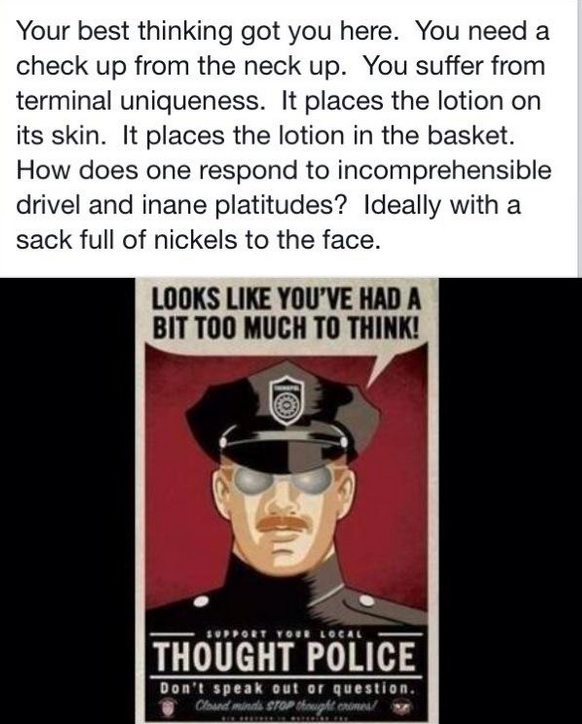
If Seppala were asked to provide the evidence-base and rationality of these statements he would be hard pressed to do so.  The question would be met with deflection, logical fallacy, references to the opinions of like minds and thought-stopping memes.  “You need a check-up from the neck up,”  your best thinking got you here,”  there is no “I” in “team,” “denial isn’t just a river in Egypt.”  Oh, yeah?   well “Rogue” isn’t just a river in Oregon and, while we are at it, “Boring” isn’t just a town!

It is this type of misinformation and propaganda that allows the “impaired physician movement” to  drag away the “best worker in the hospital” and deem him “in denial.”

“We were so surprised. We didn’t even know he had a problem”  say the nurses, patients and colleagues left behind.

Well the truth is he probably didn’t!

ByQiW11IYAI2Cit

Blind-faith and unquestioning allegiance to expert authority deflects scrutiny and analysis.  Few red flags are raised as this type of moral preening promotes misguided plausibility and complacency in the belief that these are indeed experts with good intentions. This needs to be addressed.

But if you look at any of the current “moral panics” that are being used to suggest random suspicion-less drug testing of doctors or promoting the Physician Health Programs as successful and replicable models, you will inevitably find a doctor on this list behind it. It is a given.

And the invitation goes out to Seppala to debate this in a public forum on a level playing field.    Not gonna happen because it would be impossible for him to address and answer the questions rationally,  directly and with any tiny scrap of evidence based data.

IMG_0581

Screen Shot 2014-11-26 at 7.23.12 PM

Disrupted Physician 101.3 –“For What it’s Worth”— The ASAM/ABAM Diploma Mill

ABAM Diploma Mill

Proof of Expertise or License to kill!

Disrupted Physician 101.3 –“For What it’s Worth”— The ASAM/ABAM Diploma Mill.

I can think of no other specialty or subspecialty in the profession of medicine where non-existent expertise can be incontestably announced and implemented.  If I claimed to be an ace neurosurgeon or an expert otolaryngologist and started practicing my claimed skills in the hospital I would be called on it pretty quick by both colleagues and patients–deemed a delusional fraud and run out on a rail within a week.

Yet doctors who have not met the usual and customary standards of  professional and educational quality and core competencies collectively and summarily identified  for medical specialties and subspecialties by the American Board of Medical Specialties, American Council on Graduate Medical Education and Institute of Medicine are able to claim “expertise”  in “addiction medicine” and everybody just lets them.

Screen Shot 2014-11-24 at 9.24.57 AM

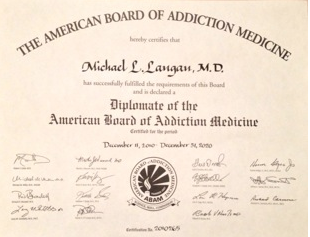
As an experiment to prove this hypothesis I sat for the 2010 American Board of Addiction Medicine (ABAM) Certification Exam.

I have absolutely no training or education in the field of addiction medicine.  I didn’t pick up a book or study anything. I did not prepare at all.   I went to the testing facility and finished the test within an hour and a half and below is my score.  I passed it by a large margin with a score of 459 (passing score is > 394).  


Aced it!

Aced it!

I am no expert in Addiction Medicine; Point being neither is 4000 of me.

The validity and reliability of opinions lie in their underlying methodology and evidence base. Reliance on the personal authority of any expert or group of experts is the fallacy of appeal to authority.

I have asthma but that does not make me a Pulmonologist.  That addiction “specialist” diagnosing and treating you may have 5 years prior been a proctologist; and maybe not even a very good one at that.

Somewhere there may be doctor with no post-graduate training in surgery wielding a scalpel and calling himself an expert surgeon, but it is difficult to imagine that he is a very good one.

Screen Shot 2014-11-24 at 12.18.00 AM

Dr. Allwissend 01

← Back

Thank you for your response. ✨

images-2

Disrupted Physician 101.2: “Addiction Medicine” is a Self-Designated Practice Specialty Unrecognized by the American Board of Medical Specialties–(An AMA Census Term Indicating Neither Training nor Competence)

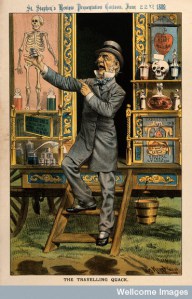
V0011377 A quack doctor selling remedies from his caravan; satirizingEducational and Professional Standards in Medical Specialties and Subspecialties

The increasingly rapid growth and complexity of medical knowledge in twentieth century American medicine resulted in the creation of specialties and subspecialties.

A related development was the creation of “boards”  to “certify” physicians as  knowledgeable and competent in the specialties and subspecialties in which they claimed to have expertise.   The American Board of Ophthalmology, organized in 1917, was the first of these.

As the number of medical specialties proliferated an umbrella organization was formed to accomplish this task. The Advisory Board for Medical Specialties was created  in 1933 and reorganized as the American Board of Medical Specialties (ABMS) in 1970.  This non-profit organization oversees board certification of all physician specialists and sub-specialists in the United States.

The ABMS recognizes 24 medical specialties in which physicians can pursue additional training and education to pursue Board Certification.Screen Shot 2014-11-07 at 7.44.56 PM

In 1991 the American Board of Medical Genetics was approved as the 24th ABMS board and these 24 boards grant the  37 general certificates and 88 subspecialty certificates available to medical specialists today.

The ABMS Member Boards are responsible for developing and implementing the educational and professional standards for quality practice in a particular medical specialty or subspecialty and evaluate physician candidates for Board Certification.  They set the bar of knowledge and competence for their given area of expertise.

All of the ABMS Member Boards are:

“committed to the principle of examining doctors based on six general competencies designed to encompass quality care: patient care, medical knowledge, practice-based learning and improvement, interpersonal and communication skills, professionalism, and systems-based practice.”

These areas have been collectively identified by the ABMS, the American College of Graduate Medical Education (ACGME) and the Institute of Medicine (IOM) in order to standardize graduate medical education in any specialty  from medical school graduation through retirement.1

One of the  24 medical specialties ABMS recognizes in which physicians can pursue additional training and education and pursue Board Certification is Psychiatry.

Founded in 1934, The American Board of Psychiatry and Neurology (ABPN) is one of the 24 ABMS specialty boards. In 1959, the ABPN issued its first subspecialty certificate in Child and Adolescent Psychiatry and was the only ABNP subspecialty until 1991 when the first examination in Geriatric Psychiatry was administered.4 Addiction Psychiatry became a subspecialty of ABPN in 1993.

The ABPN governs the specialty of Psychiatry, of which Addiction Psychiatry is a subspecialty.   Board Certification in Addiction Psychiatry requires a four-year psychiatric-residency program for training in the prevention, diagnosis and treatment of mood, anxiety, substance-abuse as well as other psychological and interpersonal problems followed by an additional year of training in one of the 40 accredited Addiction Psychiatry Fellowship programs. The Accreditation Council for Graduate Medical Education (ACGME) is the professional organization responsible for the accreditation residency education programs in the US for ABMS specialty and subspecialty areas of medicine. Addiction Psychiatry training programs are governed by the ACGME and graduates are eligible for ABPN Certification in Addiction Psychiatry.

When this rigorous education and training is complete a candidate is Board Eligible and can then take the subspecialty certification exam. The exam assesses competency in the dand consultation, pharmacotherapy, pharmacology of drugs, psychosocial treatment and behavioral basis of practice to be Board Certified in the subspecialty of Addiction Psychiatry by the ABPN.

Candidates must then be assessed in  a number of areas including psychiatric evaluation and consultation, pharmacotherapy, pharmacology, toxicology, psychosocial treatment, behavioral basis of practice, and many other areas in which for the past half-decade they where taught and apprenticed.

The current structure of residency training is little changed from when it was conceived originally by William Stewart Halsted in the late 19th Century.  Physicians acquire knowledge and skills necessary to safely and competently manage patients through apprenticeship. Training in a specialty area provides a comprehensive platform that allows medical school graduates to apply a body of knowledge to patient care and the treatment of disease. This forms the foundation of our Guild–undifferentiated and general but pluripotential.

The American Academy of Addiction Psychiatry (AAAP) is the only professional organization in the US focused on the subspecialty of Addiction Psychiatry.   The AAAP Mission Statements are to: 2

  • Promote high quality evidence-based screening, assessment and treatment for substance use and co-occurring mental disorders.
  • Translate and disseminate evidence-based research to clinical practice and public policy.
  • Strengthen Addiction Psychiatry specialty training and foster careers in Addiction Psychiatry.
  • Provide evidence-based addiction education to health care trainees and health professionals to enhance patient care and promote recovery.
  • Educate the public and influence public policy for the safe and humane treatment of those with substance use disorders.
  • Promote prevention and enhance addiction treatment and recovery across the life span.
  • Promote research on the etiology, prevention, identification and treatment of substance use and related disorders.

Self-Designated Practice Specialty :  An AMA Census Term Indicating What a Group of Doctors are Calling Themselves.

Screen Shot 2014-03-18 at 5.22.16 PMThe American Medical Association records a physician’s Self-Designated Practice Specialty (SDPS) in response to an annual credentialing survey. According to the AMA, SDPS are “historically related to the record-keeping needs of the American Medical Association and do not imply ‘recognition’ or ‘endorsement’ of any field of medical practice by the Association. SDPS refers to a self-designated specialty and this is not equivalent nor does it imply ABMS [American Board of Medical Specialties] Board Certification.a_meissen_group_of_harlequin_and_the_quack_doctor_circa_1741_faint_blu_d5585085_001h

“The fact that a physician chooses to designate a given specialty/area of practice on our records does not necessarily mean that the physician has been trained or has special competence to practice the SDPS.”3

Physicians have been able to list addiction medicine as a self-designated area of practice using the specialty code “ADM” since 1990.Screen Shot 2014-11-07 at 7.45.43 PM

In contrast to these accepted board credentials, American Board of Addiction Medicine (ABAM)  certification requires only a medical degree, a valid license to practice medicine, completion of a residency training in ANY specialty, and one year‘s full time involvement plus 50 additional hours of medical education in the field of alcoholism and other drug dependencies. The majority of American Society of Addiction Medicine (ASAM) physicians meet these requirements by “working in a chemical dependency treatment facility, taking continuing medical education courses in addiction, or participating in research.”6

The American Society of Addiction Medicine’s mission is to “establishScreen Shot 2014-11-07 at 7.47.55 PM addiction medicine as a specialty recognized by professional organizations, governments,, physicians, purchasers, and consumers of health care products, and the general public.’5   They have succeeded in doing this as many consider them to be the experts in addiction medicine including regulatory agencies.

The goal of the American Board of Addiction Medicine (ABAM) Foundation is to “gain recognition of Addiction Medicine as a medical specialty by the American Board of Medical Specialties (ABMS).”

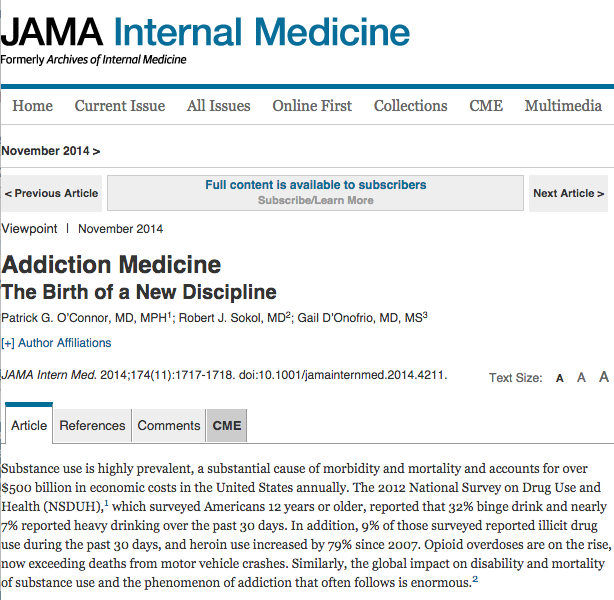
But Addiction Medicine is currently not recognized by the ABMS.  It is still a a Self-Designated Practice Specialty and the ABAM is a Self-Designated Board.  So too is the American Academy of Ringside Medicine and Surgery, the American Academy of Bloodless Medicine and Surgery and the Council of Non-Board Certified Physicians.   But these Self-Designated Boards do not have the multi-billion dollar drug and alcohol testing and treatment industry supporting them. Addiction Medicine has deep pockets, and if the November 2014 issue of the Journal of the American Medical Association (JAMA) is a harbinger of what’s to come, this self-designated practice specialty currently being certified by a self-designated Board and bereft of anything resembling the the educational and professional standards for quality practice in a particular medical specialty or subspecialty may soon robber baron its way into acceptance by the American Board of Medical Specialties.

Screen Shot 2014-11-23 at 11.15.15 PM

One thing is for certain.  When society gives power of diagnosis and treatment to individuals within a group schooled in just one uncompromising model of addiction with the majority attributing their very own sobriety to that model, they will exercise that power to diagnose and treat anyone and everyone according to that model.  The birth of Addiction Medicine as an ABMS accepted discipline is sure to be a success for the drug and alcohol testing and 12-step treatment industry, but its spawn is sure to be an inauspicious mark on the Profession and Guild of Medicine and a bane of society for years to come.

cropped-jester

  1. Stevens RA. In: Stevens R, Rosenberg C, Burns L, eds. History and Health Policy in the United States: Putting the Past Back in: Rutgers University Press; 2006:49-83.
  2. American Association of Addiction Psychiatry Website http://www.aaap.org/about-aaap/mission-statement (accessed 4/2/2014).
  3. American Medical Association. List & Definitions of Self-Designated Practice Specialties. August 21, 2012 http://www.ama-assn.org/ama.
  4. Juul D, Scheiber SC, Kramer TA. Subspecialty certification by the American Board of Psychiatry and Neurology. Academic psychiatry : the journal of the American Association of Directors of Psychiatric Residency Training and the Association for Academic Psychiatry. Spring 2004;28(1):12-17.
  5. http://www.asam.org/about-us/mission-and-goals.
  6. Tontchev GV, Housel TR, Callahan JF, Kunz KB, Miller MM, Blondell RD. Specialized training on addictions for physicians in the United States. Substance abuse : official publication of the Association for Medical Education and Research in Substance Abuse. Apr 2011;32(2):84-92.

Disrupted Physician 101.1: The “Impaired Physician Movement” and the History of the American Society of Addiction Medicine (ASAM)

Disrupted Physician 101.1: The “Impaired Physician Movement” and the History of the American Society of Addiction Medicine (ASAM).

Henry David Thoreau

“With one arm around the shoulder of religion and the other around the shoulder of medicine, we might change the world.”—Twelve Steps and Twelve Traditions, AA World Services, Inc (1953).

In 1985 the British sociologist G. V. Stimson wrote:

“The impaired physician movement is characterized by a number of evangelical recovered alcoholic and addict physicians, whose recovery has been accompanied by an involvement in medical society and treatment programs. Their ability to make authoritative pronouncements on physician impairment is based on their own claim to insider’s knowledge.”

The American Society of Addiction Medicine’s mission is to “establish addiction medicine as a specialty recognized by professional organizations, governments, physicians, purchasers, and consumers of health care products, and the general public.”  

In this they have succeeded.images-4

And in the year 2014 Stimson’s characterization of the “impaired physician movement” remains as accurate and apt as it was in 1985. But the “number of evangelical recovered alcoholic and addict physicians” has increased dramatically  (outnumbering Addiction Psychiatry by 4:1)  and their involvement in  medical society and treatment programs” has been realized and enforced through the state Physician Health Programs and their “PHP-approved’ assessment and treatment centers.

Their “ability to make authoritative pronouncements on physician impairment…based on their own claim to insider’s knowledge”  has become public policy and sanctified by Regulatory Medicine -essentially the Word of the Lord.

And the 1953 Alcoholics Anonymous prophecy that “With one arm around the shoulder of religion and the other around the shoulder of medicine, we might change the world” is also coming to pass.

But the world is not changing for the better as that arm around the shoulder of religion has its fingers deep in the pockets of the multi-billion dollar drug and alcohol testing and assessment and treatment industries.  And the arm around the shoulder of medicine has its fingers clamped tightly around its throat; a stranglehold in full throttle suffocating the Profession of Medicine with no meaningful opposition I can see.

Disrupted Physician 101.1: The “Impaired Physician Movement” and the History of the American Society of Addiction Medicine (ASAM)

“With one arm around the shoulder of religion and the other around the shoulder of medicine, we might change the world.”—Twelve Steps and Twelve Traditions, AA World Services, Inc (1953).
 
2055 

In order to comprehend the current plight of the Medical Profession and the dark clouds that lie ahead it is necessary to understand the history of the “impaired physician movement” and the American Society of Addiction Medicine.

In 1985 the British sociologist G. V. Stimson wrote:

“The impaired physician movement is characterized by a number of evangelical recovered alcoholic and addict physicians, whose recovery has been accompanied by an involvement in medical society and treatment programs. Their ability to make authoritative pronouncements on physician impairment is based on their own claim to insider’s knowledge.”1

The impaired physician movement emphasizes disease and therapy rather than discipline and punishment and believes that addiction is a chronic relapsing brain disease requiring lifelong abstinence and 12-step spiritual recovery. The drug or alcohol abuser or addict is a person lacking adequate internal controls over his or her  behavior;  for his own protection as well as the protection of society external restraints are required including involuntary treatment.

The American Society of Addiction Medicine can trace its roots to the 1954 founding of the New York City Medical Society on Alcoholism (NYCMSA) by Ruth Fox, M.D whose husband died from alcoholism.

Screen Shot 2014-02-23 at 4.42.15 PM

220px-ASAM_Logo

Finding that alcoholics in her psychoanalytic practice did not recover when she used conventional analytic approaches, she taught her patients about alcoholism as a disease and introduced “them to AA meetings held in her living room.”2

A number of physicians in the New York Medical Society were themselves recovering alcoholics who turned to Alcoholics Anonymous for care.3

The society, numbering about 100 members, established itself as a national organization in 1967, the American Medical Society on Alcoholism (AMSA).3

Screen Shot 2014-02-23 at 4.52.08 PM

The group promoted the concept of alcoholism as a chronic relapsing disease requiring lifelong spiritual recovery through the 12-steps of AA.

By 1970 membership was nearly 500.2Screen Shot 2014-02-22 at 2.47.51 PM

In 1973 AMSA became a component of the National Council on Alcoholism (NCA), now the National Council on Alcoholism and Drug Dependence (NCADD) in a medical advisory capacity until 1983.

logo

“Abstinence from alcohol is necessary for recovery from the disease of alcoholism” became the first AMSA Position Statement in 1974.2

Screen Shot 2014-02-22 at 3.55.08 PM

Screen Shot 2014-02-22 at 1.49.24 PM

Screen Shot 2014-02-22 at 1.59.25 PM

In 1985 ASAM’s first certification exam was announced. According to Dr. Bean-Bayog, chair of the Credentialing Committee:

“A lot of people in the alcoholism field have long wanted physicians in the field to have a high level of skills and scientific credibility and for this body of knowledge to be accredited.”2

And in 1986 662 physicians took the first ASAM Certification Exam.medical

By 1988 membership was over 2,800 with 1,275 of these physicians “certified” as:

“having demonstrated knowledge and expertise in alcoholism and other drug dependencies commensurate with the standards set forth by the society.”4
“While certification does not certify clinical skill or competence,” the Board explained, “it does identify physicians who have demonstrated knowledge in diagnosis and treatment of alcoholism and other drug dependencies.”5
Somehow, I don't think this is quite what they had in mind!

Somehow, I don’t think this is quite what they had in mind!

Achieving “recognized board status for chemical dependence” and fellowships in  “chemical dependency”  are among the five-year objectives identified by the group.  These are to come to fruition by  “careful discussion, deliberation, and consultation” to “determine its form and structure and how best to bring it about.”5

The formation of ASAM State Chapters begins with California, Florida, Georgia, and Maryland submitting requests.6

In 1988 the AMA House of Delegates votes to admit ASAM to the House. According to ASAM News this “legitimizes the society within the halls of organized medicine.”2

In 1989 the organization changes its name to the American Society of Addiction Medicine (ASAM).2

Since 1990, physicians have been able to list addiction medicine as a self-designated area of practice using the specialty code “ADM.”

By 1993 ASAM has a membership of 3,500 with a total of 2,619 certifications in Addiction Medicine.

The Membership Campaign Task Force sets  a goal to double its membership of 3,500 to 7,000 by the year 2000 to assure “the future of treatment for patients with chemicals. It represents a blueprint for establishing addiction medicine as a viable entity.”7

Screen Shot 2014-02-23 at 3.12.12 PM

Ninety physicians become Fellows of the American Society of Addiction Medicine (FASAM) in 1996 “to recognize substantial and lasting contributions to the Society and the field of addiction medicine.”8

Among the honorees are Robert DuPont, G. Douglas Talbott, Paul Earley, and Mel Pohl. In addition to at least five consecutive years of membership and certification by the Society, Fellows must have “taken a leadership role in ASAM through committee service, or have been an officer of a state chapter, and they must have made and continue to make significant contributions to the addictions field.”8

The American Board of Addiction Medicine (ABAM) is formed in 2007 as a non-profit 501(C)(6) organization “following conferences of committees appointed by the American Society of Addiction Medicine” to “examine and certify Diplomats.”9

In 2009 National Institute on Drug Abuse (NIDA) Director Nora Volkow, M.D., gives the keynote address at the first ABAM Screen Shot 2014-11-18 at 10.12.23 AMboard certification diploma ceremony.10

According to an article in Addiction Professional “Board certification is the highest level of practice recognition given to physicians.”

“A Physician membership society such as ASAM, however, cannot confer ‘Board Certification,’ ” but a“ “Medical Board such as ABAM has a separate and distinct purpose and mission: to promote and improve the quality of medical care through establishing and maintaining standards and procedures for credentialing and re-credentialing medical specialties.”

The majority of ASAM physicians meet these requirements by “working in a chemical dependency treatment facility, taking continuing medical education courses in addiction, or participating in research.”11

“In the United States accredited residency programs in addiction exist only for psychiatrists specializing in addiction psychiatry; nonpsychiatrists seeking training in addiction medicine can train in nonaccredited ‘fellowships,’ or can receive training in some ADP programs, only to not be granted a certificate of completion of accredited training.”11

Screen Shot 2014-02-28 at 1.13.17 PM

Specialty recognition by the American Board of Medical Specialties, fifty Addiction Medicine Fellowship training programs and a National Center for Physician Training in Addiction Medicine are listed as future initiatives of the ABAM Foundation in 2014.

The American Society of Addiction Medicine’s mission is to “establish addiction medicine as a specialty recognized by professional organizations, governments, physicians, purchasers, and consumers of health care products, and the general public’12   

In this they have succeeded.

And in the year 2014 G.V. Stimson’s characterization of the “impaired physician movement” remains as accurate and apt as it was in 1985. But the “number of evangelical recovered alcoholic and addict physicians” has increased dramatically  (outnumbering Addiction Psychiatry by 4:1)  and their involvement in  medical society and treatment programs” has been realized and enforced through the state Physician Health Programs and their “PHP-approved’ assessment and treatment centers.Screen Shot 2014-11-18 at 10.11.55 AM

Their “ability to make authoritative pronouncements on physician impairment…based on their own claim to insider’s knowledge”  has become public policy and sanctified by Regulatory Medicine -essentially the Word of the Lord.

And the 1953 Alcoholics Anonymous prophecy that “With one arm around the shoulder of religion and the other around the shoulder of medicine, we might change the world” is also coming to pass.

But the world is not changing for the better as that arm around the shoulder of religion has its fingers deep in the pockets of the multi-billion dollar drug and alcohol testing and assessment and treatment industries.  And the arm around the shoulder of medicine has its fingers clamped tightly around its throat; a stranglehold in full throttle suffocating the Profession of Medicine with no meaningful opposition I can see.

IMG_1686

  1. Stimson GV. Recent developments in professional control: the impaired physician movement in the USA. Sociology of health & illness. Jul 1985;7(2):141-166.
  2. Four Decades of ASAM. ASAM News. March-April 1994, 1994.
  3. Freed CR. Addiction medicine and addiction psychiatry in America: Commonalities in the medical treatment of addiction. Contemporary Drug Problems. 2010;37(1):139-163.
  4. . American Medical Society on Alcoholism & Other Drug Dependencies Newsletter. Vol III. New York, NY: AMSAODD; 1988:12.
  5. Ursery S. $1.3M verdict coaxes a deal for doctor’s coerced rehab. Fulton County Daily Report. May 12, 1999b 1999.
  6. . AMSAODD News. Vol III. New York, NY: American Medical Society on Alcoholism & Other Drug Dependencies; 1988.
  7. Membership Campaign Update. ASAM News. Vol VIII: American Society of Addiction Medicine; 1993:11.
  8. . ASAM News. Vol 12. Chevy Chase, MD: American Society of Addiction Medicine; 1997:20.
  9. http://www.abam.net/about/history/.
  10. Kunz KB, Gentiello LM. Landmark Recognition for Addiction Medicine: Physician certification by the American Board of Addiction Medicine will Benefit all Addiction Professionals. Addiction Professional. 2009. http://www.addictionpro.com/article/landmark-recognition-addiction-medicine.
  11. Tontchev GV, Housel TR, Callahan JF, Kunz KB, Miller MM, Blondell RD. Specialized training on addictions for physicians in the United States. Substance abuse : official publication of the Association for Medical Education and Research in Substance Abuse. Apr 2011;32(2):84-92.
  12. http://www.asam.org/about-us/mission-and-goals.

images-4Screen Shot 2014-07-24 at 4.15.40 PM