Physician Suicide

Physician Suicide.

Physician Suicide 101:  Secrets, lies and solutions by Dr. Pamela Wible, M.D., is now featured on KevinMD.com.  Please read and comment!   We need to use this as a stepping stone to start discussing the Elephant in the room; state Physician Health Programs (PHPs) organized under the Federation of State Physician Health Programs.  These programs once served the dual purpose of helping sick doctors and protecting the public from harm.

Taken over by the “impaired physician” movement the current manifestation is one of absolute power and unrestrained managerial authority with no meaningful oversight, regulation or accountability.  It is a culture of institutional injustice that is preventing doctors from seeking help for fear of being ensnared and monitored by them.  Those being monitored by them are subject to bullying, abuse and forced 12-step indoctrination under threat of loss of licensure.  Many of these doctors do not even have an addiction or substance use disorder.   Situational factors, a “one-off” or even a false accusation can result in monitoring by these programs that encourage confidential referral for things such as being behind on medical charts.  Sham peer-review is rampant.32-640x472

Moreover, the authority bestowed on this group is both illegitimate and irrational. The mechanics and mentality of the Federation of State Physician Health Programs conforms to that of the American Society of Addiction Medicine (ASAM). Although there are some Addiction Psychiatrists involved, the vast majority are  “specialists” in “Addiction Medicine.

The ASAM is not even recognized by the American Board of Medical Specialties as a bona fide specialty. It is a Self-Designated-Medical-Specialty; an AMA term used to keep track of what any group of doctors is calling themselves.

Screen Shot 2014-11-29 at 11.04.53 AM

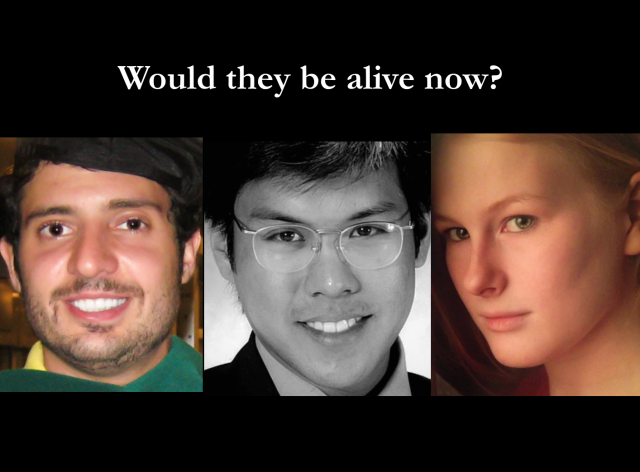
Dr. Gregory H. Miday (1982-2012) A Doctor who would have made this world a better place.

In fact, American Board of Addiction Medicine (ABMS) “board certification” is little more than a diploma mill.

Yet these “specialists” are now in charge of ALL things related to PHYSICIAN HEALTH.

Many of the physicians running these programs had their licenses revoked and got them back by claiming salvation through the good graces of Alcoholics Anonymous and other 12-step methodology. Many have felony convictions. Some have double felonies.

At best we have unqualified zealots. But one major problem I have heard over and over again from physicians forced into these programs is an absolute lack of justice, empathy and even civility by those in charge.

A note from Dr. Karen Miday whose son Greg died by suicide after having a Corona in Peurto Rico while on vacation:

Dr. Gregory H. Miday ( 1982-2012) My physician son died of suicide 2 years ago while being monitored by the Missouri PHP. When he called to notify them of his relapse (while vacationing in Puerto Rico) and his intent to admit himself to a local public treatment center (decision made in consultation with his psychiatrist during an office visit that morning) the PHP said they did not approve of the plan. They told him to come speak with them instead. He chose otherwise. His phone calls to the PHP were the last ones he ever made. Clearly, he did not see them as benevolent. I sincerely doubt that he is their only casualty. Yet, where are the statistics? How many others have died under their watch. Strangely, the clinical director ( an RN, and likely recovering addict) told my husband that no internal review of my son’s case was planned. Such reviews after a suicide are mandatory at every public mental health facility I have practiced at. Our best and our brightest are being subjected to substandard care without any oversight or accountability. I can’t bring my son back. I do hope, however, that others will join me in an effort to pull the curtain back on these programs and perhaps save other lives. Karen Miday, MD, Cincinnati, OH

Misconduct, fraud, and even crimes are being reported.

Perhaps the 12-step salvation is just a ruse for some of them; a convenient cloak under which to hide all manner of abuse with impunity and immunity.

These individuals have been granted unrestrained managerial prerogative and absolute power over doctors. They decide not only who to monitor but how that monitoring proceeds in every last detail. Our fates, literally, lie in the hands of this group. No more physicians should die by this system of institutional injustice, bullying and pseudoscience. The conflicts-of-interest are abhorrent and would be incomprehensible in any other venue.

Isn’t it time we take charge? And the solution is fairly simple.

Oversight, regulation, and auditing by OUTSIDE groups. That is how it’s done everywhere else. Why do these guys get a pass?  Why would anyone be against procedural fairness and transparency in any situation? These are legitimate questions.

State Medical Societies, Departments of Public Health, the American Medical Association, the American Council on Graduate Medical Education, the Institute of Medicine and other Accreditation and Professional Organizations need to start addressing this.

This is a Public Health Emergency that is not going away.  It needs to be addressed directly and with urgency; not with kid gloves and temporization.

Accountability is without exception.  It requires both the provision of information and justification for actions.   Accountability also requires consequences for actions if they breach standards-of-care, ethics and the law.

 Hopefully this article will succeed in framing certain questions for the medical profession; questions that we all need to think about now before the door closes for good.

Physician Suicide 101: Secrets, Lies & Solutions by Pamela Wible, M.D.

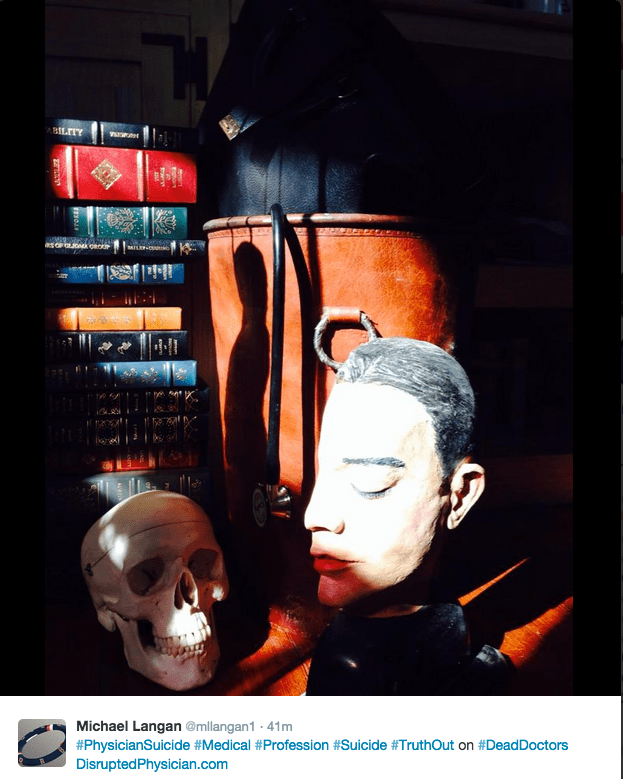
Physician Suicide, the “Impaired Physician Movement” and ASAM:  The Dead Doctors at Ridgeview Institute under G. Douglas Talbott, by Michael Langan, M.D.

Physician Suicide

Screen Shot 2014-11-19 at 8.09.52 AM

Physician Suicide 101: Secrets, Lies & Solutions by Dr. Pamela Wible, M.D.,  will hopefully serve as a stepping-stone to start discussing the elephant in the room; Physician Health Programs (PHPs) and their relationship to physician suicide.

The current state-of-affairs in these once benevolent programs that served a dual purpose of helping and protecting the public from “impaired” physicians is one of unrestrained managerial authority and absolute power with no meaningful oversight, regulation or accountability.

Moreover, the authority bestowed on this group is both illegitimate and irrational. The Federation of State Physician Health Programs is composed of American Society of Addiction Medicine “specialists” in “Addiction Medicine.”

The ASAM is not even recognized by the American Board of Medical Specialties as a bona fide specialty. It is a Self-Designated-Medical-Specialty; an AMA term used to keep track of what any group of doctors is calling themselves.

In fact, American Board of Addiction Medicine (ABMS) “board certification” is little more than a diploma mill.

Yet these “specialists” are now in charge of ALL things related to PHYSICIAN HEALTH.

Many of the physicians running these programs had their licenses revoked and got them back by claiming salvation through the good graces of Alcoholics Anonymous and other 12-step methodology. Many have felony convictions. Some have double felonies.

At best we have unqualified zealots. But one major problem I have heard over and over again from physicians forced into these programs is an absolute lack of justice, empathy and even civility by those in charge.

Misconduct, fraud, and even crimes are being reported.

Perhaps the 12-step salvation is just a ruse for some of them; a convenient cloak under which to hide all manner of abuse with impunity and immunity.

These individuals have been granted unrestrained managerial prerogative and absolute power over doctors. They decide not only who to monitor but how that monitoring proceeds in every last detail. Our fates, literally, lie in the hands of this group. No more physicians should die by this system of institutional injustice, bullying and pseudoscience. The conflicts-of-interest are abhorrent and would be incomprehensible in any other venue.

Isn’t it time we take charge? And the solution is fairly simple.

Oversight, regulation, and auditing by OUTSIDE groups. That is how it’s done everywhere else. Why do these guys get a pass?  Why would anyone be against procedural fairness and transparency in any situation? These are legitimate questions.

State Medical Societies, Departments of Public Health, the American Medical Association, the American Council on Graduate Medical Education, the Institute of Medicine and other Accreditation and Professional Organizations need to start addressing this.

It is a public heal emergency that is not going away.  It needs to be addressed directly and with urgency.

Accountability is without exception.   Hopefully this article will succeed in framing certain questions for the medical profession; questions that we all need to think about now before the door closes for good.

Physician Suicide 101: Secrets, Lies & Solutions by Pamela Wible, M.D.

Physician Suicide, the “Impaired Physician Movement” and ASAM:  The Dead Doctors at Ridgeview Institute under G. Douglas Talbott, by Michael Langan, M.D.

http://youtu.be/FNoLigQzp5M

← Back

Thank you for your response. ✨

mllangan1's avatarDisrupted Physician

View original post

Physician Suicide, the “Impaired Physician Movement” and ASAM: The Dead Doctors at Ridgeview Institute under G. Douglas Talbott

cropped-hanging_witch_01.jpg

Gentlemen, it is a disagreeable custom to which one is too easily led by the harshness of the discussions, to assume evil intentions. It is necessary to be gracious as to intentions; one should believe them good, and apparently they are; but we do not have to be gracious at all to inconsistent logic or to absurd reasoning. Bad logicians have committed more involuntary crimes than bad men have done intentionally.”–Pierre S. du Pont (September 25, 1790)

“It is easier to believe a lie one has heard a hundred times than a truth one has never heard before.” –Robert S. Lynd


Ridgeview Institute was a drug and alcohol treatment program for “impaired physicians” in Georgia created by G. Douglas Talbott, a former cardiologist who lost control of his drinking and recovered through the 12-steps of Alcoholics Anonymous.

Up until his death on October 18, 2014 at the age of 90, Talbott  owned and directed a number of treatment facilities for impaired professionals, most recently the Talbott Recovery Campus in Atlanta, one of the preferred referrals for physicians ordered into evaluation and treatment by licensing boards today.

G. Douglas Talbott is a prototypical example of an “impaired physician movement” physician–in fact in many ways he may be considered the”godfather” of the current organization.  He helped organize and serve as past president of the American Society of Addiction Medicine (ASAM) and was a formative figure in the American Medical Association’s (AMA’s) Impaired Physician Program.

Screen-shot-2014-10-20-at-11.00.23-PM-1024x701

G. Douglas Talbott (center), with sons Mark (left) and Dave (right). (image: Ham Biggar)

The cost of a 28-day program for nonprofessionals at Ridgeview in 1987 was $10,000 while the cost was “higher for those going through impaired-health professionals program,” which lasted months rather than 28 days.1

In 1975 after creating the DeKalb County Impaired Physicians Committee for the Medical Association of Georgia, Talbott founded the Georgia Disabled Doctors Program for the assessment and treatment of physicians. Founded in part because “traditional one-month treatment programs are inadequate for disabled doctors,” and they required longer treatment to recover from addiction and substance abuse.   According to Talbott, rehabilitation programs that evaluate and treat the rest of the population for substance abuse issues are incapable of doing so in doctors as they are unlike any other of the inhabitants of our society. Physicians are unique. Unique because of their incredibly high denial”, and he includes this in what he calls the “Four MDs,” “M-Deity”, “Massive Denial” “Militant Defensiveness” and “More Drugs.”2   And these factors set doctors apart from the rest.

According to Talbott, “impaired doctors must first acknowledge their addiction and overcome their ‘terminal uniqueness’ before they can deal with a drug or alcohol problem.” “Terminal uniqueness “ is a phrase Talbott uses to describe doctors’ tendency to think they can heal themselves.

“M-Deity” refers to doctors “being trained to think they’re God;”3 blinded by an overblown sense of self-importance and thinking that they are invincible-an unfounded generalization considering the vast diversity of individuals that make up our profession.   Although this type of personality does exist in medicine,  it is a small minority -just one of many opinions with little probative value offered as factual expertise by the impaired physician movement and now sealed in stone.

Former Assistant Surgeon General (Ret) Admiral (Ret) John C. Duffy

Former Assistant Surgeon General (Ret) Admiral (Ret) John C. Duffy

This attitude, according to some critics, stems from the personal histories of the treatment staff, including Talbott, who are recovering alcoholics and addicts themselves. One such critic was Assistant Surgeon General under C. Everett Koop John C. Duffy who said that Ridgeview suffered from a “boot-camp mentality” toward physicians under their care and “assume every physician suffering from substance abuse is the same lying, stealing, cheating, manipulating individual they were when they had the illness. Certainly some physicians are manipulative, but it’s naïve to label all physicians with these problems.”1

001p3_xlg.preview

LeClair Bissell

American Society of Addiction Medicine (ASAM) President (1981-1983) LeClair Bissell was also highly critical of Talbott’s approach. Bissell, co-author of the first textbook of ethics for addiction professionals4 when asked if there was any justification to the claim that doctors are sicker than other people and more vulnerable to addiction replied:

“Well, based on my treatment experience, I think they are less sick and much easier to treat than many other groups. I think one reason for that is that in order to become a physician…one has to have jumped over a great many hurdles. One must pass the exams, survive the screening tests and the interviews, be able to organize oneself well enough to do examinations and so on, and be observed by a good many colleagues along the way. Therefore I think the more grossly psychotic, or sicker, are frequently screened out along the way. The ones we get in treatment are usually people who are less brain-damaged, are still quite capable of learning, are reasonably bright. Not only that, but they are quite well motivated in most cases to hang on to their licenses, the threat of the loss of which is frequently what puts them in treatment in the first place. So are they hard to treat? No! Are they easy patients? Yes! Are they more likely to be addicted than other groups? We don’t know.”5

“I’m not much for the bullying that goes along with some of these programs,” Bissell commented to the Atlanta Journal and Constitution in 1987.3

The constitution did a series of reports after five inpatients died by suicide during a four-year period at Ridgeview.6 In addition there were at least 20 more who had killed themselves over the preceding 12 years after leaving the treatment center.1

Bissell, the recipient of the 1997 Elizabeth Blackwell Award for outstanding contributions to the cause of women and medicine remarked: “When you’ve got them by the license, that’s pretty strong leverage. You shouldn’t have to pound on them so much. You could be asking for trouble.”3

According to Bissell: “There’s a lot of debate in the field over whether treatment imposed by threats is worthwhile…To a large degree a person has to seek the treatment on his own accord before it will work for him.”3

A jury awarded $1.3 million to the widow of one of the deceased physicians against Ridgeview,7 and other lawsuits initiated on behalf of suicides were settled out of court.6

The Constitution reported that doctors entered the program under threats of loss of licensure “even when they would prefer treatment that is cheaper and closer to home.” 8 The paper also noted that Ridgeview “enjoys unparalleled connections with many local and state medical societies that work with troubled doctors,” “licensing boards often seek recommendations from such groups in devising an approved treatment plan,” and those in charge are often “physicians who themselves have successfully completed Ridgeview’s program.”8

In 1997 William L. White interviewed Bissell whom he called “one of the pioneers in the treatment of impaired professionals.” The interview was not published until after her death in 2008 per her request.   Noting that her book Alcoholism in the Professions9 “remains one of the classics in the field”, White asked her when those in the field began to see physicians and other professionals as a special treatment population; to which she replied:

“When they started making money in alcoholism. As soon as insurance started covering treatment, suddenly you heard that residential treatment was necessary for almost everybody. And since alcoholic docs had tons of money compared to the rest of the public, they not only needed residential treatment, they needed residential treatment in a special treatment facility for many months as opposed to the shorter periods of time that other people needed.”10

Talbott claimed a “92.3 percent recovery rate according to information compiled from a five-year follow-up survey based on complete abstinence and other treatment.”11 A 1995 issue of The Federal Bulletin: The Journal of Medical Licensure and Discipline, published by the Federation of State Medical Boards, contains articles outlining impaired physician programs in 8 separate states. Although these articles were little more than descriptive puff-pieces written by the state PHP program directors and included no described study-design or methodology the Editor notes a success rate of about 90% in these programs and others like them 12 and concludes:

“cooperation and communication between the medical boards and the physician health programs must occur in an effort to protect the public while assisting impaired physicians in their recovery.” 12

No one bothered to examine the methodology to discern the validity of these claims and it is this acceptance of faith without objective assessment that has allowed the impaired physician movement through the ASAM and FSPH to advance their agenda;  confusing ideological opinions with professional knowledge.

“There is nothing special about a doctor’s alcoholism,” said Bissel

“These special facilities will tell you that they come up with really wonderful recovery rates. They do. And the reason they do is that any time you can grab a professional person by the license and compel him or her into treatment and force them to cooperate with that treatment and then monitor them for years, you’ll get good outcomes—in the high 80s or low 90s in recovery rates—no matter what else you do.”10
“The ones I think are really the best ones were not specialized. There were other well-known specialty clinics that claimed all the docs they treated got well, which is sheer rot. They harmed a great many people, keeping them for long, unnecessary treatments and seeing to it that they hit their financial bottom for sure: kids being yanked out of college, being forced to sell homes to pay for treatment, and otherwise being blackmailed on the grounds that your husband has a fatal disease. It’s ugly.”10

Stanton Peele’s “In the Belly of the American Society of Addiction Medicine Beast” describes the coercion, bullying, threats and indoctrination that are standard operating procedure in Talbott’s facilities.13  Uncooperative patients, “and this covers a range of sins of commission or omission including offering one’s opinion about one’s treatment,” are “threatened with expulsion and with not being certified-or advocated for with their Boards.”13

The cornerstone of treatment is 12-step spiritual recovery. All new patients are indoctrinated into A.A. and coerced to confess they are addicts or alcoholics. Failure to participate in A.A. and 12-step spirituality means expulsion from the program with the anticipated result being loss of one’s medical license.

In May 1999 Talbott stepped down as president of the American Society of Addiction Medicine (ASAM) as a jury awarded Dr. Leonard Masters a judgment of $1.3 million in actual damages and an undisclosed sum in punitive damages for fraud, malpractice, and the novel claim of false imprisonment.14

The fraud finding required a finding that errors in the diagnosis were intentional. Masters, who was accused of overprescribing narcotics to his patients was told by the director of the Florida PHP that he could either surrender his medical license until the allegations were disproved or submit to a four-day evaluation.

Masters agreed to the latter, thinking he would have an objective and fair evaluation. He was instead diagnosed as “alcohol dependent” and coerced into “treatment under threat of loss of his medical license. Staff would routinely threaten to report any doctor who questioned any aspect of their diagnosis or treatment to their state medical boards “as being an impaired physician, leaving necessary treatment against medical advice,”14  the equivalent of professional suicide.

Masters, however, was not an alcoholic.

According to his attorney, Eric. S. Block,  “No one ever accused him of having a problem with alcohol. Not his friends, not his wife, not his seven children, not his fellow doctors, not his employees, not his employers, No one.” 15

He was released 4 months later and forced to sign a five-year “continuing care” contract with the PHP, also under continued threat of his medical license.

Talbott faced no professional repercussions and no changes in their treatment philosophy or actions were made. They still haven’t.  They have simply tightened the noose and taken steps to remove accountability.

Up until his recent death, Talbott continued to present himself and ASAM as the most qualified advocates for the assessment and treatment of medical professionals for substance abuse and addiction.16

ASAM and like-minds still do.

In most states today any physician referred for an assessment for substance abuse will be mandated to do so in a facility just like Ridgeview.

There is no choice.   In mechanics and mentality, this same system of coercion, control, and indoctrination has metastasized to almost every state only more powerful and opaque in an unregulated gauntlet protected from public scrutiny, answerable and accountable to no one.  Laissez faire Machiavellian egocentricity unleashed.    For what they have done is taken the Ridgeview model and replicated it over time state by state and tightened the noose.  By subverting the established Physician Health Programs (PHPs) started by state medical societies and staffed by volunteer physicians they eliminated those not believing in the mentality of the groupthink.   They then mandated assessment and treatment of all doctors be done at a “PHP-approved” facility which means a facility identical to Ridgeview.  This was done  under the scaffold of the Federation of State Physician Health Programs (FSPHP).  They are now in charge of all things related to physician wellness in doctors.

  1. Durcanin C, King M. The suicides at Ridgeview Institute: Suicides mar success at Ridgeview with troubled professionals. Atlanta Journal and Constitution. December 18, 1987, 1987: A13.
  2. Gonzales L. When Doctors are Addicts: For physicians getting Drugs is easy. Getting help is not. Chicago Reader. July 28, 1988, 1988.
  3. King M, Durcanin C. The suicides at Ridgeview Institute: A Doctor’s treatment program may be too tough, some say. Atlanta Journal and Constitution. December 18, 1987a, 1987: A12.
  4. Bissell L, Royce JE. Ethics for Addiction Professionals. Center City, Minnesota: Hazelden; 1987.
  5. Addiction Scientists from the USA: LeClair Bissell. In: Edwards G, ed. Addiction: Evolution of a Specialist Field. 1 ed: Wiley, John & Sons, Incorporated; 2002:408.
  6. Durcanin C. The suicides at Ridgeview Institute: Staff members didn’t believe Michigan doctor was suicidal. Atlanta Journal and Constitution. December 18, 1987, 1987: A8.
  7. Ricks WS. Ridgeview Institute loses $1.3 million in suit over suicide. Atlanta Journal and Constitution. October 11, 1987, 1987: A1.
  8. King M, Durcanin C. The suicides at Ridgeview Institute: Many drug-using doctors driven to Ridgeview by fear of losing licenses. Atlanta Journal and Constitution. December 18, 1987b, 1987: A1.
  9. Bissell L, Haberman PW. Alcoholism in the Professions. Oxford University Press; 1984.
  10. White W. Reflections of an addiction treatment pioneer. An Interview with LeClair Bissell, MD (1928-2008), conducted January 22, 1997. Posted at http://www.williamwhitepapers.com. 2011.
  11. Williams c. Health care field chemical dependency threat cited. The Tuscaloosa News. January 16, 1988, 1988: 16.
  12. Schneidman B. The Philosophy of Rehabilitation for Impaired Physicians. The Federal Bulletin: The Journal of Medical Licensure and Discipline. 1995;82(3):125-127.
  13. Peele S. In the Belly of the American Society of Addiction Medicine Beast. The Stanton Peele Addiction Website (accessed March 28, 2014) http://web.archive.org/web/20080514153437/http://www.peele.net/debate/talbott.html.
  14. Ursery S. $1.3M verdict coaxes a deal for doctor’s coerced rehab. Fulton County Daily Report. May 12, 1999b 1999.
  15. Ursery S. I was wrongly held in alcohol center, doctor charges. Fulton Count y Daily Report. April 27, 1999a 1999.
  16. Parker J. George Talbott’s Abuse of Dr. Leon Masters MD ( http://medicalwhistleblowernetwork.jigsy.com/george-talbott-s-abuse-of-leon-masters ). Medical Whistelblower Advocacy Network.

    There is enormous inertia—a tyranny of the status quo—in private and especially governmental arrangements. Only a crisis—actual or perceived—produces real change. When that crisis occurs, the actions that are taken depend on the ideas that are lying around. That, I believe, is our basic function: to develop alternatives to existing policies, to keep them alive and available until the politically impossible becomes politically inevitable.-Milton Friedman

    Screen Shot 2014-11-19 at 4.27.00 PM

Physician Suicide

Screen Shot 2014-11-19 at 8.09.52 AM

Physician Suicide 101: Secrets, Lies & Solutions by Pamela Wible, M.D.

Physician Suicide, the “Impaired Physician Movement” and ASAM:  The Dead Doctors at Ridgeview Institute under G. Douglas Talbott, by Michael Langan, M.D.

Patient-with-sign-1024x641-1

Screen Shot 2014-11-19 at 4.27.00 PM

Robin Williams Melancholy Suicide–Hopelessness, Helplessness, and Defeat

Robin Williams Melancholy Suicide–Hopelessness, Helplessness, and Defeat.


Robin Williams Melancholia

There’s something in his soul
O’er which his melancholy sits on brood,
And I do doubt the hatch and the disclose
Will be some danger—which for to prevent,
I have in quick determination……..
It shall be so.    Madness in great ones must not unwatched go.
—Hamlet Act III, Scene 1
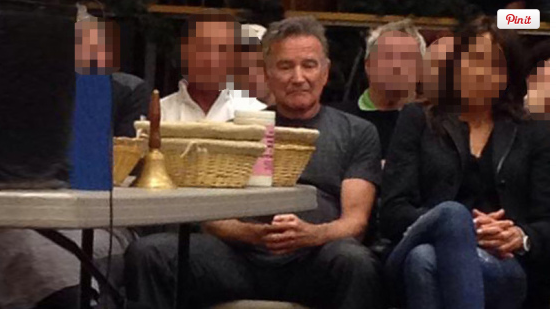
According to Radar Online Robin Williams is looking “grim and focused.”  Grim? Yes. Focused? No.  His visage is one of entrapment, despair, and dread.
In  F. Scott Fitzgerald’s  The Great Gatsby, Nick Carraway observes that “the loneliest moment in someone’s life is when they are watching their whole world fall apart, and all they can do is stare blankly”   This is not focus but melancholia–hopelessness, helplessness, and defeat.

Robin Williams Melancholy Suicide–Hopelessness, Helplessness, and Defeat

mllangan1's avatarDisrupted Physician


There’s something in his soul
O’er which his melancholy sits on brood,
And I do doubt the hatch and the disclose
Will be some danger—which for to prevent,
I have in quick determination……..
It shall be so.    Madness in great ones must not unwatched go.
—Hamlet Act III, Scene 1
According to Radar Online Robin Williams is looking “grim and focused.”  Grim? Yes. Focused? No.  His visage is one of entrapment, despair, and dread.
In  F. Scott Fitzgerald’s  The Great Gatsby, Nick Carraway observes that “the loneliest moment in someone’s life is when they are watching their whole world fall apart, and all they can do is stare blankly”   This is not focus but melancholia–hopelessness, helplessness, and defeat.
In 1896 Émile Durkheim described “melancholy suicide” as being “connected with a general state of extreme depression and exaggerated sadness, causing the patient no longer to realize sanely the…

View original post 2,366 more words

Article by Pamela Wible, M.D. discussing physician suicide and addressing the role of Physician Health Programs (PHPs)

Patient-with-sign-1024x641-1

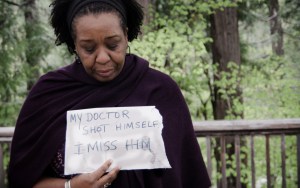
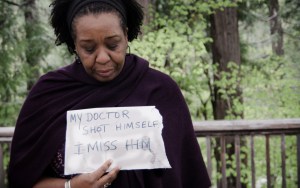
Physician Suicide–What to do When Your Doctor Dies Suddenly by Pamela Wible, M.D.

32-640x472

Physician Suicide 101: Secrets, Lies & Solutions by Dr. Pamela Wible, M.D

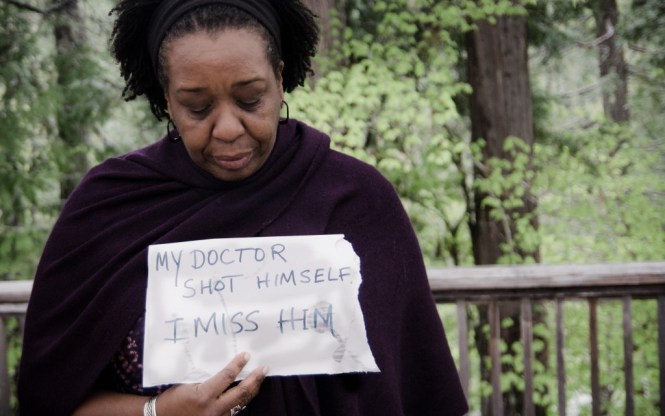
Physician Suicide 101:  Secrets, Lies & Solutions  By Dr. Pamela Wible, M.D. will hopefully serve as a stepping-stone to start discussing Physician Health Programs (PHPs) and their relationship to physician suicide.    (click on photo above to access article).

The current state-of-affairs is one of unrestrained  managerial authority and absolute power with no meaningful oversight, regulation or accountability.    Moreover, the authority bestowed on this group is both illegitimate and irrational.  The Federation of State Physician Health Programs is composed of American Society of Addiction Medicine “specialists” in “Addiction Medicine.”    The ASAM is not even recognized by the American Board of Medical Specialties as a bona fide specialty.  It is a Self-Designated-Medical-Specialty;  an AMA  term used to keep track of what any group of doctors is calling themselves.    American  Board of Addiction Medicine (ABMS) “board certification” is little more than a diploma mill.   Yet these “specialists” are now in charge of ALL things in PHYSICIAN HEALTH.    Many of the physicians running these programs had their licenses revoked and got them back by claiming salvation through the good graces of Alcoholics Anonymous and other 12-step methodology.  Many have felony convictions.  Some have double felonies.

At best we have unqualified zealots.   But one major problem I have heard over and over again from physicians forced into these programs is an absolute lack of justice, empathy and even civility by those in charge.  Misconduct, fraud, and even crimes are being reported.   Perhaps the 12-step salvation is just a ruse for some of them; a convenient cloak under which to hide all manner of abuse with impunity and immunity.

The majority of physicians would never do many of the things those now in charge have done no matter how inebriated, intoxicated or otherwise “impaired.”

Most doctors would never think of selling the “date-rape” drug to DEA agents or pilfering IV narcotics from cancer patients who need them.    But if you do a search of some of the doctors who run these PHP programs you’ll find this type of repugnant behavior is all represented.  “i’ve changed.”  “Give me a second chance.”     History will eventually look upon this like the lobotomy.  What the hell were they thinking.  Some of these people should never have gotten their licenses back.   They not only did but were put in charge. Brilliant!

And these are the individuals who have been granted unrestrained managerial prerogative and absolute power over all of doctors.  They decide not only who to monitor but how that monitoring proceeds in every last detail.  Our fates, literally, lie in the hands of this group.   No more physicians should die by this system of institutional injustice, bullying and pseudoscience.  The conflicts-of-interest are abhorrent and would be incomprehensible in any other venue.  Isn’t it time we take charge?  And the solution is fairly simple.  Oversight, regulation,  and auditing by OUTSIDE groups. That is how it’s done everywhere else.  Why do these guys get a pass?     Accountability is a rule not an exception.    Hopefully this article will succeed in framing certain questions for the medical profession; questions that we all need to think about now before the door closes for good.

← Back

Thank you for your response. ✨

IMG_0706

Psychopathy and the Medical Profession

IMG_9598Psychopathy is present in all professions. In The Wisdom of Psychopaths: What Saints, Spies, and Serial Killers Can Teach Us About Success, Kevin Dutton provides a side-by-side list of professions with the highest (CEO tops the list) and lowest (care-aid) percentage of psychopaths.   Interestingly surgeons come in at #5 among the professions with the highest percentage of psychopathy while doctors  (in general) are listed among the lowest.

Although by no means a scientific study, Psycopaths, by their very nature, seek power and it would make sense that a psychopath among us might pick surgery over pediatrics or pathology as they are drawn to power, prestige, and control. Be this as it may the incidence of psycopathy or psychopathic traits in doctors of any specialty is low. Statistics indicate that no more than 1% of men in general exhibit psychopathic traits. In Women these characteristics are far less.

Due to irresponsible behavior and a tendency to ignore or violate social conventions and rules,  psychopaths frequently find themselves engaged in conduct involving the criminal justice system or involved in other disciplinary action. Juvenile delinquency, arrests, school suspensions and misconduct related issues are barriers that preclude professional careers for many and, with around 15% of the prison population estimated to be psychopathic, incarceration and recidivism are common final pathways. Because of this tendency it would be highly unlikely for most sociopaths to follow a standard professional career pathway involving academic rigor and normal professional and societal expectations,  because impulsive irresponsible actions commonly blocks it. This would predict a probably much lower prevalence of psycopathy in physicians compared to the general population.

That being said, such self imposed removal from a potential  career is the sole product of getting caught for misconduct and being held accountable for it.   Psychopaths possess several traits that make this difficult.    With a talent for “reading people” and identifying their weak spots and vulnerabilities they are able to get people to see what they want them to see.  Psychopaths often exude charm, confidence and charisma.  They can lie effortlessly and are very convincing..

The natural history of psychopathy involves risky behavior and the ability to get away with it or out of it. The consequences of this depend on if and when it occurs. It is entirely conceivable that some may live their entire lives undetected. With a need for stimulation and a proneness to boredom the psychopath is particularly prone to drug abuse and addiction and twice as likely as the general population to be diagnosed.

 Psycopathy involves a path of risky behavior as well as the potential for being held accountable for it. At any age the behavior that brings they psychopath to the attention of the criminal justice system is often drug or alcohol related. The natural history of the average psychopath reveals an overrepresentation in prison with a 15x greater risk in general. Any statistics on psycopathy in a population is based on psychometric evaluations retrospectively in specific populations. Being arrested or getting caught for something does not reveal the pathology or the correlation. You have to look for it.

And nothing is known of subpopulations of psychopaths and the impact of intelligence, education, profession and other factors and how they relate to outcomes and consequences over time. Egocentricity and a sense of entitlement drives they do not adapt to the environment but try to make the environment adapt to them. Without empathy and lacking remorse the goal is always self-serving and a question of what they can get out of it.

 Many judges, as an alternative to incarceration, have been requiring people arrested for drug and alcohol related offenses to attend AA meetings and provide proof of participation. As misguided as this is on other levels it is also dangerous. Given a choice between incarceration and attending AA the majority of any population, including those with psychopathic traits, would choose the latter. And as in any situation they would use it to see what they could get out of it. Masters of manipulation and impression management in a room full of potential victims. The reports of rape and theft coming out is no surprise. It is in all likelihood much worse.

And in reality psychopaths exist in every profession, including medicine.

What is the natural history and final common pathway of M.D. psychopaths?  Where do these shape-shifters end up?

Screen Shot 2014-11-08 at 11.10.42 PM

In his book Without Conscience, Dr. Robert Hare notes “If we can’t spot them, we are doomed to be their victims, both as individuals and as a society. ” Dr. Clive Boddy in Corporate Psychopaths observes that unethical leaders create unethical followers, which in turn create unethical companies and society suffers as a result.” And if you look at the FSPHP branch of the ASAM that is exactly what you will find.  less than 1/% of the population are psychopaths but they represent more that 10% of those in prisons.  What is the natural history of the physician psychopath? You do the math.

images-4

http://psychopathyinfo.wordpress.com/2012/03/22/characteristics-of-corporate-psychopaths-and-their-corporations/

Robin Williams Melancholy Suicide–Hopelessness, Helplessness, and Defeat


There’s something in his soul
O’er which his melancholy sits on brood,
And I do doubt the hatch and the disclose
Will be some danger—which for to prevent,
I have in quick determination……..
It shall be so.    Madness in great ones must not unwatched go.
—Hamlet Act III, Scene 1
According to Radar Online Robin Williams is looking “grim and focused.”  Grim? Yes. Focused? No.  His visage is one of entrapment, despair, and dread.
In  F. Scott Fitzgerald’s  The Great Gatsby, Nick Carraway observes that “the loneliest moment in someone’s life is when they are watching their whole world fall apart, and all they can do is stare blankly”   This is not focus but melancholia–hopelessness, helplessness, and defeat.
In 1896 Émile Durkheim described “melancholy suicide” as being “connected with a general state of extreme depression and exaggerated sadness, causing the patient no longer to realize sanely the bonds which connect him with people and things about him. Pleasures no longer attract.”  Williams’ face  is weighted with melancholy. Not focus.

Heightened perceptions of defeat and entrapment are known to be powerful predictors of suicide. According to the “Cry of Pain” model people are particularly prone to suicide when life  experiences are interpreted as signaling defeat, defined as a sense of a “failed struggle.” Unable to find some sort of resolution to a defeating situation, a sense of entrapment proliferates and the perception of no way out provides the central impetus for ending one’s life.

As in all suicidal tragedies, the role of addiction and mental illness has been posited as the cause. Although depression and substance abuse are the two biggest risk factors for suicide, neither explains  completion of the act–the descent from ideation and planning to finality and oblivion.  Saying suicide is caused by depression and drugs is like claiming marijuana is a “gateway drug” to heroin.  It may be a a common related  pre-conditional occurrence but it is not the cause.  It is a non sequitur.   And just as most marijuana users never develop an inclination to stick an opiate filled needle into their veins, the majority of depressed individuals and substance abusers do not kill themselves.   One does not lead to the other.

And as we have seen in the reports of bullied teenagers who have died by suicide, it is all too often the bullies themselves who are quickest to pronounce this conclusion.   Attributing suicide to mental illness and substance abuse deflects culpability.  It negates the need for further inquiry.  It creates an absence of the need to change.   The rationalization diffuses both individual and collective blame.   It scatters  responsibility and guilt.  It is both an individual and community defense mechanism.  Incessantly and chronically shaming, humiliating, and degrading another person because of race, body type, sexual preference or whatever perceived eccentricity or non-conformity threatened the community herd was irrelevant.  It played no role.  It was drink, drugs, or depression–the unspoken understanding is  they would have done it anyway.   And no one stops to ponder that said depression or desire to alter ones mental state just might in actual fact be a symptom of the humiliation and shame they themselves created.   And it works.  The bullies are never held accountable. But it is nevertheless they who figuratively loaded the gun, placed it in the victims mouth, and pulled the trigger.

The  link between bullying and suicide is well known,  especially when combined with entrapment and the feeling there is no way out.  “They would have done it anyway.” No, they would not have and a modicum of perceived support, concern, kindness and understanding  from others may have prevented it.

Dr. Drew Pinsky seemed omnipresent in discussing Williams suicide; delivering authoritative pronouncements with seeming omniscience and certainty.     “The death of Robin Williams has led me to this plea — let’s loudly and seriously address something that’s still hidden, stigmatized and even ignored in this country: Mental illness,” Pinsky writes on his blog.  I don’t see the logic here.  How is exposing mental illness a product of Williams suicide.  He was  open, unashamed, and forthright about his prior addictions and depression.  He was not hiding it.  Neither is the 21st century for that matter.

The more important issue that I see needs pleading, is that mental illness be properly, accurately, and thoughtfully diagnosed and treated.

Depression, as with any mental illness, needs to be diagnosed, monitored, and treated by educated, trained, and experienced experts in depression.   Not self-proclaimed experts.     Pinsky’s specialty is “addiction medicine” and he is “board certified” by the American Board of Addiction Medicine (ABAM).

The American Society of Addiction Medicine can trace its roots to the 1954 founding of the New York City Medical Society on Alcoholism (NYCMSA) by Ruth Fox, M.D.,  whose husband died from alcoholism. This  group promoted the concept of alcoholism as a chronic relapsing brain disease requiring lifelong spiritual recovery through the 12-steps of AA. And the primary goal of the ASAM is and always has been the acceptance of 12-step doctrine, lifelong abstinence, and spiritual recovery as the one and only treatment for addiction.  It always will be.

This philosophy and guiding doctrine stems from the “impaired physician movement”, a group that,  according to British sociologist G.V. Stimson: ” is characterized by a number of evangelical recovered alcoholic and addict physicians, whose recovery has been accompanied by an involvement in medical society and treatment programs. Their ability to make authoritative pronouncements on physician impairment is based on their own claim to insider’s knowledge.”  This group grew in numbers, organized, and eventually became the ASAM.

The American Board of Medical Specialties (ABMS)  recognizes 24 medical specialties and subspecialties. Addiction Medicine is not one of them. The only ABMS recognized subspecialty is Addiction Psychiatry and it requires a four-year psychiatric-residency program followed by a 1-year Fellowship focusing on addiction in an accredited training program.

In contrast, ABAM certification requires only a medical degree, a valid license to practice medicine, and completion of residency training in ANY specialty.

Hazelden, the facility where Williams was admitted in July is an ASAM facility.  And the  Medical Director, Marvin Seppala is a Like-Minded Doc.   Unlike most ASAM physicians, however, Seppala is a psychiatrist. But he is a psychiatrist brought up in the folds of ASAM ideology. He was, in fact, the first adolescent graduate of Hazelden in the 1970s when he completed the program at the age of 19.

Pinsky, predictably goes on to state that “Williams had a brain disease, ” He posits it against demons or devils as if it is either/or.  This concrete splitting of complex subjects into two separate entities to claim only one correct is just one of many simplistic and misleading “false dichotomies” used by the ASAM.     Of course addiction is a brain disease.    But in reality the definition is unhelpful unless we are living in the Victorian era. It’s like saying Gonorrhea is a genital disease  not  venereal (from Latin venereus “of sexual love”).  In reality it involves a number of factors including both psychosocial and medical.  Cornering a definition does nothing to advance knowledge and care.

Addiction is multifactorial and diverse. Simplifying it into binary options does little to advance understanding.   And it too involves a variety of issues including the situational, the psychosocial, the genetic and the biochemical.   Like every other medical issue there are a number of factors to be taken into consideration.  And imposing the 12-steps to salvation on all-comers is not only illogical, but anti-science, and downright improper.    It can also be deadly.  Especially when the the person it is imposed on is not a full-blown addict but a substance abuser. an experimenter, a dabbler, or someone who has simply had a “lapse.”

The ASAM emphasizes that addiction is a “brain disease” and not a “moral failing” in a mutually exclusive construct that allows either one or the other but not both.  It is presented as a dichotomy in which the promotion of one both precludes and dismisses the other.  It is either black or white. Period.

But substance use, abuse, and addiction comes in every color, saturation, hue and shade.   Psychosocial, behavioral, and social factors play a role in the actions and deeds of everyone including those addicted to alcohol and drugs.  The disease concept neglects this multifactorial confluence of factors that ultimately produce a given behavior by viewing all behavior a product of the “disease.”   Any and all behavior is simply a product of a “brain disease” in the addicted individual who cannot be trusted to make decisions on his own but has to be told what to do as part of the treatment.   A danger to himself and others  the addict cannot be trusted to make his own decisions, so we must make them for him.

The chronic brain disease model is an oversimplification of the complex and a false dichotomy–so too is bifurcating  “recovery” and “relapse,” treatment” and  “discipline,”  and “confession”and “denial.”  Anything less than total abstinence constitutes an illness.

One true dichotomy  that exists among the proponents of the chronic brain disease model of addiction with  lifelong abstinence and spiritual recovery is  a  person is either “with them” or “against them.”

Dr. Drew Pinsky notes “there were a number of factors” that contributed to William’s condition.  He states “alcoholism is certainly one. He may have had a genetic potential for depression. Addiction and depression can be an easily fatal combination.”    Non-sequitur.
images-3 copy

Depression needs to be treated by thoughtful, educated, competent and trained experts in depression not self-declared experts.    ASAM doctors are not “real” experts.  They are pretend experts trumpeting one frozen paradigm while dismissing or ignoring others.  It is expert opinion where the goal is not new knowledge and and new discovery. The die  is cast.  And most of the “research” put out by this group consists of methodologically unsound studies published in their journals in which an attempt is made to make the data fit an already determined hypothesis.

Point being that depression needs to be evaluated and treated by trained professionals who understand depression. Psychiatrists, psychopharmacologists, neuropsychologists, and psychologists schooled in a broad spectrum of treatment modalities.   Numerous depression treatments are available.  If one treatment fails or is ineffective then others must be tried.    Most depression is treatable, especially subacute or acute depression.  SSRIs, SNRIs SNDRIs, tricyclics, MAOs, and atypical antidepressants are available. Different types of psychotherapy are available–cognitive behavioral therapy, interpersonal therapy, dialectic behavioral therapy, mindfulness therapy, and Jungian psychoanalysis can be beneficial for people suffering from depression.  And ECT and TMS can also play a role in depression refractory to medications and psychotherapy.

Depression is extremely common in Parkinson’s disease but due to the dopamine loss it requires special consideration of what drugs to use and not use.  SSRI’s can sometimes worsen the condition.   Consultation with a knowledgable and experienced neurologist is critical.

I do not know what assessments or treatments were being tried in Robin Williams.   But the treatment modalities offered by ASAM physicians are usually few to one.

The majority of “addiction medicine” specialists are not psychiatrists.   For all you know you may find yourself being treated by an addiction  “specialist” who was a practicing proctologist just a few years prior; and perhaps not even a good one at that.

Moreover, many of the ASAM physicians are “anti-medication” and may take people off medications that have been helping them and that they need.   And the devastating results are often  seen after the patient has been discharged home.

Taken off drugs while in rehab and sent home without them, the beneficial effects may wear off gradually. And as they do mental conditions may deteriorate.   Manic episodes, paranoid psychoses, extreme anxiety, and profound depression can all occur well after someone has been discharged home.   So can suicide.

And when this happens the ASAM doctors  blame it on their fatal “disease” when, just as is seen with the suicides of bullied teens, it was actually they  who put the gun to their heads and pulled the trigger.

Depression needs to be treated by experts in depression.   Putting someone in a one-size fits all shackled and frozen mold can be fatal.  And calling them  helpless addicts with a chronic disease who have no control due to character defects adds kindling to the fire.  Depressed people need empowerment not powerlessness;  self-esteem not shame.  Shame is devastating. It goes right to the core of the person’s identity making them feel exposed, inferior, and degraded.  Dehumanized, delegitimized, and vulnerable.  The link between bullying and suicide is clear.  And this is especially true when combined with entrapment.  The feeling there is no way out.

When society gives power of diagnosis and treatment to individuals  within a group schooled in just one uncompromising model of addiction with the majority attributing their very own sobriety to that model, they will exercise that power to diagnose and treat anyone and everyone according to that model.   And it can be fatal.

Under a dictatorship everything else becomes subordinated to the guiding philosophy of the dictatorship.   Corresponding doctrine replaces ethics as well as professional guidelines, standards of care, and evidence based medicine.  Ideology usurps critical thinking.  Having only a hammer, everyone is seen as a nail  A symphony with just one note.

And faith in institutions demands mass adherence to faith in that authority. Direct challenge to the status quo undermines the publics blind faith. The biggest obstacle is thimages-4at this system allows them to throw the normal rules of conduct under the imperative of a higher goal assumed to trump all other consideration.
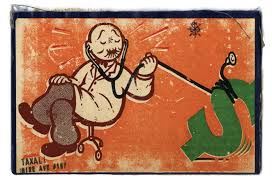
All of medicine needs to be predicated on competence, thoughtfulness, good-faith, civility, honesty, and integrity. This is universally applicable.  All specialties of medicine are required by that specialty to practice evidence based medicine and avoid conflicts of interest except one–addiction medicine.  Due to a confluence of factors they have been given a pass.

But the validity and reliability of opinions lie in their underlying methodology.  Reliance on the personal authority of any expert or group of experts is a logical fallacy.

And in order to save American Medicine this  problem needs to be clearly recognized.  The ASAM has a monopoly on addiction medicine. Treatment of substance abuse in this country is, in fact, defined by the impaired physicians movement paradigm.

A paradigm that is in actuality rife with methodologically flawed studies, cherry picking, bias, and cognitive distortion.  A paradigm that places expert opinion, ideology, and doctrine above critical thinking and evidence base.   Coercion and control are placed above patient autonomy and individual choice because the patient has a “disease” and can’t think for himself.  So we’ll think for him.    The  conflicts of interest are many and complex. They would be unimaginable in other fields of medicine.

But  I agree with Pinsky on one point.  His  comment that addiction and depression can be a deadly combination is true.   And this is especially so when treatment of the addiction is the primary focus and consists of imposed 12-step indoctrination and the depression remains untreated or ineffectively treated.    That is a deadly combination indeed–and one that can easily lead a person down the road of hopelessness, helplessness, and despair. And it is time the medical field as a whole shined some light on this, and hold addiction medicine to the same standards of conduct and care as the rest of the profession.
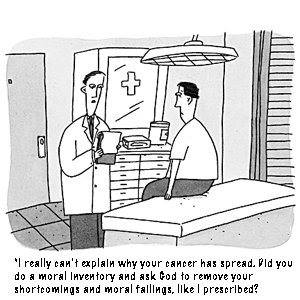
10341576_1433278880276338_2453654675045984951_n

A Golden Age

BY TIMOTHY STEELE

Even in fortunate times,
The nectar is spiked with woe.
Gods are incorrigibly
Capricious, and the needy
Beg in Nineveh or sleep
In paper-gusting plazas
Of the New World’s shopping malls.
Meantime, the tyrant battens
On conquest, while advisers,
Angling for preferment, seek
Expedient paths. Heartbroken,
The faithful advocate looks
Back on cities of the plain
And trudges into exile.
And if any era thrives,
It’s only because, somewhere,
In a plane tree’s shade, friends sketch
The dust with theorems and proofs,
Or because, instinctively,
A man puts his arm around
The shoulder of grief and walks
It (for an hour or an age)
Through all its tears and telling.

Timothy Steele, “Golden Age” from Sapphics and Uncertainties: Poems 1970-1986. Copyright � 1986, 1995 by Timothy Steele. Reprinted with the permission of the University of Arkansas Press, www.uapress.com.

Source: Sapphics Against Anger and Other Poems (1986)

Screen Shot 2014-08-13 at 11.08.55 PMScreen Shot 2014-08-13 at 11.12.09 PM
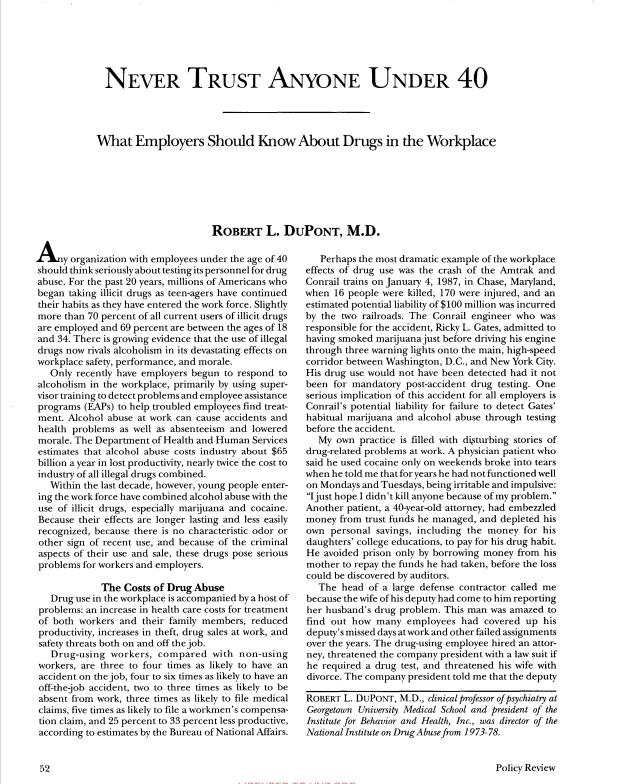
Disappointed that his grandiose proposal to test the urine of half the U.S. population for illicit drugs was declined in the 1980’s, Bob realizes such a large swath was too tall an order. Acknowledging that his dream of lifelong urine drops for each and every one of the riffraff at least once a fortnight will take time, he decides to focus his attention on specific subsets of the great unwashed such as school-children, welfare mothers, the unemployed and whatever they are calling Hippies these days.