In 2012 Robert Dupont delivered the keynote speech at the Drug and Alcohol Testing Industry Association annual conference and described a “new paradigm” for addiction and substance abuse treatment of zero tolerance for alcohol and drug use that is enforced by monitoring with frequent random drug and alcohol tests. Detection of any substances is met with swift and certain consequences. He proposed expansion of this paradigm to other populations including workplace, healthcare, and schools. Based on the state Physician Health Program model of “contingency management,” with frequent testing and a point of “leverage,” such as a medical license in doctors, that is used as a behavioral incentive.
The ASAM White Paper on drug testing seems to indicate a desire to liberalize drug testing by utilizing health care providers in the process. Currently forensic drug testing uses a strict chain-of-custody protocol with Medical Review Officer (MRO) review. But if the result of a positive test is “therapeutic” rather than “punitive” this is unnecessary. In the “new paradigm” a positive test simply requires an evaluation at a “PHP-approved” facility.
Accountability needs to be rooted in organizational purpose and public trust.
A recent article in JAMA, “Identification of Physician Impairment” suggests that undetected physician impairment may be contributing to medical error and that sentinel-event and random alcohol-drug testing could be implemented to address the problem as is being done in the current “Physician Health Program (PHP)” system.
The most consequential and critical issue for physicians, if this comes to fruition, is who will be in organizational and managerial control of the system and what ideological influences will be guiding policy and practice. It is concerning that one of the co-authors of this article, Greg Skipper, is a Fellow of the American Society of Addiction Medicine with strong ties to the 12-step treatment industry and drug testing industry.
History shows Lord Acton’s aphorism on absolute power to be repeatedly true. Corruption is a virtually inevitable consequence of unchecked power. The only two factors that constrain corruption are moral virtue and deterrence.
Disregard for standards of care and violations of codes of conduct are common. So too is the use of anything that furthers the agenda. Pseudoscience, such as polygraph testing, previously deemed by the American Medical Association as an unscientific game of “chance,” and psychometric testing of dubious validity are being used for confirmation of diagnoses.
They introduced and brought to market junk science like the Ethyl Glucuronide (EtG) biomarker for detecting alcohol use. The EtG was introduced by an FSPHP physician, marketed, and proselytized as an accurate and reliable test for alcohol. After setting an arbitrary cutoff of 100 to prove drinking he ruined countless careers and lives.
As the disaster toll increased it became clear the test was not very good. It became apparent the test was, in fact, very flawed and misguided as using an ultra sensitive poorly specific test for a substance environmentally ubiquitous precludes its forensic applicability.
Hand sanitizer, cosmetics, sauerkraut, and myriad other products were shown to result in an elevated EtG. Sensibly, the majority of drug testing and monitoring programs abandoned it. The market for the test decreased dramatically as the only customers left were drug monitoring programs in which the testers had absolute power and those being tested were absolutely powerless–programs like those run by the PHP.
This group has now introduced the Phosphatidylethanol (PEth) test as a confirmation test for EtG and USDTL marketed it as the PEthStat. State Physician Health Programs are now using the EtG and adding the PEth to confirm alcohol ingestion. And just as they did with the EtG the claims of reliability are grand but without foundation. All speculative A=B oversimplified thinking that ignores the myriad other factors involved. The science is empty if you remove the dregs of filler and puff. And the conflicts of interest are mind-boggling.
Corporate Front Groups and Corruption in Medicine-Forensic fraud, conflicts of Interest and the Erosion of Trust The ASAM and FSPHP are corporate front groups that have infiltrated organized medicine and gained tremendous sway. Advancing the multi-billion dollar 12-step rehab and drug testing industry agenda control has replaced conduct and ideology has trampled science and reason. As organizations without transparency, accountability, or regulation they have become reservoirs of bad medicine and corruption.
Accountability is rooted in organizational purpose and public trust. Unfortunately, humanitarian ideals have been trampled by the imposition of corporate front groups who advance hidden agendas under guises of science and scholarship and patinas of benevolence. Rife with conflicts of interest, these groups obfuscate, mislead, and exploit us to further an underlying political agenda. Healthcare and medicine has been infiltrated by various groups that pose a serious threat to both the humanitarian and evidence based aspects.
Robert DuPont, The ASAM, FSPHP, Physician Health Programs and the “New Paradigm.”
“With one arm around the shoulder of religion and the other around the shoulder of medicine, we might change the world.”-Twelve Steps and Twelve Traditions, AA World Services, Inc (1953).
In 2012 Former White House Drug Czar (1973-1977) Robert Dupont, M.D. delivered the keynote speech at the Drug and Alcohol Testing Association (DATIA) annual conference and described a “new paradigm” for addiction and substance abuse treatment. The former National Institute on Drug Abuse Director proposed expansion of this paradigm to other populations including workplace, healthcare, and schools.
As a substance abuse treatment program that “sets the standard for effective use of drug testing,” the proposed new paradigm is based on the state Physician Health Program (PHP) model
Dupont wants to expand the PHP model to other populations. In an article published in the Journal of Psychoactive Drugs in 2012, he and co-author Greg Skipper, M.D, (Director of Professionals Health Care at Promises Treatment Center) describe the necessity for wider application of this new paradigm. They review the successes of similar programs monitoring commercial pilots, attorneys, probationers, and those in the criminal justice system, and proclaim the “need to reach more of the 1.5 million Americans who annually enter substance abuse treatment, which now is all too often a revolving door.”1 They conclude:
This model of care management for substance use disorders has been pioneered by a small and innovative group of the nation’s physicians in their determination to help other physicians save their careers and families while also protecting their patients from the harmful consequences of continued substance abuse. In fulfilling the professional admonition “physician: first heal thyself,” these physicians have created a model with wide applicability and great promise.1
“Based on abundant evidence, a “new paradigm” for substance abuse treatment has evolved that is the exact opposite of harm reduction. This paradigm enforces a standard of zero tolerance for alcohol and drug use that is enforced by monitoring with frequent random drug and alcohol tests. Detection of any drug or alcohol use is met with swift, certain, but not draconian, consequences.”
Straight, Inc. –Torture as treatment
In 1981 Dupont made similar claims about Straight, Inc., a non-profit teenage rehabilitation center. The predecessor of Straight, Inc., the Seed, was started in 1970 in Florida with a start up grant of $1 million dollars from the federal governments National Institute on Drug Abuse (NIDA). Director of NIDA, Robert L. DuPont, Jr. had approved the grant.on the antidrug cult Synanon founded in 1958. Deemed a the “family oriented treatment program,” Dupont encouraged organization and expansion. Targeting the children of wealthy white families they exploited parents fears for profit. Signs for hidden drug use such as use of Visine, altered sleep patterns, and changes in clothing style were used as indications for referral. Any child who arrived would be considered an addict in need of their services. Coercion, confrontation, command and control as the guiding principles,. Submit or face the consequences. .We know what’s right. The idea was to strip the child of all self-esteem and then build him back up again in the straight image. Abused dehumanized, delegitimized, and stigmatized-the imposition of guilt, shame, and helplessness for ego deflation and murder of the psyche to facilitate canned and condensed 12-step as a preparatory step on the path of lifelong spiritual recovery.
Children were coaxed or terrorized into signing confessions, berated, and told they were in “denial. Inaccurate and false diagnoses were given to wield greater control. Reports and witness accounts now indicate that many of the kids did not even have drug problems but by creating a “moral panic” about teenage drug use they exploited parents fears for profit. Straight, Inc. became the biggest juvenile rehabilitation center in the world. Health officials in Boston cited Straight for treating a 12 -year old girl for drug addiction when her records revealed all she did was sniff a magic marker! Pathologizing normality.
Methodologically flawed research , deceptive marketing, and propaganda were all used to support the continuation of the program. Designed to be hidden from public view. Straight, Inc. had no regulation or oversight. These programs of torture and abuse resulted in many suicides, suicide attempts, post-traumatic stress disorder and other psychological and grave psychological trauma. There is a FB page dedicated in memory to all of those who died.
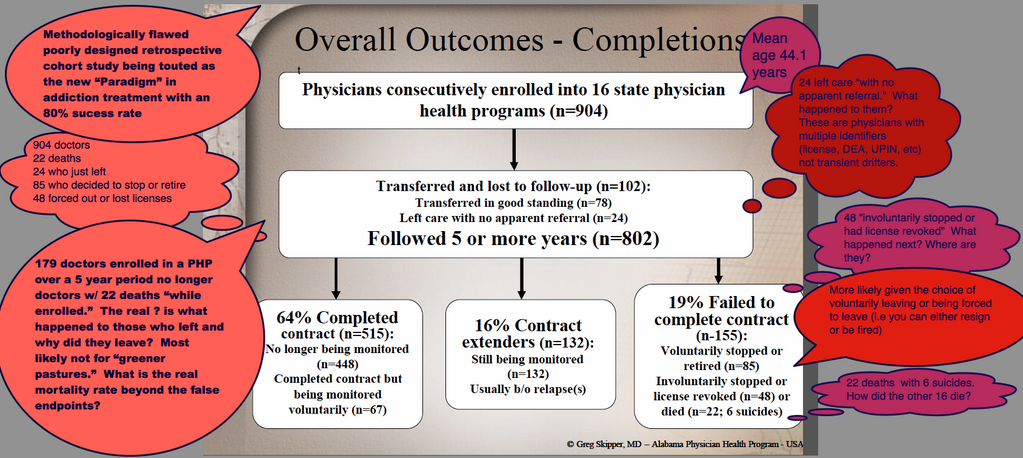
The retrospective five year cohort study they published in 2008 is their flagship study about which they parade an 80% success rate. It is methodologically flawed in many ways with missing and incomplete information and misleading interpretation. It’s all propaganda.
The 2008 Physicians Health Program study inexplicably excluded resident physicians because they “were both younger than the average practicing physician and therefore at higher risk of substance abuse.” Other than cherry picking to favor success what is the logic behind that.
More importantly, however, is the 24 that “left care with no apparent referral” and the 48 that “involuntarily stopped or had their licenses revoked.”
It would seem logical that there must have been some major precipitating event leading to the 24 physicians who left care. And what happened to the physicians who were removed from the programs and had their licenses revoked ?–event that could very well lead to feeling hopeless with no way out and precipitate a completed suicide.
They list only 6 suicides and it appears that the outcome suicide they are using is one that was done while being actively monitored in the program. If they were removed from PHS or had their licenses revoked and subsequently committed suicide we don’t know. The outcome seems to be the last recorded clerical status of the monitored physician.
Since this group is now lobbying to use this “blueprint” as a successful model applicable to other populations and may be involved in the assessment and monitoring of a much larger population should the random drug and alcohol testing of all physicians come to be it is essential that who they are be exposed as well as the validity of the claims they make. There are no evidence-based reviews of any of the ASAM studies including the junk science of the EtG and PEth tests that will surely be used in any physician monitoring program that were introduced and marketed by Greg Skipper yet he lists no conflicts of interest. The 12-step evidence is self-evident in the “blueprint.”
Interestingly, I cannot even find any criticisms of the design of the study and its flaws–only praise and sloganeering. We need to speak up before the door closes for good..
The vast majority of people know little about Physician Health Programs. They seldom reach the threshold of public attention.
Unless specifically looking for information about them, little treatment community blandishment, there is a dearth of informative in depth analysis
Although no reliable statistics exist, anecdotal reports suggest an alarming upsurge in physician suicide. This necessitates a reappraisal of known predisposing risk factors such as substance abuse and depression but also requires a critical examination of what external forces or vulnerabilities might be unique to doctors and how they might be involved in the descent from suicidal ideation to suicidal planning to completed suicide.
Depression and Substance Abuse Comparable to General Population
Depression and substance abuse are the two biggest risk factors for suicide. The prevalence of depression in physicians is close to that of the general population 1,2 and, if one looks critically at the evidence based literature, substance abuse in medical professionals approximates that of the general population. Controlled studies using DSM diagnostic criteria suggest that physicians have the same rates (8-14%) of substance abuse and dependence as the rest of the population 3 and slightly lower rates compared to other occupations.4,5 Epidemiological surveys reveal the same. Hughes, et al.6 found a lifetime prevalence of drug or alcohol abuse or dependence in physicians of 7.9%, markedly less than the 14.6% prevalence reported in the general population by Kessler.7
State Physician Health Programs
Perhaps it is how physicians are treated differently when they develop a substance abuse or mental health problem.
Physician Health Programs (PHP) can be considered an equivalent to Employee Assistance Programs (EAPs) for other occupations. PHPs meet with, assess and monitor doctors who have been referred to them for substance use or other mental or behavioral health problems. Originally developed as “impaired physician” programs, the PHPs were created to help doctors who developed problems with substance abuse or addiction an alternative to disciplinary action by State Medical Boards. These programs existed in almost every state by 1980. Often staffed by volunteer physicians and funded State Medical Societies, these programs served the dual purpose of helping sick colleagues and protecting the public. Preferring rehabilitation to probation or license revocation so long as the public was protected from imminent danger, most medical boards accepted the concept with support and referrals. Most EAPs were developed with the collaboration of workers unions or some other group supporting the rights and interests of the workers. As there is no such organization representing doctors, PHPs developed in the absence of regulation or oversight. As a consequence there is no meaningful accountability.
“Because PHP practices are unknown to most physicians before becoming a client of the PHP, many PHPs operate out- side the scrutiny of the medical community at large. Physicians referred to PHPs are often compromised to some degree, have very little power, and are, therefore, not in a position to voice what might be legitimate objections to a PHP’s practices.”8
Noting that “for most physicians, participation in a PHP evaluation is coercive, and once a PHP recommends monitoring, physicians have little choice but to cooperate with any and all recommendations if they wish to continue practicing medicine,” Knight and Boyd raise serious ethical and managerial questions about current PHP policies and practice including conflicts of interest in referrals for evaluation and treatment, lack of adherence to standards of care for forensic testing of substances of abuse, violations of ethical guidelines in PHP research, and conflicts of interest with state licensing boards.
Knight and Boyd recommend “that the broader medical community begin to reassess PHP’s as a whole” and that “consideration be given toward the implementation of independent ethical oversight and establish and appeals process for PHP clients who feel they are being treated unfairly.” 8 They also recommend the relationship of PHP’s between the evaluation and treatment centers and licensing boards be transparent and that national organizations review PHP practices and recommend national standards “that can be debated by all physicians, not just those who work within PHPs.”8 Unfortunately this has not happened. Most physicians have no idea that the state physician health programs have been taken over by the “impaired physicians movement.”
In his Psychology Todayblog, Boyd again recommends oversight and regulation of PHPs. He cites the North Carolina Physicians Health Program Audit released in April of 2014 that reported the below key findings:
As with Knight and Boyd’s paper outlining the ethical and managerial problems in PHPs, the NC PHP audit finding that abuse could occur and not be detected generated little interest from either the medical community or the media.
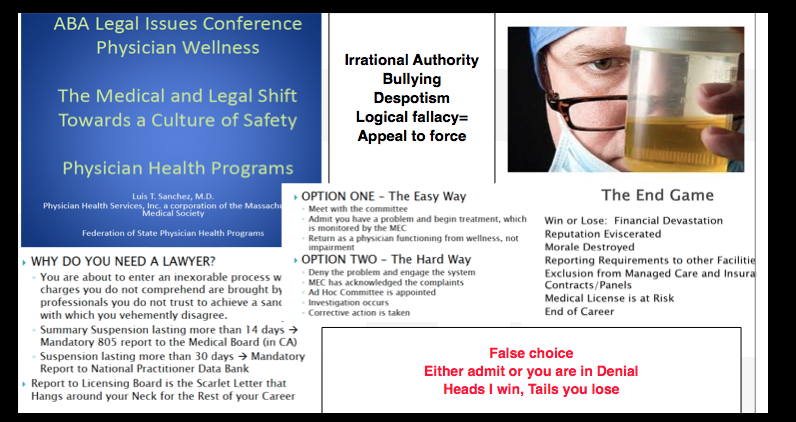
Although state PHPs present themselves as confidential caring programs of benevolence they are essentially monitoring programs for physicians who can be referred to them for issues such as being behind on chart notes. If the PHP feels a doctor is in need of PHP “services” they must then abide by any and all demands of the PHP or be reported to their medical board under threat of loss of licensure.
LDTs bypass the FDA approval process and have no meaningful regulatory oversight. The LDT pathway was not designed for “forensic” tests but clinical tests with low risk. Some are arguing for regulation and oversight of LDTs due to questionable validity and risk of patient harm.13
These same physicians are claiming a high success rate for PH programs9 and suggesting that they be used for random testing of all physicians.14
As with LDTs, the state PHPs are unregulated, and without oversight. State medical societies and departments of health have no control over state PHPs.
Their opacity is bolstered by peer-review immunity, HIPPA, HCQIA, and confidentiality agreements. The monitored physician is forced to abide by any and all demands of the PHP no matter how unreasonable-all under the coloration of medical utility and without any evidentiary standard or right to appeal.
The ASAM has a certification process for physicians and claim to be “addiction” specialists. This “board certification” is not recognized by the American Board of Medical Specialties and is not a recognized medical specialty. The goal of the ASAM is to be recognized as the experts in addiction medicine with the consensus expert opinion based on the 12-step prohibitionist brain disease model. The ASAM has aligned itself with a number of inpatient drug treatment centers (Hazelden, Talbott, Marworth, Bradford,etc) and are heavily funded by the drug testing industry. It is in fact a “rigged game.”
State PHPs are non-profit non-governmental organizations and have been granted quasi-governmental immunity by most State legislatures from legal liability.
By infiltrating “impaired physician” programs they have established themselves in almost every state by joining, gaining power, and removing dissenters. Groupthink and 12-step indoctrination are the goals. By advertising as advocates for doctors who are “caring,” “confidential resources,” “giving help,” and advocating for “colleagues in need” the outward appearance is one of benevolence.
The biggest obstacle is that this system allows them to throw the normal rules of conduct under the imperative of a higher goal assumed to trump all other consideration. Those outside of programs either defend or ignore the reports of ethical and criminal violations, complacent in their trust of these “experts” claiming they are just helping sick doctors and protecting the public.
With no oversight or regulatory body involved this is all done with impunity, immunity, and undercover. They use the accusation of substance abuse as an indication to disregard the claims of the accused. The physician is left without rights, depersonalized, and dehumanized. The imposition of confinement, stigmatization, lack of oversight of the organizations, peer-review protected confidentiality, and lack of procedural protection is a one-way train to hopelessness and despair.
By establishing a system that of coercion, control, secrecy, and misinformation, the FSPHP is claiming an “80% success rate” 15and deeming the “PHP-blueprint” as “the new paradigm in addiction medicine treatment.
The ASAM/FSPHP had a major influence on the DSM-V where drug abuse and dependence are no longer separate entities. They are also working behind the scenes to get legislation to randomly drug test all physicians.
They are now after the “disruptive physician” and the evidentiary criteria are fairly low and red flags include “deviating from workplace norm in dress or conduct” and being tardy for meetings.
They have identified “the aging physician” as a potential problem because “as the population of physicians ages,””cognitive functioning” becomes “a more common threat to the quality of medical care.”
The majority of physicians are unaware that the Federation of State Medical Boards House of Delegates adopted an updated Policy on Physician Impairment in 2011 that uses addiction as an example of a “potentially impairing illness.” According to the Federation of State Physician Health Programs …”physician illness and impairment exist on a continuum with illness typically predating impairment, often by many years. This is a critically important distinction. Illness is the existence of a disease. Impairment is a functional classification and implies the inability of the person affected by disease to perform specific activities.”
“Process addiction” was added as a potentially impairing illness including compulsive gambling, compulsive spending, compulsive video gaming, and “workaholism.” According to the FSPHP “the presence of a process addiction can be problematic or even impairing in itself, and it can contribute to relapse of a physician in recovery. As such, process addictions should be identified and treated.” They define three levels of relapse including the novel “relapse without use.”
Bullying, Helplessness, Hopelessness and Despair
Perceived helplessness is significantly associated with suicide.16 So too is hopelessness, and the feeling that no matter what you do there is simply no way out17,18 Bullying is known to be a predominant trigger for adolescent suicide19-21 One study found that adolescents in custody who were bullied were 9.22 times more likely to attempt suicide than those were not bullied.22
Heightened perceptions of defeat and entrapment are known to be powerful contributors to suicide.23,24 The “Cry of Pain” model 25,26 specifies that people are particularly prone to suicide when life experiences are interpreted as signaling defeat which is defined as a sense of “failed struggle” or loss of social position and resources.. The person is unable to identify an escape from or resolution to a defeating situation, a sense of entrapment proliferates with the perception of no way out, and this provides the central impetus for ending ones life.
There is also evidence that rescue factors such as social supports may play a role in preventing suicide. These rescue factors act buffers to protect against suicide in the face of varying degrees of life stress.27,28 The study of female physicians revealed meetings to discuss stressful work experiences as a potential protective factor, 29 and support at work when difficulties arose appeared to be a protective factor for the male physicians.30 Research involving Finnish physicians found that control over one’s work and organizational justice were the most important determinants of work-related wellbeing.31,32 Organizational justice is related to fairness and refers to an individuals perception of an organizations behaviors, decisions, and actions and how these influence one’s own attitudes and behaviors and has been identified as a psychosocial predictor of health and wellbeing3334 Low organizational justice has been identified as a notable risk factor for psychological distress and depression.35,36
A recent report indicates that job stress, coupled with inadequate treatment for mental illness may play a role in physician suicide..
Using data from the National Violent Death Reporting System the investigators compared 203 physicians who had committed suicide to more than 31,000 non-physicians and found that having a known mental health disorder or a job problem that contributed to the suicide significantly predicted being a physician.1
Physicians were 3.12 times more likely to have a job problem as a contributing factor. In addition, toxicology testing showed low rates of medication treatment. The authors concluded that inadequate treatment and increased problems related to job stress are potentially modifiable risk factors to reduce suicidal death among physicians.
They also warned that the database used likely underestimated physician suicides because of “underreporting and even deliberate miscoding because of the stigma attached.”
I can think of nothing more institutionally unjust than an unregulated zero-tolerance monitoring program with no oversight using unregulated drug and alcohol testing of unknown validity.
We have heard of numerous suicides due to these institutionally unjust programs. Three doctors died by suicide in Oklahoma in a one month period alone (August 2014). All three were being monitored by the Oklahoma PHP. I went to an all boys high-school of less than 350 students yet a classmate a couple years ahead of me died by suicide a few months ago. He was being monitored by the Washington PHP. His crime? A DUI in 2009–a one-off situational mistake that in all likelihood would never have recurred. But as is often the case with those ensnared by state PHPs he was forced to have a “re-assessment” as his five-year monitoring contract was coming to an end. These re-assessments are often precipitated by a positive Laboratory Developed Test (LDT) and state medical boards mandate these assessments can only be done at an out-of-state “PHP-approved” facility. Told he could no longer operate and was unsafe to practice medicine by the PHP and assessment center he then hanged himself. And at the conclusion of Dr. Pamela Wible’s haunting video below are listed just the known suicides of doctors; many were being monitored by their state PHPs–including the first name on the list– Dr. Gregory Miday.
None of these deaths were investigated. None were covered in the mainstream media. These are red flags that need to be acknowledged and addressed! This anecdotal evidence suggests the oft-used estimate of 400 suicides per year (an entire medical school class) is a vast underestimation of reality—extrapolating just the five deaths above to the entire population of US doctors suggests we are losing at least an entire medical school per year.
As physicians we need to demand transparency, oversight, regulation and auditing by outside groups. This is a public health emergency.
To wit:
They first came after the substance abusers and I did not speak out because I was not a substance abuser.
They then came for those with psychiatric diagnoses and I did not speak out because I was not diagnosed with a psychiatric disorder.
They then came after the “disruptive physician” and I did not speak out because I was not disruptive.
They then came after the aging physician and I did not speak out because I was young.
They then came after me and there was no one else to speak out for me.
Ford DE, Mead LA, Chang PP, Cooper-Patrick L, Wang NY, Klag MJ. Depression is a risk factor for coronary artery disease in men: the precursors study. Archives of internal medicine. Jul 13 1998;158(13):1422-1426.
Frank E, Dingle AD. Self-reported depression and suicide attempts among U.S. women physicians. The American journal of psychiatry. Dec 1999;156(12):1887-1894.
Brewster JM. Prevalence of alcohol and other drug problems among physicians. JAMA : the journal of the American Medical Association. Apr 11 1986;255(14):1913-1920.
Anthony J, Eaton W, Mandell W, al. e. Psychoactive Drug Dependence and abuse: More Common in Some Occupations than in Others? Journal of Employee Assistance Res. 1992;1:148-186.
Stinson F, DeBakely S, Steffens R. Prevalence of DSM-III-R Alcohol abuse and/or dependence among selected occupations. Alchohol Health Research World. 1992;16:165-172.
Hughes PH, Brandenburg N, Baldwin DC, Jr., et al. Prevalence of substance use among US physicians. JAMA : the journal of the American Medical Association. May 6 1992;267(17):2333-2339.
Kessler RC, Berglund P, Demler O, Jin R, Merikangas KR, Walters EE. Lifetime prevalence and age-of-onset distributions of DSM-IV disorders in the National Comorbidity Survey Replication. Archives of general psychiatry. Jun 2005;62(6):593-602.
Boyd JW, Knight JR. Ethical and managerial considerations regarding state physician health programs. Journal of addiction medicine. Dec 2012;6(4):243-246.
DuPont RL, McLellan AT, White WL, Merlo LJ, Gold MS. Setting the standard for recovery: Physicians’ Health Programs. Journal of Medical Regulation. Mar 2010;95(4):10-25.
Skipper GE, Weinmann W, Thierauf A, et al. Ethyl glucuronide: a biomarker to identify alcohol use by health professionals recovering from substance use disorders. Alcohol and alcoholism. Sep-Oct 2004;39(5):445-449.
Skipper GE, Thon N, Dupont RL, Baxter L, Wurst FM. Phosphatidylethanol: the potential role in further evaluating low positive urinary ethyl glucuronide and ethyl sulfate results. Alcoholism, clinical and experimental research. Sep 2013;37(9):1582-1586.
Skipper GE, Thon N, DuPont RL, Campbell MD, Weinmann W, Wurst FM. Cellular photo digital breathalyzer for monitoring alcohol use: a pilot study. European addiction research. 2014;20(3):137-142.
Sharfstein J. FDA Regulation of Laboratory-Developed Diagnostic Tests: Protect the Public, Advance the Science. JAMA : the journal of the American Medical Association. Jan 5 2015.
Pham JC, Pronovost PJ, Skipper GE. Identification of physician impairment. JAMA : the journal of the American Medical Association. May 22 2013;309(20):2101-2102.
McLellan AT, Skipper GS, Campbell M, DuPont RL. Five year outcomes in a cohort study of physicians treated for substance use disorders in the United States. Bmj. 2008;337:a2038.
Rivers I, Noret N. Potential suicide ideation and its association with observing bullying at school. The Journal of adolescent health : official publication of the Society for Adolescent Medicine. Jul 2013;53(1 Suppl):S32-36.
Lester D, Walker RL. Hopelessness, helplessness, and haplessness as predictors of suicidal ideation. Omega. 2007;55(4):321-324.
Beck AT. Hopelessness as a predictor of eventual suicide. Annals of the New York Academy of Sciences. 1986;487:90-96.
Hinduja S, Patchin JW. Bullying, cyberbullying, and suicide. Archives of suicide research : official journal of the International Academy for Suicide Research. 2010;14(3):206-221.
Hertz MF, Donato I, Wright J. Bullying and suicide: a public health approach. The Journal of adolescent health : official publication of the Society for Adolescent Medicine. Jul 2013;53(1 Suppl):S1-3.
Kim YS, Leventhal B. Bullying and suicide. A review. International journal of adolescent medicine and health. Apr-Jun 2008;20(2):133-154.
Kiriakidis SP. Bullying and suicide attempts among adolescents kept in custody. Crisis. 2008;29(4):216-218.
Taylor PJ, Gooding P, Wood AM, Tarrier N. The role of defeat and entrapment in depression, anxiety, and suicide. Psychological bulletin. May 2011;137(3):391-420.
Lester D. Defeat and entrapment as predictors of depression and suicidal ideation versus hopelessness and helplessness. Psychological reports. Oct 2012;111(2):498-501.
Williams JMG. Cry of Pain. Harmondsworth: Penguin; 1997.
Williams JMG, Crane C, Barnhofer T, Duggan DS. Psychology and suicidal behavior: elaborating the entrapment model. In: Hawton K, ed. Prevention and treatment of suicidal behavior: from science to practice. Oxford: Oxford University Press; 2005:71-89.
Borowsky IW, Ireland M, Resnick MD. Adolescent suicide attempts: Risks and protectors. Pediatrics. 2001;107(485).
Clum GA, Febbraro GAR. Stress, social support and problem-solving appraisal/skill: Prediction of suicide severity within a college sample. Journal of Psychopathology and Behavioral Assessment. 1994;16:37-46.
Fridner A, Belkic K, Marini M, Minucci D, Pavan L, Schenck-Gustafsson K. Survey on recent suicidal ideation among female university hospital physicians in Sweden and Italy (the HOUPE study): cross-sectional associations with work stressors. Gender medicine. Apr 2009;6(1):314-328.
Fridner A, Belkic K, Minucci D, et al. Work environment and recent suicidal thoughts among male university hospital physicians in Sweden and Italy: the health and organization among university hospital physicians in Europe (HOUPE) study. Gender medicine. Aug 2011;8(4):269-279.
Lindfors PM, Meretoja OA, Toyry SM, Luukkonen RA, Elovainio MJ, Leino TJ. Job satisfaction, work ability and life satisfaction among Finnish anaesthesiologists. Acta anaesthesiologica Scandinavica. Aug 2007;51(7):815-822.
Heponiemi T, Kuusio H, Sinervo T, Elovainio M. Job attitudes and well-being among public vs. private physicians: organizational justice and job control as mediators. European journal of public health. Aug 2011;21(4):520-525.
Elovainio M, Kivimaki M, Vahtera J. Organizational justice: evidence of a new psychosocial predictor of health. Am J Public Health. Jan 2002;92(1):105-108.
Lawson KJ, Noblet AJ, Rodwell JJ. Promoting employee wellbeing: the relevance of work characteristics and organizational justice. Health promotion international. Sep 2009;24(3):223-233.
Hayashi T, Odagiri Y, Ohya Y, Tanaka K, Shimomitsu T. Organizational justice, willingness to work, and psychological distress: results from a private Japanese company. Journal of occupational and environmental medicine / American College of Occupational and Environmental Medicine. Feb 2011;53(2):174-181.
Lang J, Bliese PD, Lang JW, Adler AB. Work gets unfair for the depressed: cross-lagged relations between organizational justice perceptions and depressive symptoms. The Journal of applied psychology. May 2011;96(3):602-618.
The juxtaposed documents in and of themselves reveal a number of red flags. How does one “revise” a chain-of-custody”? If you do a google search you will not find “chain-of-custody” as an object of the verb revise. It is an oxymoron. A document or opinion can be revised. A chain-of-custody, by its very definition, cannot. This collusion to fabricate a positive test has coined a new oxymoron—“revised chain-of-custody.” Go ahead and look it up. It is a novel one. As it should be.
What these documents show is, in fact, indefensible ethically, procedurally and legally. The first document signed by Dr. Luis Sanchez, past President of the FSPHP and past Medical Director of Physician Health Services, Inc. (PHS) was sent to the Board of Registration in Medicine on December 11, 2012 and is notable for two statements. The letter from Dr. Sanchez asserts that “Yesterday, December 10, 2012, Physician Health Services, PHS received a revision of a laboratory test result,” but it did not matter because PHS was {unaware} ” of any action taken by the Massachusetts Board of Registration in Medicine as a result of the July 28th, 2011 report. However, based on the amended report, PHS will continue to disregard the July 21st PEth test result.”
The second document, addressed to Dr. Luis Sanchez, is dated October 4, 2012 (67 days earlier) and shows the first document to be a bald-faced lie.
On July 28h 2011 Dr. Luis Sanchez reported to the Medical Board that I had a positive alcohol test.
Although I knew that Dr. Sanchez had fabricated the test I had no way of proving it. I requested the “litigation packet,” which records “chain-of-custody” from collection to analysis in August of 2011. At first they refused. PHS then tried to dissuade me (“it will be costly, involve attorneys, etc). Finally they agreed but threatened me with “unintended consequences.”
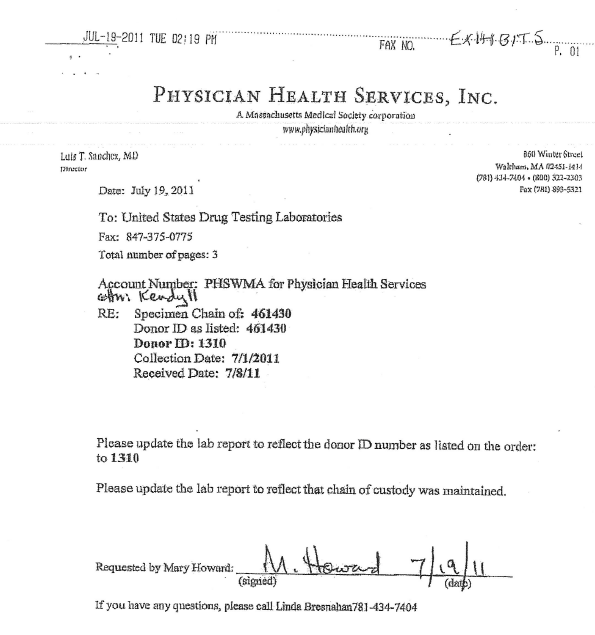
I was finally able to get a copy of the “litigation packet” in December of 2011. Remarkably, it showed that Sanchez had requested my ID # and a “chain-of-custody” be added to an already positive specimen. I reported this to the Board but they ignored it. I also filed a complaint with the College of American Pathologists.
On October 23, 2012 Sanchez reported to the Medical Board that I was “noncompliant” with requirements with A.A. meetings that I was supposed to go to as a direct result of the positive test and my license to practice medicine was suspended as a result in December 2012.
On December 10, 2012 I contacted the College of American Pathologists who told me the test was “amended” from “positive” to “invalid” on October 4, 2012. I confronted Sanchez and PHS and they said they did not know anything about it.
The following day, December 11, 2012, they sent out a letter saying that the test was invalid but that they were “unaware of any action taken against my license as a result of the test.”
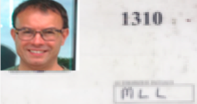
The documents show that on July 19th, 2011 Sanchez requested my ID # 1310 and a “chain-of-custody” be added to an already positive specimen and on October 4th 2012 the test was “appended” to “external chain of custody not followed per standard protocol.”
Please note again that Dr. Sanchez stated on December 11, 2012 that he “just learned” about this on December 10, 2012. He reported me to the Board as “noncompliant” on October 23, 2012 and my license was suspended in December 2012. These documents show he had full knowledge that the test was invalid and as an agent of the Board this is under “color of law.” Both he, and PHS, need to be held accountable for this.
The contradictory documents from Sanchez alone constitute a crime (withholding information in concealment and providing false information to a state agency). But what he did is far far worse.
I just obtained the October 4th document. Although I knew it existed, PHS suppressed it and refused to acknowledge it. But in response to a complaint I filed against PHS and the labs it was revealed by USDTL that the test in question (phosphatidyl-ethanol) was not sent as a “forensic” specimen but collected as a “forensic” specimen, then changed to a “clinical” specimen at the request of PHS Program Director, Linda Bresnahan. The specimen was kept at the collecting lab (Quest) for 7 days as a “clinical” specimen, then sent to the analyzing lab (USDTL) with specific instructions from Quest to process it and report it as a “clinical” specimen. PHS then used it as a “forensic” specimen by reporting me to the Board of Registration in Medicine and requesting I undergo an evaluation for alcohol abuse.
As a “clinical” specimen it is rendered “Protected Health Information” (PHI) and thus under the HIPAA Privacy-Rule. So with the help of the College of American Pathologists I requested my PHI from both Quest and USDTL. Quest refused (for obvious reasons) but USDTL complied. And that is how I was able to obtain the October 4th document revealing that Dr. Sanchez lied to the Medical Board. I would love to hear him, or PHS MRO Wayne Gavryck, defend the indefensible (and unconscionable).
Dr. Sanchez is correct when he pleads ignorance of any action taken by the Board as a result of the July 21st PEth result. It was his report to the Medical Board that I was “noncompliant” with attending AA meetings (that I was supposed to go to as the direct and sole result of the positive test) that he reported to the Board just two weeks after the October 4th appended test.
The test was sent as a “clinical” specimen intentionally. PHS is not a clinical provider but a monitoring agency. They cannot send clinical samples. But since clinical samples are “protected health information” and under HIPAA the lab had to give me the records and here you have them.
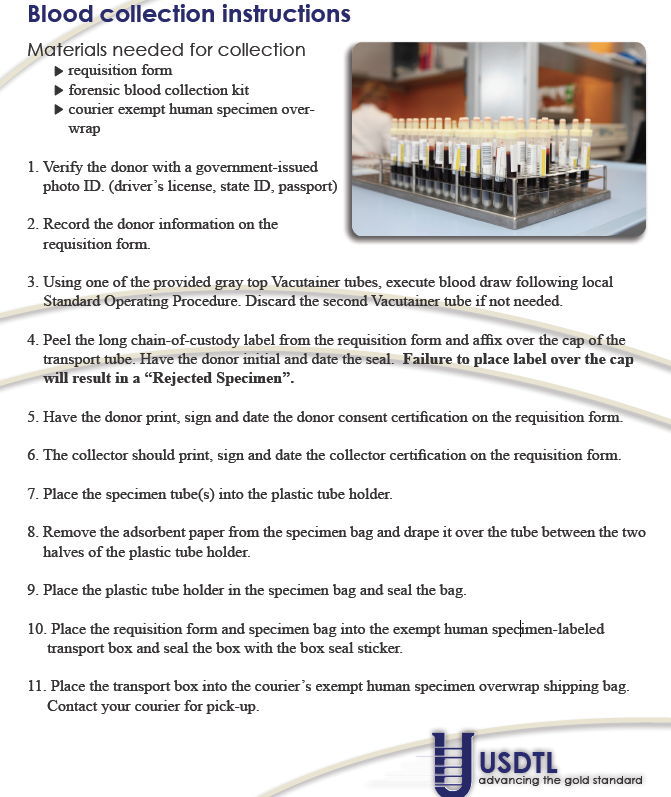
The distinction between “forensic” and “clinical” drug and alcohol testing is black and white. PHS is a monitoring program not a treatment provider. The fact that a monitoring agency with an MRO asked the lab to process and report it as a clinical sample and then used it forensically is an extreme outlier in terms of forensic fraud. The fact that they collected it forensically, held it for 7 days and changed it from “forensic” to “clinical” to bypass strict “chain-of-custody” requirements deepens the malice. The fact that they then reported it to the Board as a forensic sample and maintained it was forensic up until now makes it egregious. But the fact that the test was changed from “positive” to “invalid” on October 4th, 2012 and Sanchez then reported me to the Board on October 23rd 2012 for “noncompliance,” suppressed it and tried to send me to Kansas for damage control makes it wantonly egregious. (they didn’t think I’d ever find out).
Add on that the fact that I’ve been questioning the validity of the test since day 1 and they violated the HIPAA Privacy Rule over and over and this is reckless and major health care fraud.
Fax from PHS to USDTL on July 19th, 2011 asking that my ID #1310 be added to an already positive test and a “chain-of-custody” be “updated”
USDTL complies with PHS request to and adds my ID #1310 and a date of collection (July 1, 2011) to an already positive specimen
No date of collection, no unique identifier linking specimen to me. Multiple “fatal flaws.”
I file complaint with CAP January 12, 2102. CAP forces USDTL to amend test from “positive” to “invalid” which they do on October 4, 2012. PHS conceals this fact until December 11, 2012
Massachusetts physician Dr. Michael Langan has filed a lawsuit against Quest Diagnostics, alleging the lab giant was negligent and engaged in fraud and deceit in its handling of his forensic drug test sample.


 Accountability needs to be rooted in organizational purpose and public trust.
 ce of unchecked power. The only two factors that constrain corruption are moral virtue and deterrence.
 arketed it as the PEthStat.
State Physician Health Programs are now using the EtG and adding the PEth to confirm alcohol ingestion. And just as they did with the EtG the claims of reliability are grand but without foundation.
All speculative A=B oversimplified thinking that ignores the myriad other factors involved. The science is empty if you remove the dregs of filler and puff. And the conflicts of interest are mind-boggling.
arketed it as the PEthStat.
State Physician Health Programs are now using the EtG and adding the PEth to confirm alcohol ingestion. And just as they did with the EtG the claims of reliability are grand but without foundation.
All speculative A=B oversimplified thinking that ignores the myriad other factors involved. The science is empty if you remove the dregs of filler and puff. And the conflicts of interest are mind-boggling.










 Disrupted Physician