


The brain disease model of addiction: is it supported by the evidence and has it delivered on its promises?
Sign up for Lancet Psychiatry to read the full article. An overview is below.
We need a similar critique of the American Society of Addiction Medicine (ASAM) and its affiliates on this side of the Atlantic as “addiction medicine” is slated to be approved by the American Board of Medical Specialties in 2016 even though the discipline falls far short of the educational and professional standards for quality practice developed and implemented by all other ABMS member boards. According to the ABMS these 24 boards are:
“committed to the principle of examining doctors based on six general competencies designed to encompass quality care: patient care, medical knowledge, practice-based learning and improvement, interpersonal and communication skills, professionalism, and systems-based practice.”These areas have been collectively identified by the ABMS, the American College of Graduate Medical Education (ACGME) and the Institute of Medicine (IOM) in order to standardize graduate medical education.
Any critique of the ASAM would find a number of issues antithetical to the six general competencies which stress “learning and improvement.” In contrast the ASAM rests on the conviction that their views are absolutely certain and patently rejects open-minded inquiry. An academic analysis of addiction medicine from the vantage point of the ASAM would reveal false assumptions, bias, dogmatism, and data-dredging. It would also reveal that those claiming expertise are in fact illegitimate and irrational authority who believe in an ends-justifies-the-means approach to push forth the chronic relapsing brain disease with lifelong abstinence an d imposed 12-step recovery. These are false experts who rationalize unethical, unprofessional and even criminal behavior as zeal for the faith if it aligns with the brain disease model of addiction (BDMA) Their viewpoints are fixed and final.
They have not been held to truly objective judging, analysis, evaluation or outside critique. The purpose of critique is the same as the purpose of critical thinking: to appreciate strengths as well as weaknesses, virtues as well as failings. Critical thinkers critique in order to redesign, remodel, and make better. This direly needs to be done. The evidence-base for both the BDMA and the drug and alcohol testing, assessment and treatment is poor. They are claiming physician health programs are the crown jewel of addiction treatment– a replicable model to be replicated in other populations. It is all hyperbole and propaganda. In reality they are using medical assessment and treatment as tools to repress and punish doctors. Those running the state physician health programs are typically morally disengaged bullies with Machiavellian egocentricity. And all the congratulatory backslapping is based on a singe poorly designed opinion piece.
Science and medicine need to be predicated on competence, thoughtfulness, good faith, civility, honesty, and integrity. This is universally applicable. What they are doing betrays the trust of society and breaches the most basic ethical obligations of not only doctors but human beings.
But no one seems to be challenging them. Why is no one questioning this self-appointed authority. If people do not start talking, writing, discussing and debating the current paradigm then what Robert Dupont describes in the ASAM White Paper on Drug Testing will be ushered in. As with doctors you won’t know it until it hits you. If the ASAM becomes an ABMS medical specialty then it will be too late. They will impose their authority on you as a patient and their won’t be a damn thing you will be able to do about it.
Once illegitimate and irrational authority are sanctified by the American Board of Medical Specialties there will be nothing left to do except watch the profession of medicine go up in flames.
Right now it’s just doctors and pilots. What you need to see is that you are next. I base that prediction on past public-policy, regulatory, administrative and medical practice tinkering as well as the documented paper trail of “research” and opinion. And even though all of this can be explained using documentary evidence, fact and critical analysis no one seems alarmed.
If you map it out you will see the trajectory is aimed at the transportation industry, students with federal loans, high school athletes, schools, gun owners, and eventually schools.
If you have something to lose that is affiliated with a state or federal agency they will hold it hostage if you get a positive hair, nail, sweat blood, or urine test at your doctors visit. The positive test is the golden ticket for them and a ticket to an assessment facility in Kansas, Arkansas, Mississippi and some other places for you on your dime. And these are one-way tickets. No return to normality available. One way ticket. No return flight.
See full article through the following link:
http://www.thelancet.com/journals/lanpsy/article/PIIS2215-0366(14)00126-6/fulltext
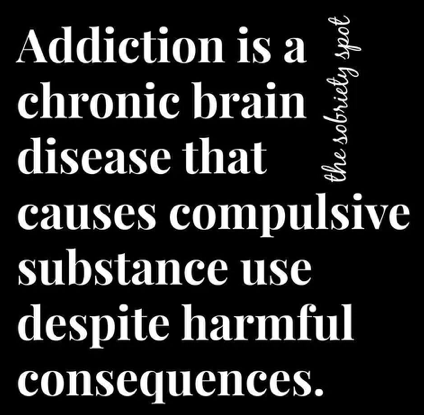
Proponents of the brain disease model of addiction (BDMA) have been very influential in setting the funding priorities of NIDA, and by extension the bulk of publicly supported research on addiction. In 1998, Leshner testified that NIDA supports more than 85% of the world’s research on drug abuse and addiction.3 The American Society of Addiction Medicine has defined addiction as a “primary, chronic disease of brain reward, motivation, memory, and related circuitry”.4 In July, 2014, newly appointed Acting Director of US National Drug Control Policy, Michael Botticelli, launched a reformist strategy nationally, claiming decades of research have demonstrated that addiction is a brain disorder—one that can be prevented and treated.5 The BDMA has also been widely discussed in leading scientific research journals3, 6 and most recently in a positive editorial in Nature.7
In the USA, proponents of the BDMA have argued that it will help to deliver more effective medical treatments for addiction with the cost covered by health insurance, making treatment more accessible for people with addictions.1, 2, 6 An increased acceptance of the BDMA is also predicted to reduce the stigma associated with drug addiction by replacing the commonly held notion that people with drug addiction are weak or bad with a more scientific viewpoint that depicts them as having a brain disease that needs medical treatment.
In this Personal View, we critically assess the scientific evidence for the BDMA reported in leading general scientific journals and the extent of the social benefits that advocates of the BDMA claim it has produced, or is likely to produce, with its widespread acceptance among clinicians, policy makers, and the public. The BDMA is not co-extensive with neuroscience-based explanations of addiction. This review is not intended as a critique of all neuroscience research on addiction. We focus instead on the popular simplification of work in this specialty that has had a major influence on popular discourse on addiction in scientific journals and mainstream media.
 Conclusions

Considerable scientific value exists in the research into the neurobiology and genetics of addiction, but this research does not justify the simplified BDMA that dominates discourse about addiction in the USA and, increasingly, elsewhere. Editors of Nature were mistaken in their assumption that the BDMA represents the consensus view in the addictions specialty,7 as shown by a letter signed by 94 addiction researchers and clinicians (including one of the authors of this Personal View).74Understanding of addiction, and the policies adopted to treat and prevent problem drug use, should give biology its due, but no more than it is due. Chronic drug use can affect brain systems in ways that might make cessation more difficult for some people. Economic, epidemiological, and social scientific evidence shows that the neurobiology of addiction should not be the over-riding factor when formulating policies toward drug use and addiction.
The BDMA has not helped to deliver the effective treatments for addiction that were originally promised by Leshner and its effect on public health policies toward drug addiction has been modest. Arguably, the advocacy of the BDMA led to overinvestment by US research agencies in biological interventions to cure addiction that will have little effect on drug addiction as a public health issue. Increased access to more effective treatment for addiction is a worthy aim that we support but this aim should not be pursued at the expense of simple, cost effective, and efficient population-based policies to discourage the whole population from smoking tobacco and drinking heavily. Nor should the pursuit of high technology cures distract from the task of increasing access to available psychosocial and drug treatments for addiction, which most people with addictive disorder are still unable to access.
Our rejection of the BDMA is not intended as a defence of the moral model of addiction.65 We share many of the aspirations of those who advocate the BDMA, especially the delivery of more effective treatment and less punitive responses to people with addiction issues. Addiction is a complex biological, psychological, and social disorder that needs to be addressed by various clinical and public health approaches.65 Research into the neuroscience of addiction has provided insights into the neurobiology of decision-making, motivation, and behavioural control in addiction. Chronic use of addictive drugs can impair cognitive and motivational processes and might partly explain why some people are more susceptible than others to developing an addiction. The challenge for all addiction researchers—including neurobiologists—is to integrate emerging insights from neuroscience research with those from economics, epidemiology, sociology, psychology, and political science to decrease the harms caused by drug misuse and all forms of addiction.46

References
- Leshner, A. Addiction is a brain disease, and it matters. Science. 1997; 278: 45–47
- Dackis, C and O’Brien, C. Neurobiology of addiction: treatment and public policy ramifications.Nat Neurosci. 2005; 8: 1431–1436
- US Government Printing Office. Senate Hearing 105-573. Drug addiction and recovery.http://www.gpo.gov/fdsys/pkg/CHRG-105shrg49670/html/CHRG-105shrg49670.html. ((accessed Sept 26, 2014).)
- American Society of Addiction Medicine. Public policy statement: definition of addiction. Chevy Chase, MD. http://www.webcitation.org/62jXWo8dq; 2011. ((accessed July 15, 2014).)
- Botticelli, M. National blueprint for drug policy reform released today in Roanoke, VA. Office of National Drug Control Policy media release July 9, 2014.http://www.whitehouse.gov/blog/2014/07/09/national-blueprint-drug-policy-reform-released-today-roanoke-va. ((accessed July 15, 2014).)
- Volkow, N and Li, T. Drug addiction: the neurobiology of behaviour gone awry. Nat Rev Neurosci.2004; 5: 963–970
- Animal farm. Nature. 2014; 506: 5
- Ahmed, S. The science of making drug-addicted animals. Neuroscience. 2012; 211: 107–125
- Koob, G. The neurobiology of addiction: a neuroadaptational view relevant for diagnosis.Addiction. 2006; 101: 23–30
- Feltenstein, M and See, R. The neurocircuitry of addiction: an overview. Br J Pharmacol. 2008;154: 261–274
- Hyman, S, Malenka, R, and Nestler, E. Neural mechanisms of addiction: the role of reward-related learning and memory. Annu Rev Neurosci. 2006; 29: 565–598
- Koob, G and Le Moal, M. Neurobiology of addiction. Academic Press, New York; 2006
- Panlilio, L and Goldberg, S. Self-administration of drugs in animals and humans as a model and an investigative tool. Addiction. 2007; 102: 1863–1870
- Vanderschuren, L and Ahmed, S. Animal studies of addictive behavior. Cold Spring Harb Perspect Med. 2013; 3: a011932
- Volkow, N, Wang, G, Fowler, J, Tomasi, D, and Baler, R. Neuroimaging of addiction. in: P Seeman, B Madras (Eds.) Imaging of the human brain in health and disease. Elsevier, San Diego; 2014: 1–26
- Volkow, N, Fowler, J, Wang, G, Teland, F, and Baler, R. Imaging dopamine’s role in drug abuse and addiction. in: L Iversen, S Iversen, S Dunnett, A Bjorklund (Eds.) Dopamine handbook. Oxford University Press, Oxford; 2010: 407–417
- Volkow, N and Baler, R. Addiction science: uncovering neurobiological complexity.Neuropharmacology. 2014; 76: 235–249
- Volkow, N, Fowler, J, Wang, G, Baler, R, and Telang, F. Imaging dopamine’s role in drug abuse and addiction. Neuropharmacology. 2009; 56: 3–8
- Reske, M and Paulus, M. A neuroscientific approach to addiction: ethical issues. in: J Illes, B Sahakian (Eds.) Oxford handbook of neuroethics. Oxford University Press, Oxford; 2011: 177–202
- Kendler, K, Chen, X, Dick, D et al. Recent advances in the genetic epidemiology and molecular genetics of substance use disorders. Nat Neurosci. 2012; 15: 181–189
- Ball, D. Addiction science and its genetics. Addiction. 2008; 103: 360–367
- Satel, S and Lilienfeld, S. Brainwashed: the seductive appeal of mindless neuroscience. Perseus Books Group, New York; 2013
- Heyman, G. Addiction: a disorder of choice. Harvard University Press, Cambridge, MA; 2009
- Kincaid, H and Sullivan, J. Medical models of addiction. in: D Ross, H Kincaid, D Spurrett, P Collins (Eds.) What is addiction?MIT, Cambridge, MA; 2010: 353
- Robins, L, Helzer, J, Hesselbrock, M, and Wish, E. Vietnam veterans three years after Vietnam: how our study changed our view of heroin. Am J Addict. 2010; 19: 203–211
- Kleiman, M. When brute force fails: how to have less crime and less punishment. Princeton University Press, Princeton; 2009
- Bachman, J, Wadsworth, K, O’Malley, P, Johnston, L, and Schulenberg, J. Smoking, drinking, and drug use in young adulthood: the impacts of new freedoms and new responsibilities. Lawrence Erlbaum, Mahwah, NJ; 1997
- Ahmed, S, Lenoir, M, and Guillem, K. Neurobiology of addiction versus drug use driven by lack of choice. Curr Opin Neurobiol. 2013; 23: 581–587
- Alexander, B, Coambs, R, and Hadaway, P. The effect of housing and gender on morphine self-administration in rats. Psychopharmacology (Berl). 1978; 58: 175–179
- Hall, WD, Gartner, CE, and Carter, A. The genetics of nicotine addiction liability: ethical and social policy implications. Addiction. 2008; 103: 350–359
- Gartner, CE, Barendregt, J, and Hall, WD. Multiple genetic tests for susceptibility to smoking do not outperform simple family history. Addiction. 2009; 104: 118–126
- Roberts, N, Vogelstein, J, Parmigiani, G, Kinzler, K, Vogelstein, B, and Velculescu, V. The predictive capacity of personal genome sequencing. Sci Transl Med. 2012; 4: 133ra58
- Button, K, Ioannidis, J, Mokrysz, C et al. Power failure: why small sample size undermines the reliability of neuroscience. Nat Rev Neurosci. 2013; 14: 365–376
- Ioannidis, J. Excess significance bias in the literature on brain volume abnormalities. Arch Gen Psychiatry. 2011; 68: 773–780
- Ioannidis, J, Munafò, M, Fusar-Poli, P, Nosek, B, and David, S. Publication and other reporting biases in cognitive sciences: detection, prevalence, and prevention. Trends Cogn Sci. 2014; 18: 235–241
- Hall, WD, Gartner, CE, Mathews, R, and Munafò, M. Technical, ethical and social issues in the bioprediction of addiction liability and treatment response. in: A Carter, W Hall, J Illes (Eds.)Addiction neuroethics: The ethics of addiction research and treatment. Elsevier, New York; 2012:116–138
- Lingford-Hughes, A, Welch, S, Peters, L, and Nutt, D. BAP updated guidelines: evidence-based guidelines for the pharmacological management of substance abuse, harmful use, addiction and comorbidity: recommendations from BAP. J Psychopharmacol. 2012; 26: 899–952
- Ersche, K, Williams, G, Robbins, T, and Bullmore, E. Meta-analysis of structural brain abnormalities associated with stimulant drug dependence and neuroimaging of addiction vulnerability and resilience. Curr Opin Neurobiol. 2013; 23: 615–624
- Hyman, S. The neurobiology of addiction: implications for the voluntary control of behaviour. in:J Illes, B Sahakian (Eds.) Oxford handbook of neuroethics. Oxford University Press, Oxford; 2011:203–217
- Goldstein, R and Volkow, N. Dysfunction of the prefrontal cortex in addiction: neuroimaging findings and clinical implications. Nat Rev Neurosci. 2011; 12: 652–669
- Volkow, N, Wang, G, Fowler, J, and Tomasi, D. Addiction circuitry in the human brain. Annu Rev Pharmacol Toxicol. 2012; 52: 321–326
- National Institute on Drug Abuse. Drugs, brains and behavior: the science of addiction. Washington, DC. http://www.drugabuse.gov/publications/science-addiction; 2007. ((accessed July 15, 2014).)
- Nutt, D and Lingford-Hughes, A. Addiction: the clinical interface. Br J Pharmacol. 2008; 154: 397–405
- Volkow, N and Li, T. Drugs and alcohol: treating and preventing abuse, addiction and their medical consequences. Pharmacol Ther. 2005; 108: 3–17
- Lingford-Hughes, A, Watson, B, Kalk, N, and Reid, A. Neuropharmacology of addiction and how it informs treatment. Br Med Bull. 2010; 96: 93–110
- Kalant, H. What neurobiology cannot tell us about addiction. Addiction. 2010; 105: 780–789
- Koob, G, Lloyd, G, and Mason, B. Development of pharmacotherapies for drug addiction: a Rosetta Stone approach. Nat Rev Drug Discov. 2009; 8: 500–515
- Cahill, K, Stead, L, and Lancaster, T. Nicotine receptor partial agonists for smoking cessation.Cochrane Database Syst Rev. 2011; 2 (CD006103.)
- Rösner, S, Hackl-Herrwerth, A, Leucht, S, Lehert, P, Vecchi, S, and Soyka, M. Acamprosate for alcohol dependence. Cochrane Database Syst Rev. 2010; 9 (CD004332.)
- Minozzi, S, Amato, L, Vecchi, S, Davoli, M, Kirchmayer, U, and Verster, A. Oral naltrexone maintenance treatment for opioid dependence. Cochrane Database Syst Rev. 2011; 4 (CD001333.)
- Kosten, T, Domingo, C, Shorter, D et al. Vaccine for cocaine dependence: a randomized double-blind placebo-controlled efficacy trial. Drug Alcohol Depend. 2014; 140: 42–47
- View in Article
- | Summary
- | Full Text
- | Full Text PDF
- | PubMed
- | Scopus (3)
- Hartmann-Boyce, J, Cahill, K, Hatsukami, D, and Cornuz, J. Nicotine vaccines for smoking cessation. Cochrane Database Syst Rev. 2012; 8 (CD007072.)
- Hall, WD and Gartner, CE. Ethical and policy issues in using vaccines to treat and prevent cocaine and nicotine dependence. Curr Opin Psychiatry. 2011; 24: 191–196
- Paul, S, Mytelka, D, Dunwiddie, C et al. How to improve R&D productivity: the pharmaceutical industry’s grand challenge. Nat Rev Drug Discov. 2010; 9: 203–214
- Djulbegovic, B, Hozo, I, and Ioannidis, J. Improving the drug development process: more not less randomized trials. JAMA. 2014; 311: 355–356
- Prinz, F, Schlange, T, and Asadullah, K. Believe it or not: how much can we rely on published data on potential drug targets?. Nat Rev Drug Discov. 2011; 10: 712
- Tsilidis, K, Panagiotou, O, Sena, E et al. Evaluation of excess significance bias in animal studies of neurological diseases. PLoS Biol. 2013; 11: e1001609
- Hall, WD. Stereotactic neurosurgical treatment of addiction: minimising the chances of another ‘great and desperate cure’. Addiction. 2006; 101: 1–3
- Luigjes, J, van den Brink, W, Feenstra, M et al. Deep brain stimulation in addiction: a review of potential brain targets. Mol Psychiatry. 2012; 17: 572–583
- Stephen, J, Halpern, C, Barrios, C et al. Deep brain stimulation compared with methadone maintenance for the treatment of heroin dependence: a threshold and cost-effectiveness analysis.Addiction. 2012; 107: 624–634
- Rouaud, T, Lardeux, S, Panayotis, N, Paleressompoulle, D, Cador, M, and Baunez, C. Reducing the desire for cocaine with subthalamic nucleus deep brain stimulation. Proc Natl Acad Sci USA.2010; 107: 1196–1200
- Carter, A and Hall, WD. Proposals to trial deep brain stimulation to treat addiction are premature. Addiction. 2011; 106: 235–237
- Baltuch, G and Stern, M. Deep brain stimulation for Parkinson’s disease. Informa Healthcare,New York; 2007
- Rose, G. The strategy of preventive medicine. Oxford University Press, Oxford; 1992
- Carter, A and Hall, WD. Addiction neuroethics: the promises and perils of neuroscience research on addiction. Cambridge University Press, London; 2012
- National Institute on Drug Abuse. Fiscal Year 2015 Budget information—congressional justification for National Institute on Drug Abuse. Rockville, MD. http://www.drugabuse.gov/about-nida/legislative-activities/budget-information/fiscal-year-2015-budget-information-congressional-justification-national-institute-drug-abuse; 2014. ((accessed July 15, 2014).)
- White, V, Hill, D, Siahpush, M, and Bobevski, I. How has the prevalence of cigarette smoking changed among Australian adults? Trends in smoking prevalence between 1980 and 2001. Tob Control. 2003; 12: ii67
- Pierce, J, Gilpin, E, Emery, S, White, M, Rosbrook, B, and Berry, C. Has the California tobacco control program reduced smoking?. JAMA. 1998; 280: 893
- Hall, WD, Madden, P, and Lynskey, M. The genetics of tobacco use: methods, findings and policy implications. Tob Control. 2002; 11: 119–124
- Doran, C, Hall, WD, Shakeshaft, A, Vos, T, and Cobiac, L. Alcohol policy reform in Australia: what can we learn from the evidence. Med J Aust. 2010; 192: 468–470
- Miller, P, Carter, A, and De Groot, F. Investment and vested interests in neuroscience research of addiction: why research ethics requires more than informed consent. in: A Carter, W Hall, J Illes (Eds.) Addiction neuroethics: the ethics of addiction research and treatment. Elsevier, New York;2012: 278–301
- Courtwright, D. The NIDA brain-disease paradigm: history, resistance, and spinoffs. BioSocieties.2010; 5: 137–147
- Nutt, D, King, L, Saulsbury, W, and Blakemore, C. Development of a rational scale to assess the harm of drugs of potential misuse. Lancet. 2007; 369: 1047–1053
- Heim, D. Addiction: not just brain malfunction. Nature. 2014; 507: 40

 Disrupted Physician