Medical Urban Legend–The Legacy of the 4 MDs and why B.S. Needs to be Identified from the Get-Go!

photo

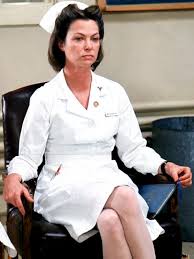
“Because I can Biotches! That’s right..because I can!”

According to G. Douglas Talbott, rehabilitation programs that evaluate and treat the rest of the population for substance abuse issues are incapable of doing so in doctors as they are unlike any other inhabitants of our society.   Physicians are unique. Unique because of their incredibly high denial”, and this genetically inherent denial is part of what he calls the “four MDs.” Used to justify the thrice lengthier length of stay in physicians the “four-MDs” are as follows: “M-Deity”, “Massive Denial” “Militant Defensiveness” and “More Drugs.”

He states that “Impaired doctors must first acknowledge their addiction and overcome their ‘terminal uniqueness’ before they can deal with a drug or alcohol problem.”

Now some  doctors are arrogant undisciplined egotists but narcissistic personalities exist in any profession and expanding traits that may apply to a small percentage of doctors to include all doctors as a universal truth contradicts reality. Applying a stereotypical paternalistic length of treatment in doctors three times as long as non-doctors to force a “one-size” fits all treatment on them has no evidence base.

tumblr_kuwuugSEmN1qz6z0no1_500This dicto simpliciter argument can, in fact, be refuted simply by pointing it out! Sadly, no one ever did so the ASAM front-group hasbeen able to establish this caricature of the arrogant paternalistic know it all needing 3 months or more of treatment as standard of care for our profession. They did this by getting medical boards and the FSMB to accept fantasy as fact by relying on board members tendency to accept expert evidence at face value–which they always do and that is a personality characteristic that I would argue is not dicto simpliciter.

Physicians are unique only insofar as the unique elements required of the profession to become and be a physician such as going to medical school and completing the required board examinations.

Any and all doctors referred to a PHP for assessment will spend at least 3 months in treatment if the facility feels it is indicated. It is inevitable. No one has challenged a patently absurd generalization that has absolutely no evidence base or plausible scientific or medical explanation. Of course those sentenced to the 3 or more months have complained but by that time they are de-legitimized and stigmatized. No one to complain to.  After all, these are just redeemed altruistic non-profit  good guys protecting the public and helping colleagues forge a path to salvation!
All the ASAM/FSPHP quacks have to do at that point to deflect legitimate concerns is point out the one doing the complaining is an “addict” who is “in denial” and it is part of his “disease.”  The mere accusation of substance abuse is used to disregard the claims of the accused.
Authoritative opinion entrenched. Someone should have called B.S. long ago.  But no one did and if they had we would not be in the current situation which is only going to go from bad to worse as the ASAM plan for universal contingency-management and urine usury unfolds-–A “golden age.” And the 4MDs Talbott attributes to doctors are all wrong. There is only one MD and it is “medical license.” On second thought that may not be entirely true.  “More money” may be another. And I am not talking about a doctor’s income. I am referring to insurance and the specter of depleting home and hearth.   Fiscal annihilation. Your license or your life.   And the only true  and plausible answer that Talbott could give to justify the lengthy stay is “Because I can biotches!” And “contingency-management” sounds better than extortion doesn’t it?  And  using your medical license as “leverage” sounds a helluva lot better than holding it for ransom.
10561776_1446076165663276_673756111807603530_n-1
The ‘A’ Word: Are Doctors Arrogant?
Leslie Kane
June 17, 2014
Good Doctors Have Some Bad MomentsDoctors’ personalities have become a hot topic, not only because warmth and pleasantness count toward patient satisfaction, but also because positive patient interactions have a role in better outcomes.Physicians’ personalities are under the microscope as patients post reviews of doctors on numerous Websites. In some reviews, the word “arrogant” has shown up. But calling doctors arrogant is nothing new.Are there really so many arrogant doctors? No doubt, some physicians deserve the label, but it seems to be a stereotype that has blossomed and taken on its own life.”Arrogance among doctors is not the norm”, says Marion Stuart, PhD, co-author of The 15 Minute Hour: Therapeutic Talk in Primary Care, and Professor Emeritus in the Department of Family Medicine at UMDNJ-Robert Wood Johnson Medical School. “Someone who has done the hard work and has gone into medicine because they care about people, and are interested in helping peoples’ lives and making the world a better place, is not going to be arrogant.”So how did the arrogant doctor epithet arise?In the past, doctors were considered authorities who told compliant patients what to do and treated them with a paternalistic attitude. Some doctors may retain those behaviors today.Another possibility is overgeneralizing. A patient sees a doctor who has a difficult personality and assumes that the trait is more widespread within the profession than it really is.Arrogance or Self-confidence?

“Arrogance is totally different from self-confidence,” says Dr. Stuart. “When you’re confident, that’s your assessment of your own competence. You have the experience and the wisdom, you know what you can do, and your confidence says that. It’s your relationship to yourself and your own expertise,” she says.

Arrogance is a different ballgame. “This has to do with your judging that other people are inferior,” she says. “It has more to do with not seeing other people as being up to your standards.”

Could the confidence that comes with being accomplished and successful make someone arrogant? Typically no, says Dr. Stuart. The trait of arrogance develops or resides within a person at a much earlier stage, arising from one of two paths:

“I am indeed better.” Someone who has always lived a privileged life, feels entitled to all of the finer things, or has always been looked up to may take it as a given that he or she is better than others. “People who had a sheltered, protected existence with no perception of what the real world is like for other people may consider themselves an elite group, entitled to feel superior,” says Dr. Stuart.

“I made it, so why can’t you?” By contrast, a person who was deprived as a child and worked very hard to pull himself up by the bootstraps may then look down on others who don’t have the same perseverance or initiative to take charge of their life and create similar success.

Doctors Are Harried and Pressured; Patients Are More Demanding

Some doctors have admitted that at times it’s hard to maintain their patience, and frustration triggers a snappish response. Throw into the mix the fact that doctors may have less time to see each patient and answer questions, and you have the ingredients for a negative interaction.

“I’ve had eight years of medical education and I’ve been trying to get my patient to make healthy lifestyle changes, and he comes in with a page ripped out of a tabloid, convinced that the information is right…there’s a limit to how much time I can spend ‘educating’ or convincing them that their ‘cure’ has no scientific basis,” one physician told me.

People have come to expect the stance of “the customer is always right” and get annoyed if doctors don’t accede to all of their requests. But because of new medical practice guidelines, a doctor may not readily give the patient the test or medication they ask for. “Now, with healthcare insurers and companies setting limits on doctors, many times the patient feels that the doctor is not so much on their side, and this could be perceived as arrogant,” says Dr. Stuart.

Is There an Outbreak of Rudeness?

Barry Silverman, MD, a cardiologist and coauthor with pediatrician Saul Adler, MD, of Your Doctors’ Manners Matter: Better Health Through Civility in the Doctor’s Office and in the Hospital, says, “While most doctors are appreciated and respected by their patients, there’s a general perception that professionalism has declined.

“Patients are often more informed, ask detailed questions, and demand a high level of service, while demands on the doctor’s time increase and reimbursements fall,” says Dr. Silverman. “What patients interpret as arrogance is many times a rushed and harried doctor, not an uncaring one. Medicine can be mentally and physically exhausting, but the bottom line is that the doctor must listen and communicate with the patient to deliver quality medical care.”

Still, remaining pleasant and calm is easier for some doctors than for others. There’s no uniform physician personality; many doctors have a natural “people person” inclination, while others are more stoic.

Are doctors expected to smile and be nice in every circumstance, no matter what?

“Professionalism is not about putting on a happy face or being someone you are not; it is about providing quality care for the patient,” says Dr. Adler. “Patients are more informed and have access to more information than ever before. Much of that information is incorrect and sometimes harmful. That means that part of the professional duty is to teach as well as treat.

“Patients understand that doctors have significant restraints on their time, and it is not unreasonable for doctors to use preprinted written materials, educational resources outside the doctor’s personal office, and honest and informative Websites,” says Dr. Adler. “However, under no circumstances should the doctor be rude or abrupt; a smile and kind, considerate behavior is always appropriate.”

It would be naive to say that there aren’t arrogant doctors. But there are far more doctors trying to do their best for patients and relate to them.

Medscape Business of Medicine © 2014 WebMD, LLC

[image

The Brain Disease Model of Addiction: is it Supported by the Evidence and has it Delivered on its Promises?

An academic analysis of addiction medicine from the vantage point of the ASAM would reveal false assumptions, bias, dogmatism, and data-dredging. It would also reveal that those claiming expertise are in fact illegitimate and irrational authority who believe in an ends-justifies-the-means approach to push forth the chronic relapsing brain disease with lifelong abstinence and imposed 12-step recovery.

These are false experts who rationalize unethical, unprofessional and even criminal behavior as zeal for the faith if it aligns with the brain disease model of addiction (BDMA).

Their viewpoints are fixed and final.

They have not been held to truly objective judging, analysis, evaluation or outside critique.

mllangan1's avatarDisrupted Physician

Dr. Allwissend 01

The brain disease model of addiction: is it supported by the evidence and has it delivered on its promises?

Prof Wayne Hall, PhD
Adrian Carter, PhD
Cynthia Forlini, PhD

Sign up for Lancet Psychiatry to read the full article. An overview is below.

We need a similar critique of the American Society of Addiction Medicine (ASAM)  and its affiliates on this side of the Atlantic as “addiction medicine” is slated to be approved  by the  American Board of Medical Specialties in 2016 even though the discipline falls far short of the educational and professional standards for quality practice developed and implemented by all other ABMS member boards.    According to the ABMS these 24 boards are:

“committed to the principle of examining doctors based on six general competencies designed to encompass quality care: patient care, medical knowledge, practice-based learning and improvement, interpersonal and communication skills, professionalism, and…

View original post 3,946 more words

The Need for Anti-Trust and OIG Investigation of Physician Health Programs—Sunshine is the Best Disinfectant!

She likes a rigged game, you know what I mean?”
— R.P. Murphy in Ken Kesey’s One Flew Over the Cuckoo’s Nest


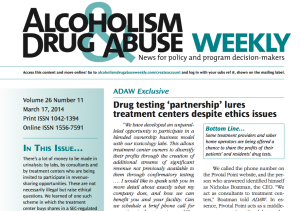
Unknown-3An article published in the March 17, 2014 newsletter Alcoholism and Drug Abuse Weekly entitled “Physician group urges focus on spiritual and psychosocial” describes a group of doctors emphasizing “that for all addictions, the psychosocial and spiritual interventions, including 12-step interventions must be included in the treatment process.”   “According to founding board member Dr. Ken Thompson, M.D., “to not do so falls short of practicing good addiction medicine.”
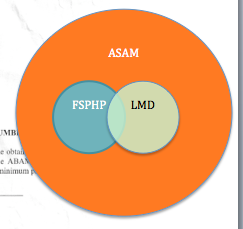
With a “significant percentage” in 12-step recovery themselves, “they have formed group called “Like-Minded Docs.”  This group now has close to 300 physicians, “many of whom are medical directors of top treatment programs and also members of the American Society of Addiction Medicine (ASAM).”

ADAW March 17 2014

Screen Shot 2014-03-15 at 7.38.33 PM

Dr. Thompson is  the Medical Director of Caron treatment center in Pennsylvania. The group also includes medical directors of many other treatment centers including Hazelden, Talbott, Marworth, and Promises.   The President of the American Society of Addiction Medicine is in fact a Like-Minded Doc.

The number of like-minded docs represent over 10% of the American Society of Addiction Medicine (ASAM).
Ostensibly I applaud the ideal of addressing the psychosocial and spiritual aspects of addiction.

I also acknowledge that alcoholics anonymous and 12-step recovery is a treatment tool that can provide great benefit to some people.   But to others it provides no benefit and to some it can cause harm.   As most reasonable people would agree, forcing individuals into a thought process of spirituality should never be mandated.

That being said, I have no strong feelings for or against A.A and 12-step spirituality.  I view it through the same pluralistic and open-minded lens as I do religion–there are many paths to salvation and none superior.

I have referred patients to A.A. and see it as an option and a personal choice that can provide great benefit to some people, none to others and in fact harm those who are not aligned with the concept.

If it works for you great. If not then let’s take a different approach.
Although the ideals of the Like-Minded Docs are laudable, it is the framework that is concerning as it creates a confluence of currents that preclude option and choice.

It is a scaffold that can be used for coercion, control, and imposition.   It can be abused.

And this is exactly what is being done in many of the State Physician Health Programs (PHPs) as well as the drug courts.  It is notable that many of the same individuals pushing PHPs as a  “replicable” model of recovery are the very same individuals behind the drug courts and the motivation behind this does not appear to be altruism but power and greed.

Originally funded by state medical societies and staffed by volunteer physicians, PHP’s were designed to help sick doctors and protect the public. Over the past decade these programs have undergone a sweeping transformation due to this subgroup of the  ASAM.

It is important to understand that the ASAM is not recognized by the American Board of Medical Specialties (ABMS). They created their own “board certification” (ABAM) and the only requirement is an M.D. in any specialty and some sort of experience in substance abuse.  This is not a medical specialty but a “special interest group.”

images Trumpeting the false dichotomy that addiction is a “brain disease” and not a “moral failing” while portraying themselves as altruistic advocates of the afflicted, this subgroup of the ASAM has cultivated an organization that exudes authority, knowledge, respectability, and advocacy.  But they are an illegitimate authority and others must be made cognizant of this fact.
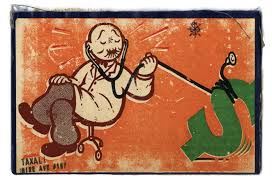
The ASAM has set forth definitions of addiction, shaped diagnostic criteria, dictated assessment protocols and shaped public policy all under the guise of scholarship and compassion. But is this the real motive?  I don’t think so.

This same group introduced junk science such as the EtG and PEth alcohol biomarkers through Greg Skipper, FSPHP, ASAM, and a like-Minded Doc who can also be found on this list.  The conflicts-of-interest are serious and vast.

images-4
This same group has created the “impaired” physician construct as well as the  “moral panic” of a hidden cadre of drug addled and besotted doctors protected by a “culture of silence” that has seriously damaged the reputation of doctors and the medical profession through the eyes of both regulators and the general public.

This same group has introduced and promulgated the nebulous “disruptive physician” and successfully fostered a moral crusade to attack this huge apparently hidden but non-existent threat.

The next target is the “aging physician” and if you do an internet search you will see they are currently fomenting a call to arms to root out senility in medicine.

This same group used the same tactics in each case.

With no evidence base they used propaganda and disinformation to convince regulatory and administrative medicine that witches are real, witches are dangerous, and that they were the experts when it came to identifying, assessing and treating witches.    And it worked.
By infiltrating state PHPs they have become the might and main of addiction medicine in the United States.

By removing dissenters who disagreed with the groupthink they have taken over almost all  of the state PHPs organized under the Federation of State Physician Health Programs (FSPHP).

And this is where it becomes interesting.

Screen Shot 2014-05-07 at 5.38.23 PMState PHPs are very strict when it comes to choice in rehabilitation facilities for for physicians in need of assessment and treatment for substance abuse.


In fact there is no choice in the matter.
As home to some of the countries top ranked hospitals and most prestigious medical schools Massachusetts is an international healthcare hub with world-class teaching, research, and clinical care.

Two of the top three psychiatric hospitals in the United States as rated by U.S. News and World Report are found here in Massachusetts with McLean Hospital earning the top prize and Massachusetts General Hospital ranked number three.

However, this medical mecca of learning and research is apparently unable to attract anyone with competence and skill to assess physicians for substance abuse or disruptive behavior.
In Massachusetts if the State PHP, PHS,inc. feels a physician is in need of an assessment the evaluation must be done at “a facility experienced in the assessment and treatment of health care professionals” It must be done at a “PHP-approved” facility. No exceptions.

And apparently these esoteric skills are only found in Georgia, Arkansas, Alabama, and a half dozen other places.Screen Shot 2013-11-25 at 4.55.18 PM
With over 20 years experience with the Massachusetts PHP, Physicians Health Services, inc., Harvard Medical Schools Dr.’s John Knight and J. Wesley Boyd wrote an article in the Journal of Addiction Medicine last year concerning ethical issues in state PHPs.

Ethical and Managerial Considerations Regarding State Physician Health Programs

IMG_9115 One of the issues Knight and Boyd discussed was the conflicts of interest between the state PHPs and the evaluation centers.



One comment I was surprised got past editorial review was that the treatment centers may “consciously or otherwise” tailor diagnosis and recommendations to the PHP’s impression of that physician. “Consciously” tailoring a diagnosis is fraud. It is political abuse of psychiatry.

If you look up the medical directors of the “preferred facilities” and then cross reference with the list of LMD’s you get a perfect match.
So when the PHP refers a physician for an evaluation and gives them a choice of an assessment facility there is no choice.

It is three card monte. It is a shell game. Heads I win tails you lose.
The ASAM has imposed the prohibitionist chronic brain disease spiritual recovery model of addiction on the field of medicine.

It is a system of coercion, control, and indoctrination. And another ASAM Like-Minded Doc, Robert Dupont, is calling this the “new paradigm” of addiction medicine and wants to spread it out to other venues including schools.
Like-Minded Docs solves the final piece of the puzzle. It explains why so many doctors across the country are claiming fabrication and manipulation of personality and cognitive tests to support nonexistent diagnoses.

They are not gathering data to form a hypothesis but making data fit a hypothesis that arrived before they did.

It also explains the marked increase in physician suicide.

With guilt assumed from the start, no due process, no appeal and no way out physicians are being bullied, demoralized, and dehumanized by these zealots to the point of hopelessness.

This needs to stop.

Medicine is predicated on competence, good-faith, and integrity. Medical ethics necessitates beneficence, respect, and autonomy. The scaffold erected here is designed for coercion and control. Exposure, transparency, and accountability are urgent. An evidence based Cochrane type assessment of their “research” and an Institute of Medicine Conflict of Interest review are long overdue.

The emperor has no clothes and sunshine is the best disinfectant.

images-8

Screen Shot 2015-06-18 at 2.43.46 AM


IMG_9516

The Plan to… Require Doctors to Drug-Test all Patients

In reality the misconduct and abuse perpetrated by physician health programs (PHPs) is commensurate with the behavior of Dr. Farid Fata, the Detroit Oncologist who intentionally misdiagnosed patients with cancer so he could make money off unnecessary chemotherapy treatment. Dr. Fata’s egregious betrayal of trust and unconscionable acts generated a flurry of comments. His vile acts resulted in an appropriate response.

The exact same misconduct is being perpetrated by PHPs but being overlooked, justified or otherwise ignored. Dr. Fata intentionally misdiagnosed patients with cancer who did not have cancer so he could give them chemotherapy to make money. PHPs are intentionally misdiagnosing substance abuse and behavioral disorders in physicians who do not have them in order to give them unneeded treatment and force them into monitoring contracts to both make money and gain control.

mllangan1's avatarDisrupted Physician

33e7f-0905opedparini-master180-v3The Plan to… Require Doctors to Drug-Test all Patients.

There seems to be a willful ignorance or apathy among the medical profession at large  regarding Physician Health Programs (PHPs).    Perhaps most take the side of the PHPs complacent in the belief that these groups are just helping sick doctors and protecting the public.    The mere accusation of substance abuse  or “disruptive” behavior is in-and-of- itself used to disregard the claims of the accused.  Any and all complaints of malpractice, misconduct and even crimes are deflected, turfed or dismissed–rendered as nothing more than “bellyaching.

 In reality the misconduct and abuse perpetrated by the PHPs is commensurate with the behavior of Dr. Farid Fata,  the Detroit Oncologist who intentionally misdiagnosed patients with cancer so he could make money off unnecessary chemotherapy treatment.  Dr. Fata’s egregious betrayal of trust and unconscionable acts generated a flurry of comments.  His vile acts resulted…

View original post 155 more words

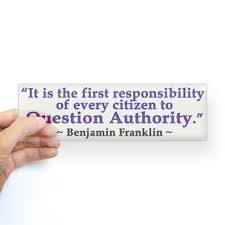
Question Authority: The Need for Anti-Authoritarians in the Medical Profession

Screen Shot 2015-05-30 at 7.27.10 PM


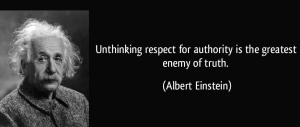
Anti-authoritarians question whether an authority is a legitimate one before taking that authority seriously.  images-24To evaluate the legitimacy of  an authority it is necessary to:
1. Assess whether they actually know what they are talking about.   2. Assess whether the authorities are honest in their intentions.
When anti-authoritarians assess an authority to be illegitimate, they challenge and resist that authority.
There is a paucity of anti-authoritarianism in the medical community concerning groups that have gained tremendous sway in the regulation of the medical profession.    There is, in fact, an absence of anti-authoritarian questioning  of  what is essentially illegitimate and irrational authority.
images-26
Most doctors are unaware of the impact these organizations have had on both the regulation of the medical profession and social control of individual doctors.  Through “moral entrepreneurship” and “bent science” these groups have successfully swayed both policy-makers and the public to support an agenda not supported by reality testing or critical thinking.  This acceptance without investigation has led to a deterioration of professional ethics and evidence-based decision making in the regulation of the medical profession.
 In order for these organizations to maintain power it is necessary that their authoritative opinion remain unquestioned and unchallenged.  Consciously manufactured propaganda has persuaded regulatory and public opinion of their value and to maintain power it is necessary that this authority remain insulated from outside evaluation because the entire system is based on assumptions that can be aptly characterized as “illusions.
images-4
The dogmatic statements and abusive generalizations do not conform to reality.
Everything is adapted to an existing stagnant cognitive system that falls far off the map of the scientific approach to information and evidence based medicine.  Perceiving only confirmations the physician health paradigm embodies and expresses preconceived ideas, values and mentalities based on certitude and absolute truth.

If one looks behind the curtain there is not much there.   Screen Shot 2015-06-16 at 3.39.59 AM

Historical, political, economic and social analysis can all show how the construct that exists today came to be.   This can be factually ascertained by simple reasoning and examination of the documentary evidence.

Any one of these analyses would reveal that the “PHP-blueprint” is a false-construct built on circumnavigation and obfuscation.

An evidence-based scrutiny of the literature would reveal it to be invalid and of little probative value.  A public policy analysis would reveal the logical fallacies involved in trumpeting  their positions including exaggerated rhetoric and  fear monitoring strategies designed to inspire moral panics and exploit fears to further an underlying political agenda

Any critical analysis would reveal cherry picking. proof by anecdote, deceptive propaganda, double talk, contradictory, illogical and incomprehensible jabber,  unprovable and  un-disprovable statements and a panoply of logical fallacy.

These groups  misrepresent, censor and suppress. They  nit pick and split hairs.  Screen Shot 2015-06-16 at 3.40.37 AMThe concept of denial is not just used to force people into treatment and justify abuse during treatment but  to suppress specific questions and deliberately avoid key facts.
So why are we not questioning this “authority?”     They have been left alone and basically thrown in the backyard left to proliferate like feral cats.

Screen Shot 2015-06-16 at 3.40.57 AM

We need anti-authoritarians and we need them now.

I need allies before the door closes for good. And that door may be closing a lot sooner than you think!

 Screen Shot 2015-06-16 at 3.38.43 AMScreen Shot 2015-06-16 at 3.39.39 AMScreen Shot 2015-06-16 at 3.49.43 AM

Screen Shot 2015-06-16 at 3.40.14 AM

The Need to Speak up Against Bad Science, Bad Medicine, Bad Policy and Bad Actors–Neutrality is not an Option. Use Your Voice and Question Authority!

Screen Shot 2015-05-31 at 5.24.44 PM

Screen Shot 2015-05-31 at 5.23.51 PM

images-24


The bad science, bad medicine, bad policy and bad actors are easy to identify. It would be like shooting fish in a barrel.

So what are the barriers?

Why has this not been done?

The answer to that is complex but involves a confluence of factors including psychological, political and cultural. “Feel good fallacy,” “political correctness, and moral and policy entrepreneurship have effectively swayed the targets intended. The well-funded misinformation and propaganda was cast with a large net using the same techniques others have successfully used throughout history to accomplish the same. Moral panics, moral crusades, and a plethora of logical fallacy have been used and used with considerable resources and skill.

So what can we do about it?

The first “step into the breach” is to identify the problem with the first one being the Emperor has no clothes. Once this is acknowledged it would not take long to address directly the specific problems and erroneous assumptions of this paradigm through the lenses of science, critical reasoning, ethics and common sense. If this were to be done the entire Potemkin village would fall like a house of cards.Screen Shot 2015-06-15 at 12.05.53 AM

But the very first and simplest step is to use your voice to question this authority. Neutrality is not an option.   Either support what these groups are doing or question them with your voice and the written word.

The bad science, medicine, policy and actors are obvious.   It would be like shooting fish in a barrel and the first target needs to be the “PHP-Blueprint.”   It would be so easy to take down this “research” they are using to promote PHPs as a “gold-standard” and replicable model.  Shooting fish in a barrel requires someone take aim and at this point hardly anyone is even willing to pick up the gun.

Screen Shot 2015-06-14 at 12.23.19 PM

images-4

mllangan1's avatarDisrupted Physician

Drug Companies and Doctors: A Story of Corruption.

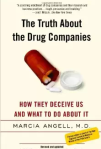
What we need is a Marcia Angell to take on the multi-billion dollar drug and alcohol testing, assessment and treatment industry.

Screen Shot 2015-06-01 at 7.22.25 PMWhile all eyes were focused on the drug companies these multi-billion dollar industries erected a scaffold of immunity and profit by removing (and blocking) themselves from essentially all aspects of accountability; answerability, justification for actions and the ability to be punished by outside actors.    The 2009 quote in reference to “big pharma”  is just as applicable to the drug and alcohol testing industry,”  the inpatient assessment and treatment centers and the “authorities” pushing public policy and swaying public opinion to accept irrational and illegitimate authoritative opinion as truth.

And unlike the pharmaceutical industries carefully constructed “bent science” which requires a keen eye and critical analysis , the evidence-base supporting the testing, assessment and treatment industry rests on a foundation that can…

View original post 541 more words

“One of the saddest lessons of history is this..”–Carl Sagan

images2Q==carli

mllangan1's avatarDisrupted Physician

“One of the saddest lessons of history is this: If we’ve been bamboozled long enough, we tend to reject any evidence of the bamboozle. We’re no longer interested in finding out the truth. The bamboozle has captured us. It’s simply too painful to acknowledge, even to ourselves, that we’ve been taken. Once you give a charlatan power over you, you almost never get it back.”

― Carl Sagan, The Demon-Haunted World: Science as a Candle in the Dark

View original post

Without Dr. William Morgan the 2004 Red Sox World Series win would not exist–a true Boston Hero

Without Dr. William Morgan the 2004 Red Sox World Series win would not exist–a true Boston Hero.

The essay below found on 123HelpMe.com called The “Doctor Who Saved Boston.” is about Dr. William J. Morgan, the brilliant hand surgeon who helped the Red Sox win the World Series for the first time in 86 years.  Morgan performed  surgery on Curt Schilling’s severely damaged ankle that allowed him to pitch in game 6 of the ALCS against the Yankees when we were down three games to two.
No known medical or surgical options existed to allow Schilling the functionality to pitch.  But just as things were looking bleak Dr. Morgan miraculously performed an unprecedented procedure he invented that allowed Schilling to pitch seven innings winning the game 4-2.   He created a wall of stitches to hold Schillling’s torn tendon sheath in place before game 6’s win and again before game 2 of the World Series that we also won.

“Addiction Medicine” is not recognized by the American Board of Medical Specialties (ABMS)–It is a “self-designated-practice specialty” (SDPS) and indicates neither knowledge nor expertise.

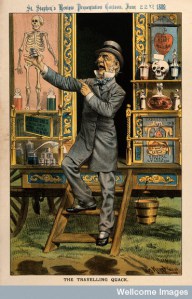
V0011377 A quack doctor selling remedies from his caravan; satirizingEducational and Professional Standards in Medical Specialties and Subspecialties

The increasingly rapid growth and complexity of medical knowledge in twentieth century American medicine resulted in the creation of specialties and subspecialties.

A related development was the creation of “boards”  to “certify” physicians as  knowledgeable and competent in the specialties and subspecialties in which they claimed to have expertise.   The American Board of Ophthalmology, organized in 1917, was the first of these.

As the number of medical specialties proliferated an umbrella organization was formed to accomplish this task. The Advisory Board for Medical Specialties was created  in 1933 and reorganized as the American Board of Medical Specialties (ABMS) in 1970.  This non-profit organization oversees board certification of all physician specialists and sub-specialists in the United States.

The ABMS recognizes 24 medical specialties in which physicians can pursue additional training and education to pursue Board Certification.Screen Shot 2014-11-07 at 7.44.56 PM

In 1991 the American Board of Medical Genetics was approved as the 24th ABMS board and these 24 boards grant the  37 general certificates and 88 subspecialty certificates available to medical specialists today.

The ABMS Member Boards are responsible for developing and implementing the educational and professional standards for quality practice in a particular medical specialty or subspecialty and evaluate physician candidates for Board Certification.  They set the bar of knowledge and competence for their given area of expertise.

All of the ABMS Member Boards are:

“committed to the principle of examining doctors based on six general competencies designed to encompass quality care: patient care, medical knowledge, practice-based learning and improvement, interpersonal and communication skills, professionalism, and systems-based practice.”

These areas have been collectively identified by the ABMS, the American College of Graduate Medical Education (ACGME) and the Institute of Medicine (IOM) in order to standardize graduate medical education in any specialty  from medical school graduation through retirement.1

One of the  24 medical specialties ABMS recognizes in which physicians can pursue additional training and education and pursue Board Certification is Psychiatry.

Founded in 1934, The American Board of Psychiatry and Neurology (ABPN) is one of the 24 ABMS specialty boards. In 1959, the ABPN issued its first subspecialty certificate in Child and Adolescent Psychiatry and was the only ABNP subspecialty until 1991 when the first examination in Geriatric Psychiatry was administered.4 Addiction Psychiatry became a subspecialty of ABPN in 1993.

The ABPN governs the specialty of Psychiatry, of which Addiction Psychiatry is a subspecialty.   Board Certification in Addiction Psychiatry requires a four-year psychiatric-residency program for training in the prevention, diagnosis and treatment of mood, anxiety, substance-abuse as well as other psychological and interpersonal problems followed by an additional year of training in one of the 40 accredited Addiction Psychiatry Fellowship programs. The Accreditation Council for Graduate Medical Education (ACGME) is the professional organization responsible for the accreditation residency education programs in the US for ABMS specialty and subspecialty areas of medicine. Addiction Psychiatry training programs are governed by the ACGME and graduates are eligible for ABPN Certification in Addiction Psychiatry.

When this rigorous education and training is complete a candidate is Board Eligible and can then take the subspecialty certification exam. The exam assesses competency in the dand consultation, pharmacotherapy, pharmacology of drugs, psychosocial treatment and behavioral basis of practice to be Board Certified in the subspecialty of Addiction Psychiatry by the ABPN.

Candidates must then be assessed in  a number of areas including psychiatric evaluation and consultation, pharmacotherapy, pharmacology, toxicology, psychosocial treatment, behavioral basis of practice, and many other areas in which for the past half-decade they where taught and apprenticed.

The current structure of residency training is little changed from when it was conceived originally by William Stewart Halsted in the late 19th Century.  Physicians acquire knowledge and skills necessary to safely and competently manage patients through apprenticeship. Training in a specialty area provides a comprehensive platform that allows medical school graduates to apply a body of knowledge to patient care and the treatment of disease. This forms the foundation of our Guild–undifferentiated and general but pluripotential.

The American Academy of Addiction Psychiatry (AAAP) is the only professional organization in the US focused on the subspecialty of Addiction Psychiatry.   The AAAP Mission Statements are to: 2

  • PROMOTE HIGH QUALITY EVIDENCE-BASED SCREENING, ASSESSMENT AND TREATMENT FOR SUBSTANCE USE AND CO-OCCURRING MENTAL DISORDERS.
  • TRANSLATE AND DISSEMINATE EVIDENCE-BASED RESEARCH TO CLINICAL PRACTICE AND PUBLIC POLICY.
  • STRENGTHEN ADDICTION PSYCHIATRY SPECIALTY TRAINING AND FOSTER CAREERS IN ADDICTION PSYCHIATRY.
  • PROVIDE EVIDENCE-BASED ADDICTION EDUCATION TO HEALTH CARE TRAINEES AND HEALTH PROFESSIONALS TO ENHANCE PATIENT CARE AND PROMOTE RECOVERY.
  • EDUCATE THE PUBLIC AND INFLUENCE PUBLIC POLICY FOR THE SAFE AND HUMANE TREATMENT OF THOSE WITH SUBSTANCE USE DISORDERS.
  • PROMOTE PREVENTION AND ENHANCE ADDICTION TREATMENT AND RECOVERY ACROSS THE LIFE SPAN.
  • PROMOTE RESEARCH ON THE ETIOLOGY, PREVENTION, IDENTIFICATION AND TREATMENT OF SUBSTANCE USE AND RELATED DISORDERS.

Self-Designated Practice Specialty :  An AMA Census Term Indicating What a Group of Doctors are Calling Themselves.

Screen Shot 2014-03-18 at 5.22.16 PMThe American Medical Association records a physician’s Self-Designated Practice Specialty (SDPS) in response to an annual credentialing survey. According to the AMA, SDPS are “historically related to the record-keeping needs of the American Medical Association and do not imply ‘recognition’ or ‘endorsement’ of any field of medical practice by the Association. SDPS refers to a self-designated specialty and this is not equivalent nor does it imply ABMS [American Board of Medical Specialties] Board Certification.a_meissen_group_of_harlequin_and_the_quack_doctor_circa_1741_faint_blu_d5585085_001h

“The fact that a physician chooses to designate a given specialty/area of practice on our records does not necessarily mean that the physician has been trained or has special competence to practice the SDPS.”3

Physicians have been able to list addiction medicine as a self-designated area of practice using the specialty code “ADM” since 1990.Screen Shot 2014-11-07 at 7.45.43 PM

In contrast to these accepted board credentials, American Board of Addiction Medicine (ABAM)  certification requires only a medical degree, a valid license to practice medicine, completion of a residency training in ANY specialty, and one year‘s full time involvement plus 50 additional hours of medical education in the field of alcoholism and other drug dependencies. The majority of American Society of Addiction Medicine (ASAM) physicians meet these requirements by “working in a chemical dependency treatment facility, taking continuing medical education courses in addiction, or participating in research.”6

The American Society of Addiction Medicine’s mission is to “establishScreen Shot 2014-11-07 at 7.47.55 PM addiction medicine as a specialty recognized by professional organizations, governments,, physicians, purchasers, and consumers of health care products, and the general public.’5   They have succeeded in doing this as many consider them to be the experts in addiction medicine including regulatory agencies.

The goal of the American Board of Addiction Medicine (ABAM) Foundation is to “gain recognition of Addiction Medicine as a medical specialty by the American Board of Medical Specialties (ABMS).”

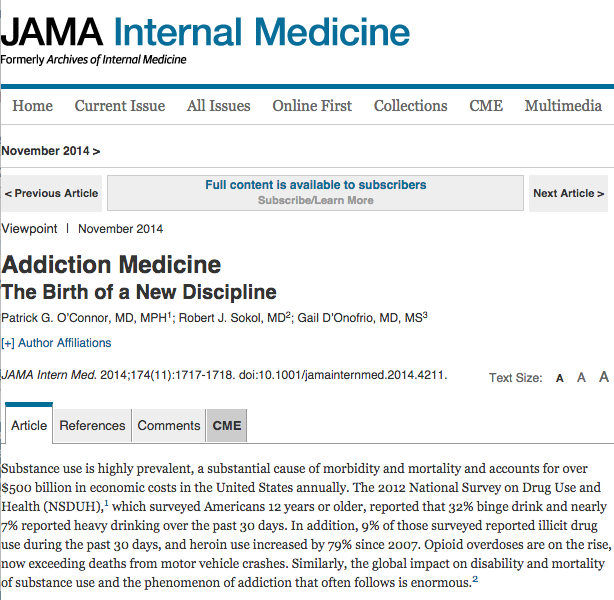
But Addiction Medicine is currently not recognized by the ABMS.  It is still a a Self-Designated Practice Specialty and the ABAM is a Self-Designated Board.  So too is the American Academy of Ringside Medicine and Surgery, the American Academy of Bloodless Medicine and Surgery and the Council of Non-Board Certified Physicians.   But these Self-Designated Boards do not have the multi-billion dollar drug and alcohol testing and treatment industry supporting them. Addiction Medicine has deep pockets, and if the November 2014 issue of the Journal of the American Medical Association (JAMA) is a harbinger of what’s to come, this self-designated practice specialty currently being certified by a self-designated Board and bereft of anything resembling the the educational and professional standards for quality practice in a particular medical specialty or subspecialty may soon robber baron its way into acceptance by the American Board of Medical Specialties.

Screen Shot 2014-11-23 at 11.15.15 PM

One thing is for certain.  When society gives power of diagnosis and treatment to individuals within a group schooled in just one uncompromising model of addiction with the majority attributing their very own sobriety to that model, they will exercise that power to diagnose and treat anyone and everyone according to that model.  The birth of Addiction Medicine as an ABMS accepted discipline is sure to be a success for the drug and alcohol testing and 12-step treatment industry, but its spawn is sure to be an inauspicious mark on the Profession and Guild of Medicine and a bane of society for years to come.

cropped-jester

  1. Stevens RA. In: Stevens R, Rosenberg C, Burns L, eds. History and Health Policy in the United States: Putting the Past Back in: Rutgers University Press; 2006:49-83.
  2. American Association of Addiction Psychiatry Website http://www.aaap.org/about-aaap/mission-statement (accessed 4/2/2014).
  3. American Medical Association. List & Definitions of Self-Designated Practice Specialties. August 21, 2012 http://www.ama-assn.org/ama.
  4. Juul D, Scheiber SC, Kramer TA. Subspecialty certification by the American Board of Psychiatry and Neurology. Academic psychiatry : the journal of the American Association of Directors of Psychiatric Residency Training and the Association for Academic Psychiatry. Spring 2004;28(1):12-17.
  5. http://www.asam.org/about-us/mission-and-goals.
  6. Tontchev GV, Housel TR, Callahan JF, Kunz KB, Miller MM, Blondell RD. Specialized training on addictions for physicians in the United States. Substance abuse : official publication of the Association for Medical Education and Research in Substance Abuse. Apr 2011;32(2):84-92.
IMG_6274 2

“mail order” expertise; Diploma Mill