The Medical Profession, Moral Entrepreneurship, Moral Panics and Social Control

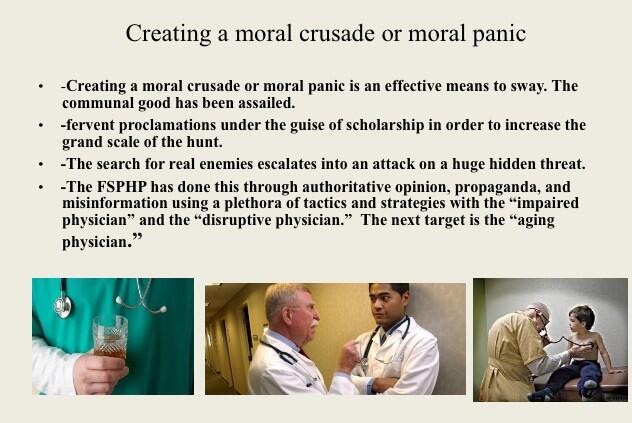
The terms “impaired physician” and the “disruptive physician” are used as labels of deviancy. As deviants who allegedly threaten the very core of medicine (patient care) and the business of medicine (profit) they must be stopped at all costs. Belief in the seriousness of the situation justifies intolerance and unfair treatment. The evidentiary standard is lowered. Aided by a “conspiracy of silence” among doctors in which impaired colleagues are not reported necessitates identification of them by any means necessary. Increase the grand scale of the hunt.

mllangan1's avatarDisrupted Physician

IMG_9005The Medical Profession, Moral Entrepreneurship, and Social Control

Sociologist Stanley Cohen  used the term “”moral panic” to characterize the amplification of deviance by the media, the public, and agents of social control.1  Labeled as being outside the central core values of consensual society, the deviants in the designated group are perceived as posing a threat to both the values of society and society itself.   Belief in the seriousness of the situation justifies intolerance and unfair treatment of the accused.   The evidentiary standard is lowered.

Howard Becker describes the role of “moral entrepreneurs,” who crusade for making and enforcing rules that benefit their own interests by bringing them to the attention of the public and those in positions of power and authority under the guise of righting a society evil. 2

And according to cultural theorist Stuart Hall, the media obtain their information from the primary definers of social…

View original post 2,652 more words

Beyond the Schoolyard: Workplace Bullying

mllangan1's avatarDisrupted Physician

quote-to-be-able-to-destroy-with-good-conscience-to-be-able-to-behave-badly-and-call-your-bad-behavior-aldous-huxley-314332This infographic on workplace bullying was created by International Business Degree Guide to convey the message that workplace bullies not only hurt people, they can also hurt business–driving away good employees in their quest for control.

Adept at dissimulation, those in authority often see what the bully expressly feigns and pretends to be. Under observation by authority the bully hides his true self and often cultivates an image designed to please and impress.

Screen Shot 2015-06-08 at 1.47.25 PM

Veiling truth to those in power protects the bully.  Reports of abuse are disbelieved or ignored; dismissed or minimized as exaggeration; deemed a product of bellyachers and whiners.  In addition to hiding his true self the bully will often tell superiors what they want to hear. The workplace bully promotes an image of loyalty, dedication and hard work to superiors and may even feign common ideals and goals.   This  impression management often works.

When bullying ends in tragedy it is often revealed that those…

View original post 108 more words

Letters From Those Abused and Afraid

I get many e-mails, letters and phone calls from doctors, nurses and others who have been abused by  “professional health programs” (PHPs). Most are anonymous.  Afraid of being identifi…

Source: Letters From Those Abused and Afraid

Need Allies and Funding: Please Help Continue the Fight on Disrupted Physician

Please donate! Making some serious gains and some funding would speed this up considerably!

mllangan1's avatarDisrupted Physician

Need allies and funding. Please see DisruptedPhysician.com and help me to continue the fight for physician health reform
Reblogged on WordPress.com

Source: Need Allies and Funding: Please Help Continue the Fight on Disrupted Physician
Physician Suicide and the Elephant in the Room
Michael Langan, M.D.

Although no reliable statistics exist, anecdotal reports suggest an alarming upsurge in physician suicide. This necessitates a reappraisal of known predisposing risk factors such as substance abuse and depression but also requires a critical examination of what external forces or vulnerabilities might be unique to doctors and how they might be involved in the descent from suicidal ideation to suicidal planning to completed suicide.

Depression and Substance Abuse Comparable to General Population

Depression and substance abuse are the two biggest risk factors for suicide. The prevalence of depression in physicians is close to that of the general population1,2 and, if one looks…

View original post 3,304 more words

Medical Regulation and Junk-Science: The “Medical Sanctification” of Lie-Detectors byMedical Boards and State Physician Health Programs

mllangan1's avatarDisrupted Physician

Junk-Science in the Medical Profession: The Resurgence of Polygraph “Lie-Detection” in an age of Evidence-Based Medicine.

33755_1527129670651_5081648_n Circa 1995

The article below was published in the now defunct magazine Gray Areas almost twenty years ago. (Vol. 4, No. 1, Spring 1995 pp. 75-77).  It is not a research article but a critique of the use of polygraphy written for a general audience.

Antipolygraph.org founder George Maschke noted in 2008 that the article “makes a good introduction to the pseudoscience of polygraphy” and “the criticisms of polygraphy remain valid today.”  The basic assumption of any good test is that is has construct validity; that it is actually measuring what it is purported to measure.   Polygraphy is purported to detect lies but the specificity and sensitivity are about the same as a toss of a coin and has the potential to cause a great deal of harm to those who are…

View original post 3,281 more words

The impact of illegitimate authority on regulation of the medical profession: The overdue need for critical analsysis

Screen Shot 2016-05-30 at 5.27.41 AM

It is not wisdom but Authority that makes a law—Thomas Hobbes
In Questions of science, the authority of a thousand is not worth the humble reasoning of a single individual— Galileo Galilei

Regulatory Decisions and Public Policy 

Making sound decisions about regulation calls for an understanding of the problem it is intended to solve. Legitimate policy must be based on recognized institutions and experts. Regulatory changes demand methodologically sound science and evidence-based facts arrived at through rigorous peer review and professional oversight. The science must be reliable and unbiased. Legitimate policy must be based on legitimate institutions and expert authority grounded in wisdom. Authoritative opinion needs to be assembled with facts and best available evidence guided by science and critical reasoning to best solve a particular problem and benefit the greater good.

If the information regulatory agencies rely on to make regulatory decisions and public policy is unreliable then bad decisions, wrong decisions and flawed public policy are inevitable.   Consequences can be far-reaching and grave.

The impact of the close alliance between state medical boards and their state physician health programs (PHPs) and their national organizations on this failure to achieve the public goals with which they have been tasked has not been considered. It needs to be as the consequences of relying on this illegitimate and irrational authority have indeed been far-reaching and grave. Some of the nonsense pushed forth by the PHP movement and given “regulatory sanctification” by state medical boards is beyond belief. It would be comical if the results were not so tragic.

State Medical Boards

A physician’s right to practice medicine is granted by the state medical board in the form of a medical license. Each state has a medical practice act that defines the practice of medicine and used to regulate the medical profession. The medical board is empowered to identify and take action against doctors for substandard care, unprofessional behavior and other violations as defined by the state medical practice act. Given that medical boards are state agencies, their authority is subject to traditional constitutional constraints including equal protection and procedural due process limitations.

State Medical Boards have faced criticisms for being lax in their duty to protect the public from dangerous doctors.1,2 A recent study in the New England Journal of Medicine found that just 1% of physicians accounted for 32% of paid malpractice claims.3 One physician had at least 31 malpractice totaling more than $10 million in damages and nine of those payments were related to “failure to use proper aseptic technique” while another had at least 21 malpractice payments including eight improperly performed surgeries, three unnecessary surgeries and two surgeries on the wrong body part.   Neither of these doctors faced disciplinary action from their state medical board.

Failing to recognize the germ theory by failing to meet even the most basic standards of cleanliness and wrong-side surgery are egregious. The fact that these are not isolated one-offs but repeat offenders is reprehensible.     There is clearly something wrong with a system that allows such unfettered idiocy to flourish.

On the other hand there are increasing reports of excellent doctors with no history of malpractice or patient harm losing their licenses after one-offs, minor infractions or nothing at all.

The public’s goals would be better served if boards exercised their discretion against physicians who violate the most basic standards of professionalism and competency. They are failing to achieve this task.

The Federation of State Medical Boards (FSMB)

The Federation of State Medical Boards (FSMB) is a national not-for profit organization that gives guidance to state medical boards through public policy development and recommendations on issues pertinent to medical regulation.

Shortly after its founding in 1912, the Federation of State Medical Boards began publishing a quarterly journal addressing issues relating to medical licensing and regulation of doctors. First published in 1913 as the Quarterly of the Federation of State Boards of the United States, the publication has undergone several name changes and publication schedules. The archival organization and availability of full articles published sequentially over the past century is historically invaluable as it provides not only the regulatory by the national organization involved in the medical licensing and regulation of doctors and this archival organization facilitates an unskewed and impartial examination in its historical context. A focus on sound decision-making can be seen in the regulatory and legal medicine literature up until the 1990s.

For example when drug-testing was first introduced questions of validity became a genuine topic of concern.

By the late 1980s almost every state medical board was utilizing random drug and alcohol testing.   Noting that “not all testing methods and results are created equal,” South Carolina State Board of Medical Examiners executive director Stephen S. Seeling, J.D. addressed the critical importance of accuracy and reliability in the Federation Bulletin in 1988 and cautioned that “if boards wish to be able to use positive results of drug screens in administrative or legal proceedings, great care must be taken to insure that the results are accurate, reliable and thus legally probative.” 4 Suggesting that board members and board attorneys be familiar with specific testing methodologies Seeling concludes that:

Random drug testing is an important tool for every board in its mission to protect the public and maintain the integrity of the medical profession. Careful attention however must be given to this process to insure the reliability and legal defensibility of testing results. Failure to do so could diminish the board’s credibility in the eyes of the profession and the public, and expose the board to potentially serious legal challenges.”4

This sound decision-making unfortunately took a nasty left turn in 1995. In that year the Federation of State Physician Health Programs (FSPHP) forged a relationship with the Federation of State Medical Boards. They have been going strong ever since.

1995 FSPHP/FSMB Alliance

The Sick Physician: Impairment by Psychiatric Disorders, Including Alcoholism and Drug Dependence, published in JAMA in 1973,5 recommended that state medical societies establish programs to identify and treat “impaired physicians” which the AMA defined as “a physician who is unable to practice medicine with reasonable skill and safety to patients because of mental illness or excessive use or abuse of drugs, including alcohol.”

Physician Health Programs (PHPs) were subsequently developed to assist with the goal of rehabilitating and monitoring doctors as an alternative to disciplinary action by state medical boards. Preferring rehabilitation to probation or license revocation so long as the public was protected from imminent danger, most medical boards accepted the concept with support and referrals.

PHPs existed in almost ever state by 1980. Often staffed by volunteer physicians and funded by the state medical society, these programs served the dual purpose of helping sick doctors and protecting the public. As an alternative to disciplinary action these programs advocated for physicians who developed illness, assured they got proper treatment and provided monitoring to assure they remained healthy. The mechanics and mentality of PHPs were initially quite variable.

The model used today came out of the “impaired physician movement,” which according to British sociologist G. V. Stimson is “characterized by a number of evangelical recovered alcoholic and addict physicians, whose recovery has been accompanied by an involvement in medical society and treatment programs. Their ability to make authoritative pronouncements on physician impairment is based on their own claim to insider’s knowledge.”6

In 1987, the Atlanta Journal and Constitution ran a series of reports after five patients in the “Impaired Professionals” program at Ridgeview Institute created by G. Douglas Talbott in Atlanta killed themselves7 and least 20 more died by suicide after leaving Ridgeview.8 It was reported doctors were coerced into Ridgeview and then threatened and bullied to comply with any and all demands under threat of loss of licensure. All patients were indoctrinated into A.A. and forced to confess they were alcoholics or addicts or threatened with expulsion and with not being certified or advocated for with their Medical Boards.

A “recovering” alcoholic and addict who had previously been a successful cardiologist Talbott created the DeKalb County Impaired Physicians Committee for the Medical Association of Georgia in 1975 and subsequently founded the Georgia Disabled Doctors Program for the assessment and treatment of physicians, in part because “traditional one-month treatment programs are inadequate for disabled doctors.” He created the “Impaired Professionals” program at Ridgeview to provide this specialized treatment. The Constitution reported that doctors entered the program under “threats of loss of licensure even when they would prefer treatment that is cheaper and closer to home,” 9 because Ridgeview “enjoys unparalleled connections with many local and state medical societies that work with troubled doctors,” and “licensing boards often seek recommendations from such groups in devising an approved treatment plan”

money1-richdoctorThe Constitution reported that those in charge of the program are often “physicians who themselves have successfully completed Ridgeview’s program.”9  The impaired physician movement emphasizes disease and therapy, rather than discipline and punishment. They believe that alcoholism and addiction is a chronic relapsing brain disease requiring lifelong abstinence and 12-step spiritual recovery. The drug or alcohol abuser or addict is a person lacking adequate internal controls over his behavior and for his own protection as well as the protection of society external restraints are required including involuntary treatment.

“Contingency-management,” or systematic use of reinforcement is a type of treatment used in the mental health field in which patient’s behaviors are rewarded (or less often punished). It has successfully been used in substance abuse treatment by using prizes or vouchers for positive reinforcement by, for example giving prizes or vouchers for negative drug screens or following up for an appointment.10,11. At Ridgeview, a doctor’s medical license was being used as the leverage. This is not contingency management. It is extortion.

Many addiction professionals were highly critical of Talbott’s methods, including LeClair Bissell.7 and Assistant Surgeon General John C. Duffy who said that Ridgeview suffered from a “boot-camp mentality” toward physicians under their care.”8   “”

Talbott justified this length of stay because he claimed doctors were unique because of what he calls the “four-MDs,” ”M-Deity”, “Massive Denial” “Militant Defensiveness” and “More Drugs.”12

lab fraud $$The cost of a 28 day program at Ridgeview was $10,000 but far more for the thrice lengthy stay required by healthcare professionals..8  I would say the impetus behind this is due to just “two-MDs,” “Medical License,” and “More Money.”

A jury awarded $1.3 million to the widow of one of the deceased physicians against Ridgeview,13 and other lawsuits initiated on behalf of suicides were settled out of court, but nothing else has changed.14

These suicides did not generate any reaction from the medical community at large and any doctor referred by a PHP for an assessment today will spend at least 3 months in treatment. ”   It is inevitable. The Dicto simpliciter argument of “terminal uniqueness” has been cemented as in 1995 this PHP model won the lottery.   A 1995 issue of The Federal Bulletin: The Journal of Medical Licensure and Discipline, published by the Federation of State Medical Boards, contains articles outlining PHP programs in 8 separate states. Although these articles were little more than descriptive promotional pieces written by state PHP program directors with no described study-design or methodology the journals Editor proclaimed “the success rate of the programs and others like them approach 90%.” 15 and “cooperation and communication between the medical boards and the physician health programs must occur in an effort to protect the public while assisting impaired physicians in their recovery.” 15 The 8 state PHPs were all based on Talbott’s methodology.

Screen Shot 2015-01-09 at 1.59.40 AMNonsense such as the “four-MDs” and thrice lengthy treatment has been accepted without scrutiny. Logical fallacy is written as science. For example Merlo and Gold use the “appeal to consequences” logical fallacy to justify the extended length of stay stating that “physicians with a substance use disorder are not typical of addicts in general, it is not useful to apply standard professional guidelines… Rather, because of the public health consequences of relapse, most physicians who are addicted are treated more aggressively and for longer periods” than non-physicians.

According to Merlo and Gold “Physicians will lobby for a level of care that minimizes the disruption of their daily life. However, it is generally not advisable to grant the physician’s request for treatment in the least restrictive environment, but rather to maximize the treatment dose and duration to improve effectiveness and reduce the likelihood of relapse and further damage to health, family, and the ability to practice. Depending on the response to treatment, physicians typically undergo 3 to 6 months of intensive treatment in a structured program and 5 years of urine testing with controlled, contingency-managed outpatient follow-up.16 This  gibberish has no basis in reality. It is made up out of whole cloth.  No evidence-base exists and it is  propaganda based fear that defies not only reason but common sense.

“Potentially Impairing Illness” “Relapse Without Use” “Dumb and Dumber”

 The Federation of State Medical Boards House of Delegates adopted an updated Policy on Physician Impairment at their 2011 annual meeting approved the concept of “potentially impairing illness.”

According to the Federation of State Physician Health Programs …”physician illness and impairment exist on a continuum with illness typically predating impairment, often by many years. This is a critically important distinction. Illness is the existence of a disease. Impairment is a functional classification and implies the inability of the person affected by disease to perform specific activities.”

Screen Shot 2016-06-07 at 7.48.20 AM“Process addiction” was added as a potentially impairing illness including compulsive gambling, compulsive spending, compulsive video gaming, and “workaholism.” According to the FSPHP “the presence of a process addiction can be problematic or even impairing in itself, and it can contribute to relapse of a physician in recovery. As such, process addictions should be identified and treated.” They define three levels of relapse. “Relapse without use” is a 12-step concept. G. Douglas Talbott defines it as “stinkin thinkin.”Screen Shot 2016-06-07 at 7.44.04 AM
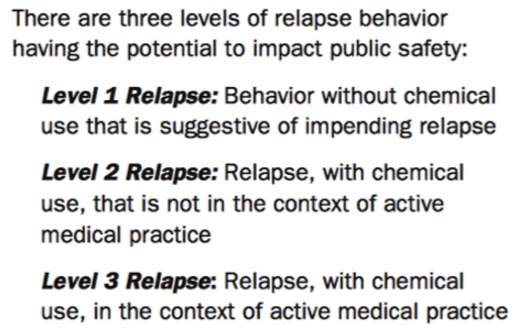
According to Judith Eaton of the Massachusetts PHP, Physician Health Services, Inc. (PHS), not having “complete, accurate, and up-to-date records” could be a red flag for such a potentially impairing illness as “when something so necessary is not getting done, it is prudent to explore what else might be going on.”

The FSMB and state medical boards have gone on to condone polygraph testing and non-validated neuropsychological testing pseudoscience in their “disruptive physician” exams.   Is the magic 8 ball and tea leaves next? How low does the credibility compass have to go before someone stands up and calls bullshit on this carnival?   The most egregious of indiscretions has been the introduction and acceptance of junk-science.

“Medical Sanctification of Junk-science”

Those behind the Inquisition knew they did not have to convince everyone to get what they wanted, just Ecclesiastical and political authority. The same applies here. Ethyl Glucuronide (EtG) was introduced in 1999 as a biomarker for alcohol consumption,17 and subsequently suggested as a tool to monitor health professionals by Dr. Gregory Skipper because of its high sensitivity to ethanol ingestion.

content-1What is so egregious about this is there was absolutely no evidence base. Skipper, who was convicted of a felony in Oregon and had his licenser revoked but got it back by claiming he was redeemed through A.A. read about it and after a study on just 14 patients pitched it to a drug testing company as a Laboratory Developed Test (LDT). The LDT pathway is a shortcut to get lab tests approved (under the premise that it will be used in treating a person medically and is thus of benefit) but Skipper took advantage of this loophole to develop a “forensic” LDT. He then used his position as the Alabama PHP Director to pitch it to the Medical Board before the ink dried.
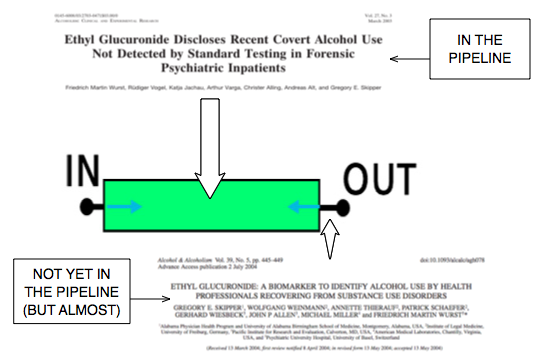

As an LDT the FDA has no control over advertising so the lab can make any claims they want and in this case they claimed a positive EtG (> 100) was definitive proof of drinking. The State PHPs started using them on physicians. As PHPs were using them, the labs were able to sell it to other groups seeing they were “medically sanctified.” The test was subsequently found to be so sensitive that it could measure incidental exposure to alcohol in foods, over the counter cold medications, mouthwash18,19, hand sanitizer gel20, and nonalcoholic wine.21 Sauerkraut and bananas have even been shown to cause positive EtG levels.

After a Wall Street Journal Article came out debunking the test most monitoring programs abandoned it. PHPs did not. Talbott puts out a list of literally hundreds of products doctors need to avoid including colognes, mouthwashes, and foods.

Skipper simply kept raising the cutoff point from 100 to 250 to 500. It is now known hand sanitizer alone can cause a level of 2000. He subsequently introduced other tests as confirmatory tests.Screen Shot 2015-03-19 at 9.02.57 PM

Many people had licenses revoked, loss of custody of their children, went back to jail, and suffered multiple other losses. If you look at the evidence base it is absent. There is nothing. The emperor has not clothes. This is a racket and the damage has been grave.

These same people are trying to sell the “PHP-blueprint” and its array of non-validated test to other populations as the “new paradigm” just as they did with the snake oil tests. The same carney hucksters are promoting the whole enchilada as a package deal. In “Six lessons from state physician health programs to promote long-term recovery” Robert Dupont and Dr. Greg Skipper attribute a high success rate to the following factors:22

(1) Zero tolerance for any use of alcohol and other drugs;

(2) Thorough evaluation and patient-focused care;

(3) Prolonged, frequent random testing for both alcohol and other drugs;

(4) Effective use of leverage;

(5) Defining and managing relapses; and

(6) The goal of lifelong recovery rooted in the 12-Step fellowships.22

Caveat emptor people. Caveat emptor!  Any argument should be based on its own merits and methodology and evidence must be examined to discern its validity. Hopefully other agencies will look at this with a more jaundiced eye and less obtusity than the FSMB and state medical boards.

Unfortunately the position of the regulatory agencies towards this illegitimate authority and irrational authority has been one of uncritical acceptance and blind faith. It is the absence of objective assessment and critical analysis that has enabled the FSPHP and PHPs to gain tremendous sway in the medical profession and cause tremendous harm to the medical profession. By confusing ideological opinions with professional knowledge the medical boards have rubber stamped whatever’s been thrown their way and for this they should be ashamed. The impact of this close alliance between state medical boards and their state physician health programs (PHPs) and their national organizations on the current state of medicine has not been examined. It needs to be.

crop0002_3_3

  1. Jost TS, Mulcahy L, Strasser S, Sachs LA. Consumers, complaints, and professional discipline: a look at medical licensure boards. Health matrix. Summer 1993;3(2):309-338.
  2. Galusha BL. Quality initiatives. The role of medical licensing and disciplinary boards. Quality assurance and utilization review : official journal of the American College of Utilization Review Physicians. Aug 1988;3(3):66-70.
  3. Studdert DM, Bismark MM, Mello MM, Singh H, Spittal MJ. Prevalence and Characteristics of Physicians Prone to Malpractice Claims. The New England journal of medicine. Jan 28 2016;374(4):354-362.
  4. Seeling SS. Thoughts on the reliability of drug testing. Federation bulletin / Federation of State Medical Boards of the United States. Aug 1988;75(8):230-234.
  5. The sick physician. Impairment by psychiatric disorders, including alcoholism and drug dependence. JAMA : the journal of the American Medical Association. Feb 5 1973;223(6):684-687.
  6. Stimson GV. Recent developments in professional control: the impaired physician movement in the USA. Sociology of health & illness. Jul 1985;7(2):141-166.
  7. King M, Durcanin C. The suicides at Ridgeview Institute: A Doctor’s treatment program may be too tough, some say. Atlanta Journal and Constitution. December 18, 1987a, 1987: A12.
  8. Durcanin C, King M. The suicides at Ridgeview Institute: Suicides mar success at Ridgeview with troubled professionals. Atlanta Journal and Constitution. December 18, 1987, 1987: A13.
  9. King M, Durcanin C. The suicides at Ridgeview Institute: Many drug-using doctors driven to Ridgeview by fear of losing licenses. Atlanta Journal and Constitution. December 18, 1987b, 1987: A1.
  10. Petry NM, Alessi SM, Hanson T, Sierra S. Randomized trial of contingent prizes versus vouchers in cocaine-using methadone patients. Journal of consulting and clinical psychology. Dec 2007;75(6):983-991.
  11. Lussier JP, Heil SH, Mongeon JA, Badger GJ, Higgins ST. A meta-analysis of voucher-based reinforcement therapy for substance use disorders. Addiction. Feb 2006;101(2):192-203.
  12. Gonzales L. When Doctors are Addicts: For physicians getting Drugs

is easy. Getting help is not. Chicago Reader. July 28, 1988, 1988.

  1. Ricks WS. Ridgeview Institute loses $1.3 million in suit over suicide. Atlanta Journal and Constitution. October 11, 1987, 1987: A1.
  2. Durcanin C. The suicides at Ridgeview Institute: Staff members didn’t believe Michigan doctor was suicidal. Atlanta Journal and Constitution. December 18, 1987, 1987: A8.
  3. Schneidman B. The Philosophy of Rehabilitation for Impaired Physicians. The Federal Bulletin: The Journal of Medical Licensure and Discipline. 1995;82(3):125-127.
  4. Merlo LJ, Gold MS. Successful Treatment of Physicians With Addictions: Addiction Impairs More Physicians Than Any Other Disease. Psychiatric Times. 2009;26(9):1-8.
  5. Wurst FM, Kempter C, Seidl S, Alt A. Ethyl glucuronide–a marker of alcohol consumption and a relapse marker with clinical and forensic implications. Alcohol Alcohol. Jan-Feb 1999;34(1):71-77.
  6. Costantino A, Digregorio EJ, Korn W, Spayd S, Rieders F. The effect of the use of mouthwash on ethylglucuronide concentrations in urine. Journal of analytical toxicology. Nov-Dec 2006;30(9):659-662.
  7. Reisfield GM, Goldberger BA, Pesce AJ, et al. Ethyl glucuronide, ethyl sulfate, and ethanol in urine after intensive exposure to high ethanol content mouthwash. Journal of analytical toxicology. Jun 2011;35(5):264-268.
  8. Rosano TG, Lin J. Ethyl glucuronide excretion in humans following oral administration of and dermal exposure to ethanol. Journal of analytical toxicology. Oct 2008;32(8):594-600.
  9. Hoiseth G, Yttredal B, Karinen R, Gjerde H, Christophersen A. Levels of ethyl glucuronide and ethyl sulfate in oral fluid, blood, and urine after use of mouthwash and ingestion of nonalcoholic wine. J Anal Toxicol. Mar 2010;34(2):84-88.
  10. Dupont RL, Skipper GE. Six lessons from state physician health programs to promote long-term recovery. Journal of psychoactive drugs. Jan-Mar 2012;44(1):72-78.

photo 2


ASAM plan to have doctors drug test Almost everyone using non- FDA approved testing

img_5201
The Plan to… Require Doctors to Drug-Test all Patients
.

Chain-of-Custody refers to the document or paper trail showing the collection, control, transfer, analysis and disposition of laboratory tests. It is the written documentation of a specimen from the moment of collection to the final destination to the review and reporting of the final results. The multi-part chain-of-custody form, or “custody and control” form, is part and parcel of this process. It contains stickers to sign and seal the specimen so that it cannot be tampered with and the form itself is signed by the appropriate parties as the test specimen travels from place to place. Information is added to the form as it travels from person to person. It has been given the status of a legal document as it has the ability to invalidate a specimen with incomplete information. Once the sample is analyzed it is reviewed by a Medical Review Officer (MRO) for final review. In the case of a positive test it is the responsibility of the MRO to ascertain an intact chain-of-custody, determine whether an alternative explanation exists for the positive test such as a prescribed medication, and then and only then report the test as a “true positive.”

The MRO looks for what are called “fatal flaws” and, should one be present, invalidates the test. A fatal flaw requires the test be rejected as it were never drawn. It invalidates it and it cannot be used.

Forensic versus Clinical Drug Testing

Forensic drug testing is done for medico-legal purposes. It is used for testing people for substances of abuse or substances in those who should not be using them. Forensic drug testing results in consequences. These consequences can be grave and far-reaching if the drug-testing is being done by a regulatory agency or some other body given the power to sanction or punish. Loss of careers, of child-custody, and of rights and freedoms can all depend on results of a single test.

IMG_0701Random drug-testing done in the workplace is also forensic but the consequences are usually quite different. A positive drug-test done in this manner typically results in an assessment, treatment if indicated, and compliance with some sort of monitoring protocol in order to return to work.


Forensic drug testing follows more stringent guidelines than clinical testing because of these consequences. Some are more stringent than others, requiring split-specimen samples and the use of only certified labs. But the minimum requirements for any and all drug testing include strict chain-of-custody procedures and review by a certified MRO.

images-16

Clinical drug testing, on the other hand, occurs in the course of a doctor caring for a patient. It is done to diagnose and treat and cannot be used outside this purview. The results of a clinical test are part of the medical record and deemed ‘Protected Health Information’ (PHI). The results are protected by HIPPA and cannot be disclosed to anyone not directly involved in your direct medical care without your written consent. There are no additional guidelines in place for clinical drug-testing as patient autonomy is preserved. A positive result could result in a recommended course of action by the physician but it is still up to the patient whether or not to follow that recommendation. It is not imposed. But there are some groups who want to change that by blurring the lines between “forensic” and “clinical” drug testing.

The ASAM White Paper on Drug Testing

According to the ASAM White Paper on Drug Testing, clinical drug-testing “employs the same sound procedures, safeguard, and systems of information management that are used for all other health-related laboratory tests, tests on which life-and-death medical decisions are commonly made.” In the box above they describe the multiple safeguards in place and requirements demanded of “forensic” drug testing, but do not mention the reason these uncompromising and multiple specifications exist is to protect the donor from a false accusation of drug or alcohol use. They proceed to define “clinical drug testing” as “part of a patient examination performed for the purposes of diagnosis, treatment, and the promotion of long-term recovery”, noting that clinical testing “must meet the established standards of medical practice and benefit the therapeutic relationship, rather than meeting the formal legal requirements of forensic testing.” The authors then state that the “majority of drug testing done today” includes both forensic and clinical elements, using individuals on parole and probation as examples.

The logical fallacy here is striking. It is comparing apples and oranges. After detailing the specific quality-assurance safeguards designed to prevent the donor of a drug or alcohol test from being falsely accused of illicit use, the authors give a general definition and purpose of “clinical” testing then state that when testing for drugs the systems in place are up to snuff as it is already being used to make life-and-death medical decisions. The take-home message is that “forensic” testing is unnecessary hyperbole designed for legal challenges. The clinical lab systems in place are used for critically important testing so it can be used for drug-testing. After all, parolees and probationers don’t require it.

Forensic guidelines developed in collaboration with occupational and environmental medicine specialist, clinical and forensic toxicologists, pathologists and others, and each of these requirements exists to assure the validity and accuracy of the testing process and protect the donor. If “clinical” testing context had fit the bill then “forensic” testing would not have evolved. Labs ordered clinically in the course of patient care are interpreted within the context of multiple other pieces of data. Lab errors occur all the time and are interpreted in that context.

Oftentimes a lab will not fit with the clinical picture and, when that happens, a repeat lab is ordered for verification. Specimens get collected in the wrong tube and specimens get lost but in the clinical setting they simply get reordered and there are no consequences to patient care. In contrast drug testing is an all-or-none one-shot test and the results have consequences. It is for that reason they must be valid.

Chain-of-custody and MRO review are critical and that is why most drug-testing programs follow the forensic protocol. And the example of non-forensic drug-testing parolees and probationers is misleading. Any Employee Assistance Program that has a union or some other group looking out for their best interests uses strict “forensic” guidelines. Parolees and probationers have no power and have no choice. Besides, the National Association of Drug Court Professionals uses the Laboratory Developed Tests these same people introduced to test individuals on probation or parole in the criminal justice system just as they do in the PHPs.

The ASAM White Paper:

“Encourages wider and ‘smarter’ use of drug testing within the practice of medicine and, beyond that, broadly within American society. Smarter drug testing means increased use of random testing* rather than the more common scheduled testing,* and it means testing not only urine but also other matrices such as blood, oral fluid (saliva), hair, nails, sweat and breath when those matrices match the intended assessment process.

In addition, smarter testing means testing based upon clinical indication for a broad and rotating panel of drugs.”

ent

Screen Shot 2015-06-18 at 2.11.24 AM

Screen Shot 2013-10-28 at 10.24.14 PM

 Puzzle solved- Medical Board PHP Compliance counsel another rigged gauntlet–outcome predetermined and PHCU assassins for PHP

Massachusetts Board of Registration in Medicine Attorney Deb Stoller’s “Fraud on the


Stay tuned -Physician Health and Compliance Unit Board (PHCU) counsel Deb Stoller’s Fraud on the Court beyond reprehensible and much more abhorrent then below. The last piece of the puzzle is  in place.  This is a closed system designed to prevent exposure of the corruption and fraud. Tone at the top not only unethical but sociopathic. The system is  rotten to the core.
PHCU Board counsel was Developed as independent unit outside the Board at large and given power to act both as hearing officer and present PHS cases to the Board and recommend Board disposition.  That’s right -the PHCU Holds all the cards and the deck is stacked.

“Fraud on the court” occurs when the judicial machinery itself has been tainted, such as when an attorney, who is an officer of the court, is involved in the perpetration of a fraud or makes material misrepresentations to the court. Fraud upon the court makes void the orders and judgments of that court.
Bulloch v. United States, 763 F.2d 1115, 1121 (10th Cir. 1985 states: “Fraud upon the court is fraud which is directed to the judicial machinery itself and is not fraud between the parties or fraudulent documents, false statements or perjury. … It is where the court or a member is corrupted or influenced or influence is attempted or where the judge has not performed his judicial function — thus where the impartial functions of the court have been directly corrupted.”

It has recently become evident that the Director of the Board of Registration in Medicine’s Physician Health and Compliance Unit, attorney Deb Stoller, has been unethically and unlawfully withholding and concealing documentary evidence that is not only exculpatory to me but reveals that Physician Health Services (PHS) engaged in misconduct and fraud. She has essentially been concealing their crimes.

The “Administrative Record” filed by the Board was absent copious documentation of major importance and all of it was submitted through the care of Ms. Stoller. The missing documents include multiple petitions and supporting documents that are neither irrelevant nor superfluous. Each of these documents contains sufficient indicia of reliability to meet probative value.Concealing material fact, misrepresentation and making false statements to a state administrative agency is unethical. It constitutes abuse of power and fraud.

Fraud on the court occurs where a party tampers with the fair administration of justice by deceiving “the institutions set up to protect and safeguard the public” or otherwise abusing or undermining the integrity of the judicial process. Hazel-Atlas Glass Co. v. Hartford-Empire Co., 322 U.S. 238, 246 (1944).

The United States Court of Appeals for the First Circuit skillfully defined the concept of fraud on the court in Aoude, supra at 1118, as follows: “A `fraud on the court’ occurs where it can be demonstrated, clearly and convincingly, that a party has sentiently set in motion some unconscionable scheme calculated to interfere with the judicial system’s ability impartially to adjudicate a matter by improperly influencing the trier or unfairly hampering the presentation of the opposing party’s claim or defense.”

.Stoller is in violation of the Rules of Professional Conduct including Mass.R.Prof.C. 3.4(c). Fairness to Opposing Party and Counsel which states in part: A lawyer shall not: (c) knowingly disobey an obligation under the rules of a tribunal except for an open refusal based on an assertion that no valid obligation exists.

Mass.R.Prof.C Advocate Rule 3.3 Candor Toward The Tribunal reads:

(a)A lawyer shall not knowingly:

(1) make a false statement of fact or law to a tribunal or fail to correct a false statement of material fact or law previously made to the tribunal by the lawyer; (3) offer evidence that the lawyer knows to be false. If a lawyer, the lawyer’s client, or a witness called by the lawyer, has offered material evidence and the lawyer comes to know of its falsity, the lawyer shall take reasonable remedial measures, including, if necessary, disclosure to the tribunal. A lawyer may refuse to offer evidence, other than the testimony of a defendant in a criminal matter, that the lawyer reasonably believes is false; (b) A lawyer who represents a client in an adjudicative proceeding and who knows that a person intends to engage, is engaging or has engaged in criminal or fraudulent conduct related to the proceeding shall take reasonable remedial measures, including, if necessary, disclosure to the tribunal,; (c) The duties stated in paragraphs (a) and (b) continue to the conclusion of the proceeding, and apply even if compliance requires disclosure of information otherwise protected by Rule 1.6.

And under Mass.R.Prof.C. 8.4(c, d, h. It is professional misconduct for a lawyer to: (c) engage in conduct involving dishonesty, fraud, deceit, or misrepresentation; (d) engage in conduct that is prejudicial to the administration of justice; (h) engage in any other conduct that adversely reflects on his or her fitness to practice law.

The Supreme Judicial Court (SJC) reviews the Board’s decisions in part for constitutional error, see Mass.Gen.L. ch. 30A, Sec. 14(7), and is permitted to gather evidence “in cases of alleged irregularities in procedure before the agency [when those irregularities are] not shown in the record.” Mass.Gen.L. ch. 30A, Sec. 14(5). The Court may look beyond the record if it appears the agency deliberately or negligently excluded documents that may have been adverse to its decision.

On a writ of certiorari, the court’s review “is confined to the record and is for the purpose of correcting legal error, [and therefore] the inquiry about the presence or absence of genuine issues of material fact, germane to summary judgment procedure, is inappropriate. . . . [The reviewing court] need only inquire whether the commission’s decision was ‘legally tenable and supported by substantial evidence on the record as a whole.”‘ Gloucester v. Civil Serv. Comm’n, 408 Mass. 292 , 297 (1990), quoting Commissioner of Health & Hosps. of Boston v. Civil Serv. Comm’n, 23 Mass. App. Ct. 410 , 411 (1987). See G.L.c. 31, s. 2 (b); Mayor of Revere, supra at 319-322.

Fraud is distinguished from negligence, ignorance, and error by virtue of the fact that it is intentional; involving some level of calculation. Negligence is: “the failure to use such care as a reasonably prudent and careful person would use under similar circumstances.” In a professional context, it is defined as: “conduct which falls below the standard established by law for the protection of others against unreasonable risk of harm… it is characterized chiefly by inadvertence, thoughtlessness, inattention, and the like.”. Fraud, in contrast, is not accidental in nature, nor is it unplanned. Those who commit fraud know what they are doing and are deliberate in their efforts. They are also aware that it is unethical, illegal, or otherwise improper.

Fraudulent intent is established by examining the documentation of decisions and behaviors associated with those under suspicion. As explained in Coenen: “Manipulation of documents and evidence is often indicative of such intent. Innocent parties don’t normally alter documents and conceal or destroy evidence.

As explained in Black’s Law Dictionary, fraud is an intentional distortion of facts and truth for the purposes of inducing another to give up something of value that they possess or to relinquish a legal right that they might otherwise retain. It is additionally defined as a “false presentation of a matter of fact whether by words or by conduct, by false or misleading allegations or by concealment of that which should have been disclosed which deceives and is intended to deceive another.”

I believe it is safe to conclude that the parties here participated in fraud.

The “litigation-packet” did not merely show “chain-of-custody” issues but forensic fraud. Misrepresenting invalid forensic test results as valid is the definition of forensic fraud. Ms. Stoller should have immediately assessed the “clear-weight” of this evidence, entered it into the docket for reconsideration and given me an opportunity to be heard. She did not.

The Federation of State Medical Board Policy specifically requires strict “chain of custody.” She violated the Board’s very own standards and then blocked me from returning to practice by putting barriers in place, refusing to allow independent evaluations and protracting the time –drawing this out in order to cause as much damage as possible to my family and me.
Mr. Bertram alleges PHS has not committed any crimes because the agency has not been charged with any crimes. This is logical fallacy. They have not been charged with any crimes because the very agencies capable of charging them with crimes are ignoring or otherwise overlooking them for various reasons. Furthermore, If I see someone being stabbed in the back I can reasonably conclude it is a crime. Colluding with a laboratory to intentionally misrepresent laboratory data is laboratory fraud and covered under Title 18 of the United States Criminal Code (Wire fraud 18 USC 1343, False Statements 18 USC 1001, Conspiracy 18-USC 371, False Claims 18-USC 287 and Obstruction of Justice 18-USC 1505). I believe all of these are applicable here. In addition Dr. Sanchez violated M.G.L 156 (B) Section 69 by making false statements to a state agency.

PHS has convinced the Board not to “second-guess” their decisions and apparently the Board has convinced state AGOs to not “second-guess” theirs; each presupposing the integrity of the individuals and validity of the decisions of the agencies in question. As a result complaints by doctors of serious crimes and abuse are ignored. Fact and truth do not matter as the agencies blindly support one-another. This removes all aspects of accountability including answerability and justification for one’s actions. It is a flawed system.

In the past the SJC has overturned the Board’s decisions on due process grounds, see, e.g., Morris v. Board of Reg. in Medicine, 405 Mass. 103, 110, 539 N.E.2d 50, 54 (1989) (vacating Board decision because proceedings “denied [the physician] fairness in a due process sense.”).

This interference with the administration of Justice, abuse of authority and denial of constitutional rights warrant the Board Orders be reversed, vacated and corrected. “The touchstone of due process is protection of the individual against arbitrary action of government.” (Wolff v. McDonnell, 418 U.S. 539, 558 (1974). “[i]n a just society those who govern, as well as those who are governed, must obey the law.” (United States v. Leon, 104 S. Ct. 3430, 3457 (1984) (Stevens, J., dissenting).

The Courts have held that the Massachusetts and Federal Administrative Procedure Acts require both the agency and the court to consider the entire record, including testimony given at the hearing. In Friends of Edgartown Great Pond v. DEP, 446 Mass. 830, 845 (2006), the SJC recognized that the agency must consider the hearing evidence, finding the agency hearing complied with the Administrative Procedure Act requirements because “the record illustrates that over the course of the five-day hearing, the administrative law judge carefully considered all of the relevant evidence.”

The record compiled here illustrates that over the course of four years the Board not only failed to carefully consider any of the relevant evidence but most likely never saw any of it.

Our Constitution mandates that level of legal process due to reflect “respect enforced by law for that feeling of just treatment which has been evolved through centuries of Anglo-American constitutional history and civilization.” Joint Anti-Fascist Refugee Comm. v. McGrath, 341 U.S. 123, 162, 71 S.Ct. 624, 95 L.Ed. 817 (1951) (Frankfurter, J., concurring)

Ms. Stoller violated multiple professional regulations, ethics and the law in an ongoing campaign in which she blocked the administration of justice. By concealing the truth she prevented both exculpatory evidence favorable to my case and detrimental to the opposing party (involving misconduct and crimes from ever coming to light. It is quite clear the full Board never saw these documents. The fact that the latest Board action did not have any of the documents or petitions submitted over the past year is prima facie evidence of Fraud on the Court. Ms. Stoller needs to be held accountable and I am requesting the SJC uses whatever power it has available to make certain this occurs. Ms. Stoller needs to be disciplined for her actions and this discipline needs to be commensurate with her crime. In this case nothing less then disbarment and criminal charges would fit that bill.
In the Matter of Michael L Langan, M.D.

Petitioner
ON PETITION FOR A WRIT OF CERTIORARI (SJC-2015-0267)
TO THE
MASSACHUSETTS
SUPREME JUDICIAL COURT FOR THE COMMONWEALTH
MOTION TO DECIDE THE MATTER ON THE PAPERS DUE TO INTENTIONAL CONCEALMENT OF KEY DOCUMENTS AND “FRAUD ON THE COURT”
The Administrative Record filed by the Board and Assistant Attorney General Bryan Bertram’s oppositional statements suggest that the Director of the Board’s Physician Health and Compliance Unit, Attorney Debra Stoller has been interfering with the administration of justice by suppressing documentation provided as key evidence and the petitionary arguments accompanying them. The amount of missing information is profound and in review of all of the documents including Board Orders and the Board’s oppositional response to my complaint it is evident that the documents were concealed from the full Board. Mr. Bertram’s arguments are based on a very limited record as both exculpatory documents supporting my position and documents indicating misconduct by PHS were intentionally blocked by attorney Deb Stoller in violation of professional regulation consistent with Fraud on the Court. She engaged in misrepresentation, concealment and other misconduct in interference with the administration of justice.
Fraud on the court occurs when the judicial machinery itself has been tainted, such as when an attorney, who is an officer of the court, is involved in the perpetration of a fraud or makes material misrepresentations to the court. Fraud upon the court makes void the orders and judgments of that court. In Bulloch v. United States, 763 F.2d 1115, 1121 (10th Cir. 1985), the court stated “Fraud upon the court is fraud which is directed to the judicial machinery itself and is not fraud between the parties or fraudulent documents, false statements or perjury. … It is where the court or a
member is corrupted or influenced or influence is attempted or where the judge has not performed his judicial function — thus where the impartial functions of the court have been directly corrupted.” Ms. Stoller has in fact violated:
Mass.R.Prof.C. 8.4(c, d, h). Misconduct. It is professional misconduct for a lawyer to: (c) engage in conduct involving dishonesty, fraud, deceit, or misrepresentation; (d) engage in conduct that is prejudicial to the administration of justice; (h) engage in any other conduct that adversely reflects on his or her fitness to practice law.
Mass.R.Prof.C. 3.4(c). Fairness to Opposing Party and Counsel. A lawyer shall not: (c) knowingly disobey an obligation under the rules of a tribunal except for an open refusal based on an assertion that no valid obligation exists;
Rules of Professional Conduct Rule 3.4: Fairness to Opposing Party and Counsel
A lawyer shall not:
(a) unlawfully obstruct another party’s access to evidence or unlawfully alter, destroy, or conceal a document or other material having potential evidentiary value. A lawyer shall not counsel or assist another person to do any such act;
(b) falsify evidence, counsel or assist a witness to testify falsely, or offer an inducement to a witness that is prohibited by law;
(c) knowingly disobey an obligation under the rules of a tribunal except for an open refusal based on an assertion that no valid obligation exists;
(d) in pretrial procedure, make a frivolous discovery request or fail to make reasonably diligent effort to comply with a legally proper discovery request by
On March 9, 2015 an Affidavit was filed with this Court (Affidavit of Michael Langan in Support of Motion for Relief Pursuant to Earlier Court Order) because Attorney Deb Stoller refused to schedule a hearing despite this Court’s request that she do so. In this Affidavit I outline the multiple unwarranted and unjustified delays and state “my legitimate concern is that the Board will simply ignore my most recent January 20, 2015 Petition for Re-instatement. My fears are well grounded as the Board has engaged in a persistent pattern of ignoring my every reasonable effort at trying to be re-instated; and the board has abused the administrative law process to accomplish this. It was only after this Affidavit was filed with this Court that Ms. Stoller even put me on the schedule.
It appears my fears were indeed well grounded as they actually did ignore my January 20, 2015 petition. It appears the April 16, 2015 Board Hearing was simply a “sham review” to satisfy this Court’s request.
The Administrative Record compiled for the April 16, 2015 Board Hearing was absent copious relevant documents including the January 20, 2015 Petition on which it was ostensibly based. In fact, the sole petition is close to one year old. Since that time I have submitted five more petitions that are absent. Since that time I have submitted multiple documents and petitions that are not found anywhere in the Board’s record. Although some of the key documents presented to the Board since 2011 are contained therein, there is no index indicating the date they were received and this brings into question when and if these mitigating and even exculpatory documents were ever even considered.
Mr. Bertram’s oppositional statements underscore these violations and bring the abuse of authority and denial of Constitutional rights to a level of outrageousness. Mr. Bertram states “in his most recent petition to the Board to stay the suspension (“January 2015 Petition”), Dr. Langan submitted a report from an independent psychiatric evaluation (favorably opining as to his fitness to practice medicine) satisfying the first condition, but he did not satisfy the Board’s other conditions because he did not propose suitable (or any) monitoring plans with his petition. Instead, Dr. Langan sought to challenge the Board’s findings that he twice previously
violated the LOA even though he never challenged those violations before, and the time to do so has long since passed.” (page 2)
“Dr. Langan had in the past submitted a letter from Dr. Timothy Wilens, dated February 14, 2014, reporting to the Board that to the date of that letter Dr. Langan remained alcohol and substance free. Id at 158. But, that is not evidence that Dr. Langan remained abstinent in the months preceding the January 2015 Petition to the Board.” (page 8)
Mr. Bertram is correct. The February 14, 2014 report from Dr. Wilens does not cover the months preceding the January 2015 Petition to the Board, but the attached letters from Dr. Wilens dated April 24, 2014 and April 3, 2015 certainly do. The January 2015 Petition was heard at an April 16, 2015 Board Hearing and the April 3, 2015 letter from Dr. Wilens states: “I have monitored him (Langan) clinically and over the past year have been ordering and monitoring urine and saliva” toxicology tests and notes he will continue following me. This letter was written 13 days prior to the April 16th Board Hearing but absent from the Administrative Record filed by the Board October 9, 2015. The letter was provided to Board attorney Deb Stoller both by U.S. Postal service and e-mail. Additionally, it was hand delivered with the other supporting documents of my January 2015 Petition to Board attorney Tracy Ottina at the April 16th, 2015 Board Hearing.
The only possible explanation for the absence of this letter from the Administrative Record is that it was intentionally withheld. The fact that Mr. Bertram argues the absence of such documentation was used in the Board’s reasoning process to deny my Petition suggests the Board never saw it.
Due to the limited number of straightforward issues pertaining to my case (i.e. no patient care or other issues that could be used as a pretext)

this rises to the level of a Brady violation. A Brady analysis has three prongs. First, “the evidence at issue must be favorable to the
accused.” Strickler v. Greene, 527 U.S. 263, 281-282, 119 S. Ct. 1936, 144 L. Ed. 2d 286 (1999). Second, it “must have been suppressed by the

state.” Id. at 282, 119 S. Ct. 1936. Third, “prejudice must have

ensued.” The absence of a monitoring plan is the sole issue Mr. Bertram
identifies as being a factor in the Board’s denial of my petition therefore in this context had I provided a monitoring plan my petition would not have been denied. Mr. Bertram goes on to state that I have never challenged the Board’s findings that I violated my Letter of Agreement. The copious documentation I I have provided this court shows I have been challenging these findings since day one and due to the limited number of issues leading to my suspension and the documentary evidence I have provided to Ms. Stoller that is exculpating to me and incriminating for PHS I suspect it was all suppressed.
Ms. Stoller is abusing her position of authority to deny due process and fundamental fairness with the administration of Justice. She is denying Constitutional rights and violating the Rules of Professional Conduct including Mass. R. Prof. C. 3.4(a), (b), (c); 3.3 (a), (b), (c) and 8.4(a), (c), and (d)
Additionally, I have provided evidence that PHS is engaging in crimes making her in violation of Advocate Rule 3.3 Candor Toward The Tribunal which reads:
(a) A lawyer shall not knowingly:
(1) make a false statement of fact or law to a tribunal or fail to correct a false statement of material fact or law previously made to the tribunal by the lawyer;
(3) offer evidence that the lawyer knows to be false. If a lawyer, the lawyer’s client, or a witness called by the lawyer, has offered material evidence and the lawyer comes to know of its falsity, the lawyer shall take reasonable remedial measures, including, if necessary, disclosure to the tribunal. A lawyer may refuse to offer evidence, other than the testimony of a defendant in a criminal matter, that the lawyer reasonably believes is false.
(b) A lawyer who represents a client in an adjudicative proceeding and who knows that a person intends to engage, is engaging or has engaged in criminal or fraudulent conduct related to the proceeding shall take reasonable remedial measures, including, if necessary, disclosure to the
tribunal.
(c) The duties stated in paragraphs (a) and (b) continue to the conclusion of the proceeding, and apply even if compliance requires disclosure of information otherwise protected by Rule 1.6.
In a November 12, 2015 Motion to Enlarge Time to Respond to Petition Mr. Bertram states “… the undersigned Assistant Attorney General discovered that the certified administrative record was potentially incomplete. After conferring with the Board, it was determined that a copy of Dr. Langan’s petition for reconsideration that resulted in the Board order now under review was inadvertently omitted from the record. (The document was also absent from the Board’s internal docket of this proceeding, resulting in the error by the Board’s staff who assembled the record.)
According to the May 7, 2015 Board Order: “The licensee has not submitted any new documentation that contradicts any of the documents cited to above and found in the Board’s February 6, 2013 Order of Suspension. In the absence of such documentation, there is no basis for rescinding the Board’s vote based on this argument.”
In other words, as with Dr. Wilen’s letter, the Board never saw it and the proposition that this was “inadvertent” is implausible.
In addition to Dr. Wilen’s letter, three petitions were filed with the Board of Registration in Medicine in preparation for the April 16, 2015 Board Hearing. These are dated January 20, 2015 and February 20, 2015 and make reference to a September 3, 2014 Petition in which I introduced a recently acquired document from October 4, 2012.
The October 4, 2012 document from United States Drug Testing Labs (USDTL) to Dr. Luis Sanchez reports the invalidity of the confirmatory test from July 2011 and was the result of an investigation by the College of American Pathologists and precedes Dr. Sanchez report to the Board that I was non-compliant by two weeks. It is essentially exculpatory as Sanchez claimed in a written letter to the Board that he had not become cognizant of the invalidity of the test until December 10, 2012 (67-days later) and these contradictory documents in juxtaposition are prima facie evidence of misrepresentation and dishonesty. Sanchez concealed the test revision and reported non-compliance with my monitoring contract to the Board on October 19, 2012, two weeks after he was informed of the tests invalidity.

In fact the Administrative Record submitted by the Board contains just one Petition from May 25, 2014 that was submitted after Dr. Patricia Recupero completed her 87-page report opining I was safe to practice medicine without restriction and documenting the misconduct of PHS . This report as well as other supportive documentation previously provided to the Board from July 2011 to April 2014 the time they were produced was included with the petition (pages 153-180).
The record provides no index of when these documents were received. No timeline exists. They are not acknowledged in the written Board orders and no consideration is given to them in their written opinion. This brings into question whether or not this information was even available at the time of both Board orders. Was this information taken into account at the time it was provided or was it intentionally withheld or discarded at the time?
Due to the profound removal of due process and fundamental fairness as well as the inability of Mr. Bertram to develop an accurate oral argument due to the limited information contained in the official record I respectfully request the Court proceed with judicial review based on the documents.
Respectfully Submitted,
Michael Langan, M.D. December 9, 2015

“New Paradigm” is a business model not a medical model

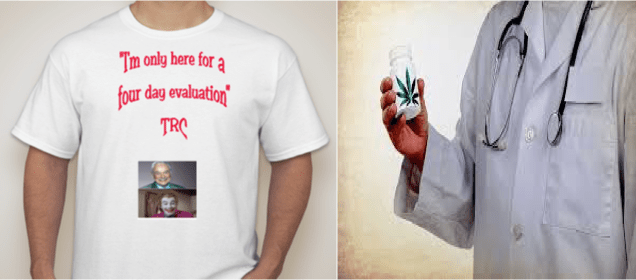
“I’m only here for a four day evaluation”– T-shirt sold at Talbott Recovery Center

Screen Shot 2016-06-02 at 1.07.06 AM

The  New York Times article below written by Robert Dupont advocates coercion to facilitate addiction treatment.

Inherent in the current chronic brain disease model of addiction is the importance of external control.  The addict has an uncontrollable brain disease and in denial so we must make decisions for him.   Coercion is certainly justifiable in some cases.  Someone deep in the throes of addiction or alcoholism may  indeed require coercion to get the help they need.  Coercion could save their life.

But that is not what we are talking about here. Claiming that the addict has an uncontrollable disease is increasingly being used to to exert control over individuals regardless of whether they need to be treated.  The “I’m only here for a four-day evaluation” T-shirts were sold at Talbott Recovery Center, one of the specialized assessment and treatment centers. It is a joke because most doctors assessed at Talbott end up staying for about four-months not four-days.

 In state physician health Programs (PHPs) the concept of denial is being used to dismiss oppositional opinion and fact and coercion is being used to provide unneeded treatment is  to individuals  who do not even come close to meeting  the diagnostic criteria for substance use disorder.

 An article entitled    “Drug Abuse Among Doctors: Easy, Tempting, and Not Uncommon”is typical of the alarmist propaganda used to promote these programs.

“Physician access to medications through prescriptions, networks of professional contacts, and proximity to hospital and clinic supplies” gives them “rare access to powerful, highly sought-after drugs” says Marvin D. Seppala, chief medical officer at Hazelden. This access “sets them apart” and “not only foment a problem” but”perpetuate it” says Seppala. “Access “becomes an addict’s top priority” and they “will do everything in their power to ensure it continues.” He states:

“They’re often described as the best workers in the hospital,” he says. “They’ll overwork to compensate for other ways in which they may be falling short, and to protect their supply. They’ll sign up for extra call and show up for rounds they don’t have to do.” Physicians are intelligent and skilled at hiding their addictions, he says. Few, no matter how desperate, seek help of their own accord.”

This is pure preposterous nonsense.  The entire purpose of this vignette is to temper the responses of others when the best worker in the hospital is hauled away and coerced into treatment for a non-existent disease. It is to deflect inquiry, skepticism and doubt about the event.

The Federation of State Medical Boards House of Delegates adopted an updated Policy on Physician Impairment at their 2011 annual that approved the concept of “potentially impairing illness” and “relapse without use.”   PHPs can now coerce doctors into treatment for “relapse” to a disease that they never had in the first place. “Relapse without use” is a 12-step concept G. Douglas Talbott defines as “stinkin thinkin.” The Federation of State Medial Boards provided “regulatory sanctification” to an A.A. concept.

A February 2016  “Physician Health News”article written by Dupont  entitled  “An Outsider Looks at PHP Care Management”  is analogous to Willy Wonka writing a paper called “An Outsider Looks at Chocolate Factories.” Dupont notes “many physicians entering into PHP care are angry and feel beleaguered because they do not think they have problems or need treatment.”

The simplistic binary chronic relapsing brain disease model as defined by the American Society of Addiction Medicine (ASAM) is the foundation for this model.

They have been given the power to coerce and control physicians, They also force 12-step ideology and force doctors to to accept ideas that are anathema to them.

The concept of denial is used to force people into treatment and justify abuse during treatment.   The chronic recurring model as espoused by 12-step justifies both ongoing drug and alcohol testing and a revolving door of treatment.    They have been given the power to coerce physicians to accept ideas that are anathema to them.

Designating abstinence as the only acceptable treatment outcome is also a necessary component.

Cui bono?  The drug and alcohol assessment, treatment and testing industry to which Dupont has strong ties.

Dupont and former DEA head Peter Bensinger run a corporate drug-testing business. Their employee-assistance company, Bensinger-Dupont is the sixth largest in the nation.

It is important to recognize that this is not a medical model but a business model.  No research, information, logic or anything else is going to change the business plan. PHPs are essentially employee assistance programs (EAPs) for doctors. They are selling an EAP (the PHP-blueprint) and the junk-science non-FDA approved drug and alcohol testing that goes along with it.

In “Six lessons from state physician health programs to promote long-term recovery” Dupont and Dr. Greg Skipper (attribute this success rate to the following factors:8

(1) Zero tolerance for any use of alcohol and other drugs;

(2) Thorough evaluation and patient-focused care;

(3) Prolonged, frequent random testing for both alcohol and other drugs;

(4) Effective use of leverage;

(5) Defining and managing relapses; and

(6) The goal of lifelong recovery rooted in the 12-Step fellowships.

This is a business model plain and simple and all the trumpeting of success and glory is based on a single retrospective poorly designed bullshit study of 16 state PHPs rife with conflicts of interest.  The “PHP blueprint” needs to be attacked.

Reflecting on Lord Acton’s observation that “absolute power corrupts absolutely” the American philosopher Eric Hoffer added that “Those in possession of absolute power can not only prophesy and make their prophecies come true, but they can also lie and make their lies come true.”    The “PHP-Blueprint”  is   being brandished by Dupont as the  “new paradigm” of substance abuse treatment but the majority of doctors being monitored do not meet the criteria for substance use disorder.   This system is not designed to help doctors or protect the public.  It is designed to profit and line the purses of the drug and alcohol assessment, testing and treatment industry.   This needs to be recognized and addressed before the new paradigm expands to other occupations, college students and kids.


Drug Addiction Recovery Often Starts With Coercion

Robert L. DuPont

Robert L. DuPont, a psychiatrist, is the president of the Institute for Behavior and Health Inc. He was the director of the National Institute on Drug Abuse from 1973 to 1978.

UPDATED NOVEMBER 12, 2015, 12:52 PM

Addiction hijacks the brain. Families dealing with addicted loved ones know this. Research shows that 95 percent of people suffering from substance use disordersdo not think that they have a problem or need treatment. Few addicts enter treatment without meaningful coercion, most often from families or the criminal justice system.

The challenge in responding to this seemingly simple question about coerced treatment is in the details. Surely not everyone who is addicted to drugs should be committed to treatment. The opposite is also true. Some addicts should be committed to treatment against their will. Not all coercion is commitment and not all commitment has the force of law.

Programs with effective coercion and serious consequences, such as HOPE Probation and Physician Health Programs, often produce excellent outcomes for most participants.

Two good examples of effective coercion that overcome addiction are HOPE Probation and the state-based Physician Health Programs, both of which are enforced by intensive random monitoring and permit no use of alcohol or other drugs. While these two programs share many similar features, they deal with very different populations of serious substance users: one with convicted felons on probation and the other with physicians. Both are voluntary in the sense that individuals can choose to not abide by the program requirements, but in both cases the consequences may be serious. For probationers in HOPE, the risk of failing is prison and for physicians in P.H.P., it is the loss of a medical license. Both programs produce excellent outcomes for most participants.

Families faced with addiction often reluctantly, and only after many failures, use “tough love” to promote treatment and recovery while insisting that their addicted loved ones be drug-free. Families usually have to use a significant measure of coercion not only to get addicts into treatment but also to keep them there and to prevent relapse upon discharge.

As a psychiatrist specializing in the treatment of addiction, I am struck by the stark contrast between addicted people who are using alcohol and other drugs actively and those who are in stable recovery. In the process of recovery there is a transition from near-universal denial of problems and rejection of treatment to gratitude for and acceptance of the coercion that got them on that path. The addict’s will is different when using drugs and when in recovery.

Recovery from addiction may or may not involve treatment. It takes years of hard work – usually with the sustained support of recovery communities. Because of the denial that characterizes the cunning, baffling and powerful disease of addiction, recovery often starts with substantial coercion.

Join Opinion on Facebook and follow updates on twitter.com/roomfordebat

Need Allies and Funding: Please Help Continue the Fight on Disrupted Physician

Please contribute!

Need allies and funding. Please see DisruptedPhysician.com and help me to continue the fight for physician health reform


Reblogged on WordPress.com

Source: Need Allies and Funding: Please Help Continue the Fight on Disrupted Physician
Physician Suicide and the Elephant in the Room
Michael Langan, M.D.

Although no reliable statistics exist, anecdotal reports suggest an alarming upsurge in physician suicide. This necessitates a reappraisal of known predisposing risk factors such as substance abuse and depression but also requires a critical examination of what external forces or vulnerabilities might be unique to doctors and how they might be involved in the descent from suicidal ideation to suicidal planning to completed suicide.

Depression and Substance Abuse Comparable to General Population

Depression and substance abuse are the two biggest risk factors for suicide. The prevalence of depression in physicians is close to that of the general population1,2 and, if one looks critically at the evidence based literature, substance abuse in medical professionals approximates that of the general population.  Controlled studies using DSM diagnostic criteria suggest that physicians have the same rates (8-14%) of substance abuse and dependence as the rest of the population 3 and slightly lower rates compared to other occupations.4,5 Epidemiological surveys reveal the same. Hughes, et al.6 found a lifetime prevalence of drug or alcohol abuse or dependence in physicians of 7.9%, markedly less than the 14.6% prevalence reported in the general population by Kessler.7

State Physician Health Programs

Perhaps it is how physicians are treated differently when they develop a substance abuse or mental health problem.

Physician Health Programs (PHP) may be considered the equivalent to Employee Assistance Programs (EAPs) for other occupations. PHPs meet with, assess and monitor doctors who have been referred to them for substance use or other mental or behavioral health problems. Originally developed as “impaired physician” programs, the PHPs were created to help doctors who developed problems with substance abuse or addiction as an alternative to disciplinary action by State Medical Boards. These programs existed in almost every state by 1980. Often staffed by volunteer physicians and funded by State Medical Societies, “impaired physician” programs served the dual purpose of both helping sick colleagues and protecting the public. Preferring rehabilitation to probation or license revocation (so long as the public was protected from imminent danger)  most medical boards accepted the concept with support and referral.   However, most EAPs were developed with the collaboration of workers unions or some other group supporting the rights and interests of the workers.  Not so with PHPs  as there is no such organization representing doctors.   PHPs developed in the absence of regulation or oversight.    As a consequence there is no meaningful accountability.

In Ethical and Managerial Considerations Regarding State Physician Health Programs published in the Journal of Addiction Medicine in 2012, John Knight, M.D. and J. Wesley Boyd, M.D., PhD who collectively have more than 20 years experience with the Massachusetts PHP state that:

“Because PHP practices are unknown to most physicians before becoming a client of the PHP, many PHPs operate out- side the scrutiny of the medical community at large. Physicians referred to PHPs are often compromised to some degree, have very little power, and are, therefore, not in a position to voice what might be legitimate objections to a PHP’s practices.”8

Noting that “for most physicians, participation in a PHP evaluation is coercive, and once a PHP recommends monitoring, physicians have little choice but to cooperate with any and all recommendations if they wish to continue practicing medicine,” Knight and Boyd raise serious ethical and managerial questions about current PHP policies and practice including conflicts of interest in referrals for evaluation and treatment, lack of adherence to standards of care for forensic testing of substances of abuse, violations of ethical guidelines in PHP research, and conflicts of interest with state licensing boards.

Knight and Boyd recommend “that the broader medical community begin to reassess PHP’s as a whole” and that “consideration be given toward the implementation of independent ethical oversight and establish and appeals process for PHP clients who feel they are being treated unfairly.” 8 They also recommend the relationship of PHP’s between the evaluation and treatment centers and licensing boards be transparent and that national organizations review PHP practices and recommend national standards “that can be debated by all physicians, not just those who work within PHPs.”8 Unfortunately this has not happened. Most physicians have no idea that the state physician health programs have been taken over by the “impaired physicians movement.”

In his Psychology Today blog,  Boyd again recommends oversight and regulation of PHPs.   He cites the North Carolina Physicians Health Program Audit released in April of 2014 that reported the below key findings:

As with Knight and Boyd’s paper outlining the ethical and managerial problems in PHPs, the NC PHP audit finding that abuse could occur and not be detected generated little interest from either the medical community or the media.

Although state PHPs present themselves as confidential caring programs of benevolence they are essentially monitoring programs for physicians who can be referred to them for issues such as being behind on chart notes. If the PHP feels a doctor is in need of PHP “services” they must then abide by any and all demands of the PHP or be reported to their medical board under threat of loss of licensure.

State PHP programs require strict adherence to 12-step doctrine9 yet many of the physicians monitored by them are neither addicts nor alcoholics. Some do not even have substance abuse issues and there are reports of “disruptive” physicians being diagnosed with “character defects” at the “PHP-approved” facilities that do these assessments.   PHPs require abstinence from drugs and alcohol yet use  non-FDA approved Laboratory Developed Tests in their monitoring programs. Many of these tests were introduced to commercial labs and promoted by ASAM/FSPHP physicians.10-12

LDTs bypass the FDA approval process and have no meaningful regulatory oversight.   The LDT pathway was not designed for “forensic” tests but clinical tests with low risk.   Some are arguing for regulation and oversight of LDTs due to questionable validity and risk of patient harm.13

These same physicians are claiming a high success rate for PH programs9 and suggesting that they be used for random testing of all physicians.14

As with LDTs, the state PHPs are unregulated, and without oversight. State medical societies and departments of health have no control over state PHPs.

Their opacity is bolstered by peer-review immunity, HIPPA, HCQIA, and confidentiality agreements. The monitored physician is forced to abide by any and all demands of the PHP no matter how unreasonable-all under the coloration of medical utility and without any evidentiary standard or right to appeal.

The ASAM has a certification process for physicians and claim to be “addiction” specialists. This“board certification” is not recognized by the American Board of Medical Specialties and is not a recognized medical specialty. The goal of the ASAM is to be recognized as the experts in addiction medicine with the consensus expert opinion based on the 12-step prohibitionist brain disease model. The ASAM has aligned itself with a number of inpatient drug treatment centers  (Hazelden, Talbott, Marworth, Bradford,etc) and are heavily funded by the drug testing industry.   It is in fact a “rigged game.”

State PHPs are non-profit non-governmental organizations and have been granted quasi-governmental immunity by most State legislatures from legal liability.

By infiltrating “impaired physician” programs they have established themselves in almost every state by joining, gaining power, and removing dissenters. Groupthink and 12-step indoctrination are the goals. By advertising as advocates for doctors who are “caring,” “confidential resources,” “giving help,” and advocating for “colleagues in need” the outward appearance is one of benevolence.

The biggest obstacle is that this system allows them to throw the normal rules of conduct under the imperative of a higher goal assumed to trump all other consideration. Those outside of programs either defend or ignore the reports of ethical and criminal violations, complacent in their trust of these “experts” claiming they are just helping sick doctors and protecting the public.

With no oversight or regulatory body involved this is all done with impunity, immunity, and undercover. They use the accusation of substance abuse as an indication to disregard the claims of the accused. The physician is left without rights, depersonalized, and dehumanized. The imposition of confinement, stigmatization, lack of oversight of the organizations, peer-review protected confidentiality, and lack of procedural protection is a one-way train to hopelessness and despair.

By establishing a system that of coercion, control, secrecy, and misinformation, the FSPHP is claiming an “80% success rate” 15and deeming the “PHP-blueprint” as “the new paradigm in addiction medicine treatment.

The ASAM/FSPHP had a major influence on the DSM-V where drug abuse and dependence are no longer separate entities. They are also working behind the scenes to get legislation to randomly drug test all physicians.

They are now after the “disruptive physician” and the evidentiary criteria are fairly low and red flags include “deviating from workplace norm in dress or conduct” and being tardy for meetings.

They have identified “the aging physician” as a potential problem because “as the population of physicians ages,””cognitive functioning” becomes “a more common threat to the quality of medical care.”

The majority of physicians are unaware that the Federation of State Medical Boards House of Delegates adopted an updated Policy on Physician Impairment in 2011 that uses addiction as an example of a “potentially impairing illness.”  According to the Federation of State Physician Health Programs …”physician illness and impairment exist on a continuum with illness typically predating impairment, often by many years. This is a critically important distinction. Illness is the existence of a disease. Impairment is a functional classification and implies the inability of the person affected by disease to perform specific activities.”

“Process addiction” was added as a potentially impairing illness including compulsive gambling, compulsive spending, compulsive video gaming, and “workaholism.” According to the FSPHP “the presence of a process addiction can be problematic or even impairing in itself, and it can contribute to relapse of a physician in recovery. As such, process addictions should be identified and treated.” They define three levels of relapse including the novel “relapse without use.”

Bullying, Helplessness, Hopelessness and Despair

Perceived helplessness is significantly associated with suicide.16 So too is hopelessness, and the feeling that no matter what you do there is simply no way out17,18 Bullying is known to be a predominant trigger for adolescent suicide19-21 One study found that adolescents in custody who were bullied were 9.22 times more likely to attempt suicide than those were not bullied.22

Heightened perceptions of defeat and entrapment are known to be powerful contributors to suicide.23,24 The “Cry of Pain” model 25,26 specifies that people are particularly prone to suicide when life experiences are interpreted as signaling defeat which is defined as a sense of “failed struggle” or loss of social position and resources.. The person is unable to identify an escape from or resolution to a defeating situation, a sense of entrapment proliferates with the perception of no way out, and this provides the central impetus for ending ones life.

There is also evidence that rescue factors such as social supports may play a role in preventing suicide. These rescue factors act buffers to protect against suicide in the face of varying degrees of life stress.27,28 The study of female physicians revealed meetings to discuss stressful work experiences as a potential protective factor, 29 and support at work when difficulties arose appeared to be a protective factor for the male physicians.30   Research involving Finnish physicians found that control over one’s work and organizational justice were the most important determinants of work-related wellbeing.31,32 Organizational justice is related to fairness and refers to an individuals perception of an organizations behaviors, decisions, and actions and how these influence one’s own attitudes and behaviors and has been identified as a psychosocial predictor of health and wellbeing33 34Low organizational justice has been identified as a notable risk factor for psychological distress and depression.35,36

A recent report indicates that job stress, coupled with inadequate treatment for mental illness may play a role in physician suicide..

Using data from the National Violent Death Reporting System the investigators compared 203 physicians who had committed suicide to more than 31,000 non-physicians and found that having a known mental health disorder or a job problem that contributed to the suicide significantly predicted being a physician.1

Physicians were 3.12 times more likely to have a job problem as a contributing factor. In addition, toxicology testing showed low rates of medication treatment.  The authors concluded that inadequate treatment and increased problems related to job stress are potentially modifiable risk factors to reduce suicidal death among physicians.

They also warned that the database used likely underestimated physician suicides because of “underreporting and even deliberate miscoding because of the stigma attached.”

I can think of nothing more institutionally unjust than an unregulated zero-tolerance monitoring program with no oversight using unregulated drug and alcohol testing of unknown validity.

We have heard of numerous suicides due to these institutionally unjust programs.   Three doctors died by suicide in Oklahoma in a one month period alone (August 2014).   All three were being monitored by the Oklahoma PHP.   I went to an all boys high-school of less than 350 students yet a classmate a couple years ahead of me died by suicide a few months ago. He was being monitored by the Washington PHP. His crime?  A DUI in 2009–a one-off situational mistake that in all likelihood would never have recurred.  But as is often the case with those ensnared by state PHPs he was forced to have a “re-assessment” as his five-year monitoring contract was coming to an end.  These re-assessments are often precipitated by a positive Laboratory Developed Test (LDT) and state medical boards mandate these assessments can only be done at an out-of-state “PHP-approved” facility.    Told he could no longer operate and was unsafe to practice medicine by the PHP and assessment center he then hanged himself.  And at the conclusion of Dr. Pamela Wible’s haunting video below are listed just the known suicides of  doctors; many were being monitored by their state PHPs–including the first name on the list– Dr. Gregory Miday.

None of these deaths were investigated. None were covered in the mainstream media.   These are red flags that need to be acknowledged and addressed!    This anecdotal evidence suggests the oft-used estimate of 400 suicides per year (an entire medical school class) is a vast underestimation of reality—extrapolating just the five deaths above to the entire population of US doctors suggests we are losing at least an entire medical school per year.

As physicians we need to demand transparency, oversight, regulation and auditing by outside groups. This is a public health emergency.

To wit:

They first came after the substance abusers and I did not speak out because I was not a substance abuser.

They then came for those with psychiatric diagnoses and I did not speak out because I was not diagnosed with a psychiatric disorder.

They then came after the “disruptive physician” and I did not speak out because I was not disruptive.

They then came after the aging physician and I did not speak out because I was young.

They then came after me and there was no one else to speak out for me.

Ford DE, Mead LA, Chang PP, Cooper-Patrick L, Wang NY, Klag MJ. Depression is a risk factor for coronary artery disease in men: the precursors study. Archives of internal medicine. Jul 13 1998;158(13):1422-1426.
Frank E, Dingle AD. Self-reported depression and suicide attempts among U.S. women physicians. The American journal of psychiatry. Dec 1999;156(12):1887-1894.
Brewster JM. Prevalence of alcohol and other drug problems among physicians. JAMA : the journal of the American Medical Association. Apr 11 1986;255(14):1913-1920.
Anthony J, Eaton W, Mandell W, al. e. Psychoactive Drug Dependence and abuse: More Common in Some Occupations than in Others? Journal of Employee Assistance Res.1992;1:148-186.
Stinson F, DeBakely S, Steffens R. Prevalence of DSM-III-R Alcohol abuse and/or dependence among selected occupations. Alchohol Health Research World. 1992;16:165-172.
Hughes PH, Brandenburg N, Baldwin DC, Jr., et al. Prevalence of substance use among US physicians. JAMA : the journal of the American Medical Association. May 6 1992;267(17):2333-2339.
Kessler RC, Berglund P, Demler O, Jin R, Merikangas KR, Walters EE. Lifetime prevalence and age-of-onset distributions of DSM-IV disorders in the National Comorbidity Survey Replication.Archives of general psychiatry.Jun 2005;62(6):593-602.
Boyd JW, Knight JR. Ethical and managerial considerations regarding state physician health programs. Journal of addiction medicine. Dec 2012;6(4):243-246.
DuPont RL, McLellan AT, White WL, Merlo LJ, Gold MS. Setting the standard for recovery: Physicians’ Health Programs. Journal of Medical Regulation. Mar 2010;95(4):10-25.
Skipper GE, Weinmann W, Thierauf A, et al. Ethyl glucuronide: a biomarker to identify alcohol use by health professionals recovering from substance use disorders. Alcohol and alcoholism.Sep-Oct 2004;39(5):445-449.
Skipper GE, Thon N, Dupont RL, Baxter L, Wurst FM. Phosphatidylethanol: the potential role in further evaluating low positive urinary ethyl glucuronide and ethyl sulfate results.Alcoholism, clinical and experimental research. Sep 2013;37(9):1582-1586.
Skipper GE, Thon N, DuPont RL, Campbell MD, Weinmann W, Wurst FM. Cellular photo digital breathalyzer for monitoring alcohol use: a pilot study.European addiction research.2014;20(3):137-142.
Sharfstein J. FDA Regulation of Laboratory-Developed Diagnostic Tests: Protect the Public, Advance the Science. JAMA : the journal of the American Medical Association. Jan 5 2015.
Pham JC, Pronovost PJ, Skipper GE. Identification of physician impairment.JAMA : the journal of the American Medical Association. May 22 2013;309(20):2101-2102.
McLellan AT, Skipper GS, Campbell M, DuPont RL. Five year outcomes in a cohort study of physicians treated for substance use disorders in the United States. Bmj. 2008;337:a2038.
Rivers I, Noret N. Potential suicide ideation and its association with observing bullying at school.The Journal of adolescent health : official publication of the Society for Adolescent Medicine. Jul 2013;53(1 Suppl):S32-36.
Lester D, Walker RL. Hopelessness, helplessness, and haplessness as predictors of suicidal ideation. Omega. 2007;55(4):321-324.
Beck AT. Hopelessness as a predictor of eventual suicide. Annals of the New York Academy of Sciences. 1986;487:90-96.
Hinduja S, Patchin JW. Bullying, cyberbullying, and suicide. Archives of suicide research : official journal of the International Academy for Suicide Research. 2010;14(3):206-221.
Hertz MF, Donato I, Wright J. Bullying and suicide: a public health approach. The Journal of adolescent health : official publication of the Society for Adolescent Medicine. Jul 2013;53(1 Suppl):S1-3.
Kim YS, Leventhal B. Bullying and suicide. A review. International journal of adolescent medicine and health. Apr-Jun 2008;20(2):133-154.
Kiriakidis SP. Bullying and suicide attempts among adolescents kept in custody.Crisis.2008;29(4):216-218.
Taylor PJ, Gooding P, Wood AM, Tarrier N. The role of defeat and entrapment in depression, anxiety, and suicide. Psychological bulletin. May 2011;137(3):391-420.
Lester D. Defeat and entrapment as predictors of depression and suicidal ideation versus hopelessness and helplessness. Psychological reports. Oct 2012;111(2):498-501.
Williams JMG. Cry of Pain. Harmondsworth: Penguin; 1997.
Williams JMG, Crane C, Barnhofer T, Duggan DS. Psychology and suicidal behavior: elaborating the entrapment model. In: Hawton K, ed. Prevention and treatment of suicidal behavior: from science to practice. Oxford: Oxford University Press; 2005:71-89.
Borowsky IW, Ireland M, Resnick MD. Adolescent suicide attempts: Risks and protectors.Pediatrics. 2001;107(485).
Clum GA, Febbraro GAR. Stress, social support and problem-solving appraisal/skill: Prediction of suicide severity within a college sample.Journal of Psychopathology and Behavioral Assessment. 1994;16:37-46.
Fridner A, Belkic K, Marini M, Minucci D, Pavan L, Schenck-Gustafsson K. Survey on recent suicidal ideation among female university hospital physicians in Sweden and Italy (the HOUPE study): cross-sectional associations with work stressors. Gender medicine. Apr 2009;6(1):314-328.
Fridner A, Belkic K, Minucci D, et al. Work environment and recent suicidal thoughts among male university hospital physicians in Sweden and Italy: the health and organization among university hospital physicians in Europe (HOUPE) study. Gender medicine. Aug 2011;8(4):269-279.
Lindfors PM, Meretoja OA, Toyry SM, Luukkonen RA, Elovainio MJ, Leino TJ. Job satisfaction, work ability and life satisfaction among Finnish anaesthesiologists. Acta anaesthesiologica Scandinavica. Aug 2007;51(7):815-822.
Heponiemi T, Kuusio H, Sinervo T, Elovainio M. Job attitudes and well-being among public vs. private physicians: organizational justice and job control as mediators. European journal of public health. Aug 2011;21(4):520-525.
Elovainio M, Kivimaki M, Vahtera J. Organizational justice: evidence of a new psychosocial predictor of health. Am J Public Health. Jan 2002;92(1):105-108.
Lawson KJ, Noblet AJ, Rodwell JJ. Promoting employee wellbeing: the relevance of work characteristics and organizational justice. Health promotion international. Sep 2009;24(3):223-233.
Hayashi T, Odagiri Y, Ohya Y, Tanaka K, Shimomitsu T. Organizational justice, willingness to work, and psychological distress: results from a private Japanese company. Journal of occupational and environmental medicine / American College of Occupational and Environmental Medicine. Feb 2011;53(2):174-181.
Lang J, Bliese PD, Lang JW, Adler AB. Work gets unfair for the depressed: cross-lagged relations between organizational justice perceptions and depressive symptoms. The Journal of applied psychology. May 2011;96(3):602-618.

Written by
Michael Langan, M.D.