Are Physician Health Programs (PHPs) above the law?
Unable to get law enforcement to take cognizance of reported abuse, many doctors I have spoken with believe that the actors involved are impervious to criminal liability. Complaints of fabrication and fraud involving PHPs and their affiliates to the police, the Attorney General and other law enforcement agencies have been given no credence, tabled or dismissed with little investigation.
Believing these agencies are deliberately ignoring credible complaints and the documentary evidence placed before them, some have concluded that state PHPs have been given the power to commit crimes with impunity and immunity.
PHPs are not above the law. It is by removing themselves from and blocking the usual routes of accountability and absolute operational control of the testing, assessment and treatment process that has enabled misconduct to remain hidden, unrecognized or excused. The crimes exist but they remain undetected, unnoticed and unpunished.
Removing Accountability
The essence of accountability is answerability which means having the obligation to answer questions regarding decisions and actions. This requires the transmission of information when it is requested. The accountable actor provides the information to the overseeing actors in a transparent manner.
Accountability also requires explanation and justification for the information provided. What was done and why? Standards, rules, regulations, codes, laws and other benchmarks are then applied by the overseeing actor to determine if the information provided was appropriate or inappropriate.
The availability and application of sanctions for illegal or inappropriate actions uncovered through answerability is also a necessary component of accountability. This is necessary to impose restraint on authority and power. Lack of enforcement of sanctions contribute to the creation of a culture of impunity.
The usual mechanisms that exist to impose restraint and create incentives for appropriate behavior and actions are absent. No outside oversight exists to limit their power or subject them to a set of rules. No regulation exists to curb abuse.
A Culture of Impunity
The authority accorded PHPs and the power they exercise exist in a culture of impunity.
No indications of abuse were found, a point brandished by the PHP as redeeming and proving no abuse was occurring. In actual fact it is an ominous finding that also relates to their apparent ability to violate the law.
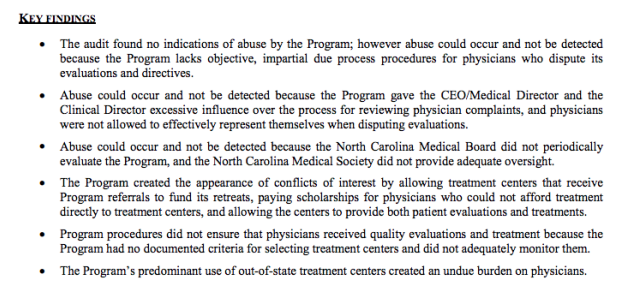
The audit found no indications of abuse but that abuse could occur and not be detected because of an absence of due process for the complainant, excessive control of the complaint process by the PHP and absence of oversight by either the medical board or medical society. What this means is that a doctor with no power is making a complaint against an unsupervised agency with enough power to influence the investigation of a complaint against itself. The reason no indications of abuse were found is because the system is specifically designed to hide abuse. That is the intent.
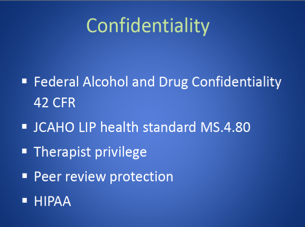
Absence of transparency, regulation and oversight coupled with control of information enables both censorship and doctoring of records. Strict Confidentiality is enforced by HIPAA, peer review protection, and drug and alcohol confidentiality law.
PHPs are able to suppress and conceal criminal activity but they are also able to manufacture information designed to hide misconduct.
The North Carolina Audit found no objective selection criteria for the out of state assessment and treatment centers because none exist other than ideological mindset and monetary gain. The same facilities are used by most state PHPS. They are, in fact, mandated as they are the “PHP-preferred” facilities.
In 2011 The American Society of Addiction Medicine (ASAM) issued a public policy statement on coordination between PHPs, regulatory agencies, and treatment providers. recommending only “PHP-approved” treatment centers be used and the statement specifically excludes ‘non-PHP” recognized facilities.
What the Audit diid not discover is the medical directors of all of the “PHP-approved” facilities can all be seen on this list of Like-Minded Docs.It is a rigged game Every aspect of drug-testing, assessment and treatment is kept hidden and secret and within control of the PHP.
It is a rigged game in which they have removed themselves from all aspects of accountability. They have, in effect, manufactured a culture of impunity at our expense.
“The impaired physician movement is characterized by a number of evangelical recovered alcoholic and addict physicians, whose recovery has been accompanied by an involvement in medical society and treatment programs. Their ability to make authoritative pronouncements on physician impairment is based on their own claim to insider’s knowledge.”–G.V. Stimson (1)
Forget what you see; Some things they just change invisibly–Elliott Smith (Between the Bars)
Physician Impairment
The Sick Physician: Impairment by Psychiatric Disorders, Including Alcoholism and Drug Dependence, published by the American Medical Association’s (AMA) Council on Mental Health in The Journal of the American Medical Association in 1973, (2) recommended that physicians do a better job of helping colleagues impaired by mental illness, alcoholism or drug dependence. The AMA defined an “impaired physician” as “a physician who is unable to practice medicine with reasonable skill and safety to patients because of mental illness or excessive use or abuse of drugs, including alcohol.”
Recognition of physician impairment in the 1970s by both the medical community and the general public led to the development of “impaired physician” programs with the purpose of both helping impaired doctors and protecting the public from them.
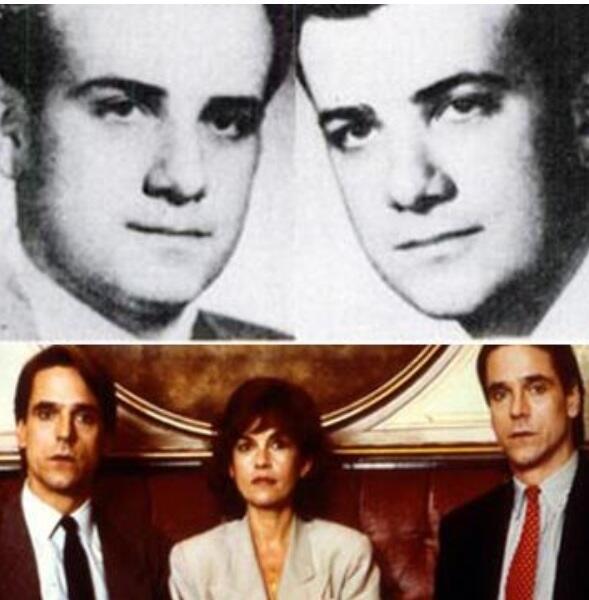
The 1975 media coverage of the deaths of Drs. Stewart and Cyril Marcus brought the problem of impaired physicians into the public eye. Leading experts in the field of Infertility Medicine, the twin gynecologists were found dead in their Upper East Side apartment from drug withdrawal that New York Hospital was aware of but did nothing about. Performing surgery with trembling hands and barely able to stand, an investigation revealed that nothing had been done to help the Marcus brothers with their addiction or protect patients. They were 45 –years old.
Top: Twin Gynecologists Stewart and Cyril Marcus Bottom: The Movie “Dead Ringers” starring Jeremy Irons based on the Marcus twins
Although the New York State Medical Society had set up its own voluntary program for impaired physicians three years earlier, the Marcus case prompted the state legislature to pass a law that doctors had to report any colleague suspected of misconduct to the state medical board and those who didn’t would face misconduct charges themselves.
Physician Health Programs
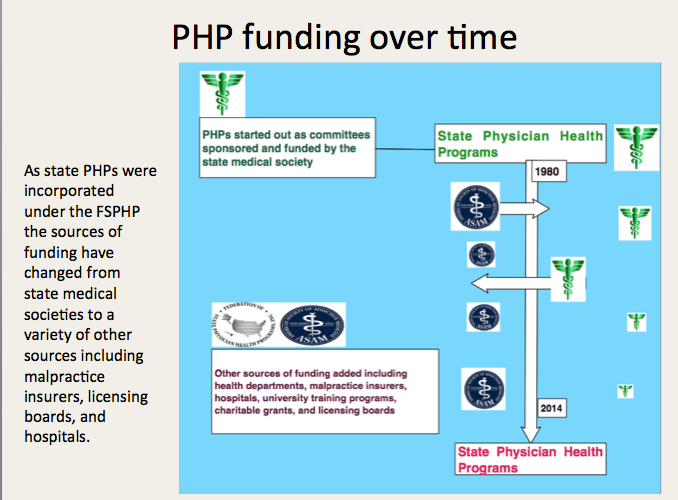
Physician health programs (PHPs) existed in almost every state by 1980. Often staffed by volunteer physicians and funded by State Medical Societies, these programs served the dual purpose of helping sick colleagues and protecting the public. Preferring rehabilitation to probation or license revocation so long as the public was protected from imminent danger, most medical boards accepted the concept with support and referral.
As an alternative to discipline the introduction of PHPs created a perception of medical boards as “enforcers” whose job was to sanction and discipline whereas PHPs were perceived as “rehabilitators” whose job was to help sick physicians recover. One of many false dichotomies this group uses and it is perhaps this perceived benevolence that created an absence of the need to guard.
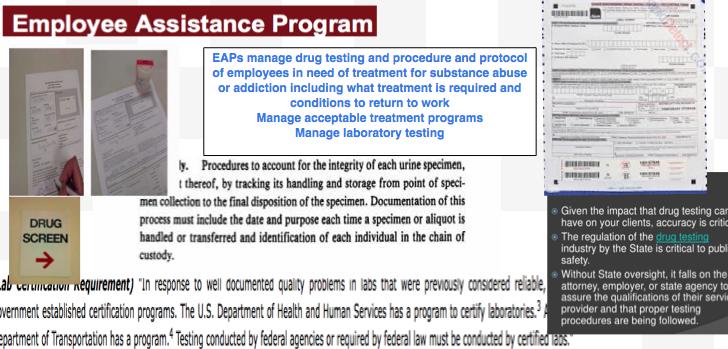
Employee Assistance Programs for Doctors
Physician Health Programs (PHPs) are the equivalent of Employee Assistance Programs (EAPs) for other occupations. PHPs meet with, assess, and monitor doctors who have been referred to them for substance use or other mental or behavioral health problems.
Most EAPs, however, were developed with the collaboration of workers unions or some other group supporting the rights and best interests of the employees. PHPs were created and evolved without any oversight or regulation.
The American Society of Addiction Medicine can trace its roots to the 1954 founding of theNew York City Medical Society on Alcoholism (NYCMSA) by Ruth Fox, M.D whose husband died from alcoholism.
The society, numbering about 100 members, established itself as a national organization in1967, the American Medical Society on Alcoholism (AMSA).
By 1970 membership was nearly 500.
In 1973 AMSA became a component of the National Council on Alcoholism (NCA) in a medical advisory capacity until 1983.
But by the mid 1980’s ASAM’s membership became so large that they no longer needed to remain under the NCADD umbrella.
In 1985 ASAM’s first certification exam was announced. According to Dr. Bean-Bayog, chair of the Credentialing Committee, “a lot of people in the alcoholism field have long wanted physicians in the field to have a high level of skills and scientific credibility and for this body of knowledge to be accredited” (3). And in 1986 662 physicians took the first ASAM Certification Exam.
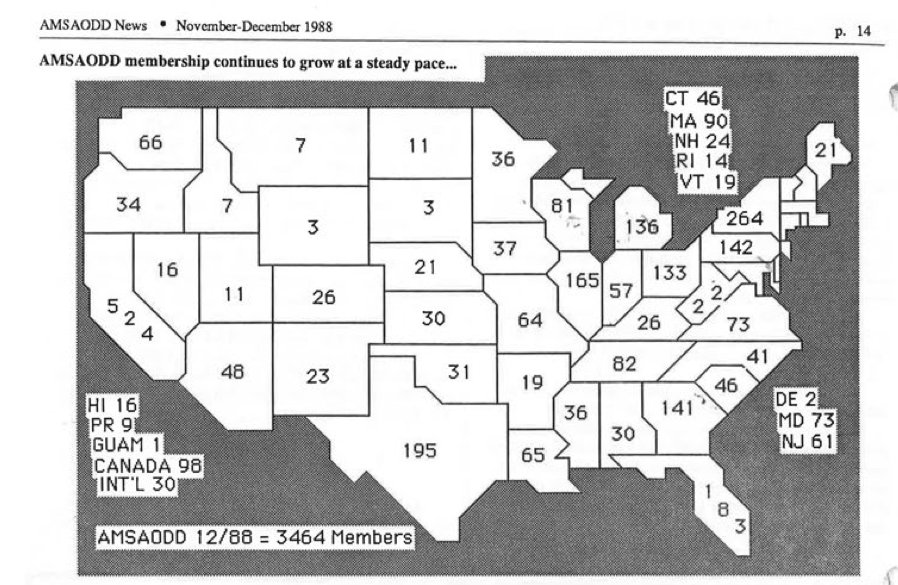
By 1988 membership was over 2,800 with 1,275 of these physicians “certified” as “having demonstrated knowledge and expertise in alcoholism and other drug dependencies commensurate with the standards set forth by the society.” (4) The formation of State Chapters began with California, Florida, Georgia, and Maryland submitting requests.(5)
In 1988 the AMA House of Delegates voted to admit ASAM to the House. According to ASAM News this “legitimizes the society within the halls of organized medicine. (3)
By 1993 ASAM had a membership of 3,500 with a total of 2,619 certifications in Addiction Medicine. The Membership Campaign Task Force sets a goal to double its membership of 3,500 to 7,000 by the year 2000 to assure “the future of treatment for patients with chemicals. It represents a blueprint for establishing addiction medicine as a viable entity.” (6)
Many of these physicians joined state PHPs and over time have taken over under the umbrella of the FSPHP.
1. Stimson GV. Recent developments in professional control: the impaired physician movement in the USA. Sociology of health & illness. Jul 1985;7(2):141-166.
2. The sick physician. Impairment by psychiatric disorders, including alcoholism and drug dependence. JAMA : the journal of the American Medical Association. Feb 5 1973;223(6):684-687.
3. Four Decades of ASAM. ASAM News. March-April 1994, 1994.
4. American Medical Society on Alcoholism & Other Drug Dependencies Newsletter. Vol III. New York, NY: AMSAODD; 1988:12.
5. AMSAODD News. Vol III. New York, NY: American Medical Society on Alcoholism & Other Drug Dependencies; 1988.
6. Membership Campaign Update. ASAM News. Vol VIII: American Society of Addiction Medicine; 1993:11.
“Let it be considered, too, that the present inquiry is not concerning a matter of right, if I may say so, but concerning a matter of fact.”–Adam Smith
“Most men endure the sacrifice of the intellect more easily than the sacrifice of their daydreams. They cannot bear that their utopias should run aground on the unalterable necessities of human existence” -Ludwig von Mises
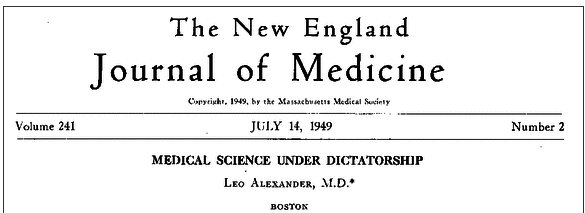
The guiding philosophic principle is Hegelian or “rational utility” and “corresponding doctrine and planning”, Alexander said “replaced moral, ethical and religious values” and Nazi propaganda was highly effective in perverting public opinion and public conscience. He explains how this expressed itself in a rapid decline in standards of professional ethics in the medical profession. This all “started from small beginnings” with subtle shifts in the attitudes of physicians to accept the belief that there is such a thing as “a life not worthy to be lived.”
In 1985 the British Sociologist G.V. Stimson wrote of a new form of professional control in the United States that had emerged in the preceding decade whose “success rests on the ability to take certain areas of conduct such as alcoholism and drug abuse (which are formally disciplinary issues) and handle them as diseases.”2
Stimson writes:
“The impaired physician movement is characterized by a number of evangelical recovered alcoholic and addict physicians, whose recovery has been accompanied by an involvement in medical society and treatment programs. Their ability to make authoritative pronouncements on physician impairment is based on their own claim to insider’s knowledge.”2
Among these authoritative pronouncements was the use of specialized treatment centers. Many professionals were critical of these programs including Assistant Surgeon General John C. Duffy who criticized the “boot-camp mentality”4 toward doctors and American Society of Addiction Medicine President Leclair Bissel who when asked in a 1997 interview when the field began to see physicians as a specialized treatment population replied “when they started making money..” .”5
Amid reports of abuse, coercion and control in facilities using a doctor’s medical license as “leverage,” the Atlanta Journal Constitution ran a series of reports in 1987 documenting the multiple suicides of health care practitioners at one of these programs (5 while in the facility and at least 20 after discharge).6 Neither these suicides nor a large settlement against the same facility (finding a non-alcoholic doctor was intentionally misdiagnosed as an alcoholic and forced into months of treatment) for fraud, malpractice, and false imprisonment involving intentional misdiagnosis7 generated any interest among the medical community at large.
And by 1995 the door had closed as the Federation of State Physician Health Programs ( FSPHP ) relationship with the Federation of State Medical Boards (FSMB), the national organization responsible for the licensing and discipline of doctors, was forged. A 1995 issue of The Federal Bulletin: The Journal of Medical Licensure and Discipline, contains articles outlining the high success rates of these programs in 8 states with an editorial comment from the FSMB that concludes:
“cooperation and communication between the medical boards and the physician health programs must occur in an effort to protect the public while assisting impaired physicians in their recovery.”8
The Federation of State Medical Boards (FSMB) has approved any and all policy and regulation put forth by the impaired physician movement then organized under the Federation of State Physician Health Programs (FSPHP) with no apparent inquiry or opposition.
In 2003 Dr. Gregory Skipper, one of the key players of the impaired physician movement partnered with NMS labs to develop the alcohol metabolite ethyl-glucuronide (EtG) as a laboratory developed test1314 he proposed be used as a monitoring tool for covert alcohol use in physicians after a pilot study involving just 14 psychiatric inpatients.15
The policy entrepreneurship this group so effectively uses to advance their goals can be seen in the August 25, 2004 Journal of Medical Licensure and Discipline which contains articles both presenting the problem 11 and providing the solution.11 The EtG was then introduced as an accurate and reliable indicator of covert alcohol use and the impact of this cannot be underestimated as it introduce to the market not only unregulated non FDA approved tests for forensic use but tests reaching further back into history then those used by workplace drug-testing programs.
The limitations of any test needs to be understood both in the forensic and clinical context but there is a lot less flexibility in the forensic context when people’s liberties, freedoms or property rights ( as with a medical license) are in jeopardy.
Sensitivity and specificity need to be carefully considered. The positive predictive value of a test is the true positives over the true positives plus false positives. If you are going to sanction somebody as a result of a single test that test needs to have 100% sensitivity.
When workplace drug testing was introduced debates over both the accuracy and scope of tests occurred. The employees right to privacy and the employers right to have a drug-free workplace were discussed with the general consensus being testing for impairment was a legitimate concern but preservation of private life should remain.
What was done here dissolves both.
PHP programs require abstinence from all substances including alcohol and strict adherence to 12-step doctrine9 yet many of the physicians monitored by them are neither addicts nor alcoholics. Requiring abstinence from drugs and alcohol while using non-FDA approved Laboratory Developed Tests in monitoring programs is a dangerous combination. The suicides reported by the Atlanta Journal Constitution in 1987 were prior to the introduction of these tests. Adding these tests of unknown validity to an already abusive program of coercion and control would only worsen the situation.
I have been hearing of multiple suicides involving both the fear of results and false results. I have also been hearing of doctors who have killed themselves because they were suffering from depression but did not seek help as their fear of being ensnared into the PHP outweighed the need to get help.
Three decades after G.V. Stimson so accurately defined the impaired physician movement the impaired physician movement defines the professional control of medicine.. Their involvement in medical society physician health programs (PHPs) and treatment programs has evolved into absolute control of both. Pronouncements on physician impairment have evolved from insider’s claims to written edict. And their reach has extended from impairment due to drugs and alcohol to “potential impairment” and “relapse without use.” Their reach has extended from drug and alcohol impairment to all other aspects of medicine and the impact has been profound. Medicine has been subordinated to the guiding philosophy of the impaired physician movement and doctors are dying in droves du to institutional injustice.
How does the profession of medicine reconcile the fact that we have allowed an as yet non ABMS recognized “self-certification” specialty full reign over those who are ABMS recognized? How is it that we allow non-FDA approved Laboratory Developed Tests (LDTs) of unknown validity on doctors coerced into state Physician Health Programs (PHPs)? A recent debate in Washington calling for regulation of “clinical” LDTs just took place and the fact that they are being used for “forensic” purposes in doctors is incomprehensible. Has anyone noticed it is the same people introducing the tests who are claiming PHPs are the “gold standard,” trying to push them on other EAPs and calling for more widespread use of these tests?
Those involved in the Massachusetts General Hospital Laboratory Medicine, Toxicology and addiction medicine departments looked critically at these tests and decided hands down against using them. Why? Because no evidence base exists and the potential harm far outweighs any perceived benefit. “Research” has been done on those being monitored by PHPs and the criminal justice system and Drs. J Wesley Boyd, M.D., PhD, and John Knight, M.D. of Harvard Medical School who collectively have over two decades of experience as Associate Directors with the Massachusetts PHP, Physician Health Services, Inc. addressed this research in a 2012 article published in the Journal of the American Society of Addiction Medicine entitle Ethical and Managerial Considerations Regarding State Physician Health Programs. The allegations that PHPs are engaging in research in violation of the Nuremberg code ( that was a direct result of the Nuremberg trials for which Dr. Alexander acted as consultant ) should have raised some eyebrows. It hasn’t.
What do you think will happen when ASAM gets recognized by the ABMS in 2 years as is expected? These “addiction medicine” specialists will inevitably join hospital formulary , clinical lab, toxicology and ethics panels to do the same thing they have done to get where they are today. They will do the same thing they have done with state PHPs. Those with a hidden agenda will be able to outvote those of good conscience and thoughtful intelligence and patient care will then be subordinated to the guiding philosophy of the impaired physicians movement.
This system of institutional injustice is killing doctors by suicide as the medical societies and Departments of Public Health have given PHPs full autonomy and authority and it is poised to impact patient care.
I challenge you to name any other company, organization, group or agency within or related to the profession of medicine and the field of science that is bereft of absolutely all transparency, regulation or oversight? It does not exist.
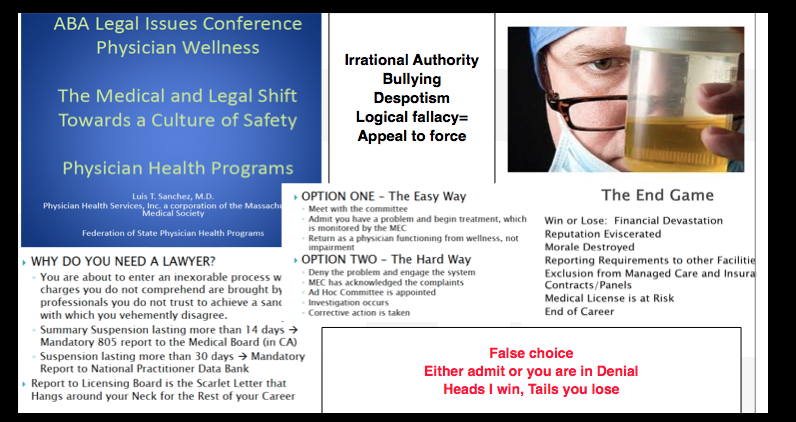
The PHP scaffold has deliberately removed themselves from all aspects of accountability including answerability, justification of actions and the ability of outside actors to hold them in judgment of any information provided by answerability. Heads I win, tails you lose. That is a big red flag in itself. and those not currently being held accountable they may very well be after you next as their plans include expansion to other groups includes EAPs, the Department of Transportation, athletes, students and even kids!
Doctors are afraid to talk about this for fear of being ensnared themselves. Those already in these programs will not speak for fear of punishment. This is a legitimate concern and needs to be discussed openly and publicly. I need allies!
Help me get the word out –too many doctors are dying. Three died by suicide in one month alone who were being monitored by the Oklahoma PHP and these suicides did not even make the local papers let alone national news! They need to.
In The Argument of Fascism Ludwig von Mises wrote:
It cannot be denied that Fascism and similar movements aiming at the establishment of dictatorships are full of the best intentions and that their intervention has, for the moment, saved European civilization. The merit that Fascism has thereby won for itself will live on eternally in history. But though its policy has brought salvation for the moment, it is not of the kind which could promise continued success. Fascism was an emergency makeshift. To view it as something more would be a fatal error.
Although no reliable statistics exist, anecdotal reports suggest an alarming upsurge in physician suicide. This necessitates a reappraisal of known predisposing risk factors such as substance abuse and depression but also requires a critical examination of what external forces or vulnerabilities might be unique to doctors and how they might be involved in the descent from suicidal ideation to suicidal planning to completed suicide.
Depression and Substance Abuse Comparable to General Population
Depression and substance abuse are the two biggest risk factors for suicide. The prevalence of depression in physicians is close to that of the general population 1,2 and, if one looks critically at the evidence based literature, substance abuse in medical professionals approximates that of the general population. Controlled studies using DSM diagnostic criteria suggest that physicians have the same rates (8-14%) of substance abuse and dependence as the rest of the population 3 and slightly lower rates compared to other occupations.4,5 Epidemiological surveys reveal the same. Hughes, et al.6 found a lifetime prevalence of drug or alcohol abuse or dependence in physicians of 7.9%, markedly less than the 14.6% prevalence reported in the general population by Kessler.7
State Physician Health Programs
Perhaps it is how physicians are treated differently when they develop a substance abuse or mental health problem.
Physician Health Programs (PHP) can be considered an equivalent to Employee Assistance Programs (EAPs) for other occupations. PHPs meet with, assess and monitor doctors who have been referred to them for substance use or other mental or behavioral health problems. Originally developed as “impaired physician” programs, the PHPs were created to help doctors who developed problems with substance abuse or addiction an alternative to disciplinary action by State Medical Boards. These programs existed in almost every state by 1980. Often staffed by volunteer physicians and funded State Medical Societies, these programs served the dual purpose of helping sick colleagues and protecting the public. Preferring rehabilitation to probation or license revocation so long as the public was protected from imminent danger, most medical boards accepted the concept with support and referrals. Most EAPs were developed with the collaboration of workers unions or some other group supporting the rights and interests of the workers. As there is no such organization representing doctors, PHPs developed in the absence of regulation or oversight. As a consequence there is no meaningful accountability.
“Because PHP practices are unknown to most physicians before becoming a client of the PHP, many PHPs operate out- side the scrutiny of the medical community at large. Physicians referred to PHPs are often compromised to some degree, have very little power, and are, therefore, not in a position to voice what might be legitimate objections to a PHP’s practices.”8
Noting that “for most physicians, participation in a PHP evaluation is coercive, and once a PHP recommends monitoring, physicians have little choice but to cooperate with any and all recommendations if they wish to continue practicing medicine,” Knight and Boyd raise serious ethical and managerial questions about current PHP policies and practice including conflicts of interest in referrals for evaluation and treatment, lack of adherence to standards of care for forensic testing of substances of abuse, violations of ethical guidelines in PHP research, and conflicts of interest with state licensing boards.
Knight and Boyd recommend “that the broader medical community begin to reassess PHP’s as a whole” and that “consideration be given toward the implementation of independent ethical oversight and establish and appeals process for PHP clients who feel they are being treated unfairly.” 8 They also recommend the relationship of PHP’s between the evaluation and treatment centers and licensing boards be transparent and that national organizations review PHP practices and recommend national standards “that can be debated by all physicians, not just those who work within PHPs.”8 Unfortunately this has not happened. Most physicians have no idea that the state physician health programs have been taken over by the “impaired physicians movement.”
In his Psychology Todayblog, Boyd again recommends oversight and regulation of PHPs. He cites the North Carolina Physicians Health Program Audit released in April of 2014 that reported the below key findings:
As with Knight and Boyd’s paper outlining the ethical and managerial problems in PHPs, the NC PHP audit finding that abuse could occur and not be detected generated little interest from either the medical community or the media.
Although state PHPs present themselves as confidential caring programs of benevolence they are essentially monitoring programs for physicians who can be referred to them for issues such as being behind on chart notes. If the PHP feels a doctor is in need of PHP “services” they must then abide by any and all demands of the PHP or be reported to their medical board under threat of loss of licensure.
LDTs bypass the FDA approval process and have no meaningful regulatory oversight. The LDT pathway was not designed for “forensic” tests but clinical tests with low risk. Some are arguing for regulation and oversight of LDTs due to questionable validity and risk of patient harm.13
These same physicians are claiming a high success rate for PH programs9 and suggesting that they be used for random testing of all physicians.14
As with LDTs, the state PHPs are unregulated, and without oversight. State medical societies and departments of health have no control over state PHPs.
Their opacity is bolstered by peer-review immunity, HIPPA, HCQIA, and confidentiality agreements. The monitored physician is forced to abide by any and all demands of the PHP no matter how unreasonable-all under the coloration of medical utility and without any evidentiary standard or right to appeal.
The ASAM has a certification process for physicians and claim to be “addiction” specialists. This“board certification” is not recognized by the American Board of Medical Specialties and is not a recognized medical specialty. The goal of the ASAM is to be recognized as the experts in addiction medicine with the consensus expert opinion based on the 12-step prohibitionist brain disease model. The ASAM has aligned itself with a number of inpatient drug treatment centers (Hazelden, Talbott, Marworth, Bradford,etc) and are heavily funded by the drug testing industry. It is in fact a “rigged game.”
State PHPs are non-profit non-governmental organizations and have been granted quasi-governmental immunity by most State legislatures from legal liability.
By infiltrating “impaired physician” programs they have established themselves in almost every state by joining, gaining power, and removing dissenters. Groupthink and 12-step indoctrination are the goals. By advertising as advocates for doctors who are “caring,” “confidential resources,” “giving help,” and advocating for “colleagues in need” the outward appearance is one of benevolence.
The biggest obstacle is that this system allows them to throw the normal rules of conduct under the imperative of a higher goal assumed to trump all other consideration. Those outside of programs either defend or ignore the reports of ethical and criminal violations, complacent in their trust of these “experts” claiming they are just helping sick doctors and protecting the public.
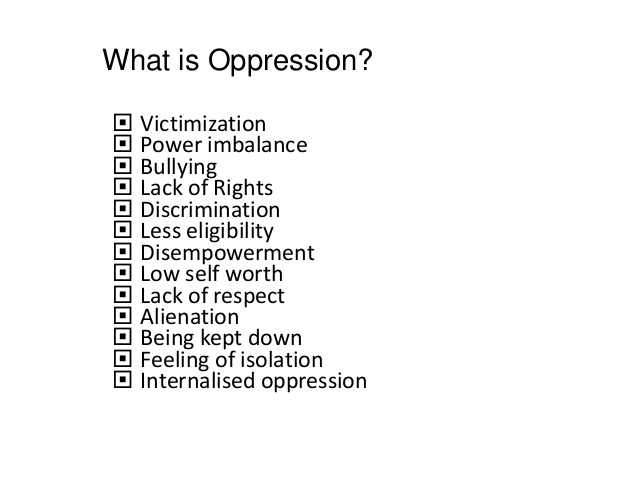
With no oversight or regulatory body involved this is all done with impunity, immunity, and undercover. They use the accusation of substance abuse as an indication to disregard the claims of the accused. The physician is left without rights, depersonalized, and dehumanized. The imposition of confinement, stigmatization, lack of oversight of the organizations, peer-review protected confidentiality, and lack of procedural protection is a one-way train to hopelessness and despair.
By establishing a system that of coercion, control, secrecy, and misinformation, the FSPHP is claiming an “80% success rate” 15and deeming the “PHP-blueprint” as “the new paradigm in addiction medicine treatment.
The ASAM/FSPHP had a major influence on the DSM-V where drug abuse and dependence are no longer separate entities. They are also working behind the scenes to get legislation to randomly drug test all physicians.
They are now after the “disruptive physician” and the evidentiary criteria are fairly low and red flags include “deviating from workplace norm in dress or conduct” and being tardy for meetings.
They have identified “the aging physician” as a potential problem because “as the population of physicians ages,””cognitive functioning” becomes “a more common threat to the quality of medical care.”
The majority of physicians are unaware that the Federation of State Medical Boards House of Delegates adopted an updated Policy on Physician Impairment in 2011 that uses addiction as an example of a “potentially impairing illness.” According to the Federation of State Physician Health Programs …”physician illness and impairment exist on a continuum with illness typically predating impairment, often by many years. This is a critically important distinction. Illness is the existence of a disease. Impairment is a functional classification and implies the inability of the person affected by disease to perform specific activities.”
“Process addiction” was added as a potentially impairing illness including compulsive gambling, compulsive spending, compulsive video gaming, and “workaholism.” According to the FSPHP “the presence of a process addiction can be problematic or even impairing in itself, and it can contribute to relapse of a physician in recovery. As such, process addictions should be identified and treated.” They define three levels of relapse including the novel “relapse without use.”
Bullying, Helplessness, Hopelessness and Despair
Perceived helplessness is significantly associated with suicide.16 So too is hopelessness, and the feeling that no matter what you do there is simply no way out17,18 Bullying is known to be a predominant trigger for adolescent suicide19-21 One study found that adolescents in custody who were bullied were 9.22 times more likely to attempt suicide than those were not bullied.22
Heightened perceptions of defeat and entrapment are known to be powerful contributors to suicide.23,24 The “Cry of Pain” model 25,26 specifies that people are particularly prone to suicide when life experiences are interpreted as signaling defeat which is defined as a sense of “failed struggle” or loss of social position and resources.. The person is unable to identify an escape from or resolution to a defeating situation, a sense of entrapment proliferates with the perception of no way out, and this provides the central impetus for ending ones life.
There is also evidence that rescue factors such as social supports may play a role in preventing suicide. These rescue factors act buffers to protect against suicide in the face of varying degrees of life stress.27,28 The study of female physicians revealed meetings to discuss stressful work experiences as a potential protective factor, 29 and support at work when difficulties arose appeared to be a protective factor for the male physicians.30 Research involving Finnish physicians found that control over one’s work and organizational justice were the most important determinants of work-related wellbeing.31,32 Organizational justice is related to fairness and refers to an individuals perception of an organizations behaviors, decisions, and actions and how these influence one’s own attitudes and behaviors and has been identified as a psychosocial predictor of health and wellbeing3334 Low organizational justice has been identified as a notable risk factor for psychological distress and depression.35,36
A recent report indicates that job stress, coupled with inadequate treatment for mental illness may play a role in physician suicide..
Using data from the National Violent Death Reporting System the investigators compared 203 physicians who had committed suicide to more than 31,000 non-physicians and found that having a known mental health disorder or a job problem that contributed to the suicide significantly predicted being a physician.1
Physicians were 3.12 times more likely to have a job problem as a contributing factor. In addition, toxicology testing showed low rates of medication treatment. The authors concluded that inadequate treatment and increased problems related to job stress are potentially modifiable risk factors to reduce suicidal death among physicians.
They also warned that the database used likely underestimated physician suicides because of “underreporting and even deliberate miscoding because of the stigma attached.”
I can think of nothing more institutionally unjust than an unregulated zero-tolerance monitoring program with no oversight using unregulated drug and alcohol testing of unknown validity.
We have heard of numerous suicides due to these institutionally unjust programs. Three doctors died by suicide in Oklahoma in a one month period alone (August 2014). All three were being monitored by the Oklahoma PHP. I went to an all boys high-school of less than 350 students yet a classmate a couple years ahead of me died by suicide a few months ago. He was being monitored by the Washington PHP. His crime? A DUI in 2009–a one-off situational mistake that in all likelihood would never have recurred. But as is often the case with those ensnared by state PHPs he was forced to have a “re-assessment” as his five-year monitoring contract was coming to an end. These re-assessments are often precipitated by a positive Laboratory Developed Test (LDT) and state medical boards mandate these assessments can only be done at an out-of-state “PHP-approved” facility. Told he could no longer operate and was unsafe to practice medicine by the PHP and assessment center he then hanged himself. And at the conclusion of Dr. Pamela Wible’s haunting video below are listed just the known suicides of doctors; many were being monitored by their state PHPs–including the first name on the list– Dr. Gregory Miday.
None of these deaths were investigated. None were covered in the mainstream media. These are red flags that need to be acknowledged and addressed! This anecdotal evidence suggests the oft-used estimate of 400 suicides per year (an entire medical school class) is a vast underestimation of reality—extrapolating just the five deaths above to the entire population of US doctors suggests we are losing at least an entire medical school per year.
As physicians we need to demand transparency, oversight, regulation and auditing by outside groups. This is a public health emergency.
To wit:
They first came after the substance abusers and I did not speak out because I was not a substance abuser.
They then came for those with psychiatric diagnoses and I did not speak out because I was not diagnosed with a psychiatric disorder.
They then came after the “disruptive physician” and I did not speak out because I was not disruptive.
They then came after the aging physician and I did not speak out because I was young.
They then came after me and there was no one else to speak out for me.
Ford DE, Mead LA, Chang PP, Cooper-Patrick L, Wang NY, Klag MJ. Depression is a risk factor for coronary artery disease in men: the precursors study. Archives of internal medicine. Jul 13 1998;158(13):1422-1426.
Frank E, Dingle AD. Self-reported depression and suicide attempts among U.S. women physicians. The American journal of psychiatry. Dec 1999;156(12):1887-1894.
Brewster JM. Prevalence of alcohol and other drug problems among physicians. JAMA : the journal of the American Medical Association. Apr 11 1986;255(14):1913-1920.
Anthony J, Eaton W, Mandell W, al. e. Psychoactive Drug Dependence and abuse: More Common in Some Occupations than in Others? Journal of Employee Assistance Res. 1992;1:148-186.
Stinson F, DeBakely S, Steffens R. Prevalence of DSM-III-R Alcohol abuse and/or dependence among selected occupations. Alchohol Health Research World. 1992;16:165-172.
Hughes PH, Brandenburg N, Baldwin DC, Jr., et al. Prevalence of substance use among US physicians. JAMA : the journal of the American Medical Association. May 6 1992;267(17):2333-2339.
Kessler RC, Berglund P, Demler O, Jin R, Merikangas KR, Walters EE. Lifetime prevalence and age-of-onset distributions of DSM-IV disorders in the National Comorbidity Survey Replication.Archives of general psychiatry. Jun 2005;62(6):593-602.
Boyd JW, Knight JR. Ethical and managerial considerations regarding state physician health programs. Journal of addiction medicine. Dec 2012;6(4):243-246.
DuPont RL, McLellan AT, White WL, Merlo LJ, Gold MS. Setting the standard for recovery: Physicians’ Health Programs. Journal of Medical Regulation. Mar 2010;95(4):10-25.
Skipper GE, Weinmann W, Thierauf A, et al. Ethyl glucuronide: a biomarker to identify alcohol use by health professionals recovering from substance use disorders. Alcohol and alcoholism.Sep-Oct 2004;39(5):445-449.
Skipper GE, Thon N, Dupont RL, Baxter L, Wurst FM. Phosphatidylethanol: the potential role in further evaluating low positive urinary ethyl glucuronide and ethyl sulfate results. Alcoholism, clinical and experimental research. Sep 2013;37(9):1582-1586.
Skipper GE, Thon N, DuPont RL, Campbell MD, Weinmann W, Wurst FM. Cellular photo digital breathalyzer for monitoring alcohol use: a pilot study. European addiction research.2014;20(3):137-142.
Sharfstein J. FDA Regulation of Laboratory-Developed Diagnostic Tests: Protect the Public, Advance the Science. JAMA : the journal of the American Medical Association. Jan 5 2015.
Pham JC, Pronovost PJ, Skipper GE. Identification of physician impairment. JAMA : the journal of the American Medical Association. May 22 2013;309(20):2101-2102.
McLellan AT, Skipper GS, Campbell M, DuPont RL. Five year outcomes in a cohort study of physicians treated for substance use disorders in the United States. Bmj. 2008;337:a2038.
Rivers I, Noret N. Potential suicide ideation and its association with observing bullying at school.The Journal of adolescent health : official publication of the Society for Adolescent Medicine. Jul 2013;53(1 Suppl):S32-36.
Lester D, Walker RL. Hopelessness, helplessness, and haplessness as predictors of suicidal ideation. Omega. 2007;55(4):321-324.
Beck AT. Hopelessness as a predictor of eventual suicide. Annals of the New York Academy of Sciences. 1986;487:90-96.
Hinduja S, Patchin JW. Bullying, cyberbullying, and suicide. Archives of suicide research : official journal of the International Academy for Suicide Research. 2010;14(3):206-221.
Hertz MF, Donato I, Wright J. Bullying and suicide: a public health approach. The Journal of adolescent health : official publication of the Society for Adolescent Medicine. Jul 2013;53(1 Suppl):S1-3.
Kim YS, Leventhal B. Bullying and suicide. A review. International journal of adolescent medicine and health. Apr-Jun 2008;20(2):133-154.
Kiriakidis SP. Bullying and suicide attempts among adolescents kept in custody. Crisis.2008;29(4):216-218.
Taylor PJ, Gooding P, Wood AM, Tarrier N. The role of defeat and entrapment in depression, anxiety, and suicide. Psychological bulletin. May 2011;137(3):391-420.
Lester D. Defeat and entrapment as predictors of depression and suicidal ideation versus hopelessness and helplessness. Psychological reports. Oct 2012;111(2):498-501.
Williams JMG. Cry of Pain. Harmondsworth: Penguin; 1997.
Williams JMG, Crane C, Barnhofer T, Duggan DS. Psychology and suicidal behavior: elaborating the entrapment model. In: Hawton K, ed. Prevention and treatment of suicidal behavior: from science to practice. Oxford: Oxford University Press; 2005:71-89.
Borowsky IW, Ireland M, Resnick MD. Adolescent suicide attempts: Risks and protectors.Pediatrics. 2001;107(485).
Clum GA, Febbraro GAR. Stress, social support and problem-solving appraisal/skill: Prediction of suicide severity within a college sample. Journal of Psychopathology and Behavioral Assessment. 1994;16:37-46.
Fridner A, Belkic K, Marini M, Minucci D, Pavan L, Schenck-Gustafsson K. Survey on recent suicidal ideation among female university hospital physicians in Sweden and Italy (the HOUPE study): cross-sectional associations with work stressors. Gender medicine. Apr 2009;6(1):314-328.
Fridner A, Belkic K, Minucci D, et al. Work environment and recent suicidal thoughts among male university hospital physicians in Sweden and Italy: the health and organization among university hospital physicians in Europe (HOUPE) study. Gender medicine. Aug 2011;8(4):269-279.
Lindfors PM, Meretoja OA, Toyry SM, Luukkonen RA, Elovainio MJ, Leino TJ. Job satisfaction, work ability and life satisfaction among Finnish anaesthesiologists. Acta anaesthesiologica Scandinavica. Aug 2007;51(7):815-822.
Heponiemi T, Kuusio H, Sinervo T, Elovainio M. Job attitudes and well-being among public vs. private physicians: organizational justice and job control as mediators. European journal of public health. Aug 2011;21(4):520-525.
Elovainio M, Kivimaki M, Vahtera J. Organizational justice: evidence of a new psychosocial predictor of health. Am J Public Health. Jan 2002;92(1):105-108.
Lawson KJ, Noblet AJ, Rodwell JJ. Promoting employee wellbeing: the relevance of work characteristics and organizational justice. Health promotion international. Sep 2009;24(3):223-233.
Hayashi T, Odagiri Y, Ohya Y, Tanaka K, Shimomitsu T. Organizational justice, willingness to work, and psychological distress: results from a private Japanese company. Journal of occupational and environmental medicine / American College of Occupational and Environmental Medicine. Feb 2011;53(2):174-181.
Lang J, Bliese PD, Lang JW, Adler AB. Work gets unfair for the depressed: cross-lagged relations between organizational justice perceptions and depressive symptoms. The Journal of applied psychology. May 2011;96(3):602-618.
27 thoughts on “The Elephant in the Room: Physician Suicide and Physician Health Programs”
Wow! Thank you for this! This article may very well be far beyond its time, and thus, that much more impactful. There is so much to be added to the discussion of the mental and physical state of the modern day physician. It could provide so much more insight not only into the lives of physicians, but also their patients. Much like the police, there is a code of silence among the medical and scientific community; one so static and unwavering, it is much of the cause of the staggering amount of deaths and illnesses abound in our current society. Because by default, everyone is either a patient or a physician, by building the platform for this conversation, pieces of writing like this may prove to be the key to saving every single person in the world. Literally. Again, thank you!
Thanks! The problem is the mainstream medical bloggers will not address the role of physician health programs and physician suicide. In fact many of my comments on these blogs regarding this have been removed as “spam.” This barrier has been very hard to break for various reasons. How do we solve a problem most doctors will not even mention? To address the problem we need to acknowledge it and that is just not happening.
So, so true! Please, just don’t stop what you’re doing. No matter how much blow back and obstacles you face, keep getting this message out there. People are watching and waiting for the courage to join in the conversation. People like you, with the courage to be the first on the dance floor, so to speak, are the reason the party gets started. No matter how long it may seem that you’re dancing alone, you’re not. And right when you last expect it, the whole world will begin acknowledging the significance of physician health and physician suicide, as if it’s been around as long as sliced bread. People like you and I rarely get the credit we deserve, but what’s credit, compared to saving lives. I can’t emphasize enough how important research, data and discussions like this are for the necessity of literally, saving lives. I get it. I really, really do. I’ve personally seen what can and continues to happen as a result of us ignoring what the lacking physician health programs and growing physician suicide. So, yea, just keeping going, please. For the children who may never meet you, but will live longer lives from the sacrifices you’ve made. Much peace, love and blessings be to you always! A’se (and so it is)!
So is it suicide or accidental overdose? I had a physician who was found dead by his wife, overdosed on a prescription med. It has bothered me all these years, wondering if it was deliberate or an accident. I tell myself it was accidental, because that’s what I want to believe, and yet, you all have so much responsibility weighing on your shoulders. How do you cope?
The 400 figure is an underestimate as death certificates and other traditional sources of information have proven unreliable. In addition most of these deaths are not investigated –especially if there was a PHP involved. Last August 3 doctors died by suicide in a 30 day period who were under monitoring by the state PHP and it did not even make the local news. In many cases it is difficult to determine if death is a result of suicide or an accident and suicides are often underreported to protect the victim or family from stigma or insurance investigations. An insurance company will more easily pay on a claim due to a “drug misadventure” than a suicide.
That’s understandable, but so sad. Everything seems to boil down to insurance now, what they will or will not pay for. From a patient’s point of view, it gets frustrating that we all pay because of the ones who abuse the system, and from your side, it means extra work because some of the patients abuse the system, so all patients must be subjected to the same embarrassing testing. And you suffer because the patients hold you responsible, so it is an uphill battle all the way. I’m glad the COD is not included in obits that are seen in newspapers, and also glad autopsies are not required in every case. I can remember when they were, and how hard it was on families. In the case of my doctor, an autopsy was ordered and it was all over the front page of the local paper. Not a good thing for his family to live with.
(forgive if this is a redundant entry – left one yesterday but didn’t get posted.)
Another brilliantly incisive piece, Michael!
In what is sure to be a seminal work, Tom Bourne and colleagues examined the psychiatric impact of board complaint investigations on physicians in Britain (the GMC there is the equivalent of state licensing boards here) and found a 100% increase from baseline in depression, anxiety and suicidal ideation. Hmmm … any possible link between board “investigations,” PHP sham “diagnoses” and physician suicide?
(see: Bourne T, et al. BMJ Open 2015;4:e006687. doi:10.1136/bmjopen-2014-006687)
You would have expected medical boards (consisting of physicians who took an oath, for godsakes!) and PHPs (with their “oh-so-concerned-about-physician-health” mantra) to have shuddered at this finding and rushed out to investigate whether this could possibly be true.
Now, optimists that you are, brace yourself … not one medical board or PHP member has responded to the Medscape article which announced this, nor apparently countered the finding in any other forum. (As in “oh, board and PHP inquiries are really benign … see all our happy campers … our studies show everybody’s doing well and what great work we’re doing.”
Have you heard of any investigation by FSPHP or FSMB into whether this finding might be true? Or at least an expression of concern? Nah ….
Or perhaps the AMA …? Nah.
Oooh, oooh, maybe the APA which by all rights should be concerned about the illicit activities of unlicensed PHPs operating as “public charities” conducting career and life altering psychiatric and substance abuse evaluations under the sham rubric of “peer review,” referring, under board order based on their pontifical findings (whose report they adamantly refuse to provide to the subject physician), to pre-selected “preferred institutions” with whom there is a prearranged “understanding” of the admission diagnosis and impairment severity and the gross abuse of the field of psychiatry by the denial of due process and ensuing torture these programs commit…? Maybe they’d be concerned, right??? … nah. Multiple parties have emphatically tried to rouse them from their institutional slumber to utterly no avail but an insulting response implying that the complainer is nothing but a personality-disordered whiner who’s unhappy with “the program.” (Yes, the “program.” That’s like telling a Jew in 1940’s Germany that he shouldn’t be complaining about the free train ride the government is offering.)
As has been explicitly documented by the NC State Auditor in its comprehensive performance evaluation report on the NCPHP (see NCOSA Performance Evaluation of NCPHP April 2014, available online), NCPHP systematically violated the due process rights of over 1,140 physicians over the preceding decade. (Even the writing of the phrase does not convey the extremity of the violation – one has not only been denied justice and screwed by one’s own pathetically impotent lawyers, one has lost one’s career and even personal identity – all in one fell swoop by an agency with no oversight or accountability.)
Now, answer me this: if you were falsely accused of something, falsely diagnosed, had laboratory data falsified in order to both reinforce the false diagnosis and punish you for your defiant challenge, and had your due process rights violated, and you then were entirely deprived of your career and then so publicly shamed by the published proceedings based on the false but incontestable findings, and your practice was abruptly upended, and you then were forced to witness your patients’ suffering as a result of the disruption of their care with you, and you then were forced to bear the news of one of your patients committing suicide as a direct result of this abusive disruption of care, would you be … upset?
Keep up the extraordinary work, Michael. While there are innumerable docs who have been utterly obliterated by this combined board / PHP abuse and their manipulation of their privilege – and, yes, some have tragically taken their lives being put in such an impossible bind, there are a few of us who are determined to confront this abuse and demand that protections be put in place so that it never occurs again, without severe consequences ensuing to the offending party.
(From a resident physician who wishes to remain anonymous)
Dr. Langan:
Thank you for your articles and research regarding PHPs and “impaired” physicians. I have become involved in this issue after someone close to me struggled with depression during residency. Sadly, they lacked the resources, support and coping skills and ended up committing a crime with a misdemeanor charge. Despite their treatment and rehabilitation, they were dismissed from residency. Not sure if they will ever get to practice clinical medicine. It is very sad. they are very smart, great doctor and very empathetic towards patients.
After their situation, I started looking on blogs and found that many residents had shared similar instances. Many reported struggling with depression and the stresses of residency put them over the edge– like the perfect storm of stress, fatigue, and loneliness that could exploit anyone’s weaknesses. It seems like during residency, we are emotionally as well as legally vulnerable. Many of these residents have never been able to resume training at their institutions despite their demonstration of clinical competence and emotional maturation. According to that medscape article, that is a huge loss to society, socially and financially.
Sadly, there still so much stigma surrounding mental health, and I think it may be worse in our profession.
I am very concerned regarding the future of our profession. We are becoming robots in a health care factory. Our own personal lives are being compromised as well as quality patient care.
I appreciate all you are doing to shed light on this very important issue.
Reblogged this on Chaos Theory and Human Pharmacology and commented:
“How do we solve a problem most doctors will not even mention? To address the problem we need to acknowledge it and that is just not happening.” — Dr. Michael L. Langan.
I was sent the letter below by e-mail. Dr. Roop has specifically requested that it be published here with his contact information and I applaud his courage.
On Mar 5, 2015, at 4:04 PM, Jonathan Crane Roop MD wrote:
Name: Jonathan Crane Roop MD
Email: jonathanroop@hotmail.com
Comment: I am Board Certified in Internal medicine. I have endured years of emotional, psychological and spiritual abuse at the hands of the Washington Physician’s Health Program. I have suffered through a long list of injustices without recourse. They include, but are not limited to discrimination, abuse of power, breach of contract and repeated and WILLFUL medical negligence.
Because the actions of the WPHP have been SO egregious, I assumed what was happening to me must be extraordinarily rare.
I have nothing to hide. And I have shared my story with any and all who would listen. To date, my voice, my rights and now my life have been dismissed as unimportant. MY LIFE!! It’s apparently better that I die than my tormentors be questioned and compelled to defend their indefensible and evil behavior.
I am meeting with one last attorney tomorrow. I fully expect him to ignore the basic, indisputable and well documented facts of my case. Namely, there is massive and systematic malfeasance being committed by a tax payer funded agency in the State of Washington who act with omnipotence and without oversight. I have no reason to believe he will respond any differently than the others with whom I have met. HE WON’T CARE! HE WILL NOT BE MOVED. He will make statements that suggest I DESERVE this treatment. And that my life, as well as my imminent death, is unworthy of his time or efforts.
Once my assumptions about this last meeting are officially confirmed, I am committed to the only course of action available to me. The only thing which will put an end to this nightmare.
Today I stumbled upon your website. And today, for the first time, I have learned that my case is not rare. I suspect the other physician victims in this matter have occasionally allowed themselves to dream wistfully of justice. Justice which they have seen thwarted at every turn. Perhaps they, like me, have dreamily imagined the relief and joy and LIFE they would experience if the truth were simply presented and the perpetrators held accountable. I have imagined standing up in court and triumphantly affecting justice for myself as well as all of the other current and future victims. I deliver a powerful defense of justice. My ‘dream speech’. I have imagined that I might still live. And then I wake up.
And so today, imagine my shock, when I found my ‘dream speech’ here. My speech. Reasonable. Honest. Consistent. And based firmly in truth, justice and defense of the powerless against the (arbitrarily) powerful. My speech, it seemed, but authored by another.
Thank you, Dr. Langan. You have given a voice to my struggles. Please never stop speaking for me, and people like me, many of whom, I fear, will not survive to see justice.
Despite my intention to die, I actually WANT TO LIVE! And I will live and fight on if I ever believe that there is even a small chance of justice for me and the other innocent victims of PHP’s and the ‘treatment’ centers with whom they contract (Talbott in my case. Purely evil and loathsome human beings, for the record).
So, because I do WANT to live…PLEASE HELP ME, SIR!
Can you refer me to attorneys, individuals or groups who might advocate for me and the other victims? Do you have any specific words of hope or encouragement?
Please note my name. Please add me to the list of innocent victims of these power hungry, narcissistic BULLIES.
I don’t expect to live through this. And in a way, the PHP, Talbott and the addiction ‘experts’ with whom I have been tragically acquainted are correct…My life is worth very little. But this issue is so much larger than I. I can die with some serenity if I believe there will be meaningful justice for others like me. And that those responsible will be held to account.
Thank you Dr. Langan. Thanks to all of those involved in the creation and maintenance of this website. Although your shining beacon is barely perceivable through the darkness of injustice which surrounds and seeks to extinguish it…it is the only glimmer of hope I have found during my slow death by PHP.
These miscarriages of justice remind one of nothing so much as Victor Hugo’s “Les Miserables”. That was, of course, a mere novel. Sadly, the experiences described here are real. The loss of capable physicians is doubly tragic — not only for the physicians involved, but for society at large. I would add only that God is capable of giving our lives purpose, even after what is most precious to us has been taken. Life can be worth living, despite great loss.
I have been hearing from 2 or 3 every day. Nearly all of them are afraid to leave comments here (even anonymously) for fear the PHP will find out. There is a “learned helplessness” because there is no lifeline. The Medical Boards are complicit, The Medical Societies have no oversight, Law enforcement turns a deaf ear because the perpetrators have convinced them it should be kept within the medical profession. Attempting to report valid crimes are refused and they are often reported back to the Board or PHP and further punished. The media is not interested because they have been labeled “impaired”or “disruptive” and no matter how strong the truth, evidence or facts are they take the PHPs word over theirs. And almost all of the doctors I have talked to are good doctors who are kind hearted and honest. But bad doctors are rarely sanctioned by medical boards; they have to do something so egregious that turning a blind eye would be noticed. And doctors who are bad people who have engaged in terrible behavior often get reinstated by claiming they were “helpless” over that behavior but are now “in recovery.” They go to extremes to protect sexual violators in these programs and also believe they can monitor pedophiles with polygraphs and treat them with 12-step. Just look at the case below. An adolescent psychiatrist gets arrested with child pornography and admits to a longstanding attraction to young boys. The PHP gives him a polygraph test “proving” he’s a looker not a toucher and he is back practicing medicine in no time. The PHP speaks as if he is a Saint. Perhaps they had a slot to fill in the “sexual addiction” department in one of the “PHP-approved” assessment and treatment centers.
Doctors, I can sympathize with your pain although I am not a physician. I was trained at a university medical facility in laboratory medicine and during my sophomore year it was found that I was suffering from what their psychologist called “delayed grief” from the loss of my mother. Long story short, they pushed me out of school until I could get it together. I am a disabled, Christian and pastor of a small church now and not in laboratory technology practice anymore. My website http://thelivingmessage.com, is my way of bringing the hope of Jesus to those who are searching for answers in a world that seems not to want to hear them. Please feel free to refer any of your friends to my site or even to email me through it. I will be glad to pray with and for any or all of you in your time of pain and suffering. God gave you your talents and abilities so please don’t throw them away if possible.
The list really touched me….I have been close to just ending it before. I used to think it was something only “other” people experienced. This is so sad !!
[…] require abstinence from all substances including alcohol and strict adherence to 12-step doctrine9 yet many of the physicians monitored by them are neither addicts nor alcoholics. Requiring […]
[…] require abstinence from all substances including alcohol and strict adherence to 12-step doctrine9 yet many of the physicians monitored by them are neither addicts nor alcoholics. Requiring […]
[…] system is also the unspoken and hushed major contributor to physician suicide-the elephant in the room. Those who really need help for mental health, substance abuse or other issues are afraid to get […]
[…] require abstinence from all substances including alcohol and strict adherence to 12-step doctrine9 yet many of the physicians monitored by them are neither addicts nor alcoholics. Requiring […]
[…] is also killing physicians by driving them to hopelessness, helplessness, and despair. The general medical community needs to awaken to the reality of the danger and expose and dismantle […]
[…] for suicide. The prevalence of depression in physicians is close to that of the general population 1,2 and, if one looks critically at the evidence based literature, substance abuse in medical […]
I’m hearing from more and more doctors via my survey, emails and phone calls. At this point the patterns are becoming crystal clear and they involve the same “physician wellness” actors, the same “PHP-approved” assessment and treatment facilities and the same commercial “forensic” drug testing labs.
It is all the same M.O. A false accusations is made followed by misrepresentation of laboratory developed tests (LDTs) or outright forensic fraud. A referral is then made for an “evaluation” at one of the “PHP-approved” facilities where an “assessment” is “tailored” to fit a pre-determined diagnosis. The PHP then says do anything and everything we say or we will “end you.” And all too often that is exactly what they do. It is Political Abuse of Psychiatry plain and simple. It does not get any more egregious than this folks.
The Doctors dying from this system of institutional injustice are not dying by suicide. This is more akin to murder and the murderers have removed themselves from all aspects of accountability including answerability, justification for actions and the ability to be punished by third party actors truly outside the system. It is a rigged game.
The sociopaths responsible for ordering false assessments and falsified drug and alcohol testing as well as those complying with it in the drug and alcohol testing, assessment and treatment industry need to be held accountable.
Those ordering the falsified tests and assessments are essentially putting guns to the heads of doctors. The labs and rehab centers complicit in this fraud are pulling the trigger. Simple as that.
In order to understand the current incarnation of Physician Health Programs (PHPs) it is important to understand the concept of “policy entrepreneurship” in the evolution of these programs since the 1980s.
For example, ‘policy entrepreneur’ is used by Kingdon (1984: 21; 104) to describe actors who use their knowledge of the process to further their own policy ends. They ‘lie in wait in and around government with their solutions at hand, waiting for problems to float by to which they can attach their solutions, waiting for a development in the political stream they can use to their advantage’ (Kingdon, 1984: 165–6). Entrepreneurs may be elected politicians, leaders of interest groups or merely unofficial spokespeople for particular causes. They are people with the knowledge, power, tenacity and luck to be able to exploit windows of opportunity and heightened levels of attention to policy problems to promote their ‘pet solutions’ to policymakers (see also Jones, 1994: 196 on their ability to reframe issues).
John’s (1999) treatment of entrepreneurs is similar, but he perhaps replaces the image…


















 In order to understand the current incarnation of


 Disrupted Physician
Wow! Thank you for this! This article may very well be far beyond its time, and thus, that much more impactful. There is so much to be added to the discussion of the mental and physical state of the modern day physician. It could provide so much more insight not only into the lives of physicians, but also their patients. Much like the police, there is a code of silence among the medical and scientific community; one so static and unwavering, it is much of the cause of the staggering amount of deaths and illnesses abound in our current society. Because by default, everyone is either a patient or a physician, by building the platform for this conversation, pieces of writing like this may prove to be the key to saving every single person in the world. Literally. Again, thank you!
Thanks! The problem is the mainstream medical bloggers will not address the role of physician health programs and physician suicide. In fact many of my comments on these blogs regarding this have been removed as “spam.” This barrier has been very hard to break for various reasons. How do we solve a problem most doctors will not even mention? To address the problem we need to acknowledge it and that is just not happening.
Liked by you and 2 other people
So, so true! Please, just don’t stop what you’re doing. No matter how much blow back and obstacles you face, keep getting this message out there. People are watching and waiting for the courage to join in the conversation. People like you, with the courage to be the first on the dance floor, so to speak, are the reason the party gets started. No matter how long it may seem that you’re dancing alone, you’re not. And right when you last expect it, the whole world will begin acknowledging the significance of physician health and physician suicide, as if it’s been around as long as sliced bread. People like you and I rarely get the credit we deserve, but what’s credit, compared to saving lives. I can’t emphasize enough how important research, data and discussions like this are for the necessity of literally, saving lives. I get it. I really, really do. I’ve personally seen what can and continues to happen as a result of us ignoring what the lacking physician health programs and growing physician suicide. So, yea, just keeping going, please. For the children who may never meet you, but will live longer lives from the sacrifices you’ve made. Much peace, love and blessings be to you always! A’se (and so it is)!
Liked by you and 1 other person
So is it suicide or accidental overdose? I had a physician who was found dead by his wife, overdosed on a prescription med. It has bothered me all these years, wondering if it was deliberate or an accident. I tell myself it was accidental, because that’s what I want to believe, and yet, you all have so much responsibility weighing on your shoulders. How do you cope?
Liked by you
The 400 figure is an underestimate as death certificates and other traditional sources of information have proven unreliable. In addition most of these deaths are not investigated –especially if there was a PHP involved. Last August 3 doctors died by suicide in a 30 day period who were under monitoring by the state PHP and it did not even make the local news. In many cases it is difficult to determine if death is a result of suicide or an accident and suicides are often underreported to protect the victim or family from stigma or insurance investigations. An insurance company will more easily pay on a claim due to a “drug misadventure” than a suicide.
Liked by 2 people
That’s understandable, but so sad. Everything seems to boil down to insurance now, what they will or will not pay for. From a patient’s point of view, it gets frustrating that we all pay because of the ones who abuse the system, and from your side, it means extra work because some of the patients abuse the system, so all patients must be subjected to the same embarrassing testing. And you suffer because the patients hold you responsible, so it is an uphill battle all the way. I’m glad the COD is not included in obits that are seen in newspapers, and also glad autopsies are not required in every case. I can remember when they were, and how hard it was on families. In the case of my doctor, an autopsy was ordered and it was all over the front page of the local paper. Not a good thing for his family to live with.
Liked by you and 1 other person
[…] http://disruptedphysician.com/2015/02/25/the-elephant-in-the-room-physician-suicide-and-physician-he…; […]
Liked by you
(forgive if this is a redundant entry – left one yesterday but didn’t get posted.)
Another brilliantly incisive piece, Michael!
In what is sure to be a seminal work, Tom Bourne and colleagues examined the psychiatric impact of board complaint investigations on physicians in Britain (the GMC there is the equivalent of state licensing boards here) and found a 100% increase from baseline in depression, anxiety and suicidal ideation. Hmmm … any possible link between board “investigations,” PHP sham “diagnoses” and physician suicide?
(see: Bourne T, et al. BMJ Open 2015;4:e006687. doi:10.1136/bmjopen-2014-006687)
You would have expected medical boards (consisting of physicians who took an oath, for godsakes!) and PHPs (with their “oh-so-concerned-about-physician-health” mantra) to have shuddered at this finding and rushed out to investigate whether this could possibly be true.
Now, optimists that you are, brace yourself … not one medical board or PHP member has responded to the Medscape article which announced this, nor apparently countered the finding in any other forum. (As in “oh, board and PHP inquiries are really benign … see all our happy campers … our studies show everybody’s doing well and what great work we’re doing.”
Have you heard of any investigation by FSPHP or FSMB into whether this finding might be true? Or at least an expression of concern? Nah ….
Or perhaps the AMA …? Nah.
Oooh, oooh, maybe the APA which by all rights should be concerned about the illicit activities of unlicensed PHPs operating as “public charities” conducting career and life altering psychiatric and substance abuse evaluations under the sham rubric of “peer review,” referring, under board order based on their pontifical findings (whose report they adamantly refuse to provide to the subject physician), to pre-selected “preferred institutions” with whom there is a prearranged “understanding” of the admission diagnosis and impairment severity and the gross abuse of the field of psychiatry by the denial of due process and ensuing torture these programs commit…? Maybe they’d be concerned, right??? … nah. Multiple parties have emphatically tried to rouse them from their institutional slumber to utterly no avail but an insulting response implying that the complainer is nothing but a personality-disordered whiner who’s unhappy with “the program.” (Yes, the “program.” That’s like telling a Jew in 1940’s Germany that he shouldn’t be complaining about the free train ride the government is offering.)
As has been explicitly documented by the NC State Auditor in its comprehensive performance evaluation report on the NCPHP (see NCOSA Performance Evaluation of NCPHP April 2014, available online), NCPHP systematically violated the due process rights of over 1,140 physicians over the preceding decade. (Even the writing of the phrase does not convey the extremity of the violation – one has not only been denied justice and screwed by one’s own pathetically impotent lawyers, one has lost one’s career and even personal identity – all in one fell swoop by an agency with no oversight or accountability.)
Now, answer me this: if you were falsely accused of something, falsely diagnosed, had laboratory data falsified in order to both reinforce the false diagnosis and punish you for your defiant challenge, and had your due process rights violated, and you then were entirely deprived of your career and then so publicly shamed by the published proceedings based on the false but incontestable findings, and your practice was abruptly upended, and you then were forced to witness your patients’ suffering as a result of the disruption of their care with you, and you then were forced to bear the news of one of your patients committing suicide as a direct result of this abusive disruption of care, would you be … upset?
Keep up the extraordinary work, Michael. While there are innumerable docs who have been utterly obliterated by this combined board / PHP abuse and their manipulation of their privilege – and, yes, some have tragically taken their lives being put in such an impossible bind, there are a few of us who are determined to confront this abuse and demand that protections be put in place so that it never occurs again, without severe consequences ensuing to the offending party.
Liked by you
Two examples of the misinformation and propaganda this group is putting out.
http://www.medscape.com/viewarticle/840112
http://www.thefix.com/content/what-if-we-really-treated-addiction-disease-it
Like
[…] The Elephant in the Room: Physician Suicide and Physician Health Programs. […]
Like
(From a resident physician who wishes to remain anonymous)
Dr. Langan:
Thank you for your articles and research regarding PHPs and “impaired” physicians. I have become involved in this issue after someone close to me struggled with depression during residency. Sadly, they lacked the resources, support and coping skills and ended up committing a crime with a misdemeanor charge. Despite their treatment and rehabilitation, they were dismissed from residency. Not sure if they will ever get to practice clinical medicine. It is very sad. they are very smart, great doctor and very empathetic towards patients.
After their situation, I started looking on blogs and found that many residents had shared similar instances. Many reported struggling with depression and the stresses of residency put them over the edge– like the perfect storm of stress, fatigue, and loneliness that could exploit anyone’s weaknesses. It seems like during residency, we are emotionally as well as legally vulnerable. Many of these residents have never been able to resume training at their institutions despite their demonstration of clinical competence and emotional maturation. According to that medscape article, that is a huge loss to society, socially and financially.
Sadly, there still so much stigma surrounding mental health, and I think it may be worse in our profession.
I am very concerned regarding the future of our profession. We are becoming robots in a health care factory. Our own personal lives are being compromised as well as quality patient care.
I appreciate all you are doing to shed light on this very important issue.
Thank you for your time and consideration
Liked by 2 people
Reblogged this on Chaos Theory and Human Pharmacology and commented:
“How do we solve a problem most doctors will not even mention? To address the problem we need to acknowledge it and that is just not happening.” — Dr. Michael L. Langan.
Re: Happening now (i.e., reblog).
Liked by you
I was sent the letter below by e-mail. Dr. Roop has specifically requested that it be published here with his contact information and I applaud his courage.
On Mar 5, 2015, at 4:04 PM, Jonathan Crane Roop MD wrote:
Name: Jonathan Crane Roop MD
Email: jonathanroop@hotmail.com
Comment: I am Board Certified in Internal medicine. I have endured years of emotional, psychological and spiritual abuse at the hands of the Washington Physician’s Health Program. I have suffered through a long list of injustices without recourse. They include, but are not limited to discrimination, abuse of power, breach of contract and repeated and WILLFUL medical negligence.
Because the actions of the WPHP have been SO egregious, I assumed what was happening to me must be extraordinarily rare.
I have nothing to hide. And I have shared my story with any and all who would listen. To date, my voice, my rights and now my life have been dismissed as unimportant. MY LIFE!! It’s apparently better that I die than my tormentors be questioned and compelled to defend their indefensible and evil behavior.
I am meeting with one last attorney tomorrow. I fully expect him to ignore the basic, indisputable and well documented facts of my case. Namely, there is massive and systematic malfeasance being committed by a tax payer funded agency in the State of Washington who act with omnipotence and without oversight. I have no reason to believe he will respond any differently than the others with whom I have met. HE WON’T CARE! HE WILL NOT BE MOVED. He will make statements that suggest I DESERVE this treatment. And that my life, as well as my imminent death, is unworthy of his time or efforts.
Once my assumptions about this last meeting are officially confirmed, I am committed to the only course of action available to me. The only thing which will put an end to this nightmare.
Today I stumbled upon your website. And today, for the first time, I have learned that my case is not rare. I suspect the other physician victims in this matter have occasionally allowed themselves to dream wistfully of justice. Justice which they have seen thwarted at every turn. Perhaps they, like me, have dreamily imagined the relief and joy and LIFE they would experience if the truth were simply presented and the perpetrators held accountable. I have imagined standing up in court and triumphantly affecting justice for myself as well as all of the other current and future victims. I deliver a powerful defense of justice. My ‘dream speech’. I have imagined that I might still live. And then I wake up.
And so today, imagine my shock, when I found my ‘dream speech’ here. My speech. Reasonable. Honest. Consistent. And based firmly in truth, justice and defense of the powerless against the (arbitrarily) powerful. My speech, it seemed, but authored by another.
Thank you, Dr. Langan. You have given a voice to my struggles. Please never stop speaking for me, and people like me, many of whom, I fear, will not survive to see justice.
Despite my intention to die, I actually WANT TO LIVE! And I will live and fight on if I ever believe that there is even a small chance of justice for me and the other innocent victims of PHP’s and the ‘treatment’ centers with whom they contract (Talbott in my case. Purely evil and loathsome human beings, for the record).
So, because I do WANT to live…PLEASE HELP ME, SIR!
Can you refer me to attorneys, individuals or groups who might advocate for me and the other victims? Do you have any specific words of hope or encouragement?
Please note my name. Please add me to the list of innocent victims of these power hungry, narcissistic BULLIES.
I don’t expect to live through this. And in a way, the PHP, Talbott and the addiction ‘experts’ with whom I have been tragically acquainted are correct…My life is worth very little. But this issue is so much larger than I. I can die with some serenity if I believe there will be meaningful justice for others like me. And that those responsible will be held to account.
Thank you Dr. Langan. Thanks to all of those involved in the creation and maintenance of this website. Although your shining beacon is barely perceivable through the darkness of injustice which surrounds and seeks to extinguish it…it is the only glimmer of hope I have found during my slow death by PHP.
Jonathan Crane Roop MD
811 S Cowley St #48
Spokane WA 99202
509-710-4641
Liked by 1 person
These miscarriages of justice remind one of nothing so much as Victor Hugo’s “Les Miserables”. That was, of course, a mere novel. Sadly, the experiences described here are real. The loss of capable physicians is doubly tragic — not only for the physicians involved, but for society at large. I would add only that God is capable of giving our lives purpose, even after what is most precious to us has been taken. Life can be worth living, despite great loss.
Like
I have been hearing from 2 or 3 every day. Nearly all of them are afraid to leave comments here (even anonymously) for fear the PHP will find out. There is a “learned helplessness” because there is no lifeline. The Medical Boards are complicit, The Medical Societies have no oversight, Law enforcement turns a deaf ear because the perpetrators have convinced them it should be kept within the medical profession. Attempting to report valid crimes are refused and they are often reported back to the Board or PHP and further punished. The media is not interested because they have been labeled “impaired”or “disruptive” and no matter how strong the truth, evidence or facts are they take the PHPs word over theirs. And almost all of the doctors I have talked to are good doctors who are kind hearted and honest. But bad doctors are rarely sanctioned by medical boards; they have to do something so egregious that turning a blind eye would be noticed. And doctors who are bad people who have engaged in terrible behavior often get reinstated by claiming they were “helpless” over that behavior but are now “in recovery.” They go to extremes to protect sexual violators in these programs and also believe they can monitor pedophiles with polygraphs and treat them with 12-step. Just look at the case below. An adolescent psychiatrist gets arrested with child pornography and admits to a longstanding attraction to young boys. The PHP gives him a polygraph test “proving” he’s a looker not a toucher and he is back practicing medicine in no time. The PHP speaks as if he is a Saint. Perhaps they had a slot to fill in the “sexual addiction” department in one of the “PHP-approved” assessment and treatment centers.
http://www.psychsearch.net/montana-psychiatrist-james-h-peak-convicted-of-child-porn-wants-license-back/
http://billingsgazette.com/news/local/peak-s-medical-license-reinstated-on-lifetime-probationary-status/article_fab77fef-188c-5f29-8013-4a86c87d32a8.html
Like
[…] “Physician Suicide and Physician Health Programs: The Elephant in the Room (http://disruptedphysician.com/2015/02/25/the-elephant-in-the-room-physician-suicide-and-physician-h… 😉 […]
Liked by you
Reblogged this on Disrupted Physician.
Like
Doctors, I can sympathize with your pain although I am not a physician. I was trained at a university medical facility in laboratory medicine and during my sophomore year it was found that I was suffering from what their psychologist called “delayed grief” from the loss of my mother. Long story short, they pushed me out of school until I could get it together. I am a disabled, Christian and pastor of a small church now and not in laboratory technology practice anymore. My website http://thelivingmessage.com, is my way of bringing the hope of Jesus to those who are searching for answers in a world that seems not to want to hear them. Please feel free to refer any of your friends to my site or even to email me through it. I will be glad to pray with and for any or all of you in your time of pain and suffering. God gave you your talents and abilities so please don’t throw them away if possible.
Like
Thanks Gordon, I appreciate your comments and I will.
Liked by 1 person
The list really touched me….I have been close to just ending it before. I used to think it was something only “other” people experienced. This is so sad !!
Liked by you
Reblogged this on diploctor and commented:
This article and video are so important !
Liked by you
[…] require abstinence from all substances including alcohol and strict adherence to 12-step doctrine9 yet many of the physicians monitored by them are neither addicts nor alcoholics. Requiring […]
Liked by you
[…] require abstinence from all substances including alcohol and strict adherence to 12-step doctrine9 yet many of the physicians monitored by them are neither addicts nor alcoholics. Requiring […]
Liked by you
[…] system is also the unspoken and hushed major contributor to physician suicide-the elephant in the room. Those who really need help for mental health, substance abuse or other issues are afraid to get […]
Liked by you
[…] require abstinence from all substances including alcohol and strict adherence to 12-step doctrine9 yet many of the physicians monitored by them are neither addicts nor alcoholics. Requiring […]
Liked by you
[…] is also killing physicians by driving them to hopelessness, helplessness, and despair. The general medical community needs to awaken to the reality of the danger and expose and dismantle […]
Like
[…] for suicide. The prevalence of depression in physicians is close to that of the general population 1,2 and, if one looks critically at the evidence based literature, substance abuse in medical […]
Like