


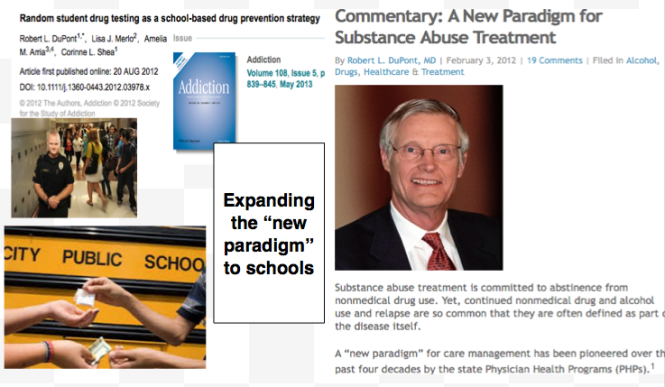
White House Drug Czar (1973-1977) Robert Dupont, M.D. (ASAM, FSPHP) and co-author Greg Skipper, M.D, (ASAM, FSPHP) describe the necessity for wider application of this new paradigm in an article published in the Journal of Psychoactive Drugs in 2012. In reviewing the “successes” of similar programs monitoring commercial pilots, attorneys, probationers, and those in the criminal justice system, they proclaim the “need to reach more of the 1.5 million Americans who annually enter substance abuse treatment, which now is all too often a revolving door.”1
Dupont and Skipper conclude:
This model of care management for substance use disorders has been pioneered by a small and innovative group of the nation’s physicians in their determination to help other physicians save their careers and families while also protecting their patients from the harmful consequences of continued substance abuse. In fulfilling the professional admonition “physician: first heal thyself,” these physicians have created a model with wide applicability and great promise.1
- Dupont RL, Skipper GE. Six lessons from state physician health programs to promote long-term recovery. Journal of psychoactive drugs. Jan-Mar 2012;44(1):72-78.




Part 3

Contents

I. Evidence regarding the effectiveness of ASAM interventions.
II. Evidence regarding the ASAM patient placement criteria.
III. More about forced interventions (coercion into treatment).
I. Evidence does not support Stuart Gitlow statements
“How To Achieve an 80 Percent Recovery Rate” —Stuart Gitlow, President of the @ASAMorg
How To Achieve an 80 Percent Recovery Rate
Published on October 16, 2012 by Stuart Gitlow, President of the American Society of Addiction Medicine (ASAM). Read the original post via the ASAM President’s BlogRecovery rates over 80% appear to be rather consistently identified both by PHPs and by studies of pilots conducted by the FAA and by independent airlines. These long term recovery rates appear dramatically superior to the recovery rates obtained within the general population, which, depending on what literature you believe, seems to lie somewhere in the 40-50% area. –Stuart Gitlow
No…
View original post 798 more words

 Disrupted Physician